
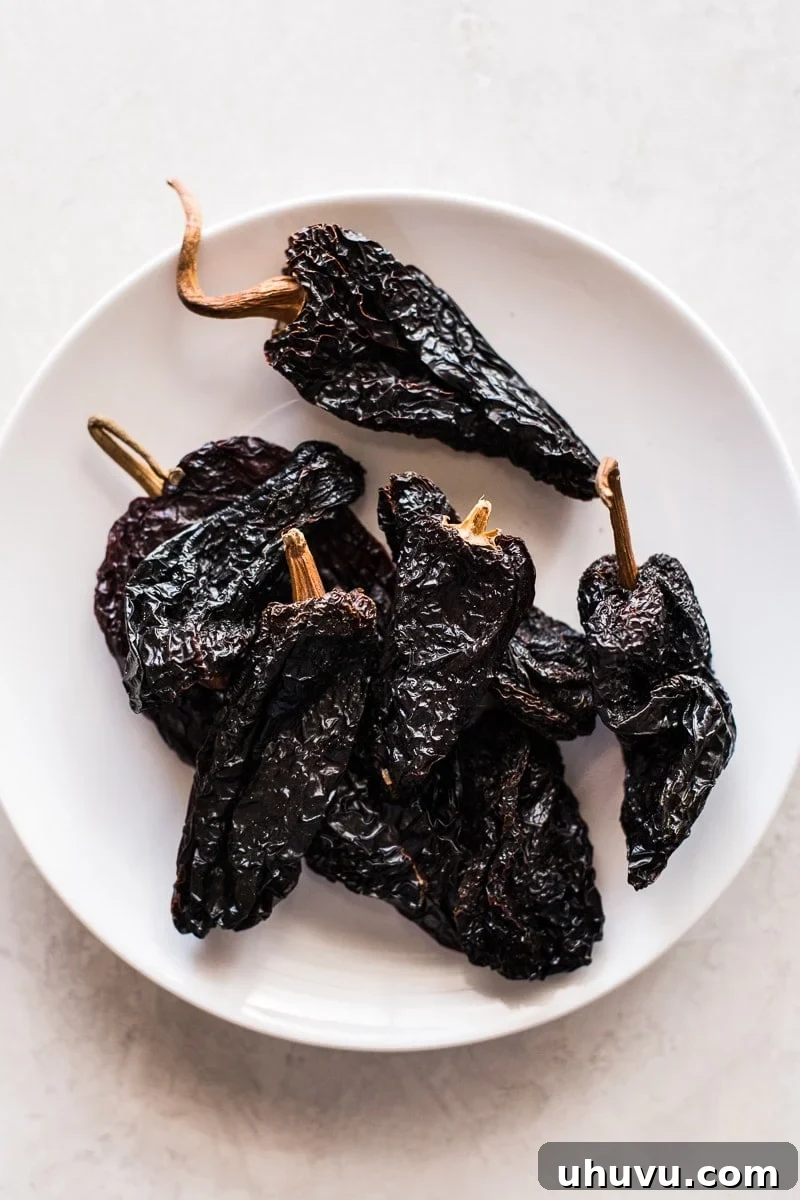
Welcome to the captivating world of Ancho chiles, an indispensable ingredient that forms the heart and soul of authentic Mexican cuisine. Known for their uniquely rich, sweet, and smoky flavor profile, these versatile dried peppers are far more than just a spice; they are a culinary cornerstone that can transform everyday meals into extraordinary feasts. From the complex depths of traditional moles and the vibrant kick of salsas to the comforting warmth of soups and stews, Ancho chiles impart a distinctive character that is both profound and inviting.
What Exactly Are Ancho Chiles? Understanding This Iconic Mexican Ingredient
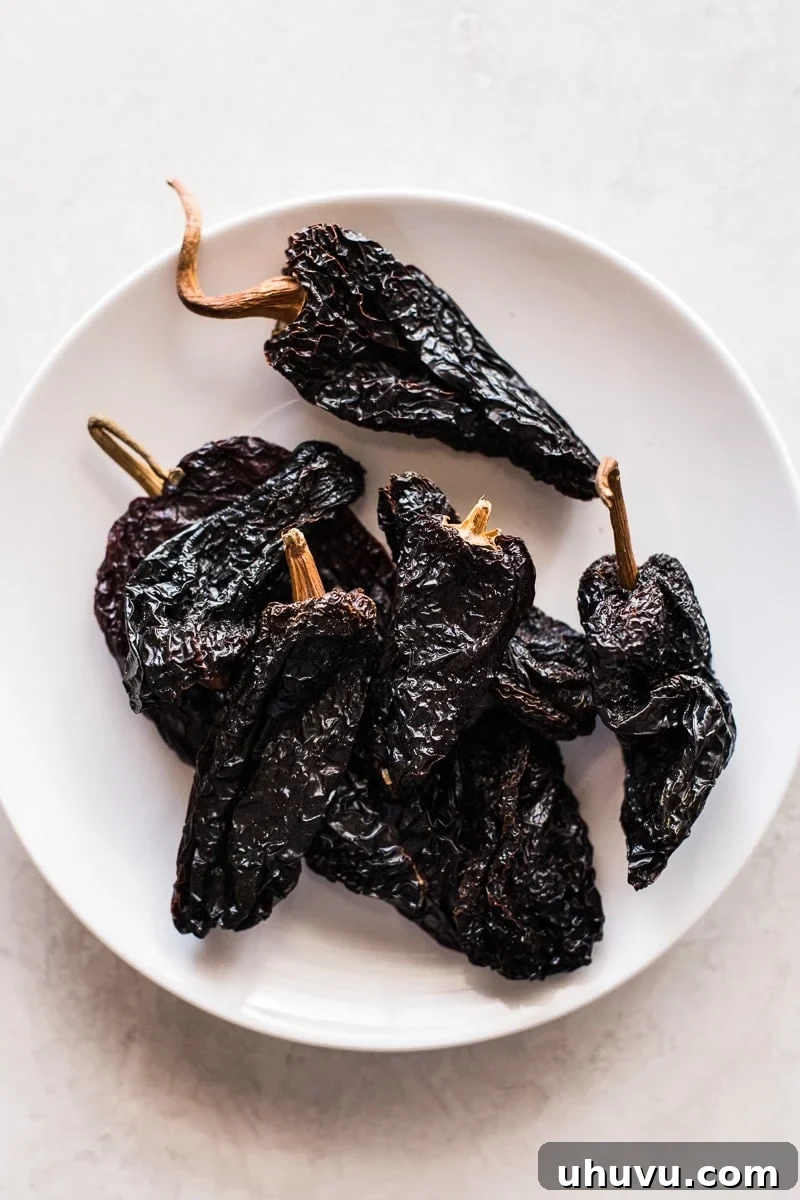
At their core, Ancho chiles, often simply referred to as “chile ancho,” are the dried version of the popular poblano pepper. This transformation from fresh, vibrant green poblano to a dark, earthy Ancho chile is a fascinating journey that profoundly impacts its flavor and culinary applications. Understanding this fundamental connection is key to appreciating the Ancho’s role in Mexican gastronomy.
When you visit most grocery stores, you’ll typically encounter emerald green poblano peppers. These fresh peppers are a staple in many dishes, famously lending their mild heat and fresh, slightly bitter notes to recipes like the iconic chile rellenos. However, to achieve the distinct character of an Ancho chile, these poblanos must undergo a crucial ripening and drying process.
The journey begins when poblano peppers are allowed to remain on the vine beyond their green stage, ripening fully until they develop a deep, rich red color. Once perfectly ripened, they are carefully harvested and then traditionally sundried. This meticulous drying process is where the magic happens: the peppers lose their moisture, their skins become leathery, and their vibrant red hue deepens into a profound, almost blackish, dark burgundy. This dehydration concentrates their sugars and develops complex new flavors, transforming them from the fresh, verdant poblano into the distinctively sweet, smoky, and earthy Ancho chile.
Botanically, both Ancho chiles and poblano peppers belong to the species Capsicum annuum. The term “Ancho” itself translates to “wide” in Spanish, a fitting description for these broad, heart-shaped peppers that are typically 3 to 4 inches long and about 2.5 inches wide. Their size and pliable, leathery texture are key indicators of their quality, which we will delve into further when discussing selection.
Decoding the Distinct Flavor Profile of Ancho Chiles
The flavor of Ancho chiles is truly what sets them apart and makes them so revered in Mexican cuisine. They boast a complex and layered taste that can be best described as a harmonious blend of smoky, mildly fruity, and subtly sweet notes, all underpinned by a deep earthiness. Unlike many other dried chiles, Ancho chiles are celebrated for their remarkably mild heat, typically ranging from 1,000 to 1,500 Scoville Heat Units (SHU). This low-heat profile means they contribute flavor rather than overwhelming spiciness, making them accessible to a wide range of palates.
Imagine the richness and depth of dried fruits like raisins and plums; Ancho chiles evoke a similar effect, adding a natural sweetness and body to dishes. This fruitiness is subtle, not overpowering, and complements their inherent smokiness. The drying process not only concentrates these flavors but also develops a unique caramelization of the peppers’ natural sugars, contributing to their profound sweetness and deep, roasted aroma.
When incorporated into recipes, Ancho chiles don’t just add a single dimension of flavor; they build a foundation of richness and complexity. They contribute a dark, appealing color and a velvety texture to sauces and pastes. Their ability to enhance and deepen other ingredients without introducing aggressive heat makes them an ideal base flavor when crafting intricate salsas, robust moles, and flavorful chile pastes, especially when combined with other dried chiles to create a spectrum of taste sensations.
The contrast between the fresh poblano and its dried counterpart is striking. While fresh poblanos offer a crisp, verdant, and sometimes slightly bitter note, Ancho chiles deliver a concentrated, mature flavor profile that is warm, inviting, and deeply satisfying. This evolution of flavor is precisely why they are essential for creating the authentic taste of many cherished Mexican dishes.
Mastering the Art of Cooking with Ancho Chiles: Preparation and Culinary Techniques
If you’re new to the world of dried chiles, Ancho chiles are an excellent starting point due to their mildness and incredible flavor-building capabilities. While they may seem intimidating at first, preparing and using them is straightforward and rewarding. The primary methods involve rehydrating them for use in sauces or pastes, or grinding them into a powder. Most traditional Mexican recipes typically call for rehydrating them to unlock their full potential and blend them into a smooth, flavorful base.
Essential Preparation Steps for Ancho Chiles:
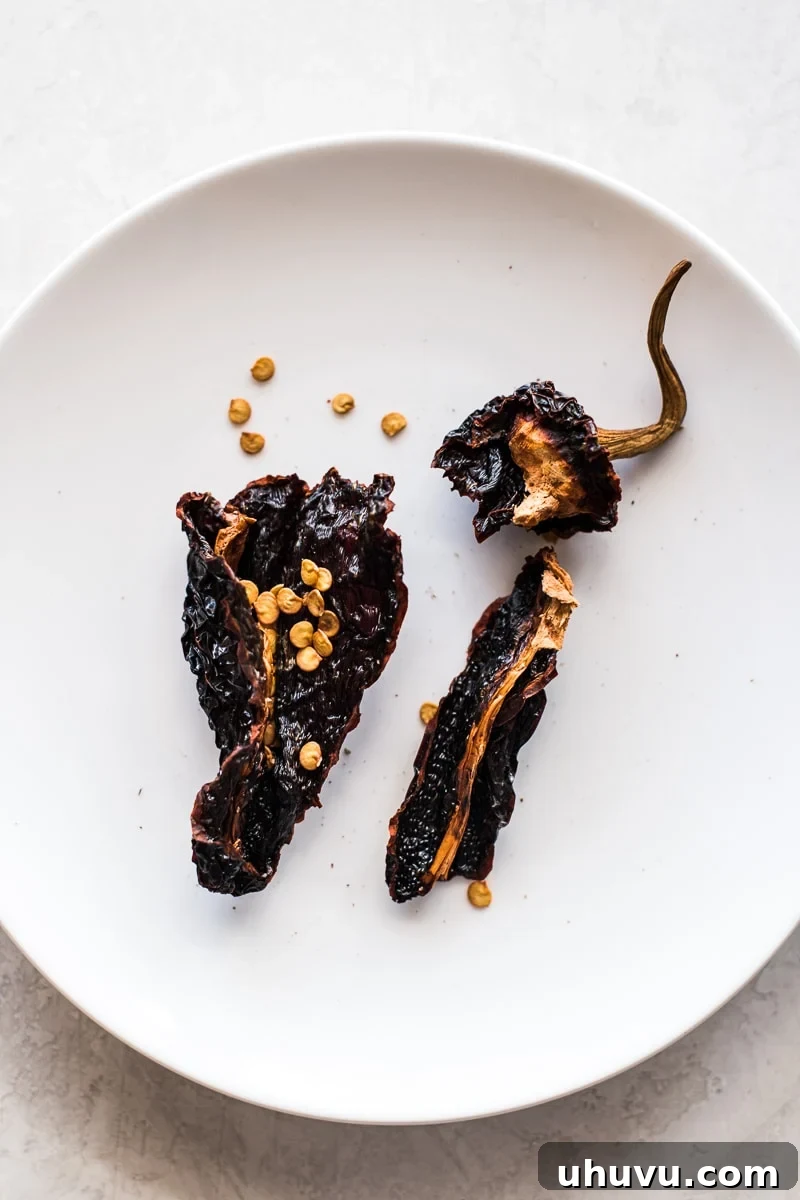
- Preparing the Ancho Chiles: Before rehydration or toasting, it’s crucial to prepare the chiles properly. Begin by carefully removing the stems. Kitchen shears are incredibly useful for this task, allowing for a clean cut. Next, make a lengthwise cut down one side of each chile to open it up. This exposes the interior, making it easy to remove the seeds and, if desired, the veins. While Ancho chiles are mild, their seeds can sometimes impart a slightly bitter taste to your final dish, and removing them ensures a purer flavor. Discard these components.
- Toasting Ancho Chiles for Enhanced Flavor: This step is often overlooked but can dramatically elevate the flavor of your Ancho chiles. To toast them, heat 1 tablespoon of olive oil (or another neutral oil) in a skillet over medium heat. Add the prepared Ancho chiles and toast them for approximately 1-2 minutes per side, or until they become fragrant and slightly puffed. Be very careful not to burn them, as burned chiles will develop an unpleasant bitter taste. Toasting helps to awaken their dormant flavors and release their aromatic compounds, intensifying their smoky and fruity notes. Some recipes, such as the vibrant salsa macha, specifically utilize this toasting or frying method to bring out the deepest flavors of the chiles. You can also dry-toast them in a hot, dry skillet for about 30 seconds per side until fragrant, though oil toasting often yields a richer flavor.
- Rehydrating Ancho Chiles for Sauces and Pastes: After preparing and optionally toasting, rehydration is the next critical step.
- Place the prepared and optionally toasted Ancho chiles into a saucepan.
- Add enough hot water to fully cover the chiles.
- Bring the water and chiles to a gentle boil over medium-high heat.
- Once boiling, remove the saucepan from the heat, cover it, and allow the chiles to soak for about 15-20 minutes. During this time, the chiles will soften, becoming pliable and plump. They should feel tender to the touch.
- Using a slotted spoon, carefully remove the rehydrated chiles from the water. The soaking liquid is often rich in flavor and can be reserved and used as part of your recipe’s blending liquid, adding even more depth.
- Once rehydrated, the chiles are ready to be blended into sauces, purees, or pastes as directed by your recipe.
- Grinding Ancho Chiles into Powder: For certain applications, such as rubs for meats or a quick flavor boost, Ancho chiles can be ground into a powder. After destemming and deseeding, toast the chiles until very crisp (this helps them grind more easily). Allow them to cool completely, then break them into smaller pieces and grind them in a spice grinder or a high-speed blender until a fine powder is achieved. Store the powder in an airtight container for future use.
Selecting and Storing Ancho Chiles for Optimal Flavor
The quality of your Ancho chiles directly impacts the flavor of your dishes. Knowing how to select the best dried peppers and properly store them will ensure you consistently achieve the rich, authentic tastes you desire in your Mexican cooking.
How to Select the Best Ancho Chiles:
As mentioned, “Ancho” means “wide,” and indeed, most Ancho chiles you’ll find are quite substantial, typically measuring around 3-4 inches in length and 2.5 inches in width. When choosing your peppers, look for the following characteristics:
- Pliability and Texture: The most crucial indicator of freshness and quality is pliability. Good quality Ancho chiles should be flexible and slightly soft, almost leathery to the touch. They should bend easily without cracking. Avoid chiles that are overly dry, stiff, or brittle, as this indicates they are old and may impart a bitter, dusty, or musty flavor to your food.
- Color: Look for a deep, dark burgundy or reddish-brown color that is relatively uniform. A dusty or faded appearance can also be a sign of age and diminished flavor.
- Aroma: Bring the chile close to your nose. High-quality Ancho chiles should have a faint but discernible sweet, smoky, and earthy aroma. If there’s no scent or it smells stale, they might not offer the best flavor.
- Intact Skin: The skin should be mostly intact, without excessive tears or blemishes.
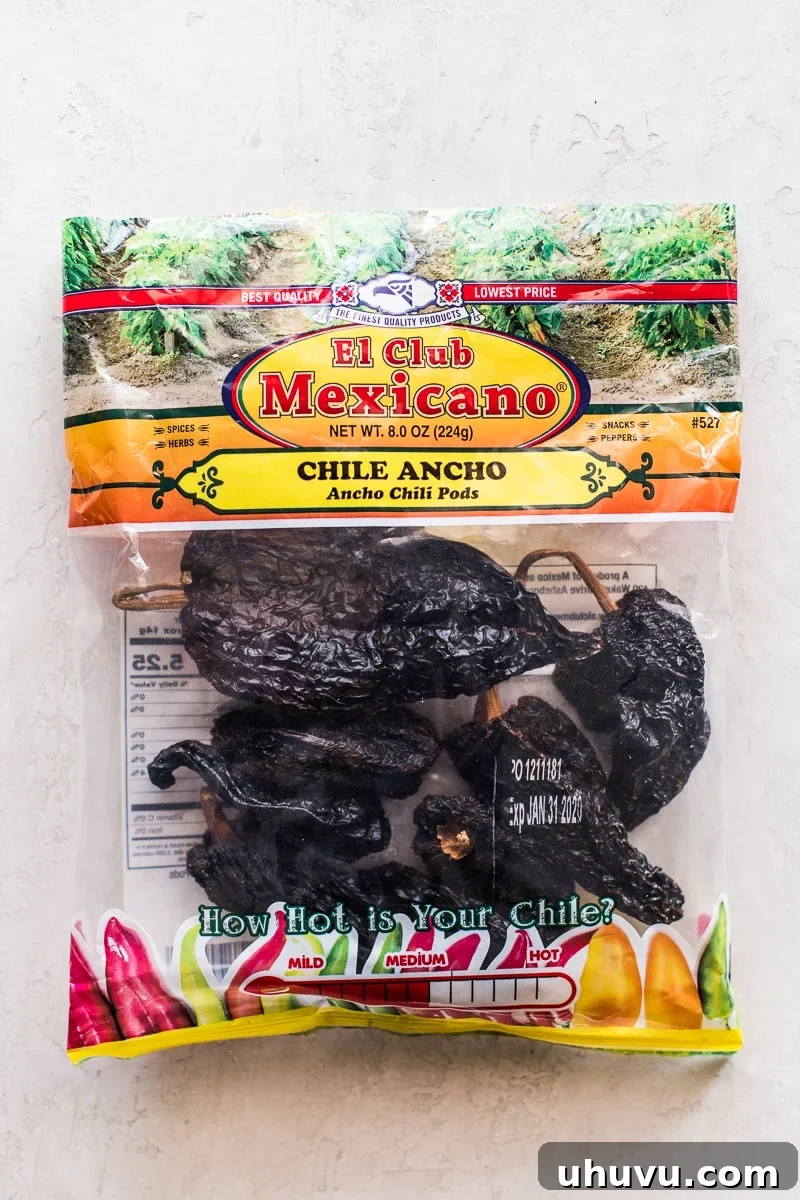
Many Mexican grocery stores and specialty Latin markets will sell Ancho chiles both pre-packaged and in large bins or stands alongside other dried peppers. Buying from bins allows you to inspect and select individual chiles, ensuring you get the freshest and most pliable ones. If purchasing pre-packaged, check for transparency of the packaging to visually inspect the chiles inside.
Proper Storage for Maximum Freshness:
Proper storage is vital to preserve the unique flavor and aroma of Ancho chiles. When stored correctly, they have a surprisingly long shelf life:
- Pantry Storage: For general use, Ancho chiles can be stored in an airtight container (such as a glass jar, zip-top bag, or food-grade storage container) in a cool, dark, and dry place, like your pantry, for up to a year. However, for the absolute best flavor and potency, it’s recommended to use them within 3-6 months. Over time, even well-stored dried chiles can gradually lose their intensity.
- Freezer Storage for Extended Shelf Life: To maximize their shelf life and maintain peak flavor for even longer periods, consider storing Ancho chiles in the freezer. Place them in a freezer-safe, airtight bag or container. Freezing helps to prevent any further loss of moisture and preserves their delicate flavors and aromas for well over a year. When you’re ready to use them, simply take out the desired amount; they do not need to be thawed before rehydration or toasting.
Delightful Ancho Chile Recipes: A Culinary Journey
Ancho chiles are undoubtedly one of the most popular and frequently used dried chiles in authentic Mexican cuisine. Their fantastic earthy, smoky, and subtly sweet flavor perfectly complements an incredibly wide variety of dishes and sauces, adding a depth and richness that is truly unmatched. Here are some quintessential recipes where Ancho chiles play a starring role, bringing their signature warmth and complexity:
- Authentic Mole Sauce: Ancho chiles are absolutely fundamental to many variations of mole. Their mild, fruity sweetness and earthy notes provide the essential backbone for this complex, iconic Mexican sauce.
- Authentic Enchilada Sauce: The rich, dark color and profound flavor of homemade red enchilada sauce largely depend on the use of Ancho chiles, often blended with other dried chiles for a perfect balance.
- Pozole Rojo: This hearty and comforting Mexican stew gets its signature red hue and deep, savory flavor from a blend of chiles, with Anchos contributing a crucial smoky and sweet foundation.
- Chile Colorado: A rich and flavorful red chile sauce that is often the star of many braised meat dishes. Ancho chiles are central to creating its characteristic vibrant color and earthy sweetness.
- Tamales: The filling for many savory tamales, particularly those with a red chile pork or beef, benefits immensely from the robust and sweet flavor profile of Ancho chiles.
- Salsa Macha: While often relying on a mix of chiles, Anchos can be included to add a mild, fruity, and smoky depth to this intensely flavorful Mexican chile oil.
- Birria: This intensely flavorful and tender Mexican stew, often made with goat or beef, features a rich, savory broth heavily flavored by a blend of dried chiles, where Anchos play a key role.
- Tacos al Pastor: The iconic marinade for Tacos al Pastor typically includes Ancho chiles, which contribute to the meat’s vibrant color and its delightful balance of sweet and savory notes.
Finding the Right Ancho Chile Substitute When Needed
Given their widespread popularity and culinary significance, Ancho chiles are generally quite easy to find in most well-stocked grocery stores, especially those with an international or Hispanic foods section. However, their unique combination of smoky, sweet, and mild earthy flavors makes them notoriously difficult to replace perfectly in a recipe without some alteration to the final taste. If you find yourself in a bind and absolutely need a substitute, here are a few options to consider, along with their flavor characteristics:
Dried Chile Pepper Substitutes:
- Mulato Chiles: Often considered the closest substitute, mulato chiles are also dried poblano peppers, but they are allowed to ripen even further on the vine, resulting in a darker color and a slightly sweeter, richer, and less fruity flavor than Anchos. They offer a similar mild heat and earthy depth.
- Guajillo Peppers: Guajillo chiles are another excellent choice for dried chile substitutions. They are known for their bright, tangy, and subtly fruity flavor with a medium heat level (2,500 to 5,000 SHU). While they share some fruitiness with Anchos, they lack the pronounced sweetness and deep smokiness. You might consider using a combination of guajillo with a tiny pinch of smoked paprika to try and replicate the smokiness.
- Pasilla de Oaxaca: If you’re specifically looking for a smoky flavor, pasilla de Oaxaca chiles are an option. They are dried and smoked Pasilla chiles, offering a more intense smokiness than Anchos, but will have a different overall flavor profile and potentially more heat.
Powdered Substitutes from the Spice Aisle:
If whole dried chiles are entirely unavailable, you can often find powdered alternatives, though these will never fully replicate the depth and fresh flavor of rehydrated whole chiles.
- Ancho Chile Powder: This is your best bet if you can’t find whole Ancho chiles. It is simply ground dried Ancho chiles and will provide the most similar flavor profile. Be mindful that its flavor might be less intense than freshly ground chiles from whole, rehydrated peppers. Use about 1 tablespoon of Ancho chile powder for every 1-2 whole Ancho chiles a recipe calls for, adjusting to taste.
- Chipotle Powder: As an alternative in the spice aisle, chipotle powder can provide a smoky element to your dish. Chipotle peppers are smoked jalapeños, giving them a distinct and often more intense smokiness compared to Anchos. However, chipotle powder will lack the characteristic earthy and fruity sweetness of Ancho chiles and will introduce a noticeable kick of heat (often 2,500 to 8,000 SHU). While it contributes smokiness, it will fundamentally alter the original flavor profile of a dish designed for Anchos.
- Smoked Paprika & Sweet Paprika Blend: In a pinch, a combination of sweet paprika and a small amount of smoked paprika can offer a very rudimentary stand-in for the sweet and smoky notes, but it will not provide the same complex depth or body that an actual chile delivers.
Locating Ancho Chiles for Your Culinary Adventures
Finding Ancho chiles is becoming increasingly easy, a testament to their growing popularity and the wider appreciation of authentic Mexican ingredients. You typically won’t have to look too far to get your hands on these wonderful dried peppers:
- Local Hispanic/Latin Grocery Stores: These are hands down the best places to find a wide selection of dried chiles, including Anchos. You’ll often find them sold in bulk bins, allowing you to pick and choose the freshest, most pliable peppers. The turnover is usually high, ensuring quality.
- Large Supermarkets with International Aisles: Many major grocery store chains now carry Ancho chiles, often in their international or ethnic food sections, sometimes labeled as “Mexican” ingredients. They might be pre-packaged in bags or plastic containers.
- Specialty Spice Shops: High-end spice shops or gourmet food stores are also likely to stock quality dried Ancho chiles, sometimes offering different grades or origins.
- Online Retailers: If you live in an area without easy access to a Hispanic grocery store, or if you prefer the convenience of home delivery, numerous online retailers sell dried Ancho chiles. Websites specializing in Mexican ingredients or larger e-commerce platforms like Amazon offer a variety of brands and quantities. Buying online can also be a great way to purchase in larger quantities if you use them frequently.
Expand Your Knowledge: Explore More Essential Chiles
The world of chiles is vast and incredibly diverse, each type offering its own unique flavor, heat, and culinary application. If you’ve enjoyed learning about Ancho chiles, consider delving deeper into other essential peppers that form the backbone of Mexican and global cuisines. Expanding your chile knowledge will open up a whole new realm of flavors and cooking possibilities:
- Guajillo Chile Peppers: Known for their fruity, tangy flavor and moderate heat, guajillos are another staple in red sauces and stews.
- Chile de Árbol: These small, potent chiles bring a fiery kick and nutty flavor to salsas and oils, typically used whole or ground.
- Poblano Peppers: The fresh, mild predecessor to the Ancho, indispensable for dishes like chile rellenos and rajas con crema.
- Chipotle Peppers: Smoked and dried jalapeños, famous for their intense smoky flavor and moderate to high heat, often found in adobo sauce.
Exploring these different chiles will not only enhance your cooking skills but also deepen your appreciation for the intricate and flavorful tapestry of Mexican culinary traditions. Ancho chiles are just the beginning of a delicious adventure!