
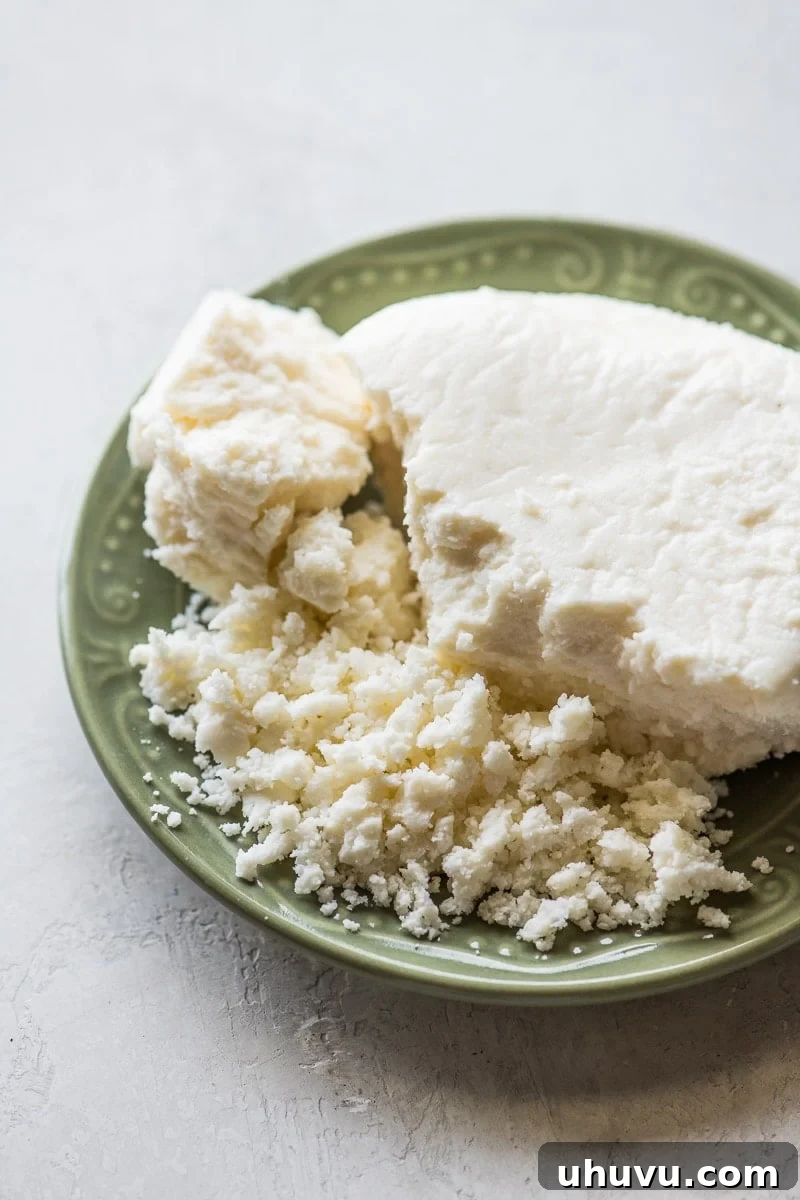
A culinary cornerstone in countless Mexican households, Queso Fresco, literally translating to “fresh cheese,” is a delightful, mild, and distinctly fresh white cheese. Its soft, moist texture and subtly tangy flavor make it an incredibly versatile ingredient, offering a delicate balance to an array of vibrant dishes.
Easily crumbled and boasting a light milky essence, Queso Fresco is a common topping for beloved Mexican staples like enchiladas, tacos, and chilaquiles. While it shares some textural similarities with Cotija cheese – both are fantastic for crumbling – Queso Fresco stands apart with its significantly milder profile and lower salt content, making it a refreshing counterpoint rather than a dominant flavor.
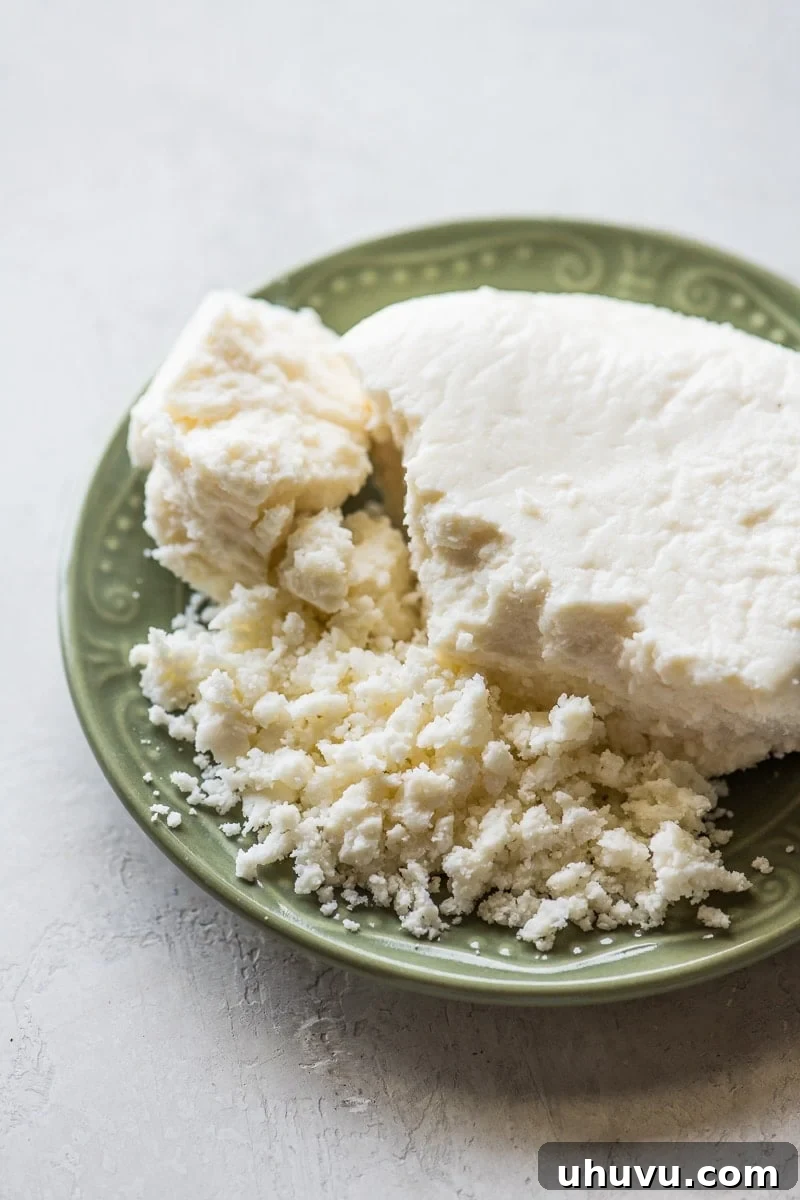
Understanding Queso Fresco: What is it Made Of?
At its heart, Queso Fresco is a testament to the simplicity and purity of dairy. Traditionally, this fresh cheese is crafted using raw cow’s milk, or a thoughtfully balanced combination of cow and goat milk. This choice of milk is fundamental to its distinctive character, imparting the delicate milky flavor, a subtle saltiness, and its signature mild tanginess that distinguishes it from aged or more robust cheeses. The process is straightforward: milk is curdled, typically with rennet or an acid, and then the curds are gently pressed to remove excess whey, resulting in a fresh, soft cheese that’s ready to enjoy almost immediately.
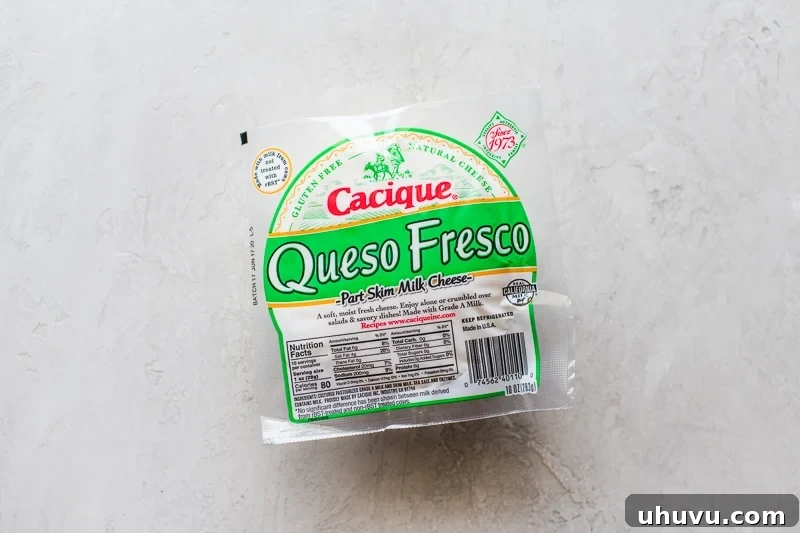
Due to its traditional preparation and delicate flavor profile, Queso Fresco shares a close kinship with other fresh, unaged cheeses such as farmer’s cheese or even some varieties of Indian paneer, though each possesses unique characteristics. In the United States, consumers will most commonly encounter versions of Queso Fresco made with pasteurized milk in grocery stores. This adaptation ensures food safety standards while striving to maintain the authentic taste and texture that make this cheese so beloved.
The Cultural Significance and History of Queso Fresco
The history of cheese-making in Mexico is deeply intertwined with the arrival of the Spanish, who introduced dairy cattle and European cheese-making techniques. However, over centuries, these techniques were adapted and localized, giving birth to a rich variety of Mexican cheeses, with Queso Fresco being one of the most prominent. It quickly became a staple, particularly in rural areas, owing to its simple production method and the ability to make it fresh without extensive aging requirements.
Queso Fresco isn’t just a food item; it’s a part of Mexican culinary identity. It represents freshness, tradition, and home cooking. From bustling city markets to humble countryside kitchens, its presence is ubiquitous. It’s often made by local producers, adding to its regional charm and supporting traditional artisanal practices. This cheese embodies the essence of Mexican flavors – fresh, vibrant, and always inviting.
Versatile Serving Suggestions and Culinary Applications
Queso Fresco’s true brilliance shines in its incredible versatility. Its mildness and fresh flavor make it an ideal companion for a wide array of dishes, particularly those in the vibrant Mexican culinary landscape. One of its most celebrated roles is to provide a refreshing contrast to spicy Mexican fare. When confronted with the fiery kick of chiles, the creamy, cool notes of Queso Fresco act as a palate cleanser, tempering the heat and allowing other flavors to emerge. This makes it an indispensable topping or stuffing for dishes where balancing intense flavors is key.
While classified as a soft cheese, it’s important to note that Queso Fresco doesn’t melt in the conventional gooey sense that many aged cheeses do. Instead, its unique composition allows it to soften slightly when heated, yet maintain its structural integrity. More impressively, when exposed to direct heat, it browns beautifully, developing a lovely golden crust that adds both visual appeal and a delightful texture to your dishes. This browning quality makes it excellent for pan-frying or grilling, offering a new dimension to its serving possibilities.
For those discovering Queso Fresco for the first time, consider these popular and impactful ways to incorporate it into your cooking:
- **Crumbled Topping:** Its crumbly nature makes it perfect for sprinkling over tacos, enchiladas, tostadas, sopes, or even hearty bean soups and salads. The small crumbles distribute flavor evenly and add a pleasing textural contrast.
- **Stuffing:** Use it as a filling for chiles rellenos, empanadas, or quesadillas (where it will soften and slightly brown rather than melt).
- **Salads:** Elevate simple green salads or vibrant Mexican salads with corn and beans by crumbling Queso Fresco over them for a fresh, creamy touch.
- **Eggs:** A fantastic addition to scrambled eggs, omelets, or huevos rancheros, providing a delightful tang and richness.
- **Grilled/Pan-Fried:** Slice it into thicker pieces and pan-fry until golden brown for a warm, slightly crispy appetizer or a side dish.

Popular Recipes Featuring Queso Fresco
Queso Fresco is a star ingredient in many traditional Mexican dishes, bringing its unique characteristics to the forefront. Here are some popular recipes where it truly shines:
- Chile Rellenos: Often used as a mild, creamy filling, balancing the heat of the poblano pepper.
- Pinto Bean Soup: Crumbled on top, it adds a refreshing coolness and creamy texture to the savory soup.
- Easy Migas Recipe: Sprinkled over the egg and tortilla mixture, it provides a salty-tangy contrast to this hearty breakfast.
- Chicken Tacos: A classic topping, its mildness complements the seasoned chicken without overpowering it.
- **Chilaquiles:** Essential for balancing the rich, saucy tortilla chips, providing a fresh, creamy counterpoint.
- **Enfrijoladas:** Often crumbled directly into or over the bean-sauce smothered tortillas.
- **Esquites or Elote (Mexican Street Corn):** While Cotija is common, Queso Fresco can offer a milder, fresher alternative.
Beyond main dishes, Queso Fresco makes for a delightful and simple snack. Roll it up in some warm homemade flour tortillas or corn tortillas, perhaps with a sprinkle of herbs or a drizzle of honey, for a quick and satisfying treat!
Proper Storage for Optimal Freshness
As a fresh cheese with a high moisture content, proper storage is paramount to maintaining the quality and extending the shelf life of Queso Fresco. It is a perishable item, and vigilance is key to enjoying it at its best.
Upon opening, it’s generally best to consume this cheese within a 5-7 day period to ensure peak freshness and flavor. To maximize its longevity, always store Queso Fresco in your refrigerator. The ideal method is to keep it in its original vacuum-sealed packaging until ready to use. Once opened, transfer any unused portions to an airtight container or a new vacuum-sealed bag. Placing it on a colder bottom shelf in the back of your refrigerator, where temperatures are most consistent, can help prolong its freshness. Under optimal conditions, this careful storage might allow you to stretch its usability to up to 2 weeks beyond the “sell by” date, provided it shows no signs of spoilage.
However, it is crucial to inspect the cheese before consumption. Always err on the side of caution: if you observe any signs of mold, discoloration, an off-odor, or a slimy texture, discard it immediately. Freezing Queso Fresco is generally not recommended as it can significantly alter its delicate texture, making it crumbly and less appealing upon thawing.
Is Queso Fresco a Healthy Choice?
For individuals mindful of a healthy and balanced diet, Queso Fresco emerges as an excellent choice among cheeses. Its nutritional profile offers several advantages that make it a favorable option for various dietary needs.
One of its most significant benefits is its relatively lower sodium and fat content compared to many aged and harder cheeses. This makes it a heart-healthier alternative without compromising on flavor or culinary versatility. Queso Fresco is also a good source of protein, essential for muscle repair and overall bodily functions, and provides a significant amount of calcium, vital for bone health.
For those adhering to a lacto-vegetarian diet, Queso Fresco is a superb addition to recipes, offering a rich source of dairy protein and calcium. Its mild flavor also means it can be incorporated into many dishes without overwhelming other ingredients, making it a flexible ingredient for vegetarian cooking. While it does contain lactose, as a fresh cheese, some individuals with mild lactose sensitivity might find it more tolerable in small quantities compared to very aged cheeses, though this can vary from person to person. Ultimately, Queso Fresco offers a wholesome and flavorful way to enhance your meals while supporting a health-conscious lifestyle.