
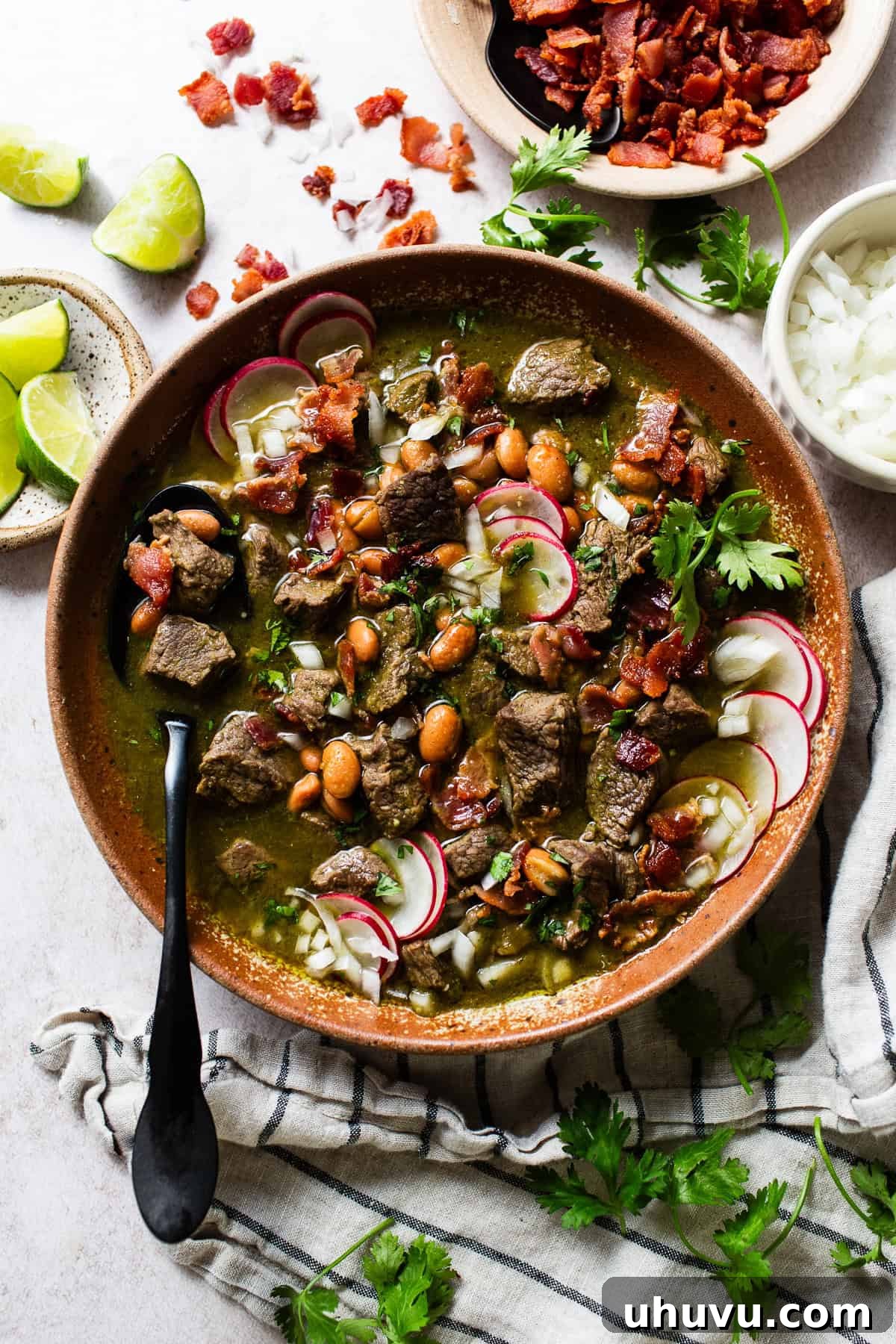
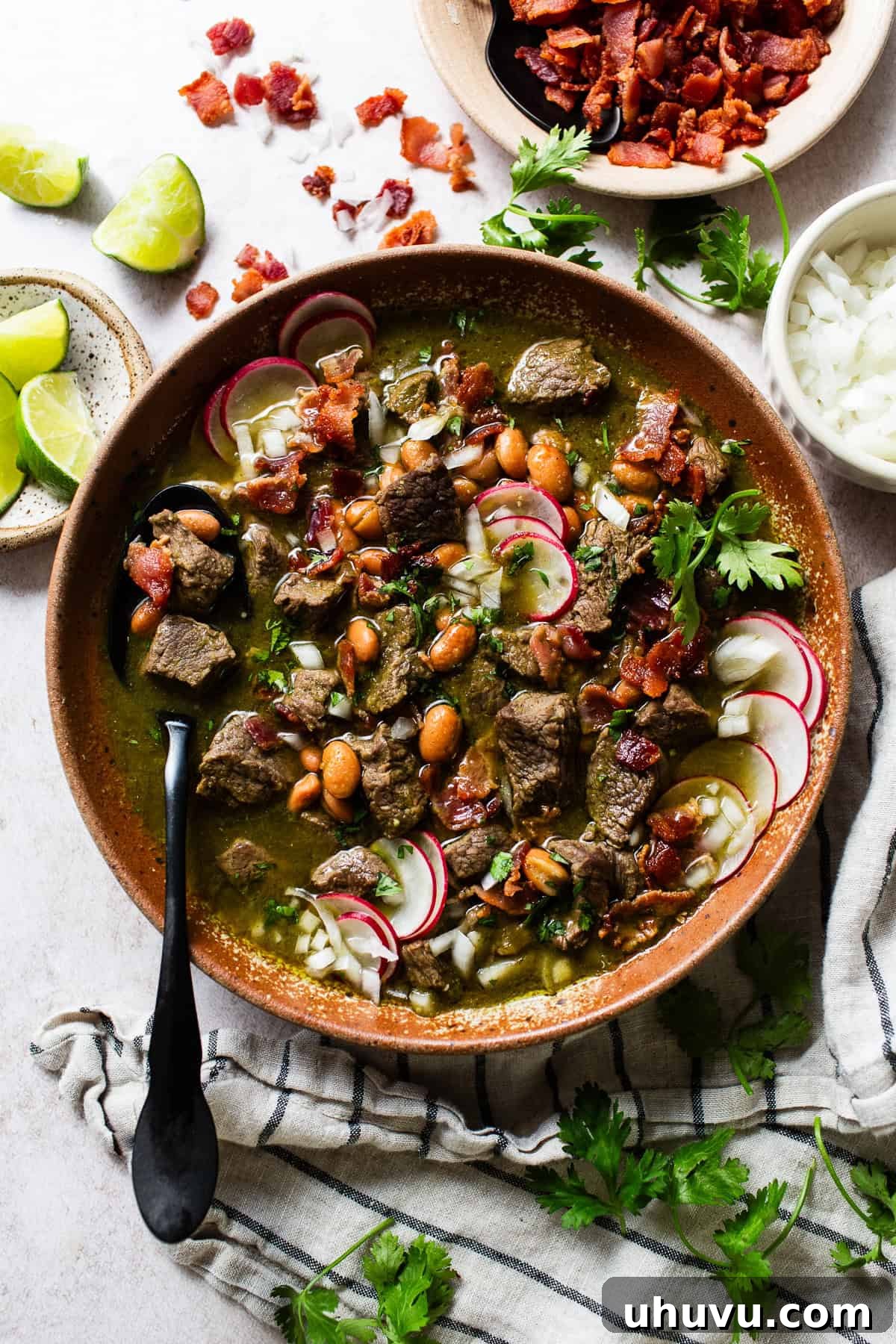
Carne en su Jugo, translating literally to “meat in its juice,” is an iconic and deeply beloved Mexican beef stew hailing from the vibrant state of Jalisco. This authentic dish is a culinary masterpiece, renowned for its rich, comforting flavors and the unique way it combines tender, bite-sized pieces of beef with a tangy tomatillo sauce, hearty pinto beans, and a generous topping of crispy bacon, fresh diced onion, and aromatic cilantro. It’s a dish that embodies the soul of traditional Mexican home cooking, offering a deeply satisfying experience with every spoonful.
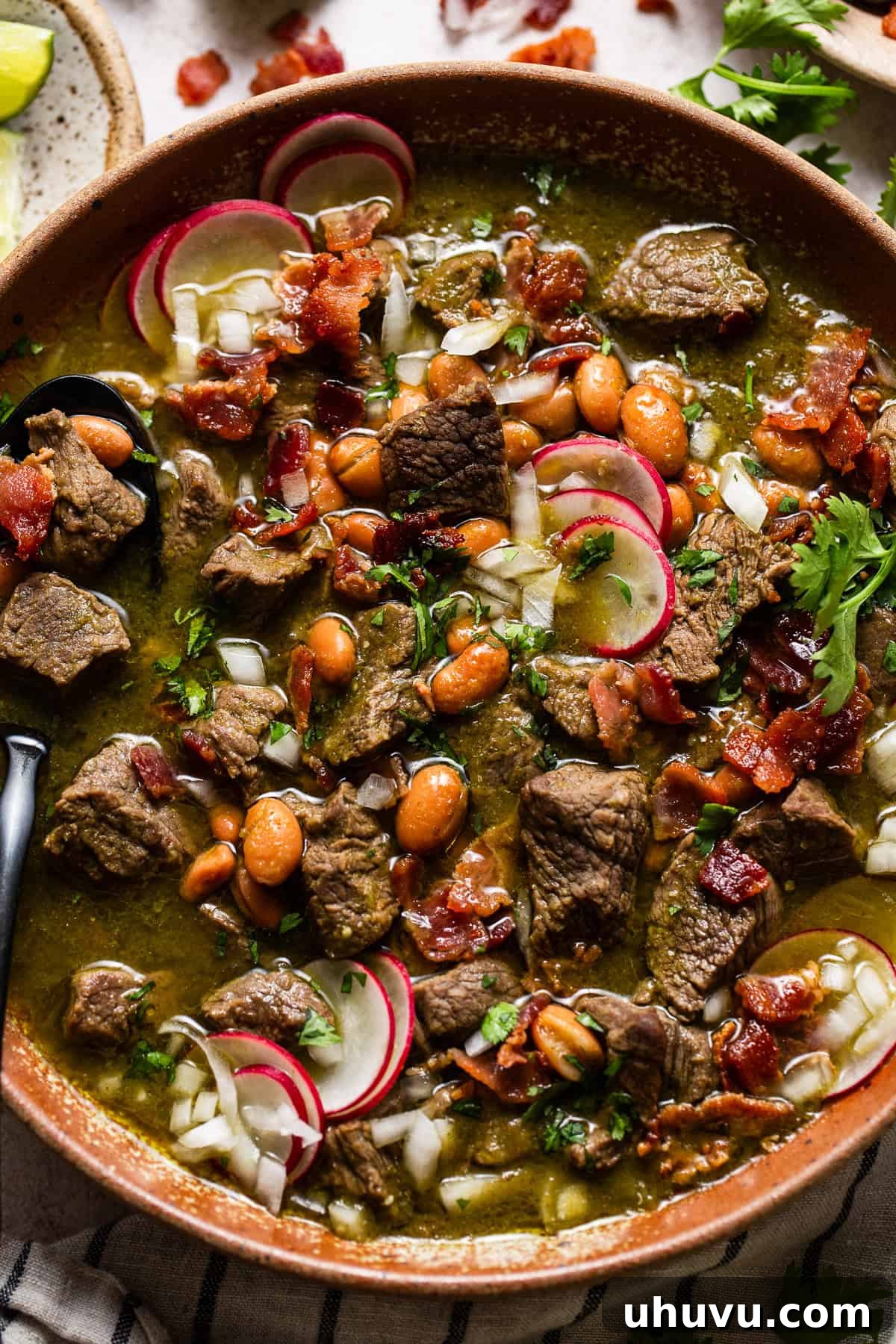
This exquisite Mexican beef stew distinguishes itself with its vibrant, tangy tomatillo sauce that perfectly complements the succulent, bite-sized steak. While it shares some similarities with other regional favorites like Chile Verde, Carne en su Jugo truly shines with its signature toppings: crunchy, savory bacon, crisp diced onions, and fresh, herbaceous cilantro. The interplay of textures and temperatures, from the warm, tender beef to the cool, crisp garnishes, makes it an unforgettable meal.
For anyone who appreciates the bold and comforting flavors of Mexican cuisine, this Carne en su Jugo recipe is a must-try. Its hearty nature and profound flavor profile make it an instant favorite, providing a culinary journey straight to the heart of Jalisco. The careful balance of savory, tangy, and fresh elements creates a stew that is not only deeply satisfying but also remarkably addictive, inviting you to savor every last drop. Once you experience the depth of flavor and comforting warmth of this stew, it’s sure to earn a permanent spot on your favorites list, alongside other Mexican classics like Carne Guisada.
What Is Carne en su Jugo? An Authentic Jalisco Delight
Carne en su Jugo, which translates to “meat in its juices,” is a quintessential Mexican dish originating from the picturesque state of Jalisco. This traditional stew is characterized by its tender, bite-sized pieces of steak, which are first browned in rich bacon fat to develop an incredible depth of flavor. The beef then simmers gently in its own juices, creating a succulent foundation for the stew. What truly sets Carne en su Jugo apart is its vibrant and tangy tomatillo-based sauce, which provides a bright contrast to the rich meat. This flavorful sauce is then combined with creamy pinto beans, adding a hearty texture and fulfilling sustenance to the dish.
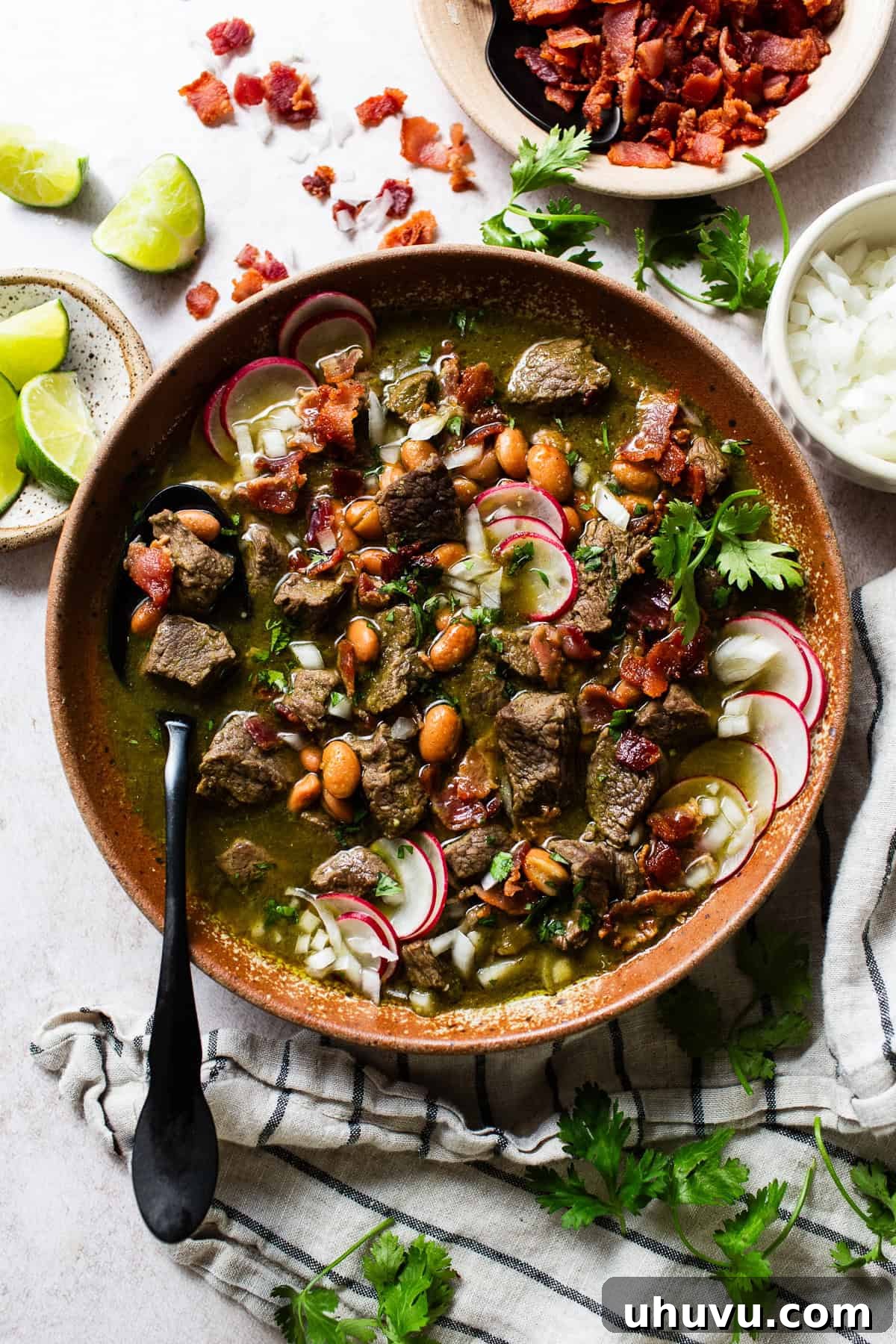
The culinary journey of Carne en su Jugo doesn’t end there; it culminates in a beautiful presentation, generously topped with an array of fresh ingredients. Crispy chopped bacon adds a delightful crunch and extra layer of savory flavor, while finely diced onion provides a sharp, fresh bite. A sprinkle of fresh cilantro introduces an aromatic herbaceous note, tying all the flavors together. This combination of tender meat, tangy broth, creamy beans, and fresh garnishes results in a stew that is both deeply comforting and bursting with authentic Mexican taste. It’s more than just a meal; it’s a celebration of Jalisco’s rich culinary heritage.
Why You’ll Adore This Carne en su Jugo Recipe
This Carne en su Jugo recipe isn’t just another dish; it’s an experience waiting to be savored. Here’s a closer look at why this recipe is destined to become a staple in your kitchen:
- Effortless One-Pot Meal: Say goodbye to mountains of dirty dishes! This entire Carne en su Jugo recipe comes together beautifully in just one large pot or Dutch oven. This makes it an absolute lifesaver for busy weeknights, offering a delicious and satisfying meal without the tedious cleanup. It’s the perfect solution for feeding a family or batch cooking for the week ahead.
- Remarkably User-Friendly: You don’t need to be a seasoned chef to master this stew. The recipe is incredibly straightforward, devoid of any complex techniques or obscure culinary skills. It relies on simple, accessible ingredients that are thoughtfully combined to build an extraordinary symphony of flavors. Each component plays a vital role, complementing the others to create deep, nuanced layers of taste that will impress even the most discerning palates.
- Rich, Complex Flavors: The magic of Carne en su Jugo lies in its incredible flavor depth. The process of browning the beef in rendered bacon fat lays a foundational layer of smoky, savory goodness. This is then beautifully intertwined with the bright, tangy notes of the tomatillo sauce, creating a harmony that is both robust and refreshing. The cumin and other seasonings further enhance this complexity, making every bite an exciting discovery.
- Ultimate Comfort Food: There’s something inherently soulful about a warm, hearty stew, and Carne en su Jugo delivers comfort in spades. It’s the kind of dish that warms you from the inside out, perfect for chilly evenings or anytime you crave a meal that feels like a warm embrace. The tender beef, creamy beans, and savory broth create a truly gratifying experience.
- Authentic Mexican Experience: For those seeking genuine Mexican flavors beyond the usual tacos and burritos, this recipe offers an authentic taste of Jalisco. It’s a traditional dish cherished in Mexican households, bringing a piece of vibrant Mexican culinary heritage directly to your dining table.
- Versatile and Customizable: While the core recipe is fantastic on its own, Carne en su Jugo is wonderfully versatile. The array of fresh toppings allows you to customize each serving to individual preferences, adding an interactive and fresh dimension to the meal.
Essential Ingredients for Authentic Carne en su Jugo
Crafting the perfect Carne en su Jugo begins with selecting the right ingredients. Each component plays a crucial role in building the layered flavors and comforting texture of this traditional Mexican stew:
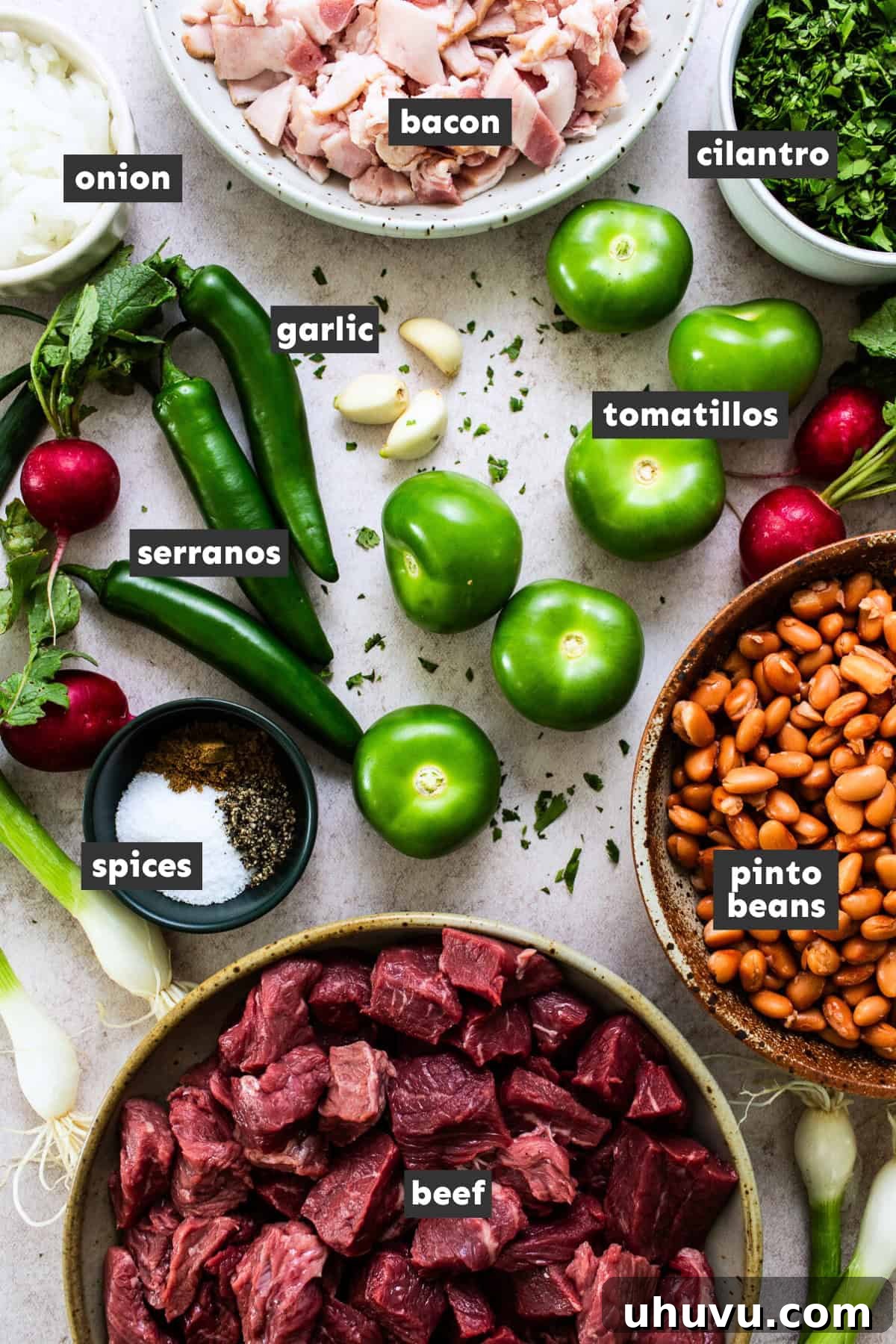
- Bacon: More than just a topping, bacon is a foundational ingredient in Carne en su Jugo. As it crisps, it renders its fat, creating a rich and flavorful medium in which the beef is subsequently browned. This infusion of smoky, savory bacon fat into the beef is essential for the dish’s signature taste. Once crispy, the bacon itself is crumbled and reserved as a delicious, textural garnish. While hickory smoked bacon is a popular choice for its robust flavor, feel free to experiment with applewood or other varieties that you enjoy to add a subtle variation to the overall taste profile.
- Beef: The heart of this stew, the beef needs to be tender and absorb the flavors of the broth. Top sirloin steak is an excellent choice for its balance of tenderness and flavor. Other suitable cuts include top round steak or beef strip steak, which also become wonderfully tender after simmering. For an even more authentic touch, skirt steak can be used, offering a slightly richer texture. Regardless of the cut, ensure the beef is sliced into uniform, bite-sized pieces to ensure even cooking and easy eating.
- Tomatillo Sauce: This is where the stew gets its distinctive tangy and bright character. A quick and easy-to-make tomatillo sauce is pivotal, cutting through the richness of the beef and bacon with its zesty notes. It’s typically crafted from fresh tomatillos, which provide the essential tartness, along with spicy serrano peppers (adjust to your heat preference), fragrant garlic, fresh cilantro, and a blend of basic Mexican seasonings like salt and pepper. This verdant green sauce forms the flavorful base of the broth.
- Seasonings: While the tomatillo sauce brings a lot of flavor, simple seasonings elevate the entire dish. Freshly ground black pepper adds a pungent kick, while cumin introduces an earthy warmth that is characteristic of Mexican cuisine. These spices deepen the complexity of the tomatillo sauce and season the beef from within.
- Kosher Salt: For seasoning the beef and the sauce, coarse kosher salt is often preferred by chefs for its pure flavor and control over seasoning. Its larger crystals allow for more even distribution and prevent over-salting, unlike fine table salt. If you only have fine salt on hand, be sure to reduce the measurements by half to avoid making the dish too salty. Proper seasoning is crucial for unlocking the full potential of each ingredient.
- Pinto Beans: These creamy legumes are a wonderful addition, adding a satisfying texture and a significant boost of protein to the stew. They absorb the rich flavors of the broth, becoming incredibly tender and contributing to the overall heartiness of Carne en su Jugo. You can opt for the convenience of store-bought canned pinto beans, ensuring they are thoroughly drained and rinsed, or for an even more authentic and flavorful experience, prepare homemade pinto beans from scratch.
- Cilantro and Onion: These fresh garnishes are non-negotiable for a truly authentic Carne en su Jugo experience. Finely chopped cilantro provides a burst of fresh, herbaceous flavor and a vibrant green color, while crisp, diced white onions add a bright, pungent note and a delightful crunchy texture that contrasts beautifully with the tender stew. Together, they lift the dish, adding layers of freshness and aromatics that truly complete the meal.
Step-by-Step: Crafting Your Own Carne en su Jugo
Follow these detailed instructions to create a delicious and authentic Carne en su Jugo in your own kitchen. This recipe simplifies the process while ensuring maximum flavor development.
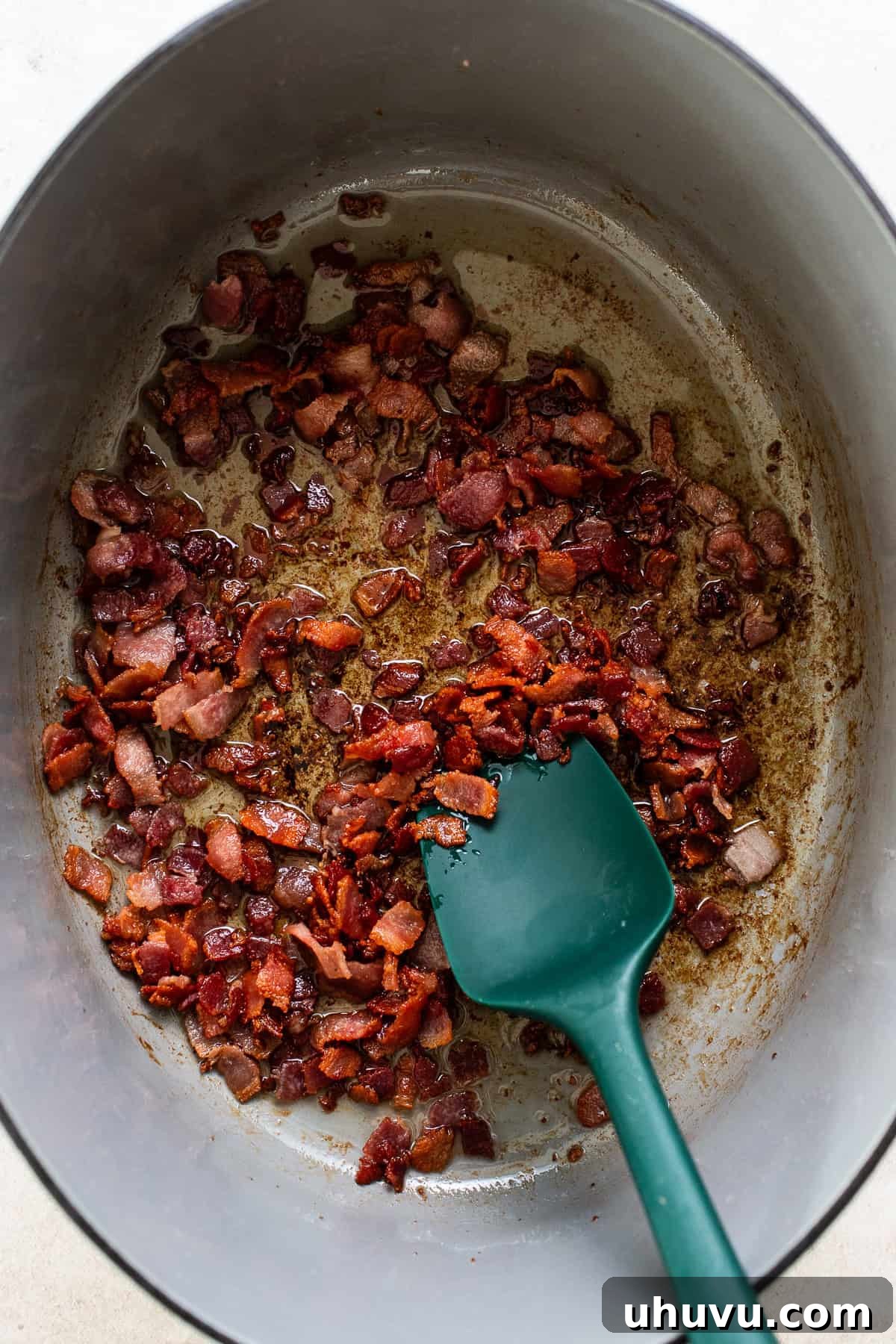
1. Prepare the Bacon: Begin by chopping your bacon into small pieces. Place these pieces in a large, heavy-bottomed pot or Dutch oven over medium heat. Cook the bacon, stirring occasionally, for approximately 10 minutes, or until all the fat has rendered and the bacon bits are beautifully crispy and golden brown. This step is crucial as the rendered bacon fat will be used to brown the beef, imparting a deep, smoky flavor. Once cooked, use a slotted spoon to transfer the crispy bacon to a bowl, leaving the rendered fat in the pot. Set the crispy bacon aside for garnish.
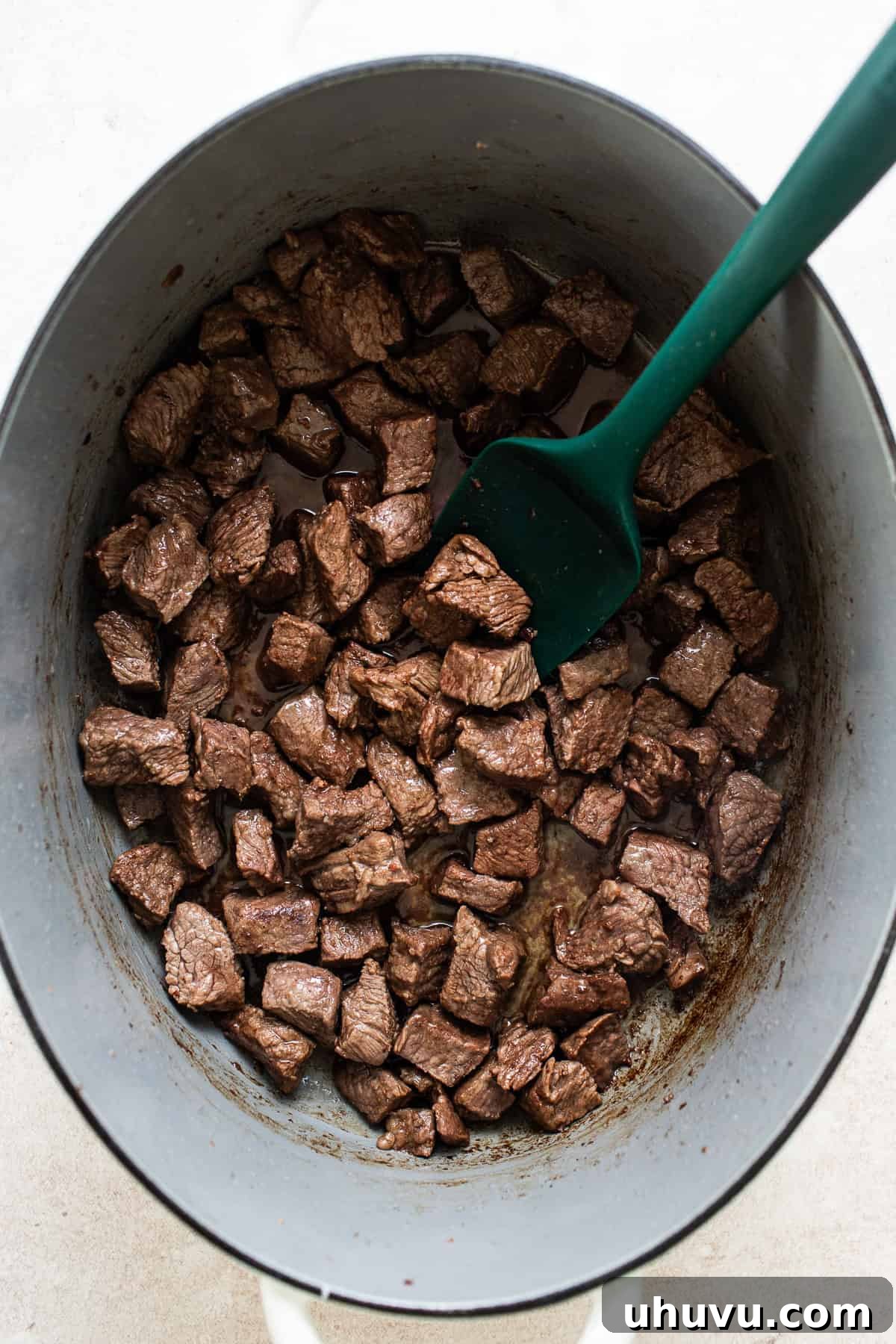
2. Brown the Beef: While the bacon fat is still hot in the pot, generously season your bite-sized beef pieces on all sides with kosher salt. Carefully add the seasoned beef to the same Dutch oven. Brown the beef on all sides until a rich, golden-brown crust forms. This browning process, known as the Maillard reaction, is essential for developing complex, savory flavors. If your pot is crowded, work in batches to ensure the beef browns rather than steams. Overcrowding can lower the temperature and prevent proper browning.
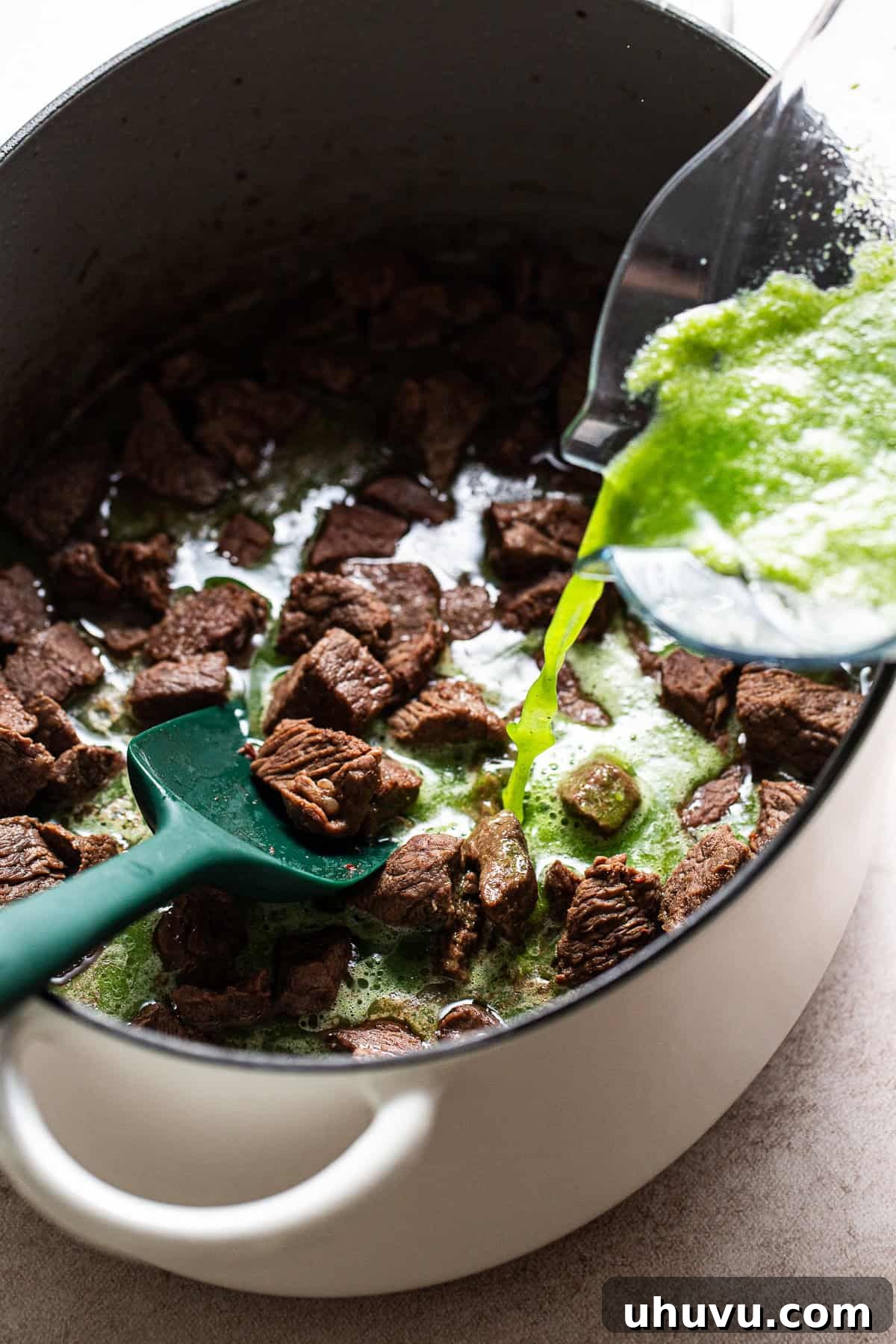
3. Prepare the Tomatillo Sauce: While the beef is browning, prepare the tangy tomatillo sauce. In a large blender, combine the husked and rinsed tomatillos, stemmed and seeded serrano peppers (adjust quantity based on desired heat level), half of the chopped cilantro, garlic cloves, ground cumin, ground black pepper, and water, along with the remaining kosher salt. Blend all ingredients until the sauce is completely smooth and vibrant green. Set this flavorful sauce aside.
4. Simmer the Stew: Once the beef is thoroughly browned, pour the prepared tomatillo sauce directly into the pot with the beef. Stir well to ensure all the ingredients are combined and coated in the rich green sauce. Bring the mixture to a rolling boil, then immediately reduce the heat to a gentle simmer. Cover the pot with a lid and allow the Carne en su Jugo to cook for 30-35 minutes. This simmering period is crucial for tenderizing the beef and allowing all the flavors to meld beautifully, creating a harmonious and deeply satisfying stew.
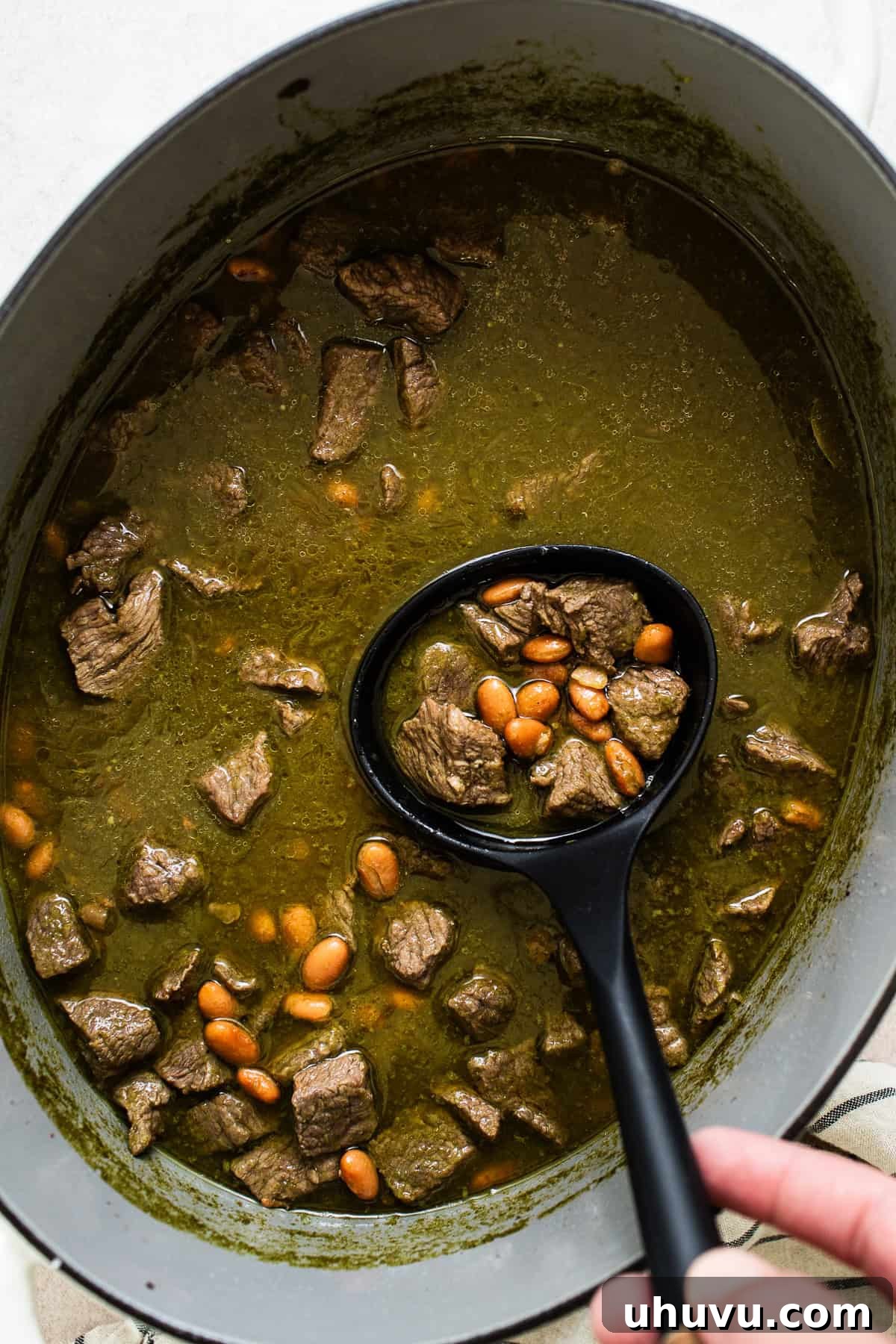
5. Add the Pinto Beans: After the beef has become tender from simmering, it’s time to incorporate the pinto beans. Add the drained and rinsed pinto beans to the pot, stirring them gently into the stew. Continue to cook for an additional 2 minutes, just long enough for the beans to warm through and absorb some of the delicious broth. This adds a creamy texture and heartiness to the dish.
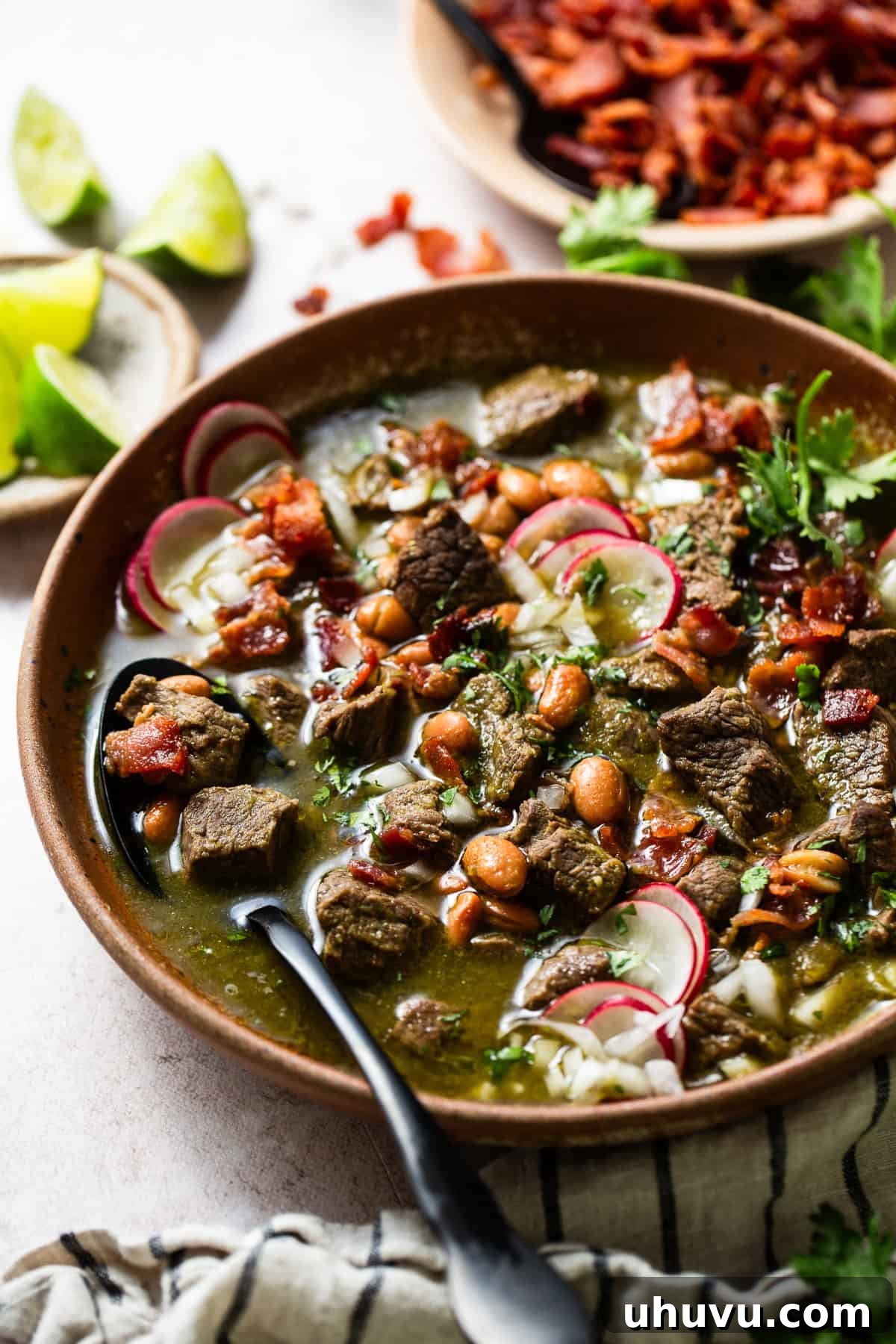
6. Garnish and Serve: Ladle the hot Carne en su Jugo into individual bowls. Garnish generously with the reserved crispy bacon bits, fresh diced white onions, and additional chopped cilantro. For an extra touch of authenticity and brightness, you can also add thinly sliced radishes and a squeeze of fresh lime juice just before serving. Enjoy this hearty and flavorful Mexican stew immediately, perhaps with warm tortillas on the side.
Expert Tips for a Perfect Carne en su Jugo
Mastering Carne en su Jugo is simple with these expert tips, ensuring a consistently delicious outcome every time:
- Customizing the Heat Level: The beauty of this stew is its adaptability to your spice preference. To make your Carne en su Jugo extra spicy, simply leave the seeds in the serrano peppers before blending the tomatillo sauce. For a milder version, you can reduce the number of serranos, or swap them out entirely for less potent jalapeño peppers. If you prefer a dish with no heat, green bell peppers can be used to add a similar vegetal note without any spice. Always taste and adjust as you go!
- Bacon Alternatives for Flavor: While bacon is traditionally key for its rendered fat and crispy bits, you do have alternatives. If you don’t have bacon or prefer a different flavor profile, consider using ham steaks cut into small cubes, crisped, and used in place of bacon for a similar savory depth. The bacon and its fat contribute significantly to the rich, smoky flavor of this dish. If omitting bacon altogether, you can use 3-4 tablespoons of olive oil or another neutral cooking oil to brown the beef. Keep in mind that this will alter the flavor profile slightly, making it less smoky but still delicious.
- Selecting the Ideal Steak Cut: The choice of beef significantly impacts the tenderness of your stew. We highly recommend using cuts like top sirloin, top round steak, or even skirt steak for their excellent flavor and ability to become wonderfully tender during the simmering process. While chuck roast can also work, be aware that it tends to be fattier and may result in a greasier final dish. Opting for leaner cuts ensures a robust flavor without excessive oiliness.
- Don’t Rush the Browning Process: Achieving a deep, dark brown crust on your beef is not just for appearance; it’s fundamental for flavor development. This process, known as the Maillard reaction, creates rich, complex savory notes that cannot be replicated. Ensure your pot is hot and don’t overcrowd the beef. Brown it in batches if necessary, allowing each piece enough space to caramelize properly. This patience will be amply rewarded in the final taste.
- Taste and Adjust Seasoning: Throughout the cooking process, especially after the sauce has simmered for a while, taste your stew and adjust the seasonings as needed. Different brands of canned beans or even fresh tomatillos can vary in their natural saltiness or acidity. Adding a pinch more salt, cumin, or even a squeeze of fresh lime juice at the end can brighten and balance the flavors to perfection.
- Make Ahead for Enhanced Flavor: Like many stews and braises, Carne en su Jugo often tastes even better the next day. The flavors have more time to meld and deepen, resulting in a richer, more cohesive dish. This makes it an excellent candidate for meal prep or for entertaining, as you can prepare it in advance and simply reheat before serving.
Delightful Serving Suggestions for Carne en su Jugo
Carne en su Jugo is a wonderfully hearty and satisfying meal on its own, but its flavors truly sing when thoughtfully paired with complementary sides and garnishes. Here are some delectable suggestions to complete your authentic Mexican feast:
- Essential Accompaniments: The rich, flavorful broth of Carne en su Jugo is perfect for dipping. Serve it alongside warm, homemade corn tortillas, soft and pliable flour tortillas, or crusty bolillo bread. These are perfect for soaking up every last drop of the savory “jugo.”
- Classic Mexican Rice: For a truly complete and traditional Mexican meal, pair your stew with a side of fluffy authentic Mexican rice. Its mild flavor and soft texture provide a perfect counterpoint to the bold flavors of the carne en su jugo.
- Elevate with Salsa Macha: Drizzle some salsa macha over your serving for an added layer of smoky depth, subtle heat, and a delightful crunch from the nuts and seeds. This chili oil-based salsa is a game-changer for enhancing the stew’s complexity.
- Freshness with Avocado: Slices of fresh, creamy avocado or a dollop of simple guacamole can add a cooling and rich element, balancing the tanginess of the tomatillo sauce and the heartiness of the beef.
- Cooling Crema or Sour Cream: A swirl of Mexican crema or a dollop of sour cream can provide a lovely creamy texture and temper the spice, adding another dimension to the dish.
- Simple Green Salad: For a lighter contrast, a crisp green salad dressed with a simple vinaigrette can cut through the richness of the stew, offering a refreshing palate cleanser.
- Beverage Pairings: Complement your meal with a refreshing agua fresca, such as horchata or jamaica, or a light, crisp Mexican lager to complete the authentic dining experience.
Storing and Reheating Your Carne en su Jugo
Carne en su Jugo is one of those wonderful dishes that often tastes even better the next day, as the flavors have more time to meld and deepen. Proper storage and reheating will ensure you can enjoy its comforting deliciousness for days to come.
To store: Once the Carne en su Jugo has cooled completely to room temperature, transfer it to an airtight container. Refrigerate promptly for up to 1 week. For longer storage, you can freeze it in freezer-safe containers for up to 3 months. Thaw frozen stew in the refrigerator overnight before reheating.
To reheat: For best results and to maintain its rich flavor, gently reheat the Carne en su Jugo in a medium pot over medium-high heat on the stovetop. Stir occasionally until it is warmed through to your desired temperature. If you’re short on time, individual servings can also be reheated in the microwave for a few minutes, stirring halfway through, until hot.
Explore More Authentic Mexican Recipes
If you’ve enjoyed the robust flavors of Carne en su Jugo, we encourage you to dive deeper into the rich and diverse world of Mexican cuisine with these other traditional recipes:
- Authentic Chile Colorado
- Slow Cooker Pork Carnitas Tacos
- Authentic Birria
- Carne con Papas (Beef and Potatoes)
- Chile Colorado
Carne en su Jugo Recipe
Ingredients
- 12 ounces bacon, chopped
- 2 ½ pounds beef strip steak (or top round steak, or top sirloin steak), sliced into bite-sized pieces
- 3 teaspoons kosher salt, divided
- 6 tomatillos, husked and rinsed
- 3 serrano peppers, stemmed and seeded (adjust for heat)
- 1 cup packed cilantro, chopped, divided, plus more for topping
- 3 cloves garlic
- ½ teaspoon ground cumin
- ½ teaspoon ground black pepper
- 3 cups water
- 2 (15-ounce) cans pinto beans, drained and rinsed
Toppings (optional)
- Chopped white onion
- Chopped cilantro
- Thinly sliced radishes
- Lime wedges
Instructions
-
Add the chopped bacon to a large pot or Dutch oven over medium heat and cook for about 10 minutes, until the fat has rendered and the bacon is crispy. Transfer the crispy bacon to a bowl and set aside, leaving the rendered fat in the pot.
-
Season the beef generously with 1 teaspoon of kosher salt. Add the seasoned meat to the same pot with the bacon fat and cook for about 10 minutes, browning it on all sides. You may need to do this in batches to avoid overcrowding.
-
While the meat is browning, prepare the tomatillo sauce. Add the husked and rinsed tomatillos, serrano peppers (stemmed and seeded), ½ cup of the chopped cilantro, garlic cloves, ground cumin, ground black pepper, water, and the remaining 2 teaspoons of kosher salt to a large blender. Blend until completely smooth.
-
Once the meat has browned, pour the tomatillo sauce into the pot. Stir to combine, bring the mixture to a boil, then reduce the heat to a gentle simmer. Cover the pot and cook for 30-35 minutes, or until the meat is soft and tender.
-
Stir in the drained and rinsed pinto beans and cook for an additional 2 minutes, just until they are warmed through.
-
Serve the Carne en su Jugo hot in bowls. Garnish each serving with crispy bacon, fresh diced onions, chopped cilantro, thinly sliced radishes, and a squeeze of fresh lime juice, if desired.
Notes
Nutrition Facts
Serving: 1serving | Calories: 620kcal | Carbohydrates: 25g | Protein: 58g | Fat: 31g | Saturated Fat: 10g | Polyunsaturated Fat: 4g | Monounsaturated Fat: 13g | Trans Fat: 0.1g | Cholesterol: 153mg | Sodium: 2034mg | Potassium: 1311mg | Fiber: 7g | Sugar: 3g | Vitamin A: 271IU | Vitamin C: 8mg | Calcium: 127mg | Iron: 6mg
Nutrition information is automatically calculated and should only be used as an approximation.
Photography by Ashley McLaughlin.