
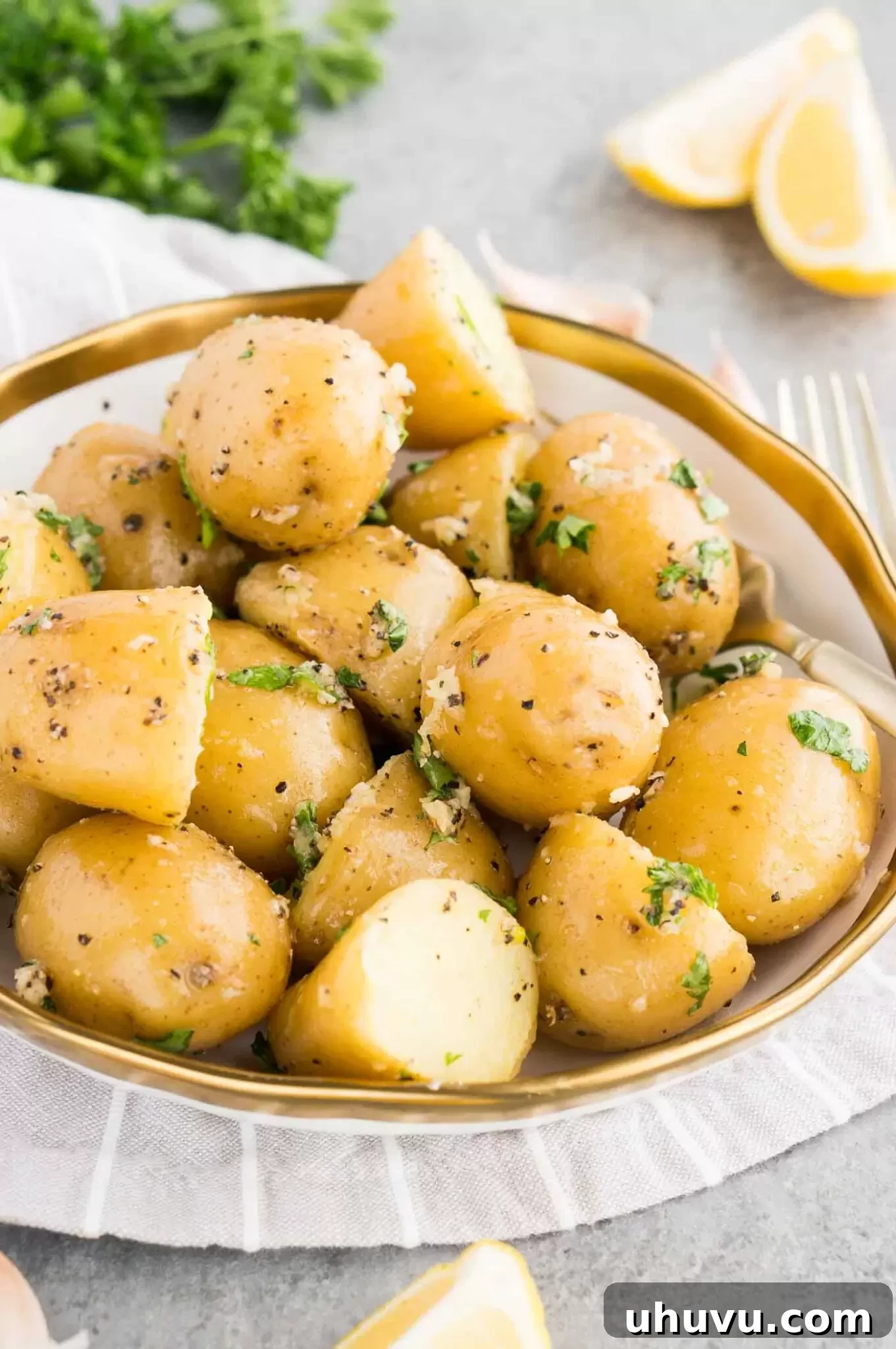
Discover the simple secret to boiling potatoes perfectly, transforming an ordinary vegetable into an extraordinary, effortlessly delicious side dish. Whether you’re aiming for a comforting weeknight meal or an elegant holiday feast, these perfectly seasoned, tender potatoes will elevate any plate with minimal prep.
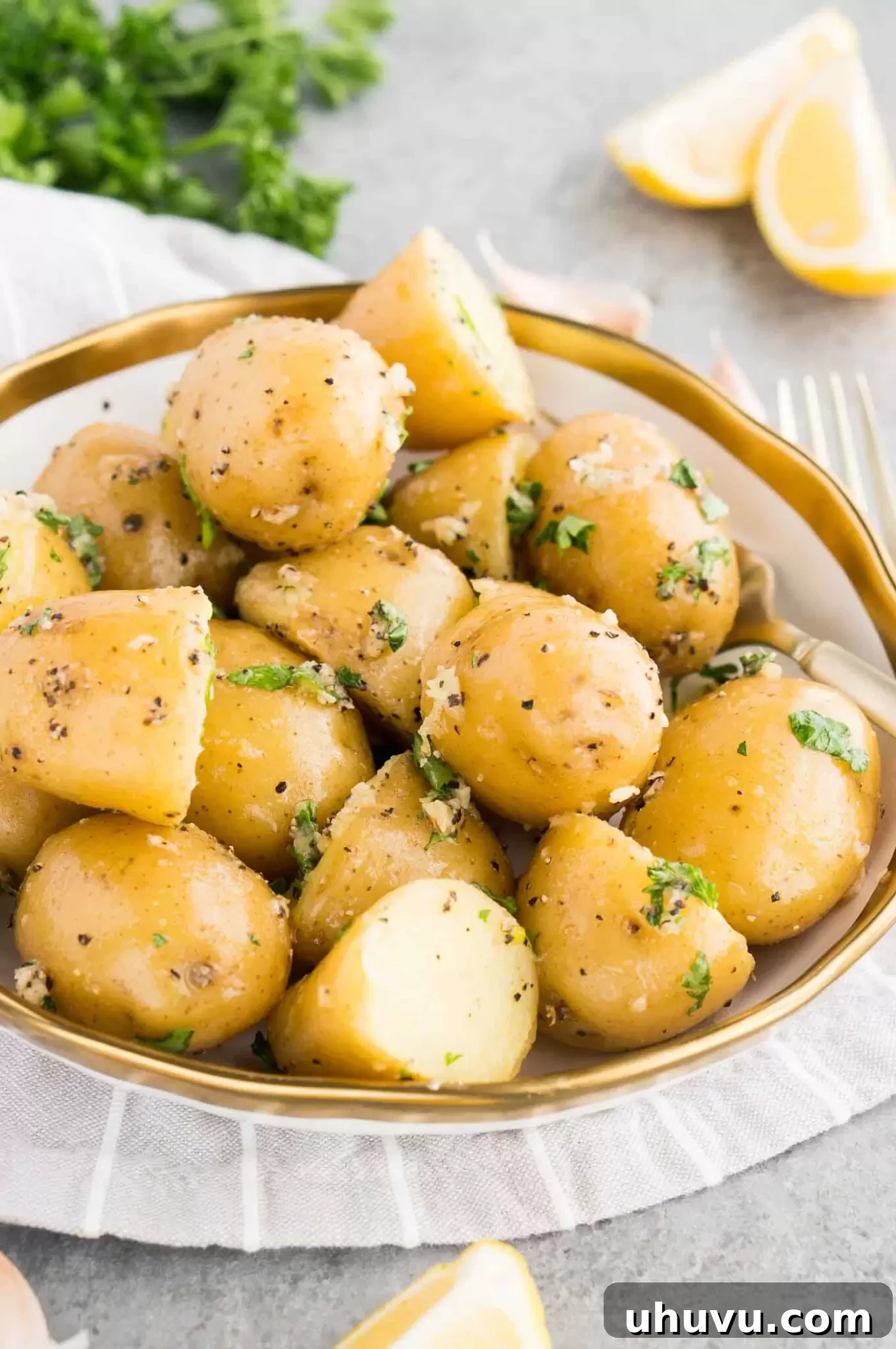
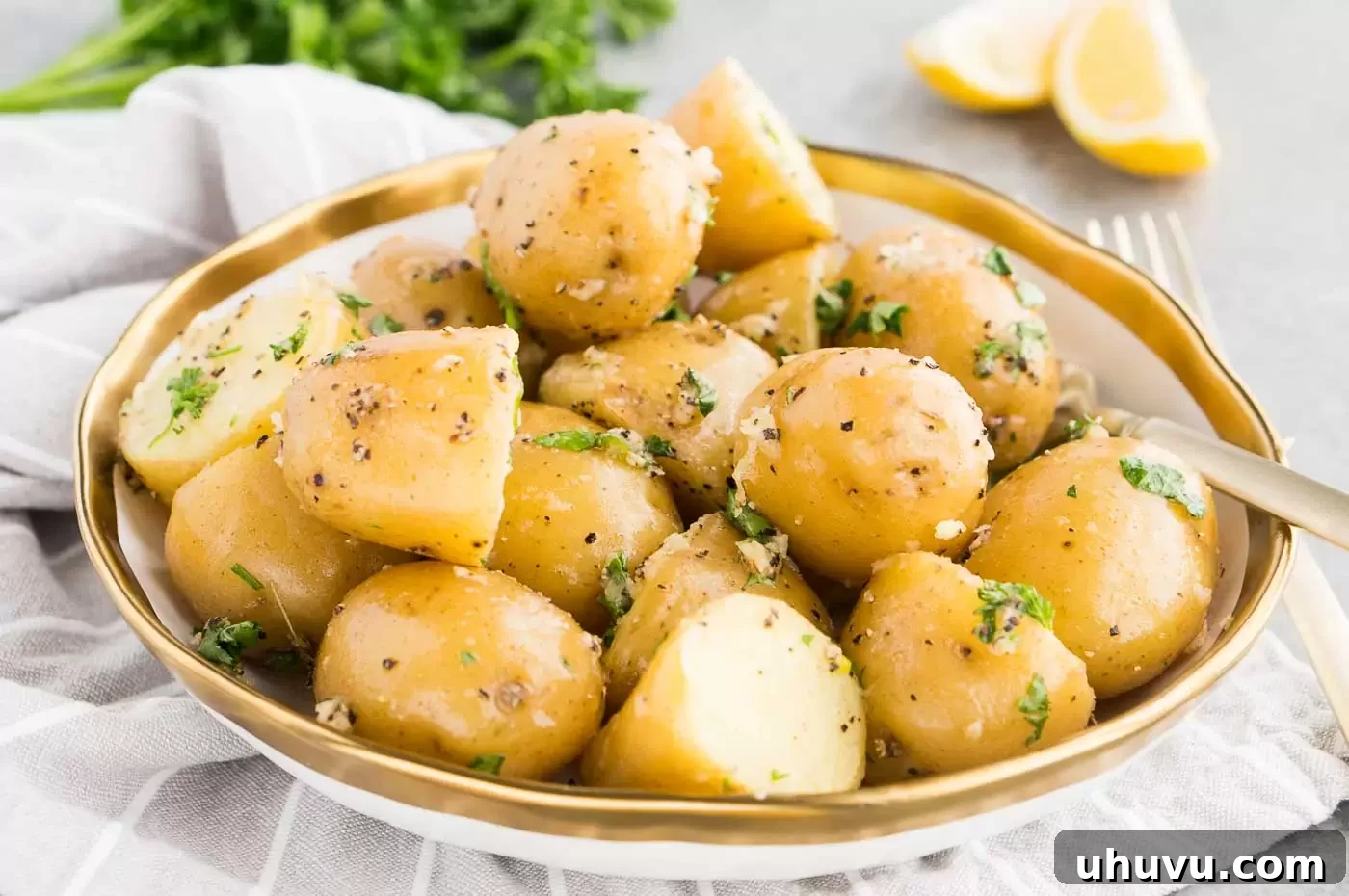
Simple buttered boiled potatoes have always been my ultimate go-to side dish. Their humble nature belies their incredible versatility and comforting appeal. Whether it’s to complement a quick and easy weeknight dinner or to enrich a grand celebration meal, a plate of well-prepared boiled potatoes is always a welcome addition. This classic preparation is the foundation for countless recipes and a testament to the power of simple ingredients cooked just right.
This comprehensive guide will teach you exactly how to boil potatoes perfectly every single time, ensuring a restaurant-quality side dish that’s both tender and bursting with flavor. We’ll cover everything from selecting the right potato variety to the ideal cooking techniques and essential seasoning tips, providing you with all the knowledge needed for consistently delicious results.
For more delicious potato inspiration, don’t miss my recipes for Garlic Roasted Potatoes and Baked Potato Wedges!
Why You’ll Love This Perfect Boiled Potato Recipe
Beyond being incredibly simple, here’s why this recipe will become a cherished staple in your kitchen:
- Effortless Preparation: Say goodbye to complicated cooking methods and lengthy ingredient lists. These boiled potatoes require minimal hands-on time, making them a stress-free addition to any meal, even on the busiest days. It’s a foundational cooking skill that yields impressive results.
- Kitchen Staple Ingredients: You won’t need a special trip to the grocery store for exotic components. Besides potatoes, you’ll only need a few basic pantry items that are likely already on hand: butter (or olive oil), garlic, salt, and pepper. This emphasis on simplicity makes this recipe accessible to everyone.
- Remarkably Versatile: Boiled potatoes are incredibly adaptable and act as a perfect canvas for various flavors. Seasoned with fresh herbs and butter, they make a fantastic accompaniment for almost any main course – from roast chicken, steak, or grilled fish to a hearty vegetarian stew. They’re perfect for grand holiday meals like Christmas, Thanksgiving, and Easter, yet equally ideal for a simple Wednesday night dinner. You can serve them simply as they are, or with a luxurious dollop of sour cream, a sprinkle of fresh chives, or even transform them into a vibrant potato salad.
- Healthy & Wholesome: Potatoes are a naturally gluten-free vegetable, packed with essential vitamins and minerals. They are a good source of Vitamin C, Vitamin B6, potassium, and fiber (especially with the skin on). Boiling them is one of the healthiest cooking methods, as it helps preserve many of their beneficial nutrients without adding excess fats.
- Budget-Friendly: Potatoes are one of the most economical and accessible vegetables available, offering superb value. This recipe allows you to create satisfying and delicious meals without breaking the bank, making it a smart choice for everyday cooking.
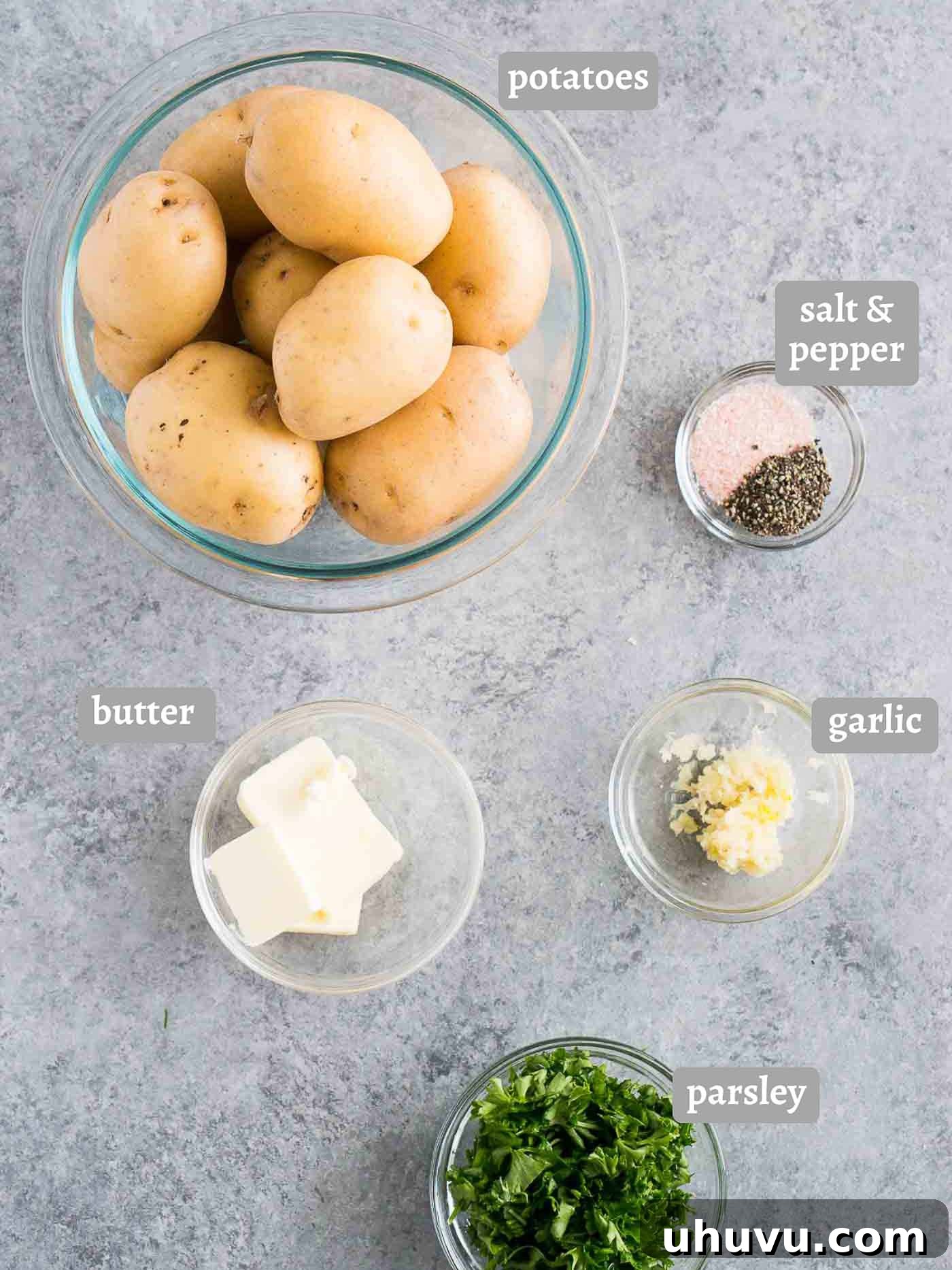
Essential Ingredients for Perfect Boiled Potatoes
Crafting perfect boiled potatoes requires just a handful of quality ingredients. Selecting the right components is key to achieving that tender texture and rich flavor.
- Potatoes: The star of the show! For boiling, I highly recommend using waxy or medium-starch varieties. These types of potatoes hold their shape better during cooking, preventing them from falling apart, and they develop a delightful creamy texture when cooked through. Excellent choices include baby gold potatoes, Dutch potatoes, fingerling potatoes, Yukon Golds, or any yellow-fleshed potato. While russet potatoes can be boiled, their high starch content means they tend to become very mealy and might fall apart easily, making them generally better suited for mashing rather than serving as a distinct side dish. Choose firm, blemish-free potatoes for the best results.
- Butter: A generous touch of good quality salted butter is transformative. It coats the tender potatoes, infusing them with a rich, velvety flavor that elevates them from merely “okay” to truly amazing. The fat helps carry the other flavors and adds a luxurious mouthfeel. If you prefer a dairy-free option or a lighter touch, a good quality extra virgin olive oil makes an excellent substitute, adding a subtle fruity depth and healthy fats.
- Garlic: Freshly minced garlic introduces a fragrant, savory layer to every bite. It’s a simple addition that makes a significant difference, adding a gourmet touch without any extra effort. The warmth of the freshly drained potatoes gently cooks the garlic, releasing its aromatic oils.
- Salt and Pepper: These fundamental seasonings are crucial for bringing out the natural deliciousness of the potatoes. Generous salting of the boiling water is vital for seasoning the potatoes from the inside out. Without enough salt in the water, your potatoes will taste bland regardless of how much you add at the end. A final seasoning with additional salt and freshly ground black pepper after draining and buttering enhances their natural flavors and perfectly complements the butter and garlic.
- Optional Fresh Parsley: A sprinkle of finely chopped fresh parsley just before serving adds a vibrant color, a refreshing herbaceous note, and a burst of fresh flavor that brightens the entire dish, providing a lovely contrast to the richness of the butter and garlic.
Mastering the Art: How to Boil Potatoes Step-by-Step
Achieving perfectly boiled potatoes is a straightforward process once you understand the key steps. Follow this detailed guide for consistently tender, flavorful, and delicious results every time:
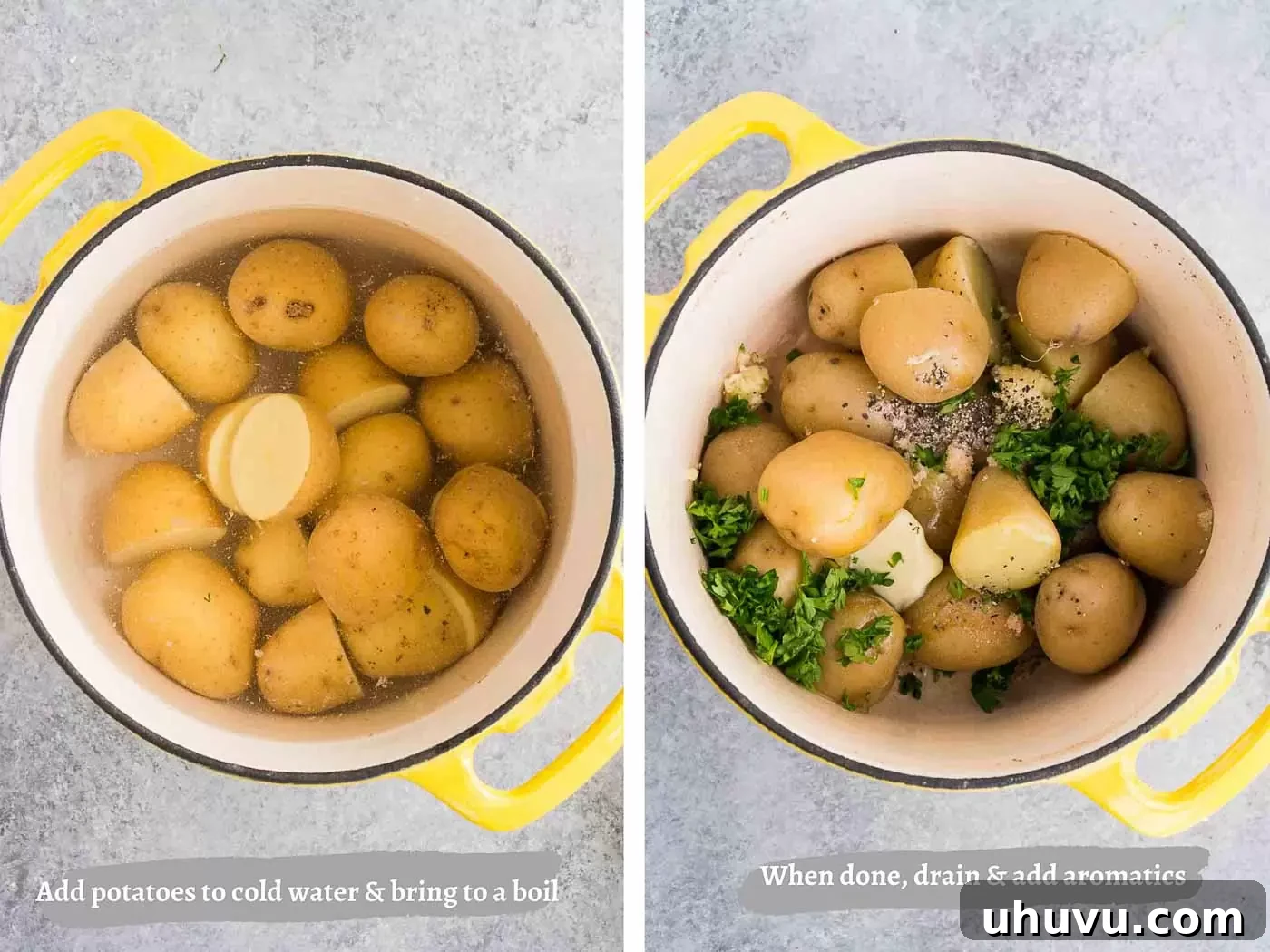
- Step 1: Prepare the Potatoes and Set Up Your Cold Water Bath. Begin by thoroughly washing your chosen potatoes under cold running water to remove any dirt or debris. If you prefer a smoother texture or are using potatoes with thick skins (like larger russets), you can peel them. However, for thin-skinned varieties such as baby gold, Yukon Gold, or red potatoes, leaving the skin on adds nutrients and rustic appeal – just ensure they are well scrubbed. For larger potatoes, it’s crucial to cut them into uniform 1 to 1.5-inch pieces. This step is essential for ensuring all potato pieces cook evenly at the same rate, preventing some from becoming overcooked and mushy while others remain hard. Place the prepared potato pieces into a medium-sized pot or a large saucepan. Crucially, cover them generously with cold water; the water level should be about an inch above the potatoes. Starting with cold water allows the potatoes to heat up gradually along with the water, promoting even cooking from the core to the surface.
- Step 2: Generously Season the Water and Simmer to Tender Perfection. Once the potatoes are submerged in cold water, add at least one teaspoon of salt. This is a vital step for flavoring the potatoes from the inside out as they absorb the salted water during cooking. Without enough salt at this stage, your potatoes will taste bland. Place the pot on the stove over high heat and bring the water to a rolling boil. As soon as the water reaches a vigorous boil, reduce the heat slightly to maintain a steady, gentle simmer. Continue to cook, uncovered, until the potatoes are perfectly fork-tender. This typically takes approximately 15 to 20 minutes, though the exact timing will depend on the size and type of potatoes you are using. To check for doneness, carefully pierce a potato piece with a fork or the tip of a sharp knife; it should slide in easily without any resistance. Be mindful not to over-boil the potatoes to the point where they are falling apart, as this can result in mushy, waterlogged, and unappetizing results.
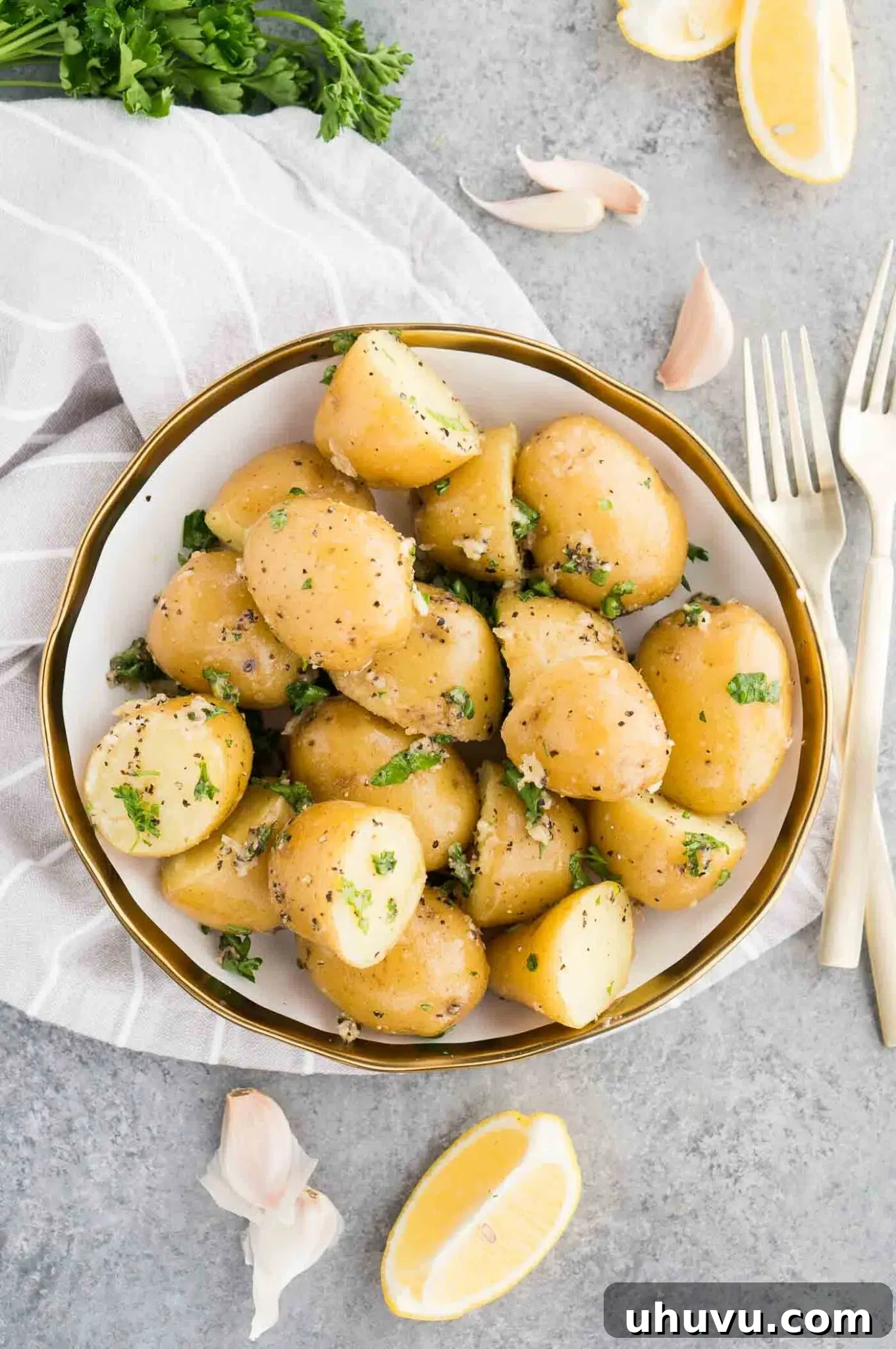
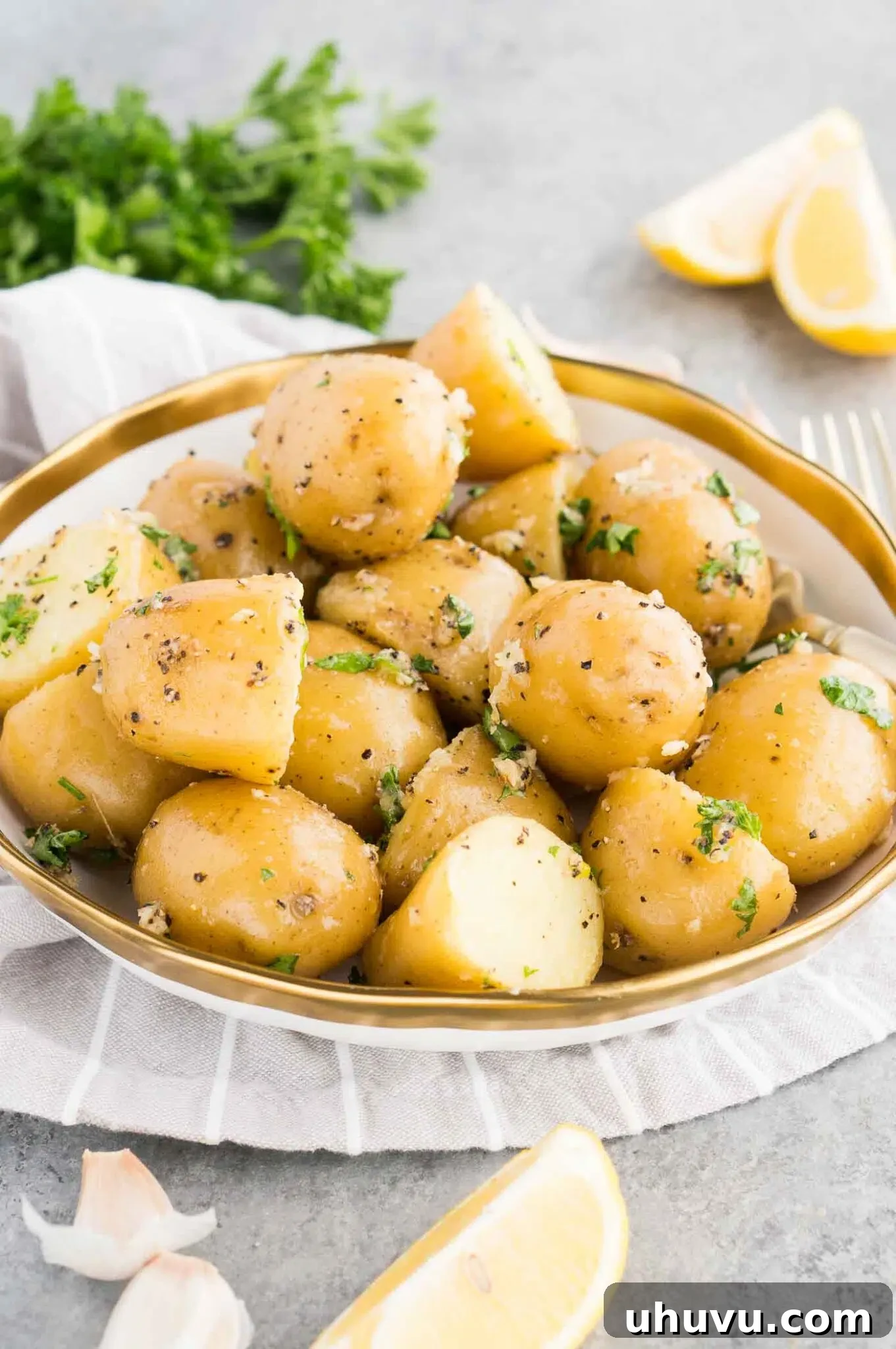
- Step 3: Drain, Finish with Flavor, and Serve Immediately. Once the potatoes have reached perfect tenderness, carefully drain them thoroughly using a colander. Allow them to sit in the colander for a minute or two to let any excess steam evaporate. This critical step helps prevent the potatoes from becoming watery and ensures that your butter and seasonings adhere better. Return the drained, hot potatoes to the empty pot (off the heat). Add the butter (or olive oil), minced fresh garlic, a pinch more salt (to taste), and freshly ground black pepper. Gently toss the potatoes with a spoon or by shaking the pot carefully until they are beautifully and evenly coated with the melted butter and aromatic seasonings. The residual heat from the potatoes will perfectly melt the butter and gently warm the garlic, releasing its full flavor. Serve these glorious, flavorful potatoes immediately as a delightful side dish. For an added pop of vibrant color and freshness, garnish with a sprinkle of finely chopped fresh parsley if desired.
TIPS FROM NELI’S KITCHEN
Recipe Notes and Expert Tips for Best Results
Follow these expert insights and common troubleshooting tips to guarantee perfectly cooked, flavorful potatoes every time:
- Always Start in Cold Water: This is perhaps the most crucial tip for even cooking. Placing potatoes directly into boiling water causes the outside to cook much faster than the inside, leading to unevenly cooked potatoes – mushy on the exterior and hard in the center. Starting them in cold water allows the potatoes to heat up gradually and cook through uniformly.
- Salt Your Water Generously: Just like pasta, potatoes absorb salt as they cook, which is the only way to truly season them from the inside out. Don’t be shy with the salt; using a good tablespoon of salt per gallon of water (or until it tastes slightly salty, like seawater) is a good starting point. This initial seasoning will significantly impact the final flavor profile.
- Cut Potatoes for Uniformity: Unless you are boiling very small, uniform potatoes (like fingerlings or baby potatoes), it’s always best to cut larger potatoes into roughly equal-sized pieces (ideally 1 to 1.5 inches). This ensures that all pieces cook at the same rate, preventing some from being overcooked while others are still underdone. Consistency is key for a perfect batch.
- Simmer, Don’t Rapid Boil: While a rapid, aggressive boil might seem quicker, it can be too harsh, causing the potatoes to break apart or become mealy and waterlogged on the outside before they’re fully cooked internally. A gentle, steady simmer ensures even, thorough cooking and helps maintain the potato’s structure and desirable texture.
- Don’t Overcrowd the Pot: Give your potatoes ample room to move and cook evenly. If you’re boiling a large batch, it’s better to use two pots or cook in smaller batches. Overcrowding can significantly lower the water temperature, leading to prolonged cooking times and uneven results.
- Drain Thoroughly: After cooking, drain the potatoes well using a colander. For an extra step to prevent sogginess, you can even return them to the empty, hot pot over very low heat for a minute or two to allow any remaining surface moisture to evaporate. This step is critical to prevent watery potatoes and ensures that butter and seasonings adhere better, creating a more flavorful coating.
- Finish with Flavor Promptly: Once drained, quickly add your butter, garlic, and other desired seasonings. The residual heat of the potatoes will efficiently melt the butter and help the flavors meld beautifully into the warm, porous potato flesh. Toss gently to coat every piece evenly.
Optimal Boiling Time for Different Potato Varieties
The cooking time for potatoes is not a one-size-fits-all metric. It varies significantly based on the potato type, its size, and whether they are peeled or left with their skin. Generally, you should expect your potatoes to be perfectly fork-tender around 15 to 20 minutes after the water reaches a rolling boil. The ultimate goal is a texture that is tender throughout but still holds its shape, rather than crumbling apart.
Here’s a breakdown of common potato types and their approximate boiling times, which can help you plan your cooking:
- Russet Potatoes (Starchy): When cut into uniform cubes (1 to 1.5 inches), these high-starch potatoes typically need about 10-15 minutes to become fork-tender. Russets absorb more water and can become very soft and crumbly, making them exceedingly ideal for light and fluffy mashed potatoes, but less so if you desire them to hold their shape as a distinct side dish.
- Yukon Gold Potatoes (Medium-Starch/Waxy): Beloved for their creamy texture and naturally buttery flavor, Yukon Golds are a remarkably versatile choice for boiling.
- For exquisitely creamy mashed potatoes, boil cut pieces for approximately 15-20 minutes until they are very soft and easily mashable.
- For a classic potato salad, aim for a slightly shorter cooking time of 10-15 minutes to ensure they are cooked through but still firm enough to maintain their structural integrity when tossed with dressing.
- Small Golden Potatoes (Waxy): Similar in characteristics to Yukon Golds but often smaller, these waxy varieties require about 15 minutes of boiling once the water is bubbling. Their thin skins are commonly left on, adding a delightful texture and additional nutrients.
- Red Potatoes (Waxy): Red potatoes are distinctly waxy and tend to hold their shape exceptionally well during cooking, making them a superb choice for boiling whole or cut. Expect them to take around 20 minutes to reach fork-tender perfection.
- Fingerling Potatoes (Waxy): These slender, elongated potatoes are also waxy and generally cook relatively quickly due to their smaller diameter. If boiling whole, they might take 15-20 minutes, similar to small golden or red potatoes, depending on their thickness.
- Sweet Potatoes: If you’re boiling sweet potatoes to prepare a vibrant sweet potato mash or a comforting sweet potato casserole, you will need to boil the cubed potatoes until they are soft when easily pierced with a fork, which usually takes about 15-20 minutes. Cutting them into uniform 1-inch slices can help reduce the cooking time slightly and ensure even cooking.
- Parboiling for Skillet or Roasted Potatoes: For dishes like skillet potatoes, frittatas, or certain roasted potato recipes where you intend to finish cooking them using another method, you might only need to parboil them. This involves partially boiling the potatoes until they are just tender enough to be pierced but still quite firm. This typically takes only about 5-10 minutes, making them ready for their final cooking stage without becoming overcooked.
As a general rule, remember that the waxier the potato variety and the larger the individual pieces, the longer they will generally take to cook through. Always conduct a fork test to ensure ideal doneness for your desired outcome.
Frequently Asked Questions About Boiling Potatoes
Absolutely! Boiled potatoes are excellent for meal prepping. Cook them according to the recipe, allow them to cool completely, and then store them in an airtight container in the refrigerator for up to 3-4 days. When ready to serve, you can easily reheat them. For the best texture, reheat in a preheated oven at 300°F (150°C) for about 10-15 minutes, or until warmed through. Alternatively, a quick sauté in a pan with a little butter can also warm them up nicely. Cold boiled potatoes are also a fantastic base for making a delicious classic potato salad, where their firm texture is an asset.
Peeling potatoes before boiling is entirely a matter of personal preference and the type of potato you are using. If you are using larger potatoes with thick, rough skins (like Russets) or if you simply prefer a smoother, more uniform texture, then peeling them is recommended. However, for smaller, thinner-skinned varieties such as baby gold, Yukon Gold, or red potatoes, the skins can definitely be left on. If keeping the skins, simply give them a thorough scrub under cold running water with a vegetable brush to remove any dirt or blemishes. The skins add a lovely rustic texture, extra fiber, and some additional nutrients, making them a healthy and flavorful choice.
While you technically can freeze boiled potatoes, their texture tends to change significantly upon thawing. They can become somewhat mushy, watery, or grainy due to the cell structure breaking down. Therefore, freezing is generally not recommended for plain boiled potatoes meant to be served as a side dish where texture is paramount. However, if you plan to use them in a casserole, soup, or as a base for mashed potatoes (where the texture will be altered anyway), you can freeze them for up to 2-3 months in an airtight freezer-safe bag or container.
A medium to large heavy-bottomed pot or saucepan is ideal for boiling potatoes. The heavy bottom helps distribute heat evenly, preventing scorching and ensuring consistent cooking. It’s important to choose a pot that is large enough to comfortably hold your potatoes and enough water to cover them by at least an inch or two, without the risk of boiling over once the water comes to a simmer.
Beyond butter and garlic, there are many delightful ways to enhance the flavor of your boiled potatoes:
- Fresh Herbs: Mix finely chopped fresh herbs like dill, chives, parsley, rosemary, or thyme into your melted butter (or olive oil) before tossing with the hot potatoes.
- Spices: A pinch of paprika, onion powder, a dash of smoked paprika, or a hint of cayenne pepper can add depth and warmth.
- Aromatics: Add a bay leaf, a few whole garlic cloves, or a quartered onion directly to the boiling water for a subtle infusion of flavor.
- Broth: For an even richer flavor profile, substitute some or all of the plain water with vegetable or chicken broth when boiling.
- Cheese: A sprinkle of grated Parmesan cheese, a creamy goat cheese, or crumbled feta after draining and buttering can create an irresistible savory kick.
- Citrus Zest: A little lemon or orange zest can add a bright, fresh note.
Beyond the Boil: Creative Serving Ideas & Variations
While simple buttered boiled potatoes are undeniably divine, their inherent versatility allows for endless culinary creativity. Once you’ve mastered the perfect boil, you can transform them into a myriad of delicious dishes and customized sides:
- Herbed Butter Potatoes: Elevate the classic by mixing finely chopped fresh herbs like dill, chives, fresh rosemary, or thyme into your melted butter before tossing with the hot potatoes. A squeeze of lemon juice can also add brightness.
- Garlic Parmesan Potatoes: After draining and buttering, generously sprinkle with freshly grated Parmesan cheese and a little extra garlic powder for an irresistible savory, cheesy kick that pairs wonderfully with Italian or chicken dishes.
- Creamy Dill Potatoes: For a tangy and fresh side, toss the warm boiled potatoes with a combination of sour cream or Greek yogurt, abundant fresh dill, a touch of lemon zest, and a squeeze of fresh lemon juice. This is particularly good with fish or chicken.
- Loaded Boiled Potatoes: Turn your simple side into a hearty dish. Serve the buttered potatoes with classic baked potato toppings: crumbled crispy bacon, shredded sharp cheddar cheese, sliced green onions, and a dollop of sour cream.
- Warm Potato Salad: For a delightful twist on traditional cold potato salad, dress warm boiled potatoes with a robust vinaigrette-based dressing, whole grain Dijon mustard, thinly sliced red onion, and plenty of fresh herbs like parsley and chives. The warm potatoes absorb the dressing beautifully.
- Smashed Potatoes: Gently smash the tender boiled potatoes with a fork or potato masher until flattened but still chunky. Then, pan-fry them in olive oil or roast them in the oven until they develop wonderfully crispy edges and a fluffy interior. Season generously with salt and pepper.
- Spicy Chipotle Lime Potatoes: Toss with a blend of melted butter, a pinch of chipotle powder, fresh lime juice, and chopped cilantro for a vibrant, zesty, and slightly spicy flavor profile.
More Essential Kitchen Tutorials
If you found this comprehensive guide to perfect boiled potatoes helpful, be sure to explore our other detailed kitchen tutorials and culinary guides to sharpen your cooking skills and expand your repertoire. Mastering these basic techniques will make you a more confident and versatile home cook:
- How To Make Perfect Hard Boiled Eggs
- How To Make Candied Pecans
- How To Cook Lentils
- How To Poach an Egg
- How To Chop an Onion Like a Pro
If you enjoyed this recipe for boiling potatoes or any other recipe on my blog, please take a moment to leave a ⭐ star rating and share your thoughts in the 📝 comments below. Your feedback is greatly appreciated and helps other home cooks discover delicious recipes! Thanks for visiting Delicious Meets Healthy!
Pin this now to find it later
Pin It
☝ Tap stars to rate (functionality removed per instructions)
How To Boil Potatoes
Pin
Save This Recipe
Enter your email and we’ll send the recipe directly to you!
By submitting this form, you consent to receive emails from Delicious Meets Healthy.
Ingredients
- 1.5 lb baby Dutch yellow potatoes, chopped or use mini/fingerling
- 2 tablespoons butter, cut into slices
- 2-3 cloves garlic, finely minced
- 1 teaspoon salt, plus more for boiling the potatoes
- ¼ teaspoon ground black pepper
- Chopped fresh parsley
Instructions
-
Place potatoes in a medium pot and cover with cold water (about an inch above potatoes). Season generously with 1 teaspoon of salt.
-
Bring to a boil over high heat, then reduce heat slightly and simmer gently until potatoes are fork tender, about 15-20 minutes (total time will depend on size and type of potatoes).
-
Drain potatoes thoroughly using a colander and return to the empty pot. Add butter, minced garlic, salt, and pepper. Toss gently until the potatoes are beautifully coated with butter and seasonings. Serve immediately, with chopped fresh parsley if desired.
Notes
- Cold Water Start: Always start potatoes in cold water and then bring them to a boil, rather than placing them directly into boiling water. This ensures even cooking from the center outwards.
- Generous Salting: Salt your water well. This is crucial for adding flavor right from the beginning of cooking, as potatoes absorb salt as they boil.
- Gentle Simmer: Simmer the potatoes rather than boiling them rapidly. While rapid boiling might cook them quicker, it risks the exterior becoming mushy or falling apart while the center remains undercooked. A gentle simmer ensures even, tender results.
- Potato Choice: You can use a variety of waxy or medium-starch potatoes such as baby gold potatoes, Dutch potatoes, fingerling potatoes, Yukon Golds, or any yellow potatoes. These types hold their shape well and offer a creamy texture suitable for boiling.
- Uniform Cutting: For even cooking, cut larger potatoes into roughly 1 to 1.5-inch pieces of similar size.
- Thorough Draining: After cooking, drain the potatoes completely. You can even return them to the hot, empty pot for a minute to allow excess steam to escape, preventing sogginess.
Nutrition
Nutrition Disclaimer: Nutritional values are estimates and may vary with ingredients, brands, and portion sizes. For accuracy, use your preferred nutrition calculator.
Like this recipe? Rate and comment below!