
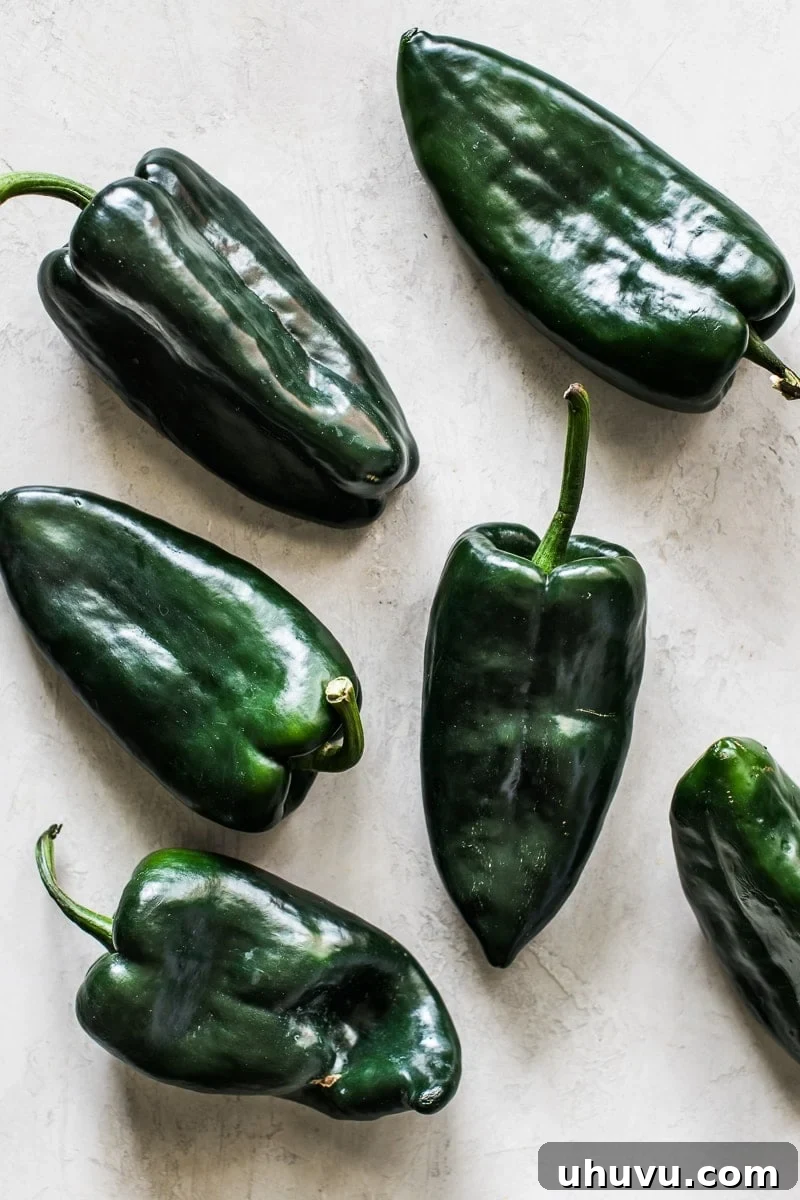
In the vibrant world of culinary ingredients, few peppers hold as esteemed a place as the Poblano pepper. Renowned for its mild heat and rich, earthy flavor, the poblano is an indispensable staple in traditional Mexican cooking and a favorite in kitchens worldwide. Unlike many of its spicier cousins, the poblano offers a nuanced flavor profile that enhances dishes without overwhelming the palate, making it incredibly versatile and appealing to a wide range of tastes. If you’re looking to add depth, a gentle warmth, and authentic Mexican flair to your meals, understanding and utilizing the humble poblano is an excellent place to start. Its distinctive taste, particularly when roasted, transforms ordinary recipes into extraordinary culinary experiences.
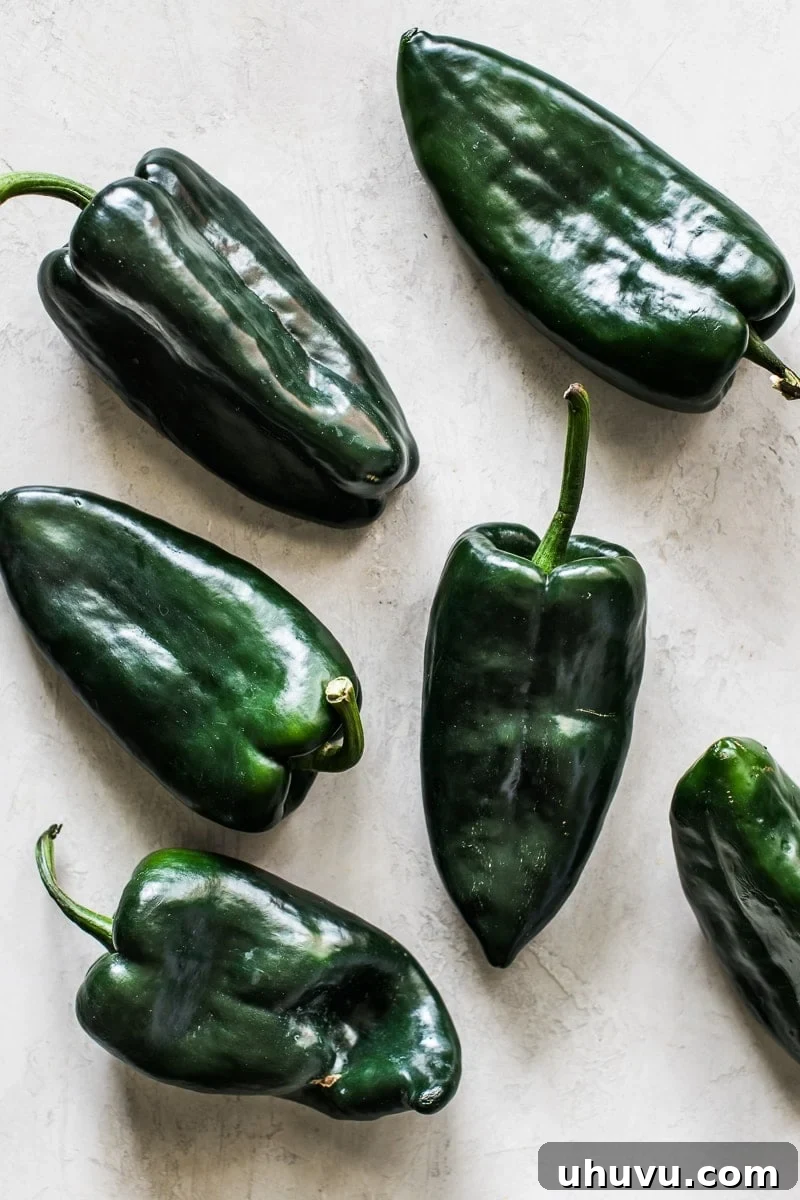
What Exactly is a Poblano Pepper?
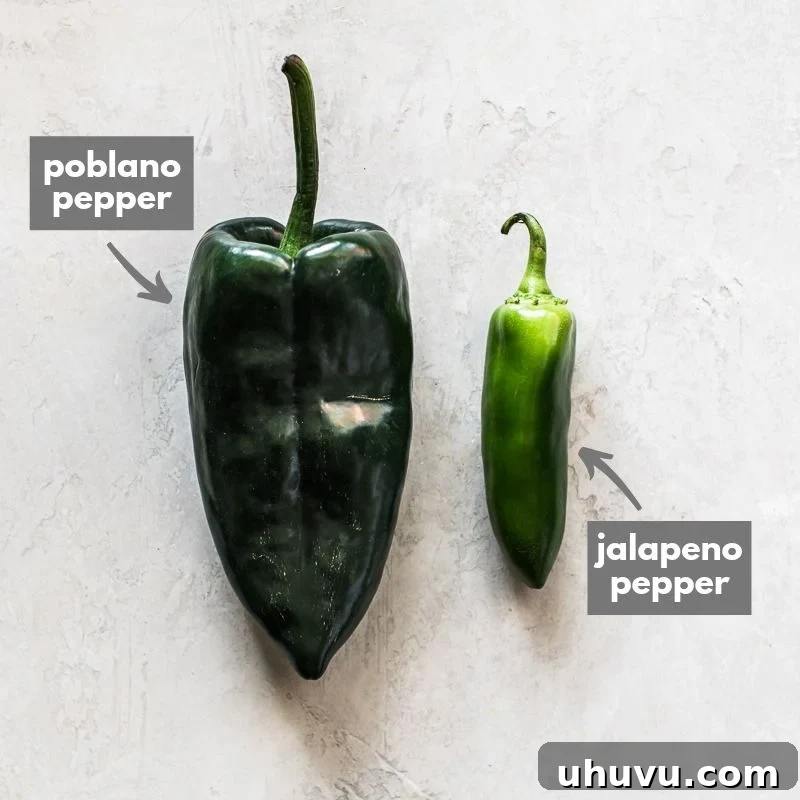
The poblano pepper (pronounced poh-BLAH-noh) is a variety of chili pepper originating from the state of Puebla, Mexico. This deep green, heart-shaped pepper is celebrated for its distinctive mildness and rich flavor, making it a cornerstone in both authentic Mexican and Tex-Mex cuisines. Typically, a fresh poblano measures about four inches long and two inches wide, tapering from a broad stem to a more pointed end. Its relatively thick flesh and dark green skin are characteristic features when fresh, gradually deepening in color as it ripens.
What sets poblanos apart is their incredible versatility. They are not merely an ingredient but a canvas upon which many traditional dishes are built. Their subtle earthiness, often described as having notes of cocoa or coffee, becomes even more pronounced and complex when cooked, especially through roasting. This process not only softens the pepper but also concentrates its flavors, bringing out a gentle sweetness and a smoky aroma that is truly unique.
Beyond its fresh form, the poblano undergoes a fascinating transformation. When allowed to fully ripen on the vine, its color shifts from dark green to a deep red. These ripe peppers are then harvested and dried, resulting in what are known as ancho chiles. Ancho chiles are one of the most widely used dried chiles in Mexican cooking, famous for their rich, fruity, and slightly smoky flavor with very little heat. They are a fundamental ingredient in mole sauces, adobos, and various stews, offering a sweet and complex dimension that is distinct from the fresh poblano.
Both fresh poblanos and their dried ancho counterparts are readily available in grocery stores across the United States and beyond. Fresh poblanos can typically be found in the produce section alongside bell peppers and other fresh chiles. Dried ancho chiles, on the other hand, are usually located in the specialty Hispanic foods aisle or with other dried spices, often available whole or as a finely ground powder. This widespread availability ensures that home cooks can easily access these flavorful peppers to elevate their culinary creations.
Understanding the Poblano Pepper’s Heat Level
For those mindful of spice, the poblano pepper offers a comforting level of mildness. It ranks quite low on the Scoville Heat Scale, typically ranging between 1,000 and 2,000 Scoville Heat Units (SHU). To put this into perspective, a poblano is significantly milder than a common jalapeño pepper, which can range from 2,500 to 8,000 SHU. While it possesses more heat than a sweet bell pepper or a banana pepper, it rarely delivers an intense burn, making it an ideal choice for those who appreciate flavor over fiery heat.
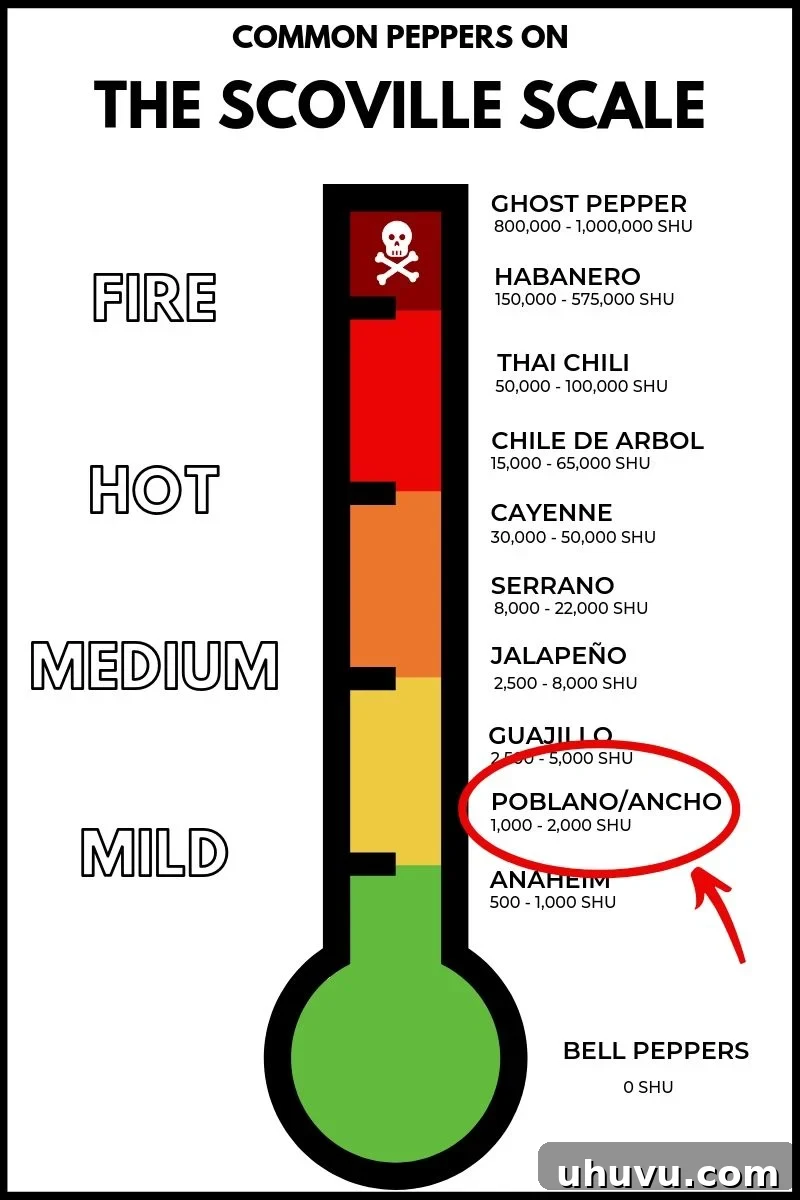
The mild nature of the poblano is one of its greatest assets. It allows for broad culinary application, serving as an excellent entry point for individuals and families exploring Mexican flavors without the intimidation of excessive spice. This “family-friendly” heat level means you can enjoy the distinctive taste of chili peppers without needing a glass of milk on standby. Factors such as growing conditions, ripeness, and even individual peppers can cause slight variations in heat, but generally, poblanos remain consistently mild.
For those who prefer even less heat, the majority of a pepper’s capsaicin (the compound responsible for spiciness) is concentrated in the seeds and the white internal membranes. By carefully removing these components before cooking, you can further temper any residual heat, allowing the pepper’s rich, earthy flavors to shine through unimpeded.
Unleashing the Flavor: How to Cook with Poblanos
Poblano peppers are remarkably versatile, offering a gentle warmth and deep flavor that can elevate a multitude of dishes. While they can technically be eaten raw, their full potential is unlocked through cooking. The raw pepper has a somewhat fibrous and sometimes tough outer skin that can be difficult to chew. Cooking, particularly roasting, not only tenderizes the skin but also intensifies the pepper’s inherent sweetness and characteristic smoky notes, making it more palatable and flavorful.
Beyond their incredible taste, poblanos also offer nutritional benefits. They are a good source of vitamins A and C, antioxidants, and dietary fiber, contributing to a healthy diet. Incorporating them into your meals is not just a treat for the taste buds but also a boost for your well-being.
One of the most common and rewarding ways to prepare poblanos is by roasting them. This method brings out their unique fruity undertones and renders the skin easy to remove, which is often desirable for a smoother texture in sauces or fillings. Roasted poblanos can be diced, sliced, or used whole in a wide array of recipes, from creamy soups to hearty stews and vibrant salsas. They lend a sophisticated, earthy aroma to dishes that is both comforting and exotic.
When selecting fresh poblanos, look for peppers that are firm, glossy, and free of blemishes or soft spots. Their dark green color should be vibrant and consistent. Once home, fresh poblanos can be stored in the refrigerator’s crisper drawer for up to a week. Cooked or roasted poblanos, especially after being peeled and deseeded, can be stored in an airtight container in the fridge for 3-4 days, or frozen for several months, making them excellent for meal prep.
The Art of Roasting Poblano Peppers
Roasting poblanos is a fundamental technique in Mexican cuisine that unlocks their full flavor potential and makes their skins easy to peel. The charring process brings out a deep, smoky sweetness and tenderizes the pepper, making it perfect for fillings, sauces, or simply as a flavorful addition to various dishes. There are several effective methods for roasting poblanos, each producing deliciously charred results.
- Gas Stove Top: This is a quick and direct method. Place the peppers directly over the open flame of a gas burner, turning them frequently with tongs until the skin is evenly blackened and blistered on all sides. The direct heat offers rapid charring.
- Broiler (Oven): Preheat your oven’s broiler to high. Place the whole poblanos on a baking sheet and position them about 4-6 inches from the heat source. Broil for 5-8 minutes per side, rotating with tongs, until the skins are thoroughly blackened and blistered. Keep a close eye on them to prevent burning.
- Hot Skillet or Comal: Heat a heavy-bottomed skillet or cast-iron comal over high heat until very hot. Place the poblanos directly on the dry pan, turning them every few minutes. The high heat will char the skin, giving them a rich flavor. This method might take a bit longer than the direct flame but is excellent for developing deep flavor.
- Grill: Roasting poblanos over charcoal or a gas grill imparts a wonderful smoky flavor that’s hard to replicate. Place the peppers directly on the grill grates over medium-high heat. Turn them regularly until the skins are completely blackened and softened.
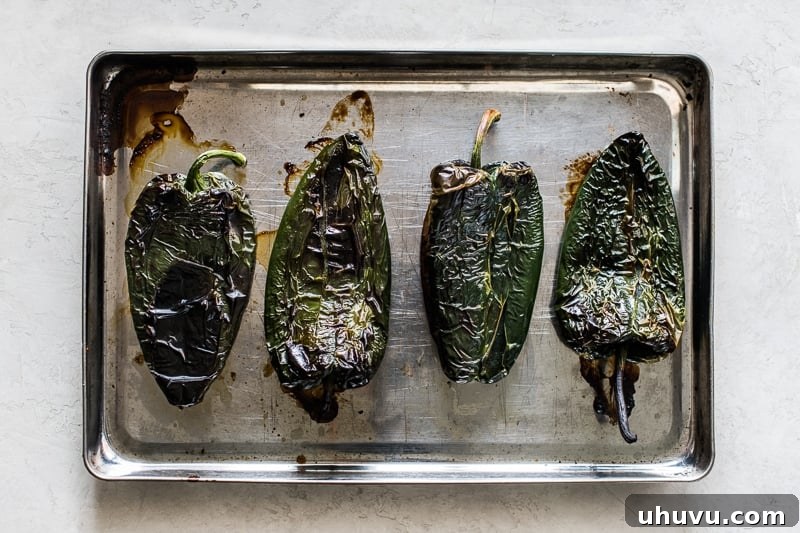
No matter which method you choose, the key is to achieve a good char on all sides. This blackening is crucial for loosening the skin. Once roasted, immediately transfer the hot peppers to a heat-proof plastic bag, a bowl covered tightly with plastic wrap (saran wrap), or a covered container. Allow them to steam for 10-15 minutes. This steaming process continues to cook the peppers slightly and causes the skin to further separate from the flesh, making it much easier to peel.
(For detailed, step-by-step photos and instructions on how to perfectly roast poblano peppers, refer to our comprehensive guide.)
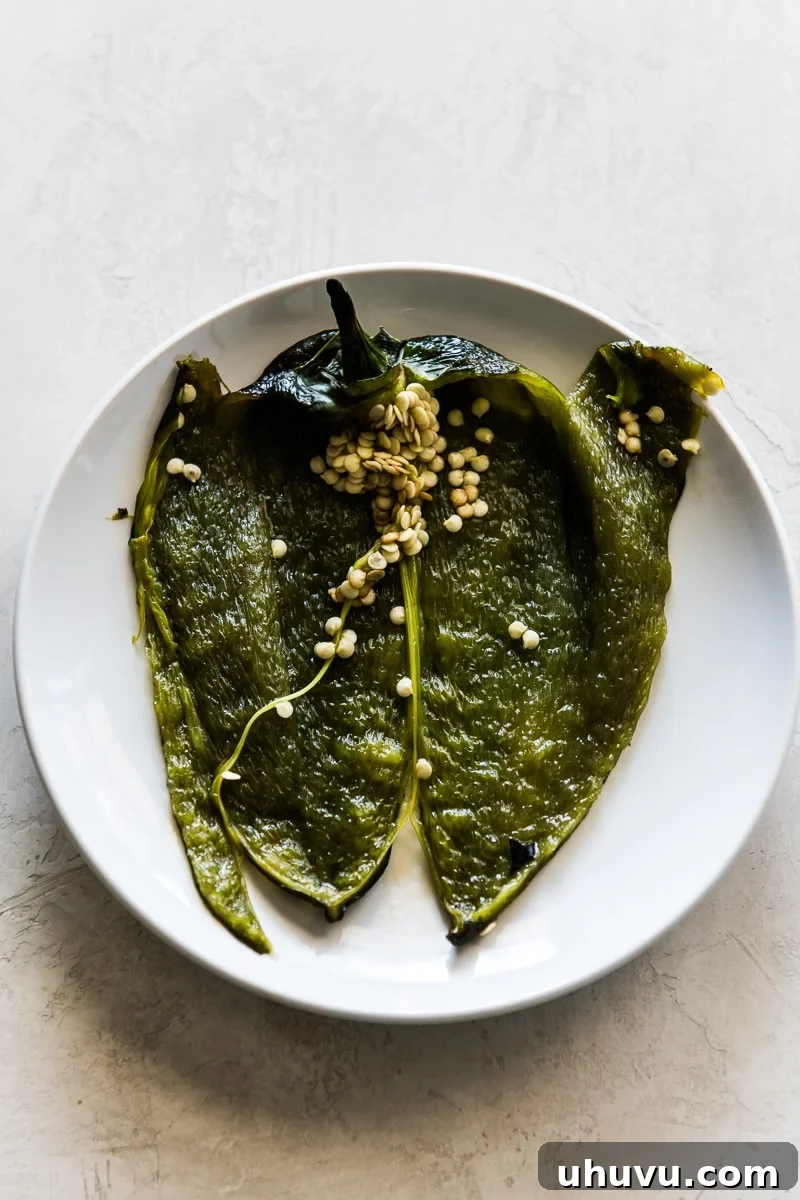
After the steaming period, remove the peppers from the bag or container. Using your fingers or a dull knife, gently rub and peel away the blackened skin. You don’t need to rinse them under water, as this can wash away some of their precious smoky flavor. Once peeled, you can carefully slit the peppers open, remove the seeds and membranes, and they are ready for use in your favorite recipes. The result is a tender, smoky, and incredibly flavorful pepper that forms the backbone of countless Mexican dishes.
Delicious Poblano Pepper Recipes to Try
The culinary applications for poblano peppers are as diverse as they are delicious. Their mild heat and robust flavor make them a star ingredient in many traditional dishes and a fantastic addition to everyday meals. From comforting casseroles to sophisticated main courses, poblanos offer a unique taste that is both approachable and distinctive.
One of the most iconic Mexican recipes featuring poblanos is Chile Rellenos. In this classic dish, a whole roasted and peeled poblano pepper is traditionally stuffed with cheese (or sometimes meat), coated in a light egg and flour batter, and then pan-fried until golden and crispy. The result is a delightfully cheesy, tender, and subtly spicy treat. For a lighter, equally flavorful alternative, consider a baked chile rellenos recipe, which offers all the savory goodness without the added oil of frying.
Poblanos are also an excellent substitute for bell peppers if you’re looking to introduce a touch of mild heat and a more complex, earthy flavor to your dishes. They can be diced and added to stir-fries, omelets, tacos, and quesadillas, or sliced into strips for fajitas and burritos. Their firm texture holds up well to cooking, and their unique taste can transform a familiar meal into something truly special. Consider using them in a creamy soup or a hearty stew for an unparalleled depth of flavor.
Here are just a few more inspiring recipes that highlight the incredible versatility and flavor of poblano peppers, inviting you to explore their potential in your kitchen:
- Chiles en Nogada: A truly magnificent and festive dish, often served on Mexican Independence Day, featuring stuffed poblanos in a creamy walnut sauce.
- Chile Relleno Casserole: All the flavors of classic chile rellenos in an easy-to-make, family-style casserole.
- Chile Verde: A vibrant, savory green chili stew where roasted poblanos contribute to the rich, complex base alongside tomatillos and other green chiles.
- Roasted Poblano Broccoli Soup: A comforting and creamy soup with the smoky depth of roasted poblanos complementing the fresh taste of broccoli.
- Steak Fajitas: Sliced poblanos add a wonderful dimension to sizzling steak and onion fajitas.
- Easy Roasted Poblano Cream Sauce: A versatile sauce perfect for pasta, chicken, or as a topping for enchiladas.
- Taco Casserole: Enhance your weeknight taco casserole with the mild flavor of diced poblanos.
- Tex-Mex Sausage Breakfast Casserole: Start your day with a flavor punch by incorporating poblanos into a hearty breakfast bake.
Whether you’re crafting an elaborate traditional feast or simply spicing up a weeknight meal, the poblano pepper is an invaluable ingredient that promises to deliver rich, authentic flavor without overwhelming heat. Its culinary journey from a fresh, vibrant green pepper to a dried ancho chile offers a spectrum of tastes that continue to inspire chefs and home cooks alike.
Explore More Mexican Peppers
Dive deeper into the fascinating world of Mexican chiles and discover other essential peppers that define the rich and diverse flavors of this incredible cuisine:
- Anaheim peppers
- Ancho chiles
- Chile de Arbol
- Chipotle peppers
- Guajillo peppers
- Habanero peppers
- Jalapeno peppers
- Serrano peppers