
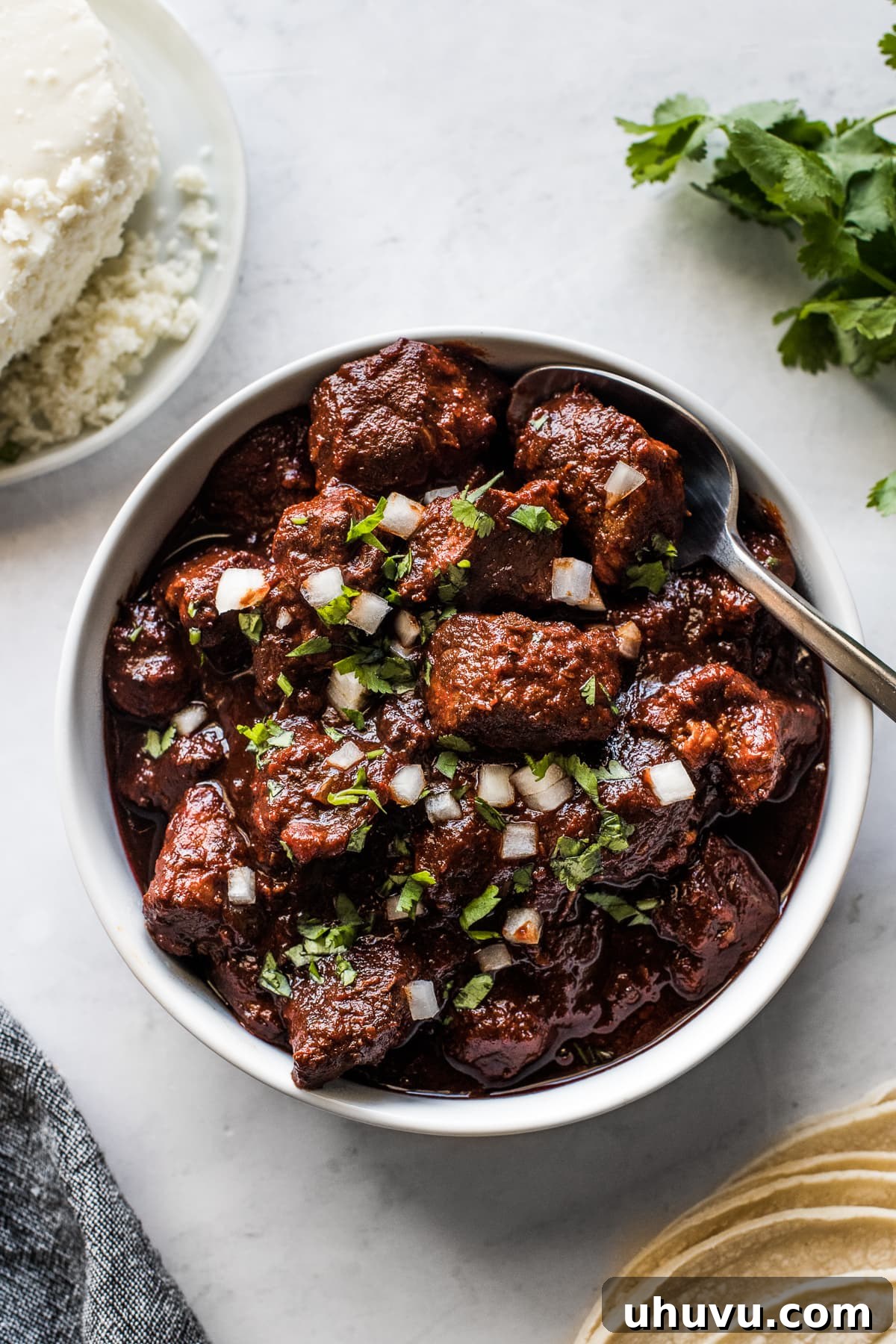
Welcome to the ultimate guide to **Carne Adovada**, a deeply flavorful and profoundly satisfying stewed pork dish hailing from the heart of New Mexico. More than just a meal, Carne Adovada is a culinary experience, revered for its tender, melt-in-your-mouth pork and its rich, vibrant sauce made from an intricate blend of dried chiles. This iconic dish embodies the robust spirit and unique flavors of New Mexican cuisine, promising a truly unforgettable taste adventure.
Imagine succulent chunks of pork, slow-simmered to perfection, completely infused with a bold and aromatic red chile sauce. This isn’t just any chile sauce; it’s a complex masterpiece, brimming with the earthy notes of carefully selected dried chiles, subtly balanced with an unexpected hint of sweetness and a tangy brightness. Whether you’re a connoisseur of New Mexican food or embarking on your first exploration, this Carne Adovada recipe is designed to bring the authentic flavors of the Southwest straight to your kitchen. It pairs beautifully with a simple side of fluffy rice or warm, homemade tortillas, transforming any meal into a savory and satisfying feast that will leave you craving more.
What is Carne Adovada? A New Mexican Culinary Gem
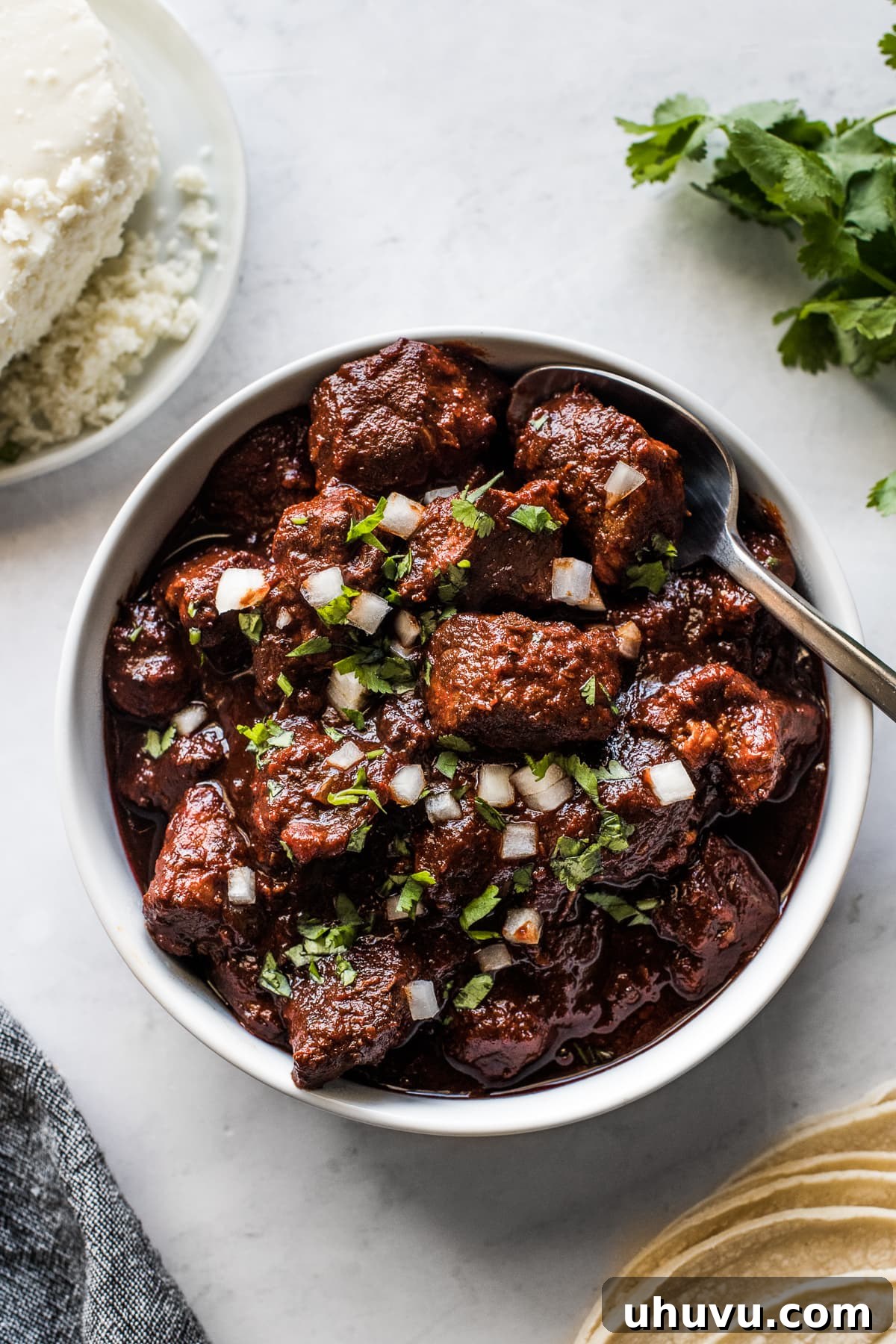
Carne Adovada is a traditional New Mexican dish featuring pork marinated and then slow-cooked in a rich red chile sauce. The name “Adovada” itself points to the marinating process, as “adobar” means to marinate or cure in Spanish. Unlike many Mexican stews, Carne Adovada focuses intensely on the flavor of dried red chiles, particularly New Mexico chiles, which are native to the region. The result is a dish celebrated for its unparalleled depth of flavor, luxurious texture, and a warmth that comforts the soul.
If you cherish tender pieces of slowly simmered pork that simply melt in your mouth, then preparing this Carne Adovada recipe is an absolute must! This iconic New Mexican creation has quickly ascended to become one of my most cherished dishes. The dried chile sauce, in which the pork luxuriates for hours, develops an incredibly intense and complex flavor profile that I find utterly irresistible and perpetually crave.
Is It Adovada or Adobada? Understanding the Nuance
This is a common point of confusion, and understanding the distinction is key to appreciating the regional specificity of this dish. In New Mexico, the specific stewed pork dish we are discussing is almost exclusively spelled “**Carne Adovada**.” This spelling is deeply rooted in New Mexican culinary traditions and culture. The term refers to pork marinated and slow-cooked in a vibrant red chile sauce, embodying a distinct flavor profile that separates it from other regional variations.
Conversely, “**Adobada**” refers to a more general Mexican culinary technique where meat (which can be pork, beef, or even chicken) is cooked in an “adobo” sauce. An adobo sauce typically contains chiles, vinegar, garlic, and other spices, and is used for marinating and braising. While there are similarities in the use of chiles and the marinating process, “Adobada” is a broader term encompassing various dishes across Mexico, whereas “Adovada” specifically denotes the New Mexican version of stewed pork with its characteristic red chile sauce.
Carne Adovada vs. Chile Colorado: A Tale of Two Chiles
While both Carne Adovada and Chile Colorado feature succulent stewed meat bathed in a rich red chile sauce, they are indeed distinct dishes, each with its own character and charm. I like to consider Carne Adovada as Chile Colorado’s more intense and sophisticated cousin, boasting a deeper and more nuanced flavor profile. Though they might appear visually similar, their differences are quite significant.
The primary distinction lies in the choice of protein: **Carne Adovada traditionally highlights pork**, typically pork shoulder or butt, which becomes incredibly tender and flavorful through slow simmering. **Chile Colorado, on the other hand, traditionally uses beef**, often chuck roast or similar cuts, also cooked until fall-apart tender. Both meats absorb the chile flavors beautifully, offering equally delicious, albeit different, experiences.
Furthermore, while both dishes rely on a red chile sauce that celebrates the robust taste and subtle spice of dried chiles, Carne Adovada elevates its complexity with additional ingredients. It often includes a hint of sweetness, typically from a touch of sugar, which helps to round out the heat and bold flavors of the chiles. The addition of tangy elements like soy sauce and vinegar further deepens and intensifies the spices, creating a layered flavor profile that is both rich and bright. Chile Colorado tends to be more straightforward, focusing primarily on the pure, earthy essence of the red chiles. This subtle yet impactful difference in seasoning makes Carne Adovada a truly unique and complex culinary delight.
Essential Ingredients for Authentic Carne Adovada
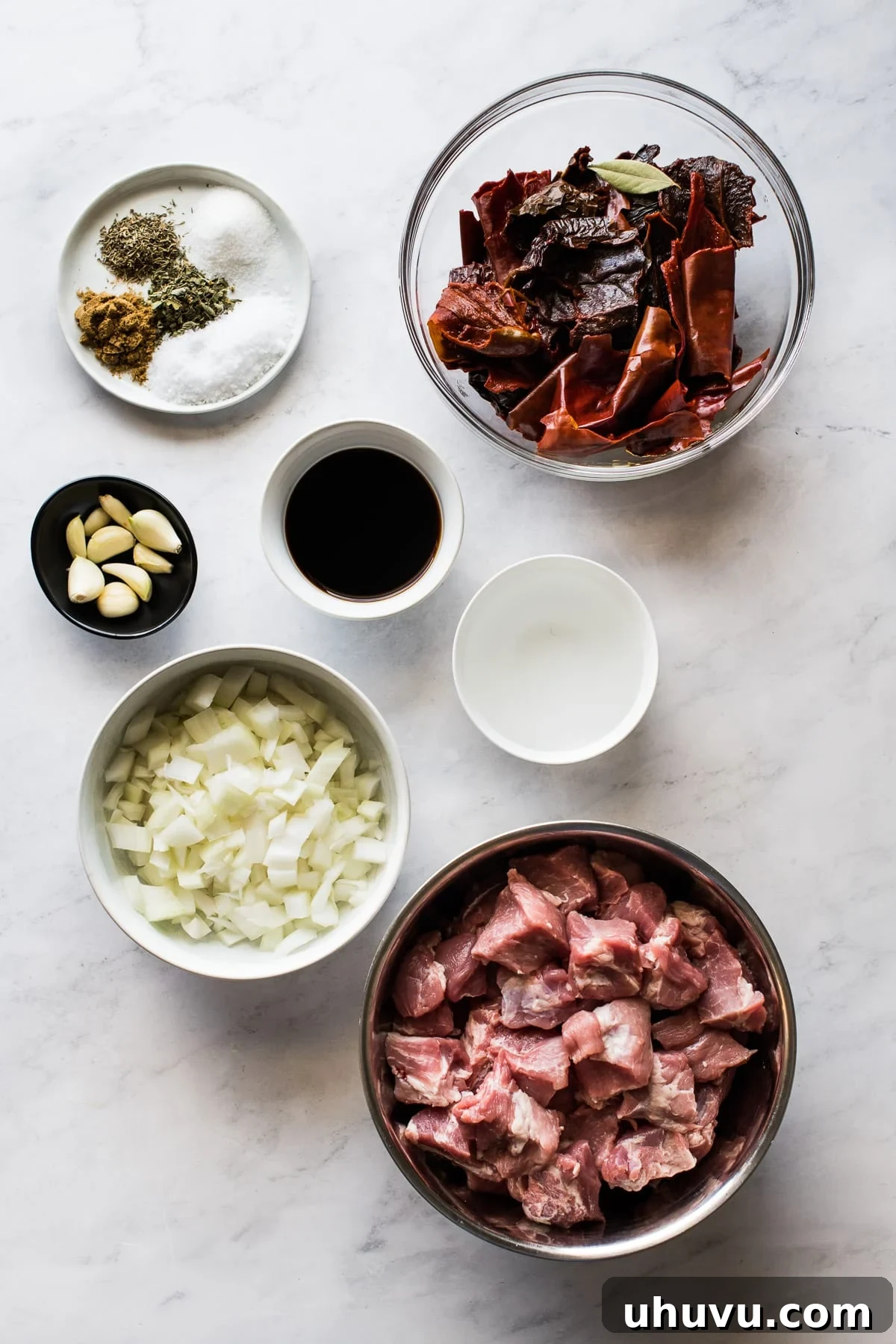
Crafting exceptional Carne Adovada begins with selecting the right ingredients. Each component plays a vital role in building the dish’s signature depth and complexity. Here’s a breakdown of what you’ll need and why:
- Dried Chiles: The Heart of the Sauce
For this authentic recipe, I’ve chosen a classic combination of 8 dried ancho chiles and 12 dried guajillo chiles. Ancho chiles provide a deep, earthy, and slightly fruity flavor with mild heat, while guajillo chiles contribute a bright, fruity, and somewhat smoky note with moderate heat. This blend creates a wonderfully balanced and complex base for the sauce. Feel free to experiment with other combinations, such as incorporating dried New Mexico chiles for a truly regional taste, or using only New Mexico chiles if you prefer. The key is to select good quality, pliable chiles for the best flavor.
- Aromatic Seasonings and Spices: The Flavor Foundation
A thoughtfully selected array of spices elevates the chile sauce. I use dried thyme for its subtle floral and peppery notes, ground cumin for its warm and earthy aroma, and Mexican oregano, which offers a more robust, citrusy, and peppery flavor compared to its Mediterranean counterpart. Kosher salt is essential for seasoning both the pork and the sauce to perfection. Our special ingredient, sugar, might seem unconventional in a savory stew. However, a small amount of granulated sugar is a secret weapon; it helps to beautifully cut through the intense spice and bold seasonings, creating a more harmonious and well-rounded flavor profile without making the dish overtly sweet.
- White Vinegar and Soy Sauce: The Tangy Balance
These two ingredients are crucial for adding acidity and umami, which help to balance the richness of the chile sauce. White vinegar provides a sharp tang that brightens the overall flavor and cuts through the richness of the pork. Soy sauce, an unexpected but brilliant addition, contributes a fantastic depth of umami and a savory complexity that you wouldn’t typically find in simpler chile sauces. Together, they create a well-balanced and uniquely complex flavor that truly makes this Carne Adovada stand out.
- Olive Oil: For Searing and Sautéing
I use olive oil to achieve a beautiful sear on the pork, which locks in flavor and creates a delicious browned crust. However, feel free to use any neutral-flavored oil you have on hand, such as vegetable oil, canola oil, or avocado oil.
- Onion and Garlic: The Aromatic Backbone
No authentic Mexican dish is complete without the foundational aromatics of onion and garlic. They provide a sweet, pungent, and savory base that forms the aromatic backbone of the stew, infusing it with irresistible flavor as it simmers.
- Pork Shoulder: The Star Protein
Pork shoulder, also widely known as pork butt (despite the name, it comes from the shoulder region), is the ideal cut for this stew-style dish. Its rich marbling and connective tissues break down beautifully during long, slow cooking, resulting in incredibly tender, fall-apart pork that is bursting with flavor. I highly recommend cutting the pork into equal-sized chunks to ensure even cooking and consistent texture throughout the stew.
- Optional Garnishes and Accompaniments: The Finishing Touch
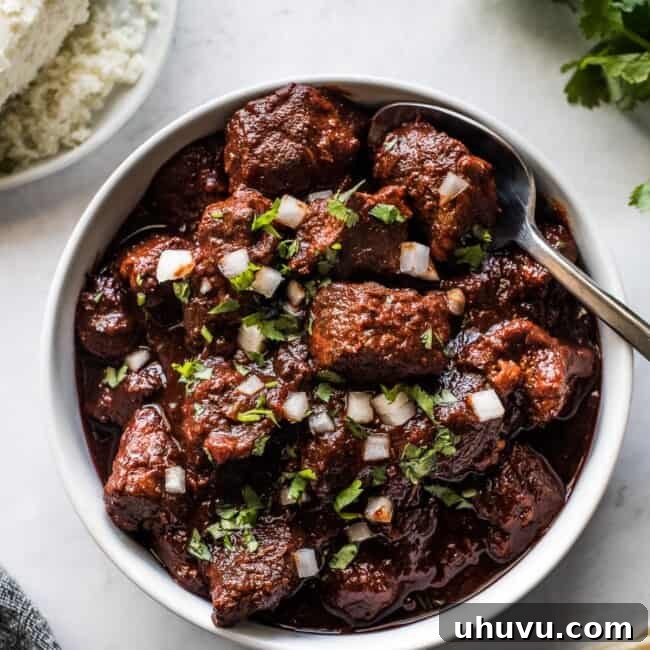
To truly complete the Carne Adovada experience, I love to garnish it with fresh, chopped cilantro and finely diced white onions, which add a refreshing crunch and zing. For serving, warm corn tortillas or soft flour tortillas are perfect for scooping up the rich stew, while lime wedges offer a burst of fresh acidity to brighten each bite. A side of rice, whether plain white rice, zesty cilantro lime rice, or flavorful Mexican rice, also makes an excellent accompaniment.
How to Make Carne Adovada: A Step-by-Step Guide
Creating this authentic New Mexican Carne Adovada is a rewarding process. Follow these steps carefully to ensure a rich, flavorful, and perfectly tender stew.
- Prepare the Chiles: First, remove and discard the stems and seeds from both the ancho and guajillo chiles. It’s important to get rid of most of the seeds as they can add bitterness. Tear the chiles into medium-sized pieces to ensure they toast and soften evenly.
- Toast the Chiles: Heat a large, dry skillet over medium heat. Add your prepared chiles to the skillet. Toast them for about 1-2 minutes, stirring constantly. The goal is to make them fragrant and slightly pliable, which brings out their smoky flavor. Be careful not to toast them for more than 2 minutes, as over-toasting can make them bitter and ruin the sauce.
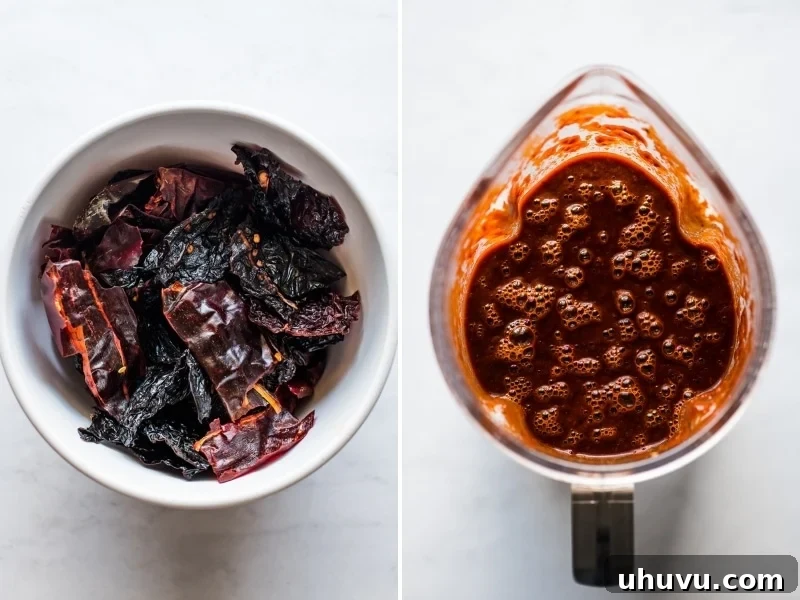
- Soften the Chiles: Immediately transfer the toasted chiles to a medium pot. Add one dried bay leaf and cover the chiles completely with water. Bring the water to a full boil over high heat, then remove the pot from the heat, cover it tightly, and let the chiles steep for about 10 minutes. This rehydrates and softens them, preparing them for blending.
- Make the Chile Sauce: Using a slotted spoon, carefully transfer the softened chiles and the bay leaf to a powerful blender. Add 3 cups of the chile-soaked water (this is crucial for flavor!), along with the garlic, distilled white vinegar, soy sauce, Mexican oregano, dried thyme, granulated sugar, ground cumin, and kosher salt. Blend the mixture until it is completely smooth and velvety. If the sauce is too thick, add a little more chile-soaked water until it reaches a pourable consistency. Set this beautiful red chile sauce aside.
- Sear the Pork: Heat 1 tablespoon of olive oil in a large, heavy-bottomed pot or Dutch oven over medium-high heat. Add half of your pork shoulder chunks to the hot oil. Sear the pork on all sides until it’s beautifully browned and caramelized. This step is essential for developing deep, savory flavors. Transfer the seared pork to a bowl or large plate and repeat with another tablespoon of oil and the remaining pork. Once all the pork is seared, set it aside.
- Cook the Onion: Add the final tablespoon of oil to the pot (if needed, there should be enough fat from the pork). Add the chopped medium onion and cook for about 5 minutes, stirring frequently, until it softens and becomes translucent. As you stir, make sure to scrape any delicious crispy brown bits (known as fond) that have stuck to the bottom of the pan. These bits are packed with flavor and will dissolve into the sauce, enriching it.
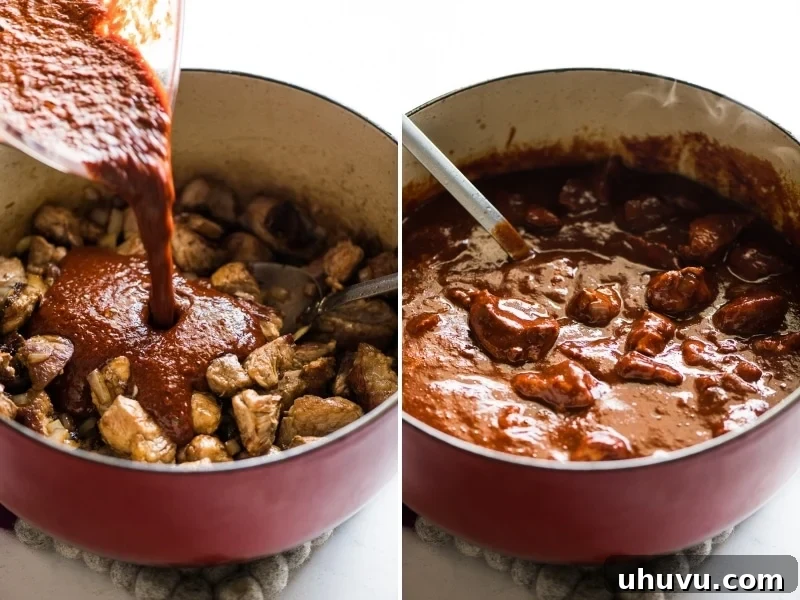
- Simmer Pork in Chile Sauce: Return all the seared pork back into the pot with the softened onions. Pour the freshly blended chile sauce over the pork. Mix everything together thoroughly to ensure all the pork is coated in the vibrant sauce. Bring the pot to a boil over medium-high heat. Once boiling, reduce the heat to low, cover the pot tightly, and let the Carne Adovada simmer gently for a minimum of 2 hours, or until the pork is incredibly tender and easily pulls apart with a fork.
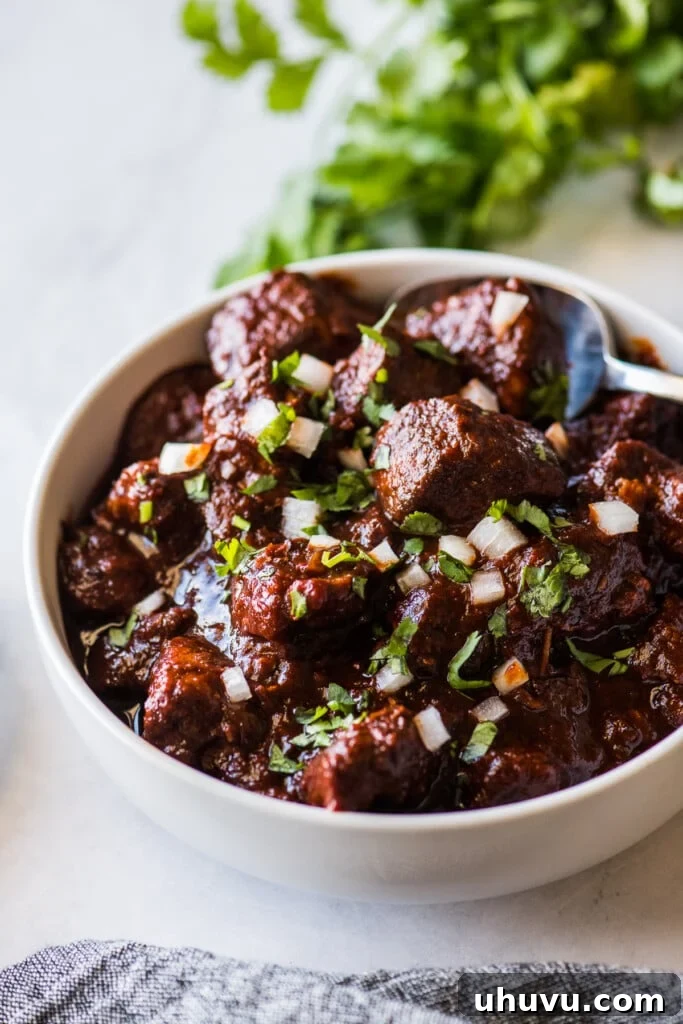
- Serve and Enjoy: Once cooked, ladle the rich Carne Adovada into bowls. Garnish generously with chopped fresh cilantro and diced white onion. Serve immediately with warm corn tortillas, flour tortillas, or your favorite rice.
Serving Suggestions: Completing Your Carne Adovada Experience
Carne Adovada is a versatile dish that can be enjoyed in many ways. Here are some of my favorite serving suggestions to make your meal truly special:
- Classic Bowl Meal: Serve generous portions in a bowl, spooned over a bed of fluffy white rice, zesty cilantro lime rice, or aromatic Mexican rice. The rice acts as a perfect canvas to soak up all the rich chile sauce.
- With Warm Tortillas: No New Mexican stew is complete without warm tortillas. Offer a stack of homemade flour tortillas or authentic corn tortillas on the side. They’re perfect for scooping up the tender pork and savory sauce.
- Garnishes Galore: Elevate the presentation and flavor with fresh toppings. Chopped fresh cilantro and finely diced white onion add a burst of freshness and a delightful textural contrast. A squeeze of fresh lime juice just before eating brightens all the flavors.
- Tacos or Burritos: Transform leftovers or even the main meal into delicious tacos or burritos. Simply fill warm tortillas with the Carne Adovada, add your favorite toppings like shredded cheese, lettuce, or crema, and enjoy a portable feast.
- Enchiladas: Use the tender Carne Adovada as a filling for enchiladas. Roll it in corn tortillas, cover with more red chile sauce and cheese, then bake until bubbly and golden.
Storing and Reheating Carne Adovada: Tips for Enjoying Later
Carne Adovada often tastes even better the next day as the flavors have more time to meld. Here’s how to store and reheat it properly:
- To store in the fridge: Once the Carne Adovada has cooled completely to room temperature, transfer it to an airtight container. It will keep beautifully in the refrigerator for up to 1 week, making it an excellent meal prep option.
- To store in the freezer: For longer storage, ensure the stew has cooled completely. Transfer it to a freezer-safe storage container or a heavy-duty freezer bag, removing as much air as possible to prevent freezer burn. Carne Adovada can be frozen for up to 3 months without significant loss of quality. Thaw overnight in the refrigerator before reheating.
- To reheat: For best results, place the desired portion of Carne Adovada in a medium pot or saucepan over medium heat on the stovetop. Stir occasionally until it is thoroughly warmed through, adding a splash of water or broth if the sauce has thickened too much. Alternatively, you can heat it in the microwave in a microwave-safe dish for 1-4 minutes, stirring halfway through, until piping hot.
Pro Tips for the Best Carne Adovada
To ensure your Carne Adovada reaches its full potential, consider these expert tips:
- Quality Chiles Matter: The flavor of your sauce largely depends on the quality of your dried chiles. Look for chiles that are pliable, not brittle, and have a rich, earthy aroma.
- Don’t Skip Searing: Searing the pork before simmering creates a deeply flavored crust that adds another layer of deliciousness to the stew. Do it in batches to avoid overcrowding the pot, which would steam the meat instead of browning it.
- Adjust Spice to Your Liking: If you prefer a spicier dish, consider adding a dried chile de árbol or two to your chile blend, or a pinch of cayenne pepper to the sauce. For less heat, remove more of the chile seeds and veins before blending.
- Low and Slow is Key: Carne Adovada truly benefits from a long, gentle simmer. This allows the pork to become incredibly tender and gives the flavors ample time to meld and deepen, resulting in a richer, more cohesive stew.
- Taste and Adjust: Always taste your sauce before simmering and again after cooking. Adjust salt, sugar, or vinegar as needed. The balance of sweet, savory, and tangy notes is what makes this dish exceptional.
Frequently Asked Questions About Carne Adovada
Here are answers to some common questions about making this delightful New Mexican stew:
- Can I make Carne Adovada in a slow cooker?
Absolutely! After searing the pork and sautéing the onion, combine all ingredients in a slow cooker. Cook on low for 6-8 hours or on high for 3-4 hours, until the pork is fork-tender. This is a fantastic option for busy days! - Can I use beef instead of pork?
While traditionally made with pork, you can certainly substitute beef chuck roast if preferred. The dish would then be closer to a Chile Colorado, but still delicious with this specific adovada sauce recipe. Adjust cooking time as needed for the beef to become tender. - Is Carne Adovada very spicy?
The spice level can vary depending on the chiles used and personal preference. This recipe, using ancho and guajillo chiles, offers a moderate and flavorful heat that is generally not overwhelmingly spicy. The sugar helps to mellow any intense heat. You can always adjust the number or type of chiles for more or less spice. - Can I prepare the chile sauce in advance?
Yes, the chile sauce can be made 2-3 days ahead of time and stored in an airtight container in the refrigerator. This can help streamline your cooking process on the day you plan to make the stew. - What kind of pot is best for simmering?
A heavy-bottomed pot, like a Dutch oven or a large cast-iron pot, is ideal. Its ability to retain and distribute heat evenly is perfect for long, slow simmering, preventing scorching and ensuring consistent cooking.
More Hearty Recipes to Explore
If you’ve fallen in love with the rich flavors and comforting warmth of Carne Adovada, you’ll surely enjoy these other hearty and authentic Mexican-inspired dishes. They’re perfect for family meals, gatherings, or simply when you crave a taste of the Southwest!
- Carne con Papas
- Carne Guisada
- Chile Verde
- Barbacoa
- Pozole Rojo
- Carne Asada
If you tried this Carne Adovada Recipe or any other recipe on Isabel Eats, don’t forget to 🌟 rate the recipe and let me know how it went in the comments below! I love hearing about your experience making it!
⭐
⭐
⭐
⭐
⭐
Carne Adovada
Isabel Orozco-Moore
20
2 35
2 55
8 servings
Ingredients
- 8 ancho chiles, rinsed (about 3 ounces)
- 12 guajillo chiles, rinsed (about 2.5 ounces)
- 1 dried bay leaf
- water
- 8 garlic cloves
- 1/2 cup distilled white vinegar
- 1/4 cup soy sauce
- 1 1/2 teaspoons dried Mexican oregano
- 3/4 teaspoon dried thyme
- 2 teaspoon granulated sugar
- 1 1/2 teaspoon ground cumin
- 1 1/2 tablespoons kosher salt
- 3 tablespoons oil, divided
- 3 pounds pork shoulder, cut into bite-sized chunks
- 1 medium onion, chopped
- for serving: chopped cilantro, lime wedges, warm tortillas
Instructions
-
Remove and discard the stems and seeds from the ancho and guajillo chiles. Tear the chiles into medium-sized pieces.
-
Heat a large skillet over medium heat. Add the chiles and toast until fragrant, stirring frequently for about 1-2 minutes.
-
Transfer the chiles to a medium pot. Add the bay leaf and fill the pot with water until the chiles are completely covered.
-
Bring the water to a boil over high heat, then remove from heat, cover, and let the chiles soak for 10 minutes.
-
Transfer the soaked and softened chiles and the bay leaf to a large blender using a slotted spoon.
-
Add 3 cups of the chile-soaked water, garlic, vinegar, soy sauce, oregano, thyme, sugar, cumin, and salt. Blend until smooth and set aside.
-
Heat 1 tablespoon of oil in a large pot or Dutch oven over medium-high heat. Add ½ of the pork shoulder and sear on all sides until browned, then transfer to a bowl or large plate.
-
Add another tablespoon of oil to the pot as well as the remaining pork. Sear on all sides until browned, then transfer to the same bowl or plate.
-
Add the remaining 1 tablespoon of oil to the pot and add the onion. Cook for 5 minutes, scraping any brown bits that have stuck to the bottom of the pan.
-
Add the seared pork back into the pot and pour the blended chile sauce on top. Mix together to combine.
-
Bring the pot to a boil, reduce heat to low, cover, and cook for 2 hours.
-
Serve in a bowl garnished with chopped cilantro, lime wedges, and a side of warm flour tortillas and/or rice.
Nutrition
Calories: 354kcal |
Carbohydrates: 32g |
Protein: 26g |
Fat: 15g |
Saturated Fat: 3g |
Polyunsaturated Fat: 4g |
Monounsaturated Fat: 7g |
Trans Fat: 0.02g |
Cholesterol: 70mg |
Sodium: 1831mg |
Potassium: 1167mg |
Fiber: 12g |
Sugar: 18g |
Vitamin A: 10684IU |
Vitamin C: 16mg |
Calcium: 56mg |
Iron: 4mg
Nutrition information is automatically calculated, so should only be used as an approximation.
Did you make this recipe?
Leave a comment and star rating below!