
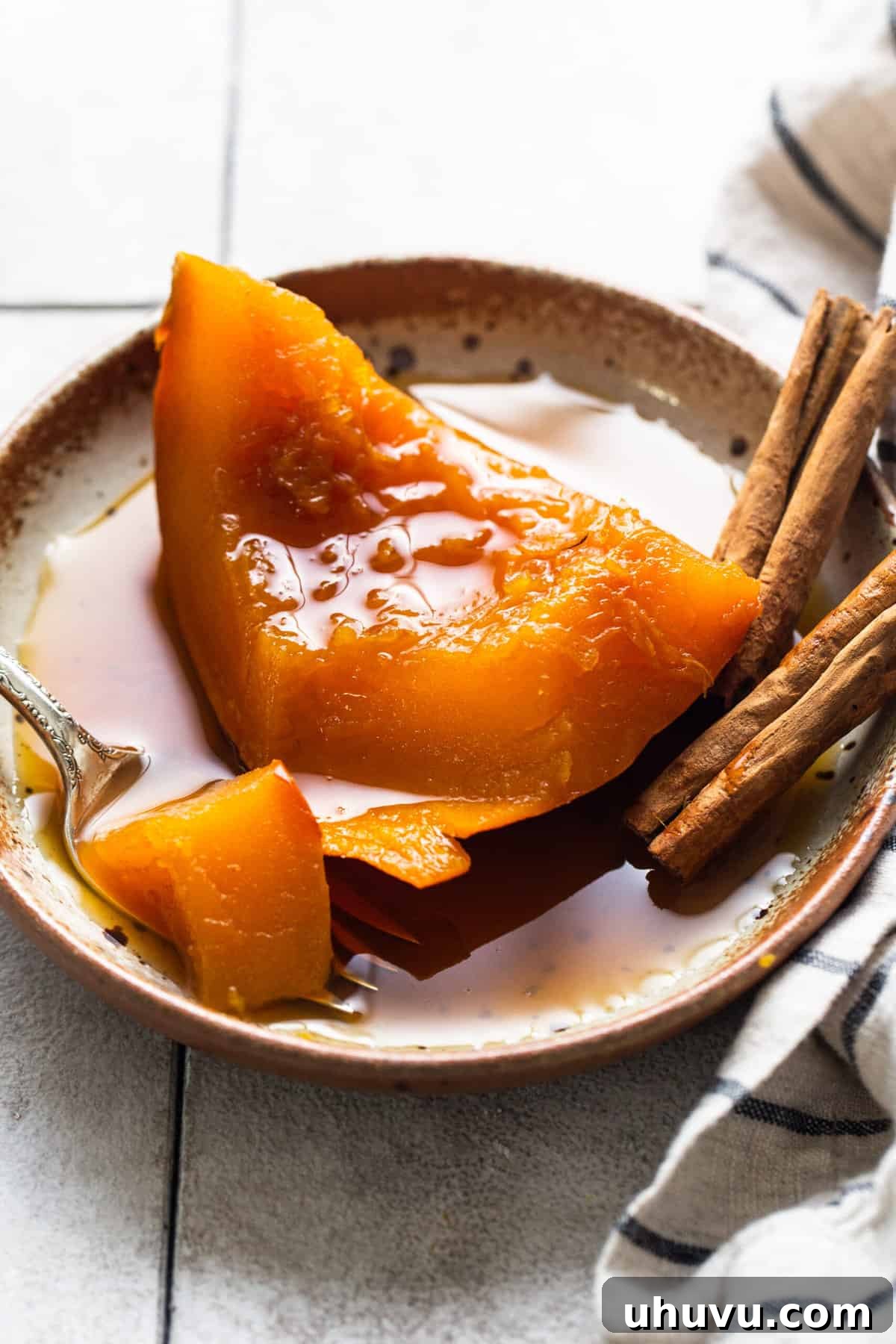
Calabaza en Tacha, often referred to as Mexican candied pumpkin, is a cherished traditional dessert deeply rooted in Mexico’s rich culinary heritage. This delightful dish combines the comforting sweetness of pumpkin with the unique, caramel-like notes of piloncillo, a distinctive unrefined cane sugar. Infused with aromatic spices like cinnamon and cloves, and brightened by fresh orange zest, Calabaza en Tacha transforms tender pumpkin into a lusciously syrupy treat. Its warm and inviting nature makes it an ideal dessert, especially during the crisp days of fall and the cooler winter months.
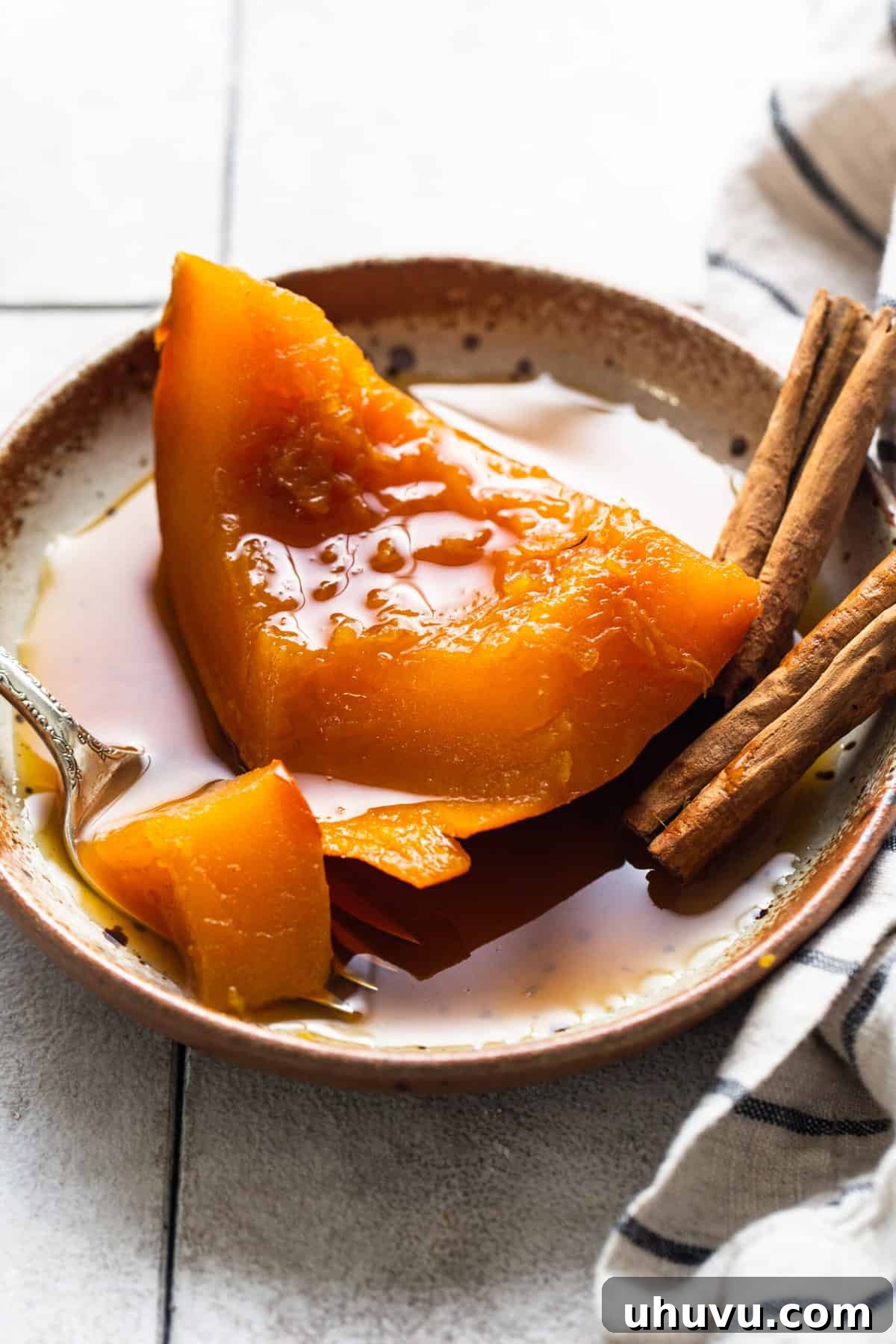
More than just a dessert, Calabaza en Tacha is a culinary masterpiece that embodies simplicity and profound flavor. The earthy sweetness of pumpkin finds its perfect partner in the deep, molasses-like richness of piloncillo. The addition of cinnamon, clove, and orange zest elevates the flavor profile, creating a symphony of tastes that dance on the palate. The preparation involves a gentle simmering process where all the ingredients meld together in a pot, creating a thick, caramelized syrup that slowly tenderizes the pumpkin to a fork-soft perfection.
This heartwarming and iconic treat holds significant cultural importance, particularly during the vibrant celebrations of Día de los Muertos, or the Mexican Day of the Dead. It is one of the many traditional food items thoughtfully placed on altars as an offering to the spirits of departed loved ones, alongside other emblematic dishes such as pan de muerto (bread of the dead), atole (a warm corn-based drink), champurrado (a chocolate-based atole), and pozole (a rich stew). The inherent sweetness of Calabaza en Tacha is symbolic, representing the sweetness of life and the fond memories shared, and it is believed to bring pleasure and comfort to the visiting spirits.
Beyond its ceremonial role, this dessert is a beloved staple during the cooler seasons. Its warming spices and rich syrup make it an excellent choice for a cozy fall evening or a festive winter gathering. Whether you’re already a pumpkin enthusiast or eager to explore new culinary horizons, this traditional Mexican candied pumpkin is sure to infuse your home with warmth and delight.
A Timeless Tradition: When to Savor Calabaza en Tacha
Calabaza en Tacha is most famously associated with Día de los Muertos, a significant cultural holiday celebrated from October 31st to November 2nd. During this time, families across Mexico prepare elaborate altars to honor and welcome back the souls of the deceased. The candied pumpkin, with its vibrant color and sweet aroma, is a perfect offering, symbolizing the gifts of the earth and the enduring sweetness of familial love.
However, its appeal isn’t limited to this special holiday. As the weather turns colder, particularly in the months of October, November, and December, Calabaza en Tacha becomes a common sight in Mexican homes. It’s a comforting dessert enjoyed by families as a simple pleasure, a sweet ending to a meal, or a cozy snack. The recipe for Calabaza en Tacha can vary subtly from region to region across Mexico, with each family often having their own beloved version passed down through generations. The recipe shared here evokes the cherished memories of enjoying this authentic dish with loved ones during my own upbringing.
Its versatility also extends to holiday tables, making it a wonderful addition to Thanksgiving or Christmas menus, offering a unique and culturally rich alternative to traditional pumpkin pies and other festive sweets. The warm spices resonate perfectly with the flavors of the season, creating a truly memorable dessert experience.
The Essence of Flavor: Key Ingredients for Calabaza en Tacha
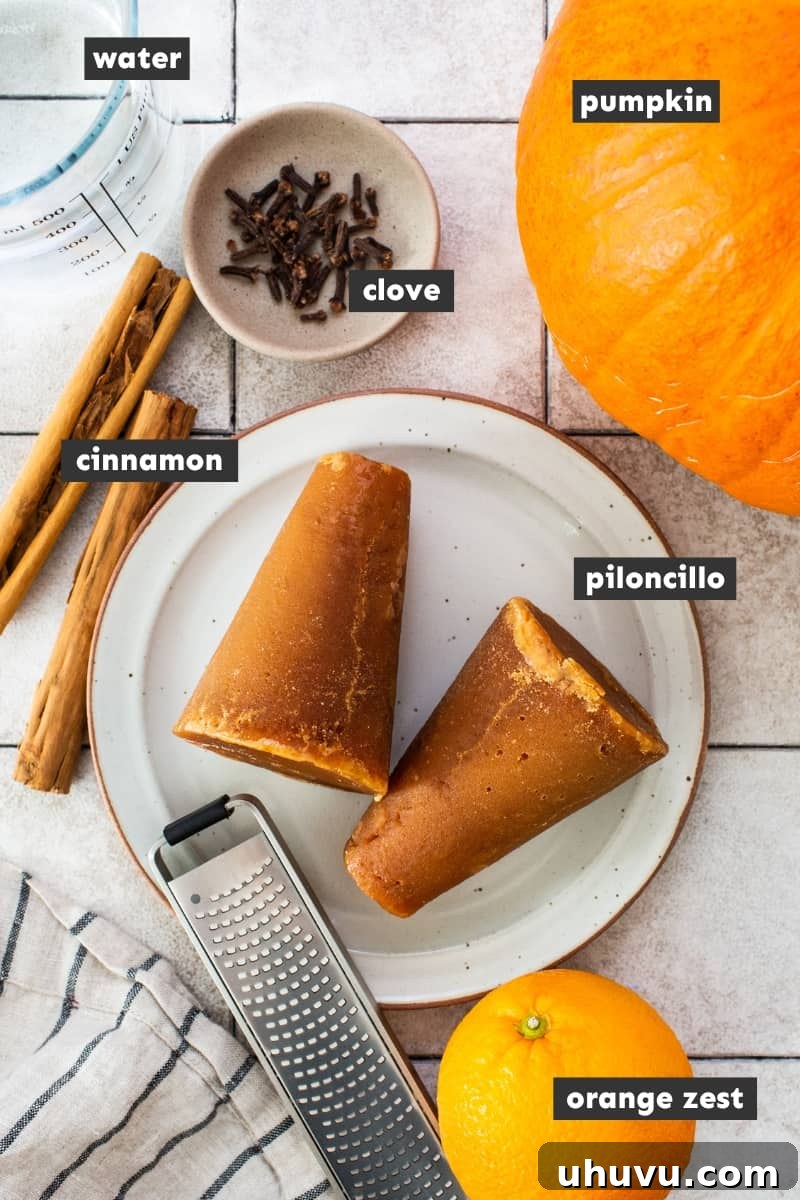
Crafting authentic Calabaza en Tacha begins with selecting the right ingredients. Each component plays a vital role in achieving the dish’s distinctive flavor and texture:
- Pumpkin: While many types of pumpkin can be used, traditional Mexican calabaza (such as Calabaza de Castilla) or even butternut squash are excellent choices. For this recipe, approximately 5 pounds of pumpkin, roughly equivalent to one small to medium-sized pumpkin, is ideal. Ensure you thoroughly scrub and wash the exterior of the pumpkin before preparation to remove any dirt or impurities. The skin is typically left on during cooking, contributing to the pumpkin’s structural integrity and adding a rustic charm to the final presentation.
- Piloncillo: This is the heart of the syrup’s unique flavor. Piloncillo is an unrefined, whole cane sugar, commonly found in a cone or disc shape. It’s made by boiling down cane sugar juice until it reaches a thick, caramel-like consistency, then pouring it into molds to solidify. Its rich, deep molasses flavor is far more complex than brown sugar, providing an unparalleled depth to Mexican desserts. It’s a staple in Latin American cuisine and is readily available in most Hispanic grocery stores or can be found online.
- Cinnamon: For an authentic Mexican flavor, Ceylon cinnamon is highly recommended. Often called “true cinnamon,” Ceylon cinnamon boasts a more delicate, complex, and sweeter flavor compared to the more common Cassia cinnamon. It’s the preferred choice in traditional Mexican cooking and can be easily sourced from Hispanic markets or purchased online. Using whole sticks allows for a slow infusion of its exquisite aroma.
- Whole Cloves: These small, dried flower buds are essential for adding a warm, intensely aromatic, and slightly sweet-spicy depth to the dessert. Cloves are a classic pairing with cinnamon and orange in many holiday and comforting recipes, enhancing the overall richness of the syrup.
- Orange: The zest of a medium-sized orange introduces a bright, citrusy counterpoint to the sweetness and spice. It adds a refreshing lift and complexity, preventing the dessert from being overly heavy and balancing the robust flavors of piloncillo and spices.
- Water: Essential for dissolving the piloncillo and creating the initial syrup base. The pumpkin will also release its own liquids, contributing to the final consistency of the luscious syrup.
Crafting Mexico’s Candied Pumpkin: A Step-by-Step Guide
Making Calabaza en Tacha is a delightful and relatively simple process that yields incredible results. Follow these steps to create your own batch of this comforting Mexican dessert:
Step 1: Prepare the Syrup Base
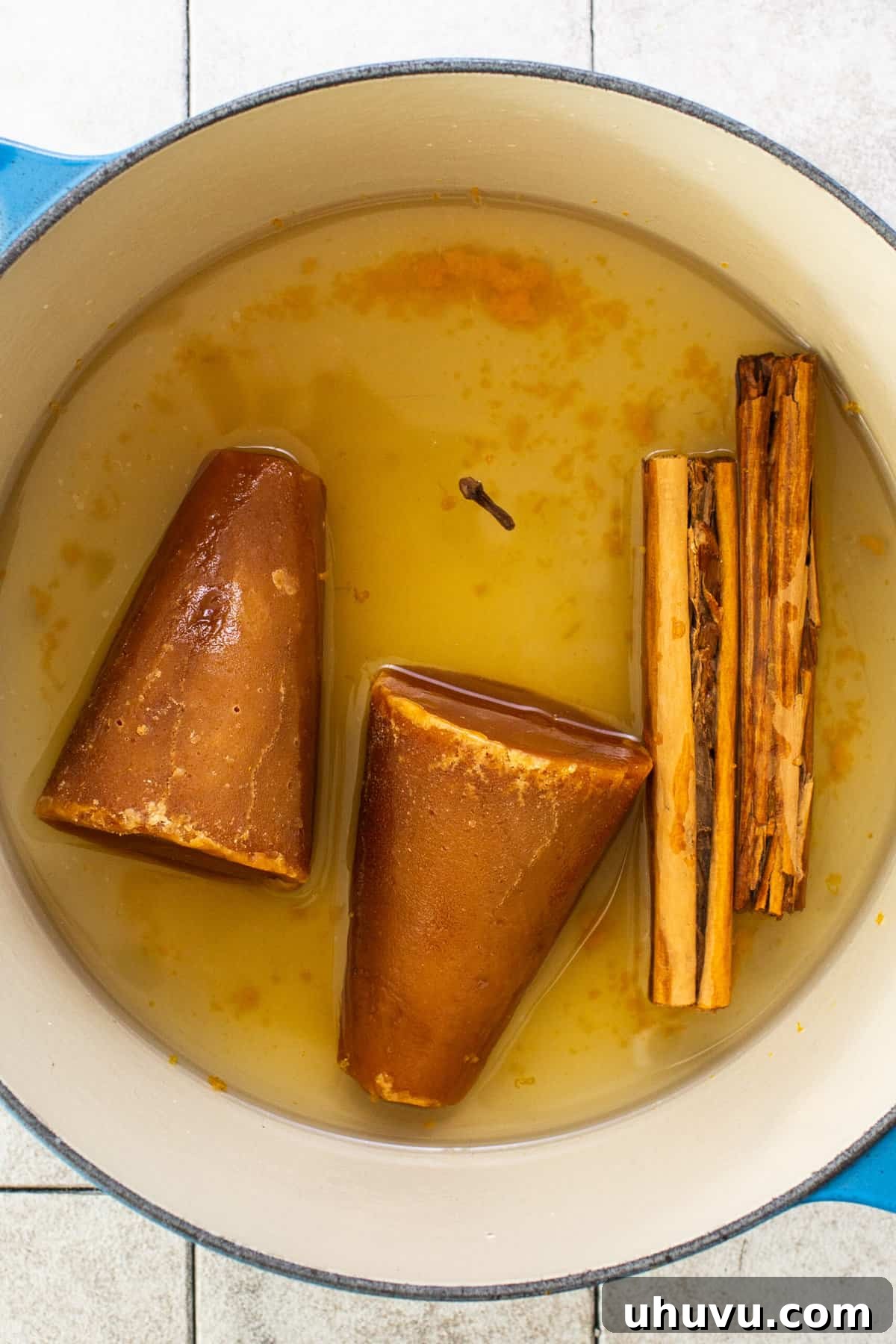
Begin by adding the piloncillo, water, Ceylon cinnamon sticks, whole clove, and orange zest to a large Dutch oven or a heavy-bottomed pot. Place the pot over medium-high heat. Allow the mixture to cook for approximately 10 minutes, stirring occasionally. The goal here is to ensure the piloncillo completely dissolves, forming a fragrant, dark syrup. This initial step is crucial for infusing the base with all the wonderful spice and citrus notes.
Step 2: Prepare the Pumpkin
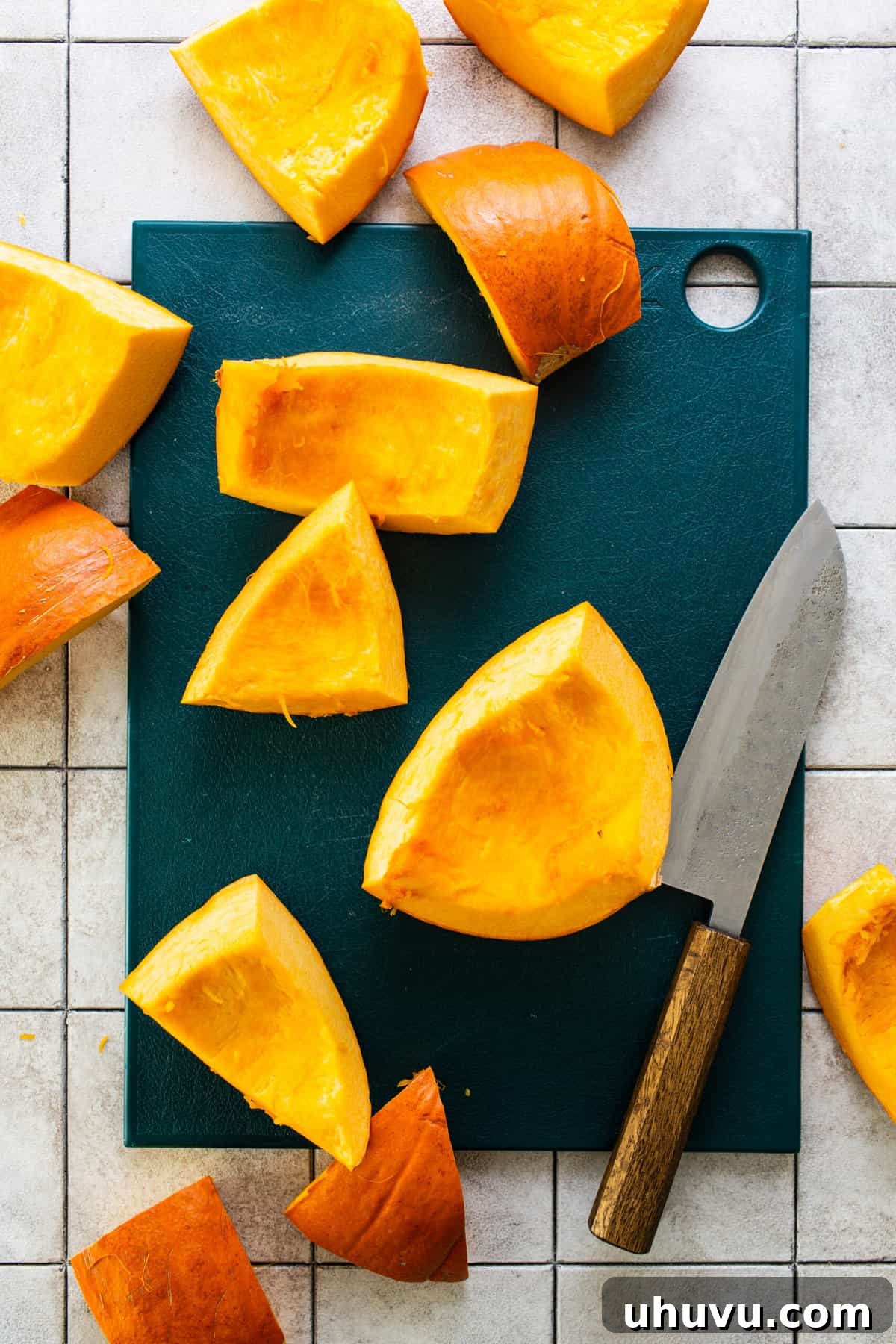
While the syrup is simmering, prepare your pumpkin. Carefully cut and discard the stem. Slice the pumpkin in half and use a spoon to scoop out and discard the seeds and any stringy fibrous flesh. Once cleaned, cut the pumpkin into uniform chunks, roughly 3 ½ to 4 inches in size. Keeping the pieces relatively consistent in size ensures even cooking.
Step 3: Simmer the Pumpkin
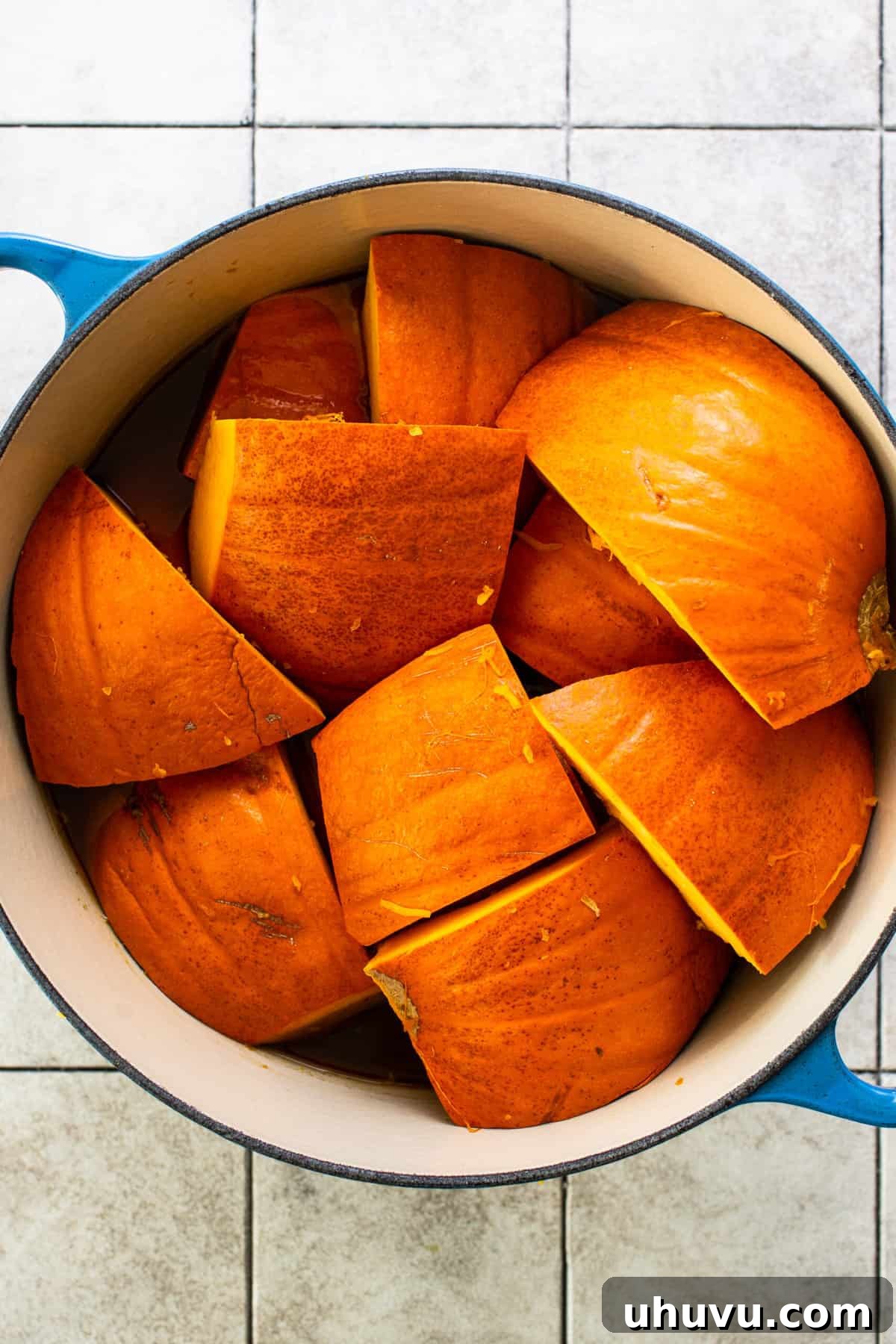
Carefully arrange the pumpkin chunks in the pot with the prepared syrup. It’s important to place them skin side up. This allows the flesh of the pumpkin to be submerged in the piloncillo syrup, absorbing all the wonderful flavors while the skin helps the pieces maintain their shape during the long cooking process. Once all pumpkin pieces are in the pot, reduce the heat to medium-low, cover, and let it simmer for a full 60 minutes. During this time, the pumpkin will become incredibly fork-tender, and its flesh will take on a beautiful golden-brown hue, fully caramelized by the rich syrup. As it cooks, the pumpkin will also release its own natural liquids, adding to the volume and richness of the syrup.
Step 4: Thicken the Syrup
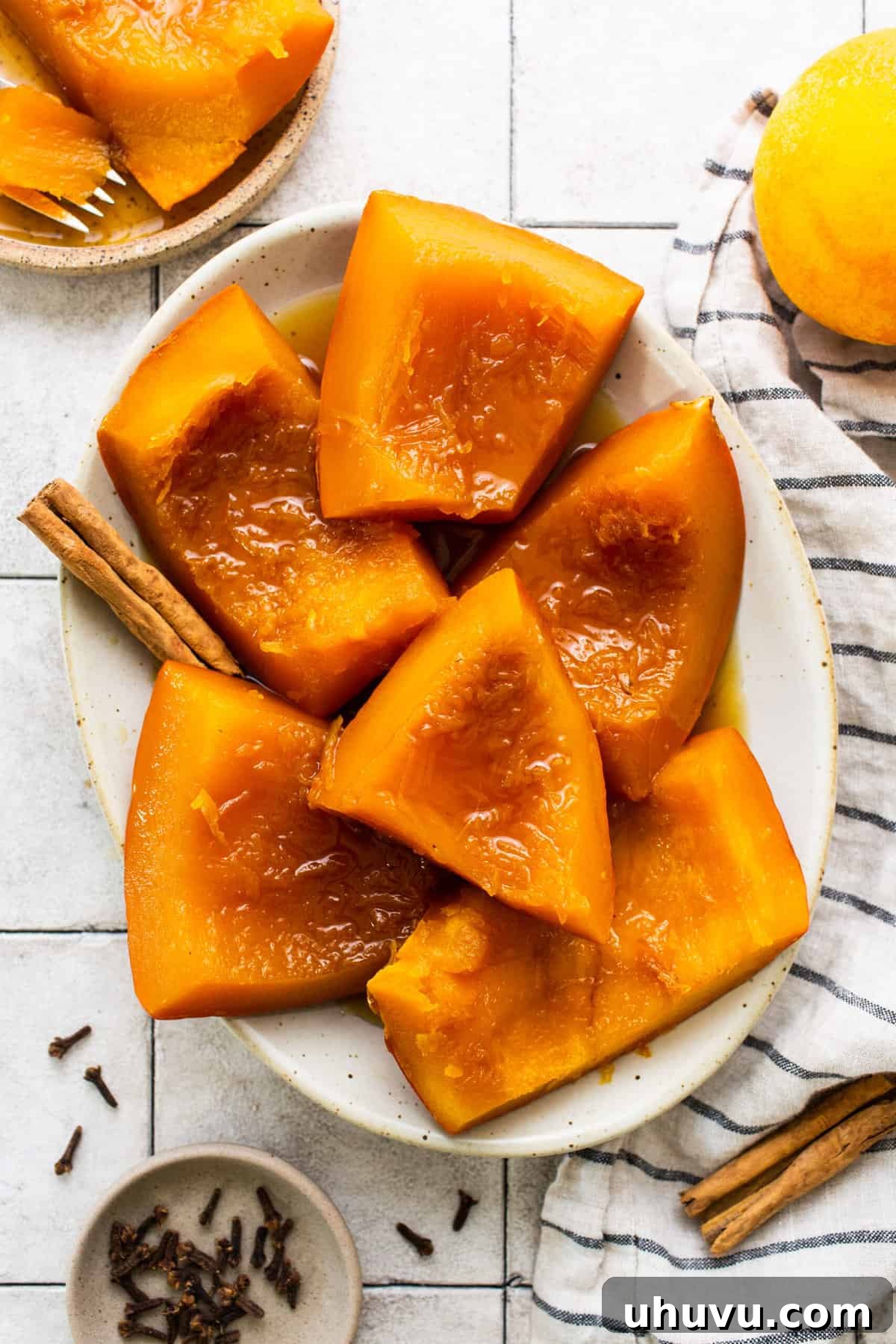
Once the pumpkin is cooked, carefully transfer the tender chunks to a serving tray or bowl and set them aside. Increase the heat to medium-high and allow the piloncillo syrup remaining in the pot to reduce. Continue cooking for about 10 minutes, stirring occasionally, until the syrup thickens to a luscious, glossy consistency. This concentrated syrup is liquid gold and will be generously drizzled over the pumpkin.
Step 5: Serve and Enjoy
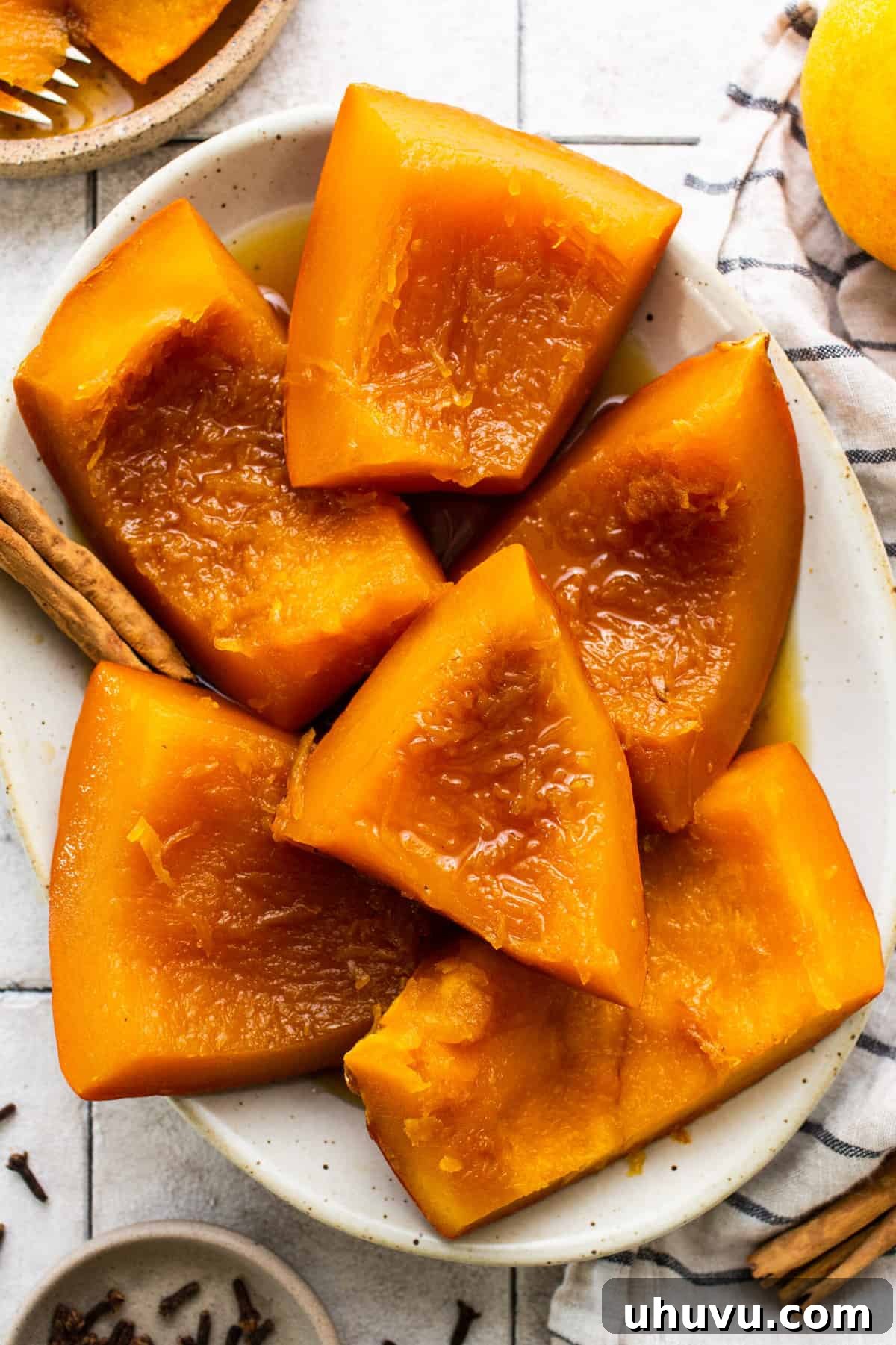
Generously spoon the warm, candied pumpkin into individual serving bowls. Drizzle a liberal amount of the thickened piloncillo syrup over each portion. Calabaza en Tacha is best enjoyed warm, allowing its comforting aromas and flavors to shine. It’s a simple yet profoundly satisfying dessert, perfect for any occasion that calls for a touch of Mexican sweetness.
Expert Tips for Perfect Calabaza en Tacha
Achieving the perfect Calabaza en Tacha is simple with a few helpful tips:
- Layering Pumpkin Pieces: Always layer the pumpkin pieces in the pot with the skin side facing up. This strategic placement ensures that the pumpkin flesh is fully submerged and directly in contact with the piloncillo syrup, allowing it to absorb all the rich flavors and caramelize beautifully. The skin acts as a protective layer, helping the pumpkin chunks maintain their shape and prevent them from disintegrating during the long cooking time.
- Don’t Worry About Liquid: Initially, the syrup may not seem like enough to cover all the pumpkin. However, pumpkins naturally release a significant amount of liquid as they cook. Trust the process; this released liquid will combine with the piloncillo syrup to create an ample, flavorful broth for the pumpkin to simmer in.
- Keep the Skin On: Leaving the pumpkin skin on during cooking is not just a traditional method but also a practical one. It provides structure to the pumpkin pieces, making them easier to handle and preventing them from becoming too soft and mushy. While some prefer not to eat the skin, it is entirely edible once cooked, becoming tender and infused with the syrup’s flavor.
- Adjust Sweetness to Taste: Piloncillo has a rich, deep sweetness. If you prefer a less sweet dessert, you can slightly reduce the amount of piloncillo, or conversely, add a touch more if you have a very sweet tooth. Remember that the flavor will intensify as the syrup reduces.
- Choose a Good Pot: A heavy-bottomed pot or a Dutch oven is ideal for making Calabaza en Tacha. These types of pots distribute heat evenly, preventing scorching and allowing for a gentle, consistent simmer which is key to tender pumpkin and a perfectly reduced syrup.
- Checking for Doneness: The pumpkin is ready when it is “fork-tender” – meaning a fork can easily slide into the flesh with minimal resistance. This usually occurs around the 60-minute mark but can vary slightly depending on the thickness of your pumpkin chunks and the specific pumpkin variety.
Substitutions and Variations: Making It Your Own
While the traditional recipe offers an unparalleled experience, you can easily adapt Calabaza en Tacha to your preferences or available ingredients:
- If you can’t find piloncillo, a suitable substitute is dark brown sugar. Use approximately 2 cups of dark brown sugar to replace 16 ounces of piloncillo. While it will provide a similar molasses-like sweetness, the flavor profile might be slightly less complex than with authentic piloncillo.
- No cinnamon sticks on hand? You can use 1 teaspoon of ground cinnamon instead. Add it to the syrup mixture at the beginning of the cooking process. Be aware that ground cinnamon can sometimes make the syrup slightly cloudy, but the flavor will still be delicious.
- If pumpkin isn’t your favorite, or you’re looking for an alternative, you can certainly use chunks of sweet potatoes or butternut squash. Both cook similarly and absorb the rich flavors of the piloncillo syrup beautifully, offering a slightly different but equally delicious experience.
- For an added layer of flavor, consider incorporating a few star anise pods or a pinch of anise seeds into the syrup mixture. These spices complement the existing flavors of cinnamon and clove wonderfully.
- A touch of vanilla extract added at the very end, after the syrup has reduced, can also enhance the overall aroma and sweetness of the dish.
Serving Calabaza en Tacha: Delightful Pairings
Calabaza en Tacha is a versatile dessert that can be enjoyed in many ways. While it’s utterly delicious on its own, a few simple additions can elevate the experience:
- One of my favorite ways to serve Calabaza en Tacha is with a generous dollop of homemade whipped cream. The light, airy cream provides a wonderful contrast to the dense, sweet pumpkin and rich syrup.
- For a creamy and comforting touch, serve the candied pumpkin in a bowl with extra piloncillo syrup and a splash of cold or warm milk (dairy or non-dairy options work beautifully). The milk softens the intensity of the syrup and creates a delightful soupy dessert.
- Beyond milk, consider pairing it with a scoop of vanilla bean ice cream. The cold ice cream melting into the warm pumpkin and syrup creates an irresistible hot-and-cold sensation.
- If you have any leftover piloncillo syrup, don’t let it go to waste! It’s fantastic drizzled over breakfast items like pancakes, waffles, or French toast. It also makes a tasty topping for baked goods such as banana nut bread or pumpkin bread, adding a unique Mexican twist to your favorite treats.
- For a truly authentic Mexican experience, serve Calabaza en Tacha alongside a warm mug of Champurrado or traditional Mexican Hot Chocolate. The combination is incredibly comforting and deeply satisfying.
Essential Tools for Your Mexican Kitchen
Having the right tools can make the preparation of Calabaza en Tacha, and many other dishes, much easier and more enjoyable:
- High-quality knives. A sharp, durable knife set is indispensable for safely and efficiently cutting the pumpkin. A professional set from a reputable brand like Zwilling will last a lifetime and maintain its edge.
- Dutch oven. This is arguably the best cooking vessel for Calabaza en Tacha. Its heavy construction and tight-fitting lid ensure even heat distribution and retention, which are crucial for simmering the pumpkin to perfect tenderness and reducing the syrup without scorching. It’s also fantastic for soups, stews, and braising meats.
- Glass jars. Perfect for storing any leftover piloncillo syrup. Airtight glass jars keep the syrup fresh and ready to use for other culinary adventures.
Storing and Reheating Your Candied Pumpkin
Calabaza en Tacha is a wonderful dish to make ahead, and leftovers are just as delicious:
- Storage: Store the cooled Calabaza en Tacha in an airtight container in the refrigerator for up to 5 days. For best results and flavor, I recommend storing the pumpkin pieces submerged in their syrup. This helps to keep the pumpkin moist and flavorful.
- Reheating: To reheat, you have a couple of options. For individual servings, the microwave works well: simply heat for 2-4 minutes, or until warmed through. If you’re reheating a larger batch, transfer it to a pot and warm it gently over medium heat on the stovetop until it begins to simmer. Be careful not to overheat, which could make the pumpkin mushy.
- Freezing: While not traditionally frozen, Calabaza en Tacha can be frozen for longer storage. Store pumpkin and syrup together in a freezer-safe, airtight container for up to 2-3 months. Thaw in the refrigerator overnight before gently reheating.
Frequently Asked Questions about Calabaza en Tacha
- What kind of pumpkin is best for Calabaza en Tacha?
- Traditional Mexican Calabaza de Castilla is ideal, but butternut squash or even sugar pumpkins work very well. Look for firm, ripe pumpkins with no soft spots.
- Can I prepare Calabaza en Tacha in advance?
- Absolutely! Calabaza en Tacha can be made a day or two ahead of time. In fact, the flavors often deepen and meld beautifully after a day in the refrigerator, making it an excellent dessert for entertaining.
- Is the pumpkin skin edible?
- Yes, the pumpkin skin becomes tender after simmering in the syrup and is perfectly edible. Many people enjoy eating it for its unique texture and infused flavor. If you prefer not to eat it, it can be easily removed with a fork once the pumpkin is cooked and tender.
- What is the origin of Calabaza en Tacha?
- The tradition of candying fruits and vegetables in Mexico dates back to pre-Hispanic times, when indigenous cultures used native sweeteners like maguey syrup. With the arrival of the Spanish, sugarcane (piloncillo) and new spices like cinnamon and cloves were introduced, leading to the evolution of many traditional Mexican sweets, including Calabaza en Tacha. The name “en tacha” refers to the large copper cauldrons (tachas) traditionally used to process sugarcane and make piloncillo, and later, for candying fruits.
- Can I make a sugar-free version?
- It’s challenging to replicate the exact flavor and caramelization of piloncillo with sugar substitutes. However, you could experiment with natural sugar alternatives like erythritol or stevia, keeping in mind that the texture and richness of the syrup may differ.
More Authentic Mexican Desserts to Explore
If you enjoyed Calabaza en Tacha, you might also like to try these other delicious Mexican recipes:
- Camote Enmielado (Candied Sweet Potatoes)
- Pumpkin Arroz con Leche (Pumpkin Rice Pudding)
- Buñuelos (Crispy Fried Fritters)
- Mexican Hot Chocolate (Rich and Spiced)
- Pumpkin Tamales (Sweet Tamales with Pumpkin)
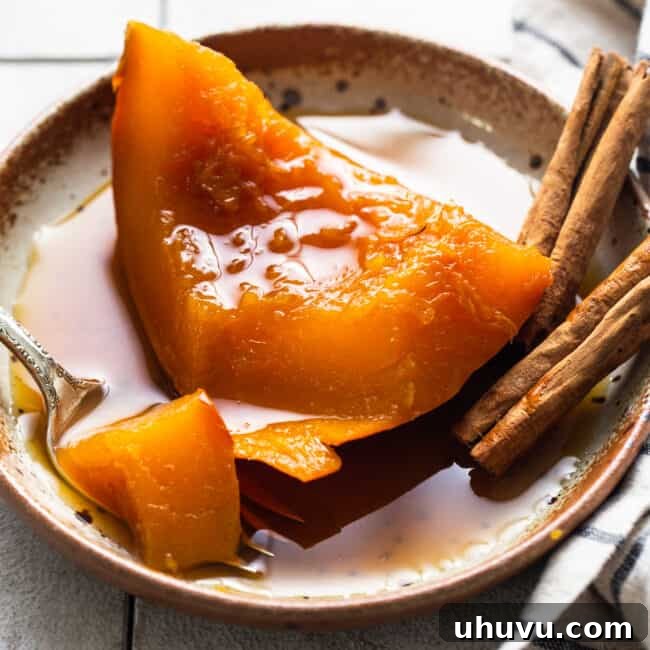
Calabaza en Tacha Recipe
By: Isabel Orozco-Moore
Calabaza en Tacha, or Mexican candied pumpkin, is a traditional Mexican dessert made from pumpkin, piloncillo, cinnamon, cloves, and orange zest.
Prep: 5 minutes | Cook: 1 hour 20 minutes | Total: 1 hour 25 minutes | Servings: 8 servings
Ingredients
- 16 ounces piloncillo
- 3 cups water
- 2 Ceylon cinnamon sticks
- 1 whole clove
- Zest of ¼ medium orange
- 5 pounds pumpkin, scrubbed and cleaned (about 1 small-medium pumpkin)
Instructions
- Add the piloncillo, water, cinnamon sticks, clove, and orange zest to a large pot or Dutch oven. Cook over medium-high heat for 10 minutes, stirring occasionally, until the piloncillo completely dissolves.
- Meanwhile, cut and discard the stem of the pumpkin. Slice it in half, discard the seeds and any stringy flesh, and cut it into 3 ½ to 4-inch chunks.
- Carefully add the pumpkin chunks to the pot skin side up.
- Reduce the heat to medium-low, cover, and cook for 60 minutes. The pumpkin should be fork-tender, and the flesh should be a beautiful golden brown color.
- Carefully transfer the cooked pumpkin to a serving tray or bowl and set aside.
- Raise the heat to medium-high and reduce the piloncillo syrup for 10 minutes, stirring occasionally.
- Serve the candied pumpkin in bowls with a generous amount of syrup.
Notes
- Piloncillo: If you can’t find piloncillo near you, use 2 cups of dark brown sugar instead.
- Cinnamon sticks: If you can’t find Ceylon cinnamon sticks, you can use regular Cassia cinnamon sticks instead.
- Make sure to layer the pumpkin pieces in the pot skin side up so that the flesh is able to touch and be submerged in the piloncillo syrup during cooking. The pumpkin will release a lot of liquid as well, so don’t worry if you think it doesn’t seem like enough liquid.
Nutrition Information (Approximate)
Serving: 1 serving | Calories: 292kcal | Carbohydrates: 75g | Protein: 3g | Fat: 0.3g | Saturated Fat: 0.2g | Polyunsaturated Fat: 0.01g | Monounsaturated Fat: 0.04g | Sodium: 23mg | Potassium: 1044mg | Fiber: 2g | Sugar: 63g | Vitamin A: 24137IU | Vitamin C: 26mg | Calcium: 118mg | Iron: 3mg
Nutrition information is automatically calculated, so should only be used as an approximation.
Photography by Ashley McLaughlin.