
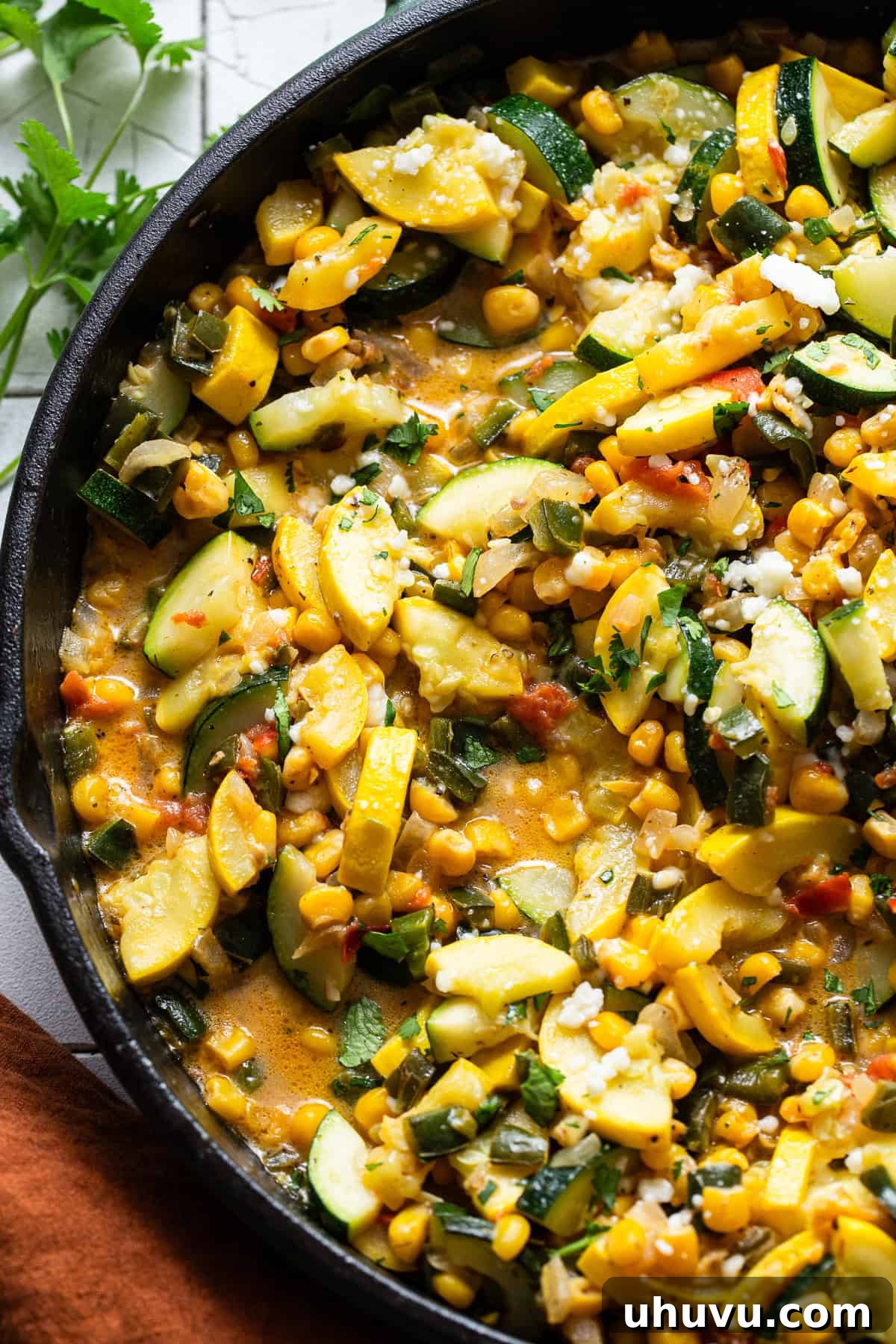
Discover the vibrant flavors of Mexican cuisine with Calabacitas, a delightful and wholesome side dish that promises to become a staple in your kitchen. This classic recipe, traditionally prepared with fresh zucchini, sweet corn, and ripe tomatoes, evokes the comforting essence of homemade Mexican cooking, just like cherished family recipes passed down through generations. It’s incredibly quick to prepare, surprisingly easy for any home cook, remarkably healthy, and profoundly satisfying – even for those who typically favor meat-centric meals.
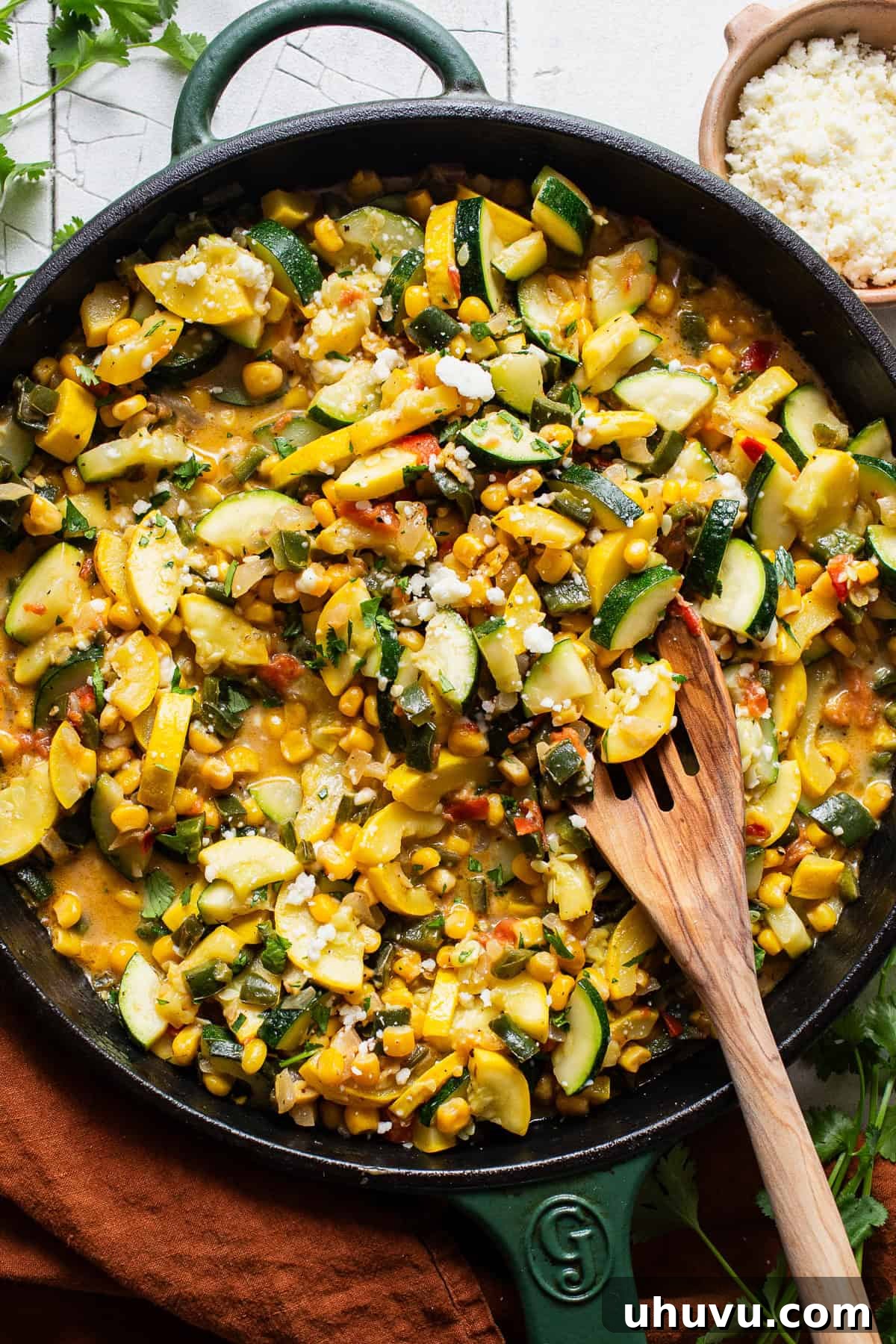
This particular Calabacitas recipe is one I turn to time and again. Its simplicity and consistent deliciousness make it an instant hit, perfectly hitting that spot for a wholesome, flavorful meal. It stands out as one of my absolute favorite methods to effortlessly incorporate more vegetables into my diet, especially during the summer months when zucchini and yellow squash are abundant. It transforms these versatile garden staples into something far from boring, offering a fresh and exciting way to enjoy the season’s bounty.
While there are countless regional variations of Calabacitas across Mexico, this specific rendition holds a special place in my heart. What sets this recipe apart is its ingenious light cheese sauce – a subtle yet transformative addition that elevates the dish without making it heavy. Crafted by gently stirring in a blend of shredded cheese and a splash of milk towards the end of cooking, this sauce melts beautifully into the tender vegetables, creating a creamy, rich texture and an unparalleled depth of flavor. The result is so irresistibly delicious that, truthfully, I rarely have any leftovers to speak of!
What Is Calabacitas?
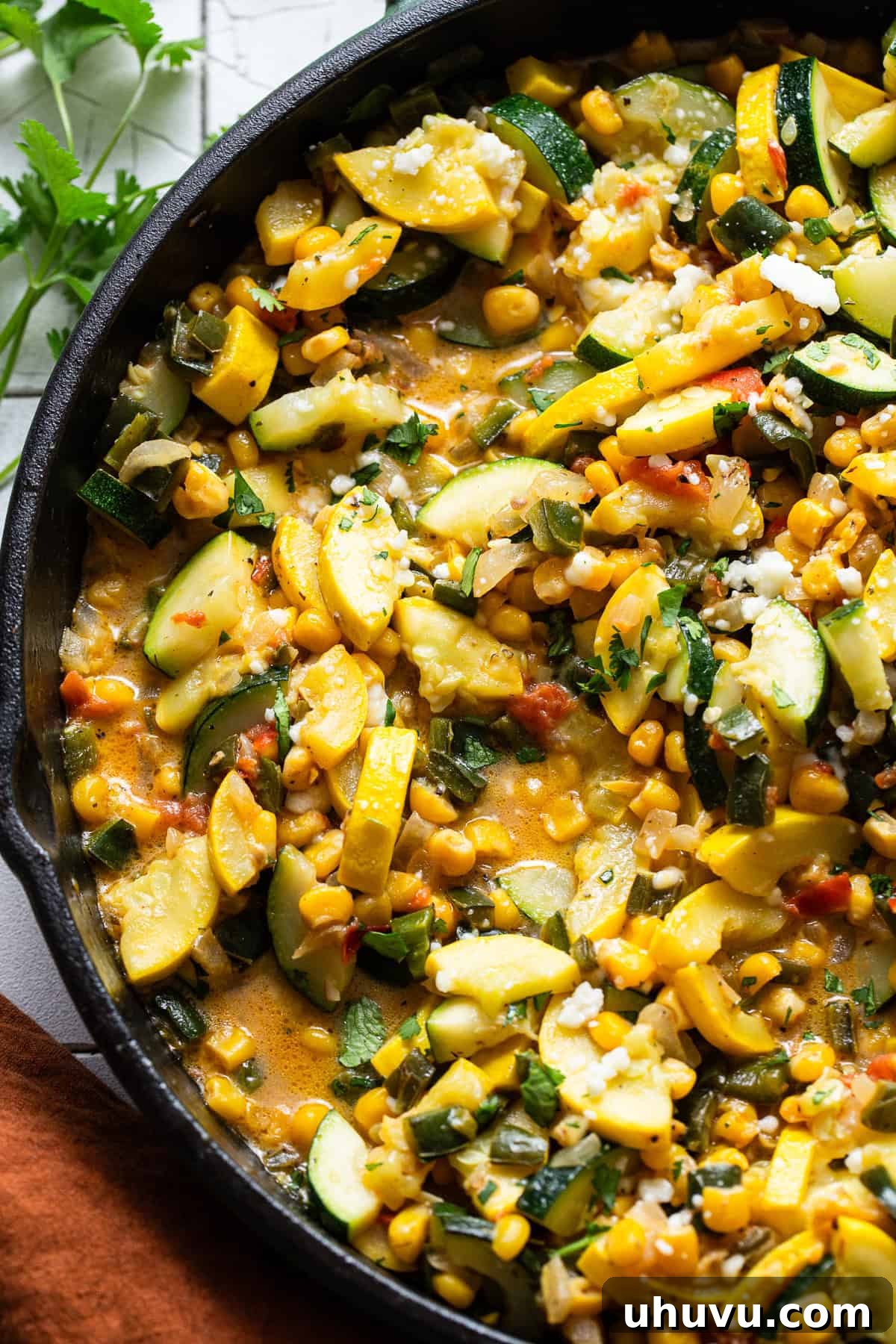
Calabacitas, a name derived from Spanish meaning “little squash,” is a beloved and traditional Mexican dish predominantly featuring sautéed summer squash (typically zucchini or yellow squash), vibrant corn kernels, ripe tomatoes, and aromatic peppers. More than just a simple side, Calabacitas is a testament to the fresh, wholesome ingredients central to Mexican cuisine, offering a burst of natural flavor and nutrients in every bite.
This versatile dish is most commonly presented as a delightful side, perfectly complementing a wide array of Mexican entrées such as grilled meats, enchiladas, or tacos. However, its hearty nature and rich flavor profile also make it substantial enough to stand proudly as a satisfying main vegetarian meal. For a complete and authentic experience, serve it alongside warm, homemade flour tortillas or rustic corn tortillas, allowing you to scoop up every last delicious morsel. It’s also excellent spooned over rice or paired with a serving of black beans or pinto beans.
5-Star Review ★★★★★
“It came out delicious!! Family loved it! Very easy to make and budget friendly.” – Cecile
Essential Ingredients for Perfect Calabacitas
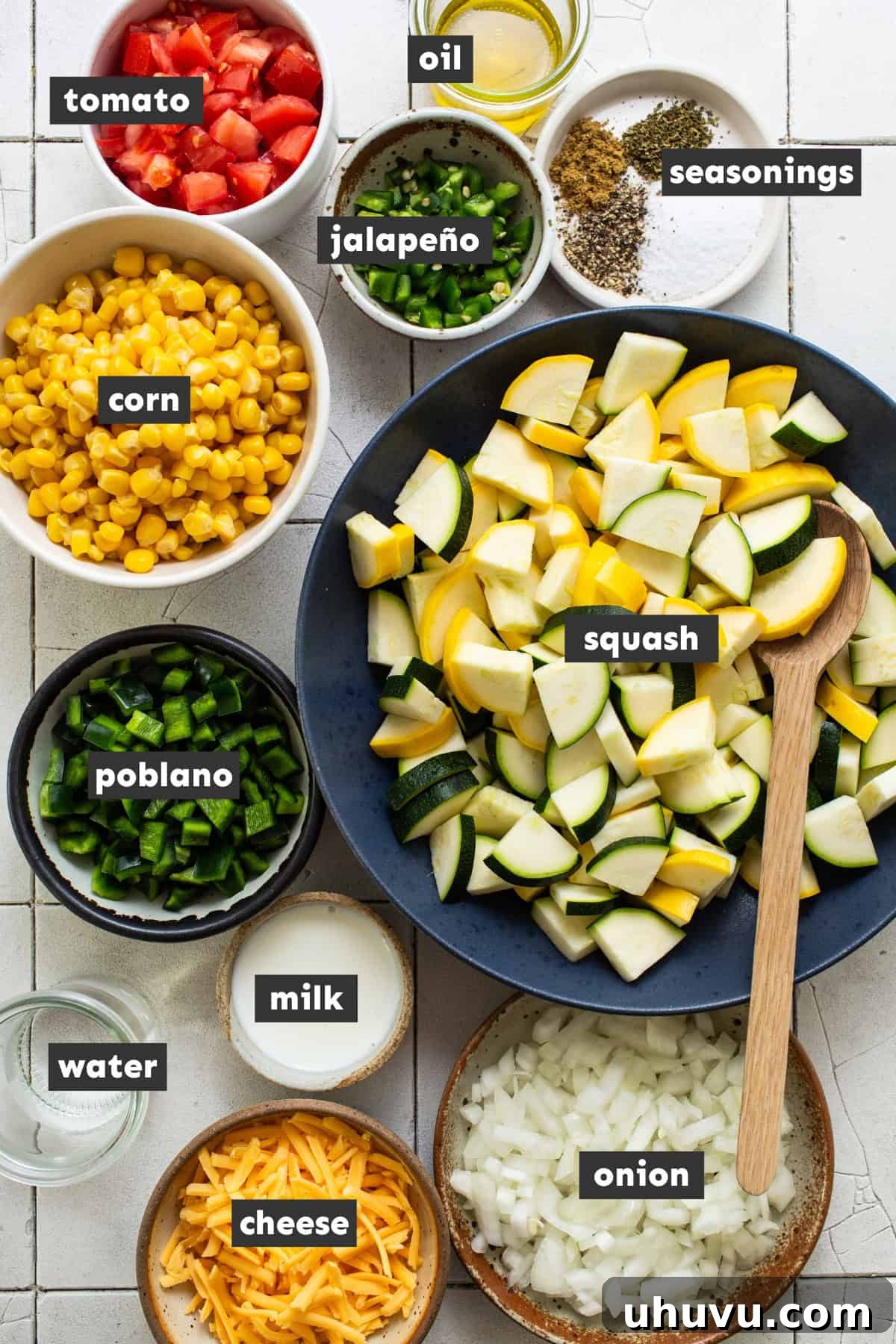
Crafting authentic Calabacitas begins with selecting the freshest, highest-quality ingredients. Each component plays a crucial role in building the layered flavors and appealing textures of this classic Mexican dish. Here’s a closer look at the key elements you’ll need:
- Zucchini and Yellow Squash: These are the undisputed stars of the show. This recipe benefits from a delightful mix of both green zucchini and sunny yellow squash, adding visual appeal and a subtle depth of flavor. For the ultimate texture, aim for medium-sized squash that are firm and free of blemishes. Larger squash tend to hold more water, which can lead to a mushier texture if overcooked, so selecting the right size is crucial for that perfect tender-crisp bite.
- Jalapeños and Poblanos: These peppers introduce a fantastic balance of gentle heat and earthy undertones. Poblano peppers offer a mild, slightly smoky flavor, while jalapeños provide a more direct, but manageable, kick. If you prefer a milder dish, simply remove the ribs and seeds from the jalapeño before dicing, as most of the capsaicin (the heat-causing compound) resides there. Alternatively, Anaheim peppers make an excellent, even milder substitute.
- Roma Tomatoes: The addition of diced Roma tomatoes brings a crucial element of sweetness and bright acidity to the dish, cutting through the richness and enhancing the overall freshness. Choose firm, ripe tomatoes for the best flavor.
- Corn: Whether you opt for fresh, canned, or frozen corn, it contributes a wonderful burst of sweetness and a pleasant textural contrast. During peak summer season, seize the opportunity to use fresh corn cut directly from the cob; its natural sweetness and crisp texture are simply unbeatable. If fresh isn’t available, quality frozen or drained canned corn works perfectly.
- Shredded Cheddar Cheese: This is the secret ingredient for creating that luscious, silky, and cheesy sauce at the end. While sharp cheddar provides a robust flavor that I particularly enjoy, feel free to experiment with other melting cheeses like creamy Monterey Jack, spicy Pepper Jack, or a milder cheddar, depending on your preference. Freshly shredded cheese melts more smoothly than pre-packaged varieties.
- Milk: To achieve the ideal consistency for the light cheese sauce, whole milk is recommended. For those who desire an even thicker and creamier finish, heavy cream or half-and-half can be used to impart a richer texture without making the dish overly indulgent.
- Aromatics & Seasonings: Don’t forget the foundational flavors! A small diced onion and minced garlic cloves provide an aromatic base. Kosher salt, freshly ground black pepper, dried oregano, and ground cumin are essential spices that tie all the vibrant flavors together, infusing the calabacitas with an authentic Mexican essence.
(These are just some of the most important ingredients and considerations. For precise measurements and step-by-step instructions, please refer to the detailed recipe below.)
How to Make Flavorful Calabacitas
Creating this delicious Calabacitas dish is a straightforward and rewarding process. Follow these simple steps to bring a taste of authentic Mexican comfort food to your table:
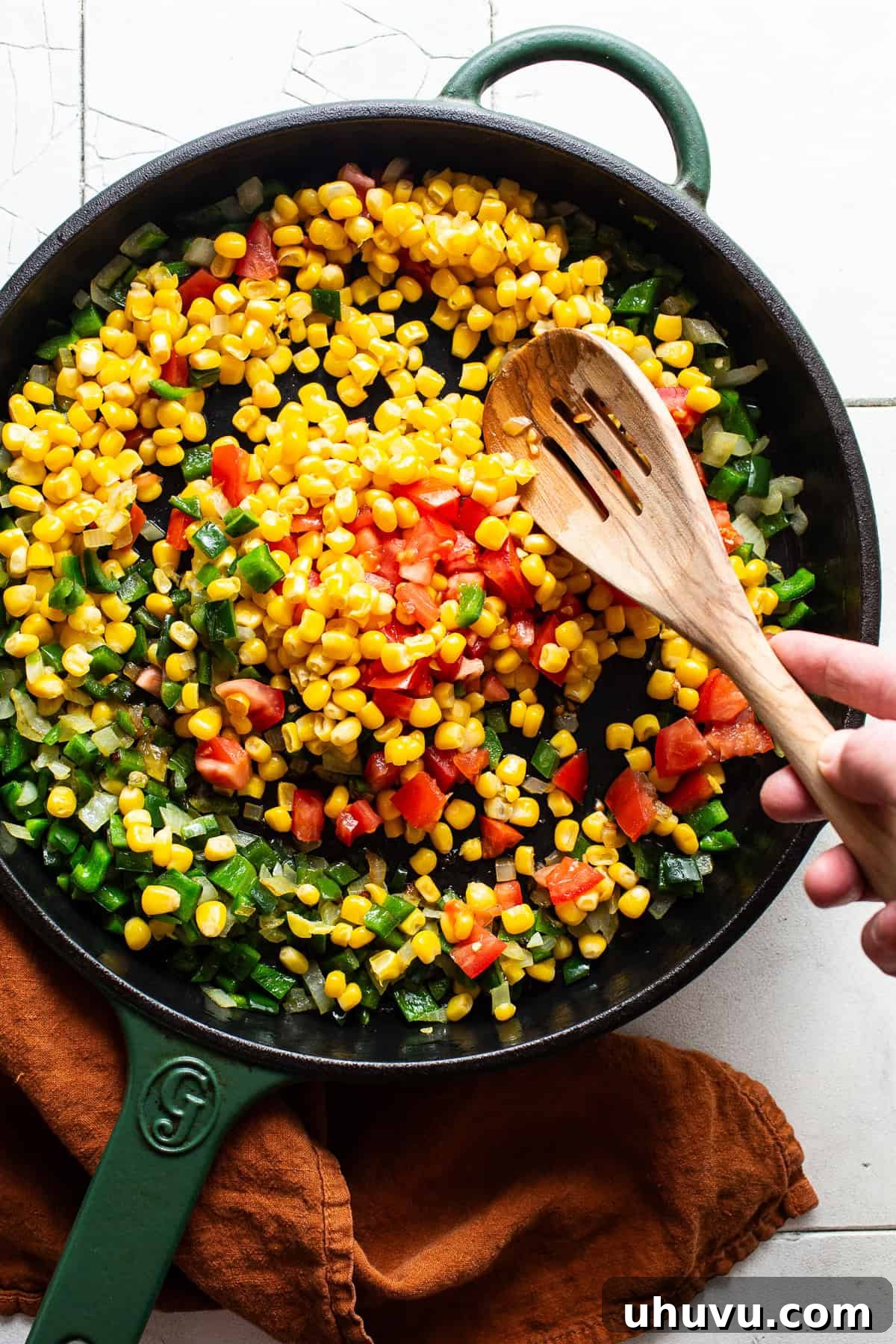
Step 1: Sauté the Aromatics. Begin by heating a tablespoon of olive oil in a large skillet or sauté pan over medium-high heat. Once shimmering, add the diced onion, poblano pepper, and jalapeño pepper. Sauté these vegetables for about 5 minutes, stirring occasionally. You want them to soften slightly and become fragrant, releasing their wonderful aromas into the pan.
Step 2: Incorporate Corn and Tomatoes. Next, add the yellow corn (fresh, frozen, or drained canned) and the diced Roma tomatoes to the skillet. Continue to sauté for another 5 minutes, stirring periodically. This allows the corn to warm through and the tomatoes to begin breaking down, releasing their juices and adding a layer of sweet acidity to the base.
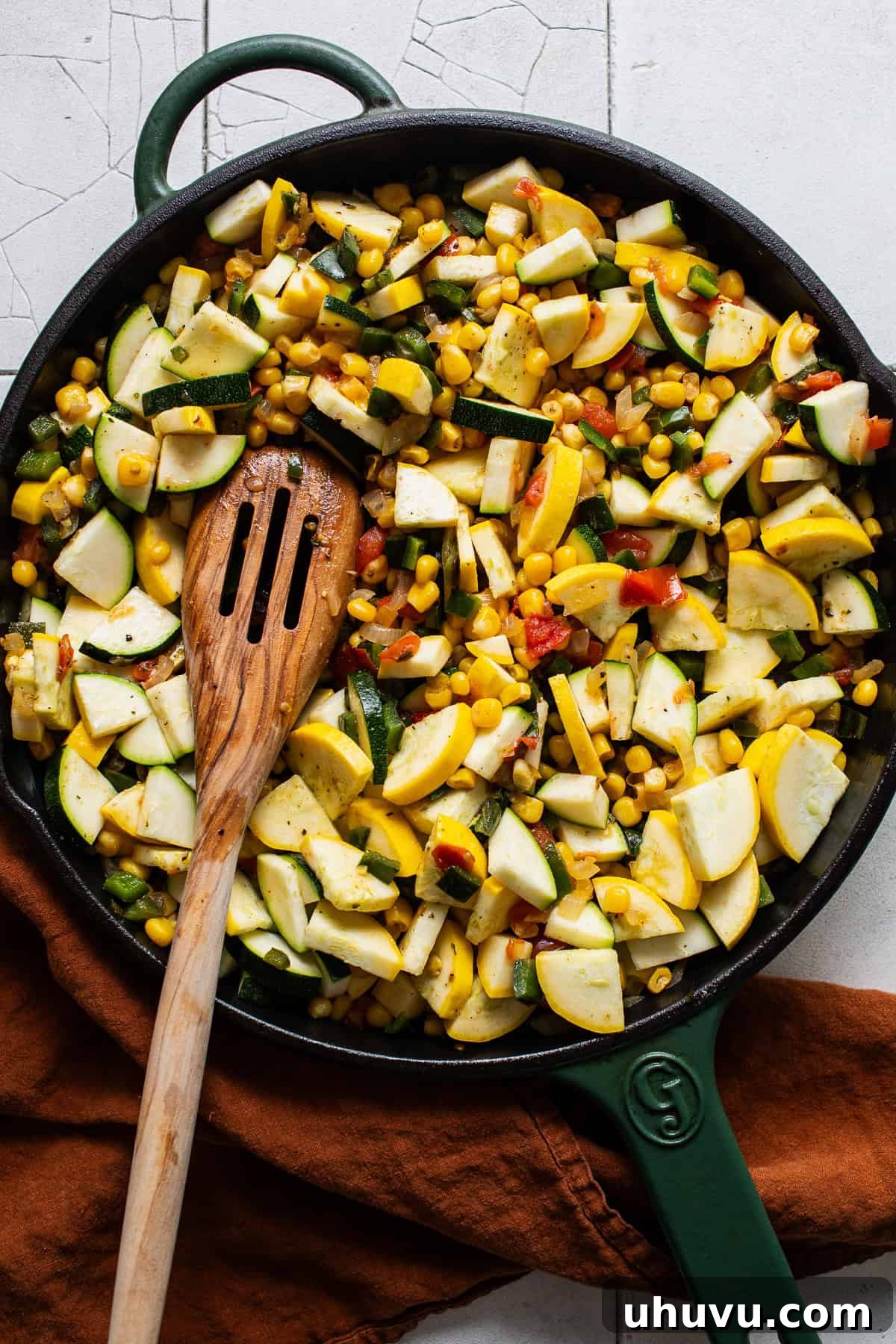
Step 3: Add Squash and Seasonings. Now, it’s time to introduce the sliced zucchini and yellow squash to the pan. Along with the squash, add the minced garlic, kosher salt, freshly ground black pepper, dried oregano, and ground cumin. Stir everything well to ensure the squash and seasonings are evenly distributed amongst the other vegetables. Cook for approximately 5 minutes, stirring every minute or so, allowing the squash to begin to soften slightly.
Step 4: Simmer to Tenderness. Pour in ¼ cup of water, then reduce the heat to low. Cover the skillet tightly with a lid and let the mixture simmer gently for another 5 minutes. This steaming process allows the zucchini and yellow squash to fully cook until they reach a tender, but still slightly firm, consistency. Be careful not to overcook them to avoid mushiness.
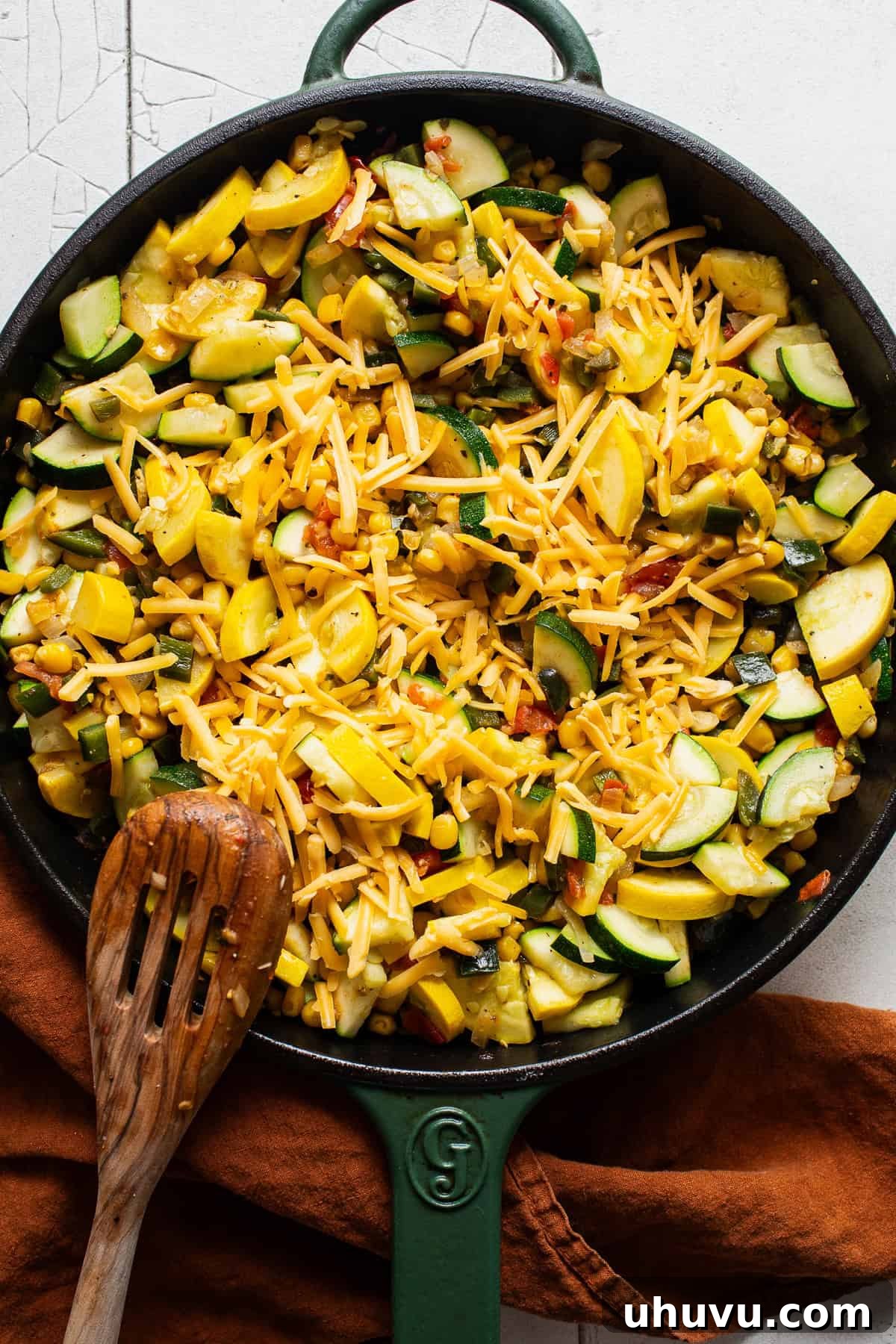
Step 5: Create the Cheesy Sauce. Once the squash is tender, remove the lid. Stir in the ½ cup of shredded cheddar cheese and ¼ cup of milk. Continue to stir gently until the cheese has fully melted and a light, creamy sauce forms, coating all the vegetables. The residual heat from the pan will help the cheese melt perfectly into a luscious texture.
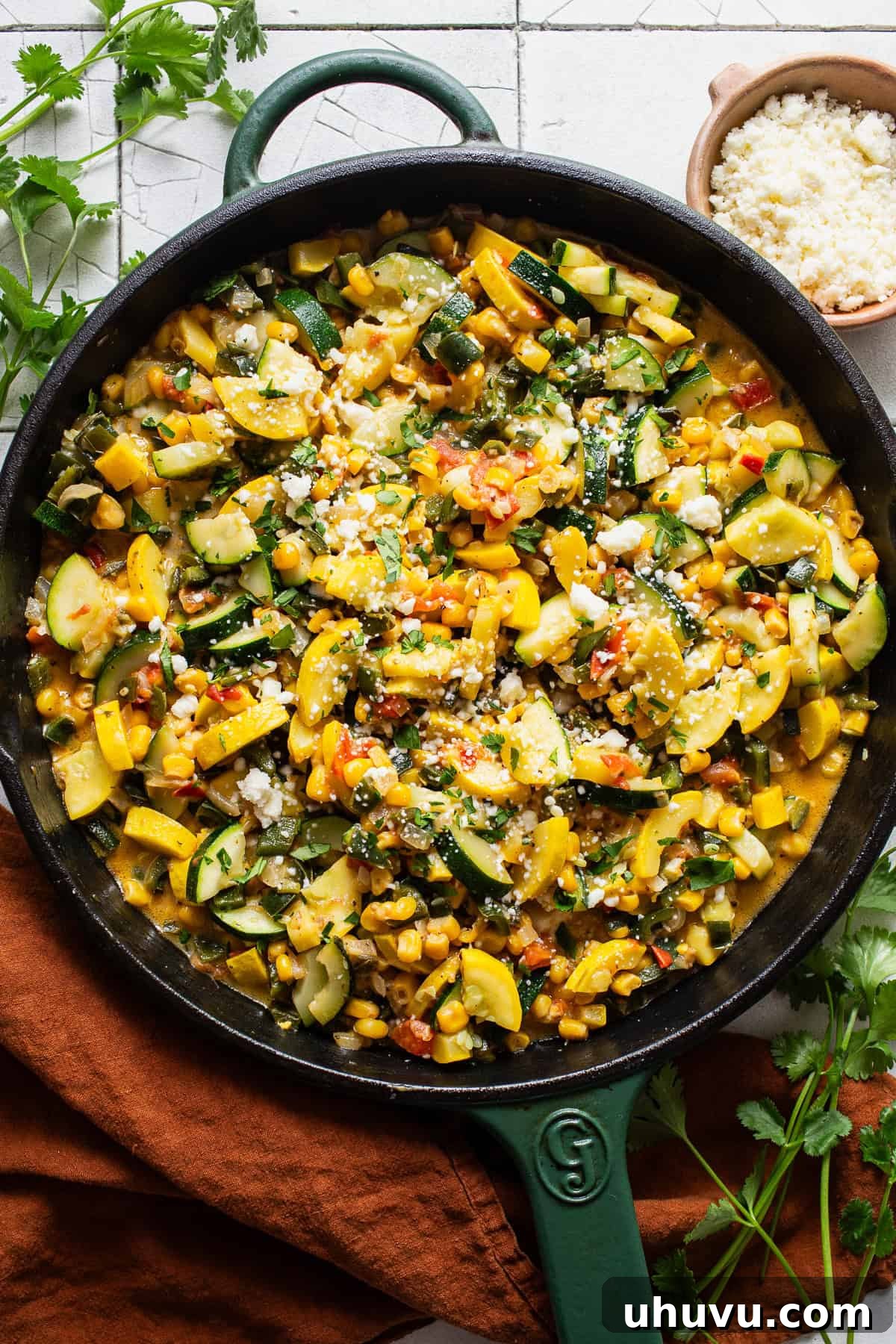
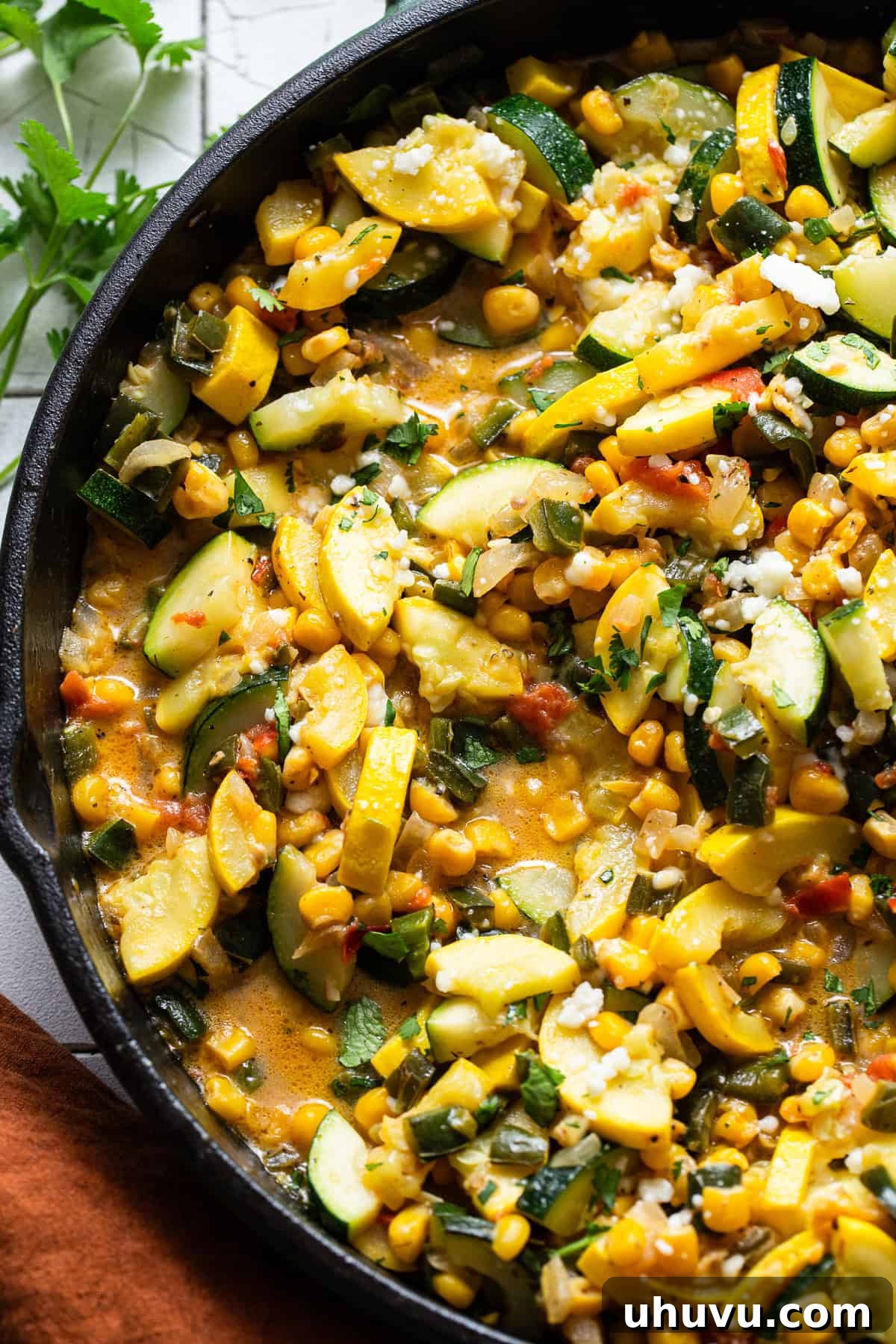
Step 6: Garnish and Serve. Remove the skillet from the heat. To finish, garnish generously with a sprinkling of crumbled Cotija cheese (or feta, if preferred) and a handful of freshly chopped cilantro. Serve your vibrant and flavorful Calabacitas immediately as a delightful side dish or a light main course. Enjoy the fresh, wholesome taste of this Mexican classic!
Calabacitas
Ingredients
- 1 tablespoon olive oil
- 1 small onion, diced (yellow or white)
- 1 poblano pepper, diced
- 1 jalapeño pepper, diced (seeds removed if you don’t want it spicy)
- 1 ½ cups yellow corn, fresh or frozen (or 15.25-ounce can, drained)
- 2 Roma tomatoes, diced
- 1 large zucchini, sliced into ¼-inch thick quartered pieces or half moons
- 1 large yellow squash sliced into ¼-inch thick quartered pieces or half moons
- 3 cloves garlic, minced
- 2 teaspoons kosher salt
- ¼ teaspoon freshly ground black pepper
- ¼ teaspoon dried oregano
- ¼ teaspoon ground cumin
- ¼ cup water
- ½ cup shredded cheddar cheese
- ¼ cup milk
- Crumbled cotija cheese, for garnishing
- Chopped cilantro, for garnishing
Instructions
- Heat the olive oil in a large skillet or sauté pan over medium-high heat.
- Add the onion, poblano, and jalapeño. Cook for 5 minutes, stirring occasionally, until the vegetables begin to soften.
- Add corn and tomatoes, and cook for 5 more minutes, stirring occasionally.
- Add the zucchini, yellow squash, garlic, salt, black pepper, oregano and ground cumin. Stir to combine and cook for 5 minutes, stirring every minute or so.
- Pour in the water, reduce the heat to low, cover, and simmer for 5 minutes.
- Stir in the shredded cheese and milk until the cheese has fully melted.
- Remove from the heat, garnish with a sprinkling of cotija cheese and cilantro, and serve.
Video
Notes
- Squash: This recipe is incredibly versatile. Feel free to use any type of summer squash you have on hand, whether it’s all zucchini, all yellow squash, or a delightful combination. Just ensure they are cut to similar sizes for even cooking.
- Peppers: For convenience or a different flavor profile, you can substitute fresh peppers with 1 or 2 (4-ounce) cans of diced green chiles. Remember to drain them thoroughly before adding to the skillet to prevent excess moisture.
- Spice level: If poblano and jalapeño peppers are too spicy for your palate, you can easily adjust the heat. Swap them out for 1 large or 2 small bell peppers (any color), which will add a sweet, mild flavor without the spice.
- Cotija cheese: While Cotija cheese offers an authentic salty, crumbly touch, you can substitute it with crumbled feta cheese for a similar tanginess. If you prefer, you can also omit the cheese garnish entirely.
- Storage: Leftover Calabacitas can be stored in an airtight container in the refrigerator for up to 5 days. For best quality and texture, it’s not recommended to freeze this dish, as the squash can become excessively mushy upon reheating.
- Reheating: To reheat, simply warm the Calabacitas on the stovetop over medium heat for about 5 minutes, stirring gently until heated through. Alternatively, you can microwave it in 30-second intervals, stirring in between, until it’s warm and ready to enjoy.
Nutrition
Calories: 149kcal |
Carbohydrates: 17g |
Protein: 6g |
Fat: 7g |
Saturated Fat: 3g |
Cholesterol: 11mg |
Sodium: 962mg |
Potassium: 493mg |
Fiber: 2g |
Sugar: 5g |
Vitamin A: 590IU |
Vitamin C: 43mg |
Calcium: 106mg |
Iron: 1mg
Nutrition information is automatically calculated, so should only be used as an approximation.
Did you make this recipe?
Leave a comment and star rating below!
Recipe Success Tips for Calabacitas
Achieving the perfect Calabacitas involves a few key techniques. Keep these tips in mind to ensure your dish is flavorful, vibrant, and boasts the ideal texture:
- Embrace Fresh, Seasonal Produce: The quality of your ingredients profoundly impacts the final taste. Squash, being the primary component, should be firm, unblemished, and medium-sized. Summer is zucchini’s peak season, which means you’ll find them at their sweetest and most flavorful, guaranteeing the best results for your Calabacitas. Utilizing fresh, in-season corn and ripe Roma tomatoes will further enhance the dish’s natural sweetness and vibrant character.
- Ensure Even Cuts for Consistent Cooking: To prevent some vegetables from becoming mushy while others remain undercooked, it’s vital to chop all your squash, peppers, and onions into similar-sized pieces. Aim for uniform ¼-inch thick quartered pieces or half-moons for the squash. This precision ensures that everything cooks at a consistent rate, resulting in a harmonious texture throughout the dish.
- Avoid Overcooking the Squash: This is perhaps the most crucial tip for perfect Calabacitas. Squash can rapidly transition from a desirable tender-crisp texture to an unappetizing mush. Cook the Calabacitas over medium-high heat initially to get a nice sauté, then reduce heat and simmer as instructed. Keep a close eye on the squash, and if you notice them becoming too soft or losing their structural integrity, promptly remove the pan from the heat. A slight bite in the squash is preferable to an overcooked, watery texture.
- Transform it into a Hearty Meal: While Calabacitas shines as a side dish, it’s incredibly adaptable and can easily be upgraded to a fulfilling main course. For a protein boost, consider stirring in some tender shredded chicken, flavorful leftover barbacoa, or rich carnitas meat. For a vegetarian main, adding hearty pinto beans and black beans not only adds protein but also makes it more substantial, perfect for a filling lunch or dinner.
Frequently Asked Questions About Calabacitas
Absolutely! While corn is a traditional and delightful feature in Calabacitas, you can certainly omit it if you prefer or if it’s not readily available. The dish will still be incredibly flavorful with just the squash, tomatoes, and peppers. You could also swap in another vegetable like diced carrots or bell peppers if you wish to maintain a similar bulk.
To transform this recipe into a rich and creamy “Calabacitas con Crema,” you have a few excellent options. Instead of using regular milk, you can stir in heavy cream for a decadent texture, or for a dairy-free alternative, coconut milk can provide a wonderful creaminess. Add it at the same step as the cheese and milk, stirring gently until the sauce thickens and coats all the vegetables beautifully. This variation offers a luxurious mouthfeel that is incredibly comforting.
The spice level of Calabacitas is entirely customizable. In this recipe, we use jalapeños and poblanos, which provide a mild to medium heat. If you prefer a milder flavor, remove the seeds and ribs from the jalapeño. For no heat at all, substitute both jalapeño and poblano peppers with bell peppers. If you enjoy extra heat, you can leave the seeds in the jalapeño or even add a pinch of cayenne pepper or a dash of your favorite hot sauce.
Yes, many regional variations of Calabacitas include meat. You can easily add cooked shredded chicken, ground beef, pork, or even chorizo to make it a more substantial meal. Incorporate the cooked meat during the last few minutes of simmering, allowing it to warm through and meld with the vegetable flavors.
Exploring Different Ways to Cook Calabacitas
While the stovetop sauté remains the most popular and easiest method, Calabacitas can be adapted to various cooking techniques, each offering a unique flavor and texture profile:
- Sautéed (One-Pot Method): The classic sautéed method, as detailed in this recipe, is favored for its simplicity and ability to create a delicious one-pot dish. Cooking the vegetables over medium-high heat is key to achieving a tender-crisp texture and preventing the squash from becoming watery or mushy. This method highlights the fresh flavors of the ingredients and ensures a quick cooking time, making it perfect for weeknight dinners.
- Roasted (Sweet & Earthy): Roasting Calabacitas in the oven or an air fryer brings out a wonderfully sweeter, more concentrated flavor in the vegetables. The high heat caramelizes the natural sugars, creating slightly browned edges and a depth that differs from sautéing. To roast, simply toss the diced squash, corn, tomatoes, and peppers with a little olive oil and your preferred seasonings (as directed in the recipe). Spread them in a single layer on a baking sheet and roast at 400℉ (200℃) until tender and slightly charred, typically for 15-20 minutes, or air fry at 375℉ (190℃) for 10-15 minutes, shaking the basket occasionally.
- Grilled (Smoky & Charred): For a fantastic smoky and charred flavor, especially during warmer months, grilling Calabacitas is an excellent choice. This method works beautifully with larger squash. Cut the zucchini and yellow squash lengthwise into thick planks or large half-moons, then scoop out the seeds if they are large. Brush them lightly with olive oil and season generously with salt, pepper, cumin, and oregano. Grill over medium-high heat until tender with attractive grill marks, then chop into smaller pieces before mixing with sautéed corn and tomatoes, or serve the grilled squash as a base with the corn and tomatoes spooned over.
More Easy Mexican Side Dishes You’ll Love
If you’re looking for more delicious and easy Mexican-inspired sides to round out your meals, here are a few highly recommended recipes that perfectly complement any main course:
- Roasted Mexican Zucchini: A simple yet flavorful way to enjoy zucchini, roasted to perfection with Mexican seasonings.
- Esquites (Mexican Street Corn Salad): A vibrant and zesty salad featuring corn, lime, cheese, and a creamy dressing.
- Roasted Corn Salsa: Sweet roasted corn combined with fresh vegetables for a refreshing and versatile salsa.
This post was originally published in May 2020 and has been updated with new photos and more helpful tips to enhance your cooking experience.
Photography by Ashley McLaughlin.