

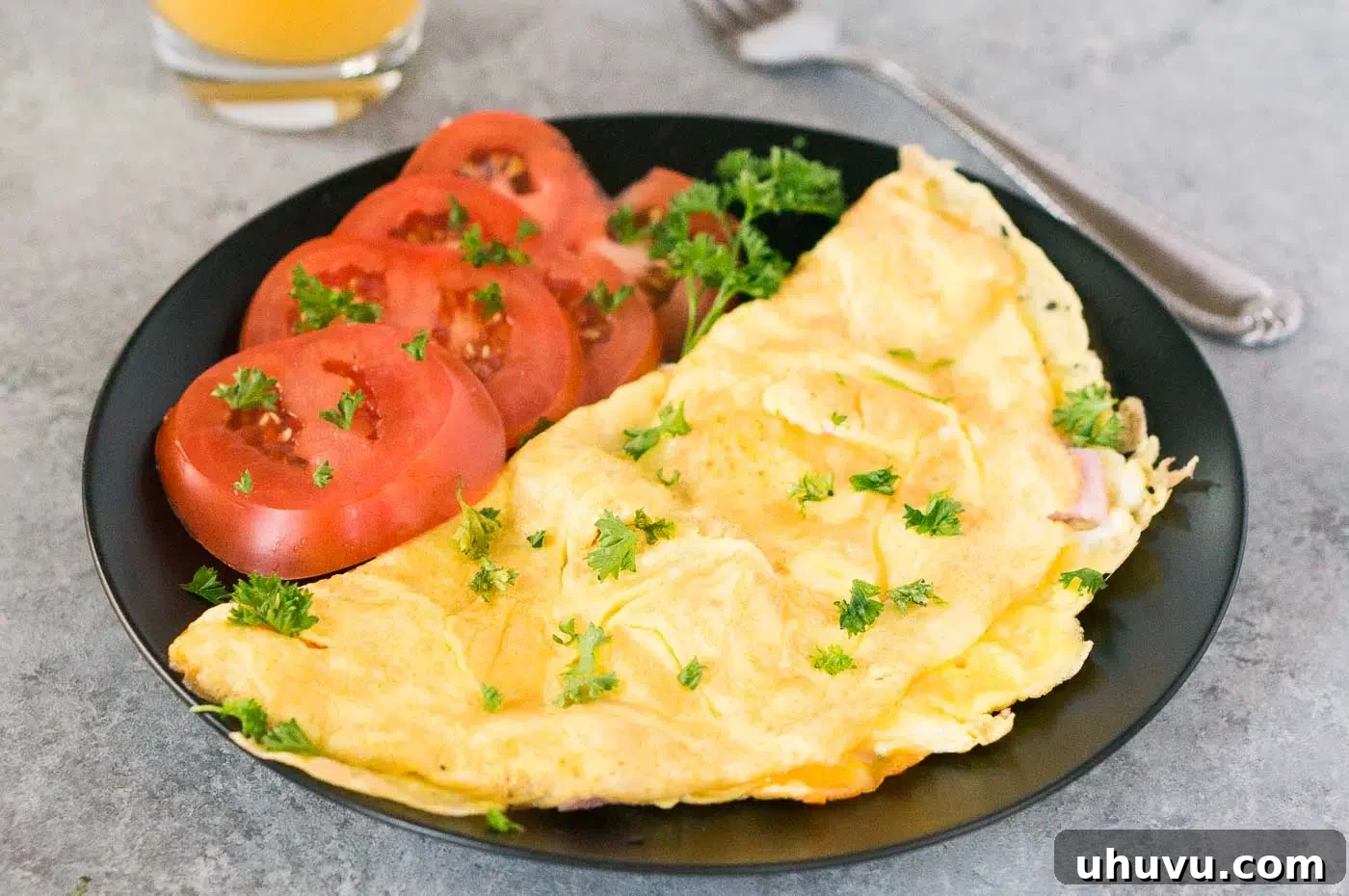
A culinary cornerstone revered for its simplicity and versatility, the humble omelet stands as a true breakfast, brunch, lunch, or even dinner champion. Learning how to make an omelet that’s light, fluffy, and bursting with flavor is a skill every home cook should master. It’s a quick, wholesome, and incredibly satisfying meal that can be customized endlessly to suit any palate or whatever ingredients you have on hand.

Often my go-to meal when time is of the essence, a delicious omelet can be ready in mere minutes, requiring just a handful of staple ingredients. While the classic French omelet might seem intimidating, often associated with a delicate, rolled technique, the American-style omelet is incredibly forgiving and easy to perfect. With my clear, step-by-step instructions and expert tips, you’ll be consistently crafting perfectly fluffy omelets in no time, making them a regular and beloved feature on your meal menu.
For more inspiration and exciting variations, be sure to explore my delightful Denver Omelet recipe and the unique Kale and Sausage Omelet. These recipes showcase just how adaptable and exciting omelets can be!
Why You Will Love This Easy Omelet Recipe
- Effortlessly Adaptable: The beauty of an omelet lies in its incredible flexibility. While I love mine filled with creamy avocado, savory ham, and sharp cheese, the possibilities are truly endless. You can incorporate virtually any ingredient you desire, from leftover vegetables to different types of meat or simply enjoy a classic plain omelet seasoned to perfection. This makes it an ideal meal for using up ingredients and satisfying diverse cravings.
- Wholesome & Deeply Satisfying: Omelets offer a fantastic way to enjoy fresh, wholesome ingredients in a truly satisfying package. Packed with protein from the eggs and vital nutrients from your chosen fillings, they provide sustained energy and keep you feeling full without being overly heavy. Their rich flavors make them a delightful choice for any meal, proving that healthy eating can also be incredibly delicious.
- Quick, Easy & Consistently Fluffy: Forget complicated cooking techniques. This homemade omelet recipe comes together in under 10 minutes from start to finish. With just a few simple steps and readily available ingredients, you’ll be creating light, airy, and perfectly fluffy omelets every single time. It’s the ultimate solution for a fast and delicious meal when you’re short on time.
- Naturally Dairy-Free Friendly: Unlike many frittata recipes that often rely on milk or cream, a traditional omelet can be made without any dairy products. This flexibility makes it an excellent choice for individuals with dairy sensitivities, lactose intolerance, or those simply looking to reduce their dairy intake. You can easily substitute dairy cheese with plant-based alternatives or skip cheese altogether, ensuring a delicious meal that caters to various dietary preferences.
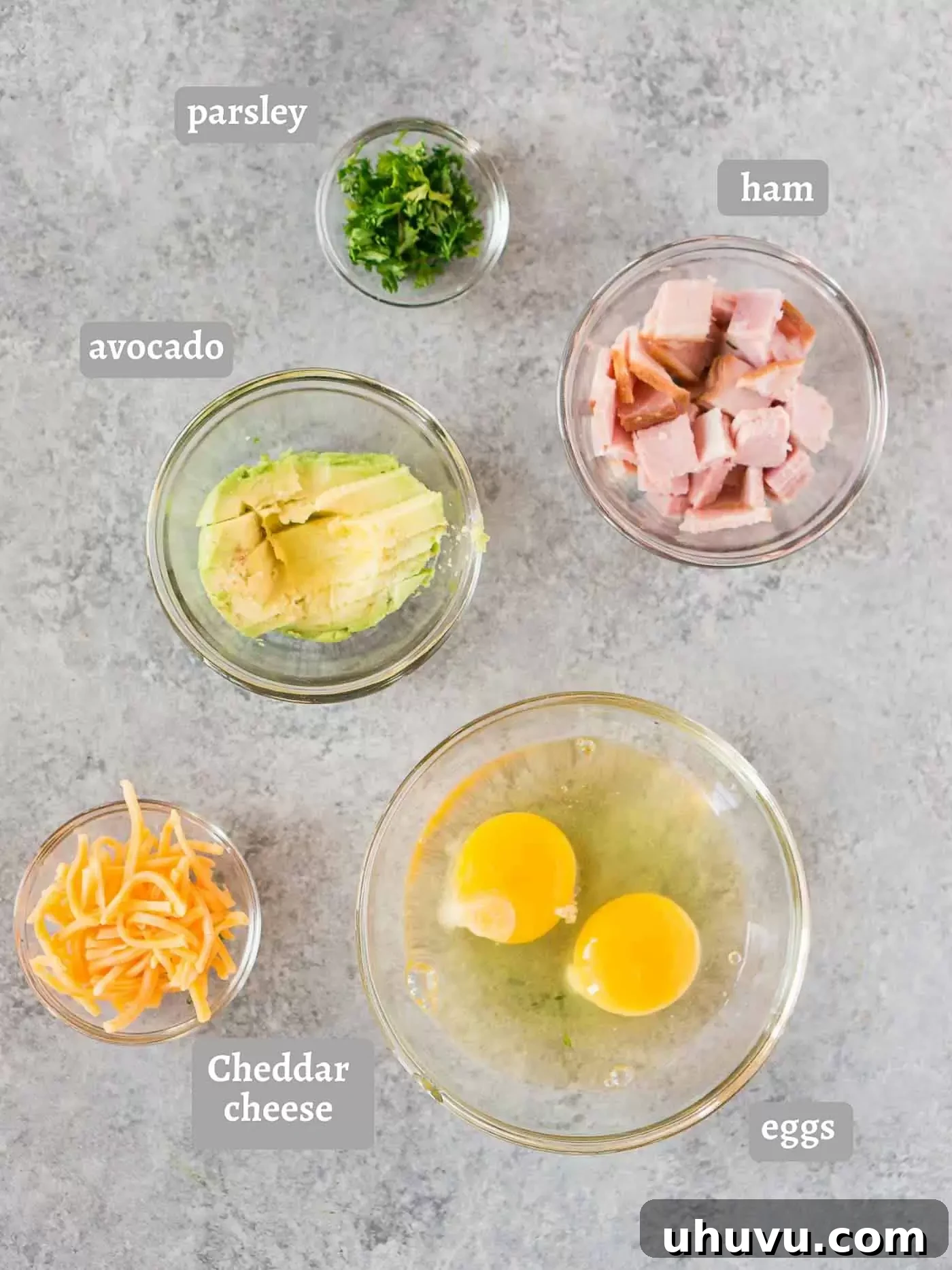
Essential Ingredients for Your Perfect Omelet
Crafting a delicious omelet starts with quality ingredients. Here’s what you’ll need, along with some helpful tips:
- Fresh Eggs: The star of the show! Always opt for the freshest eggs you can find, preferably organic or free-range, for the best flavor and texture. A simple freshness test involves placing an egg in a bowl of water: fresh eggs will sink to the bottom and lie on their side, while older eggs will stand upright or float (discard any that float entirely). Cold eggs from the fridge are fine, but allowing them to come to room temperature for about 10-15 minutes can lead to a slightly fluffier omelet.
- Cooking Fat (Oil or Butter): I prefer using coconut oil for its subtle sweetness and high smoke point, which helps create a beautifully golden crust without burning. However, olive oil, vegetable oil, or classic unsalted butter are excellent alternatives. Butter adds a rich, traditional flavor, while various oils offer different nutritional profiles and cooking properties. Choose what you like best!
- Your Favorite Fillings: This is where you can truly make the omelet your own! For this recipe, I’ve chosen a delicious combination of shredded cheese, cooked ham, and creamy avocado, seasoned with a sprinkle of everything bagel seasoning for an extra flavor boost. But don’t feel limited! The beauty of an omelet is its adaptability. Consider your preferences and what you have available.
- Salt and Pepper: Simple seasonings are key to enhancing the natural flavor of the eggs. A pinch of salt before whisking and a grind of fresh black pepper at the end can make a world of difference.
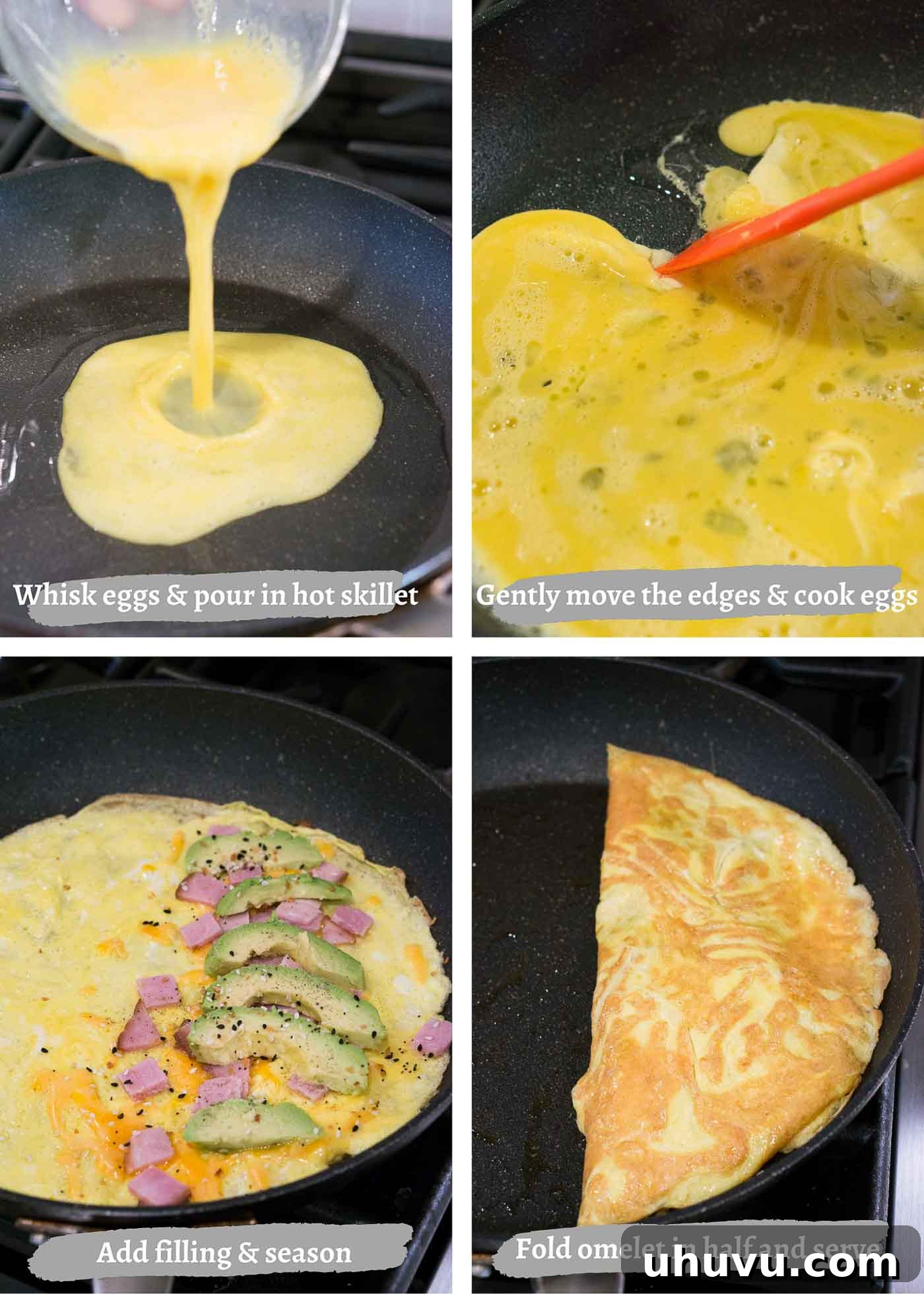
How To Make An Omelet: A Simple Step-by-Step Guide
Follow these easy steps to create your perfect, fluffy omelet:
- 1. Prepare the Eggs: Crack 2-3 large eggs (depending on your skillet size and hunger) into a medium bowl. Add a pinch of salt and a grind of black pepper. Using a fork or a small whisk, vigorously whisk the eggs until the yolks and whites are fully combined and slightly frothy. You’re aiming for a uniform, pale yellow color with some air incorporated – this is key to a fluffy omelet.
- 2. Heat Your Skillet: Place an 8 or 9-inch non-stick skillet over medium-low heat. Add 1-2 tablespoons of your chosen cooking fat (coconut oil, olive oil, or butter). Allow the fat to melt and shimmer, ensuring it lightly coats the entire bottom of the pan. The pan needs to be hot enough to cook the eggs quickly but not so hot that they burn.
- 3. Add the Eggs: Once the oil is hot and shimmering, pour the whisked eggs into the prepared pan. Immediately cover the skillet with a lid. This traps the steam, helping the top of the omelet cook gently and evenly, contributing to its fluffy texture. Cook the omelet undisturbed for about 2-3 minutes, or until the edges appear set and slightly golden, and the center is mostly cooked but still looks a little moist.
- 4. Introduce Fillings & Season: Carefully remove the lid. Now is the time to add your chosen fillings. Sprinkle shredded cheese and chopped cooked ham over one half of the omelet. Turn off the heat. The residual heat in the pan will gently melt the cheese and finish cooking the eggs. Add your avocado slices (if using) and any additional seasoning like everything bagel seasoning over the fillings.
- 5. Fold and Serve: Using a small, flexible rubber spatula, gently run it around the edges of the omelet to ensure it’s completely released from the pan. Carefully fold the unoccupied half of the omelet over the side with the fillings, creating a neat crescent shape. Slide the perfectly cooked omelet onto a warm plate. Garnish with a sprinkle of freshly chopped parsley for a pop of color and freshness, if desired, and serve immediately to enjoy its warmth and fluffiness.
TIPS FROM NELI’S KITCHEN
Expert Tips For The Best Omelet Every Time
- Portion Control is Key: Omelets are generally designed for individual servings. Resist the urge to add too many eggs to one pan, as this can overcrowd the skillet, prevent even cooking, and lead to an unappetizingly dense or even raw center. Stick to the recommended egg-to-pan ratio for optimal results.
- Match Eggs to Skillet Size: For a perfect single-serving omelet, use 2 large eggs for an 8-inch non-stick skillet. If you’re using a slightly larger 9-inch skillet, 3 large eggs will provide a more substantial and equally well-cooked omelet. This ratio ensures even heat distribution and allows the omelet to cook quickly without becoming too thick.
- Preheat Your Pan Properly: Always allow your cooking fat to get hot and shimmering before pouring in the whisked eggs. A properly preheated pan ensures that the eggs set quickly upon contact, forming a delicate crust and preventing sticking. This rapid initial set is crucial for a smooth flip and a fluffy interior.
- Don’t Overload on Toppings: While it’s tempting to add a multitude of delicious fillings, moderation is essential. Too many toppings can weigh down the delicate egg structure, making it difficult to fold without tearing. If you add too much, the omelet might break apart, turning into scrambled eggs with fillings rather than a beautifully folded omelet. Ensure any bulky fillings are pre-cooked and cooled slightly before adding them.
- Avoid Overcooking the Eggs: The secret to a tender, moist omelet is not to overcook it. The edges should be visibly set and lightly golden, and the top should appear mostly cooked but still slightly moist in the center when you add your fillings. The residual heat will continue to cook the egg gently. An overcooked omelet will be dry and rubbery.
- Choose the Right Pan: A good quality non-stick skillet is your best friend when making omelets. It ensures the eggs don’t stick and allows for easy folding and sliding onto the plate.
How Many Eggs Do You Use For a Single Omelet?
The ideal number of eggs for an omelet largely depends on the size of your skillet and your appetite. For a standard single-serving omelet, I consistently find that 2 large eggs work perfectly in an 8-inch non-stick skillet. This allows the eggs to spread thinly enough to cook evenly and quickly, resulting in that desirable fluffy texture. If you prefer a slightly larger or more filling omelet, or if you are using a 9- or 10-inch skillet, increasing to 3 large eggs is recommended. This maintains the right egg-to-surface ratio, ensuring your omelet cooks beautifully without becoming too thin or too thick.
Omelet Fillings Ideas – Build Your Own Custom Omelette
One of the most exciting aspects of making an omelet is the freedom to customize it completely. You can truly build your own culinary creation based on your favorite flavors or whatever delightful ingredients you have in your pantry or fridge. Remember to pre-cook any raw meats or hard vegetables before adding them to the omelet to ensure they are heated through and tender. Here are some fantastic filling ideas to get you started:
- Cheeses: Elevate your omelet with a variety of cheeses. Popular choices include sharp cheddar, creamy feta, tangy pimento cheese, sophisticated Gruyère, melty mozzarella, or salty Parmesan. A blend of cheeses can also add complexity.
- Meats: Add a protein punch with different meats. Try crumbled breakfast sausage, crispy bacon bits, diced ham (like in this recipe!), succulent shrimp, lean turkey sausage, or elegant smoked salmon. Ensure all meats are cooked and chopped finely for even distribution.
- Vegetables: Boost nutrition and flavor with fresh or sautéed vegetables. Creamy avocado slices, juicy diced tomatoes, wilted spinach, sweet caramelized onions, earthy sautéed mushrooms, colorful bell peppers, finely chopped onions, or even roasted potatoes/hash browns can transform your omelet.
- Fresh Herbs: A sprinkle of fresh herbs adds brightness and aromatic depth. Experiment with chives, basil, thyme, dill, or parsley. Add them just before folding or as a garnish.
- Flavor Boosters: Don’t forget seasonings! Beyond salt and pepper, consider a dash of hot sauce, a sprinkle of red pepper flakes, or a savory everything bagel seasoning for an extra layer of taste.
Omelet Variations Around the World
While this recipe focuses on a delightful American-style omelet, the omelet concept is cherished globally, with each culture adding its unique spin:
- Spanish Omelet (Tortilla Española): A hearty, thick omelet typically made with thinly sliced or diced potatoes and onions, slowly cooked in olive oil until tender, then combined with eggs and cooked until golden and firm. It’s often served at room temperature and cut into wedges.
- French Omelet: The epitome of elegance, a classic French omelet is known for its smooth, unbrowned exterior and incredibly tender, moist, almost custard-like interior. It’s typically rolled rather than folded and often contains minimal fillings, like fresh herbs or a touch of cheese.
- Denver Omelet: A popular American diner classic, the Denver omelet (also known as a Western omelet) is typically filled with diced ham, bell peppers (often green), onions, and cheese. It’s hearty, savory, and a staple on many breakfast menus.
- Mexican Omelet: Bursting with vibrant flavors, Mexican omelets often feature ingredients like salsa, jalapeños, cheese (such as Monterey Jack or Cotija), corn, black beans, and sometimes chorizo. They are a spicy and flavorful way to start the day.
- Cheese Omelet: A simple yet universally loved variation, a cheese omelet highlights the rich flavor of eggs paired with your favorite melty cheese. It’s often the gateway for many to discover the joy of omelet making.

Can You Make Omelets Ahead of Time for Meal Prep?
While omelets are truly at their peak when enjoyed fresh off the skillet, their convenience also extends to meal preparation. If you’re planning ahead, you can certainly make them in advance. Cooked omelets will keep beautifully, tightly covered in an airtight container in the refrigerator, for up to 3 days. This makes them a fantastic option for grab-and-go breakfasts or quick lunches throughout the week. They can be enjoyed cold, or gently reheated. To reheat, simply place them on a microwave-safe plate, cover loosely (to retain moisture), and microwave for about 1 minute or until heated through. Be careful not to overcook during reheating to maintain their tender texture.
Can You Freeze Omelets?
Yes, egg omelets are surprisingly freezer-friendly! This is a great tip for batch cooking and ensuring you always have a quick, protein-packed meal on hand. Once your omelets have cooled completely to room temperature, wrap each one individually in plastic wrap, then place them in a freezer-safe bag or an airtight container. They will maintain their quality in the freezer for up to 3 months. When you’re ready to enjoy one, thaw it at room temperature for an hour or two, or overnight in the refrigerator. Reheat gently in the microwave or a low-heat skillet until warmed through. The texture may be slightly different from fresh, but they will still be delicious and convenient.
What Do You Serve With These Delicious Omelets?
These healthy American-style omelets are wonderfully versatile, making them a superb option for any meal of the day. They are perfectly satisfying on their own for an easy and filling breakfast or a light meal. To elevate your lunch or brunch, consider serving them alongside a fresh, crisp chef salad or classic breakfast sides like perfectly cooked bacon strips. For a more substantial and well-rounded dinner, they pair beautifully with a side of savory sweet potato wedges, flavorful mushroom rice, or a simple green salad. Don’t forget a hot cup of coffee or tea for breakfast, or a refreshing glass of juice for brunch!

More Easy Breakfast Ideas
- Quick and Delicious Breakfast Egg Muffins
- How To Make Perfect Hard Boiled Eggs Every Time
- Hearty and Flavorful Egg Casserole
- Simple and Elegant Baked Eggs
- Effortless Instant Pot Oatmeal
If you enjoyed this Omelet recipe or any other recipe on my blog, please take a moment to leave a ⭐ star rating and share your thoughts in the 📝 comments below. Your feedback truly helps! Thank you for visiting and happy cooking!
Loved this recipe? Pin it now to save for later!
Pin It

No ratings yet. Tap stars to rate!
How To Make an Omelet
Neli Howard
5 minutes
5 minutes
10 minutes
1 omelet
Pin Recipe
Print Recipe
Save This Recipe
Enter your email and we’ll send the recipe directly to you!
By submitting this form, you consent to receive emails from Delicious Meets Healthy.
Ingredients
- 2 eggs, whisked
- 2 tablespoons coconut oil
- ¼ cup shredded cheese
- ½ cup chopped cooked ham
- ½ avocado, sliced
- Salt and everything bagel seasoning
- Freshly chopped parsley for garnish, optional
Instructions
-
Heat coconut oil in a medium skillet over medium heat.
-
When the oil is hot, pour the whisked eggs to the pan. Cover and cook until the edges have begun to set, about 2 minutes.
-
Remove the lid and add shredded cheese and chopped ham to one side of the omelet. Turn off the heat, add avocado slices, and season with salt and everything bagel seasoning. Fold the other half of the omelet over the ham & cheese.
-
Run a small rubber spatula around the edges of the eggs to release it from the pan and then slide it onto a plate. Sprinkle with some freshly chopped parsley and serve warm.
Notes
- Omelets are meant to be for one person, don’t be tempted to add more eggs to the pan or you will end up with raw egg in your pan.
- Use 2 eggs for an 8-inch skillet, and 3 eggs for a 9-inch skillet.
- Let the oil get hot before adding the eggs so they cook quickly and evenly.
- Don’t add too many toppings. If you do, the egg can rip and scramble.
- Don’t overcook the egg. The edges should be just set around the edges before you add the fillings and fold.
Nutrition
Calories: 576kcal | Carbohydrates: 10g | Protein: 30g | Fat: 48g | Saturated Fat: 22g | Trans Fat: 1g | Cholesterol: 391mg | Sodium: 989mg | Potassium: 789mg | Fiber: 7g | Sugar: 1g | Vitamin A: 811IU | Vitamin C: 23mg | Calcium: 206mg | Iron: 3mg
Nutrition Disclaimer: Nutritional values are estimates and may vary with ingredients, brands, and portion sizes. For accuracy, use your preferred nutrition calculator.