
Mastering Cilantro: The Essential Guide to Chopping and Using This Vibrant Herb
Cilantro, often celebrated for its distinctive aroma and bright, citrus-like flavor, is a true culinary gem found in kitchens around the globe. This versatile herb adds an unparalleled freshness and a zesty punch to a myriad of dishes, making it an indispensable ingredient for home cooks and professional chefs alike. Whether you’re whipping up a vibrant salsa, garnishing a plate of tacos, or infusing depth into marinades like traditional carne asada, cilantro consistently elevates the taste profile.
Its leaves, with their delicate texture and verdant hue, are not just about flavor; they also contribute visual appeal to any meal. From the bustling street food stalls of Mexico to the intricate curries of India and the refreshing spring rolls of Vietnam, cilantro’s presence is a testament to its universal appeal and adaptability. However, to truly unlock its full potential and ensure its fresh essence shines through, understanding the correct way to prepare and chop cilantro is crucial. This guide will walk you through a simple yet highly effective method, passed down through generations of passionate cooks, ensuring your cilantro is always perfectly prepped and ready to transform your culinary creations.
Why Cilantro is a Culinary Powerhouse
Beyond its reputation as a flavorful garnish, cilantro offers a complex profile that can significantly enhance a dish. It’s known for its ability to cut through richness, add a refreshing counterpoint, and infuse a unique herbaceous quality that few other ingredients can replicate. Its leaves are rich in vitamins A, C, and K, as well as several antioxidants, contributing not just flavor but also nutritional benefits to your meals. From supporting digestive health to offering anti-inflammatory properties, cilantro is more than just a seasoning; it’s a valuable addition to a balanced diet.
The flavor of cilantro is often described as a vibrant blend of lemon, parsley, and a hint of pepper. However, it’s also famously divisive, with some individuals possessing a genetic predisposition that makes the herb taste like soap. For those who appreciate its unique taste, cilantro is indispensable in Mexican, Indian, Middle Eastern, and Southeast Asian cuisines, serving as a foundational flavor in everything from pico de gallo and guacamole to chutneys and pho.
The Art of Chopping Cilantro: Unlocking Its Full Flavor
The way you chop cilantro has a profound impact on its final taste and texture in a dish. A proper chop ensures an even distribution of flavor, prevents bruising that can lead to bitterness, and contributes to the overall aesthetic of your meal. Unlike many other herbs where plucking individual leaves is common practice, cilantro can be efficiently prepared with its stems, provided you know which parts to keep and which to discard. This method not only saves time but also preserves more of the herb’s essential oils, resulting in a fresher, more potent flavor.
Forget tedious leaf-by-leaf separation; our technique focuses on a simple, swift process that allows you to prepare a whole bunch of cilantro in minutes. This approach is designed for efficiency without sacrificing the quality or integrity of the herb. By following these steps, you’ll achieve perfectly chopped cilantro every time, ready to infuse your dishes with its signature brightness.
How to Chop Cilantro Like a Pro: A Step-by-Step Guide
If you’ve never used cilantro before, or are looking for the most efficient and effective way to prepare it, this method is your go-to. It maximizes flavor, minimizes waste, and saves you precious time in the kitchen. No need to pluck off the leaves individually – we embrace the flavorful tender stems!
- Prepare and Place Your Cilantro Bunch.
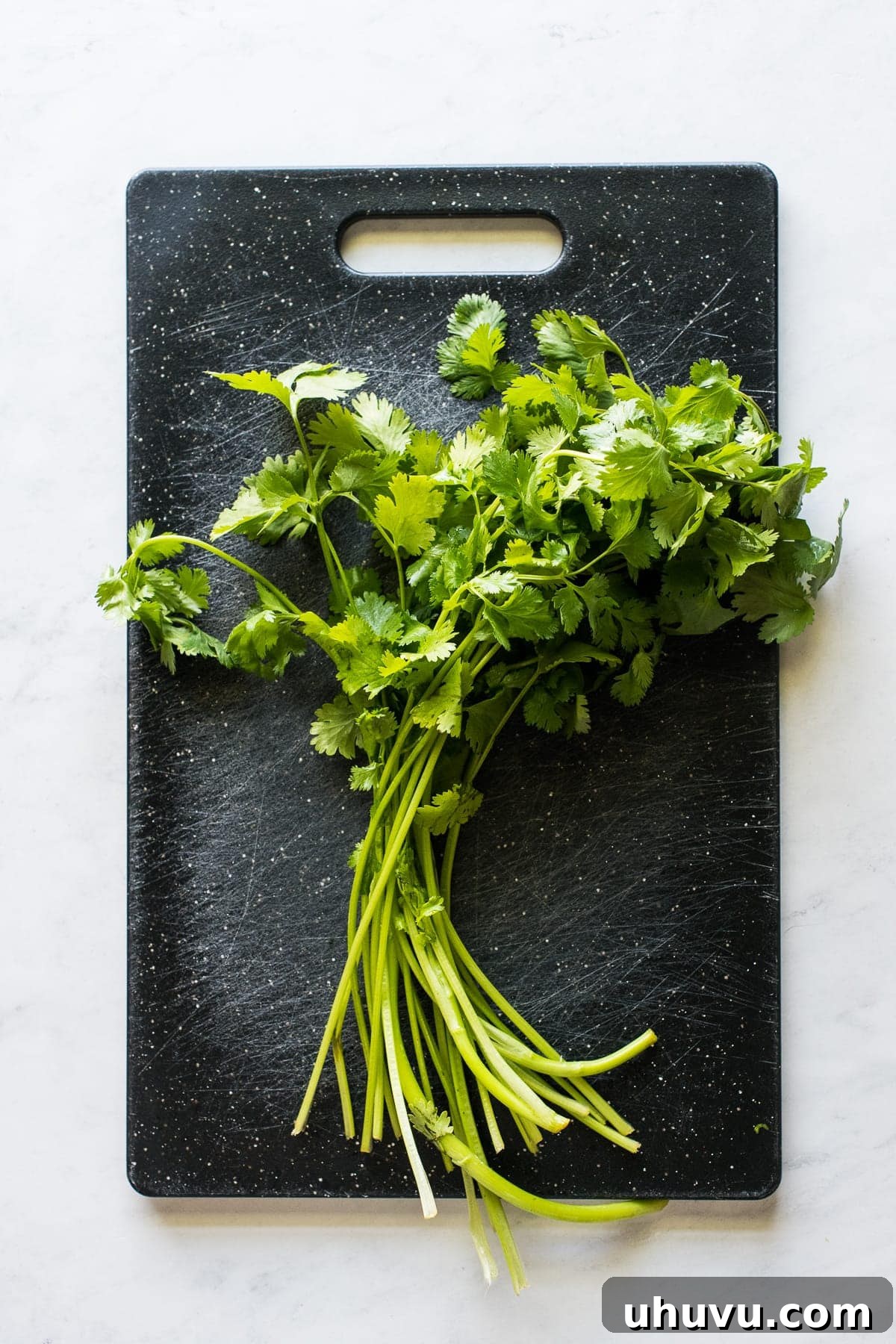
Begin by thoroughly washing your bunch of fresh cilantro under cool running water. Gently shake off excess water, or for best results, use a salad spinner or pat it dry with paper towels. Excess moisture can make the cilantro slippery and harder to chop finely. Once clean and dry, gather the entire bunch together, pinching the stems like you would a small bouquet of flowers. Lay this compact bunch flat on a sturdy cutting board, ensuring the stems are aligned at one end.

- Trim the Woody Stems.
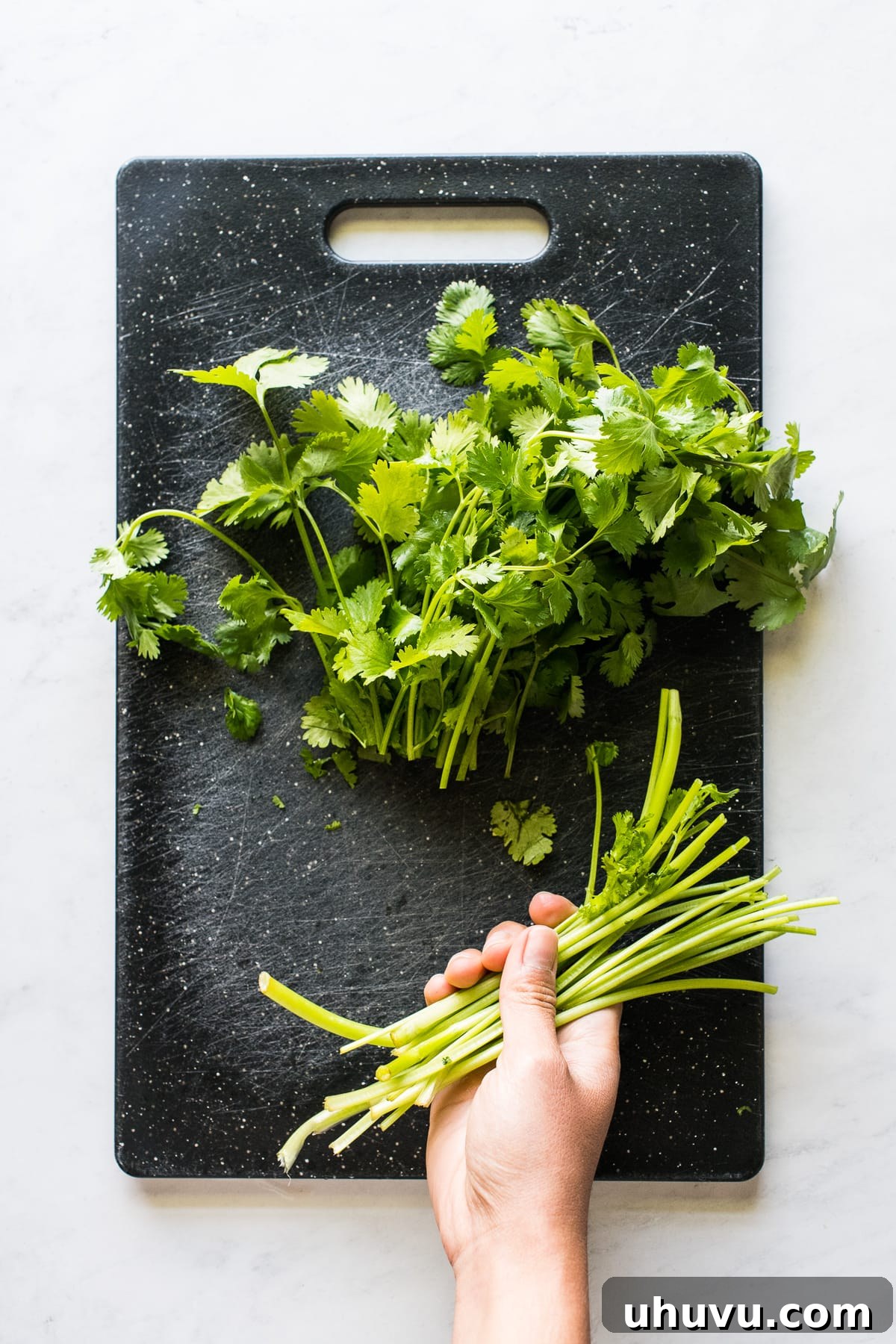
With your cilantro bunch neatly arranged, identify the point where the larger, thicker, and often woody stems begin to give way to the more tender, leafy parts. Using a sharp chef’s knife, make a clean cut across the entire bunch, removing these long, fibrous woody stems. While the tender upper stems are perfectly edible and flavorful, the woody lower stems can be tough and less palatable in many dishes. Discard these trimmed ends (or save them for making vegetable stock!).
- Execute the Rocking Chop.
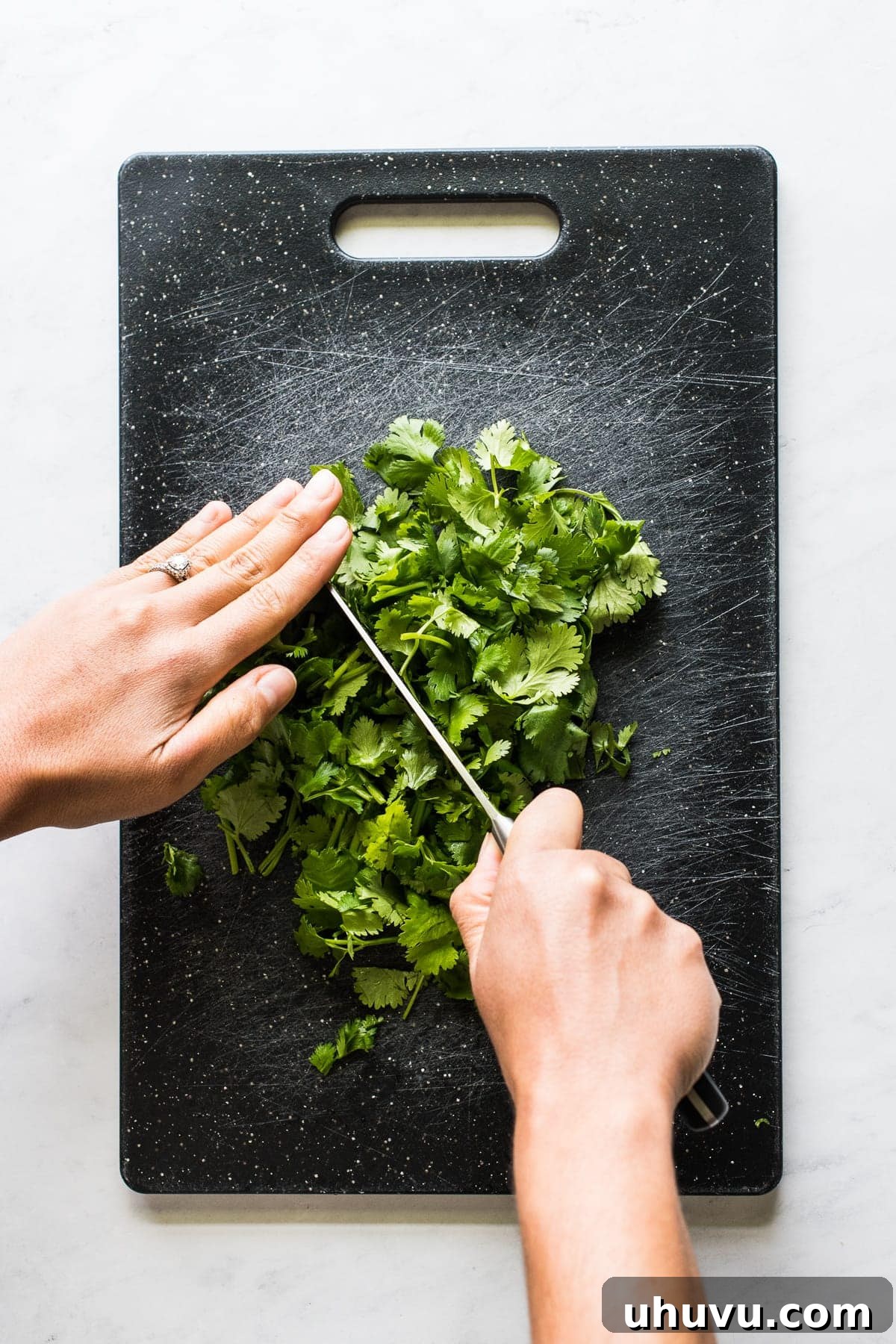
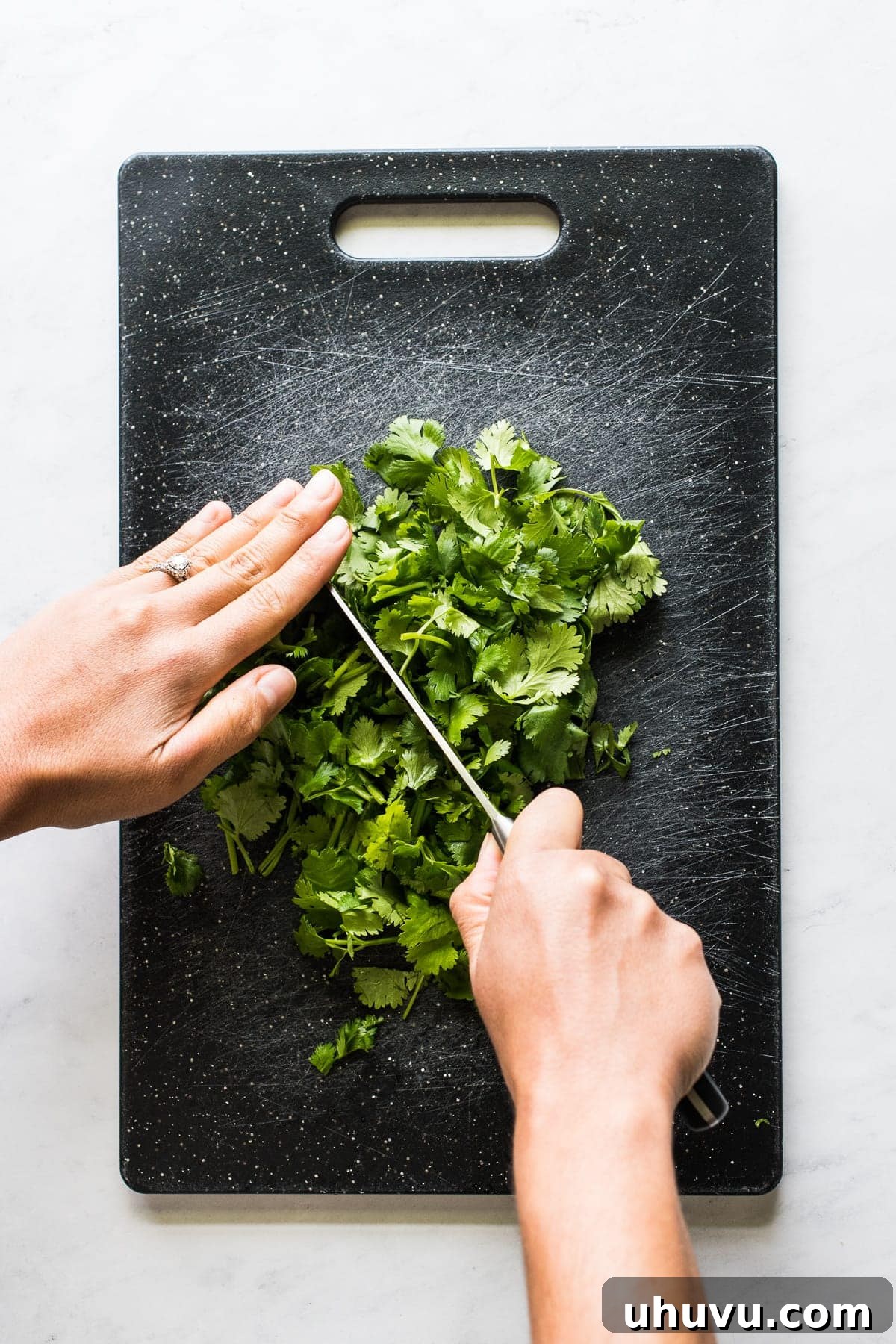
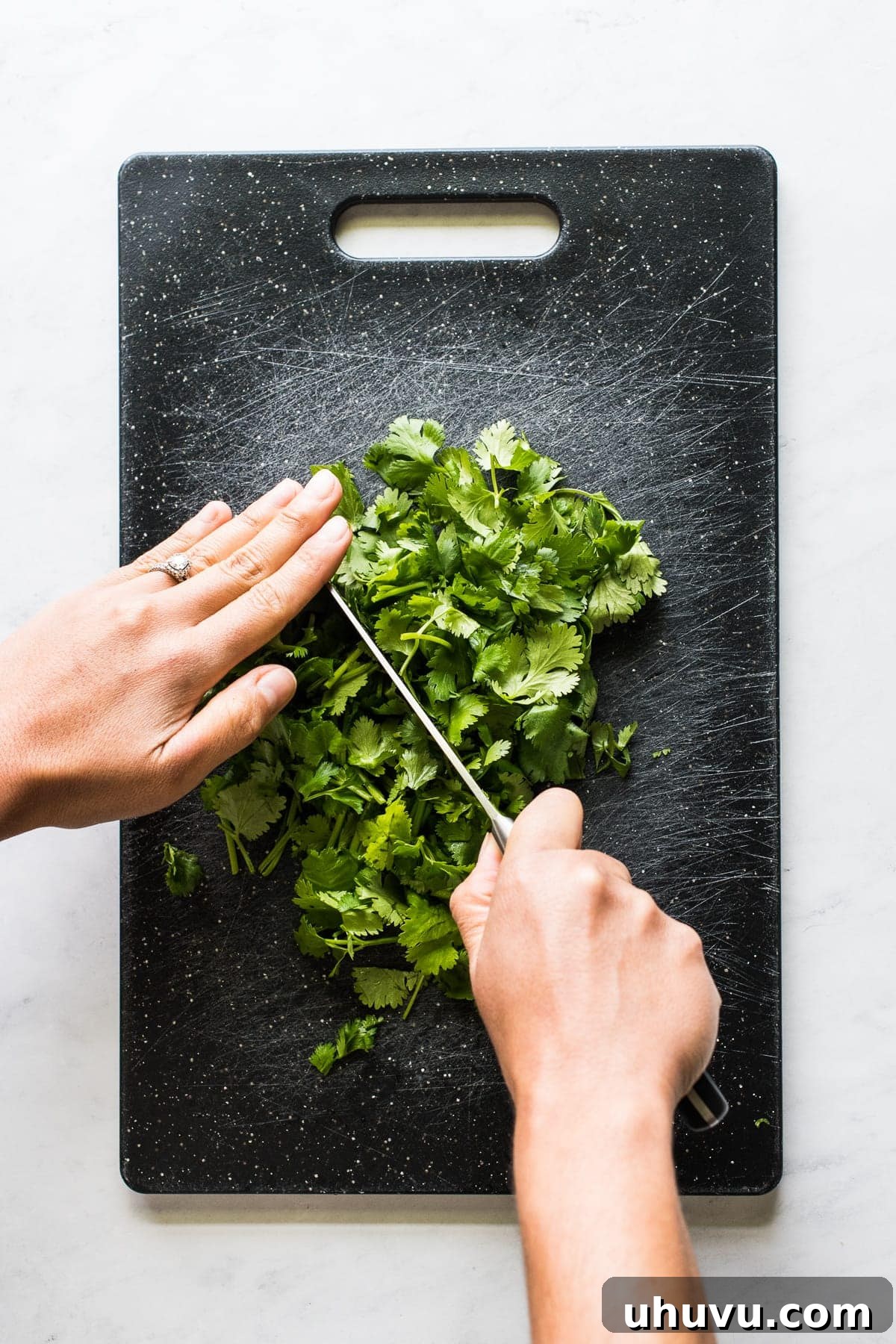
Once the woody stems are removed, you’re left with the tender stems and vibrant leaves. Bunch the cilantro tightly again. Hold the tip of your sharp knife with one hand, pressing it gently against the cutting board. With your other hand, grip the handle firmly. Begin chopping the cilantro from one end of the bunch to the other using a fluid, rocking motion. Keep the knife tip in contact with the board as you lift and lower the handle, moving steadily across the cilantro. This motion ensures even cuts and prevents the herb from bruising.
- Achieve Your Desired Consistency.
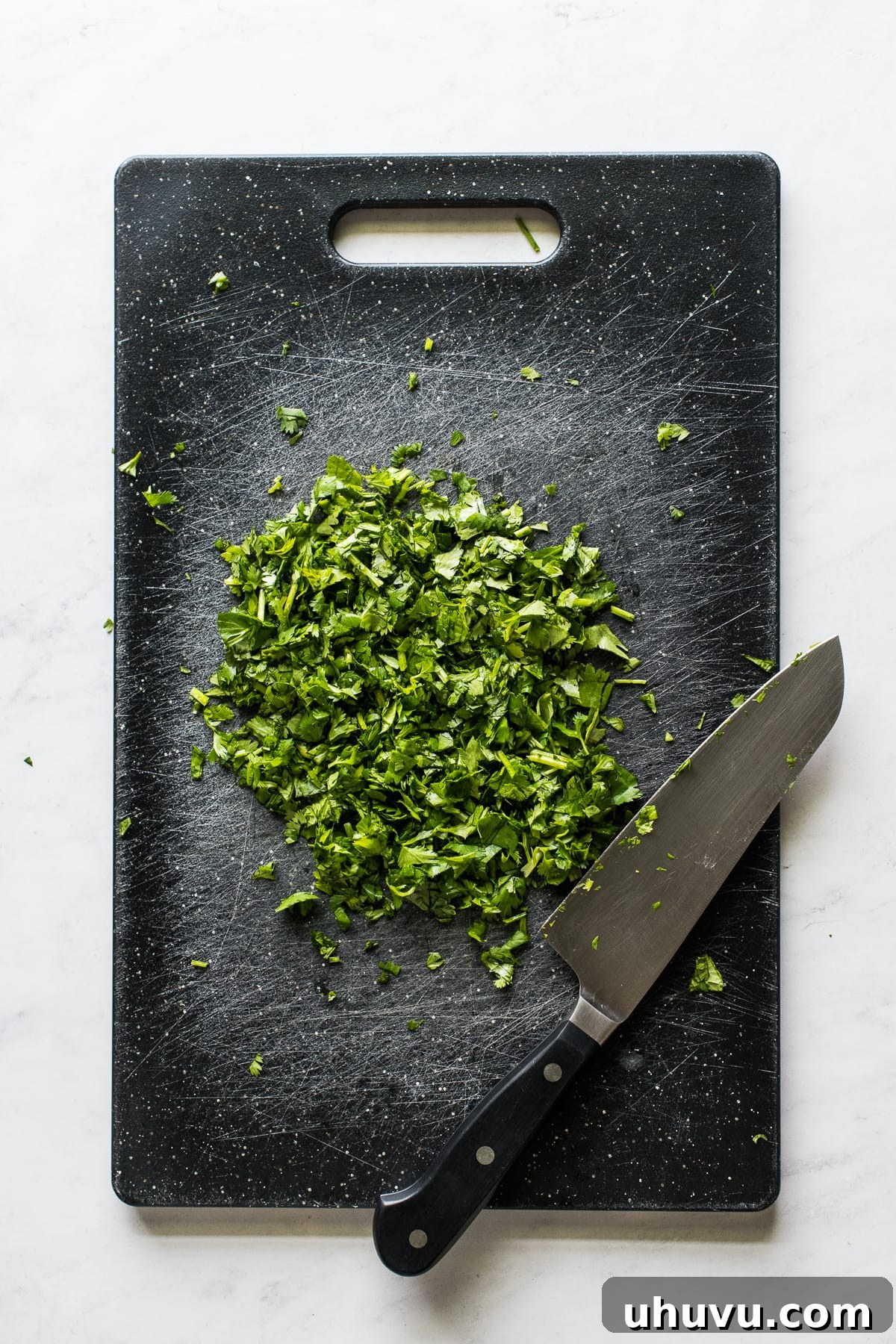
Continue the rocking motion, gathering the chopped cilantro frequently into a mound. You can continue chopping until it reaches your desired consistency – whether you prefer a roughly chopped texture for garnishes that offer a textural bite, or a very finely minced consistency for salsas, dressings, or when you want the flavor to meld seamlessly into the dish. Once it’s chopped to your liking, your fresh cilantro is ready to be used or stored. For an even finer chop, you can rotate the pile of cilantro and continue chopping until it’s perfectly minced.
Essential Tips for Perfect Cilantro Every Time
The Indispensable Sharp Knife
When chopping cilantro, or any delicate herb for that matter, the importance of a sharp knife cannot be overstated. A dull knife will crush and bruise the tender leaves rather than slice through them cleanly, releasing bitter flavors and turning the herb into a pulpy mess. A sharp blade, on the other hand, makes precise cuts, preserving the cell structure of the leaves and thus maintaining their vibrant color, fresh flavor, and pleasant texture. Not only does it yield better results, but it’s also safer to work with, requiring less force and reducing the chance of slippage.
Washing and Drying: The Forgotten Steps
Before you even think about chopping, ensure your cilantro is impeccably clean and dry. Dirt and sand can cling to the leaves, and nobody wants that in their meal. Wash the cilantro under cold running water, gently shaking it to dislodge any debris. After washing, thorough drying is critical. Excess water can dilute the flavor of the herb and make it difficult to achieve a fine chop; wet leaves tend to clump together and get mushy. Use a salad spinner for the most efficient drying, or gently pat the bunch dry with paper towels.
To Eat or Not to Eat: The Cilantro Stems
The question of cilantro stems is a common one. The tender, thinner upper stems that are part of the leafy bunch are perfectly edible and highly flavorful. In fact, they contain a concentration of the essential oils that give cilantro its distinctive taste. Including them in your chop adds depth and reduces waste. However, the long, thick, woody stems at the very bottom of the bunch are best discarded. While not harmful, their fibrous texture can be unpleasant to eat. These woody stems, however, are excellent for adding flavor to homemade vegetable broths or stocks, so consider saving them for that purpose instead of tossing them straight into the compost bin.
Optimizing Cilantro Storage for Freshness
Proper storage is key to extending the life of your fresh cilantro. Before chopping, treat your cilantro like a bouquet of flowers: trim the very ends of the stems, place the bunch in a glass of water, and loosely cover the leaves with a plastic bag. Store it in the refrigerator, and change the water every couple of days. This method can keep cilantro fresh for up to two weeks.
Once chopped, store cilantro in an airtight container lined with a damp paper towel in the refrigerator. This helps absorb excess moisture and maintains its freshness for a few days. For longer storage, chopped cilantro can be frozen. Pack it tightly into ice cube trays, cover with a little water or olive oil, and freeze. Once frozen, transfer the cubes to a freezer-safe bag. These cubes are perfect for adding to soups, stews, or sauces whenever you need a burst of fresh cilantro flavor.
Frequently Asked Questions About Cilantro
How can I tell if cilantro is fresh?
Look for bright green leaves that are firm and crisp, not wilted or yellowed. The stems should be sturdy, and the herb should have a strong, pleasant aroma. Avoid bunches with signs of sliminess or dark spots.
How long does cilantro typically last?
With proper storage (as described above), fresh, unchopped cilantro can last for 1 to 2 weeks in the refrigerator. Once chopped, it’s best to use it within 3-5 days for optimal freshness and flavor.
Can I use a food processor to chop cilantro?
Yes, you can, but with caution. A food processor can quickly over-process cilantro, turning it into a mushy paste rather than a finely chopped herb. To use a food processor, make sure the cilantro is very dry, add it to the bowl, and pulse briefly a few times until it reaches your desired consistency. Avoid continuous blending.
What are good alternatives if I don’t like cilantro?
If you’re one of those who perceive cilantro as having a soapy taste, don’t worry! There are excellent alternatives. Italian flat-leaf parsley is a common substitute, offering a fresh, green flavor without the unique notes of cilantro. Mint, basil, or a combination of the two can also work well in certain dishes, providing a different but equally refreshing herbaceous quality.
Unleash the Flavor: Recipes to Make with Cilantro
Now that you’ve mastered the art of chopping cilantro, it’s time to put your skills to delicious use! This aromatic herb is incredibly versatile, lending its bright and fresh notes to an endless array of dishes. From zesty salsas and creamy dressings to hearty main courses, cilantro can transform an ordinary meal into something extraordinary. Its ability to complement a wide range of ingredients makes it a staple in various global cuisines, particularly Mexican, Indian, Thai, and Vietnamese.
Dive into these flavorful recipes, designed to showcase the vibrant essence of freshly chopped cilantro. Each dish highlights how this simple herb can elevate taste and aroma, proving that perfectly prepared cilantro is truly a game-changer in the kitchen.
- Cilantro Pesto: A fresh twist on traditional pesto, perfect for pasta, sandwiches, or as a vibrant sauce for grilled proteins.
- Creamy Cilantro Lime Dressing: A tangy and rich dressing that brightens up salads, tacos, or serves as a dipping sauce for appetizers.
- Cilantro Lime Chicken: Marinated and cooked to perfection, this chicken dish is bursting with citrus and herb flavors, ideal for a weeknight meal.
- Cilantro Lime Cauliflower Rice: A low-carb alternative to traditional rice, infused with the refreshing flavors of cilantro and lime, great for healthy meals.
- Cilantro Lime Rice: A classic side dish for Mexican-inspired meals, adding a burst of freshness that complements everything from burritos to grilled fish.
- Creamy Cilantro Lime Chicken: Another delightful chicken recipe that combines the zest of lime and the freshness of cilantro with a rich, creamy sauce, perfect for a comforting dinner.
Embrace the vibrant world of cilantro and let its fresh, aromatic notes inspire your next culinary adventure. With these chopping techniques and a plethora of recipes, you’re well-equipped to infuse your dishes with the irresistible charm of this beloved herb.