
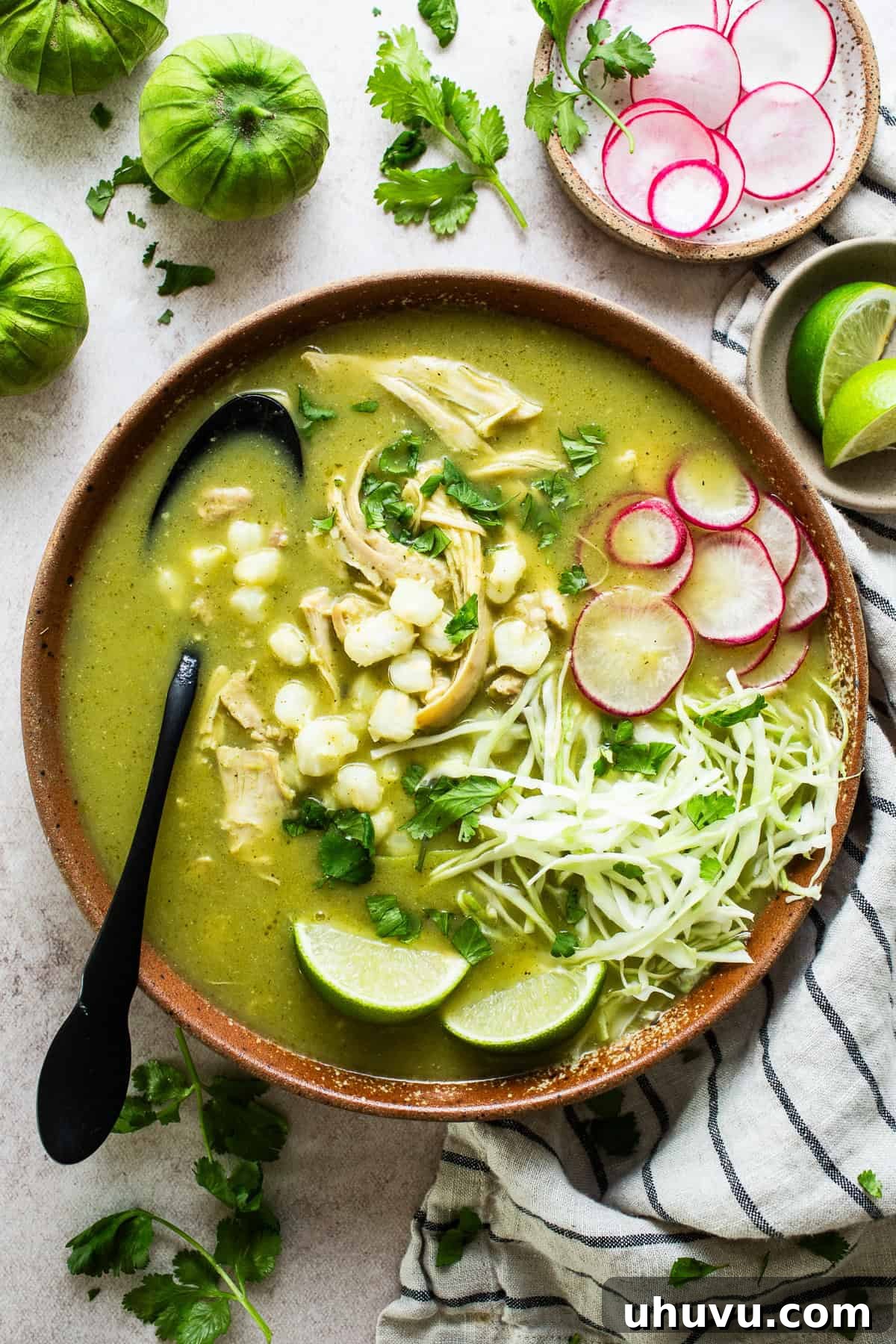
Pozole Verde: A Vibrant Mexican Comfort Stew
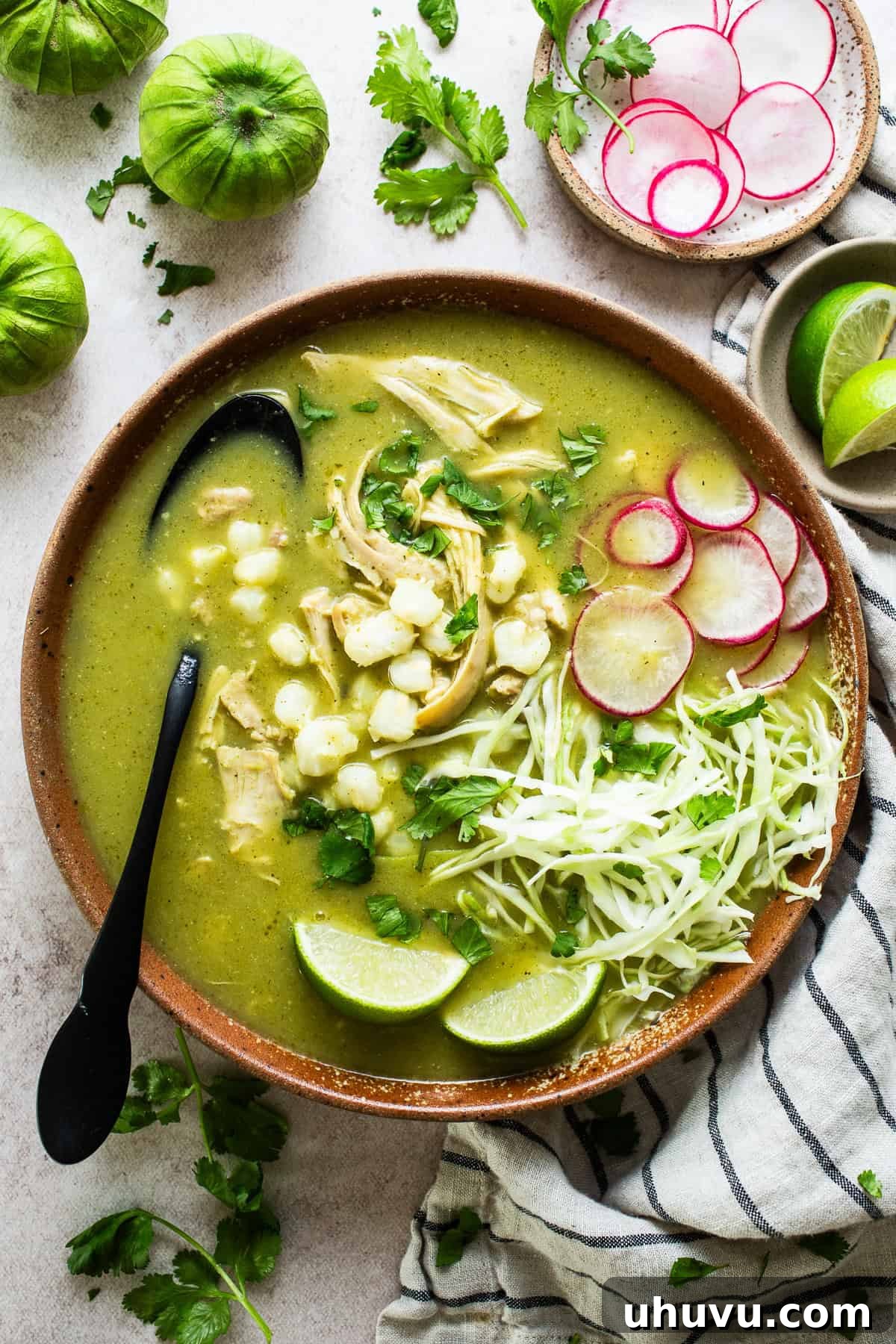
Pozole Verde, often hailed as a quintessential Mexican comfort food, is a rich and flavorful stew that captures the essence of traditional Mexican cuisine. This vibrant dish features tender shredded chicken and hearty hominy, all bathed in a bright, tangy, and subtly spicy broth. The signature green hue comes from a harmonious blend of fresh tomatillos and verdant green chiles, creating an unforgettable culinary experience.
Whether you’re seeking a soul-warming meal on a cool evening or a festive dish for a gathering, Pozole Verde delivers on all fronts. It’s surprisingly simple to prepare, making it an ideal choice for both seasoned cooks and kitchen newcomers. In just about an hour, you can have a steaming pot of this delicious stew ready to be enjoyed.
For those who appreciate authentic and comforting Mexican flavors, be sure to explore other beloved recipes such as Pozole Rojo, a hearty red chile and pork stew, Pozole Blanco, a pure and un-chiled version, and the classic Chile Verde. Each offers a unique taste of Mexico’s rich culinary heritage.
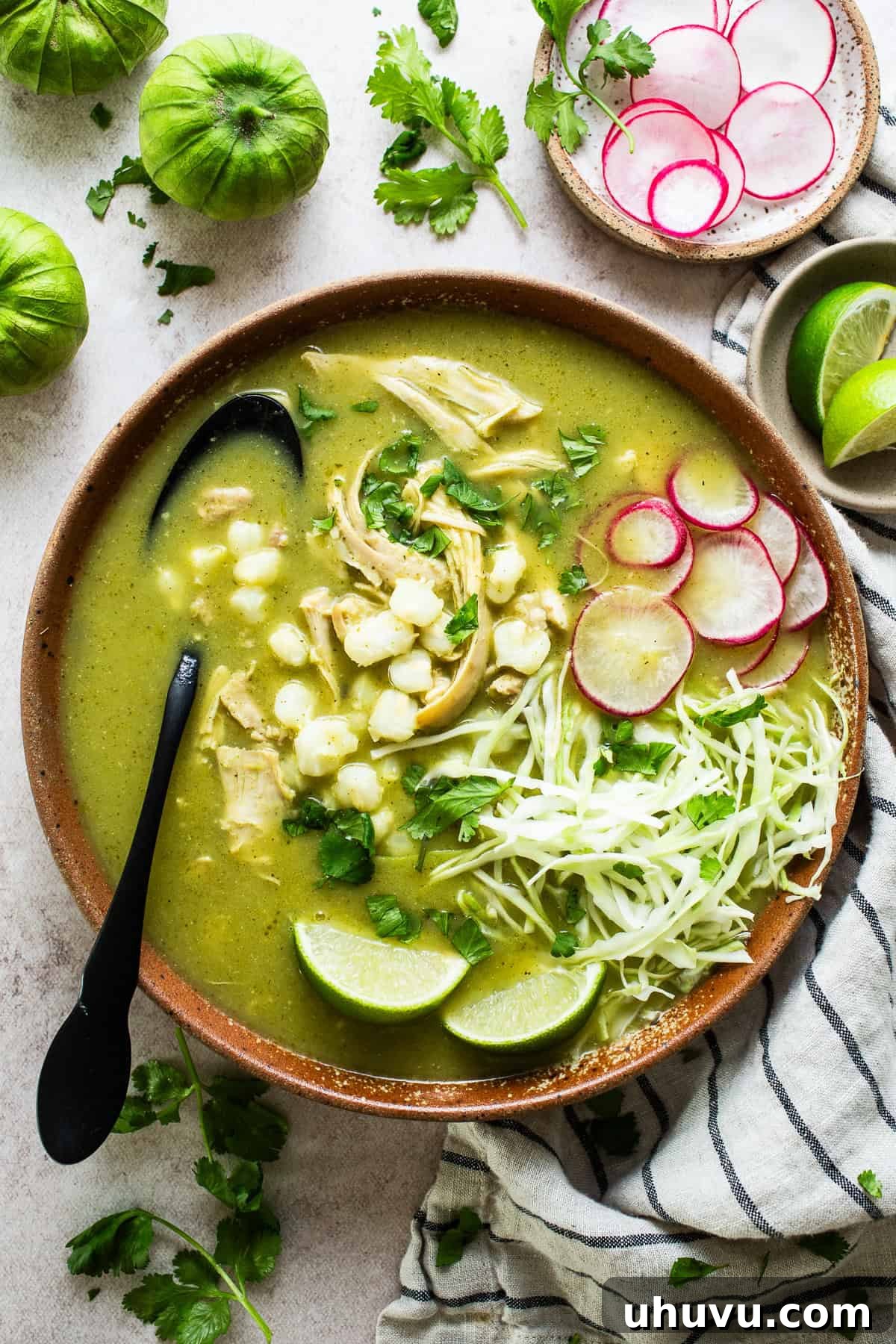
There’s something uniquely satisfying about Pozole Verde. It strikes a perfect balance between being deeply comforting and remarkably fresh. Unlike its fiery red counterpart, Pozole Rojo, which typically features succulent shredded pork in a rich, deep red chile broth, or the milder Pozole Blanco, which omits chiles entirely, this green variation stands out with its tender chicken and zesty tomatillo-green chile broth.
Here’s why this particular recipe has become a favorite:
- Efficient Preparation: This chicken Pozole Verde recipe is designed for modern kitchens, boasting a significantly faster cook time compared to other traditional pozole recipes, like Pozole Rojo. This efficiency makes it an excellent option for busy weeknights when you crave a homemade meal without spending hours in the kitchen. For those with an Instant Pot, an even quicker version is available to satisfy your cravings in record time.
- Hearty Yet Refreshing: While pozole is inherently a substantial and satisfying stew, this recipe uses a bright and tangy green chile broth. This lightens the overall profile, ensuring that the dish feels incredibly flavorful and fulfilling without ever being overly heavy. It’s the perfect blend of robustness and zest, making it suitable for any time of year.
- A Celebration of Freshness: The core ingredients of Pozole Verde—tomatillos, fresh chiles, and cilantro—contribute to a vibrant flavor that celebrates the freshness of Mexican produce. Each spoonful offers a delightful balance of tang, spice, and savory goodness.
Understanding Pozole: A Mexican Culinary Staple
Pozole, sometimes spelled posole, is much more than just a stew; it’s a foundational dish in Mexican cuisine with roots stretching back centuries. This traditional Mexican stew is primarily characterized by its use of hominy (large, dried corn kernels) and a flavorful broth, typically combined with various meats. Its preparation often involves a slow simmering process, allowing the flavors to meld and deepen into a truly spectacular dish.
While the essence of pozole remains constant, there are three primary variations, each offering a distinct flavor profile and visual appeal:
- Pozole Verde: The focus of this recipe, featuring a vibrant green chile broth made from ingredients like tomatillos, jalapeños, and cilantro. It’s known for its bright, tangy, and often herbaceous notes, typically paired with chicken or sometimes pork.
- Pozole Rojo: A rich, deep red pozole characterized by its robust broth made from dried red chiles such as ancho, guajillo, or pasilla peppers. This version often features tender shredded pork and offers a smoky, earthy, and sometimes spicy flavor.
- Pozole Blanco: The “white” pozole, which is prepared without any chiles, resulting in a clear or light broth. Its flavor is pure and comforting, highlighting the natural taste of the meat (often pork or chicken) and hominy. It’s frequently garnished with various fresh toppings to add color and texture.
Pozole is enjoyed throughout the year, but its hearty and warming qualities make it particularly popular during the cooler fall and winter months. It’s also a cherished dish for significant celebrations and holidays, including birthdays, Christmas, New Year’s Eve, and other family gatherings. The protein used in pozole can vary regionally and by preference, with chicken, pork, and beef being the most common choices, each contributing its unique richness to the stew.
Key Ingredients for Authentic Pozole Verde
Crafting an authentic and delicious Pozole Verde relies on selecting high-quality ingredients that contribute to its distinctive bright and tangy flavor. Here’s a breakdown of the essential components you’ll need:
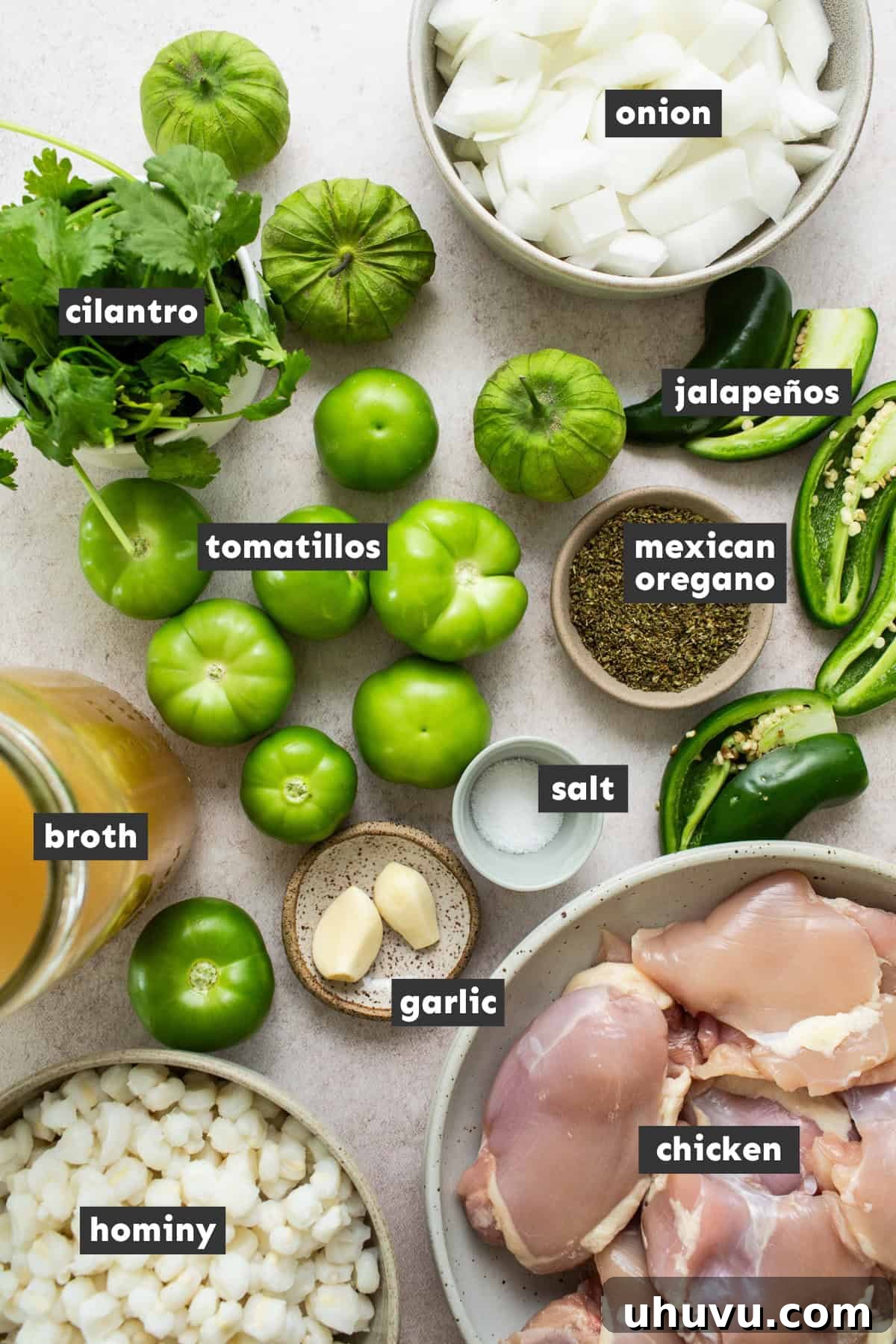
- Boneless, Skinless Chicken Thighs: Chicken thighs are the preferred choice for this recipe due to their rich flavor and tendency to remain incredibly juicy and tender even after simmering. Their slightly higher fat content adds depth to the broth. While thighs are recommended, you can also opt for chicken breasts for a leaner stew, or bone-in chicken thighs and drumsticks for even more flavor, though cooking times may need slight adjustment.
- Tomatillos: These are the true stars of the green chile broth. Tomatillos, often mistaken for green tomatoes, have a tart, bright, and slightly fruity flavor that is essential to the tangy profile of Pozole Verde. When selecting them, look for firm, bright green tomatillos with tight, papery husks. Their unique acidity beautifully complements the chicken and other ingredients.
- Jalapeño Peppers: These common green chiles provide a mild to moderate heat level to the broth. If you prefer a milder stew, simply remove the seeds and membranes from the jalapeños before adding them. For those who enjoy a spicier kick, you can substitute jalapeños with serrano peppers. Conversely, if you are particularly sensitive to spice, Anaheim peppers offer a much milder alternative.
- Onion and Garlic: These aromatic staples form the backbone of many savory dishes and are crucial for balancing the flavors in Pozole Verde. A whole white onion and several cloves of garlic lend a foundational savory note and a hint of sweetness, harmonizing with the tanginess of the tomatillos and the heat of the chiles.
- Mexican Oregano: A non-negotiable ingredient for authentic pozole. Mexican oregano differs from its Mediterranean cousin; it possesses a distinct citrusy, earthy, and slightly licorice-like flavor profile that is truly unique and integral to the stew’s character. While regular oregano can be used in a pinch, Mexican oregano is highly recommended for achieving the most authentic taste. It can often be found in Hispanic grocery stores or purchased online.
- Salt: Kosher salt is used to enhance and round out all the flavors in the pozole. It’s important to taste and adjust the seasoning throughout the cooking process to achieve perfect balance.
- Broth: For this chicken Pozole Verde, chicken broth is a natural choice, contributing to the overall chicken flavor. However, feel free to use vegetable broth if you prefer, especially if you’re adapting the recipe to be vegetarian.
- Cilantro: A generous handful of fresh cilantro adds a burst of freshness and herbaceousness to the green chile broth. Its vibrant flavor is key to the “verde” aspect of the dish. If you’re not a fan of cilantro, fresh parsley can be used as a milder, less assertive alternative.
- Hominy: A true pozole wouldn’t be complete without hominy. These are whole kernels of dried field corn, or maize, that have been nixtamalized (processed with an alkaline solution) and then canned. This process gives hominy its characteristic puffed texture and a unique, slightly chewy bite, as well as a rich, earthy corn flavor. You can typically find both white and yellow varieties in most grocery stores; yellow hominy tends to be a bit sweeter. Both are interchangeable, but white hominy is traditionally more common in many Mexican preparations. They absorb the broth’s flavors beautifully and add an essential layer of texture to the stew.
- Essential Toppings: Beyond the rich broth and tender ingredients, one of the most exciting aspects of pozole is the array of fresh toppings traditionally served alongside it. These garnishes add layers of texture, acidity, and fresh flavor, elevating each bowl:
- Fresh Lime Juice: A squeeze of lime juice brightens the stew with a zesty, acidic kick.
- Diced White Onion and Chopped Cilantro: Provide additional pungent, fresh flavors and a slight crunch.
- Thinly Sliced Cabbage: Offers a refreshing crispness and a mild, peppery contrast to the rich stew.
- Mexican Oregano: A sprinkle of dried Mexican oregano enhances the earthy, fruity notes and adds another layer of authentic flavor.
- Sliced Radishes: These bring a crisp texture and a distinct peppery, zesty flavor that cuts through the richness of the stew.
Crafting Your Homemade Pozole Verde: Step-by-Step Guide
Making Pozole Verde at home is a rewarding experience, and this recipe streamlines the process to ensure a delicious outcome in minimal time. Follow these steps to create a hearty and flavorful Mexican stew:
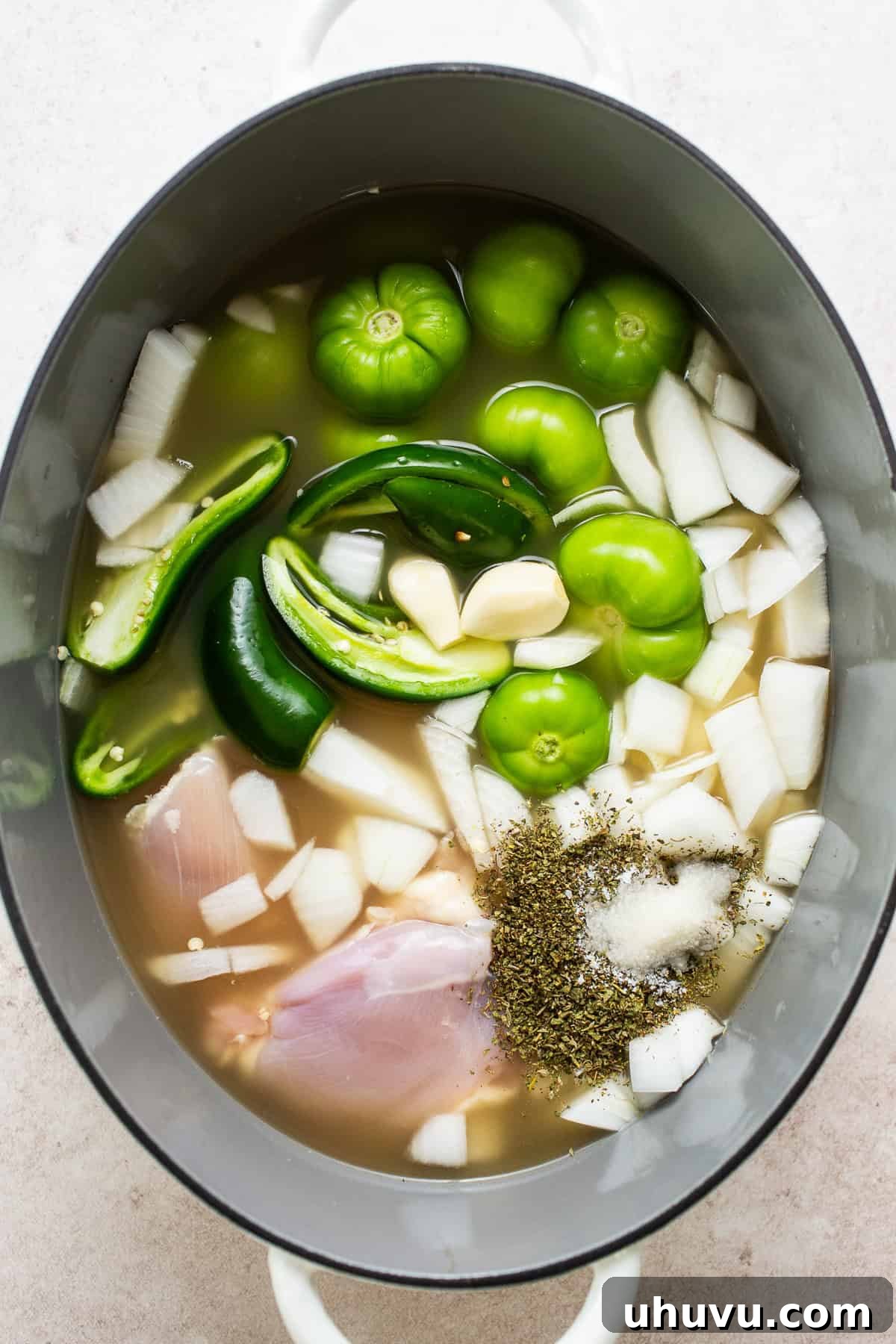
Step 1: Simmer the Chicken and Aromatics. Begin by placing the boneless, skinless chicken thighs in a large pot or a Dutch oven. Add the husked and rinsed tomatillos, roughly chopped white onion, halved jalapeño peppers (seeds removed for less spice, or kept for more), garlic cloves, Mexican oregano, kosher salt, and chicken (or vegetable) broth. Bring the mixture to a rapid boil over high heat. Once boiling, reduce the heat to low, cover the pot partially with a lid to allow some steam to escape, and let it simmer gently for about 40 minutes. The chicken should become incredibly fall-apart tender, easily shreddable with a fork.
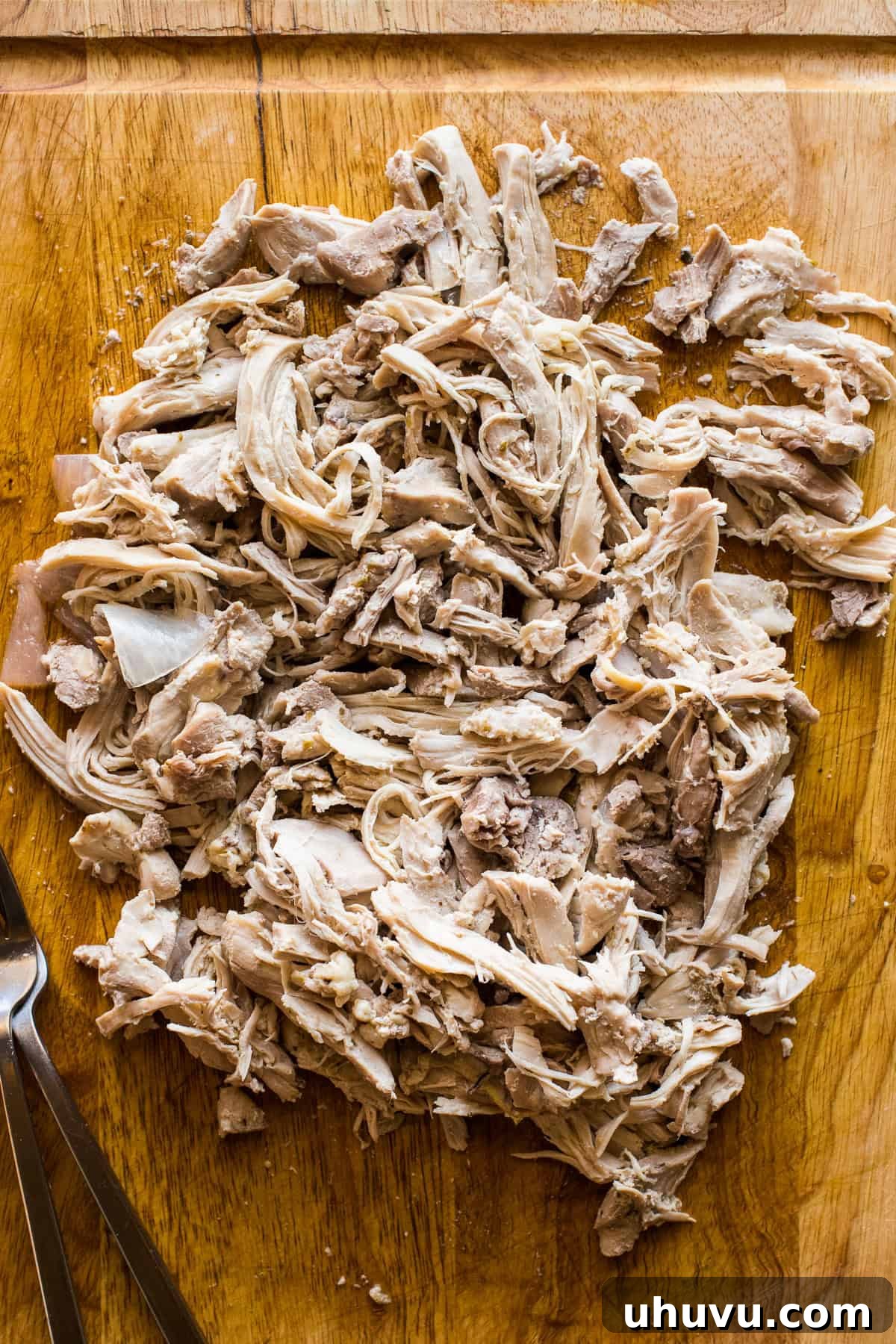
Step 2: Shred the Chicken. Once the chicken is cooked through and tender, carefully remove it from the pot using tongs or a slotted spoon and transfer it to a cutting board. Allow it to cool slightly, then use two forks to shred the chicken into bite-sized pieces. Set the shredded chicken aside for later use.

Step 3: Prepare the Verde Broth. Using a slotted spoon, carefully transfer the cooked tomatillos, onions, jalapeños, and garlic from the pot into a large blender. Add approximately one cup of the flavorful cooking liquid from the pot, along with the fresh cilantro (stems and leaves included). Blend the mixture until it is completely smooth and uniform. This creates the vibrant, tangy green chile sauce that defines Pozole Verde.
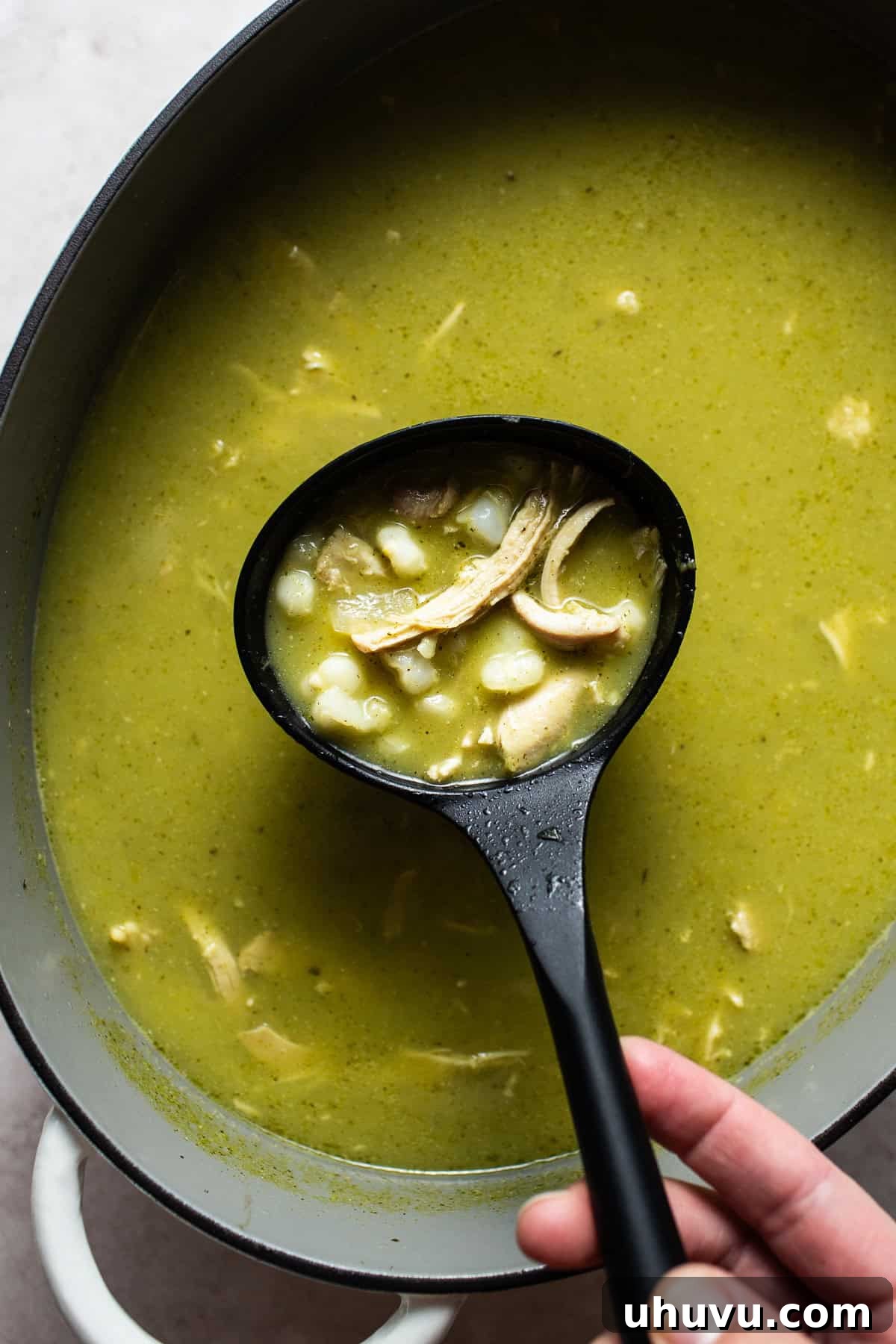
Step 4: Combine and Simmer. Pour the freshly blended green chile sauce back into the pot with the remaining cooking liquid. Stir in the shredded chicken and the drained and rinsed hominy. Bring the stew to a gentle simmer over medium-high heat and cook uncovered for another 15 minutes. This simmering time allows the flavors to fully meld and the hominy to absorb some of the rich broth. Taste the pozole and adjust the seasoning with more salt if necessary, to your preference.
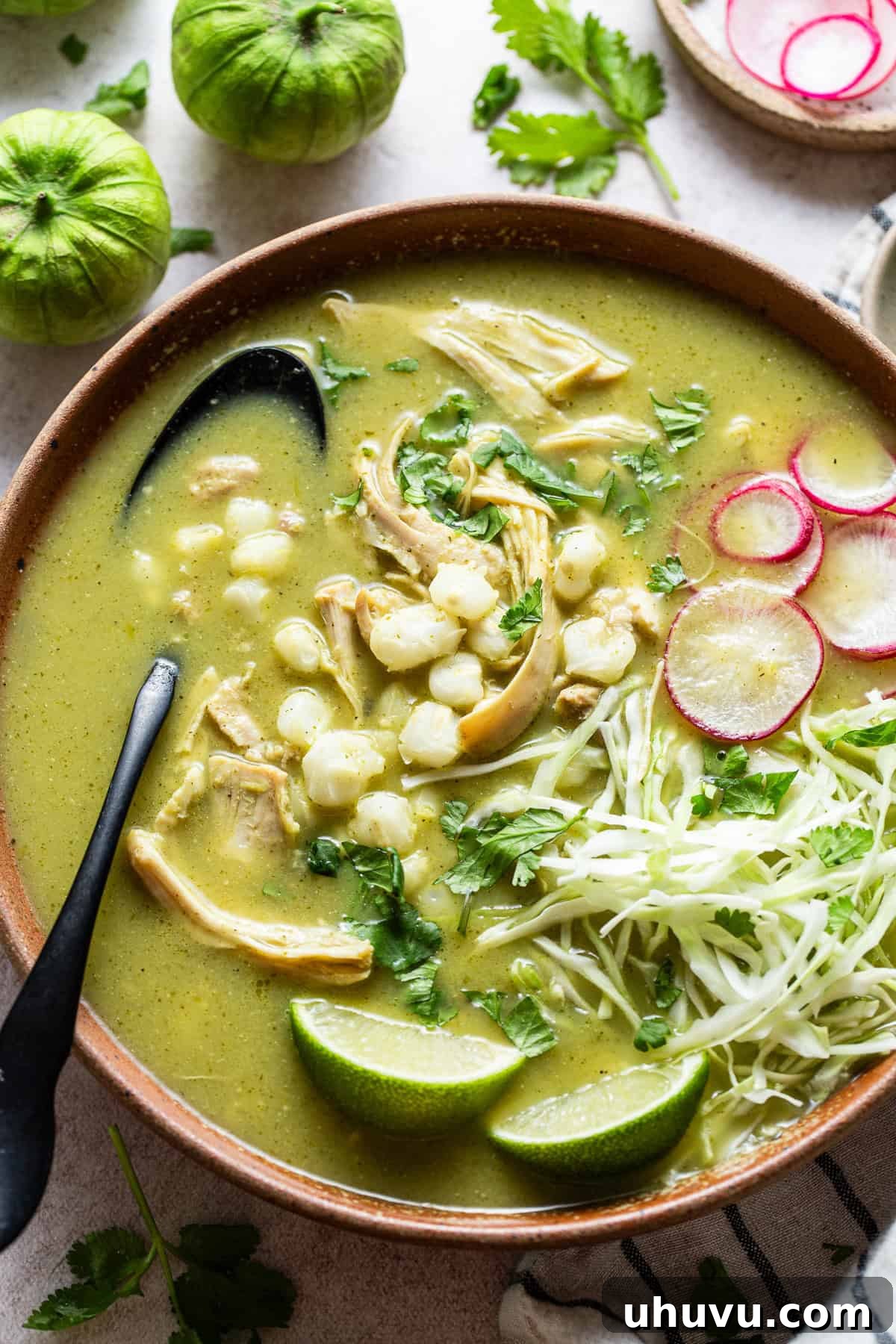
Step 5: Serve with Toppings. Ladle the warm Pozole Verde into bowls. The final flourish comes with a variety of fresh toppings that add texture, brightness, and an extra layer of flavor. Serve immediately with fresh lime wedges, thinly shredded cabbage, sliced radishes, chopped fresh cilantro, diced white onions, and a sprinkle of dried Mexican oregano.
Expert Tips for the Best Pozole Verde
Achieving a truly exceptional Pozole Verde is all about paying attention to a few key details. These tips will help you elevate your homemade stew to restaurant-quality perfection:
- Optimize Your Chicken Choice: While various cuts of chicken can be used, boneless or bone-in chicken thighs are highly recommended. Their inherent juiciness and rich flavor stand up beautifully to the tangy green chiles and flavorful broth, ensuring the chicken remains tender and moist. Chicken breasts can be used for a leaner option, but they tend to dry out more easily. If using bone-in chicken, remember to remove the bones after cooking and before shredding.
- Select Superior Tomatillos: The quality of your tomatillos directly impacts the vibrancy and tang of your broth. Always prioritize fresh, firm, and bright green tomatillos with intact, papery husks. Their tartness is crucial. If fresh tomatillos are unavailable in your area, many cooks have successfully used canned tomatillos as a substitute. If opting for canned, skip step one and add them directly to the blender in step three, as they are already cooked.
- Master the Heat Level: The spice in your Pozole Verde is entirely customizable. For a milder stew, meticulously remove all seeds and membranes from your jalapeño peppers. If you prefer a subtle warmth, you can leave some seeds in one or two peppers. For those who crave significant heat, serrano peppers are an excellent substitute. Conversely, if you have a low tolerance for spice, Anaheim peppers offer a very gentle heat profile.
- Embrace Mexican Oregano: Mexican oregano is not merely a suggestion; it is a foundational ingredient that imparts an authentic and irreplaceable fruity, citrusy, and slightly earthy flavor to the pozole. While standard Mediterranean oregano can be used as a last resort, it will yield a different flavor profile. Seek out Mexican oregano at specialty stores or online for the most genuine taste experience.
- Don’t Skimp on Toppings: The assortment of fresh toppings is integral to the pozole experience. These fresh additions provide critical textural contrast and bright, refreshing notes that cut through the richness of the stew, making each spoonful dynamic and exciting.
- Achieve a Smooth Broth: When blending the broth ingredients, ensure they are completely smooth. A silky broth enhances the overall mouthfeel and distribution of flavors. If your blender struggles, add a little extra cooking liquid to aid the process.
The Art of Serving Pozole Verde: Perfect Toppings
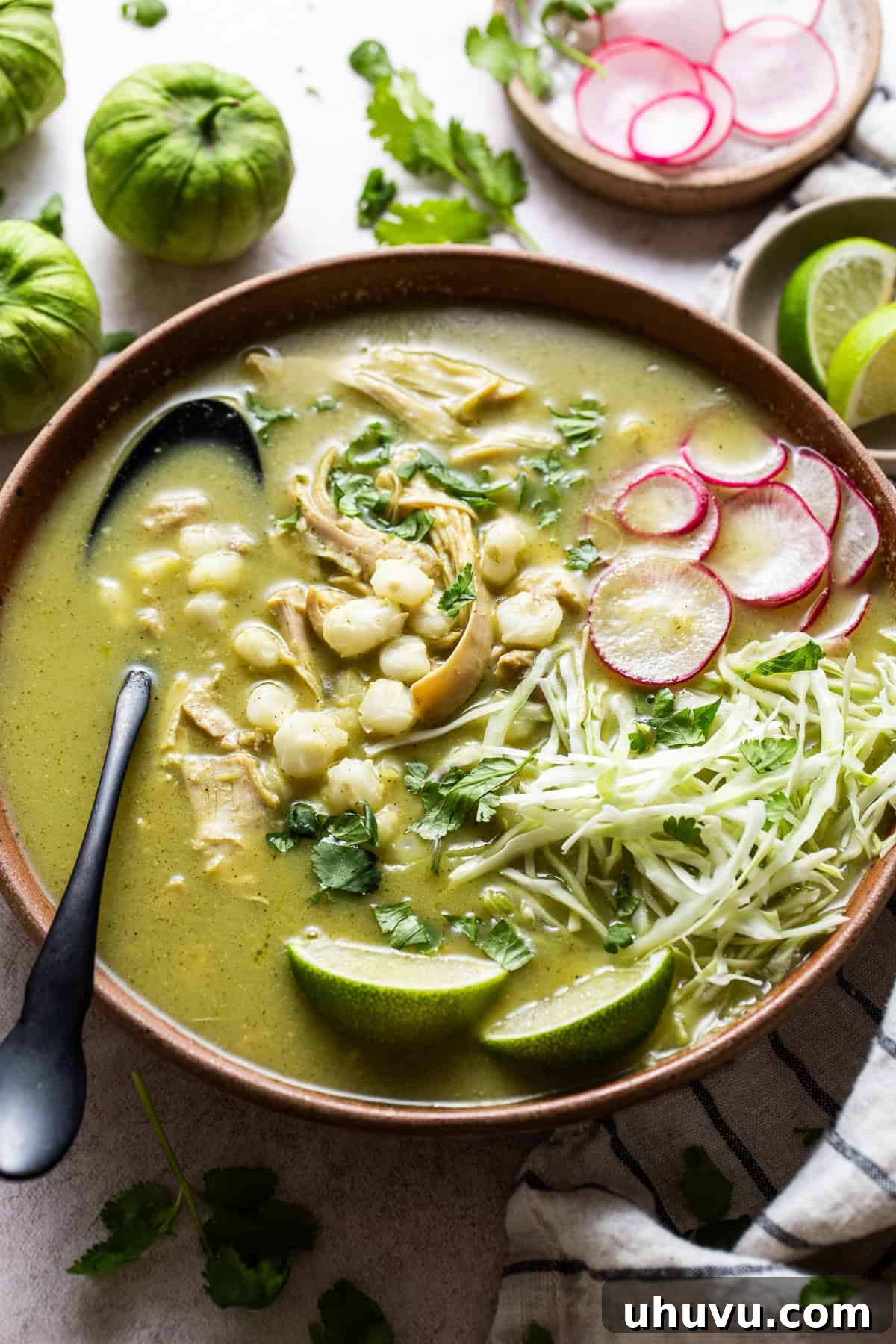
One of the most delightful traditions of enjoying Pozole Verde is customizing each bowl with a colorful and flavorful array of toppings. These garnishes don’t just add visual appeal; they introduce crucial textural contrasts, bursts of freshness, and tangy notes that truly elevate the stew. Encourage your diners to build their own bowls, personalizing their experience. Here are some of the best toppings that are traditionally served and enhance all the flavors:
- Thinly Sliced Cabbage: Provides a crisp, refreshing crunch and a mild, peppery counterpoint to the rich stew.
- Diced White Onions: Adds a pungent, fresh bite that brightens the overall flavor profile.
- Freshly Squeezed Lime Juice: An absolute must! A generous squeeze of lime juice cuts through the richness, adds zesty acidity, and brightens every flavor in the bowl.
- Sliced Radishes: Offers a delightful peppery crunch and a refreshing, earthy note.
- Chopped Cilantro: Brings an additional layer of fresh, herbaceous flavor and a vibrant green color.
- Mexican Oregano: A final sprinkle of dried Mexican oregano enhances the stew’s authentic aromatic qualities.
- Avocado Slices: While not listed in the original, creamy avocado slices would add a wonderful richness and smooth texture.
- Crispy Tortilla Strips or Tostadas: For extra crunch and to help scoop up every last drop of the delicious broth.
Exploring Pozole Verde Recipe Variations
The beauty of this Pozole Verde recipe lies in its adaptability. It can easily be adjusted to suit different cooking methods or dietary preferences, allowing you to enjoy this delicious stew no matter your kitchen setup or lifestyle. Here are some popular variations:
- Slow Cooker Pozole Verde: For a hands-off approach, the slow cooker is your best friend. Combine the chicken, tomatillos, onion, jalapeños, garlic, Mexican oregano, salt, and broth directly in your slow cooker. Cook on LOW for 5-6 hours or on HIGH for 3-4 hours, until the chicken is incredibly tender and easily shreddable. Once cooked, remove the chicken, shred it, and set it aside. Transfer the cooked tomatillos, onions, jalapeños, and garlic to a blender, adding 1 cup of the cooking liquid and the cilantro. Blend until smooth. Stir this vibrant sauce, along with the shredded chicken and hominy, back into the slow cooker. Continue cooking on HIGH for an additional 15 minutes to allow the flavors to meld and the hominy to warm through before serving.
- Instant Pot Pozole Verde: When time is of the essence, the Instant Pot speeds up the cooking process significantly. Add the chicken, tomatillos, onion, jalapeños, garlic, Mexican oregano, salt, and broth to the Instant Pot. Secure the lid and set it to Manual High Pressure for 15 minutes. Once the cooking cycle is complete, perform a quick release of the pressure. Carefully remove the chicken, shred it, and set it aside. Blend the cooked tomatillos, onions, jalapeños, garlic, 1 cup of the cooking liquid, and cilantro until smooth. Stir this blended sauce, shredded chicken, and hominy back into the Instant Pot. Select the Sauté mode and simmer, uncovered, for about 10 minutes to allow the flavors to deepen and the stew to thicken slightly before serving.
- Vegetarian Pozole Verde: Transforming this chicken pozole into a satisfying vegetarian dish is straightforward and equally delicious. Replace the chicken entirely with 2 cups of diced zucchini, or a hearty mix of vegetables such as cubed potatoes, sliced mushrooms, and bell peppers. Crucially, use vegetable broth instead of chicken broth to maintain its vegetarian status. To prepare, combine the tomatillos, onion, jalapeños, garlic, Mexican oregano, salt, and vegetable broth in a large pot. Bring to a boil, then reduce the heat to a simmer and cook for about 10 minutes, or until the vegetables begin to soften. Transfer the cooked vegetables (reserving the broth) to a blender along with 1 cup of the cooking liquid and cilantro, and blend until smooth. Pour the blended mixture back into the pot, add your desired fresh or heartier vegetables (like potatoes and mushrooms if using, which take longer to cook), and the hominy. Simmer partially covered until all the vegetables are tender, approximately 30 minutes, allowing the flavors to fully develop.
Storing and Reheating Pozole Verde
Pozole Verde is one of those wonderful dishes that often tastes even better the next day as the flavors continue to meld. Proper storage ensures you can enjoy your delicious stew for days or even months to come.
Storage: Allow the Pozole Verde to cool completely before transferring it to an airtight container. It can be stored safely in the refrigerator for up to 5 days. For longer storage, Pozole Verde freezes beautifully. Place cooled stew in freezer-safe containers or heavy-duty freezer bags, leaving a little headspace. It can be frozen for up to 3 months. Thaw frozen pozole in the refrigerator overnight before reheating.
Reheating: To reheat, simply pour the desired portion of pozole into a large pot or Dutch oven and gently warm over medium-high heat, stirring occasionally, until it is heated through. If reheating a single serving, you can also warm it in the microwave in 1-minute increments, stirring in between, until hot. If the stew seems too thick after reheating, you can add a splash of extra chicken or vegetable broth to reach your desired consistency.
Explore More Authentic Mexican Recipes
If you’ve enjoyed the vibrant flavors of Pozole Verde, we encourage you to delve deeper into the rich tapestry of Mexican cuisine with these other beloved recipes:
- Traditional Mexican Tamales: A classic dish featuring masa dough filled with savory meats or cheeses, steamed to perfection in corn husks.
- Albondigas Soup: A comforting Mexican meatball soup, typically made with a flavorful broth and an assortment of vegetables.
- Pozole Rojo: Experience the rich, deep flavors of red chile broth with tender shredded pork.
- Mexican Pork Chile Verde: A succulent pork stew in a tangy green chile sauce, perfect with warm tortillas.
If you tried this Pozole Verde Recipe or any other recipe on Isabel Eats, don’t forget to rate the recipe and let me know how it went in the comments below! I love hearing about your experience making it!
★
★
★
★
Pozole Verde
Ingredients
For the pozole
- 2 pounds boneless skinless chicken thighs
- 1 pound tomatillos, husked and rinsed
- 1 large white onion, roughly chopped
- 3 jalapeño peppers, halved (seeds removed if you don’t want it spicy)
- 2 cloves garlic
- 1 tablespoon Mexican oregano
- 1 teaspoon kosher salt
- 6 cups broth (chicken or vegetable)
- 1 cup cilantro, stems and leaves
- 2 (15-ounce) cans white hominy, drained and rinsed
Suggested toppings
- lime wedges
- sliced radishes
- thinly sliced shredded cabbage
- diced white onions
- chopped cilantro
- Mexican oregano
Instructions
- Add the chicken thighs, tomatillos, onion, jalapeños, garlic, oregano, salt, and broth to a large pot or Dutch oven. Bring to a boil over high heat, reduce heat to low, cover partially, and simmer for 40 minutes until chicken is fall-apart tender.
- Transfer the chicken to a cutting board and shred it with a fork. Set aside.
- Carefully transfer the cooked tomatillos, onions, jalapeños, and garlic with a slotted spoon to a large blender. Add in 1 cup of the cooking liquid and the cilantro, and blend until completely smooth.
- Pour the blended mixture back into the pot and stir in the shredded chicken and hominy. Bring to a simmer over medium-high heat and cook uncovered for 15 minutes. Taste and season with more salt, if necessary.
- Serve with toppings such as fresh lime juice, thinly shredded cabbage, sliced radishes, cilantro, diced onions, and Mexican oregano.
Video
A video demonstration of this Pozole Verde recipe can be found here, guiding you through each step for a perfect result.
Notes
- Chicken: For the juiciest and most flavorful stew, boneless or bone-in chicken thighs are recommended as they hold up well during simmering. Chicken breasts can be used as a leaner alternative, but be mindful not to overcook them to prevent dryness.
- Tomatillos: Always look for fresh, firm, bright green tomatillos with intact papery husks for the best tangy flavor. If fresh ones are unavailable, a pound of canned tomatillos can be successfully used. If using canned, add them directly to the blender in step 3, skipping the initial cooking in the pot.
- Adjust the heat level: Customize the spice to your preference. Keep the jalapeño seeds for an extra kick of heat. For a milder stew, remove all seeds and membranes. If you desire a spicier outcome, opt for serrano peppers. For those sensitive to spice, Anaheim peppers are a great, much milder alternative.
- Mexican oregano: This herb is crucial for an authentic flavor profile, offering unique fruity and citrusy notes. While regular oregano can be used if absolutely necessary, Mexican oregano provides a more genuine taste experience.
Nutrition
Nutrition information is automatically calculated, so should only be used as an approximation.
This recipe was originally published in November 2017 and has been updated with new photos, expanded instructions, and more helpful tips and tricks to enhance your cooking experience.
Photography by Ashley McLaughlin.