
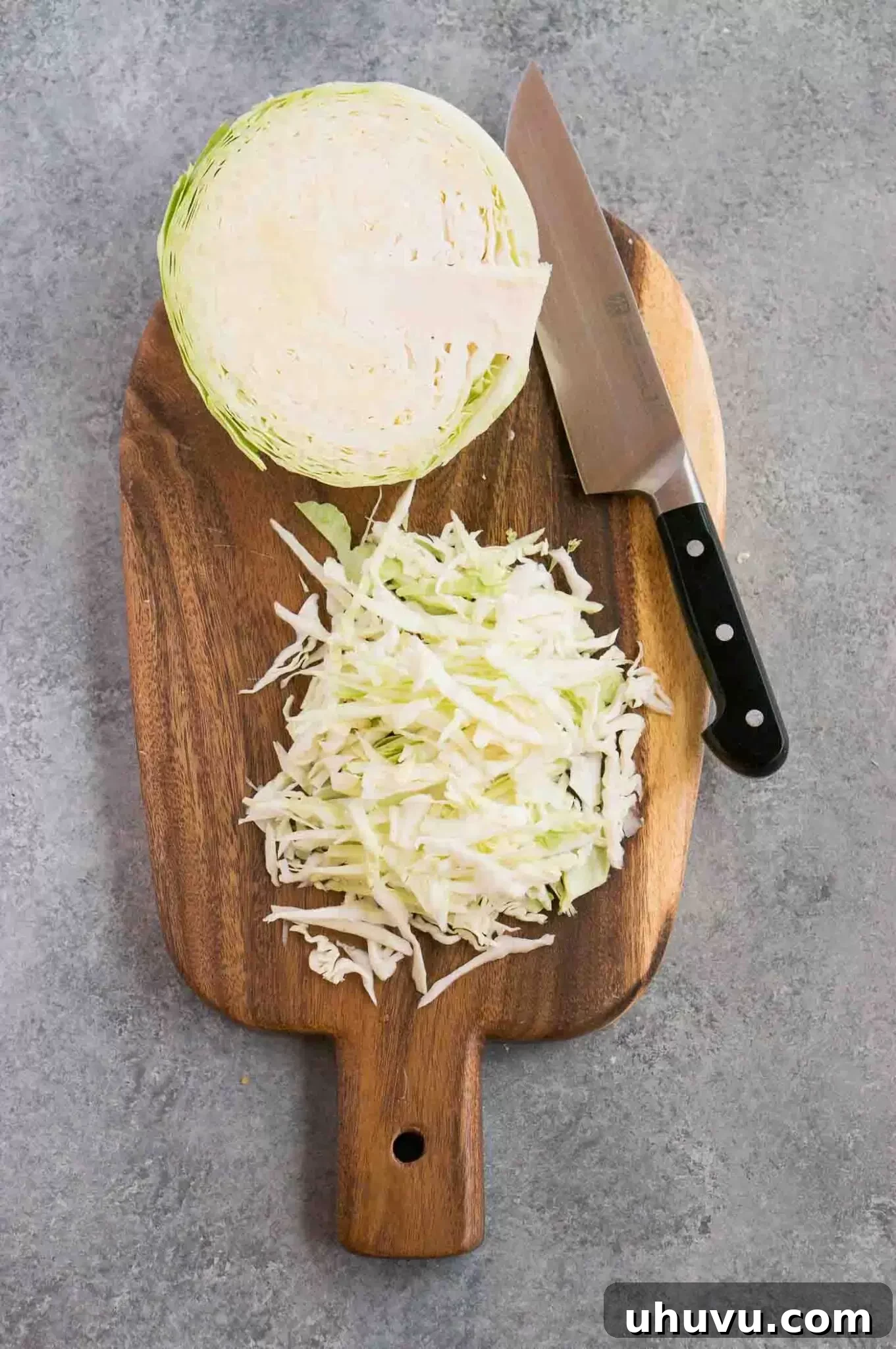
Welcome to the ultimate guide to cutting cabbage! Mastering fundamental knife skills is one of the most impactful ways to elevate your cooking experience, making meal preparation more efficient, enjoyable, and safer. This comprehensive tutorial will equip you with the knowledge and techniques to confidently handle any head of cabbage, transforming a potentially intimidating task into a simple, satisfying one.
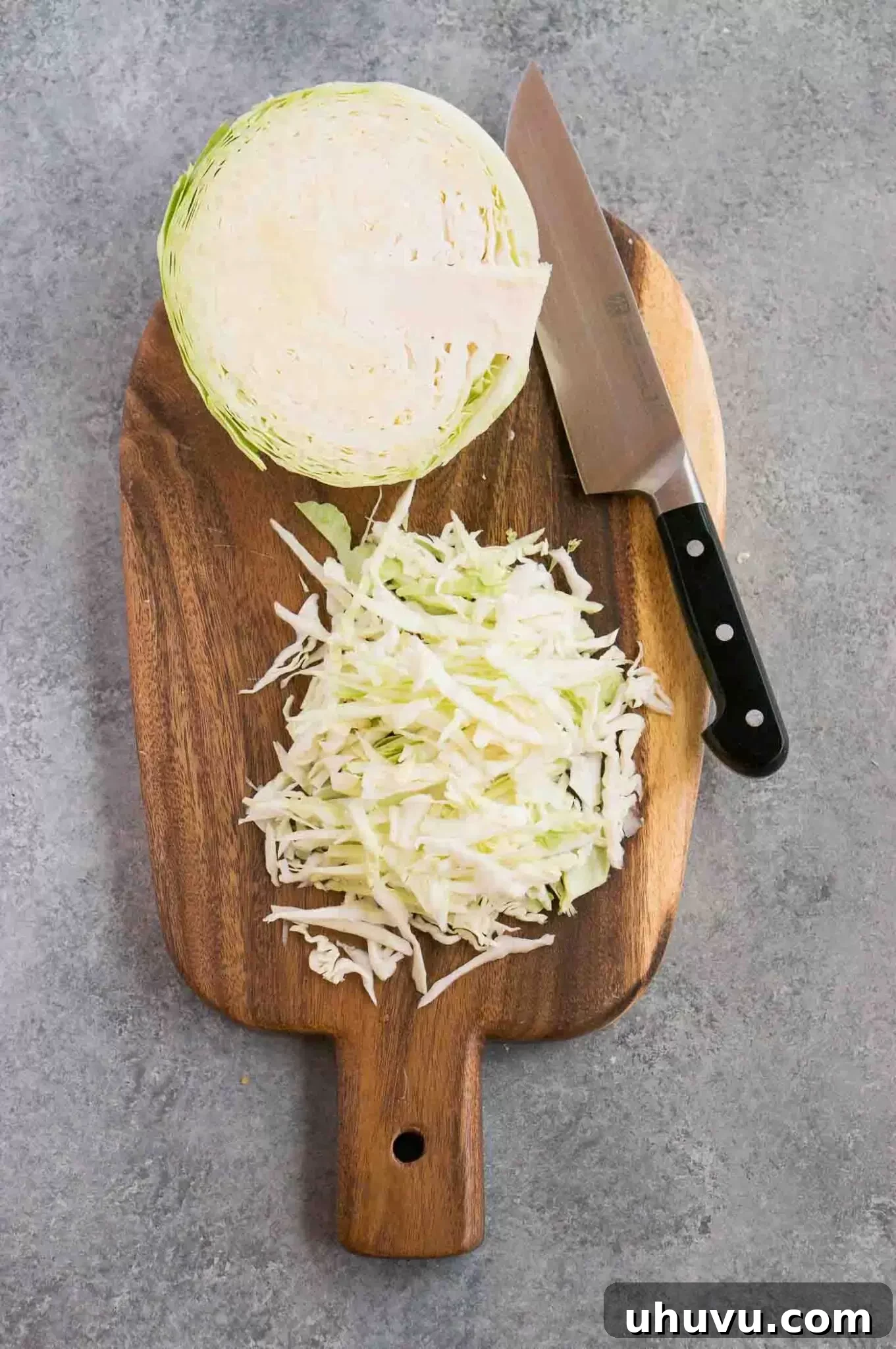
Whether you’re preparing a vibrant coleslaw, a hearty soup, or a quick stir-fry, perfectly cut cabbage can make all the difference. This instructional guide will walk you through preparing a head of cabbage, ensuring you achieve the desired cuts with speed, precision, and utmost safety. Say goodbye to store-bought pre-cut cabbage and embrace the freshness and flavor of home-prepped vegetables.
Elevate your fundamental kitchen capabilities by exploring our other helpful guides on How to Peel and Mince Garlic and How to Peel Tomatoes.
Why Mastering Cabbage Cutting Skills is Essential
Learning how to properly cut cabbage offers numerous benefits that extend beyond just a single recipe. It empowers you in the kitchen, making healthy cooking more accessible and enjoyable.
- Maximize Your Produce, Minimize Waste: Efficient cutting techniques ensure you use more of the vegetable, reducing unnecessary waste. This not only makes your fresh produce go further but also saves you money compared to buying pre-chopped vegetables.
- Enhanced Kitchen Safety: Contrary to popular belief, a sharp knife and proper technique significantly reduce the risk of accidents. This tutorial prioritizes safe cutting practices, building your confidence in handling kitchen tools.
- Embrace Wholesome, Homemade Meals: Cooking from scratch gives you complete control over your ingredients, allowing you to create meals free from unwanted additives and packed with natural flavors. Freshly cut cabbage truly tastes superior and contributes to more nutritious dishes.
- Versatility in Cooking: Cabbage is incredibly versatile, adaptable to countless cuisines and cooking methods. Being able to quickly prepare it opens up a world of culinary possibilities, from crisp salads to comforting braises.
Choosing and Preparing Your Cabbage
Before you begin slicing and dicing, it’s important to select a fresh head of cabbage and ensure you have the right tools on hand.
Head of Cabbage: The beauty of this cutting technique is its adaptability. It works perfectly for virtually any type of cabbage you encounter:
- Green Cabbage: The most common variety, known for its firm texture and slightly peppery flavor. Ideal for coleslaw, sautéing, and soups.
- Red Cabbage: Similar to green cabbage but boasts a vibrant purple-red hue and a slightly earthier taste. Great for adding color to salads and pickling.
- Savoy Cabbage: Distinguished by its crinkly, tender leaves and milder flavor. Excellent for wraps, light sautés, or adding to stews.
- Chinese Cabbage (Napa Cabbage): A longer, oval-shaped cabbage with a sweeter, more delicate flavor and tender leaves. Perfect for stir-fries, kimchi, and fresh salads.
Regardless of the variety, ensure the head feels firm and heavy for its size, indicating freshness. Avoid any with excessive blemishes or soft spots.
Essential Tools for Success
To ensure a smooth and safe cutting process, gather these fundamental kitchen tools:
- Sharp Chef’s Knife: This is your most important tool. A sharp knife requires less force, making it safer and more efficient. A long blade (8-10 inches) is ideal for cutting through a large cabbage head in one fluid motion.
- Stable Cutting Board: A non-slip cutting board is crucial for safety. Place a damp paper towel or a non-slip mat underneath your board to prevent it from shifting during cutting.
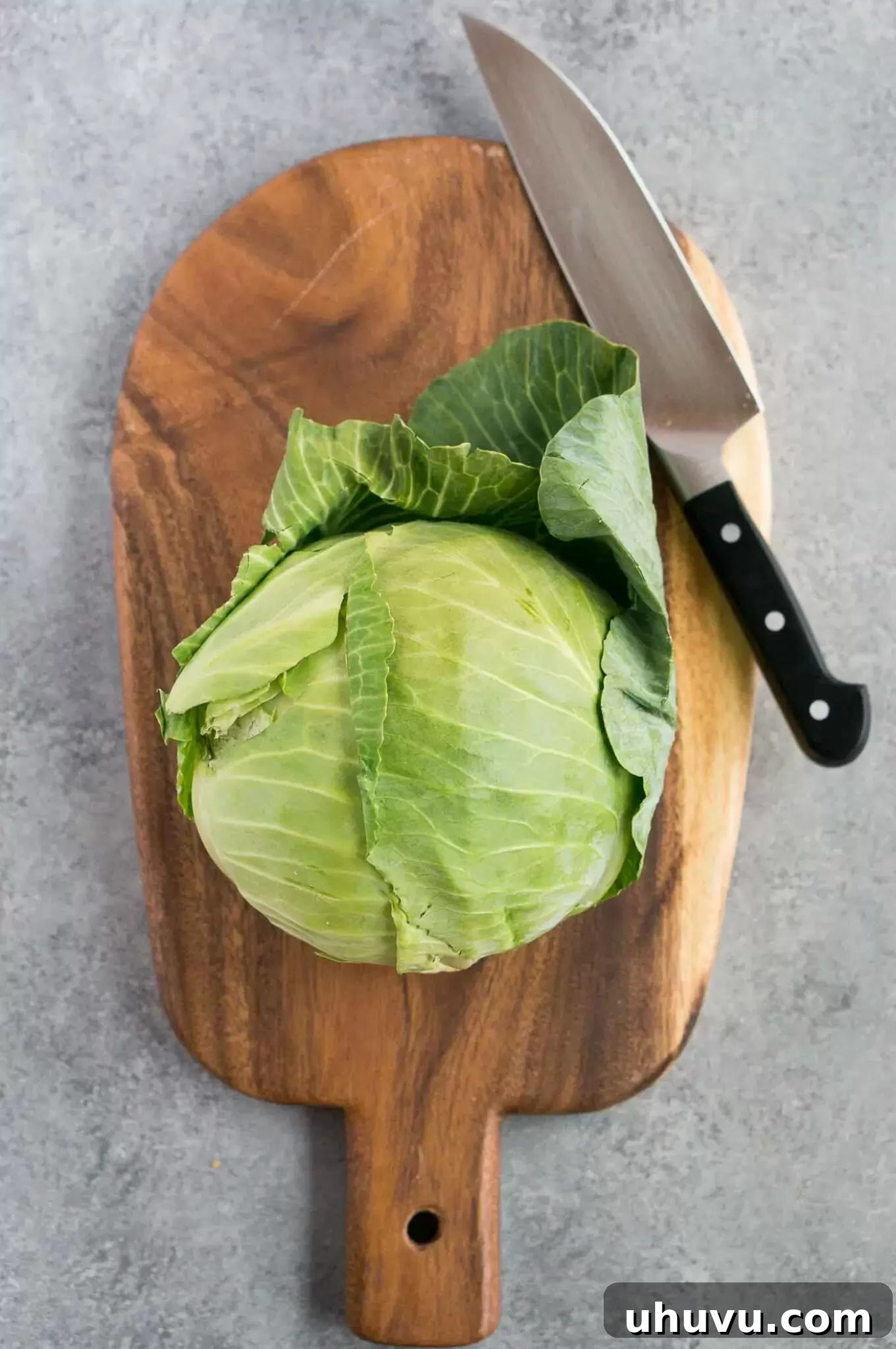
Step-by-Step Guide: How To Cut Cabbage Safely and Efficiently
Follow these detailed steps to perfectly prepare your cabbage for any recipe:
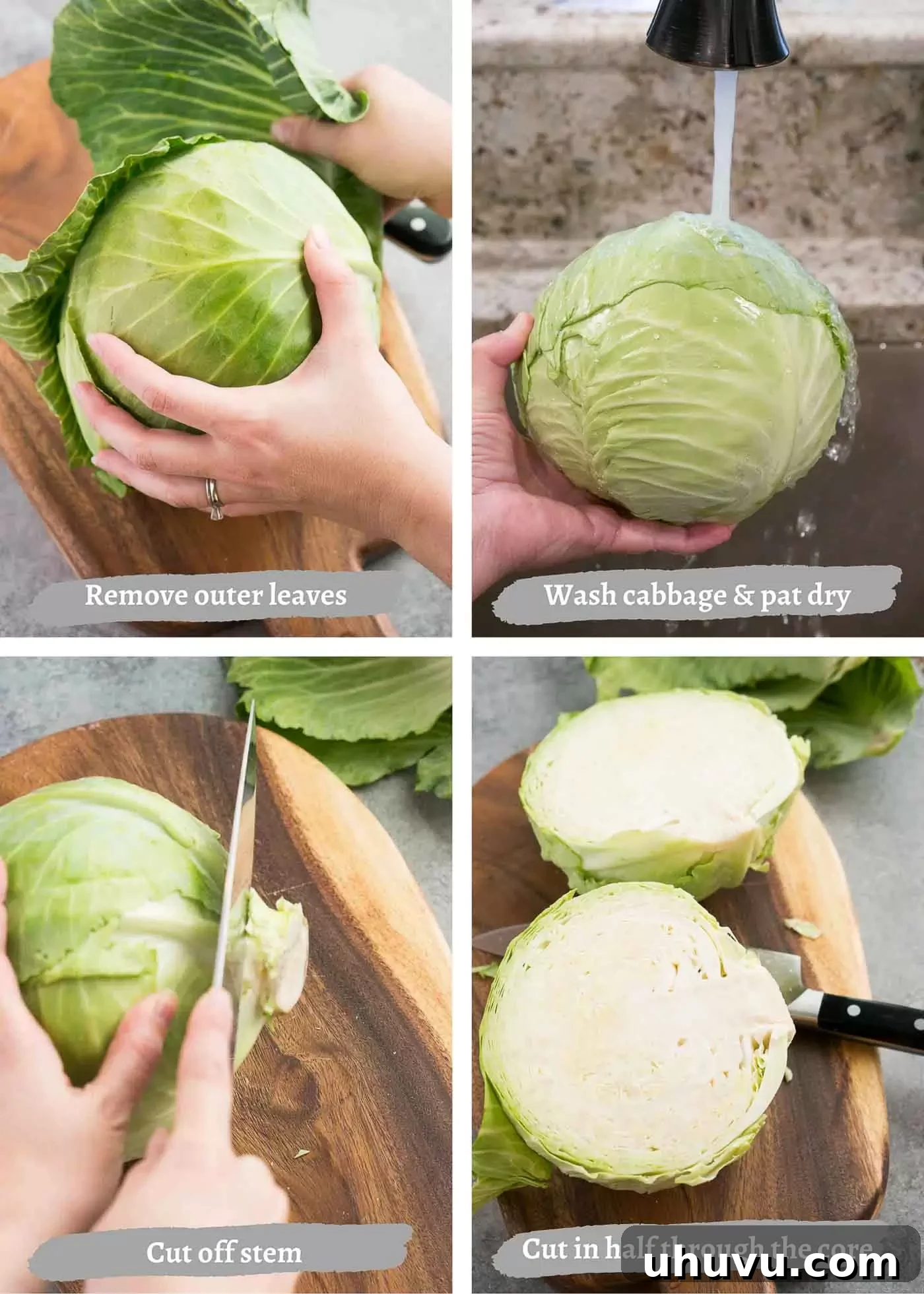
- Step 1: Initial Preparation and Cleaning. Begin by removing any bruised, discolored, or tough outer leaves from the head of cabbage. These leaves are often thicker and less palatable. Once cleaned, rinse the entire head thoroughly under cold running water to remove any dirt or debris. Gently pat dry with a clean kitchen towel.
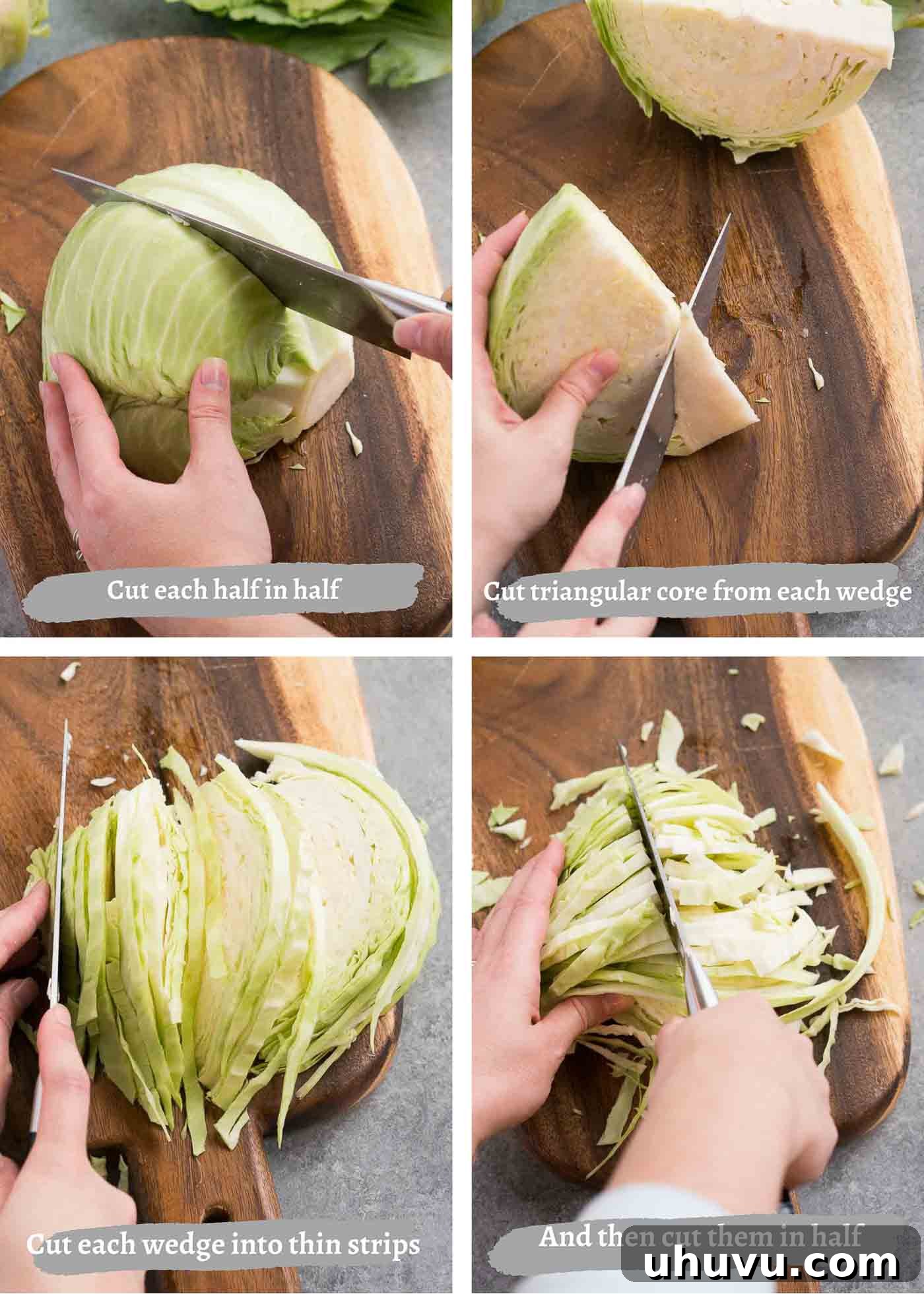
- Step 2: Halving the Cabbage. Place the whole head of cabbage on your stable cutting board with the stem side facing down. Using a sharp chef’s knife, carefully cut the cabbage in half lengthwise, starting from the top and going all the way through the tough core at the bottom. This ensures a clean, even cut.
- Step 3: Quartering the Cabbage. Take each half of the cabbage and place it cut-side down on the cutting board. Again, cut each half lengthwise through the remaining core, creating four distinct quarters. You should now have four manageable wedges of cabbage.
- Step 4: Removing the Core. The core of the cabbage is fibrous and generally undesirable for most dishes. To remove it, take one cabbage quarter and place it on its side. Locate the triangular core at the bottom. With your knife, make two diagonal cuts into the core, forming a “V” shape, and carefully remove it. Repeat this process for all four quarters.
- Step 5: Slicing or Shredding the Cabbage.
- For Shredded Cabbage (thin strips): Place a cored cabbage wedge, cut side down, on your cutting board. Using a chef’s knife, begin slicing the cabbage lengthwise (parallel to where the core was) into thin strips. The thickness of your shreds will depend on your recipe – aim for very thin slices for coleslaw and slightly thicker ones for stir-fries.
- For Chopped Cabbage (cubes or chunks): If your recipe calls for chopped cabbage, first follow the steps above to slice the cabbage into strips. Then, gather these strips and cut them crosswise (perpendicular to your initial slices) along the width to achieve your desired size of chopped pieces. This method ensures uniform pieces, which cook more evenly.
EXPERT KITCHEN TIPS
Pro Tips for Perfect Cabbage Preparation
To further refine your cabbage cutting skills and ensure consistent results, keep these expert tips in mind:
- Choose the Right Knife: Always opt for a long chef’s knife. Its length allows you to make a single, continuous cut through the cabbage, which is much safer and more effective than multiple short, choppy cuts.
- Sharpness is Key for Safety: A sharp knife is not just about efficiency; it’s paramount for safety. A dull knife requires more force, making it prone to slipping and causing injury. Regularly sharpen your knives or have them professionally sharpened.
- Don’t Skip the Core and Outer Leaves: Always remove the dense, triangular core and any tough or damaged outer leaves. These parts can be bitter, chewy, and unpleasant to eat, affecting the overall texture and flavor of your dish.
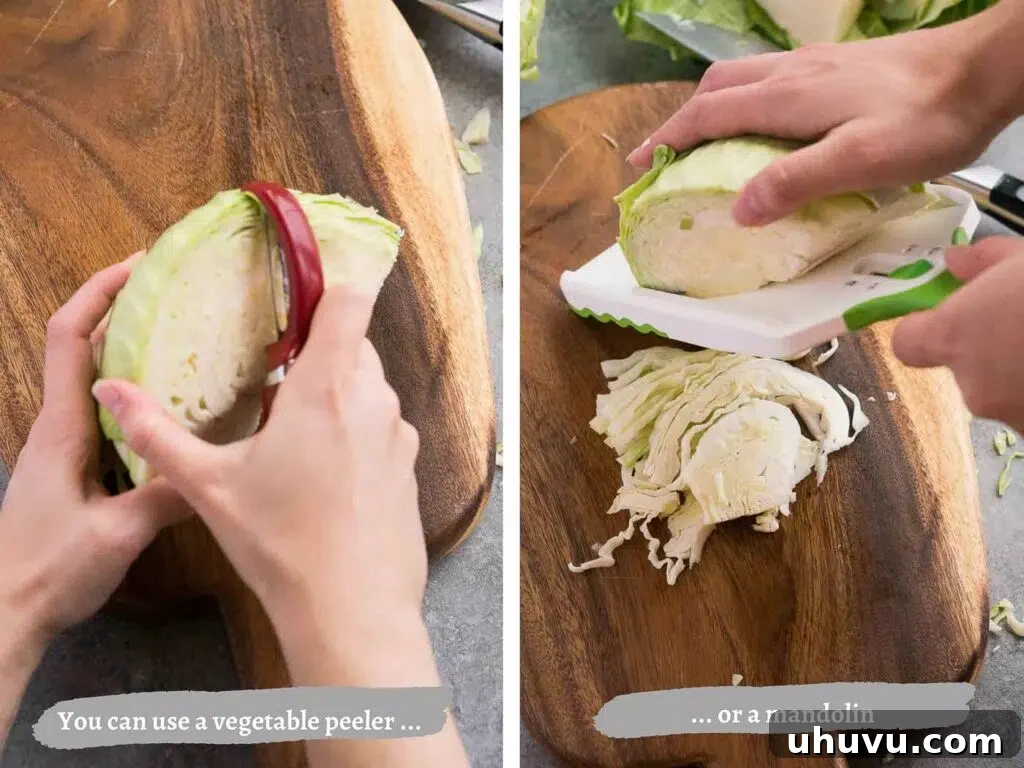
- Consider Alternative Tools for Fine Cuts: For exceptionally thin and uniform slices, especially for coleslaw or specific garnishes, a mandolin slicer can be a game-changer. Exercise extreme caution and always use the safety guard when operating a mandolin to prevent cuts. Alternatively, a vegetable peeler can be used for very fine ribbons from the flat sides of cabbage quarters.
- Maintain Your “Claw” Grip: When slicing, always curl your fingertips inwards, holding the cabbage firmly with your knuckles guiding the knife blade. This “claw” grip protects your fingers from the blade.
Storing Your Prepared Cabbage for Maximum Freshness
Proper storage is essential to keep your cut cabbage crisp and flavorful for longer. Cabbage is a hardy vegetable, and with the right methods, you can extend its shelf life, minimizing food waste.
Refrigerator Storage
Once cut, cabbage tends to dry out quickly. To maintain its freshness:
- Airtight Container: Place your shredded or chopped cabbage in an airtight container. This minimizes exposure to air, which causes oxidation and wilting.
- Plastic Wrap: Alternatively, wrap the cabbage tightly in plastic wrap before placing it in a resealable bag.
- Shelf Life: Stored correctly in the refrigerator, cut cabbage will retain its quality for approximately 5-7 days. For best results, consume within the first few days.
Freezer Storage for Long-Term Preservation
Cabbage freezes remarkably well, making it an excellent vegetable for meal prepping and long-term storage. Freezing allows you to enjoy cabbage year-round, even when it’s not in season.
- Basic Freezing (Up to 2 Months): For quick freezing, simply place your cut raw cabbage in a freezer-safe plastic bag, pressing out as much air as possible, or in an airtight freezer container. It will keep well for up to two months. Note that the texture may be slightly softer once thawed.
- Blanching for Extended Freezing (Up to 9 Months): For longer storage and to better preserve texture and color, blanching is recommended:
- Bring a large pot of water to a rolling boil.
- Prepare an ice bath: a large bowl filled with ice and cold water.
- Submerge the shredded or chopped cabbage into the boiling water for 1.5 to 2 minutes. Do not overcrowd the pot; blanch in batches if necessary.
- Quickly remove the cabbage with a slotted spoon and immediately transfer it to the ice bath to stop the cooking process.
- Once cooled (about 2 minutes), drain the cabbage thoroughly and pat it very dry with paper towels. Excess water can lead to freezer burn.
- Portion the blanched and dried cabbage into freezer-safe bags or containers. Label with the date.
Blanched cabbage can be frozen for up to 9 months. You can add frozen blanched cabbage directly to cooked dishes like soups or stews, or thaw it in the refrigerator or at room temperature for other uses.
Delicious Recipes to Showcase Your Cabbage Cutting Skills
Now that you’ve mastered the art of cutting cabbage, it’s time to put your freshly prepped veggie to good use! Cabbage is a wonderfully versatile ingredient that shines in a myriad of dishes across different cuisines. Here are some favorite recipes to inspire your next meal:
Soups + Stews
Cabbage Soup
A classic, warming soup perfect for a cozy evening or a healthy meal plan.
Side Dishes
Red Cabbage Slaw
A colorful and crunchy side, perfect for picnics or as a topping for tacos.
Main Dishes
Cabbage and Sausage Recipe
A quick and satisfying one-pan meal, perfect for a weeknight dinner.
Side Dishes
Sautéed Cabbage
A simple yet flavorful side dish that pairs well with almost any main course.
And explore even more creative cabbage recipe ideas:
- Beef and Cabbage Skillet: A hearty and healthy one-pan meal.
- Classic Coleslaw: The perfect crunchy addition to any BBQ or sandwich.
- Best Egg Roll in a Bowl with Spicy Sauce: All the flavors of your favorite takeout, deconstructed.
- Fermented Cabbage (Sauerkraut/Kimchi): For those who enjoy probiotics and tangy flavors, homemade sauerkraut or kimchi are excellent uses for large quantities of shredded cabbage.
- Cabbage Wraps: Use large, blanched cabbage leaves as a healthy alternative to tortillas or bread for wraps.
Expand Your Culinary Horizon with More Kitchen Tips
Continue your journey to becoming a confident home cook with these other essential kitchen guides:
- How To Cook Quinoa: Learn to perfectly prepare this nutritious grain.
- How To Make Perfect Hard Boiled Eggs: Achieve ideal hard-boiled eggs every time.
- How to Make Cauliflower Rice: A versatile low-carb alternative to traditional rice.
- How To Cook Rice: Master the basics of cooking fluffy, perfect rice.
If you enjoyed this comprehensive “How To Cut Cabbage” tutorial or found any other recipe on my blog helpful, please leave a ⭐ star rating and share your experience in the 📝 comments below. Your feedback is greatly appreciated! Thanks for visiting!
Pin this guide now to easily find it later
Pin It
How To Cut Cabbage
Neli Howard
3
3
1
cabbage
Ingredients
-
1
head
cabbage,
green or red, savoy, or napa cabbage
Instructions
-
Remove any damaged or browned outer leaves and rinse under cold water.
-
Place the head of cabbage on a cutting board or clean work surface with the stem side down.
-
With a chef’s knife, cut in half lengthwise, all the way through the core. Cut each half in half so you have four quarters.
-
Remove the triangular core by cutting into the core at an angle and remove it from each quarter.
-
Place the quarters, cut side down, on the cutting board. Use a chef’s knife to cut the quarters into slices cutting lengthwise. If you want to chop the cabbage, cut the cabbage quarter crosswise along the width.
Notes
- Use a long chef’s knife to cut the cabbage. This way you can cut through it in one go rather than lots of small cuts.
- Make sure that your knife is sharp. Sharp knives are less likely to slip and cut you.
- Remove the core of the cabbage as well as older outer leaves as these can be tougher and harder to eat.
Nutrition
Calories:
227
kcal
|
Carbohydrates:
53
g
|
Protein:
12
g
|
Fat:
1
g
|
Saturated Fat:
1
g
|
Polyunsaturated Fat:
1
g
|
Monounsaturated Fat:
1
g
|
Sodium:
163
mg
|
Potassium:
1544
mg
|
Fiber:
23
g
|
Sugar:
29
g
|
Vitamin A:
890
IU
|
Vitamin C:
332
mg
|
Calcium:
363
mg
|
Iron:
4
mg
Nutrition Disclaimer: Nutritional values are estimates and may vary with ingredients, brands, and portion sizes. For accuracy, use your preferred nutrition calculator.