
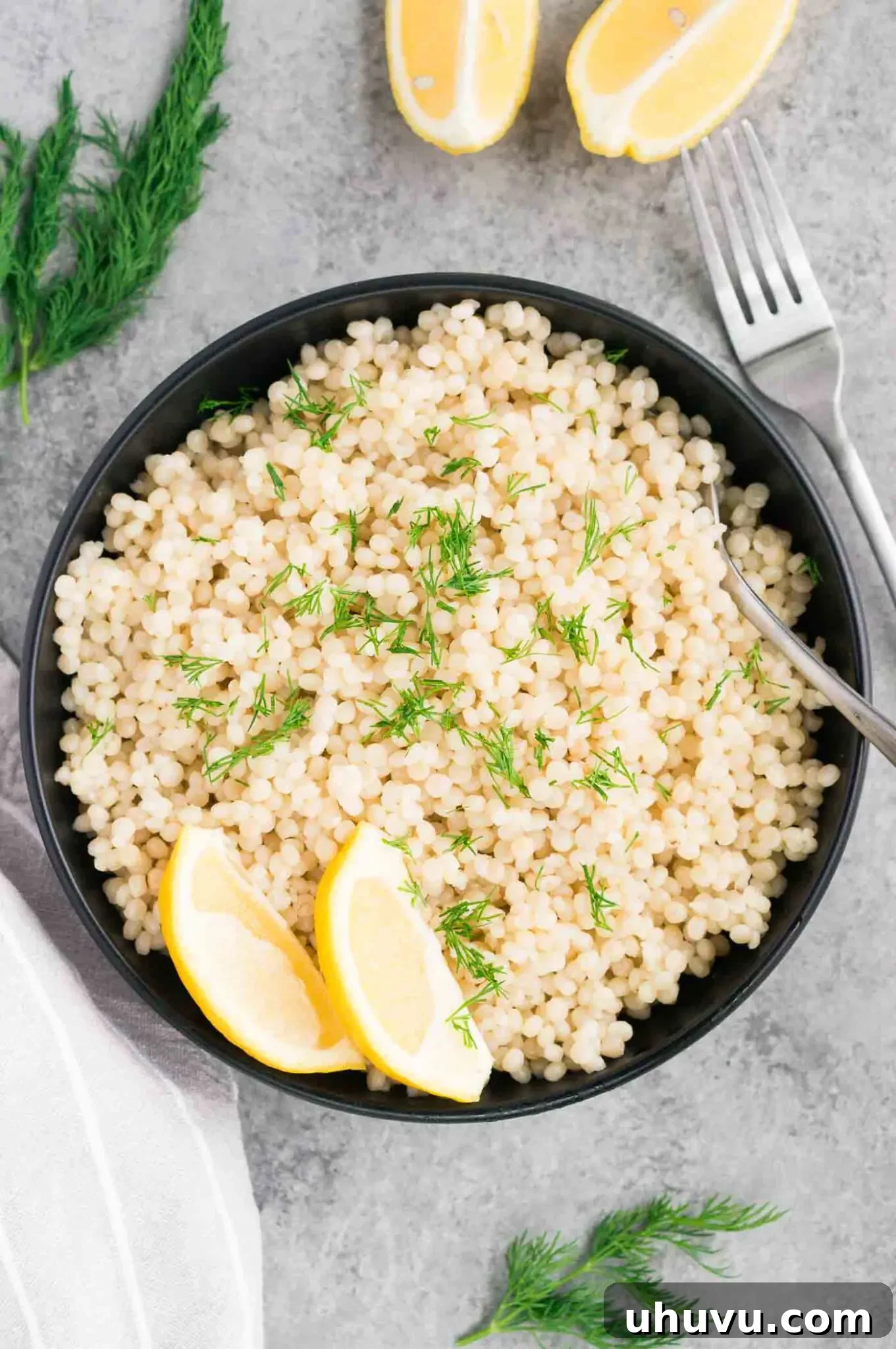
Learn how to cook couscous perfectly every single time with these top tips. Achieve perfectly fluffy, distinct grains that are ready to serve in mere minutes. This incredibly versatile side dish is ideal for busy weeknight dinners, efficient meal prep, and elevating a wide array of culinary creations.
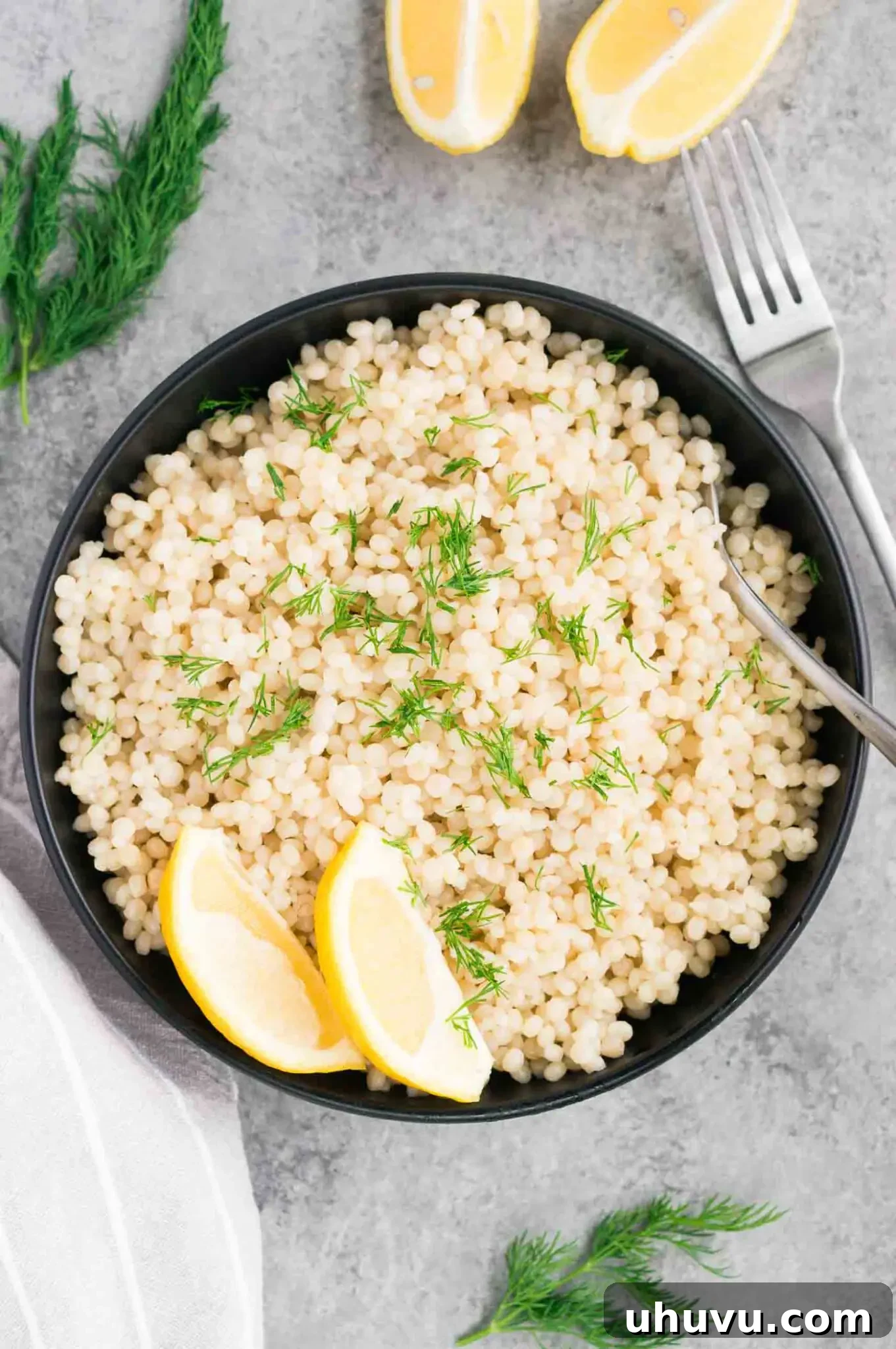
Couscous, a staple of North African cuisine, is a revelation once you master its simple preparation. It serves as a fantastic alternative to traditional rice or pasta, bringing a delightful nutty and subtly sweet flavor that beautifully complements salads, stews, and grilled dishes. This ancient grain-like pasta is not only delicious but also remarkably quick to cook, making it a go-to choice for busy home cooks.
This comprehensive, step-by-step guide will teach you exactly how to make couscous perfectly from scratch every single time. Get ready to elevate your favorite recipes with consistently fluffy and flavorful couscous. Don’t forget to try my Mediterranean Couscous Salad for an instant hit!
Why You’ll Love This Perfect Couscous Recipe
Discovering the joy of cooking couscous is a game-changer for your kitchen. Here’s why this recipe will become a new favorite:
- Quick & Easy: Forget complicated techniques or lengthy cooking times. This North African side dish requires minimal effort and is ready in under 15 minutes, making it perfect for last-minute meals.
- Simple Ingredients: You won’t need a pantry full of exotic items. This recipe relies on basic, readily available ingredients, proving that extraordinary flavor can come from simplicity.
- Incredibly Versatile: Cooked couscous is a culinary chameleon. It pairs wonderfully with a vast array of main courses, from vibrant stir-fries and wholesome protein bowls to rich curries, succulent grilled chicken, delicate seafood, and robust meats. Its neutral yet appealing flavor makes it an excellent canvas for countless dishes.
- Healthy & Satisfying: Couscous is a good source of fiber and protein, offering a satisfying and nutritious base for many meals without feeling heavy.
- Excellent for Meal Prep: Its quick cooking time and ease of storage make it an ideal component for weekly meal planning. Prepare a larger batch and enjoy it in various ways throughout the week.
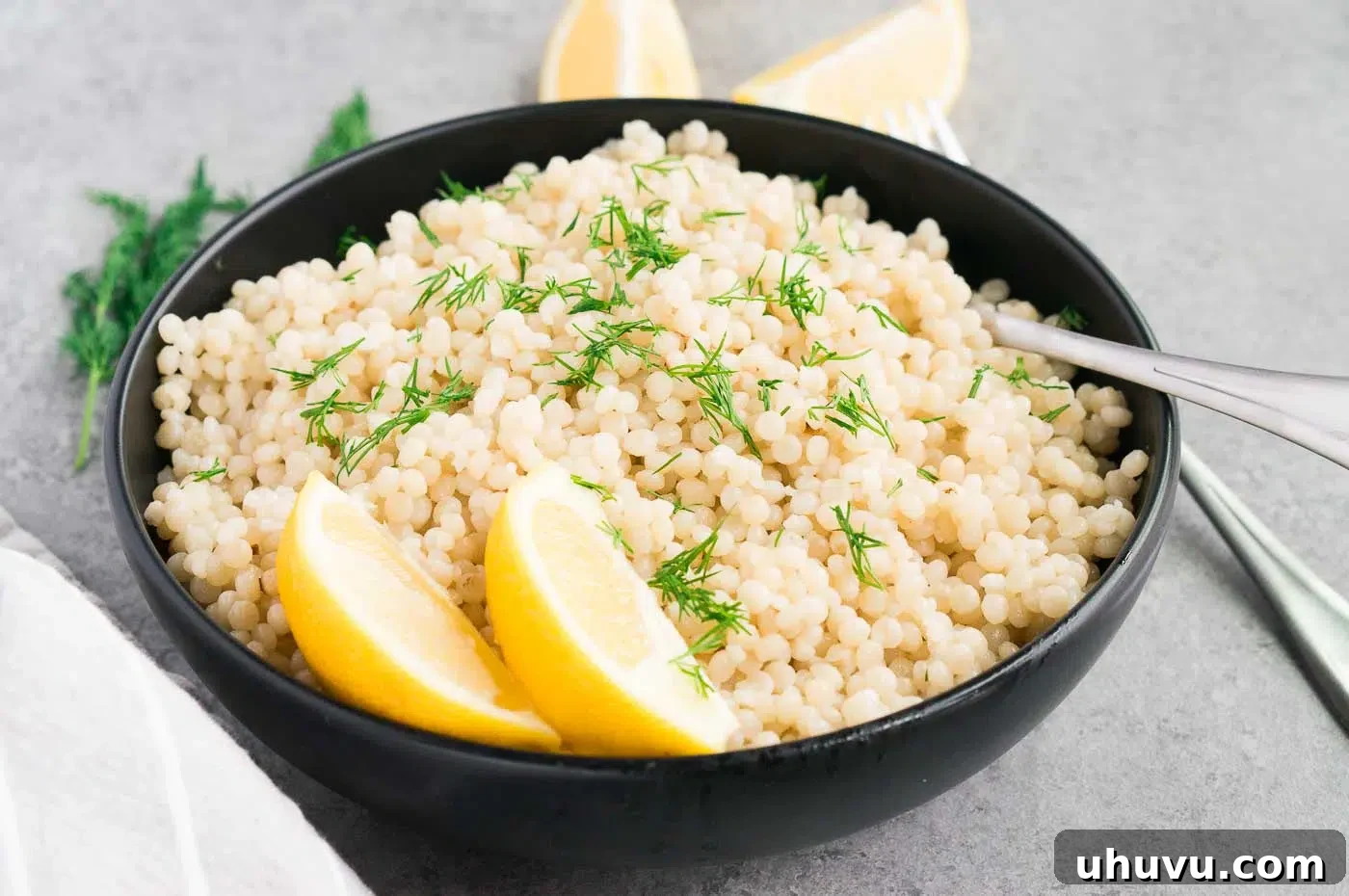
What Exactly is Couscous?
Often mistaken for a grain, couscous is actually a type of pasta made from durum wheat semolina, just like many popular kinds of pasta. It originates from North Africa and traditionally involves rolling semolina into tiny pellets, then steaming them. Today, most couscous sold in Western supermarkets is pre-steamed and dried, making it incredibly fast to prepare.
There are generally three main types of couscous:
- Moroccan Couscous: This is the smallest and most common variety, resembling tiny grains. It cooks in just 5-7 minutes.
- Israeli Couscous (Pearl Couscous): The focus of this recipe, pearl couscous has larger, spherical grains, similar to tiny pasta pearls. It has a chewier texture and takes slightly longer to cook than Moroccan couscous, typically 8-10 minutes.
- Lebanese Couscous (Moghrabieh): The largest variety, Moghrabieh pearls are even bigger than Israeli couscous, offering a very substantial and satisfying chew.
Essential Ingredients for Perfect Couscous
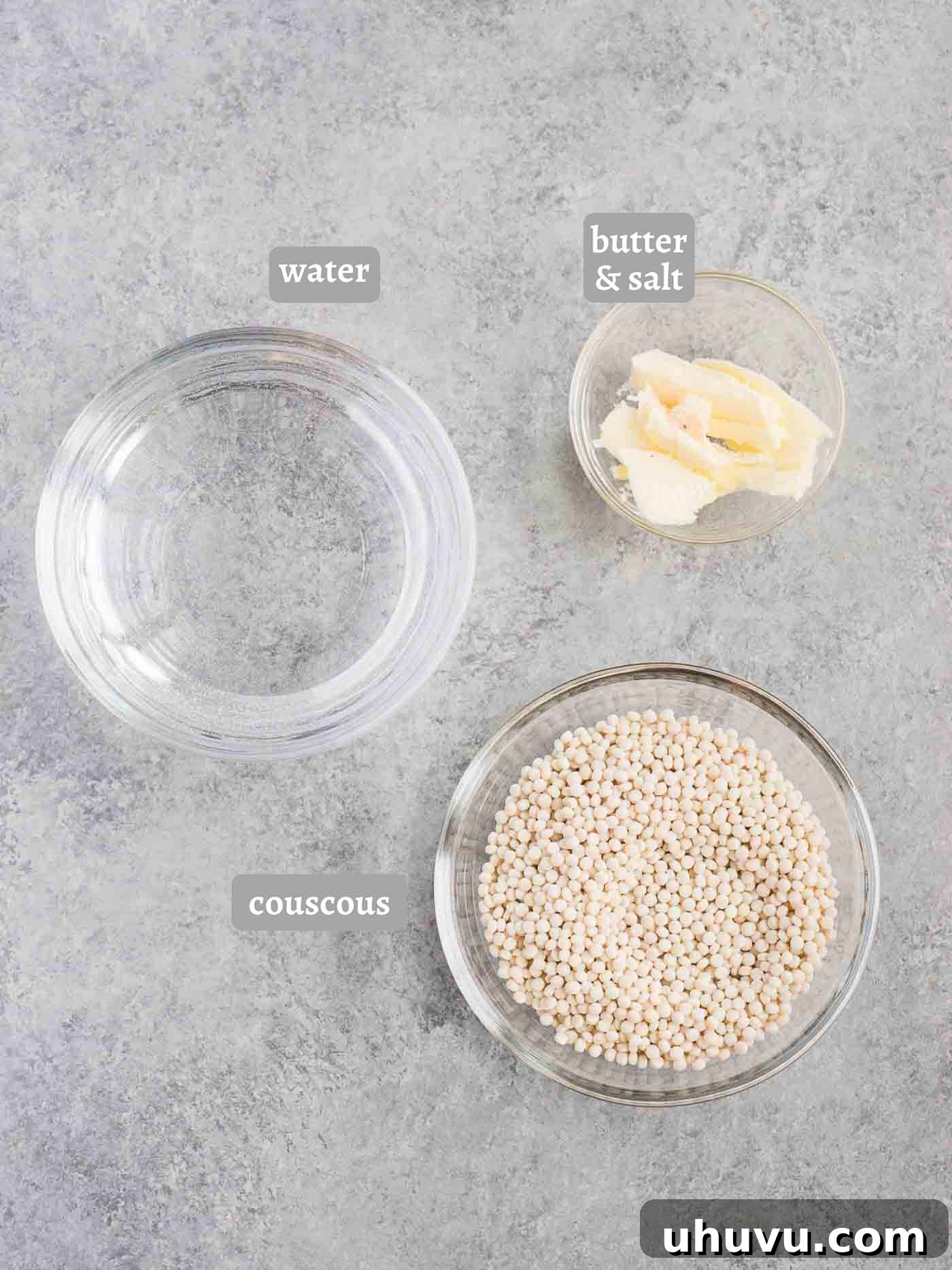
Crafting perfectly fluffy couscous requires just a handful of simple ingredients. Here’s a closer look at what you’ll need and how each contributes to the final dish:
- Water or Broth: This is the primary liquid for cooking your couscous. While plain water works perfectly fine, opting for a vegetable stock or chicken broth can significantly enhance the flavor profile, adding depth and savory notes to your dish.
- Salt: Although optional, a pinch of salt in the cooking liquid is highly recommended. It seasons the couscous from within, bringing out its natural flavors and ensuring it isn’t bland.
- Butter or Oil: This ingredient is also optional, but a small amount of butter or olive oil works wonders. It helps separate the couscous grains, preventing them from clumping together and contributing to that desirable fluffy texture. It also adds a rich, subtle flavor.
- Pearl Couscous: This recipe specifically focuses on cooking pearl couscous (also known as Israeli couscous). Its larger, chewier texture distinguishes it from the finer Moroccan variety. Pearl couscous is an incredibly versatile pantry staple that cooks quickly and integrates beautifully into many wholesome recipes.
- Fresh Herbs & Spices (Optional, for serving): To elevate the flavor just before serving, consider stirring in fresh herbs like dill, parsley, or thyme. Ground spices such as cumin or black pepper can add warmth. A bright drizzle of fresh lemon juice is also a fantastic way to add a zesty finish.
How to Cook Pearl Couscous: A Simple Step-by-Step Guide
Cooking pearl couscous to perfection is incredibly straightforward. Follow these easy steps to achieve wonderfully fluffy results every time:
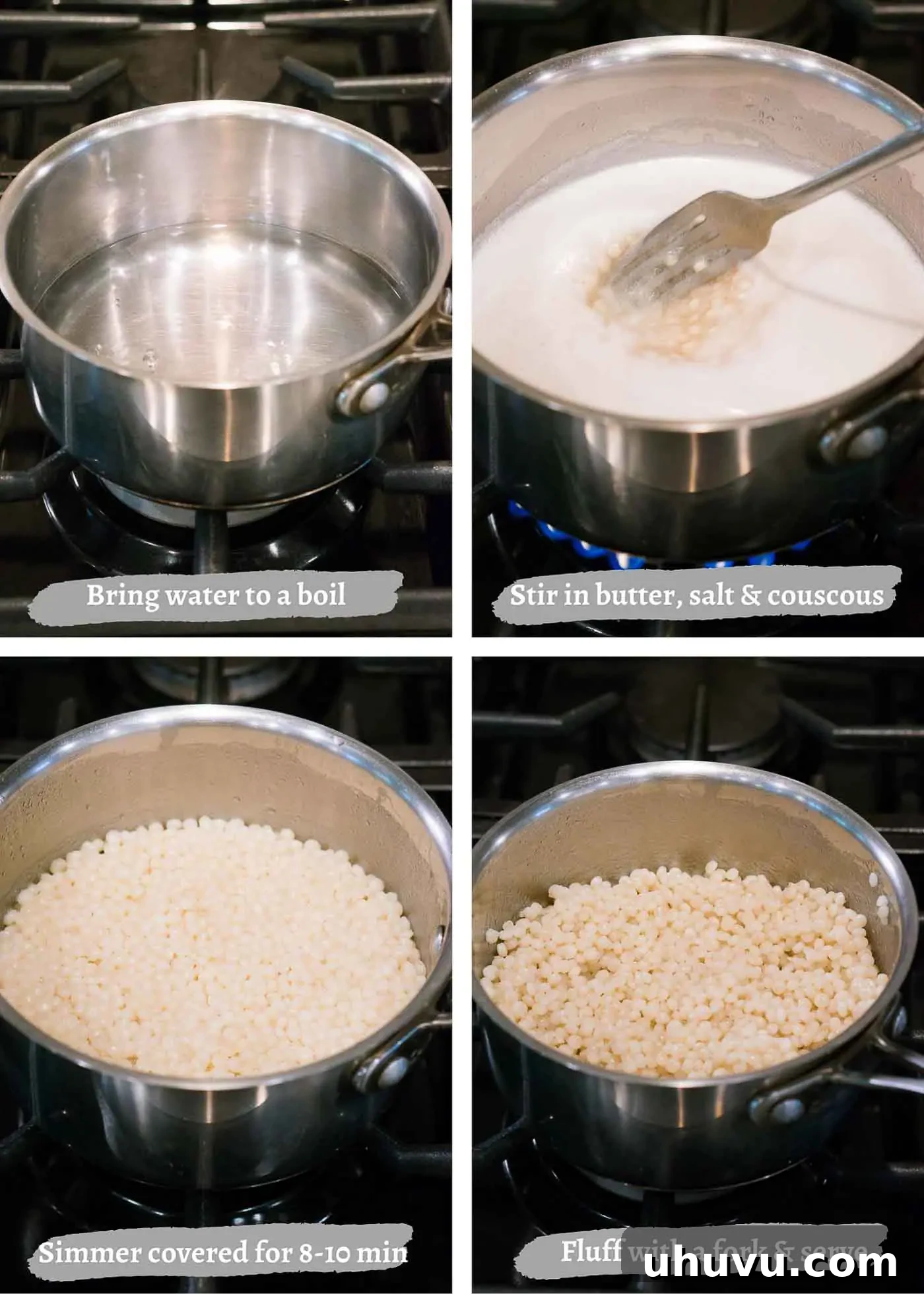
- Step 1: Bring Liquid to a Boil. In a small saucepan, bring the desired amount of water (or broth for extra flavor) to a rolling boil over medium-high heat. Ensure there’s enough liquid for the couscous to absorb.
- Step 2: Season the Liquid. Once boiling, add salt and a teaspoon of butter or olive oil to the liquid, if you desire. This is your chance to infuse flavor into the couscous as it cooks and helps prevent sticking.
- Step 3: Add Couscous and Simmer. Stir in the pearl couscous. Immediately cover the saucepan with a tight-fitting lid and reduce the heat to low. Let it simmer gently for 8 to 10 minutes. Stir occasionally to prevent sticking to the bottom of the pan and ensure even cooking.
- Step 4: Fluff and Serve. When all the liquid has been absorbed and the couscous is tender, remove the saucepan from the heat. Let it rest, covered, for a minute or two, then gently fluff the couscous with a fork. This separates the grains and creates that airy, fluffy texture.
TIPS FROM NELI’S KITCHEN
Recipe Notes and Tips for the Best Couscous
Achieving consistently delicious and fluffy couscous is easy with these expert tips:
- No Rinsing Needed: Unlike rice, there’s no need to wash or rinse couscous before cooking. It contains very little starch, so rinsing won’t impact its texture.
- The Magic of Fat: While optional, adding a small amount of butter or olive oil to the cooking liquid is highly recommended. It helps to coat the grains, ensuring they remain separate and wonderfully fluffy rather than clumping together.
- Cook Off the Heat: For the best results, add the couscous to boiling water, then immediately remove it from the direct heat source or significantly reduce the heat to a very low simmer. This gentle cooking method allows the couscous to absorb the liquid evenly without becoming overcooked or mushy.
- Fluff with a Fork: Once the liquid is absorbed, allow the couscous to sit covered for a minute or two. Then, use a fork to gently fluff the grains. This action aerates the couscous, preventing it from sticking and creating that light, desirable texture. Avoid stirring with a spoon, which can mash the grains.
- Perfect Liquid Ratio: Always follow the package instructions for the specific type of couscous you are using, as ratios can vary slightly. Generally, a 1:1.5 ratio of couscous to liquid (e.g., 1 cup couscous to 1.5 cups liquid) works well for pearl couscous.
- Use a Tight-Fitting Lid: A well-sealed lid is crucial to trap the steam and ensure the couscous cooks evenly and absorbs all the liquid.
- Avoid Overcooking: Overcooked couscous can become gummy and sticky. Once the liquid is absorbed and the grains are tender, remove it from the heat promptly.
Common Couscous Cooking Mistakes to Avoid
Even though couscous is simple, a few common errors can prevent you from achieving that perfect fluffiness:
- Too Much Liquid: The quickest way to end up with mushy, sticky couscous. Stick to the recommended liquid-to-couscous ratio (typically 1.5 cups liquid per 1 cup pearl couscous).
- Too Little Liquid: This will result in dry, hard, and undercooked grains. Ensure accurate measurements.
- Over-Stirring During Cooking: Once the couscous is added and covered, excessive stirring can break up the delicate grains and release starch, leading to a gluey texture. Stir only occasionally if needed to prevent sticking.
- Not Letting it Rest: Allowing the couscous to sit covered for a few minutes after cooking is crucial. This final resting period allows the grains to steam in their own heat, ensuring maximum absorption and tenderness before fluffing.
How Long Does Cooked Couscous Last?
Proper storage is key to extending the life of your delicious couscous. Once cooked, allow it to cool completely to room temperature before transferring it to an airtight container. Store it in the refrigerator, where it will maintain its quality for 3 to 4 days. Cooked couscous is wonderfully versatile and can be enjoyed reheated in the microwave for a warm side dish or served cold in refreshing salads.
Can You Freeze Cooked Couscous?
Absolutely! Cooked couscous freezes exceptionally well, making it a fantastic component for future meal planning. To freeze, spread the cooled couscous thinly on a baking sheet and place it in the freezer until solid. Once hard, use a fork to break up any larger lumps, then transfer the frozen couscous into individual portions in freezer-safe bags or containers. Properly stored, frozen couscous will keep its quality for up to 4 months. You can thaw it at room temperature for a few hours or reheat it directly from frozen, adding a splash of water or broth if it seems a little dry.
Is Couscous Gluten-Free?
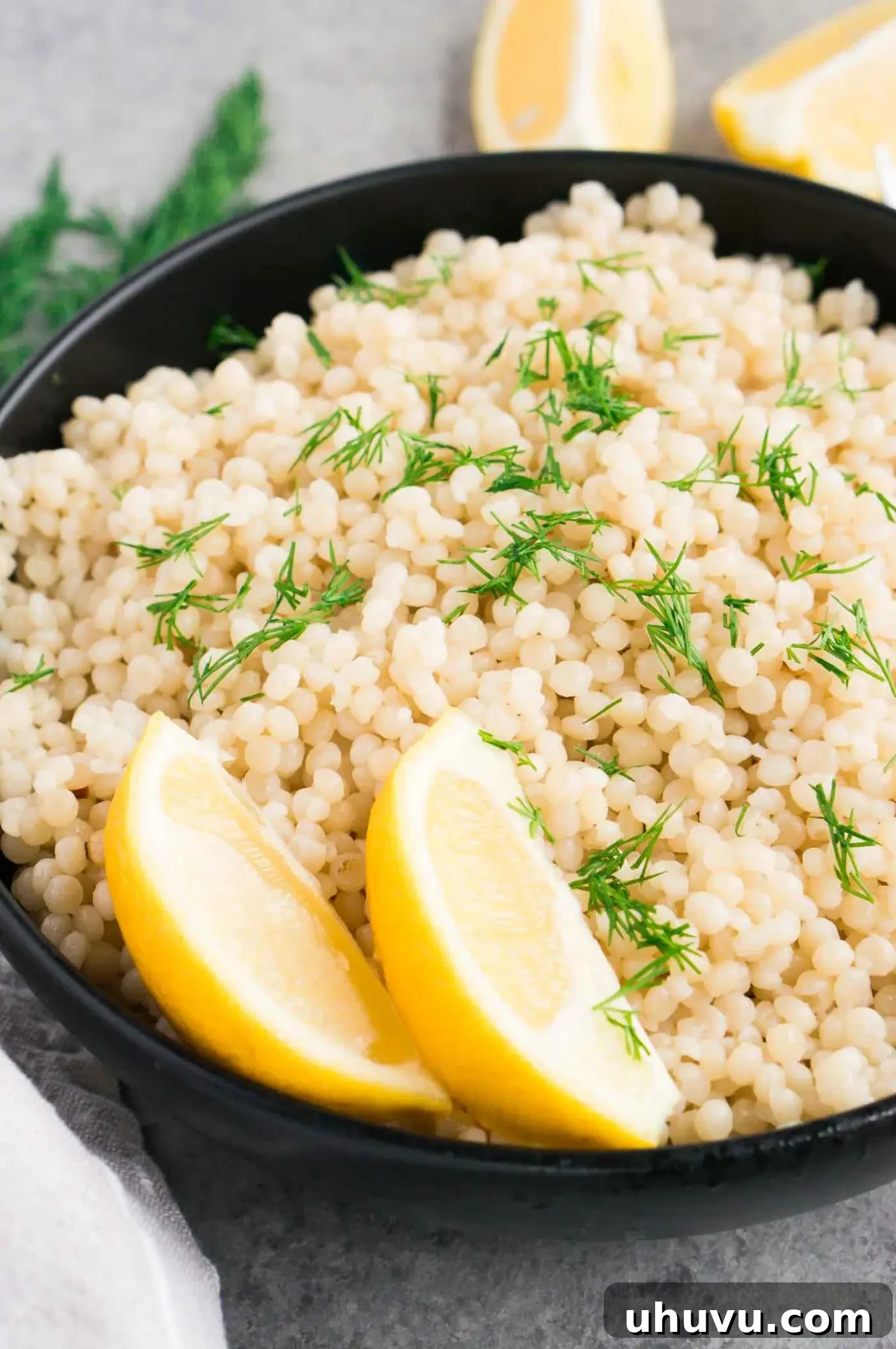
It’s a common misconception that couscous is gluten-free. However, couscous is made from semolina flour, which is derived from durum wheat. Therefore, it contains gluten and is not suitable for individuals with celiac disease or gluten intolerance. While it may resemble a grain in appearance, nutritionally and botanically, it’s more akin to a small pasta. If you require a gluten-free alternative, quinoa, millet, or rice are excellent substitutes that can offer similar versatility and a wholesome base for your meals.
What Do You Serve Pearl Couscous With? Endless Possibilities!
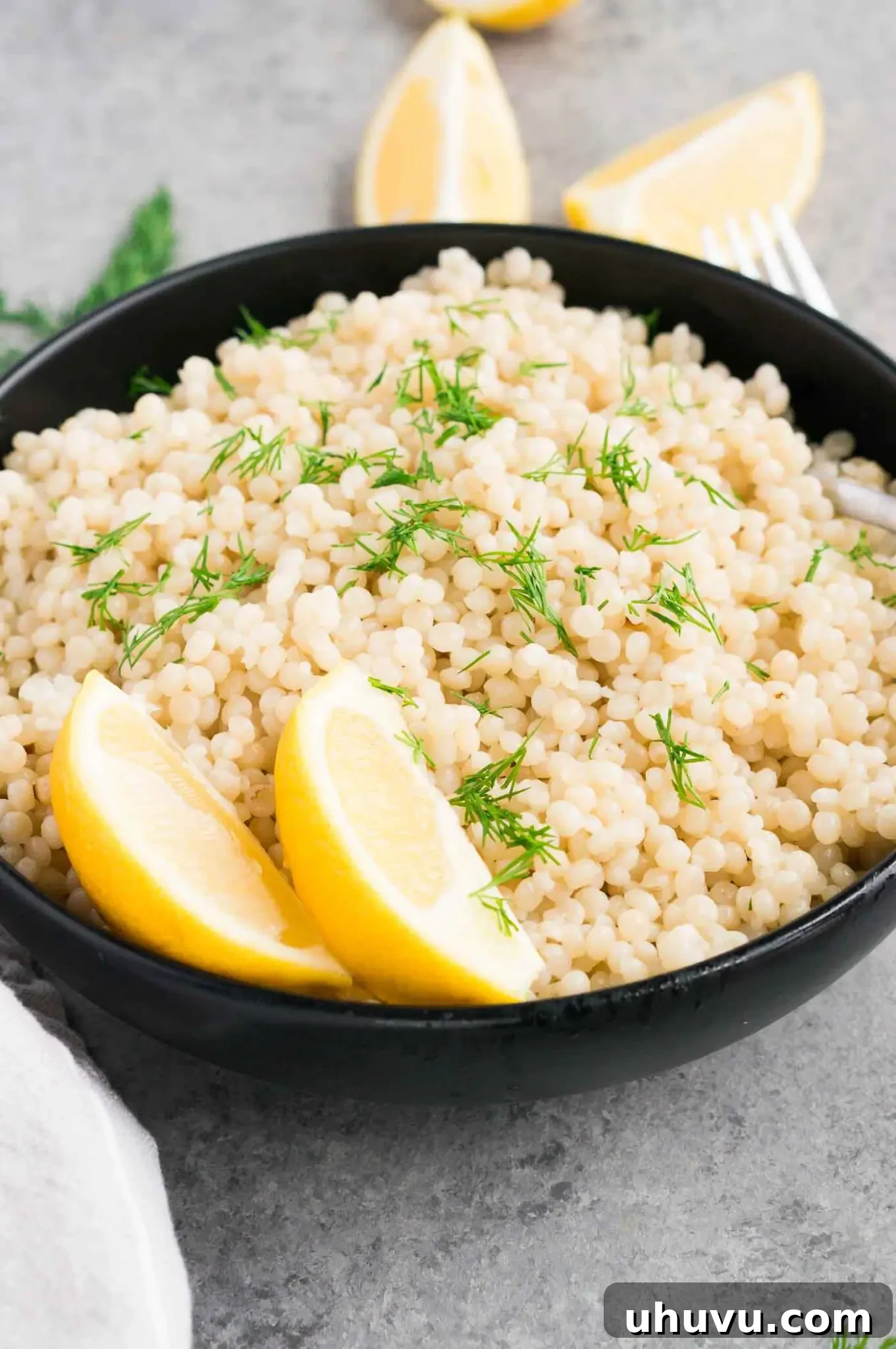
The mild, slightly nutty flavor and satisfying texture of pearl couscous make it an incredibly versatile base for countless dishes. It’s a wonderful way to add substance to a light meal or complement a hearty main course. Here are some inspiring ideas to serve your perfectly cooked pearl couscous:
- As a Side Dish: It’s a fantastic accompaniment to a variety of protein-rich dishes. Serve it alongside roasted chicken, grilled fish, pan-seared scallops, or a juicy steak. It’s particularly delightful with Middle Eastern or Mediterranean-inspired main courses.
- In Vibrant Salads: Couscous shines in both warm and cold salads. Mix it with fresh or roasted vegetables like bell peppers, zucchini, cherry tomatoes, and cucumbers. Add some feta cheese, olives, and a lemon-herb vinaigrette for a refreshing Mediterranean Couscous Salad.
- Hearty Stews and Curries: Couscous is an excellent absorbent base for rich and flavorful stews and curries. Its texture soaks up the sauces beautifully, offering a comforting and fulfilling meal. Try it with:
- Instant Pot Beef Stew
- Hearty Chili
- Protein Bowls: Create customized protein bowls with a base of couscous, topped with your favorite lean protein (chicken, chickpeas, tofu), roasted vegetables, and a flavorful dressing.
- Seafood Pairings: Its delicate flavor pairs wonderfully with seafood dishes. Consider serving it with Spicy Sausage and Shrimp Skillet or Maple Walnut Crusted Salmon.
- With Roasted Vegetables: Toss warm couscous with a medley of roasted seasonal vegetables like asparagus, broccoli, carrots, or sweet potatoes for a simple yet incredibly satisfying vegetarian meal.
- Breakfast Bowls: While less common, chilled couscous can be adapted into a sweet breakfast bowl with fruits, nuts, and a drizzle of honey.
Creative Flavor Variations for Your Couscous
One of the best things about couscous is how easily it adapts to different flavors. Don’t hesitate to get creative and customize your batch:
- Herbaceous Delight: Stir in a generous amount of freshly chopped herbs like parsley, cilantro, mint, or chives after fluffing.
- Citrus Zest: Add a tablespoon of fresh lemon or lime juice and some zest for a bright, refreshing kick.
- Spiced Warmth: Incorporate warm spices like cumin, coriander, turmeric, or a pinch of cinnamon into the cooking liquid or after fluffing for a Middle Eastern twist.
- Sweet & Savory: For a unique flavor, mix in dried fruits such as cranberries, apricots, or raisins, along with toasted nuts like almonds or pistachios.
- Garlic & Onion Infusion: Sauté minced garlic or finely chopped onion in a little olive oil before adding the liquid for a savory base.
- Roasted Vegetables: Gently fold in roasted vegetables like bell peppers, zucchini, or cherry tomatoes for added texture, color, and nutrients.
- Spicy Kick: A pinch of red pepper flakes or a dash of hot sauce can add a pleasant warmth.
More Essential Cooking Guides!
If you found this basic couscous recipe helpful and want to expand your culinary skills, I’m sure you will also love my other cooking guides & tips for mastering kitchen staples:
- How To Make Perfect Hard Boiled Eggs
- How To Make Homemade Butter
- How to Make Fluffy Cauliflower Rice
- How to Make The Best Scrambled Eggs
If you enjoyed this comprehensive How to Cook Couscous tutorial or any other recipe on my blog, please consider leaving a ⭐ star rating and let me know how it went in the 📝 comments below. Your feedback is greatly appreciated!
Pin this now to find it later
Pin It
How To Cook Couscous
Neli Howard
2
10
12
4 servings (2 cups)
Ingredients
- 1.5 cups water or broth
- ½ teaspoon salt, optional but recommended
- 1 teaspoon butter or olive oil, optional but recommended
- 1 cup pearl couscous
Instructions
-
Bring water or broth to a rolling boil in a small saucepan.
-
Add salt and butter or olive oil, if desired, to the boiling liquid.
-
Stir in the pearl couscous. Cover the saucepan with a tight-fitting lid and reduce heat to low. Simmer gently for 8 – 10 minutes, stirring occasionally to prevent sticking.
-
Once all the liquid has evaporated and the couscous is tender, remove the saucepan from the cooktop. Let it rest, covered, for 1-2 minutes, then fluff thoroughly with a fork to separate the grains. Serve immediately.
Notes
- There’s no need to wash or rinse the couscous before cooking it as it doesn’t contain starch.
- The butter/oil is optional, but it will help the grains to separate and add flavor, so it’s highly recommended for a fluffier texture.
- Add the couscous to boiling water, then take it off of the direct heat or reduce to a very low simmer to avoid overcooking and ensure even absorption.
- Fluff with a fork to separate the grains so that they don’t clump together.
- This recipe yields approximately 2 cups of cooked couscous.
Nutrition
Carbohydrates: 33g |
Protein: 5g |
Fat: 1g |
Saturated Fat: 1g |
Polyunsaturated Fat: 1g |
Monounsaturated Fat: 1g |
Trans Fat: 1g |
Cholesterol: 3mg |
Sodium: 308mg |
Potassium: 71mg |
Fiber: 2g |
Vitamin A: 31IU |
Calcium: 13mg |
Iron: 1mg
Nutrition Disclaimer: Nutritional values are estimates and may vary with ingredients, brands, and portion sizes. For accuracy, use your preferred nutrition calculator.