
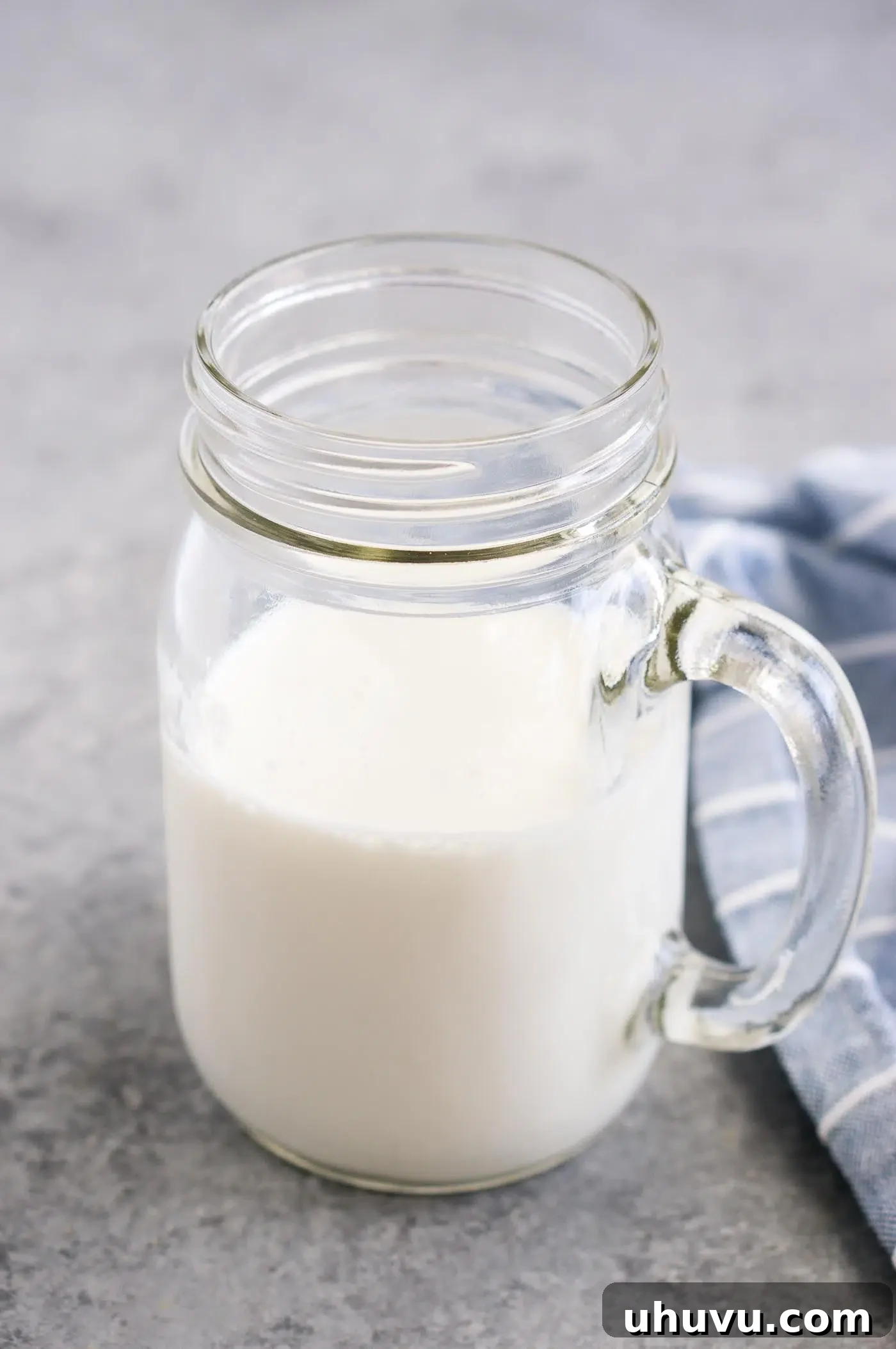
Learn how to make versatile buttermilk at home in minutes using just two common ingredients. This simple, reliable recipe ensures you’ll always have fresh buttermilk ready for all your favorite culinary creations, from fluffy pancakes to tender fried chicken.
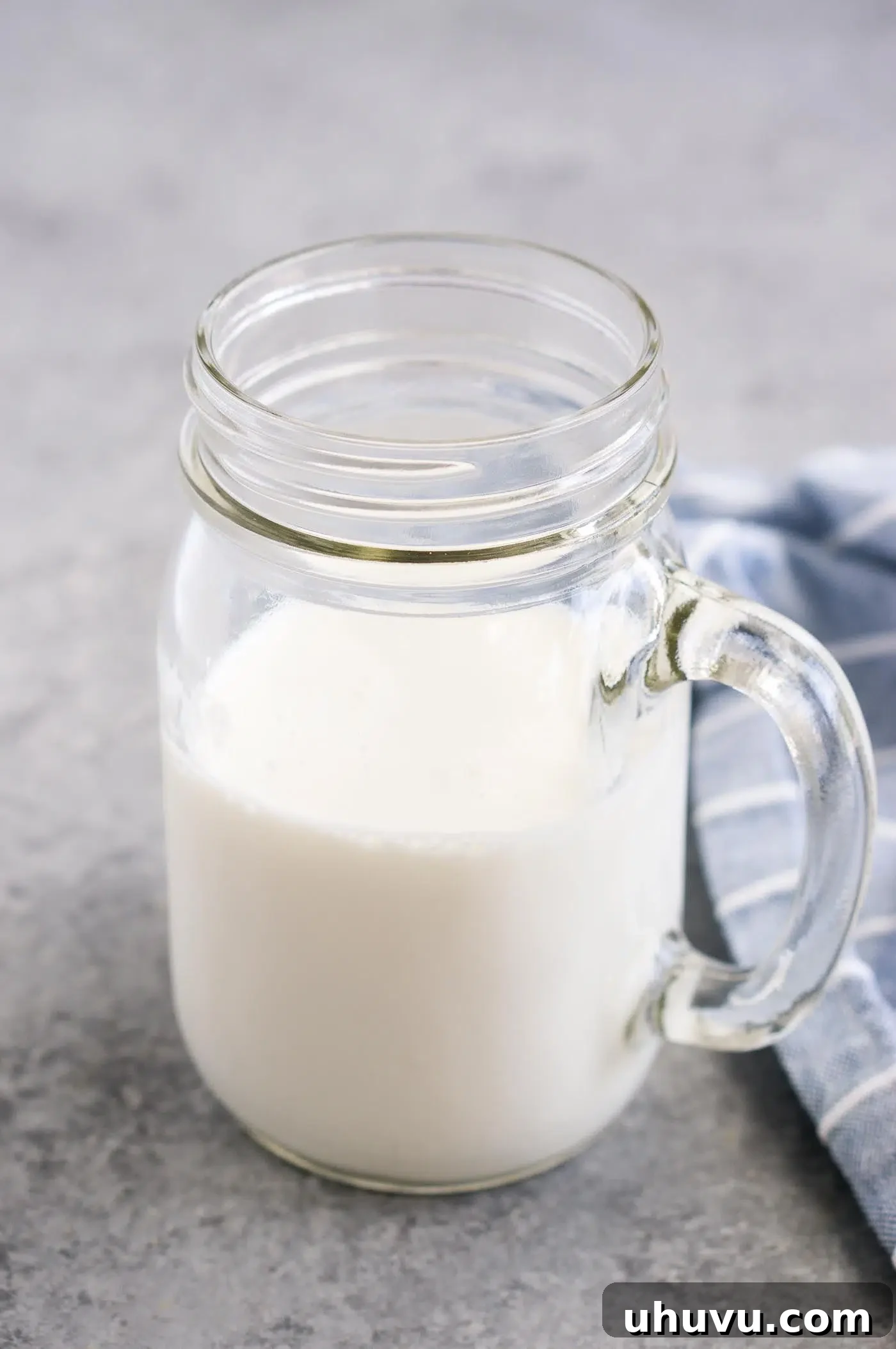
Every home cook has experienced that moment: you’re halfway through a recipe, it calls for buttermilk, and you realize you don’t have any on hand. Perhaps you need just a small amount, or you’re planning to marinate chicken and forgot to grab a carton from the grocery store. The good news is that you’ll never be stuck in this situation again, thanks to this incredibly quick and easy homemade buttermilk substitute. This simple kitchen hack has saved countless meals for me, proving itself to be an indispensable technique!
For another essential kitchen skill, be sure to check out my post on How To Make Butter too!
Why Homemade Buttermilk is a Game Changer!
Making your own buttermilk at home isn’t just a last-minute solution; it’s a smart culinary habit that offers numerous benefits. Once you try it, you’ll wonder why you ever bought it from the store!
- Unbeatable Convenience & Speed: Forget emergency trips to the store! This recipe takes no more than 5 minutes to prepare from start to finish. It’s ready to use almost instantly, allowing you to proceed with your cooking or baking without any delays.
- Simple, Accessible Ingredients: You only need two ingredients, both of which are common staples in most kitchens: milk and an acid. This means you likely already have everything you need, eliminating the need for special grocery runs.
- Cost-Effective & Eco-Friendly: Avoid buying a whole carton of buttermilk when you only need a small amount, which often leads to waste. Making it at home ensures you only prepare what you need, saving money and reducing food waste.
- Freshness You Can Trust: By preparing it yourself, you control the freshness and quality of your buttermilk, free from any additives or preservatives.
- Excellent Shelf Life & Freezer Friendly: This homemade buttermilk substitute stores beautifully. You can easily double or triple the recipe to have a batch ready for future use. It’s also remarkably freezer-friendly, making meal prep even easier.
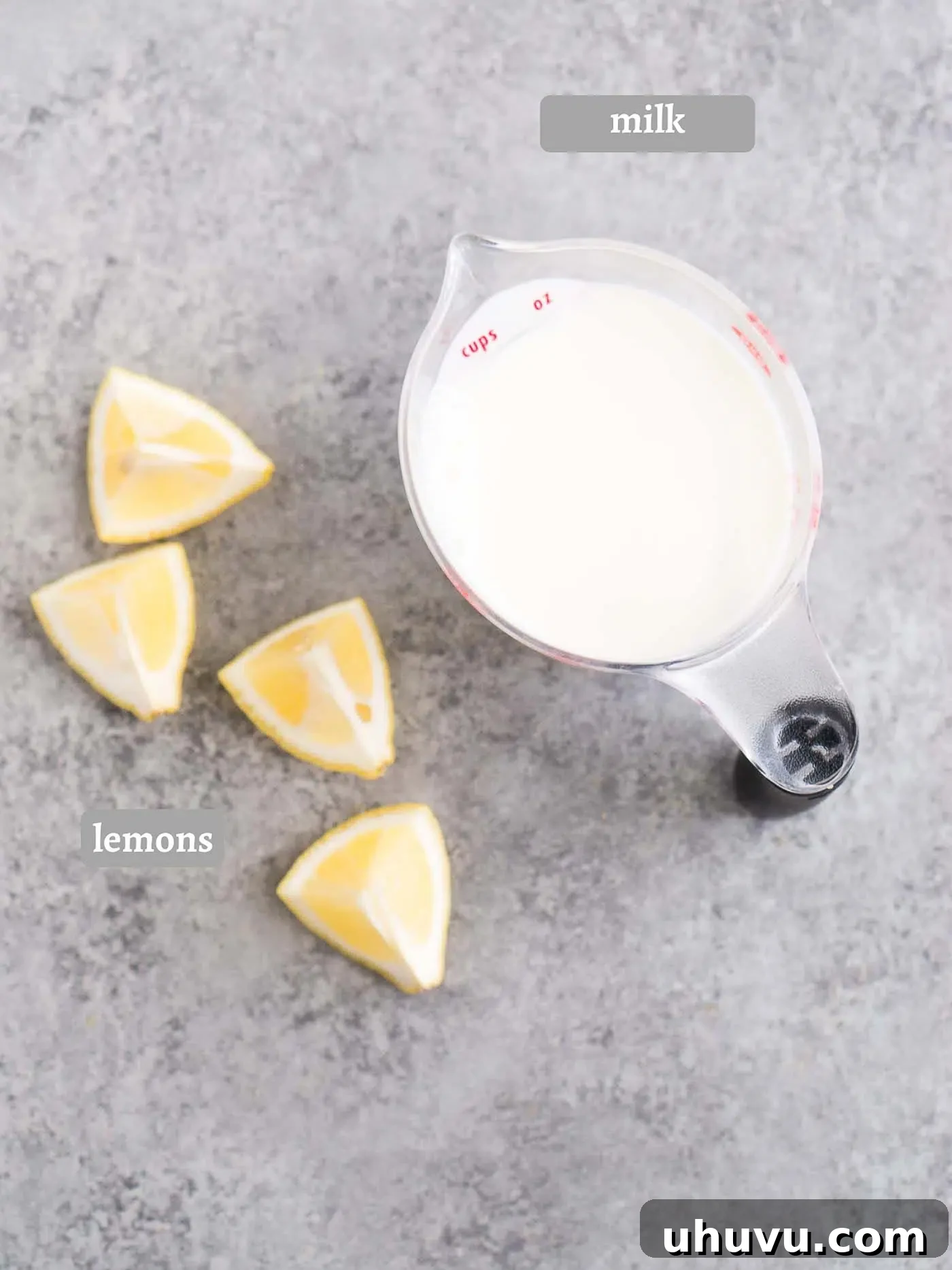
Essential Ingredients for Your Homemade Buttermilk
The beauty of this recipe lies in its simplicity. You only need two basic components, which interact to create the distinctive tangy flavor and thick texture characteristic of buttermilk.
- The Acid Component: The magic of buttermilk starts with acid. Adding an acid to regular milk causes the milk proteins to curdle and thicken, creating that characteristic tangy flavor and creamy texture. I personally prefer using a tablespoon of fresh lemon juice for its bright, clean flavor. However, distilled white vinegar works equally well and is a common substitute. Many successful recipes also utilize apple cider vinegar, which can impart a slightly different, more robust flavor profile that some find appealing. The key is to use an acid with a pH low enough to curdle the milk effectively.
- The Milk Base: The type of milk you choose can influence the final richness and thickness of your homemade buttermilk. For the creamiest and most flavorful result, I recommend using whole milk. Its higher fat content contributes to a richer mouthfeel. However, if you typically use lighter milk, 2% milk also works wonderfully and produces a great buttermilk. While 1% or skim milk can technically be used, the resulting buttermilk will be thinner and less rich, which might affect the texture of your baked goods.
How to Make Buttermilk: A Simple Step-by-Step Guide
Creating your own buttermilk is incredibly straightforward. Follow these easy steps to have fresh, tangy buttermilk ready in minutes.
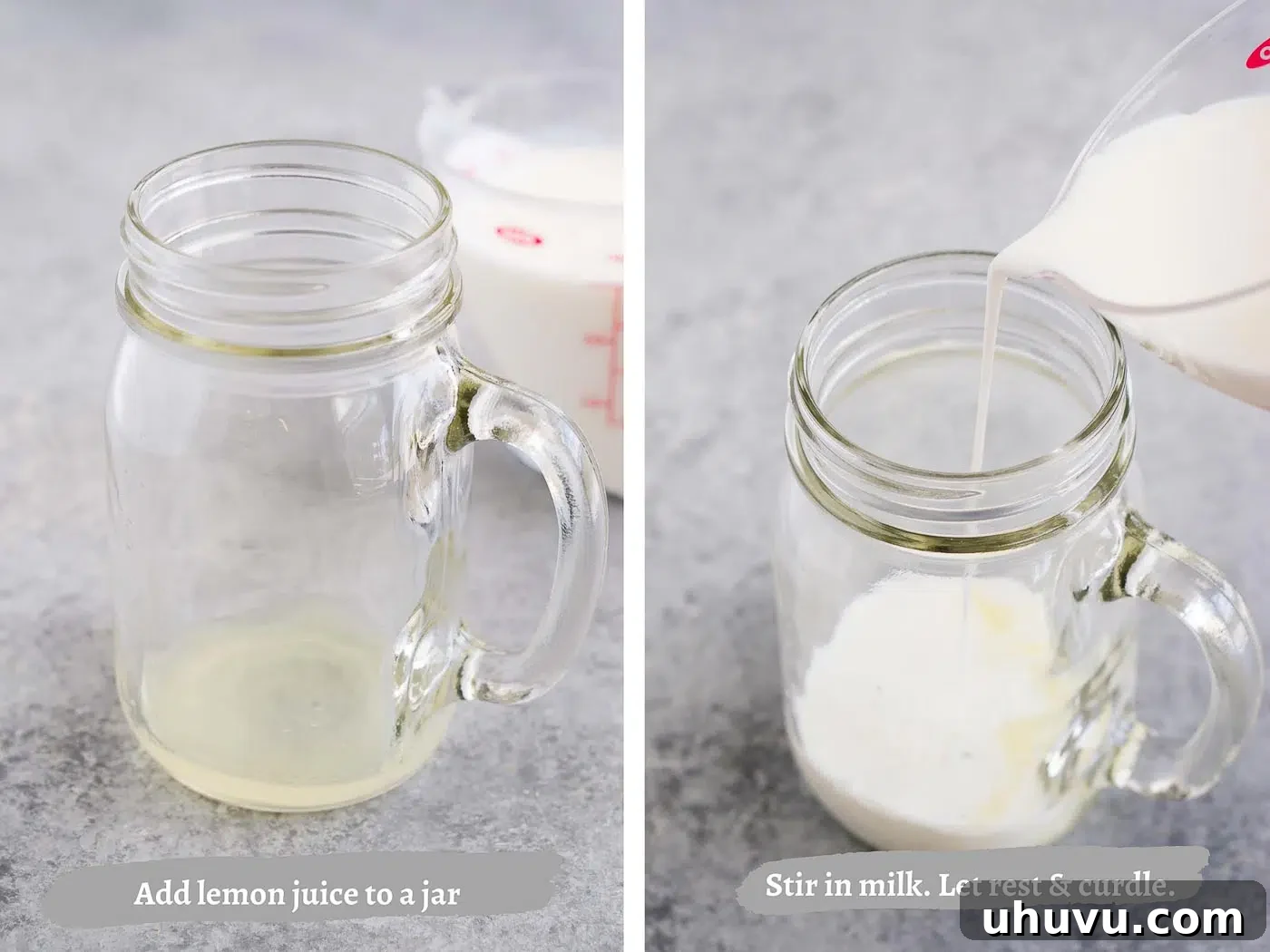
- Combine Acid and Milk: Begin by pouring 1 tablespoon of your chosen acid (fresh lemon juice or vinegar) into a liquid measuring cup. Then, carefully pour milk into the measuring cup until the total liquid reaches the 1-cup line. This ensures the correct ratio for optimal curdling.
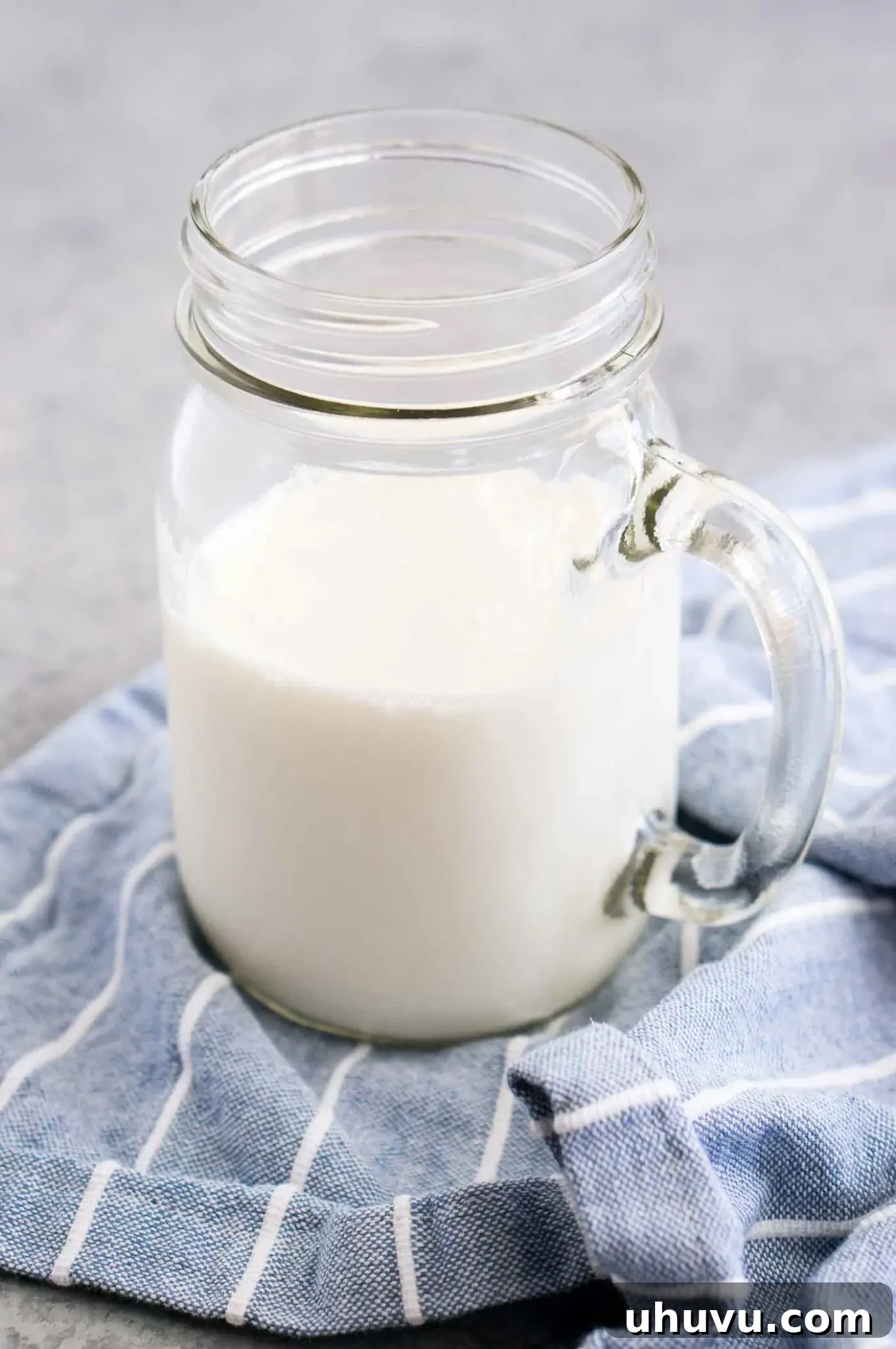
- Allow to Rest and Curdle: Gently stir the mixture once to combine the acid and milk. Now, let the mixture rest undisturbed at room temperature for approximately 5-10 minutes. During this brief period, you will observe the milk beginning to curdle and thicken. Small clumps or “curds” will form, and the texture will visibly change from thin milk to a slightly thicker, more textured liquid. This is exactly what you want!
- Stir and Use: After the resting period, give the homemade buttermilk a final gentle stir. It is now ready to be incorporated into any recipe that calls for traditional buttermilk. The tangy flavor and thickened consistency will perform perfectly in your baking or marinades.
Can You Make Vegan Buttermilk? Dairy-Free Options Explored
Absolutely! This versatile recipe can be easily adapted to create a delicious dairy-free or vegan buttermilk substitute. The principle remains the same: combining a plant-based milk with an acid. Most non-dairy milks will curdle beautifully, opening up a world of possibilities for plant-based baking and cooking.
Here are some excellent dairy-free milk options and what to consider:
- Oat Milk: A fantastic choice for vegan buttermilk. It has a naturally creamy texture and a relatively neutral flavor that won’t overpower your recipes. It thickens well and is widely available.
- Almond Milk: Another popular option. Opt for unsweetened almond milk to avoid adding unwanted sweetness to your savory dishes or to ensure your baked goods’ sugar levels are controlled. It curdles effectively and provides a good consistency.
- Soy Milk: Soy milk is known for its ability to curdle reliably and offers a good protein content, which mimics dairy milk’s structure closely. Use unsweetened varieties for best results.
- Coconut Milk: While coconut milk can be used, be aware that its distinct flavor will carry through to your final buttermilk. For recipes where a hint of coconut is welcome (like some tropical-inspired baked goods), it can be a delightful addition. However, for more neutral applications, it’s best to choose a less flavorful alternative like oat or almond milk. Always opt for the refrigerated carton coconut milk, not canned, for this application, as canned varieties are too thick.
Regardless of which plant-based milk you choose, ensure it’s unsweetened and unflavored to achieve the most neutral and functional vegan buttermilk.
How Long Does Homemade Buttermilk Keep? Storage Tips
One of the great advantages of making buttermilk at home is its excellent shelf life, allowing you to prepare it in advance or store leftovers without worry. Proper storage ensures your homemade buttermilk remains fresh and effective for a variety of uses.
- Refrigeration: Once you’ve made your buttermilk, transfer it to a clean, dry, and sealable container, such as a mason jar or an airtight bottle. Stored in the refrigerator, homemade buttermilk will keep well for up to two weeks. Always give it a quick shake or stir before using, as some separation is natural.
- Freezing: For longer storage, buttermilk freezes exceptionally well, maintaining its quality for up to 3 months. This is particularly useful if you frequently make larger batches or only need small amounts for specific recipes. I highly recommend freezing buttermilk in smaller portions, like ice cube trays. Once frozen solid, transfer the buttermilk cubes to a freezer-safe bag or container. This method allows you to easily defrost just the amount you need, preventing waste. Simply thaw the desired number of cubes in the refrigerator overnight or on the counter for a few hours. Stir well after thawing to reincorporate any separated components before use.
Why Buttermilk is a Kitchen Superstar: Its Versatile Uses
Buttermilk is far more than just a quirky ingredient; it’s a powerhouse in the kitchen, revered for its unique ability to enhance flavor, texture, and moisture in a wide array of dishes. Its slightly acidic nature makes it invaluable for both sweet and savory applications.
Baking Brilliance
Buttermilk is a cornerstone of many classic baking recipes, contributing to their signature light, fluffy, and tender crumb. Here’s why it’s so vital:
- Leavening Power: In baking, buttermilk’s acidity reacts with leavening agents like baking soda. This reaction produces carbon dioxide gas, which creates air pockets in batters, resulting in wonderfully light and airy textures. This is especially true for items like buttermilk pancakes, waffles, and biscuits, giving them their characteristic lift and tender chew.
- Flavor Enhancement: The mild tang of buttermilk adds a subtle depth of flavor, balancing sweetness and richness in cakes, muffins, and quick breads. It provides a more complex and rounded taste compared to recipes made with regular milk.
- Moisture and Tenderness: Buttermilk is less viscous than plain yogurt or sour cream, allowing it to hydrate dry ingredients effectively without making the batter too heavy. Its acid also helps to break down gluten, which leads to incredibly moist and tender baked goods that stay fresh longer.
Marinade Mastery
Beyond baking, buttermilk is an exceptional ingredient for marinades, particularly for meats like chicken:
- Tenderizing without Toughness: Buttermilk’s low acid levels (lactic acid) are gentle yet effective. Unlike stronger acids (like lemon juice or vinegar on their own), it slowly breaks down tough protein fibers in meats without making them mushy or rubbery. This results in remarkably tender and juicy fried chicken, grilled pork chops, or even fish fillets.
- Flavor Infusion: The tang of buttermilk, combined with herbs and spices, penetrates the meat, infusing it with delicious flavor and ensuring a succulent bite every time.
- Excellent Coating Base: For fried chicken, buttermilk acts as a perfect binder for breading, ensuring a crispy, flavorful crust adheres beautifully.
Beyond Baking and Marinades
Buttermilk’s versatility extends to other culinary creations:
- Creamy Dressings and Dips: It’s a key ingredient in many creamy salad dressings (like classic ranch) and dips, providing a lighter texture and bright tang compared to heavier dairy bases.
- Soups and Smoothies: A splash of buttermilk can add a pleasant creaminess and subtle sour note to chilled soups or fruit smoothies, enhancing their refreshing qualities.
- Mashed Potatoes: Swapping some regular milk for buttermilk in mashed potatoes adds an extra layer of flavor and creamy texture.
TIPS FROM NELI’S KITCHEN
Recipe Notes and Tips for Perfect Buttermilk
- Maintain the Ratio: The key to successful homemade buttermilk is the consistent ratio. Whether you’re doubling the recipe for a larger batch or halving it for a small quantity, always stick to 1 tablespoon of acid per approximately 1 cup of milk (minus that 1 tablespoon of acid, ensuring the total volume remains the same).
- Milk Temperature Matters: For the quickest and most effective curdling, use milk that is at room temperature. Cold milk will still curdle, but it may take a few extra minutes for the reaction to fully take effect.
- Any Milk Works (Almost!): While whole milk provides the richest buttermilk, you can use any dairy milk you have on hand, including 2%, 1%, or even skim milk, though the texture will be thinner. Even heavy cream can be used to make an incredibly rich, thick buttermilk.
- Observe the Curdles: Don’t expect the milk to turn into chunky cottage cheese. You’re looking for subtle thickening and small, barely visible curds. If it looks like slightly thickened milk with tiny flecks, it’s ready.
- Instant Use & Storage: Your homemade buttermilk is ready to use as soon as it’s made. For leftovers, store it covered in the refrigerator for up to 2 weeks, or freeze it for up to 3 months as detailed above.
- Yield: This recipe is designed to produce exactly 1 cup of homemade buttermilk, which is a common measurement in many recipes.
Frequently Asked Questions About Homemade Buttermilk
Here are answers to some common questions about making and using buttermilk at home:
Q: Is this homemade buttermilk the same as traditional buttermilk?
A: Not exactly. Traditional buttermilk is the byproduct left over after churning butter, and it contains naturally occurring lactic acid bacteria that ferment the milk. The homemade version made with milk and acid is a substitute that mimics the acidity and curdled texture needed for most recipes. For baking and cooking purposes, it functions almost identically.
Q: Can I use yogurt or sour cream instead of milk and acid?
A: While plain yogurt and sour cream have a similar tang and acidity, they are much thicker than buttermilk. You can thin them down with a little water or milk (1:1 ratio with yogurt/sour cream) to achieve a buttermilk-like consistency for some recipes, but the texture might still be slightly different. This homemade method is generally preferred for a truer buttermilk substitute.
Q: What if my milk doesn’t curdle?
A: There are a few reasons this might happen. Ensure your milk isn’t extremely cold; room temperature works best. Also, make sure your acid (lemon juice or vinegar) is fresh and potent. If you’re using an older bottle of vinegar or pre-squeezed lemon juice, it might have lost some of its acidity. Add another half teaspoon of acid and let it rest for a few more minutes. Very old milk might also struggle to curdle effectively.
Q: Can I use bottled lemon juice or lime juice?
A: Yes, bottled lemon juice or even lime juice will work in a pinch. However, fresh lemon juice generally provides a brighter, cleaner flavor. Avoid using “lemon juice from concentrate” if possible, as it can sometimes contain additives that affect the texture or flavor.
Q: What else can I use homemade buttermilk for?
A: The possibilities are endless! Beyond baking and marinades, use it in creamy mashed potatoes, salad dressings, brines for poultry, or even in smoothies for a tangy kick. It’s a secret ingredient for adding moisture and flavor.
More Kitchen Basics & Healthy Recipes
- How To Cook Quinoa
- How to Peel Tomatoes
- How To Make Perfect Hard Boiled Eggs
- How To Cook Lentils
How to Make Buttermilk
Neli Howard
5
5
1 cup
Ingredients
- 1 Tablespoon fresh lemon juice, or distilled white vinegar
- 1 cup milk (less 1 tablespoon to account for the acid)
Instructions
-
Pour the lemon juice or vinegar into a measuring cup. Then, pour in the milk until the liquid reaches the 1 cup line.
-
Allow the mixture to rest for 5-10 minutes to curdle and thicken.
-
Stir gently and use immediately in your recipe!
Notes
- This recipe is easily scaled; simply maintain the ratio of 1 tablespoon of acid to 1 cup (minus the acid) of milk.
- Any type of dairy milk can be used, with whole milk yielding the creamiest results. Heavy cream also works.
- Homemade buttermilk can be used immediately or stored covered in the refrigerator for up to 2 weeks. It is also freezer-friendly for up to 3 months.
- This recipe yields 1 cup of buttermilk.
Nutrition
Calories: 152kcal
|
Carbohydrates: 13g
|
Protein: 8g
|
Fat: 8g
|
Saturated Fat: 5g
|
Polyunsaturated Fat: 1g
|
Monounsaturated Fat: 2g
|
Cholesterol: 24mg
|
Sodium: 105mg
|
Potassium: 338mg
|
Fiber: 1g
|
Sugar: 13g
|
Vitamin A: 396IU
|
Vitamin C: 6mg
|
Calcium: 277mg
|
Iron: 1mg
Nutrition Disclaimer: Nutritional values are estimates and may vary with ingredients, brands, and portion sizes. For accuracy, use your preferred nutrition calculator.