

Welcome to the captivating world of spicy food, where the thrill of heat meets culinary artistry. For anyone who loves a good kick in their dishes, understanding the Scoville Scale is like having a secret weapon in the kitchen. This essential guide helps you navigate the vast universe of chili peppers, from the mildest bell pepper to the scorching inferno of the world’s hottest varieties. Join us as we explore what Scoville Units (SHU) truly mean, how different peppers rank, and how you can expertly use this knowledge to enhance your Mexican cooking and beyond, creating dishes that perfectly match your preferred level of spice.
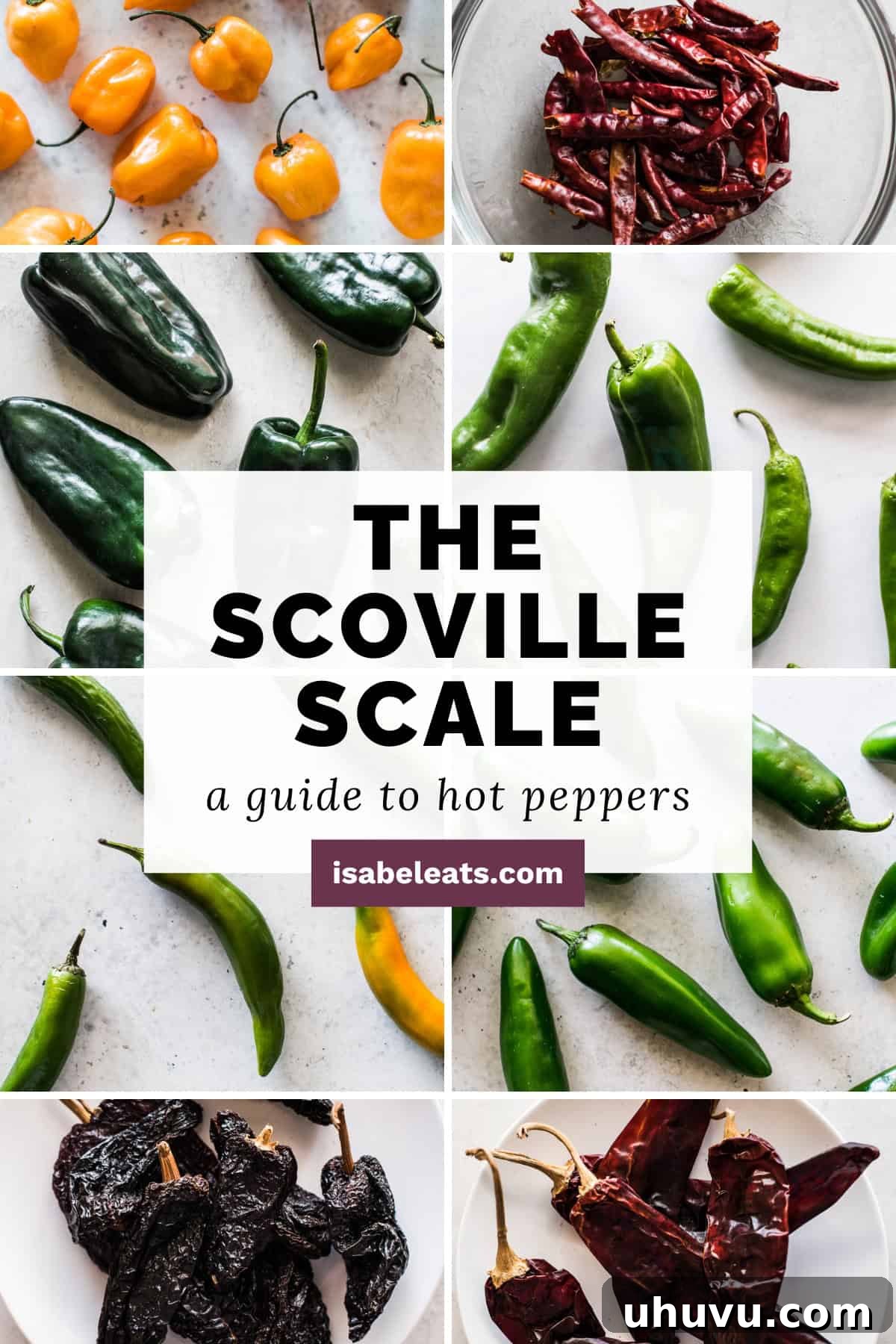
What Is the Scoville Scale? Understanding the Science of Spice
The Scoville Scale is much more than just a list; it’s a revolutionary measurement system that quantifies the pungency, or heat, of chili peppers. Invented in 1912 by American pharmacist Wilbur Scoville, this scale and its associated Scoville Heat Units (SHU) provide a standardized way to compare the spiciness of different peppers. Before Scoville’s innovation, describing a pepper’s heat was largely subjective, often leading to culinary surprises!
At the core of a chili pepper’s heat is a group of chemical compounds known as capsaicinoids, with capsaicin being the most prominent. These compounds bind to pain receptors in our mouths and throats, creating the burning sensation we associate with spicy food. Wilbur Scoville’s original method, the Scoville Organoleptic Test, involved diluting an extract of the pepper in a sugar-water solution until a panel of five taste testers could no longer detect any heat. The degree of dilution determined the SHU value. For example, if an extract needed to be diluted 1,000 times before the heat was undetectable, it would register 1,000 SHU. While modern scientific methods like High-Performance Liquid Chromatography (HPLC) can more precisely measure capsaicinoid concentration, the Scoville scale remains the widely recognized and understood benchmark for pepper heat.
This enduring system has transformed how chefs, gardeners, and spicy food enthusiasts talk about and select peppers. It’s not just a scientific tool; it’s an indispensable guide for anyone looking to master the art of flavorful heat in their cooking.
How to Read the Scoville Scale: Deciphering Scoville Heat Units (SHU)
Understanding Scoville Heat Units (SHU) is key to navigating the world of chili peppers. As mentioned, SHU represents the amount of dilution required to render the heat undetectable. The higher the SHU number, the more capsaicin is present, and thus, the spicier the pepper. This makes the scale incredibly intuitive: zero SHU means no heat at all, while millions of SHU signify extreme, tongue-numbing intensity.
To give you a clearer perspective, consider the following common examples:
- Bell Peppers: 0 SHU – Your benchmark for no heat.
- Poblano Peppers: 1,000 to 2,000 SHU – A very mild, earthy warmth.
- Jalapeño Peppers: 2,500 to 8,000 SHU – A popular, approachable level of heat.
- Serrano Peppers: 8,000 to 22,000 SHU – Noticeably spicier than a jalapeño.
- Habanero Peppers: 150,000 to 575,000 SHU – A significant step up, offering intense fruity heat.
- Ghost Peppers: 800,000 to 1,001,300 SHU – Enters the “super-hot” category, demanding caution.
When reading the Scoville Scale, remember that even within a single pepper variety, the SHU can vary due to factors like growing conditions, ripeness, and specific genetic strains. So, a jalapeño from one farm might be slightly hotter or milder than another. Generally, the peppers are ranked from the least spicy (bottom) to the most intensely hot (top), providing a clear progression of heat levels that can guide your culinary choices and help you find your perfect spice match.
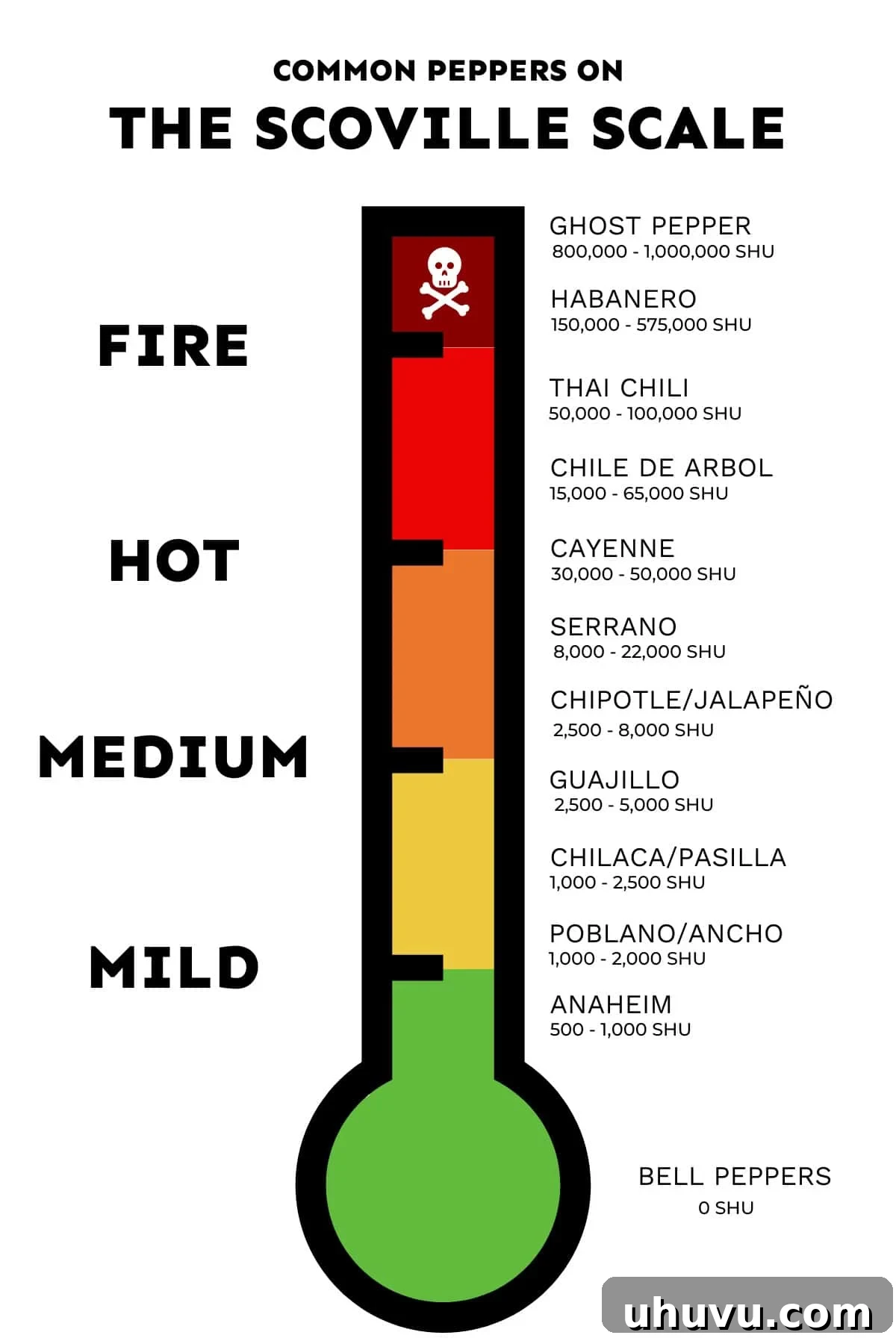
Scoville Scale Peppers and Their Distinct Scoville Units: A Flavor and Heat Guide
While the Scoville Scale encompasses every chili pepper, practical charts often focus on varieties commonly found in kitchens worldwide. Beyond just heat, each pepper brings its unique flavor profile to a dish. Here’s a closer look at some popular peppers and their SHU, along with notes on their culinary characteristics:
- Bell Peppers: 0 SHU
These are the non-spicy benchmark, sweet and crunchy, perfect for adding bulk, color, and mild flavor to almost any dish without any heat. - Anaheim Peppers: 500 to 1,000 SHU
Mild and slightly sweet, Anaheims offer a very subtle warmth. They are excellent for stuffing, roasting, or in dishes where you want a hint of pepper flavor without significant spice. - Poblano Peppers: 1,000 to 2,000 SHU
Known for their rich, earthy, and slightly smoky flavor, Poblanos provide a gentle heat. When dried, they become Ancho chiles. They are fantastic for chile rellenos, sauces, and stews. - Jalapeño Peppers: 2,500 to 8,000 SHU
One of the most widely recognized peppers, jalapeños offer a versatile, medium heat with a fresh, grassy flavor. They are incredibly popular in salsas, pickling, and various cooked dishes. - Serrano Peppers: 8,000 to 22,000 SHU
Smaller and noticeably hotter than jalapeños, serranos have a bright, crisp flavor. They are often used fresh in salsas, guacamole, and ceviche where a more pronounced heat is desired. - Cayenne Peppers: 30,000 to 50,000 SHU
Commonly dried and ground into the cayenne pepper spice, these peppers provide a clean, sharp heat that’s perfect for adding warmth to a wide range of cuisines, from Cajun to Tex-Mex. - Chile de Árbol Peppers: 5,000 to 65,000 SHU
Primarily used dried, these small, slender chiles deliver a potent, nutty heat. They are a staple in Mexican cooking for making spicy sauces, salsas, and infusing oils. - Thai Chili Peppers: 50,000 to 100,000 SHU
Known for their vibrant heat and sharp, fresh flavor, these small peppers are integral to Southeast Asian cuisine, used in curries, stir-fries, and dipping sauces. - Habanero Peppers: 150,000 to 575,000 SHU
With their distinctive fruity and floral notes combined with intense heat, habaneros are popular in hot sauces, marinades, and Caribbean cuisine. Handle with care! - Ghost Peppers (Bhut Jolokia): 800,000 to 1,001,300 SHU
One of the first peppers to break the 1 million SHU mark, the Ghost Pepper delivers a searing, prolonged heat with a somewhat smoky, sweet initial flavor. Best used sparingly in extreme hot sauces or chili.
This diverse array of peppers allows cooks to precisely tailor the heat and flavor of their dishes, transforming ordinary meals into extraordinary culinary experiences.
Essential Peppers in Mexican Cooking: A Culinary Journey
Mexican cuisine is renowned worldwide for its vibrant flavors and strategic use of chili peppers. Chiles are not merely agents of heat; they are fundamental building blocks, providing depth, aroma, and unique characteristics to countless dishes. Understanding the role of different peppers is crucial to appreciating and recreating authentic Mexican flavors.
- Jalapeños: Arguably the most ubiquitous pepper in Mexican cooking, the jalapeño offers a medium heat that is widely accessible. Its crisp, fresh flavor makes it incredibly versatile. For a milder experience, the seeds and inner membrane (where most of the capsaicin resides) can be removed. Jalapeños are fundamental to everything from jalapeño cornbread and popular appetizers like jalapeño poppers, to hearty main courses such as Mexican picadillo and the comforting chile verde stew. They can be enjoyed fresh, pickled, or roasted.
- Serrano Peppers: A step up in heat from the jalapeño, serrano peppers are small, slender, and deliver a clean, sharp spice with a bright, fresh flavor. While they can lose some intensity when cooked, their raw heat is perfect for fresh salsas and garnishes. Serranos are frequently featured in robust dishes like carne con papas, the vibrant seafood dish aguachile, savory chicken tamales, and spicy vegetarian chili, where their distinct kick is highly valued.
- Chile de Árbol Peppers: These small, slender chiles are most commonly used in their dried form in Mexican cuisine. They pack a significant punch, generally spicier than serranos but not reaching the extreme heat of habaneros. Chile de Árbol peppers are prized for their nutty, slightly smoky flavor and vibrant, persistent heat, making them ideal for adding depth and fire to sauces and salsas, such as a classic chile de árbol salsa or the fiery camarones a la diabla (devil’s shrimp).
- Poblano Peppers: Considered a mild to medium pepper, poblanos are celebrated for their rich, earthy, and slightly smoky flavor. When dried, they transform into ancho chiles, which are essential for many moles and dark sauces. Poblanos offer a gentle, lingering warmth rather than an immediate, sharp burn, making them perfect for dishes where flavor is as important as heat. They are famously used in classic Mexican dishes such as chile relleno, the patriotic chiles en nogada, creamy rajas con crema, and comforting roasted poblano corn chowder.
- Anaheim Peppers: At the very mild end of the spectrum, Anaheim peppers offer a gentle sweetness with barely a hint of spice, only slightly hotter than a bell pepper. Their mildness and robust flavor make them versatile for various applications where a pronounced pepper flavor is desired without overwhelming heat. They are frequently used in mild green enchilada sauce, the refreshing sopa de lima, and hearty taco soup, providing a lovely base flavor.
Each of these peppers contributes a unique dimension to Mexican cuisine, creating a rich tapestry of flavors and heat levels that make it one of the world’s most beloved culinary traditions.
Using the Scoville Scale While Cooking: Mastering Your Spice Level
The Scoville Scale is an invaluable tool for any home cook, empowering you to confidently adjust the spice level of any recipe to suit your personal preference or that of your guests. By understanding the SHU of different peppers, you can easily moderate or amplify the heat in your dishes.
Tailoring Recipes to Your Heat Preference:
- Mild Heat Enthusiasts: If you prefer a gentle warmth or are cooking for those sensitive to spice, opt for peppers low on the Scoville scale. Substitute hotter peppers with Anaheim peppers (500-1,000 SHU) or even bell peppers (0 SHU). They will add flavor and texture without the burn.
- Medium Heat Seekers: For a noticeable but not overpowering kick, focus on peppers in the mid-range. Jalapeños (2,500-8,000 SHU) and Serranos (8,000-22,000 SHU) are perfect choices. You can easily swap these in and out depending on whether you want to tone down or slightly crank up the heat of an existing recipe.
- Hot & Spicy Lovers: If you crave intense heat, don’t shy away from peppers higher on the scale. Introduce Habanero peppers (150,000-575,000 SHU) or dried chile de árbol (5,000-65,000 SHU) to your dishes. Just remember that a little goes a long way with these fiery varieties.
General Tips for Managing Pepper Heat:
- Removing Seeds and Ribs: For fresh peppers, the majority of capsaicin is concentrated in the internal white membrane (ribs) and, to a lesser extent, the seeds. Removing these components can significantly reduce the pepper’s heat while retaining its flavor.
- Adding Dairy: If a dish turns out too spicy, dairy products like sour cream, yogurt, milk, or cheese can help neutralize the capsaicin and soothe the burning sensation.
- Acids and Sweeteners: A splash of lime juice, vinegar, or a pinch of sugar can also help balance and temper the heat.
- Cooking Time: Generally, cooking peppers for longer periods can sometimes mellow their heat, especially if they are part of a sauce or stew.
- Safety First: When handling very hot peppers (like habaneros or ghost peppers), always wear gloves to protect your hands. Avoid touching your eyes or face, and wash your hands thoroughly with soap and water afterward. Ensure good ventilation in your kitchen to avoid inhaling capsaicin vapors, which can cause coughing and irritation.
Peppers are not something to be intimidated by. Understanding the Scoville Scale and being familiar with Scoville Units will give you confidence in preparing spicy dishes, allowing you to create customized versions of your family’s favorite meals – whether they prefer a subtle warmth or an exhilarating blaze of flavor.
What Are the Hottest Peppers? The Fiery Extremes of the Scoville Scale
For the true thrill-seekers and those fascinated by the limits of human spice tolerance, the world of super-hot peppers offers an incredible, almost intimidating, experience. These peppers aren’t typically found in your average grocery store and are reserved for extreme challenges or highly specialized culinary applications where a minuscule amount is used for unparalleled heat.
For many years, the Carolina Reaper held the Guinness World Record for the hottest pepper, boasting an incredible average of 2.2 million SHU. Its gnarly, bumpy skin and scorpion-like tail were a visual warning of the inferno within. However, the world of chili breeding is constantly evolving, and in 2023, a new champion emerged: Pepper X, measuring an astonishing 2.69 million SHU.
Here are the top 5 spiciest peppers currently recognized:
- Pepper X: 2,693,000 SHU
The undisputed king of heat. Developed by Ed Currie, the same creator of the Carolina Reaper, Pepper X is an incredibly potent hybrid that delivers an immediate and prolonged, searing burn. - Carolina Reaper: 2,200,000 SHU
Still incredibly potent, the Carolina Reaper offers a fruity flavor initially, which quickly gives way to an intense, long-lasting heat. It’s often used in extreme hot sauces and challenges. - Trinidad Moruga Scorpion: 2,009,231 SHU
Hailing from Trinidad and Tobago, this pepper offers a potent, fruity flavor before unleashing an extreme heat that builds over time. Its distinctive spherical shape and wrinkled skin are tell-tale signs of its intensity. - 7 Pot Douglah: 1,853,936 SHU
Also known as the “Chocolate 7 Pot” due to its dark brown color, the Douglah is famous for its intense heat and unique smoky, rich flavor, making it a favorite among serious chiliheads for extreme sauces. - 7 Pot Primo: 1,469,000 SHU
Recognizable by its distinctive elongated “stinger” tail, similar to the Carolina Reaper, the 7 Pot Primo delivers a very sharp and immediate heat, combined with a fruity undertone that is quickly overshadowed by its fiery intensity.
As personal testimonials from the brave few who have sampled these ultra-spicy peppers confirm, consuming them often leads to intense and prolonged sensations of burning, stomach cramps, headaches, and other significant internal discomfort that can last for several hours. For the average person and for everyday cooking, it is strongly recommended to stick to peppers in the mild, medium, or perhaps even hot (habanero) categories. Exploring these super-hots is best left to experienced enthusiasts and typically requires extreme caution and specialized preparation.
Beyond the Burn: Health Aspects of Chili Peppers
Chili peppers offer more than just a culinary thrill; they also come with a range of potential health benefits, largely attributed to their capsaicin content. Studies have suggested that capsaicin can act as a natural pain reliever, thanks to its ability to desensitize nerve receptors. This is why it’s often used in topical creams for muscle aches and arthritis.
Furthermore, capsaicin has been linked to boosting metabolism, potentially aiding in weight management by increasing thermogenesis (heat production) and fat oxidation. Some research also indicates that regular consumption of chili peppers may contribute to cardiovascular health by reducing bad cholesterol and improving blood circulation. They are also rich in vitamins, particularly Vitamin C and A, as well as antioxidants, which help combat free radicals in the body.
However, it’s important to approach super-hot peppers with caution. While moderate consumption is generally safe and beneficial, extreme heat can cause temporary digestive upset, heartburn, or irritation for some individuals. Always listen to your body and consume peppers in amounts that are comfortable for you.
Conclusion: Your Journey with the Scoville Scale
The Scoville Scale is an indispensable tool that bridges the gap between scientific measurement and culinary passion. It transforms the subjective experience of “spicy” into a quantifiable art, allowing everyone from novice cooks to seasoned chefs to navigate the diverse world of chili peppers with confidence. From understanding the origins of Scoville Heat Units to exploring the nuanced flavors and varied heat levels of peppers used in vibrant Mexican cuisine, and even venturing into the realm of the world’s most extreme super-hots, the scale empowers you.
Armed with this knowledge, you can fearlessly experiment in your kitchen, customizing recipes to achieve your perfect balance of heat and flavor. Whether you’re toning down a dish for a milder palate or igniting an inferno for a true spice challenge, the Scoville Scale is your guide. So, go ahead, explore the wonderful world of chili peppers, embrace the heat, and elevate your cooking to new, exciting levels. Your taste buds will thank you!