
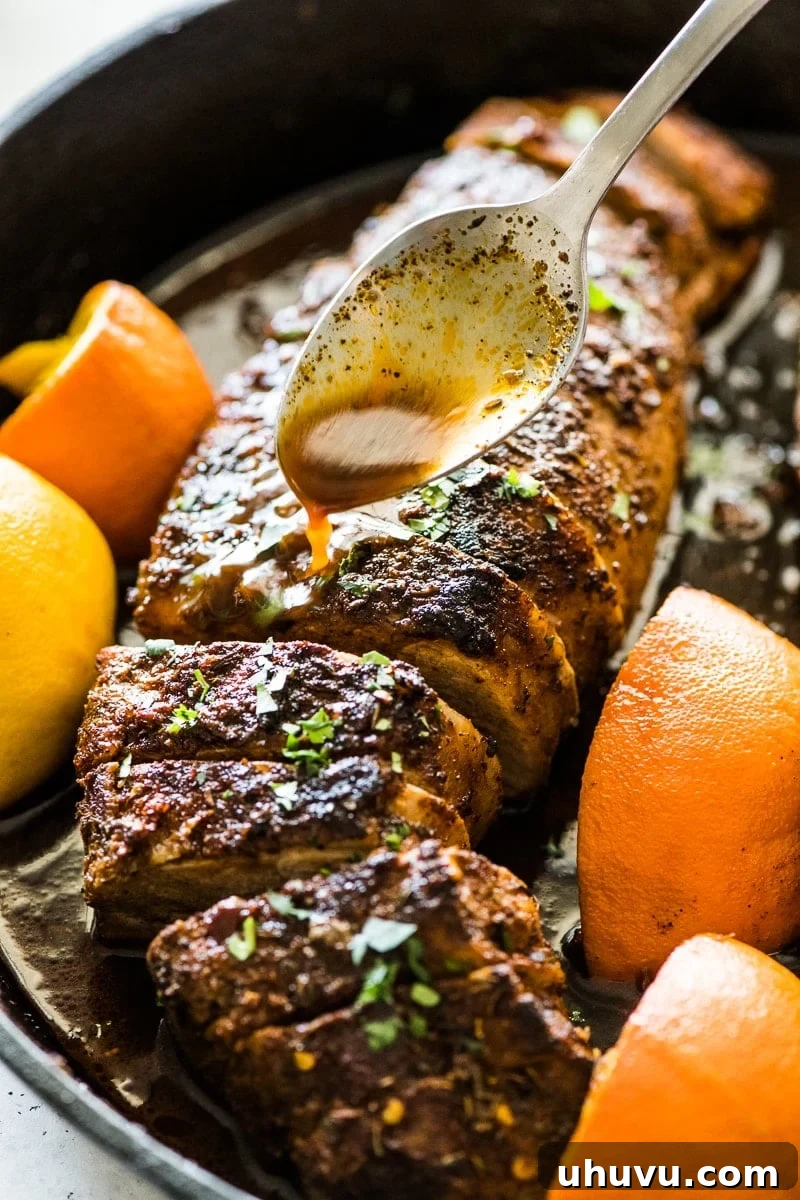
Experience the ultimate easy weeknight dinner with this incredibly flavorful Roasted Pork Tenderloin. Seasoned with a robust blend of herbs and spices, expertly seared in a trusty cast-iron skillet, and then roasted to tender perfection in the oven with zesty citrus juices, this recipe promises a dish that’s both healthy and utterly delicious. It’s naturally low-carb, gluten-free, and paleo-friendly, making it a versatile choice for any dietary need.
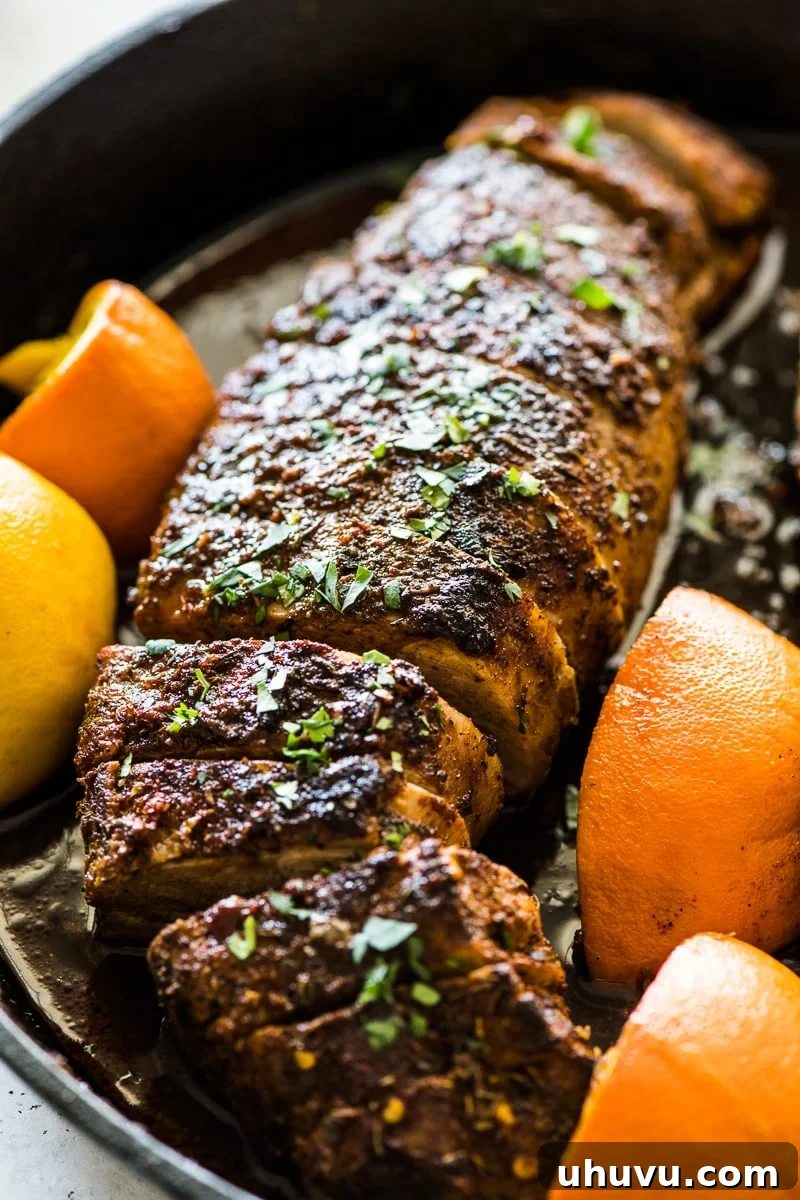
Perfectly Roasted Pork Tenderloin with Citrus Glaze
For years, roasted pork tenderloin has been a beloved staple in my kitchen, especially on busy weeknights. It’s an often-overlooked cut of meat that’s not only incredibly lean and budget-friendly but also remarkably simple to transform into a gourmet-level meal. This particular recipe takes the humble pork tenderloin and elevates it with a dynamic flavor profile, making it a go-to choice when you crave something special without spending hours in the kitchen.
What sets this recipe apart is its incredible efficiency. There’s absolutely no need for extensive marinating, which is a lifesaver for those hectic weeks when planning ahead feels like an impossible task – a scenario I know all too well! Instead, we achieve profound flavor through a simple yet powerful dry rub, a quick sear to lock in juices and develop a beautiful caramelized crust, and a final roast in the oven with freshly squeezed oranges and lemons. This citrus infusion not only keeps the pork unbelievably moist but also creates a delicate, tangy glaze that perfectly complements the rich spices. The result is a succulent, aromatic dish that tastes like it took far more effort than it actually did, yet is achievable for even the most novice home cook.
Why You’ll Love This Roasted Pork Tenderloin Recipe
If you’re searching for a dinner recipe that consistently delivers on taste, convenience, and health, look no further. This roasted pork tenderloin stands out for several compelling reasons:
- Effortless Preparation: Forget complex techniques or long marinating times. This recipe is designed for maximum flavor with minimal fuss, perfect for those evenings when time is a precious commodity. You can have a restaurant-quality meal on the table in under an hour.
- Healthy & Wholesome: Pork tenderloin is one of the leanest cuts of pork, making it an excellent source of high-quality protein with minimal fat. This recipe is also naturally low-carb, gluten-free, and paleo-friendly, aligning with a variety of healthy eating lifestyles without compromising on taste. It’s a smart choice for anyone looking to maintain a balanced diet.
- Bursting with Flavor: The combination of a smoky, herby dry rub and a bright, zesty citrus finish creates a truly unforgettable taste experience. The initial searing step is crucial, as it develops a rich, savory crust, adding a layer of flavor and texture that truly sets this dish apart from simply baking.
- Budget-Friendly: Despite its gourmet appeal, pork tenderloin is typically an affordable cut, offering a high-quality protein option that won’t break the bank. It’s a smart choice for feeding a family or entertaining guests economically, proving that delicious and impressive meals don’t have to be expensive.
- Versatile Pairing: This tenderloin pairs beautifully with a wide array of side dishes, from simple roasted vegetables and fresh salads to hearty grains and potatoes, allowing for endless meal customization. Its balanced flavor profile makes it compatible with many cuisines.
Essential Ingredients for Your Flavorful Pork Tenderloin
Crafting this succulent roasted pork tenderloin requires a few key ingredients, each playing a vital role in achieving its exquisite flavor and texture. The beauty of this recipe lies in its simplicity and the power of well-chosen seasonings that transform a lean cut of meat into something extraordinary.
The Star: Pork Tenderloin
You’ll primarily need two pork tenderloins, typically weighing a total of about 2 to 2 1/2 pounds. Most grocery stores conveniently package them in pairs, which is ideal for this recipe’s serving size. Pork tenderloin is distinct from pork loin; it’s a long, thin, and exceptionally lean muscle. Its delicate texture and mild flavor make it highly versatile, readily absorbing the delicious seasonings we’re about to apply.
The Simple, Yet Powerful Dry Rub
Instead of a wet marinade, which often requires hours of foresight, we’re opting for a powerful dry rub. This blend quickly adheres to the meat and infuses the pork with rich, smoky, and subtly spicy notes that deepen during searing and roasting. Gather these common pantry spices:
- Chili Powder: Provides a foundational warmth and earthy complexity, a gentle heat that is universally appealing.
- Kosher Salt: More than just seasoning, salt is crucial for enhancing the natural flavors of the pork and, when applied generously, helps in developing a crispy exterior.
- Smoked Paprika: This is a star ingredient. It delivers a deep, alluring smoky aroma and a beautiful reddish-brown color that significantly enhances the pork’s visual appeal and taste richness.
- Dried Thyme: Contributes a classic, fragrant herbaceous note that complements pork wonderfully, adding a touch of rustic elegance.
- Ground Cumin: Adds an earthy, slightly pungent and warm flavor that pairs exceptionally well with chili powder and smoked paprika, creating a harmonious spice blend.
- Crushed Red Pepper Flakes: For a gentle kick of heat that awakens the palate without overpowering the other delicate flavors. Feel free to adjust the quantity based on your personal spice preference.
- Onion Powder: Contributes a savory, aromatic depth, complementing the other spices and adding a subtle umami note.
Simply combine these ingredients in a small bowl, and you’ll have a potent seasoning blend ready in moments, far quicker than any liquid marinade.
Cooking Oil and Fresh Citrus Zest
Finally, you’ll need a good quality cooking oil suitable for high heat, such as olive oil, to achieve that perfect initial sear and prevent sticking. The magic truly happens with the addition of fresh citrus, which not only provides flavor but also moisture:
- One Orange: Its sweet, bright, and slightly acidic juice adds a lovely tang and subtle sweetness, contributing to a vibrant glaze and keeping the pork incredibly moist during the oven phase.
- One Lemon: The sharp, tartness of lemon juice expertly balances the richness of the pork and the sweetness of the orange, creating a perfectly rounded and complex flavor profile for the citrus glaze.
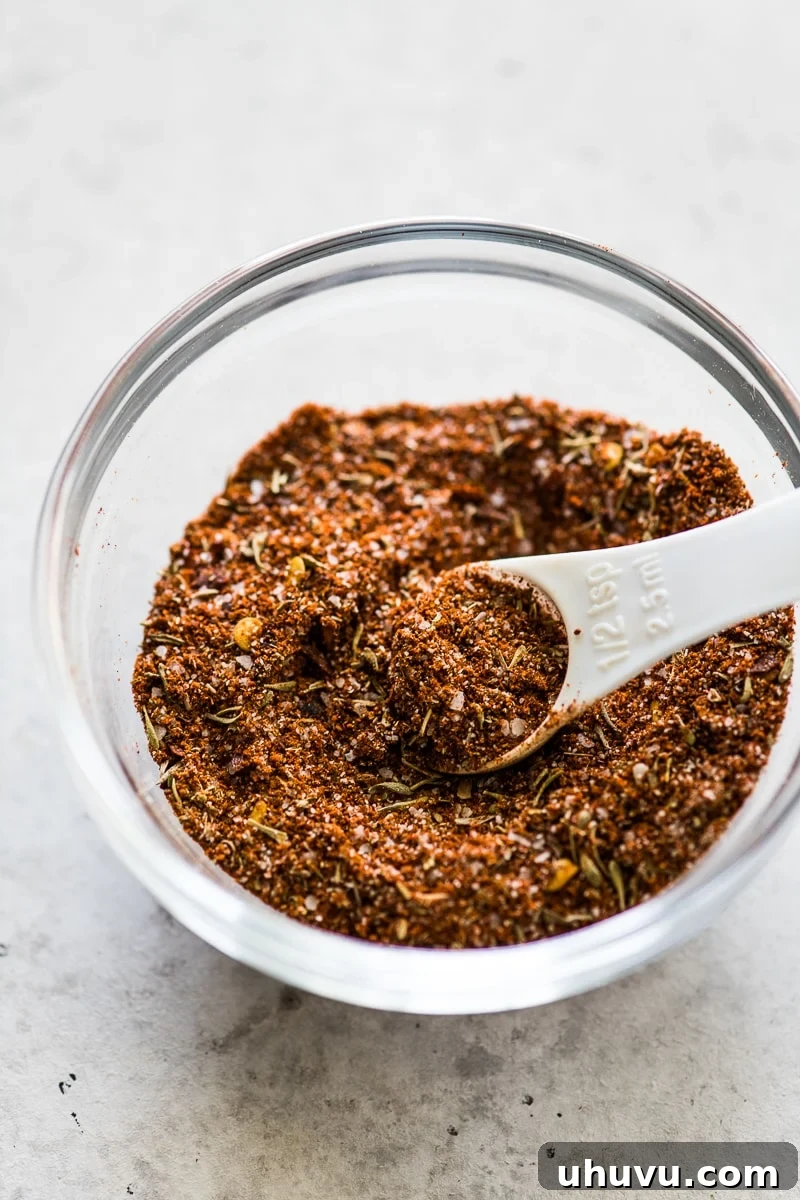
Before you begin the cooking process, ensure your pork tenderloins are completely patted dry with paper towels. This crucial step promotes a superior sear and a beautiful caramelized crust by allowing direct heat contact. Once dry, generously season them on all sides with your freshly prepared dry rub, making sure to massage the spices into the meat for maximum flavor penetration and adherence.
Step-by-Step Guide: How to Cook Pork Tenderloin to Perfection
Follow these simple yet precise steps to create a show-stopping pork tenderloin that’s perfectly seared on the outside and wonderfully juicy on the inside. Precision in each stage ensures a delicious outcome, making this recipe a guaranteed success every time.
Step 1: Prepare Your Pan and Pork.
Begin by preheating your oven to 375°F (190°C). While the oven heats up, place a large, oven-safe skillet or a Dutch oven over medium-high heat on your stovetop. A cast-iron skillet is highly recommended for this recipe because of its exceptional heat retention and even distribution, which are key for achieving a deep, even sear. Add 1-2 tablespoons of cooking oil, such as olive oil, to generously coat the bottom of the pan. Once the oil shimmers and is hot (but not smoking), carefully add the already seasoned pork tenderloins to the skillet. Ensure you don’t overcrowd the pan; if necessary, sear in batches to maintain high heat.
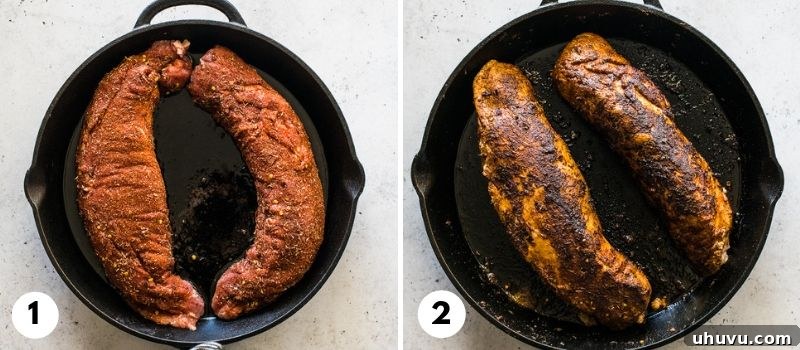
Step 2: Achieve the Perfect Sear.
Sear the pork tenderloins for approximately 1 1/2 to 2 minutes per side. The goal here is not to cook the pork through, but rather to develop a rich, golden-brown crust on all surfaces of the meat. This crucial caramelization, known as the Maillard reaction, is fundamental for building complex, savory flavors and adding an appealing texture to your dish. Use tongs to carefully turn the tenderloins until every visible side is beautifully seared and has developed a deep, enticing color.
Step 3: Introduce Citrus and Roast to Tender Perfection.
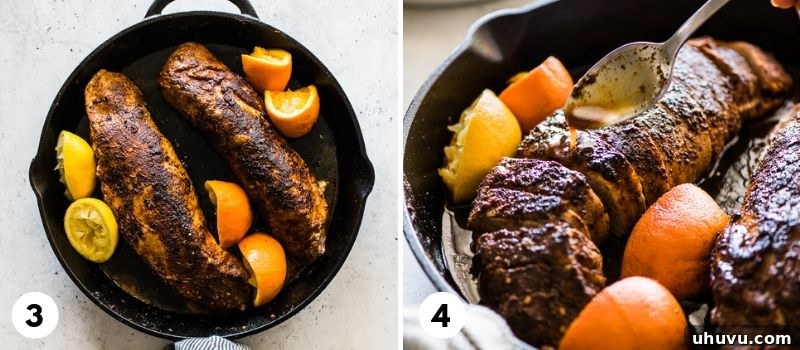
Once seared, remove the skillet from the stovetop heat. Carefully squeeze the fresh juice of one quartered orange and one halved lemon directly into the skillet, letting the vibrant juices mingle around the base of the pork. For an extra boost of aroma and flavor, you can also add the squeezed fruit rinds directly into the pan alongside the tenderloins; they will release additional essence as they bake. Transfer the entire skillet to your preheated 375°F (190°C) oven. Roast for 20-25 minutes, or until the internal temperature of the pork reaches 140°F (60°C). A reliable meat thermometer is an indispensable tool here to prevent overcooking and ensure perfectly tender, juicy results.
Step 4: Rest, Slice, and Serve with Pan Juices.
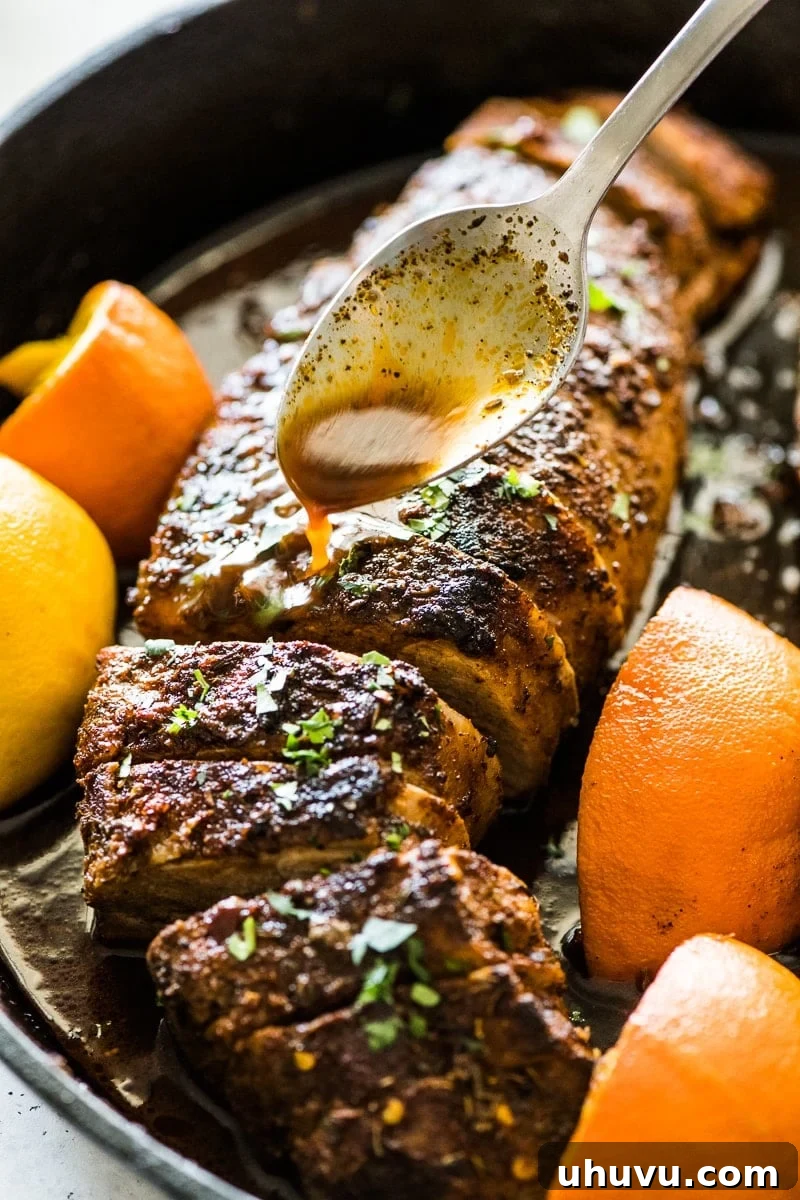
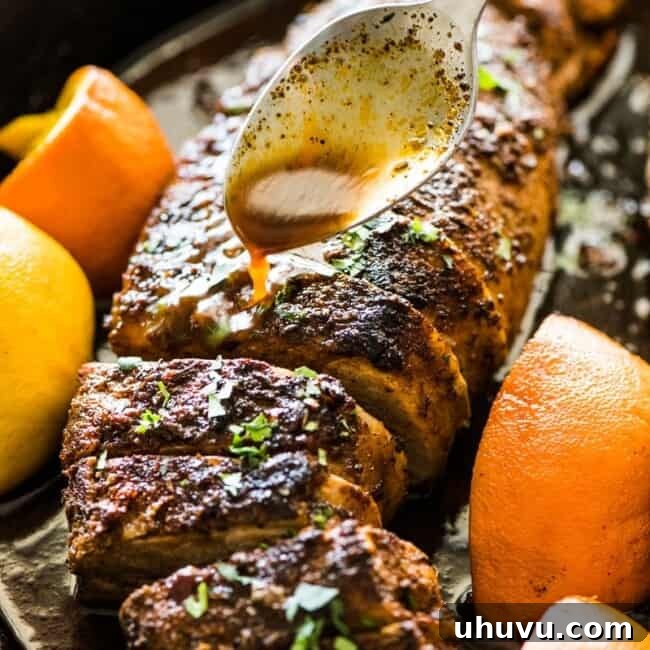
Remove the skillet from the oven and immediately transfer the pork tenderloins to a clean cutting board. It is absolutely crucial to let the pork rest for at least 5 minutes before slicing. This resting period is not optional; it allows the muscle fibers to relax and the juices, which have migrated to the center during cooking, to redistribute throughout the entire cut. This results in a significantly more tender, moist, and flavorful final product. During this time, the internal temperature will also continue to rise slightly, reaching a safe and ideal 145°F (63°C). After resting, slice the pork into appealing medallions and serve immediately, spooning the delicious citrus-infused pan juices from the skillet generously over each serving. Garnish with fresh chopped cilantro or parsley for an extra touch of freshness and color.
Expert Tips for Unforgettable Roasted Pork Tenderloin
While this recipe is straightforward, paying attention to a few key techniques can elevate your roasted pork tenderloin from good to truly exceptional. These expert tips will help ensure consistently perfect, juicy, and flavorful results every single time:
- Master the Sear for Flavor: The initial sear is more than just browning; it’s about building a profound foundation of flavor. Ensure your cast-iron skillet is piping hot before the pork goes in. You should hear an immediate, aggressive sizzle upon contact. A good sear creates a delectable caramelized crust, locking in moisture and intensifying the savory notes of the dry rub through the Maillard reaction. Don’t rush this step – a deep, rich golden-brown exterior on all sides is what you’re aiming for.
- Don’t Skip Patting Dry: This might seem like a minor detail, but it’s incredibly important. Excess moisture on the surface of the pork will cause the meat to steam rather than sear, preventing that desirable crispy, flavorful crust from forming. Use paper towels to thoroughly and completely dry the tenderloins before applying the rub.
- Invest in a Quality Meat Thermometer: This is arguably the most crucial tool for perfectly cooked pork. Pork tenderloin is a lean cut and can quickly become dry and tough if overcooked. Aim for an internal temperature of 140°F (60°C) when you remove it from the oven. The temperature will continue to rise during the resting period, reaching the FDA-recommended 145°F (63°C). An in-oven meat thermometer is especially useful as it allows you to monitor the temperature without opening the oven door repeatedly, thus maintaining consistent oven heat.
- Always Let It Rest: Patience is a virtue, especially after roasting meat. Transferring the pork to a cutting board and allowing it to rest for at least 5-10 minutes is non-negotiable. This process permits the muscle fibers to relax and reabsorb the flavorful juices that have migrated to the center during cooking. Slicing immediately will cause those precious juices to run out onto your cutting board, leaving you with noticeably drier meat.
- Don’t Overcrowd the Pan: If you’re cooking more than two tenderloins or if your skillet is on the smaller side, sear them in batches. Overcrowding the pan will drastically lower the temperature of the skillet, leading to steaming instead of searing, and preventing a beautiful, crispy crust from forming. Give each tenderloin space to brown properly.
- Trim Excess Silver Skin: Pork tenderloins often come with a tough, silvery membrane called silver skin running along one side. While not harmful to eat, it can be quite chewy. Use a sharp, thin knife to carefully slide underneath the silver skin and trim it off before seasoning for a more uniformly tender bite.
Serving Suggestions: What Pairs Well with Roasted Pork Tenderloin
This versatile roasted pork tenderloin can be the star of many different meals, thanks to its balanced flavor profile that marries smoky spices with bright citrus. To round out your dinner and create a complete, satisfying experience, consider pairing it with some of these complementary side dishes. The bright, zesty flavors of the pork lend themselves beautifully to a wide variety of accompaniments, from simple greens to hearty grains.
- Cilantro Lime Rice: The fresh, aromatic notes of cilantro and the invigorating tang of lime provide a wonderful contrast to the savory pork, making it a light, refreshing, and incredibly flavorful choice. It’s a classic pairing that never disappoints.
- Crispy Roasted Potatoes: A timeless and comforting pairing, crispy roasted potatoes offer a satisfying texture and are excellent at absorbing the delicious citrus-infused pan juices from the pork, ensuring every bite is packed with flavor.
- Mexican Quinoa Salad: For a lighter, nutrient-dense, and highly vibrant option, a Mexican-inspired quinoa salad packed with fresh vegetables, black beans, corn, and a zesty dressing can create a perfectly balanced and hearty meal.
- Jalapeno Corn Cakes: These delightful sweet and spicy corn cakes add a touch of Southern comfort and a unique flavor dimension that works surprisingly well with the savory and citrusy notes of the pork, offering an unexpected twist.
- Garlic Parmesan Roasted Asparagus: Simple roasted asparagus spears, tossed with olive oil, garlic, and a sprinkle of Parmesan, make for an elegant and healthy side that’s quick to prepare and doesn’t overpower the main dish.
- Creamy Polenta or Grits: For a comforting and rich accompaniment, serve the pork over a bed of creamy polenta or grits. The soft texture and mild flavor provide a perfect counterpoint to the tenderloin and its savory juices.
- Fresh Green Salad with Vinaigrette: A crisp green salad featuring mixed greens, cherry tomatoes, cucumbers, and a light lemon-herb vinaigrette is always a good choice. It cuts through the richness of the meat and adds a much-needed element of freshness and crunch.
Roasted Pork Tenderloin Recipe Card
This Roasted Pork Tenderloin is rubbed with herbs and spices, seared in a cast-iron skillet and roasted in the oven with oranges and lemon to keep it incredibly juicy and flavorful!
By: Isabel Orozco-Moore
Prep Time: 8 minutes
Cook Time: 27 minutes
Total Time: 40 minutes
Servings: 8 servings
Ingredients
- 1 tablespoon chili powder
- 1 1/2 teaspoons kosher salt
- 1 1/2 teaspoons smoked paprika
- 1 teaspoon dried thyme
- 1 teaspoon ground cumin
- 1 teaspoon crushed red pepper flakes
- 1 teaspoon onion powder
- 2 1/2 pounds boneless pork tenderloins (typically 2 tenderloins)
- 2 tablespoons olive oil
- 1 orange, quartered
- 1 lemon, halved
- chopped cilantro or parsley, for garnish
Instructions
- In a small bowl, combine the chili powder, kosher salt, smoked paprika, dried thyme, ground cumin, crushed red pepper flakes, and onion powder. Mix until all spices are thoroughly combined.
- Pat the pork tenderloins completely dry with paper towels. This step is crucial for achieving a good sear. Sprinkle the prepared spice mixture generously all over the tenderloins and rub it into the meat with your hands, ensuring an even and thorough coating.
- Preheat your oven to 375°F (190°C). Heat a large oven-safe skillet or pan (a cast-iron skillet or Dutch oven is highly recommended for its heat retention) over medium-high heat on your stovetop. Add the 2 tablespoons of olive oil. Once the oil is shimmering and hot, carefully place the seasoned pork tenderloins into the skillet. Sear the pork on all sides for approximately 1 1/2 minutes per side, until a beautiful, deep golden-brown crust forms.
- Remove the skillet from the stovetop heat. Carefully squeeze the fresh juice from the orange quarters and lemon halves directly into the skillet, letting the juices pool around the pork. For added flavor and aroma, place the squeezed fruit rinds into the skillet alongside the tenderloins. Transfer the entire skillet to the preheated oven and bake for 20-25 minutes, or until the internal temperature of the meat reaches 140°F (60°C). It is highly recommended to use an in-oven meat thermometer for accurate temperature monitoring, preventing overcooking.
- Once the pork reaches 140°F (60°C), remove the skillet from the oven and immediately transfer the pork tenderloins to a clean cutting board. Let the pork rest for a crucial 5 minutes. During this resting period, the pork will continue to cook slightly, and its internal temperature will rise to the recommended 145°F (63°C), ensuring maximum juiciness.
- After resting, slice the pork tenderloins into medallions. Serve immediately, drizzling generously with the flavorful, citrus-infused pan juices from the skillet. Garnish with fresh chopped cilantro or parsley for a burst of color and herbaceous freshness.
Notes
- Achieve a Deep Sear: Ensure your cast-iron skillet is very hot before adding the pork. A strong sizzle upon contact indicates the right temperature, leading to delicious caramelization and a flavorful crust.
- Use a Meat Thermometer: The key to juicy pork is cooking it to the correct internal temperature without overdoing it. Aim for 140°F (60°C) out of the oven, allowing it to reach 145°F (63°C) after resting. An in-oven meat thermometer is highly recommended.
- Resting is Essential: Never skip the resting step! A 5-minute rest allows the meat’s juices to redistribute, ensuring a tender and moist result when sliced.
Nutrition Information (Approximate Per Serving)
Serving: 1/8th of recipe | Calories: 205kcal | Carbohydrates: 3g | Protein: 29g | Fat: 9g | Saturated Fat: 2g | Polyunsaturated Fat: 0g | Monounsaturated Fat: 0g | Trans Fat: 0g | Cholesterol: 88mg | Sodium: 403mg | Potassium: 54mg | Fiber: 1g | Sugar: 1g | Vitamin A: 300IU | Vitamin C: 10.7mg | Calcium: 10mg | Iron: 4mg
Nutrition information is automatically calculated, so should only be used as an approximation.
Did you make this recipe? We’d love to hear from you! Leave a comment and star rating below to share your experience!
Flavorful Variations and Smart Substitutions
This roasted pork tenderloin recipe is wonderfully adaptable, providing a fantastic base for culinary experimentation. Feel free to explore different flavor profiles to keep your weeknight dinners exciting and tailored to your palate:
- Herbaceous Twists: Instead of, or in addition to, dried thyme, consider incorporating other aromatic dried herbs like rosemary, sage, or oregano into your dry rub. For a brighter, fresher aroma, finely chopped fresh rosemary or thyme can be added during the last 10 minutes of roasting, or simply as a garnish.
- Diverse Spice Blends: For a different culinary journey, explore alternative spice blends. A garlic-herb blend, a smoky chipotle rub (for those who love extra heat), or even a Moroccan-inspired mix with hints of ground coriander, ginger, and a pinch of cinnamon can transform the dish’s character.
- Citrus Swaps and Liquid Bases: While orange and lemon provide a beautifully balanced classic zest, you could experiment with other citrus fruits like lime or grapefruit for a different tangy note. Alternatively, for a less acidic liquid base during roasting, a splash of white wine, chicken broth, or even apple cider can add depth and moisture.
- Sweet & Savory Glaze Enhancements: For an irresistible touch of sweetness that enhances the caramelization, consider drizzling a tablespoon of pure maple syrup, honey, or even a fruit preserve (like apricot or orange marmalade) over the pork along with the citrus juices before roasting. This adds another layer of complex flavor.
- All-in-One Pan Meal: For ultimate convenience, roast some quick-cooking vegetables directly in the skillet alongside the pork. Bell peppers, zucchini, cherry tomatoes, or thinly sliced onions are excellent choices. Add them during the last 15-20 minutes of cooking to ensure they are tender-crisp.
- Spicy Kick: If you enjoy a more pronounced heat, increase the amount of crushed red pepper flakes in the dry rub, or consider adding a pinch of cayenne pepper for an extra fiery dimension.
Storage and Reheating Tips for Leftovers
Leftover roasted pork tenderloin is fantastic for meal prep or quick lunches throughout the week. Proper storage and reheating techniques are key to maintaining its deliciousness and tender texture:
- Cool Down Quickly: Always allow the pork to cool completely at room temperature (but no longer than two hours) before storing. This prevents condensation inside the container, which can lead to sogginess.
- Refrigeration: Once cooled, slice the pork or keep it whole. Store it in an airtight container in the refrigerator. Properly stored, it will remain fresh and delicious for up to 3-4 days.
- Freezing for Longer Storage: For extended storage, individual slices of pork tenderloin can be frozen. Wrap slices tightly in plastic wrap, then place them in an airtight freezer bag or container. This helps prevent freezer burn. It can be stored in the freezer for up to 2-3 months. Thaw overnight in the refrigerator before reheating.
- Reheating in the Oven (Recommended): For best results and to maintain tenderness, reheat sliced pork in a preheated oven at 300°F (150°C). Place the pork in an oven-safe dish, add a splash of chicken broth or the reserved pan juices to the container, and cover it loosely with foil. Heat until just warmed through (about 10-15 minutes), being careful not to overcook.
- Reheating on the Stovetop: Gently warm individual slices in a skillet over medium-low heat with a tablespoon of broth or water. Cover the skillet to trap steam and heat through evenly. This method works well for smaller portions and helps retain moisture.
- Microwave (Use with Caution): While convenient, the microwave can sometimes dry out lean cuts like pork tenderloin. If using, reheat small portions on a microwave-safe plate, covered, in short bursts (30-60 seconds) until warmed, stirring or flipping occasionally. Add a small amount of liquid if needed.
- Serving Leftovers Cold: Don’t underestimate the versatility of cold, sliced pork tenderloin! It’s excellent in sandwiches, wraps, salads, or even as a protein addition to a grain bowl for a quick and healthy meal.
Frequently Asked Questions (FAQs)
What internal temperature should pork tenderloin be cooked to?
The U.S. Department of Agriculture (USDA) recommends cooking pork to an internal temperature of 145°F (63°C) for safe consumption. This should always be followed by a 3-minute rest period. In this recipe, we advise removing the pork from the oven when it reaches 140°F (60°C), as the temperature will naturally rise to the safe 145°F (63°C) during the resting phase, ensuring a perfectly juicy outcome.
How do I know if my pork tenderloin is done without a meat thermometer?
While a meat thermometer is by far the most reliable and accurate method for determining doneness and preventing overcooking or undercooking, if you don’t have one, you can make an educated guess by checking the juices. When pierced with a fork or knife, the juices should run clear. However, for truly accurate, consistent, and safe results, investing in a good quality thermometer is highly recommended.
Can I use other cuts of pork for this recipe, such as pork loin or shoulder?
This recipe is specifically developed and optimized for pork tenderloin, chosen for its leanness and quick cooking time. Other cuts like pork loin or pork shoulder have different fat contents and thicknesses, requiring significantly different cooking times, temperatures, and methods. While you can adapt the flavor profile, using a different cut would necessitate adjusting the cooking instructions accordingly.
What kind of skillet is best for searing pork tenderloin?
A cast-iron skillet or a heavy-bottomed, oven-safe pan (like a Dutch oven) is ideal for this recipe. Cast iron excels at retaining and distributing heat evenly across its surface, which is absolutely crucial for achieving that beautiful, crispy, and flavorful sear that adds so much character to the pork tenderloin.
Can I prepare the dry rub in advance?
Absolutely! Preparing the dry rub in advance is a great time-saving trick. You can mix all the dry rub ingredients and store them in an airtight container in a cool, dark place for several weeks. This makes prep even quicker on a busy weeknight, allowing you to simply grab and season when you’re ready to cook.
Conclusion
This Roasted Pork Tenderloin with Citrus Glaze isn’t just a recipe; it’s a solution for delightful, healthy, and easy weeknight dining that will quickly become a family favorite. By combining a simple yet potent spice rub, a quick and essential sear, and the vibrant, tenderizing touch of fresh citrus, you can create a meal that’s both elegant enough for guests and incredibly approachable for any night of the week. Whether you’re a seasoned home cook looking for a new go-to or just starting your culinary journey, this dish promises to impress with its rich flavors, unbelievably tender texture, and straightforward preparation. Give it a try tonight and let this perfectly roasted pork tenderloin elevate your dinner table!