
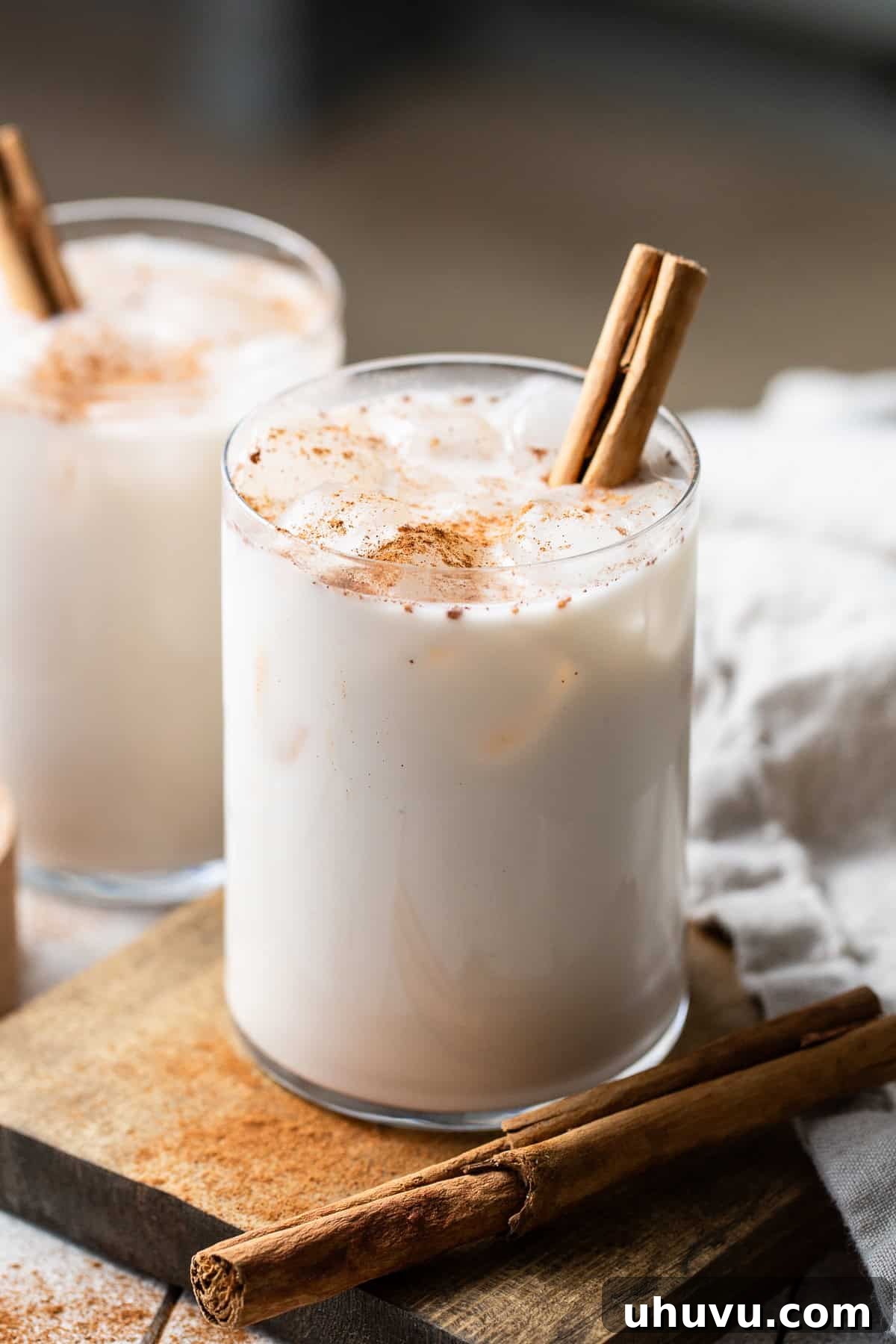
Indulge in the sweet, creamy, and wonderfully refreshing taste of homemade horchata. This authentic Mexican rice drink, crafted from simple, wholesome ingredients, is the perfect companion for a sunny afternoon or a flavorful addition to any meal. Forget the store-bought versions – learning to make horchata at home is a rewarding experience that yields a uniquely delicious beverage you’ll crave again and again.
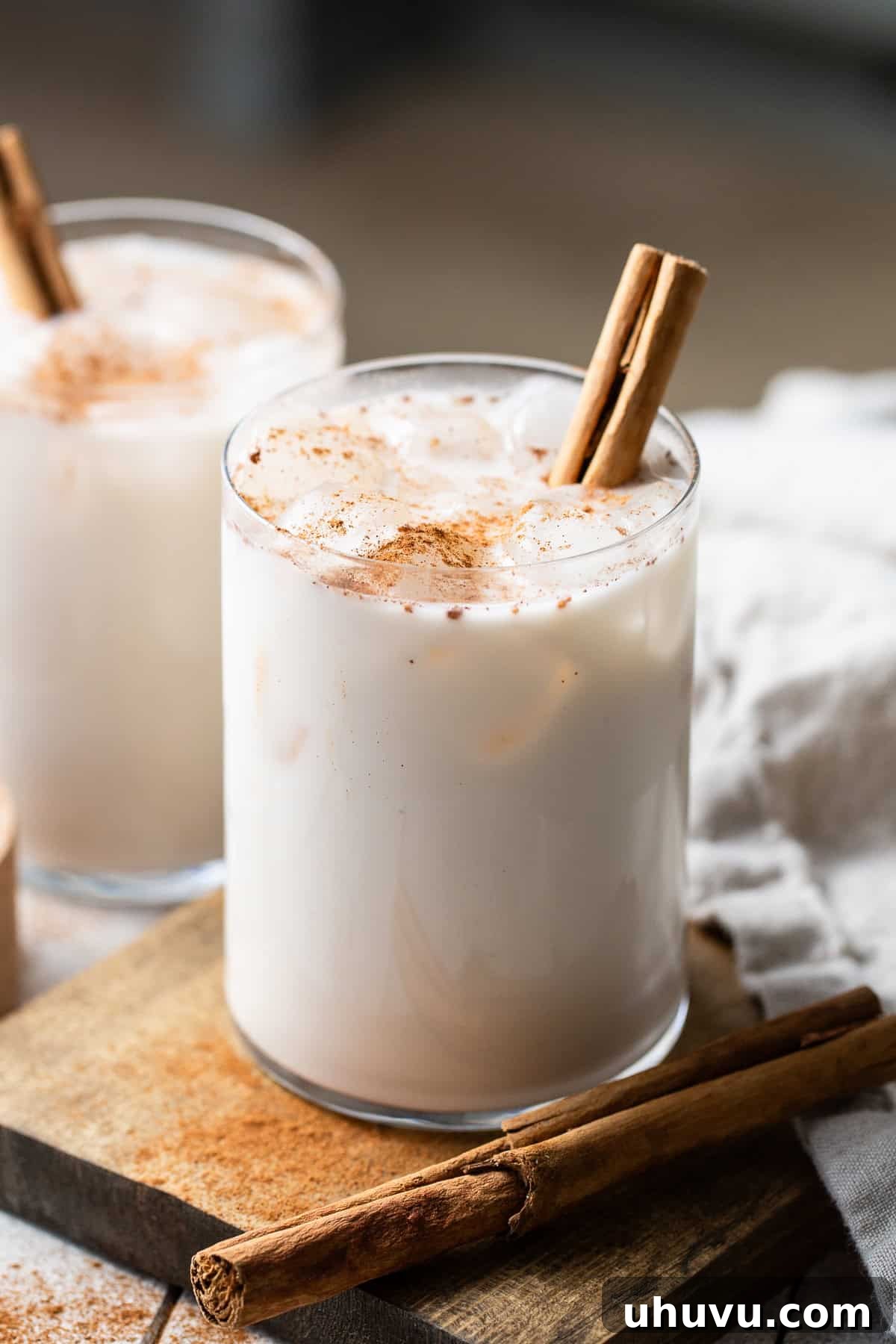
Horchata holds a special place in my heart as my go-to order at any taqueria or Mexican market. Its delicate sweetness, rich creaminess, and cooling properties make it just as invigorating as vibrant aguas frescas like watermelon agua fresca or agua de jamaica. The beauty of this beloved beverage lies in its simplicity; it’s made with readily available, budget-friendly ingredients that you likely already have in your pantry.
While the idea of making horchata from scratch might seem daunting, it’s surprisingly straightforward and requires minimal active effort. A little bit of soaking and blending transforms humble rice and cinnamon into a sublime drink that tastes infinitely better than anything you can buy pre-made. Preparing horchata at home allows you to control the quality of ingredients and customize the sweetness and creaminess to your exact preference.
Here’s why this particular recipe stands out and why you’ll absolutely fall in love with it:
- Authentic Flavor, Unrivaled Freshness: This recipe captures the true essence of traditional Mexican horchata, offering a taste that transports you straight to the bustling markets and vibrant streets of Mexico. The fresh ingredients and careful preparation create a depth of flavor unmatched by commercial versions.
- Easily Customizable: While the core combination of rice, cinnamon, and water forms the foundation, this recipe is incredibly flexible. You can effortlessly adjust the type of milk, sweetener, and even add other flavorings to suit dietary needs or personal tastes. Whether you prefer it dairy-free, nut-free, or with a specific type of sugar, this recipe can be adapted.
- Simple and Minimal Prep: Despite its sophisticated taste, horchata is remarkably easy to make. The process involves minimal hands-on time, primarily requiring soaking and blending. This makes it a perfect make-ahead beverage for entertaining or simply enjoying throughout the week.
- Budget-Friendly Ingredients: You don’t need exotic or expensive items to create this delicious drink. Long-grain white rice, cinnamon, and a few common dairy products or alternatives are all it takes, making it an economical choice for a homemade treat.
- A Healthier Homemade Alternative: By making horchata at home, you have complete control over the sugar content and quality of ingredients. This allows you to create a drink that is free from artificial additives and preserves, offering a wholesome and naturally delicious option.
What Exactly Is Horchata? A Brief History and Cultural Significance
Horchata is a beloved, creamy, and sweet beverage enjoyed across various cultures, though its preparation and ingredients differ significantly by region. In Mexico, where it is a quintessential part of the culinary landscape, horchata is typically a rice-based drink. It’s made by soaking white rice overnight, often with almonds and a distinctive Mexican cinnamon stick, in water. This mixture is then finely blended and typically combined with whole milk, evaporated milk, granulated sugar, and a touch of vanilla extract.
This delightful concoction is served chilled, usually over ice, and often garnished with a sprinkle of ground cinnamon, creating a truly refreshing treat. As a prominent type of “agua fresca” (fresh water), horchata is ubiquitous in Mexico. You’ll find it everywhere from family-run Mexican restaurants and bustling markets to street vendors and taquerias, making it a staple of everyday life and celebratory occasions. Its smooth, milky texture and comforting flavor have cemented its status as one of Mexico’s most cherished drinks.
The origins of horchata trace back even further than Mexico, with roots in North Africa and Spain. The original horchata, known as “horchata de chufa,” is made from tiger nuts (chufas) and is popular in Valencia, Spain. When the Spanish brought their culinary traditions to the Americas, the concept of horchata evolved, adapting to locally available ingredients. Rice became the primary base in Mexico, leading to the distinct and delicious Mexican horchata we know and love today.
Essential Horchata Ingredients: The Building Blocks of Flavor
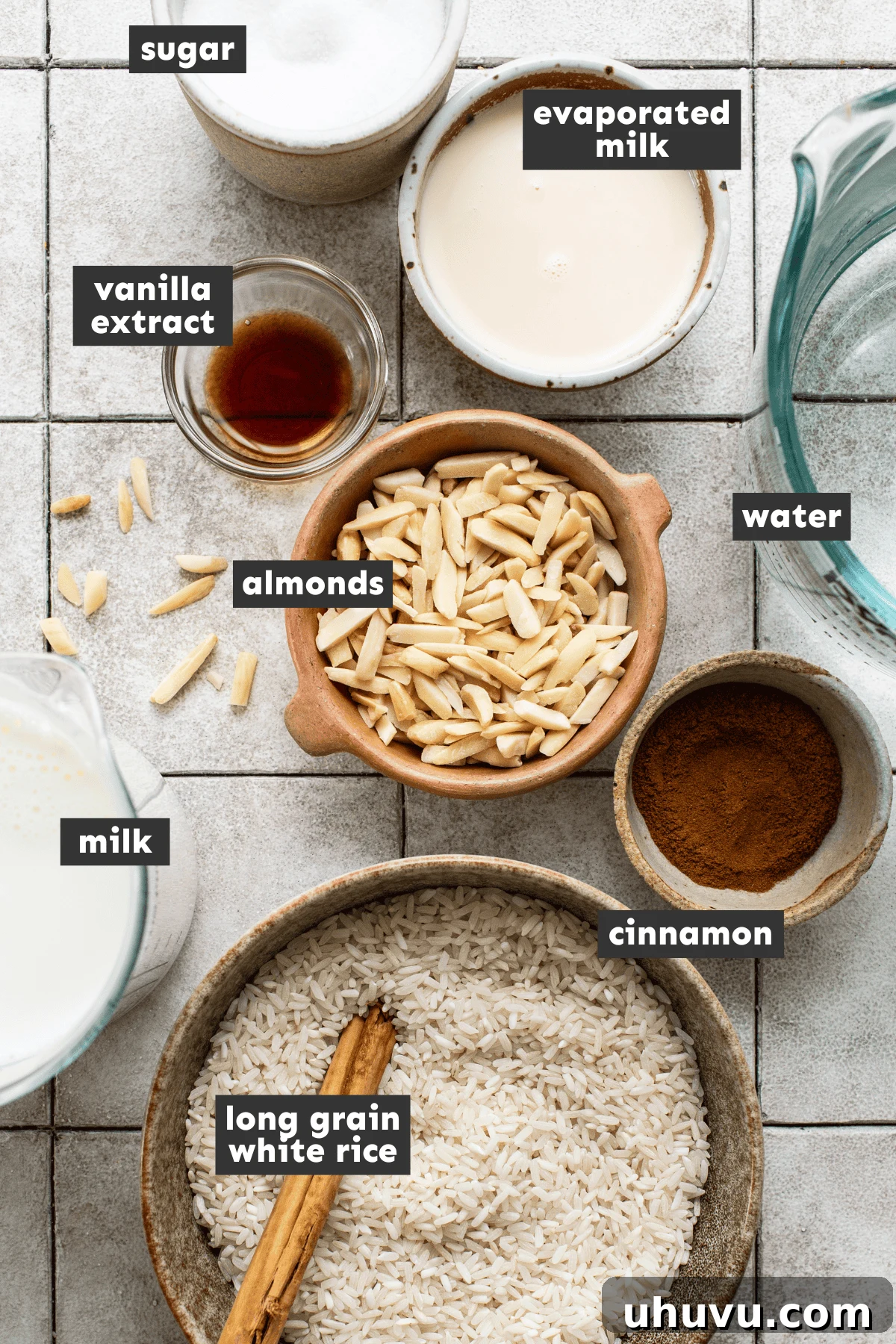
Creating an authentic and delicious horchata starts with selecting the right ingredients. Each component plays a vital role in achieving that signature creamy texture and sweet, aromatic flavor. Here’s a detailed look at what you’ll need:
- Long Grain White Rice: The foundation of Mexican horchata. White rice, particularly long grain varieties like Jasmine or Basmati, is preferred because it releases starches that contribute to the drink’s creamy, almost velvety texture when blended. Rinsing the rice thoroughly before soaking helps remove excess surface starch, preventing the horchata from becoming overly gummy. While long grain is traditional, other white rice varieties can work, just avoid brown rice as its tougher texture and stronger flavor can overpower the delicate taste of horchata.
- Almonds: A key ingredient for adding a subtle, nutty depth to the horchata. Blanched and slivered almonds are ideal as they blend more easily and contribute to a smoother texture. You can use whole or sliced almonds, but they might require a bit more blending time to break down fully. For a nut-free version, simply omit the almonds entirely; the horchata will still be delicious, just with a slightly different flavor profile. Some recipes even suggest toasting the almonds lightly before soaking for an even richer, more pronounced nutty flavor.
- Ceylon Cinnamon Stick (Mexican Cinnamon): This is perhaps the most crucial ingredient for an authentic Mexican horchata. Ceylon cinnamon, often labeled as “Mexican cinnamon,” is distinctly different from the more common Cassia cinnamon. It is lighter in color, more fragile, and has a complex, sweeter, and less pungent flavor profile. It’s designed to be easily broken into pieces and blended directly into the drink, infusing it with its delicate aroma. You can typically find Ceylon cinnamon in Hispanic grocery stores or specialty spice shops. If unavailable, a regular Cassia cinnamon stick can be used, but it’s best to remove it before blending, or use about 2 teaspoons of ground Ceylon cinnamon as a substitute (though a stick provides a superior infusion).
- Water: Used in two stages: first, for soaking the rice, almonds, and cinnamon stick to soften them and allow flavors to meld; and second, during the blending process to help achieve a smooth consistency. Using filtered water is recommended for the best flavor.
- Whole Milk and Evaporated Milk: This combination provides the characteristic richness and creaminess of horchata. Whole milk offers a rich base, while evaporated milk adds an extra layer of velvety texture and depth without making the drink excessively thick. Using only evaporated milk might result in a consistency that is too dense. For dietary alternatives, you can substitute half and half for a richer drink, or use plant-based milks like almond, soy, coconut, oat, or cashew milk to make it dairy-free. Be mindful that plant-based milks will impart their own distinct flavor.
- Granulated Sugar: The primary sweetener. The amount can be adjusted to your personal preference, allowing for a perfectly balanced sweetness. Other sweeteners such as honey, agave nectar, or sweetened condensed milk can also be used. Sweetened condensed milk, in particular, will add an extra layer of creamy decadence.
- Vanilla Extract: A teaspoon of good quality vanilla extract enhances the overall sweetness and adds a warm, inviting aroma, rounding out the flavors beautifully.
- Ground Cinnamon: A final flourish! A light dusting of ground cinnamon over each serving not only adds a beautiful visual appeal but also provides an extra fragrant kick, intensifying the classic horchata experience.
Step-by-Step: Crafting Your Perfect Horchata at Home
Making horchata is a process that requires a little patience, primarily for the soaking and straining, but the hands-on time is minimal. Follow these steps for a wonderfully creamy and flavorful result:
1. Rinse the Rice Thoroughly: Begin by placing the long-grain white rice in a fine-mesh sieve and rinsing it under cool running water. Continue rinsing until the water runs completely clear. This step is crucial for removing excess starch from the surface of the rice, which helps prevent the final horchata from having a gummy or pasty texture.
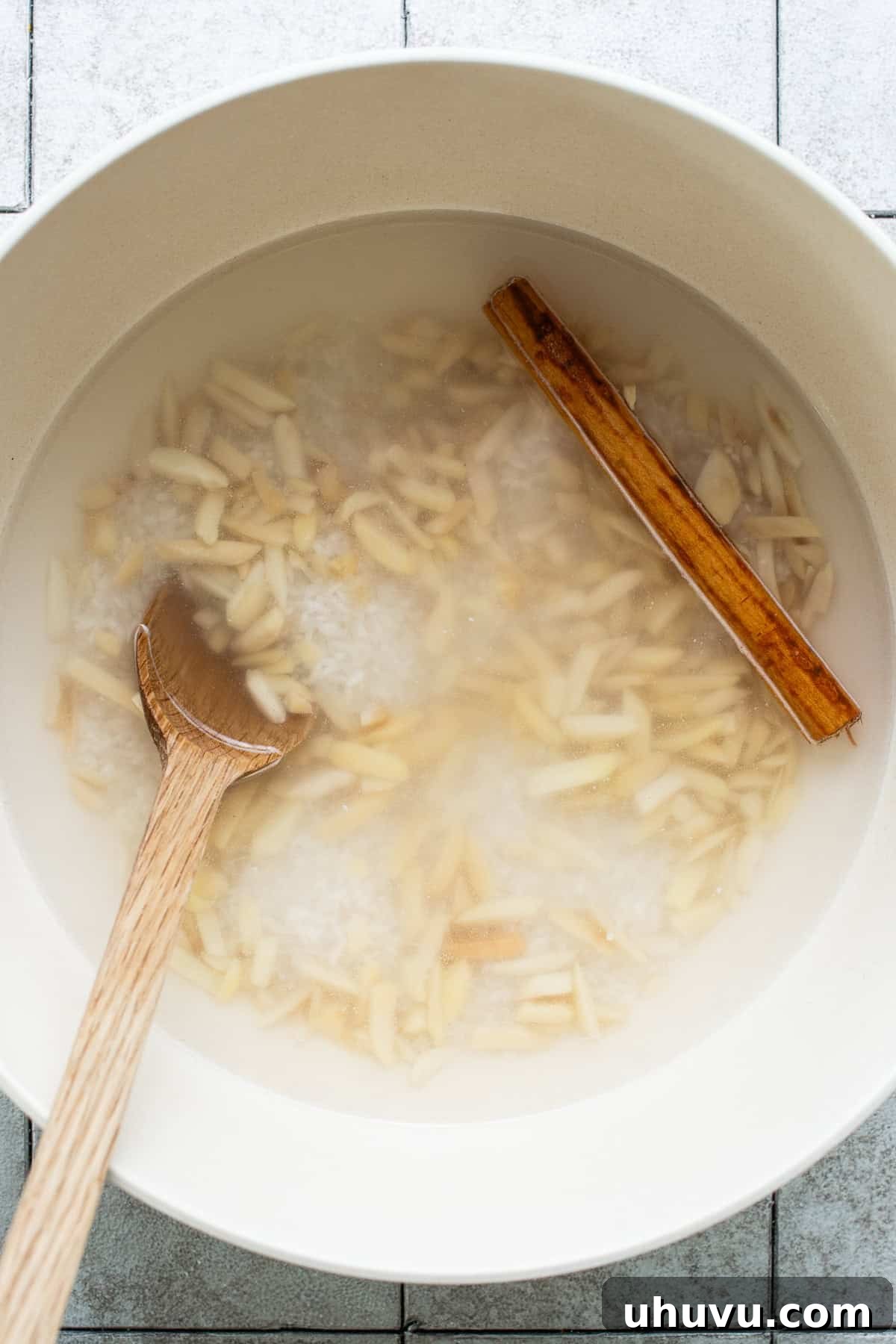
2. Soak for Flavor Infusion: Transfer the rinsed rice, along with the blanched slivered almonds, the broken Ceylon cinnamon stick, and 3 cups of water, into a large bowl or pitcher. Stir everything together gently to ensure all ingredients are submerged. Cover the bowl tightly with a lid or plastic wrap and refrigerate for at least 8 hours, or preferably overnight, and up to 24 hours. This long soak allows the rice to soften, the almonds to hydrate, and the cinnamon to release its aromatic oils, creating a rich flavor base.
3. Blend Until Silky Smooth: After soaking, pour the entire contents of the bowl (rice, almonds, cinnamon stick, and soaking water) into a high-powered blender. Add an additional 3 cups of fresh water. Blend on high speed for several minutes, typically 2 to 5 minutes, depending on the strength of your blender. The goal is to break down the rice and almonds as much as possible, aiming for a completely smooth, almost frothy mixture. If your blender is smaller, you may need to work in batches to avoid overfilling and ensure thorough blending.
4. Strain for a Velvety Texture: This is arguably the most important step for achieving a truly smooth, grit-free horchata. Place a fine-mesh strainer over a large pitcher or bowl. Alternatively, line the strainer with cheesecloth or use a nut milk bag, which works exceptionally well for this purpose. Pour the blended mixture through the strainer, using a spoon or your hand to gently press the solids and extract as much liquid as possible. You will need to repeat this straining process 2 to 4 times, or even more, to ensure all the grittiness from the rice and almonds is removed. While tedious, this repetitive straining is absolutely essential for a luxurious, silky-smooth consistency.
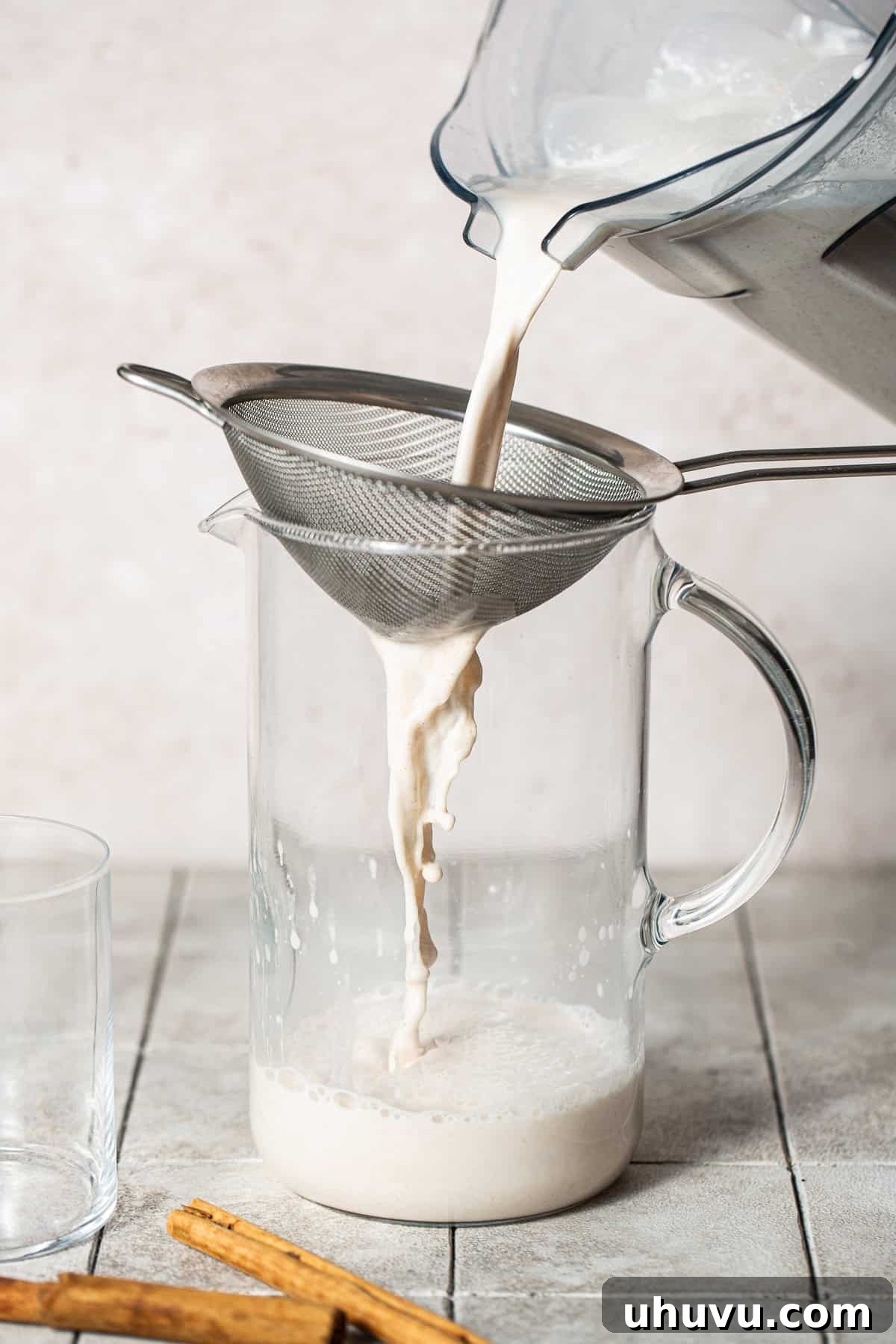
5. Combine and Sweeten: Once strained to your satisfaction, transfer the smooth rice and cinnamon liquid into a large pitcher. Add the whole milk, evaporated milk, granulated sugar (starting with ½ cup and adding more to taste), and vanilla extract. Stir everything together vigorously until all the ingredients are thoroughly combined and the sugar has completely dissolved. Taste and adjust the sweetness if necessary.
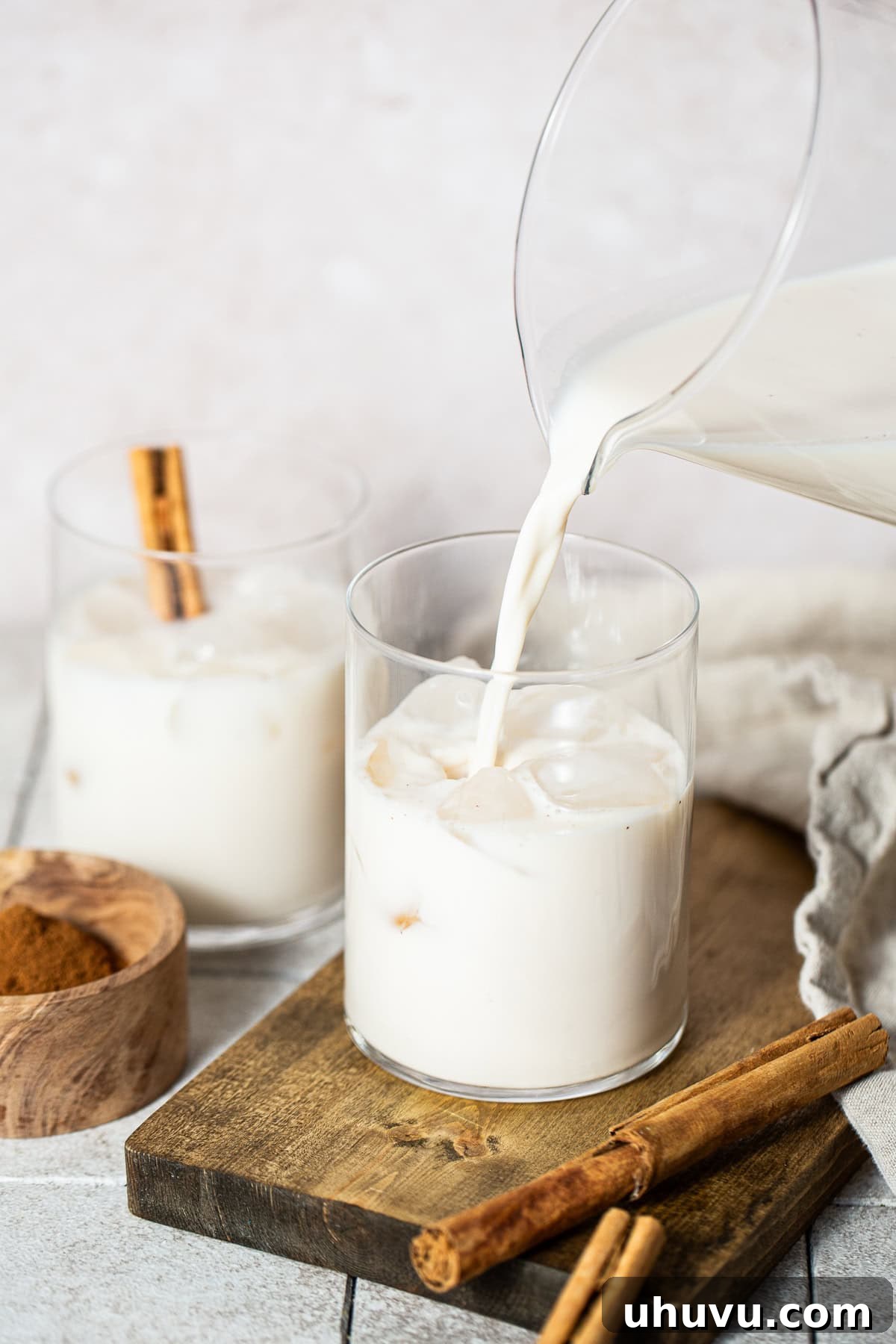
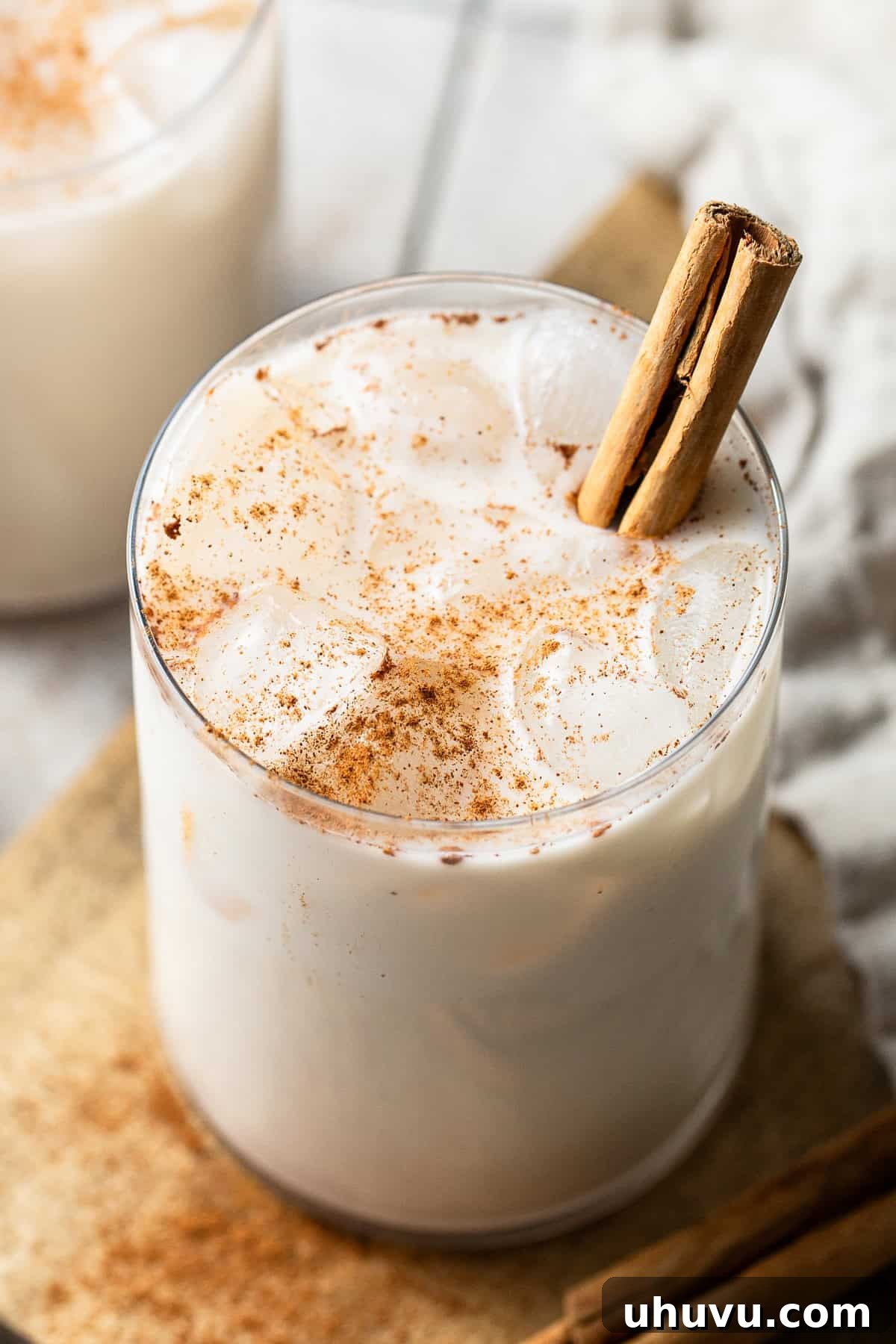
6. Chill and Serve: For the best flavor, horchata should be served ice cold. Place the pitcher in the refrigerator and chill for at least 2-3 hours, or until thoroughly cold. When ready to serve, pour over generous amounts of ice in tall glasses and garnish with a dusting of ground cinnamon. You can also add a cinnamon stick for an elegant touch.
Pro Tips for the Best Horchata Experience
- Prioritize Ceylon Cinnamon: Often referred to as “Mexican cinnamon,” Ceylon cinnamon is fundamental for authentic flavor. It’s a light brown, fragile spice with many thin layers that easily break apart, unlike the harder, denser Cassia cinnamon. Ceylon cinnamon offers a sweeter, more nuanced, and less spicy aroma that blends seamlessly into the horchata. It’s widely available in Hispanic grocery stores or can be purchased online. If you must use Cassia, remove the stick before blending as it won’t break down well and has a harsher flavor.
- Natural Separation is Normal: Don’t be alarmed if you notice the water and rice mixture separating after it has been sitting in the refrigerator, especially after a day or two. This is a completely natural occurrence due to the density difference of the ingredients. Simply give the horchata a good stir with a large spoon or whisk before serving, and it will return to its creamy, uniform state.
- Strain Diligently for Silky Smoothness: Achieving that coveted velvety texture is all about thorough straining. A nut milk bag is highly recommended as it filters out even the finest particles, but a fine-mesh strainer lined with cheesecloth works too. Depending on your blender’s power, you’ll need to strain the mixture 2 to 4 times (or more) to eliminate any grittiness. Don’t rush this step; patience here will be rewarded with a superior texture.
- Chill Thoroughly for Optimal Flavor: While it’s tempting to enjoy your horchata right away, allowing it to chill in the refrigerator for at least 2-3 hours (or even longer) significantly enhances its flavor. The cold allows the ingredients to meld further, resulting in a more harmonious and refreshing taste.
- Adjust Sweetness to Your Liking: The suggested amount of sugar is a starting point. Taste the horchata after all ingredients are combined and adjust the sweetness as needed. Some prefer it less sweet, while others enjoy a richer, dessert-like drink.
- Consider Toasting the Almonds: For an even deeper, more complex nutty flavor, lightly toast the slivered almonds in a dry pan over medium heat for a few minutes until fragrant and slightly golden before soaking. This subtle step can add another dimension to your horchata.
Serving Suggestions: What Pairs Well with Horchata?
Horchata is best enjoyed ice cold and makes a fantastic complement to a wide array of Mexican dishes. Its sweet, creamy profile helps to balance out spicy flavors and provides a refreshing counterpoint to rich, savory meals. Here are some ideas for how to serve your delicious homemade horchata:
- Alongside Tacos: The classic pairing! Horchata provides a sweet, cool contrast to savory and sometimes spicy tacos. It’s especially delicious with rich meat fillings like tacos al pastor, succulent carnitas, or flavorful chicken tinga.
- With Appetizers and Snacks: Elevate your snack time with a glass of horchata. It pairs wonderfully with salty, crunchy homemade tortilla chips and creamy queso blanco, the savory corn salad esquites, or a hearty taco dip.
- Served with Traditional Mexican Recipes: Horchata is a natural fit for more elaborate Mexican meals, offering a cooling element that cuts through rich sauces and hearty fillings. Try it with cheesy enmoladas, spicy chile verde, comforting tamales, or classic chile relleno.
- As a Dessert Drink: Its inherent sweetness makes horchata a fantastic dessert on its own, especially on a warm day. You can also serve it alongside churros, flan, or other sweet pastries.
- For Celebrations and Gatherings: Horchata is always a crowd-pleaser. Prepare a large batch for Cinco de Mayo, summer BBQs, or any family gathering.
Creative Horchata Variations: Customize Your Refreshment
While the traditional recipe is perfect as is, horchata is wonderfully adaptable. Don’t hesitate to experiment with different ingredients to create a drink that perfectly suits your taste or dietary needs. Here are some popular and delicious variations:
- Dairy-Free Alternatives: To make this horchata recipe entirely dairy-free, simply swap out the whole milk and evaporated milk for your preferred plant-based milk.
- Almond Milk: Enhances the existing nutty flavor profile.
- Soy Milk: Offers a rich, creamy texture similar to dairy milk.
- Coconut Milk: Imparts a subtle tropical hint, which can be lovely, especially if you enjoy coconut flavors.
- Oat Milk: Known for its natural sweetness and creaminess, making it a great dairy-free option.
- Cashew Milk: Provides a very smooth and neutral base, allowing the cinnamon and vanilla to shine.
Note that each plant-based milk will slightly alter the final flavor, so choose one you enjoy!
- Sweetener Swaps: Granulated sugar is standard, but you have several options to adjust the sweetness and flavor profile:
- Sweetened Condensed Milk: Replace the granulated sugar with 6-12 ounces of sweetened condensed milk for an extra creamy, richer, and more decadent horchata. This is a popular choice for a more indulgent treat.
- Brown Sugar: Adds a subtle molasses note and a deeper caramel-like flavor.
- Agave Nectar or Honey: For a more natural sweetness, these liquid sweeteners can be used to taste. Start with a smaller amount and gradually add more.
- Nut-Free Horchata: If you have allergies or simply prefer to omit them, you can easily make this recipe nut-free. Simply leave out the almonds. No need to replace them with anything else; the rice and cinnamon will still create a fantastic flavor base.
- Spiced Horchata: For an added layer of warmth and complexity, consider adding a tiny pinch of ground nutmeg or a couple of green cardamom pods (crushed slightly) to the rice mixture during the soaking stage. Remove cardamom pods before blending.
- Coffee Horchata (Horchata Latte): For a unique twist, combine horchata with coffee. You can use chilled horchata as the milk base for an iced coffee or an horchata latte. Freeze leftover horchata in ice cube trays and add them to your morning brew for a special treat.
- Fruity Horchata: While traditional horchata is plain, you can blend in fresh fruit purees after the straining step. For example, fresh strawberry puree creates a delicious strawberry horchata. Mango or banana are also popular choices.
Storage and Longevity: Keeping Your Horchata Fresh
Proper storage is key to enjoying your homemade horchata for days to come. Here’s how to keep it fresh and delicious:
- Refrigeration: Store your horchata in an airtight pitcher or container in the refrigerator for up to 1 week. The flavors will continue to meld and deepen over time, often tasting even better the next day.
- Separation is Normal: As mentioned, it’s completely natural for the milk and rice mixture to separate while sitting in the fridge. This is not an indication of spoilage. Simply give it a good stir or shake before serving to recombine the ingredients and restore its creamy consistency.
- Freezing for Longer Storage: Horchata freezes beautifully, extending its shelf life significantly. You can store it in the freezer for up to 3 months.
- Ice Cubes: One of my favorite ways to store leftover horchata is to pour it into ice cube trays and freeze them. These horchata ice cubes are perfect for preventing dilution in your drink or adding to iced coffee for a delightful horchata coffee treat in the afternoon.
- Freezer-Safe Containers: You can also freeze horchata in freezer-safe containers or bags, leaving a little headspace for expansion. Thaw in the refrigerator overnight and stir well before serving.
More Refreshing Mexican Drink Recipes to Try
If you’ve enjoyed making this horchata, you’ll love exploring other traditional Mexican beverages. Here are a few more refreshing recipes that are perfect for warm weather or any time you crave a taste of Mexico:
- Agua de Pepino (Cooling Cucumber Agua Fresca)
- Agua de Melon (Sweet Cantaloupe Water)
- Agua de Tamarindo (Tangy Tamarind Drink)
- Paletas de Fresa (Creamy Strawberries and Cream Popsicles)
- Strawberry Horchata (A delightful fruity twist on the classic)
Horchata Recipe
Ingredients
- 1 cup uncooked long grain white rice
- ½ cup blanched slivered almonds
- 1 Mexican cinnamon stick, broken in half (also known as Ceylon cinnamon)
- 6 cups water, divided
- 3 cups whole milk
- 12 ounces evaporated milk
- ½ – ¾ cup granulated sugar
- 1 teaspoon vanilla extract
- Ground cinnamon, for topping
Instructions
-
Rinse the rice under running water until the water runs clear.
-
Add the rinsed rice, almonds, cinnamon stick, and 3 cups of water to a large bowl or pitcher. Cover and let it sit in the refrigerator for at least 8 hours, up to 24 hours.
-
Pour the bowl of ingredients into a large blender and add in the 3 cups of remaining water. Blend on high until completely smooth, about 2 to 5 minutes depending on the power of your blender. You may need to work in batches depending on the size of your blender.
-
Strain the blended mixture through a fine mesh strainer or nut milk bag to remove any solids. This may require straining 2 to 4 times to remove all the grittiness.
-
When completely smooth, pour it into a large pitcher and mix in the milk, evaporated milk, granulated sugar, and vanilla extract. Stir until all the ingredients are well combined.
-
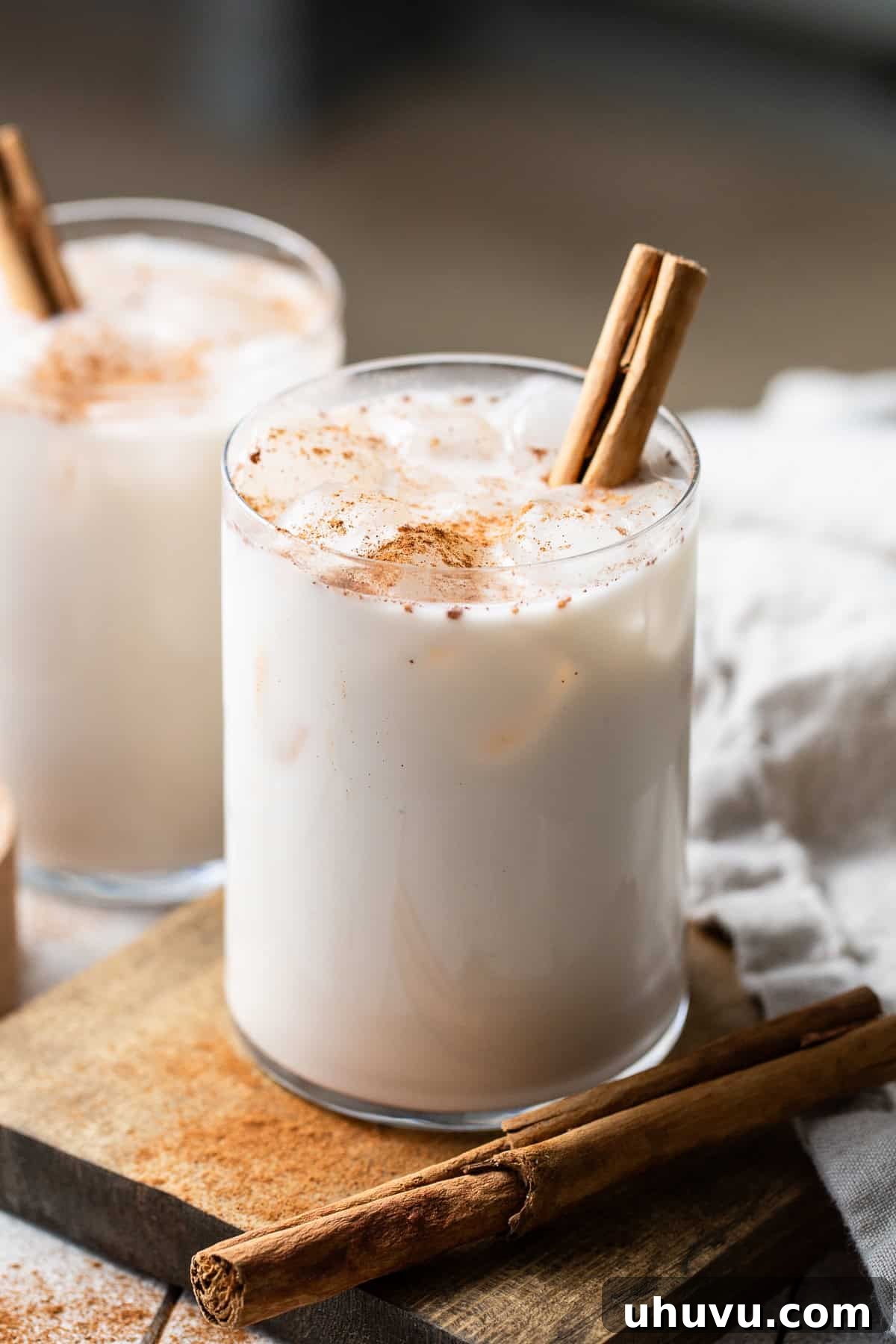
Serve over ice and top with ground cinnamon.
Video
Notes
- Ceylon cinnamon: Also referred to as “Mexican cinnamon.” Ceylon cinnamon is light brown, fragile, and has a lot of layers that are easily broken, as opposed to Cassia cinnamon which is very hard and is not easily broken in half. Ceylon cinnamon can be easily found in Hispanic grocery stores or online. If you’re not using Mexican cinnamon, remove the cinnamon stick from the mixture before blending.
- Separation of the water and the rice mixture is completely normal, especially if it’s been sitting in the fridge for a day or two. Just mix it together with a large spoon and serve as you normally would.
- To make it dairy-free, use a dairy milk alternative like almond, soy, coconut, oat, or cashew milk.
- To make it nut-free, you can simply omit the almonds. No need to replace them.
- To make this using sweetened condensed milk, replace the granulated sugar with 6-12 ounces of sweetened condensed milk for an extra creamy treat.
Nutrition
Serving: 1 cup | Calories: 287 kcal | Carbohydrates: 41g | Protein: 9g | Fat: 10g | Saturated Fat: 4g | Polyunsaturated Fat: 1g | Monounsaturated Fat: 4g | Trans Fat: 0.001g | Cholesterol: 23mg | Sodium: 91mg | Potassium: 340mg | Fiber: 1g | Sugar: 22g | Vitamin A: 252IU | Vitamin C: 1mg | Calcium: 256mg | Iron: 1mg
Nutrition information is automatically calculated, so should only be used as an approximation.
Did you make this recipe? Leave a comment and star rating below!
Frequently Asked Questions About Horchata
- Can I use ground cinnamon instead of a cinnamon stick?
While a Ceylon cinnamon stick provides the most authentic and nuanced flavor when blended, you can use ground Ceylon cinnamon as a substitute. If using ground cinnamon, add about 2 teaspoons to the blending mixture. Be aware that finely ground cinnamon might contribute a slightly more powdery texture if not strained meticulously. - Do I have to soak the rice? What if I’m short on time?
Soaking the rice (and almonds) is crucial for softening them, allowing for a smoother blend, and thoroughly infusing the cinnamon flavor. While some quick recipes exist that use hot water or a shorter soak, they generally don’t yield the same silky-smooth texture and depth of flavor as an overnight soak. For the best results, plan ahead and allow for the full soaking time. - Why is my horchata gritty?
Grittiness is almost always due to insufficient blending or, more commonly, inadequate straining. Ensure you blend the mixture for at least 2-5 minutes until it appears as smooth as possible. More importantly, strain the blended liquid multiple times (2-4 or even more) through a fine-mesh strainer or a nut milk bag. Press out all the liquid from the solids each time. Patience with the straining process is the key to a perfectly smooth horchata. - Is horchata naturally dairy-free or nut-free?
Traditional Mexican horchata often contains dairy milk and almonds, so it’s not inherently dairy-free or nut-free. However, as outlined in the “Recipe Variations” section, it’s very easy to adapt. You can omit the almonds for a nut-free version and substitute dairy milks with plant-based alternatives like almond, soy, oat, or cashew milk for a dairy-free horchata. - How long does homemade horchata last?
When stored properly in an airtight container in the refrigerator, homemade horchata typically lasts for up to 1 week. Remember to stir or shake it well before each serving, as natural separation of ingredients will occur. It can also be frozen for up to 3 months.
This post was originally published in May 2018 and has been updated with new photos, more helpful tips, and a better overall recipe and instructions, along with expanded content to provide a more comprehensive guide to making this delightful drink.
Photography by Ashley McLaughlin.