
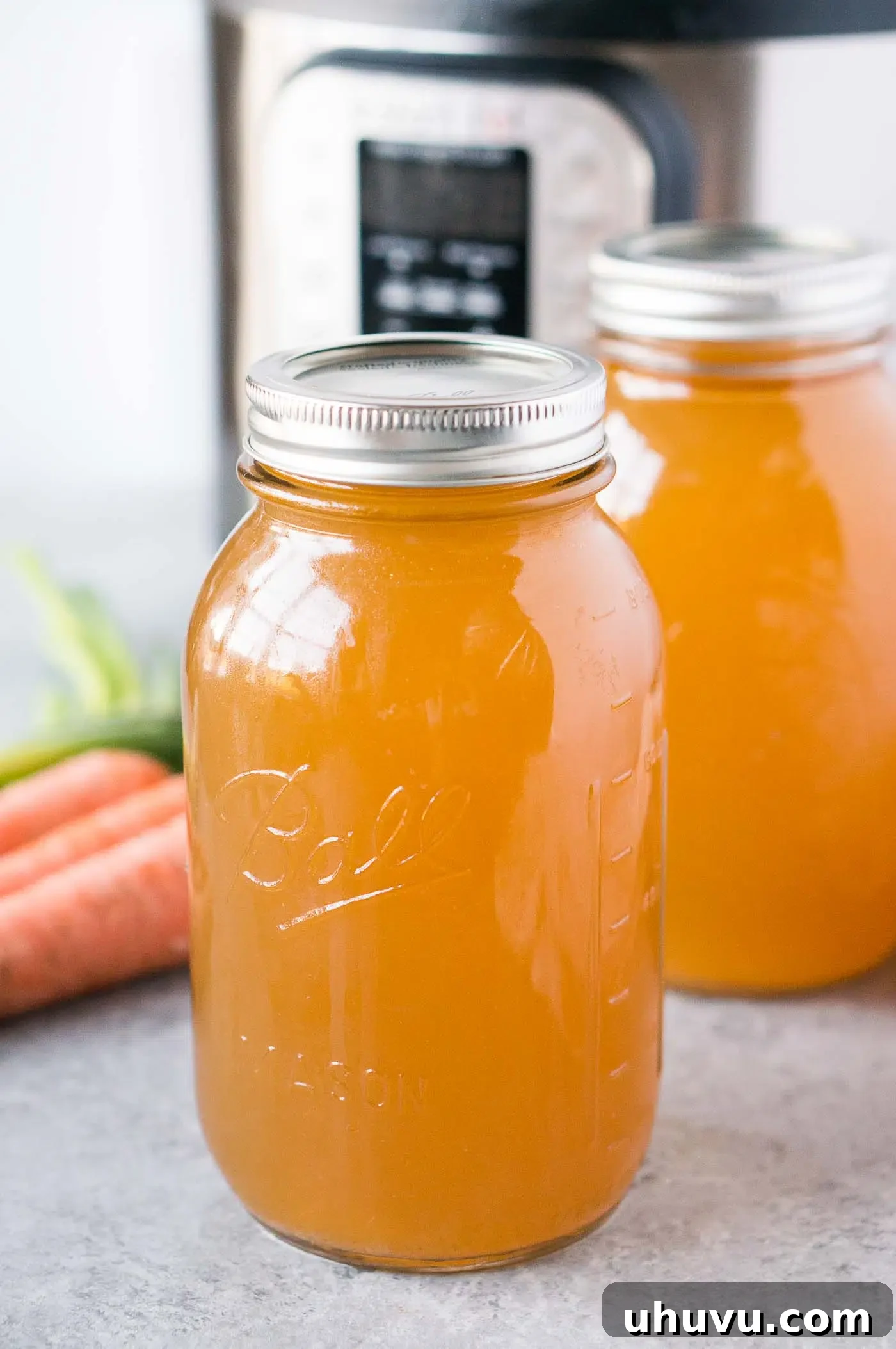
Homemade Turkey Stock: The Ultimate Thanksgiving Leftover Recipe (Instant Pot & Stovetop)
This Thanksgiving, give your turkey carcass a second life by transforming it into rich, homemade turkey stock. Whether you prefer the speed of an Instant Pot or the traditional simmer of a stovetop, this incredibly easy recipe maximizes your leftovers, ensuring nothing goes to waste and every drop of flavor is utilized. It’s a foundational recipe that will elevate countless dishes.
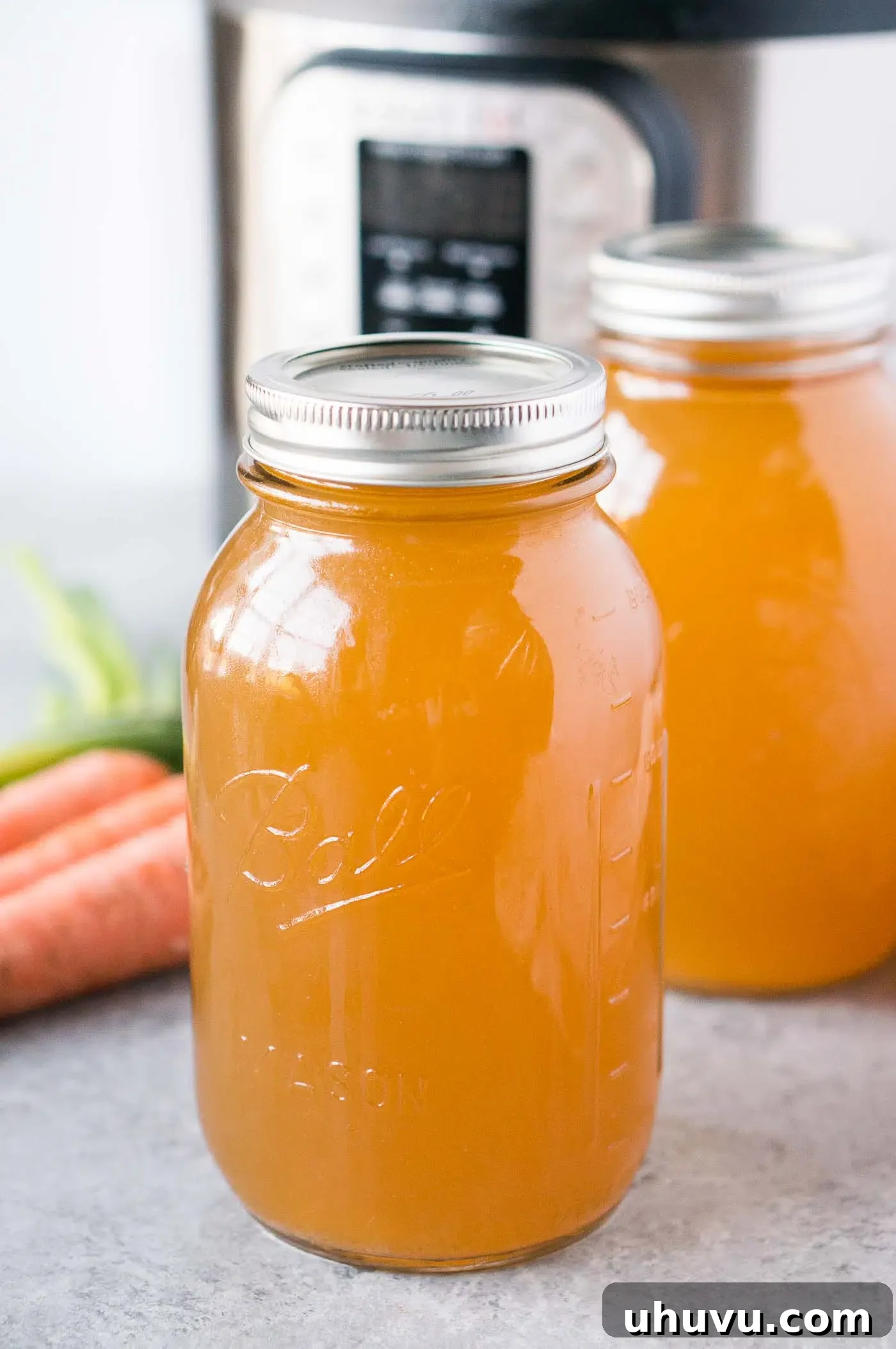
After the grand feast of Thanksgiving, a whole roasted turkey often leaves behind a valuable treasure: its carcass. Instead of discarding it, you have the perfect opportunity to create a deeply flavorful and aromatic homemade turkey stock. This recipe offers two convenient methods – the lightning-fast Instant Pot and the slow-simmering stovetop – ensuring that you can easily make this culinary staple, regardless of your kitchen setup or available time. Making your own stock is not just about reducing food waste; it’s about adding unparalleled depth and richness to your cooking that store-bought varieties simply can’t match.
This versatile homemade turkey stock is ideal for enhancing a wide array of your favorite recipes, from hearty soups and savory gravies to flavorful risottos and stews. It’s surprisingly simple to prepare, primarily utilizing your leftover Thanksgiving turkey bones and any suitable vegetable scraps you might have on hand. The result is a golden, robust stock that imparts a wonderful, wholesome flavor to your everyday meals, making every dish taste gourmet.
Looking for more ways to use up your Thanksgiving turkey leftovers? Be sure to explore my Low-Carb Turkey Club Wrap and Turkey and Sweet Potato Frittata for delicious meal ideas!
Why You Will Love This Homemade Turkey Stock Recipe
Creating your own turkey stock is a rewarding experience, offering numerous benefits that elevate your cooking and kitchen efficiency:
- Effortlessly Easy to Make: This recipe requires minimal hands-on time. Simply gather your ingredients, add them to your chosen pot, and let time or pressure do the work. It’s perfect for busy schedules, transforming what might seem like a daunting task into a simple, set-and-forget process.
- Excellent for Meal Prep and Freezing: Freshly made turkey stock is ready to use immediately, infusing your dishes with rich flavor. Furthermore, it’s incredibly freezer-friendly, allowing you to prepare a large batch and store it for months. This makes future meal prep a breeze, giving you a readily available flavor enhancer without constant effort.
- Reduces Food Waste and Saves Money: Making homemade stock is one of the best ways to practice zero-waste cooking. By utilizing the turkey carcass or bones and neglected vegetable scraps that might otherwise be discarded, you transform them into a valuable ingredient. This not only minimizes waste but also saves you money on store-bought broths, which often contain excessive sodium and artificial flavors.
- Superior Flavor and Nutritional Value: There’s no comparison between the deep, complex flavor of homemade turkey stock and its commercial counterparts. A slow simmer or pressure cook extracts maximum flavor and beneficial nutrients from the bones and vegetables, resulting in a more gelatinous, rich, and wholesome liquid that boosts the health profile of your meals.
- Versatile Culinary Foundation: Turkey stock is an incredibly versatile ingredient. It can be used as a base for virtually any soup, stew, sauce, gravy, or risotto. It also makes an excellent liquid for cooking grains like rice or quinoa, adding a subtle, savory depth that enhances their natural taste.
Essential Ingredients for Rich Turkey Stock
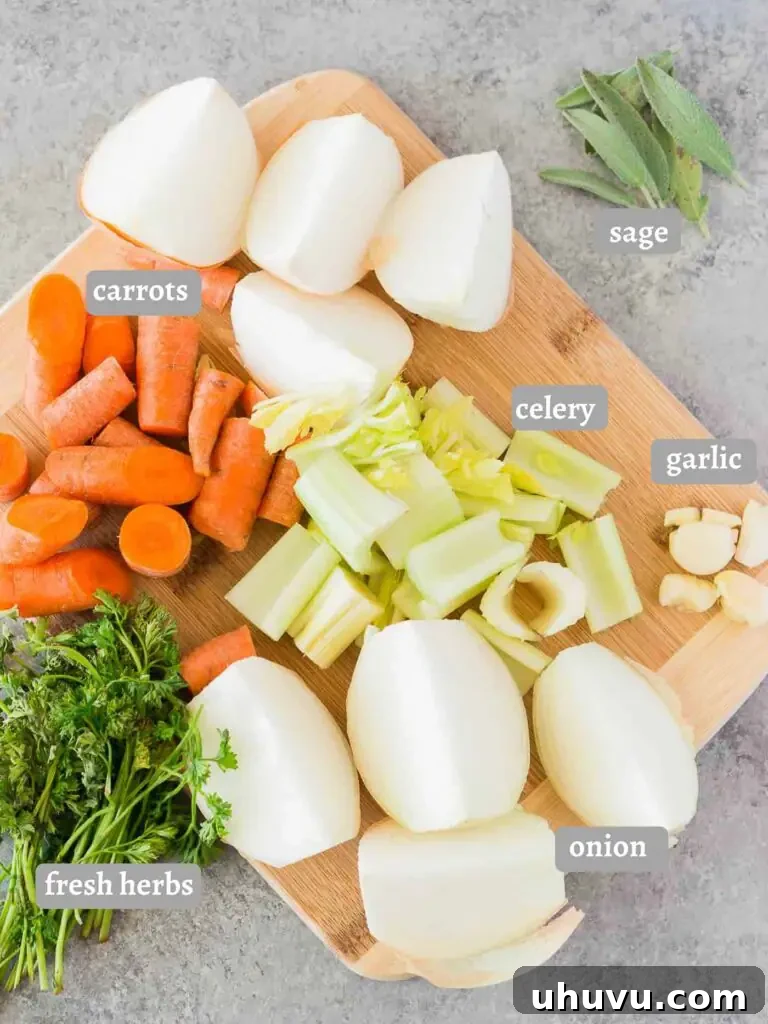
Crafting exceptional turkey stock requires only a few simple, wholesome ingredients. The beauty of this recipe lies in its flexibility, allowing you to use what you have on hand, especially after a big holiday meal.
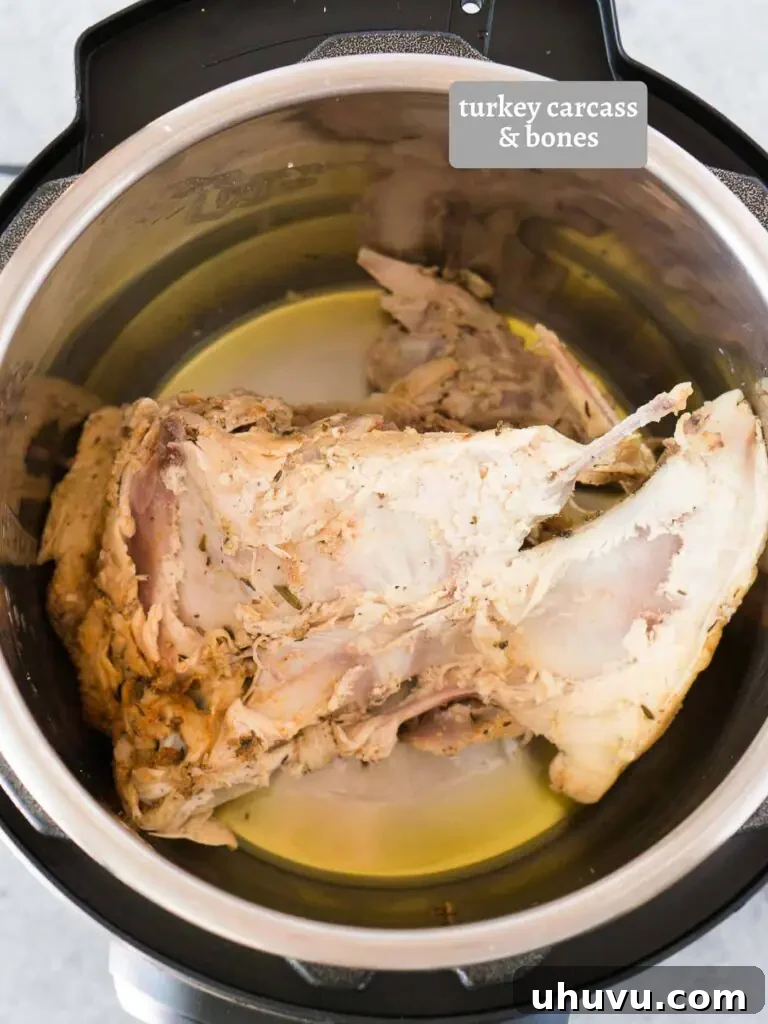
- Turkey Bones: The star of the show! You’ll need the carcass from a whole roasted turkey. Ensure you remove the majority of the meat from the bones first, saving it for other delicious turkey leftover recipes like sandwiches, casseroles, or salads. If you don’t have a full carcass, turkey neck, wings, or leg bones work just as well. For an even deeper flavor, you can briefly roast any raw bones before adding them to the pot.
- Aromatic Vegetables: These provide the foundational flavors for your stock. You can use freshly chopped vegetables or, even better, a collection of vegetable scraps (onion skins, celery ends, carrot peels, garlic cloves with skins on). Essential aromatics include:
- Carrots: Add sweetness and color.
- Onions: Provide a deep, savory base.
- Celery: Contributes to the classic stock flavor profile.
- Garlic Cloves: Infuse a pungent, aromatic note.
Feel free to include other mild-flavored scraps like leek greens or mushroom stems. Avoid cruciferous vegetables like broccoli or cabbage, as they can impart a bitter flavor to your stock.
- Fresh Herbs: Herbs are crucial for adding a fragrant, gourmet touch. Use any fresh herbs you have leftover from your holiday cooking. A classic blend includes:
- Fresh Thyme Sprigs: Earthy and slightly floral.
- Fresh Rosemary Sprigs: Piny and pungent.
- Fresh Parsley: Adds a fresh, clean note.
- Fresh Sage: Woody and aromatic, perfect with turkey.
Tying them together with kitchen twine can make removal easier.
- Seasonings and Water:
- Kosher Salt: Enhances flavor. You can add less initially and adjust after straining if you plan to reduce the stock.
- Whole Black Peppercorns: Provide a gentle warmth and spice without making the stock too peppery.
- Bay Leaves: Offer a subtle, herbaceous background note.
- Cold Water: Always start with cold water. This allows the impurities to rise to the surface, which can then be skimmed off, resulting in a clearer, cleaner-tasting stock. Use enough water to completely cover all your bones and vegetables.
-

The simple yet essential ingredients that create a flavorful turkey stock. -
The roasted turkey carcass, the foundation of a flavorful homemade stock.
How to Make Turkey Stock with Carcass: Two Easy Methods
Whether you opt for the convenience of an Instant Pot or the classic method of simmering on the stovetop, making homemade turkey stock is straightforward. Follow these steps for a perfectly flavorful broth.
Instant Pot Turkey Stock – Quick & Flavorful Instructions
The Instant Pot significantly cuts down cooking time, delivering rich stock in a fraction of the traditional time.
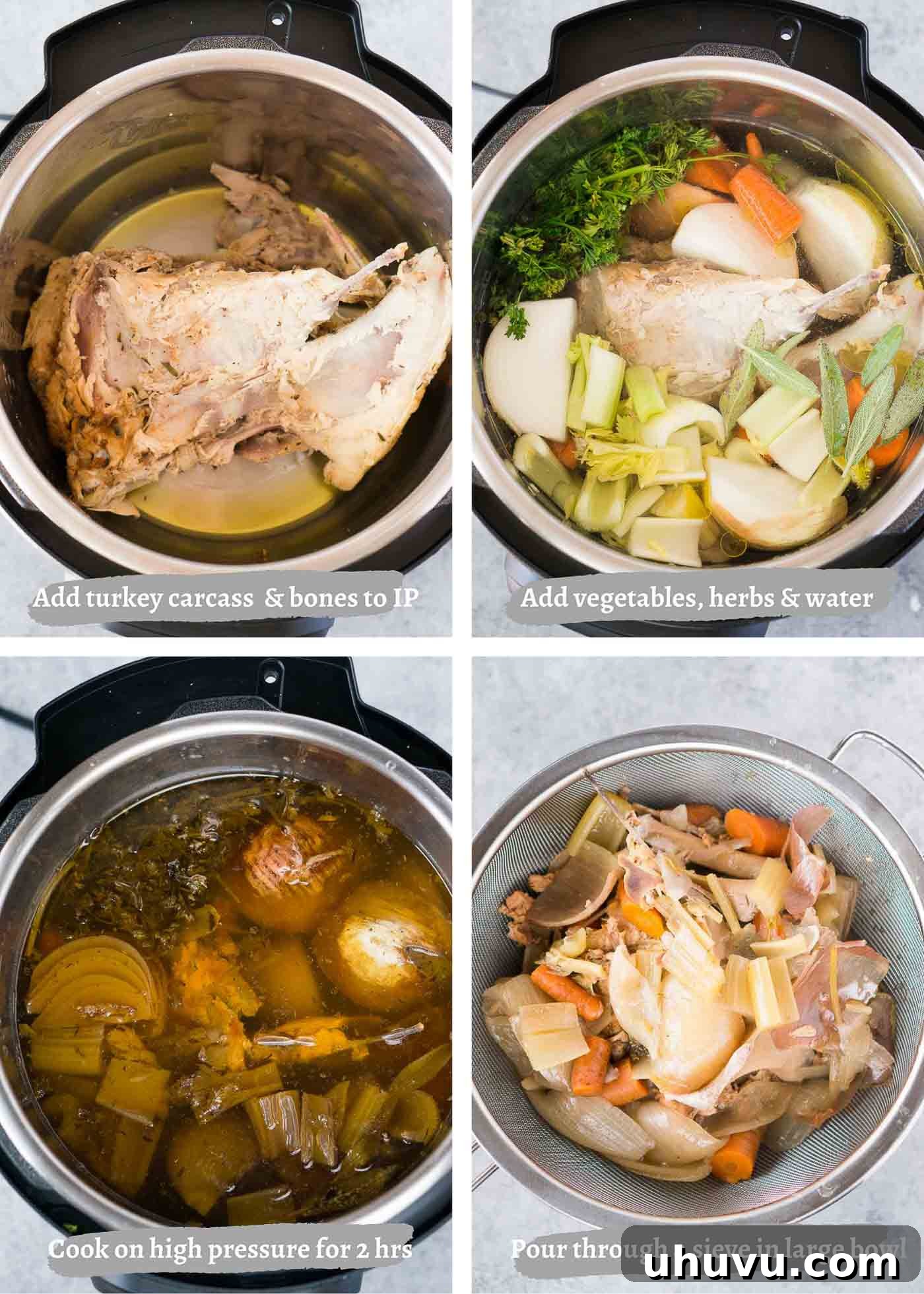
- Prepare Ingredients: Ensure your turkey carcass or bones have most of the meat removed. Roughly chop your vegetables (carrots, onions, celery, garlic) and gather your fresh herbs, salt, peppercorns, and bay leaves.
- Load the Pot: Carefully place the turkey carcass and all other ingredients into the Instant Pot. Pour in enough cold water to just cover the bones and vegetables. Do not fill past the max fill line.
- Seal and Set: Secure the Instant Pot lid and turn the steam release valve to the ‘Sealing’ position. Select the ‘Manual’ or ‘Pressure Cook’ setting and set the cooking time for 2 hours on High Pressure.
- Natural Release: Once the cooking cycle is complete, allow the pressure to release naturally. This is crucial for extracting maximum flavor and nutrients, and it typically takes 30-45 minutes. Avoid quick releasing, as it can result in a cloudy stock.
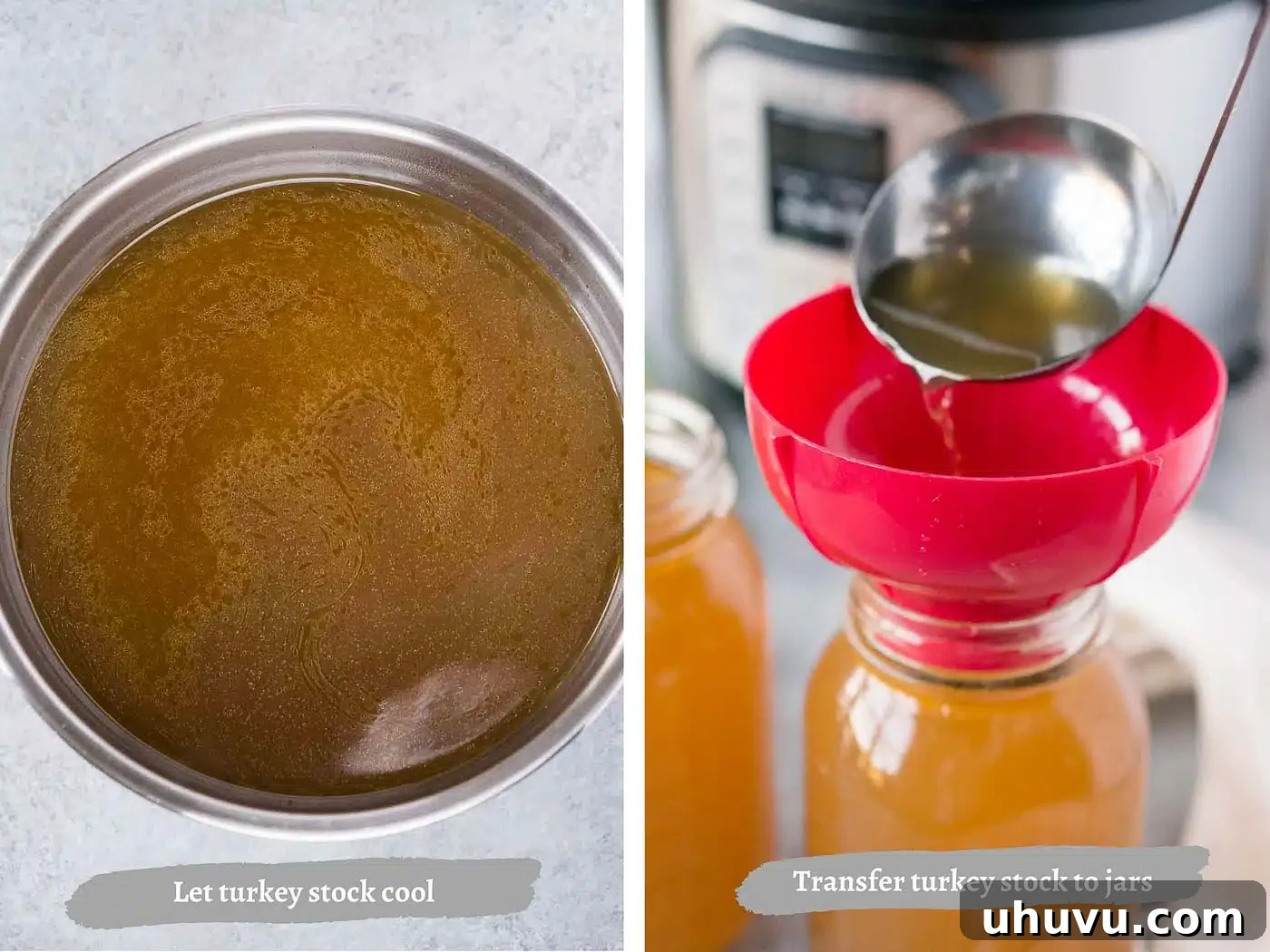
- Strain and Cool: Once the pressure has fully released, carefully open the lid. Use large tongs or a slotted spoon to remove and discard all the solids (bones, vegetables, herbs). Then, carefully pour the liquid through a fine mesh strainer (or a colander lined with cheesecloth for extra clarity) into a large heatproof bowl. Let the stock cool completely to room temperature.
- Store or Use: Once cooled, transfer the homemade turkey stock into airtight containers or glass jars. It’s now ready to be used in your favorite recipes or stored for future use.
Stovetop Turkey Stock – Classic Simmering Instructions
The traditional stovetop method yields a beautifully clear and deeply flavored stock, ideal for those who enjoy the slow cooking process.
- Combine Ingredients: Place the turkey carcass or bones, chopped vegetables, fresh herbs, salt, peppercorns, and bay leaves into a large stockpot. Pour in enough cold water to cover all the ingredients by at least an inch.
- Bring to a Boil: Place the pot over medium-high heat and slowly bring the mixture to a rolling boil. As it heats, you may see foam or scum rise to the surface; use a ladle or spoon to skim this off, as it contains impurities that can make your stock cloudy.
- Reduce to Simmer: Once boiling, reduce the heat to low to maintain a gentle simmer. The water should barely bubble. Cover the pot partially with a lid, leaving a small gap for steam to escape. Simmer for approximately 3 1/2 to 4 hours. The longer it simmers, the more flavor will be extracted.
- Strain and Cool: After simmering, remove the pot from the heat. Use tongs or a slotted spoon to carefully discard all the cooked solids. Strain the liquid through a fine mesh strainer (or cheesecloth-lined colander) into a large heatproof bowl. Allow the rich turkey stock to cool completely to room temperature.
- Store or Use: Once cooled, divide the homemade turkey stock into airtight containers or glass jars. It’s now ready to be incorporated into your culinary creations or stored for later.
Storing Your Homemade Turkey Stock
Proper storage is key to enjoying your delicious homemade turkey stock safely and for an extended period. Once you’ve strained the stock and allowed it to cool completely, it’s ready for storage.
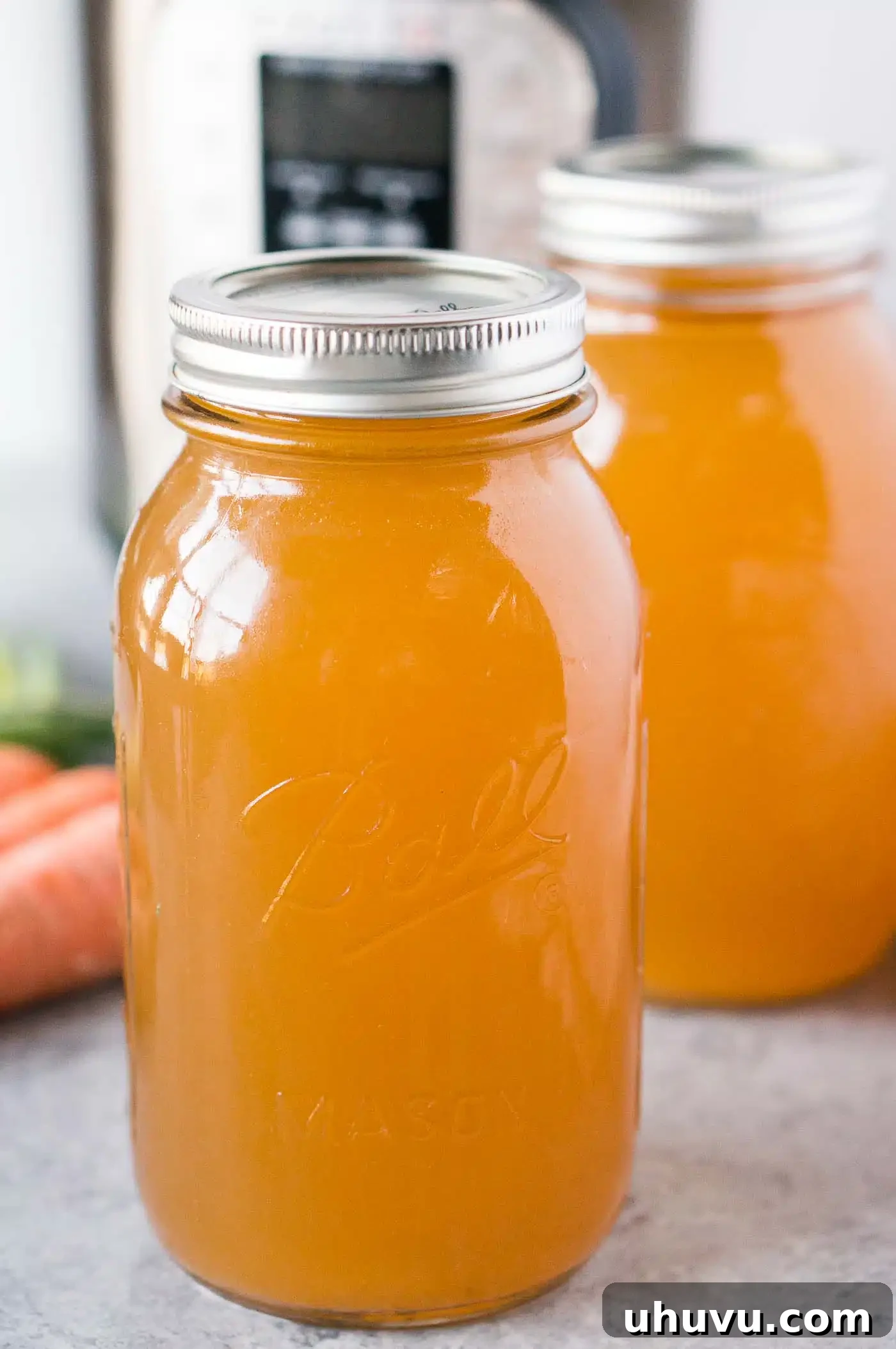
Transfer the fully cooled stock into airtight containers or glass mason jars. In the refrigerator, homemade turkey stock will keep beautifully for up to 4 days. It’s crucial that the stock is completely cool before being refrigerated. Placing hot or even warm stock directly into the fridge can raise the internal temperature of the appliance, potentially creating a food safety risk for other stored items. Always cool it on the counter first, then transfer to the fridge.
Can You Freeze Homemade Turkey Stock? Absolutely!
Yes, absolutely! This recipe typically yields a generous amount of turkey stock, making freezing an excellent and highly recommended option. Freezing allows you to preserve the stock’s freshness and flavor for several months, ensuring you always have a high-quality base for your cooking.
After the stock has completely cooled, portion it out into freezer-safe containers, glass jars (leave headspace for expansion!), or reusable freezer bags. For ultimate convenience, I highly recommend using 1-cup freezing trays with lids (like Souper Cubes). These create perfectly portioned blocks of stock, making it easy to grab just what you need for a recipe.
When freezing in jars or containers, remember to leave at least an inch or two of headspace at the top. Liquids expand when they freeze, and this space prevents your containers from cracking. To thaw, simply transfer the frozen stock to the refrigerator overnight. You can also add frozen stock directly to simmering soups or stews; it will melt and incorporate as it heats.
Creative Ways to Use Your Homemade Turkey Stock
Once you’ve made your delicious homemade turkey stock, a world of culinary possibilities opens up. This rich, savory liquid can be used in any recipe that calls for chicken, vegetable, or even beef broth, lending a unique and robust flavor that elevates every dish. Here are just a few ideas:
- Soups and Stews: The most obvious and perhaps best use! Replace water or store-bought broth with your homemade turkey stock to create incredibly flavorful bases for hearty chilis, comforting Cabbage Soup, creamy chowders, or simple vegetable soups. The depth it adds is truly unparalleled.
- Gravies and Sauces: Elevate your Thanksgiving gravy (or any gravy!) by using turkey stock as the primary liquid. It provides a natural richness that will impress your guests. It’s also fantastic for deglazing pans to create pan sauces for roasted meats.
- Risottos and Grains: Use turkey stock instead of water when cooking rice for risotto, or when simmering other grains like quinoa, couscous, or farro. This simple swap infuses your grains with a savory, aromatic flavor.
- Braised Dishes: It makes an excellent braising liquid for meats like chicken, pork, or even other turkey cuts, ensuring they remain moist and absorb incredible flavor.
- Cooking Vegetables: Steam or sauté vegetables in a splash of turkey stock for added depth, making them more flavorful than with plain water.
- Classic Comfort Meals:
- Chicken Florentine: Enhance the sauce with a touch of turkey stock.
- Instant Pot Shredded Chicken: Use stock for flavorful, tender shredded chicken.
- Instant Pot Jambalaya: Provides a rich base for this spicy, savory dish.
- Chili: Add an extra layer of umami to your favorite chili recipe.
Expert Tips for the Best Turkey Stock from Neli’s Kitchen
Recipe Notes and Tips for Perfect Homemade Stock
- Versatility with Bones: This turkey bone broth recipe is incredibly adaptable. Feel free to use it as a base for making stock from other types of bones and carcasses, such as chicken, pork, beef, or lamb. The general method remains the same, ensuring you get flavorful results every time.
- Maximize Herb Flavor: Don’t let your leftover Thanksgiving herbs go to waste! Incorporate any fresh sprigs of thyme, rosemary, sage, or parsley you have into your stock for a more complex and wonderfully aromatic flavor profile. Fresh herbs make a significant difference.
- Safety First When Straining: The freshly cooked stock will be extremely hot. Exercise extreme caution when straining to avoid burns. I find it helpful to use a large ladle to transfer the liquid in smaller batches, or a heat-resistant jug, rather than attempting to lift and pour the entire heavy pot at once. A fine mesh strainer, optionally lined with cheesecloth, will ensure a clear stock.
- Roast Bones for Deeper Flavor: If your turkey carcass wasn’t fully roasted or you’re using raw turkey parts, consider roasting them in the oven for 30-45 minutes until golden brown before adding them to your stockpot. This step adds a wonderful depth of flavor and color to your finished stock.
- Use Cold Water: Always start with cold water. This allows the proteins and impurities to slowly rise to the surface as the water heats, making them easier to skim off for a clearer stock.
- Avoid Over-Stirring: Once your stock is simmering on the stovetop, resist the urge to stir it constantly. Excessive stirring can agitate the ingredients, leading to a cloudy stock.
- Skim the Fat: After your stock has cooled completely in the refrigerator, a layer of fat will solidify on top. You can easily spoon this off and discard it if you prefer a leaner stock, or leave it for extra richness and flavor.
More Essential Kitchen Basics
Mastering fundamental kitchen skills can transform your cooking. Here are some more basic recipes and techniques to enhance your culinary repertoire:
- How To Make Perfect Hard Boiled Eggs
- How To Make Candied Pecans
- How To Make Butter
- How to Make Cauliflower Rice

Homemade Turkey Stock
Neli Howard
Don’t throw away that turkey carcass this Thanksgiving! Instead, use it to make your own incredibly flavorful homemade turkey stock. Whether you make it on the stovetop for a slow simmer or in the Instant Pot for a quick and efficient method, this easy recipe ensures you make the most out of your holiday leftovers, transforming them into a valuable culinary base that adds wonderful depth to any meal.
15 minutes
3 hours 30 minutes to 4 hours
2 hours (plus natural release)
3 hours 45 minutes
Approximately 10
cups
Ingredients
-
1
turkey carcass or bones from a roasted turkey -
3
cups
mixed vegetables or vegetable scraps (such as carrots, onions, celery, garlic, parsley, sage, thyme, etc.) -
1
Tablespoon
kosher salt -
1
teaspoon
whole black peppercorns -
2
bay leaves -
10
cups
cold water (or enough to completely cover the bones and vegetables)
Instructions
Instant Pot Method
-
Place the turkey carcass, vegetables, herbs, salt, peppercorns, and bay leaves into the Instant Pot. Pour in enough cold water to cover all ingredients, ensuring you do not exceed the ‘MAX FILL’ line.
-
Secure the lid and turn the valve to ‘Sealing’. Set the Instant Pot to High Pressure for 2 hours.
-
Once cooking is complete, allow the pressure to release naturally. This typically takes 30-45 minutes.
-
Carefully open the lid. Use tongs to discard all solids. Strain the liquid stock into a large bowl using a fine mesh strainer (or a colander lined with cheesecloth) and allow it to cool completely.
-
Divide the cooled stock into airtight containers or glass jars for storage. Use immediately or store for later.
Stovetop Method
-
Place the turkey carcass, vegetables, herbs, salt, peppercorns, and bay leaves into a large stockpot. Pour in enough cold water to cover all ingredients by at least an inch.
-
Bring the pot to a boil over medium-high heat. Once boiling, reduce the heat to low to maintain a gentle simmer. Partially cover the pot with a lid and simmer for approximately 3 1/2 to 4 hours.
-
Remove the pot from heat. Use tongs to discard all solids. Strain the liquid stock into a large bowl using a fine mesh strainer (or a colander lined with cheesecloth) and allow it to cool completely.
-
Divide the cooled stock into airtight containers or glass jars for storage. Use immediately or store for later.
Notes
- This recipe is easily adapted for other bones and carcasses like chicken, pork, beef, or lamb.
- Use any fresh herbs you have leftover from Thanksgiving for a more flavorful stock.
- When you strain the stock it will be very hot so take care. I like to use a large ladle or a jug and do it bit by bit.
- For an even richer and darker stock, roast your turkey carcass and vegetables in the oven at 400°F (200°C) for 30-45 minutes until lightly browned before adding them to your pot.
- For a clearer stock, avoid boiling vigorously; a gentle simmer is best. Also, skim any foam that rises to the surface during the initial heating phase.
- After refrigerating, a layer of fat will solidify on top. You can easily remove this if you prefer a leaner stock, or stir it in for extra richness.
Nutrition Facts (per serving)
Calories:
126
kcal
|
Carbohydrates:
8
g
|
Protein:
2
g
|
Fat:
10
g
|
Saturated Fat:
3
g
|
Polyunsaturated Fat:
2
g
|
Monounsaturated Fat:
4
g
|
Cholesterol:
10
mg
|
Sodium:
735
mg
|
Potassium:
122
mg
|
Fiber:
2
g
|
Sugar:
1
g
|
Vitamin A:
2776
IU
|
Vitamin C:
6
mg
|
Calcium:
23
mg
|
Iron:
1
mg
Nutrition Disclaimer: Nutritional values are estimates and may vary with ingredients, brands, and portion sizes. For accuracy, use your preferred nutrition calculator.