
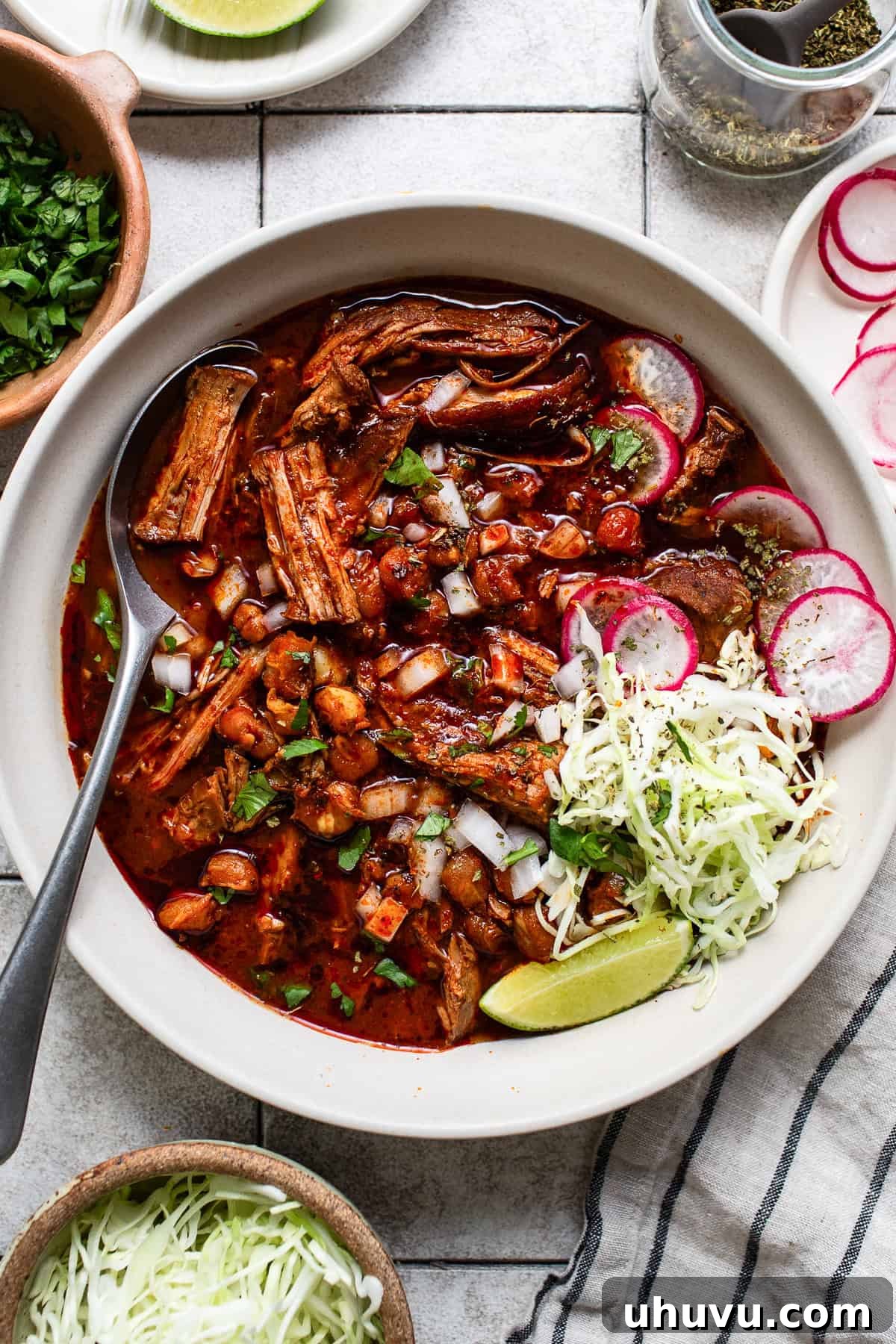
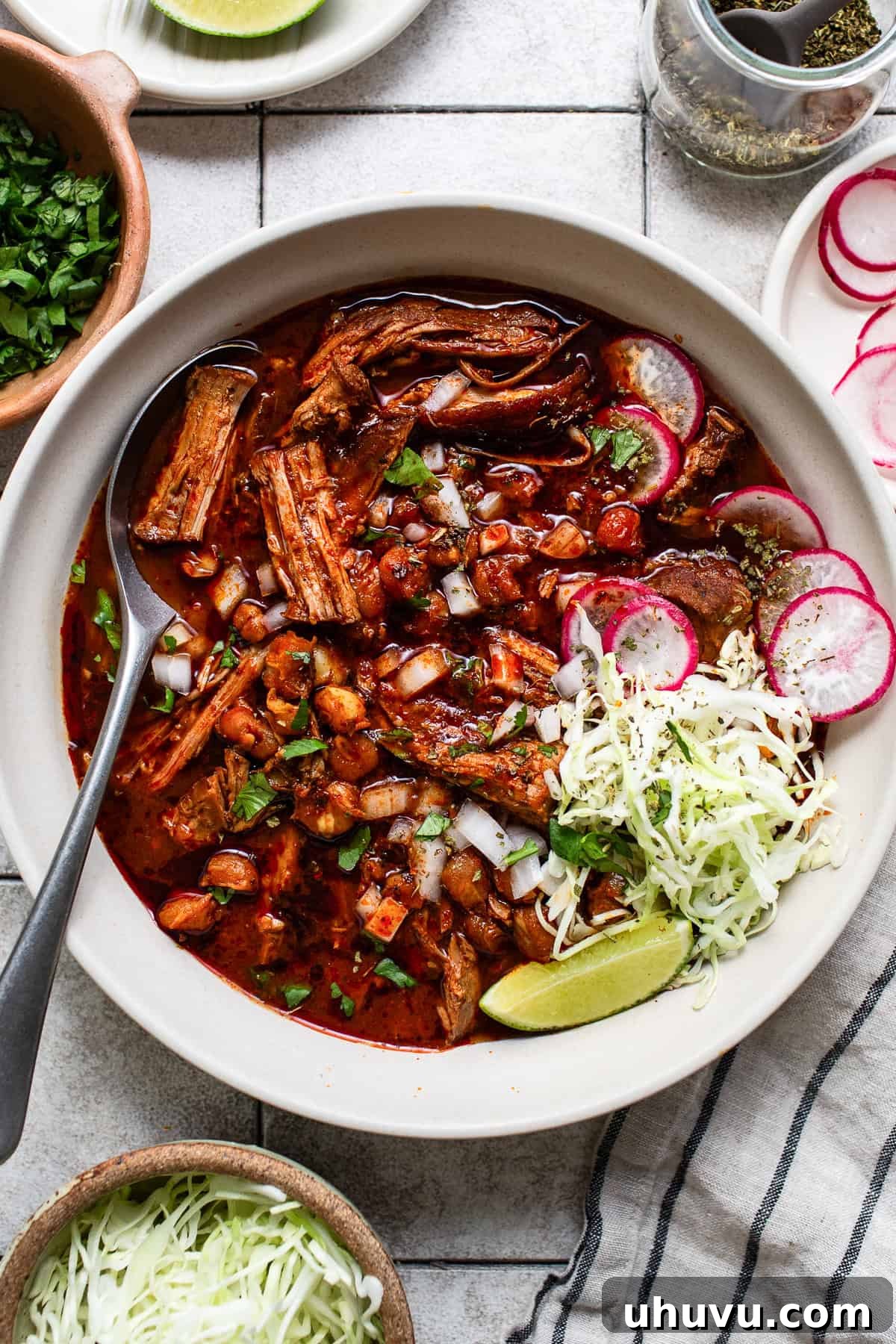
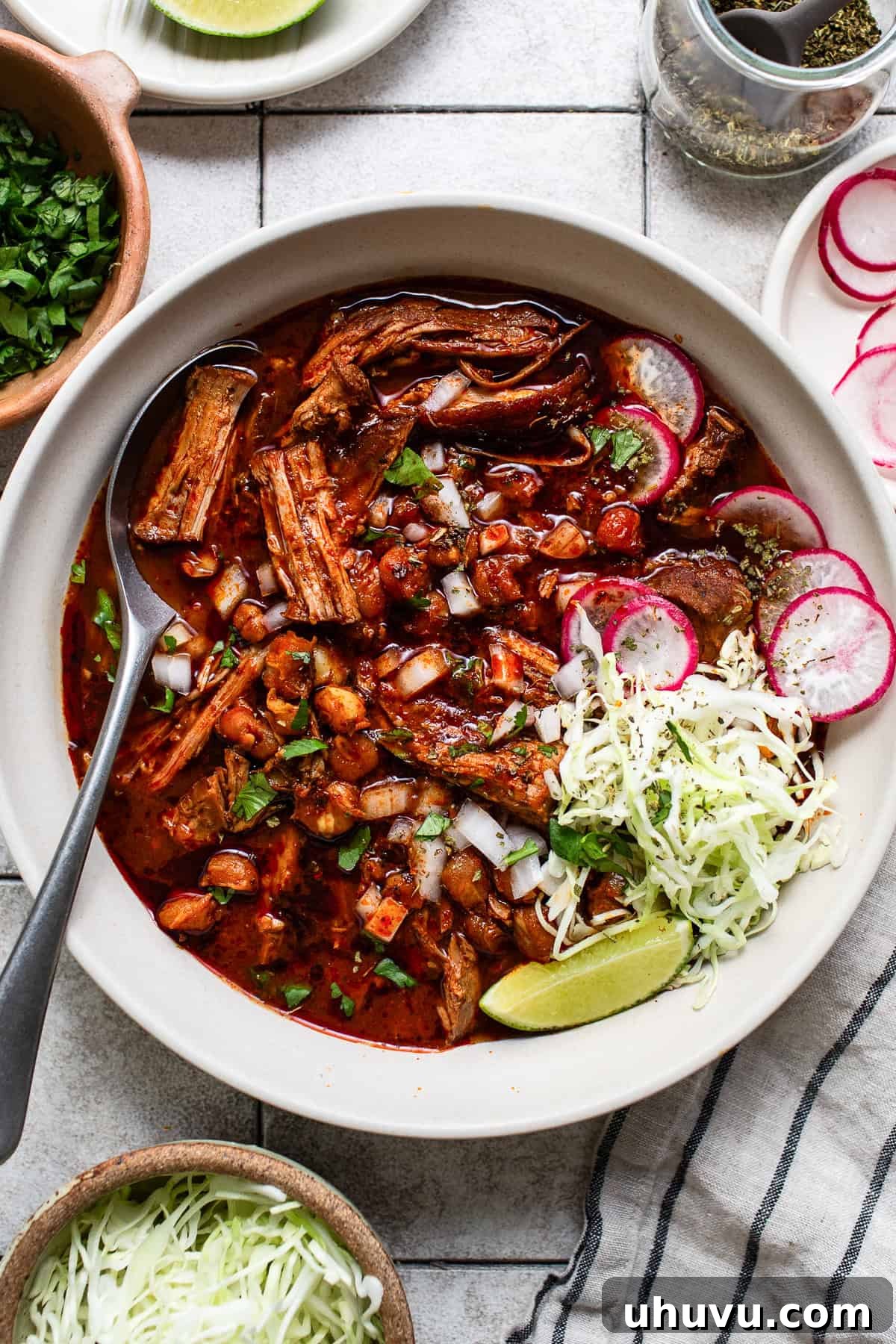
Embark on a culinary journey with this irresistible and authentic Pozole Rojo recipe, the quintessential Mexican comfort food. This hearty Mexican stew, a vibrant testament to rich culinary traditions, showcases ultra-tender pork and plump hominy, slow-cooked to perfection in a deeply flavorful red chile broth. Crafted from a carefully selected blend of dried chiles, this Pozole Rojo offers a symphony of simple yet profound Mexican flavors that will transport your senses straight to the heart of Mexico. To truly elevate your bowl, don’t forget the generous garnishes: a medley of crisp shredded cabbage, thinly sliced radishes, fresh cilantro, and a bright squeeze of lime juice. This dish isn’t just a meal; it’s an experience, steeped in tradition and brimming with soul-satisfying warmth.
For enthusiasts of traditional Mexican cuisine, explore other beloved variations of this classic stew, including the verdant pozole verde, the pristine pozole blanco, and our convenient Instant Pot pozole for a quicker rendition without compromising on flavor.
Why This Pozole Rojo Recipe is a Must-Try!
Certain dishes possess an extraordinary ability to evoke powerful feelings of nostalgia and warmth, and for me, Pozole Rojo stands paramount among them. This isn’t just food; it’s a culinary embrace that brings cherished memories flooding back.
In my family, crafting a generous pot of Pozole Rojo is a beloved holiday tradition, a festive ritual that alternates between Christmas and New Year’s celebrations each year. Its remarkable ability to feed a crowd makes it perfect for large gatherings, allowing hosts to relax as most of the “magic” unfolds during the patient simmering of the succulent pork in that rich, aromatic red chile broth. The comforting essence of this stew is simply unparalleled, making it the ideal centerpiece for those special times of year when warmth and togetherness are most desired.
While every Mexican family boasts its unique take on Pozole, our family’s recipe holds a special secret: a small tablet of authentic Mexican chocolate dissolved into the red chile broth. This unexpected ingredient doesn’t sweeten the stew; instead, it deepens the existing flavors, adding complex layers of earthy richness and a subtle warmth that harmonizes beautifully with the chiles. It’s a nuance that truly sets our Pozole Rojo apart.
Here’s why this particular Pozole Rojo recipe has become a cherished favorite and why I believe you’ll adore it too:
- Unforgettable Rich Flavor: The cornerstone of Pozole Rojo is its distinctive, robust flavor profile. Derived from a masterful blend of rehydrated dried chilies, the broth delivers a deep, earthy taste that is at once spicy, savory, and wonderfully complex. Each spoonful offers a glimpse into authentic Mexican gastronomy, leaving a lingering warmth and a desire for more.
- Incredibly Hearty and Satisfying: Beyond its exceptional taste, this stew is profoundly filling and comforting. Loaded with generously tender pork (or beef, if preferred) and large, chewy hominy kernels, it’s a substantial meal designed to satiate and soothe. It’s the kind of dish that warms you from the inside out, making it perfect for any occasion when you crave truly satisfying sustenance.
- Customizable to Your Liking: One of the greatest joys of Pozole Rojo is its versatility. You have complete control over the spice level – easily adjust the quantity of hotter chili peppers like árbol chiles, or omit them for a milder experience. The array of fresh toppings, including crisp shredded cabbage, crunchy radishes, vibrant lime, creamy avocado, and aromatic cilantro, allows each diner to personalize their bowl, creating a bespoke culinary adventure with every serving.
What Is Pozole? Exploring a Mexican Culinary Icon
Pozole is more than just a soup or stew; it’s a foundational pillar of traditional Mexican cuisine, deeply woven into the country’s cultural fabric. At its heart, Pozole is a savory and substantial dish crafted with tender cuts of meat and large, specially treated corn kernels known as hominy, all submerged in a richly seasoned broth.
While enjoyed throughout the year, Pozole holds a particularly revered place at Mexican celebrations and festive occasions. It frequently graces tables during significant events such as birthdays, weddings, national holidays, and especially during the joyous Christmas and New Year’s festivities. Its communal nature and rich, celebratory flavors make it a perfect dish for marking special moments and bringing families and friends together.
The beauty of Pozole lies in its regional diversity, giving rise to several popular variations, each with its unique character:
- Pozole Rojo (Red Pozole): The star of this recipe, Pozole Rojo, derives its vibrant color and robust flavor from a rich broth made with a blend of red dried chiles, such as guajillo, ancho, and sometimes árbol for an added kick. It’s known for its deep, earthy, and sometimes smoky notes.
- Pozole Verde (Green Pozole): This delightful variation features a bright green broth, typically made from a combination of green chiles (like serrano or jalapeño), tomatillos, cilantro, and sometimes pumpkin seeds. Often prepared with chicken, it offers a fresher, tangier flavor profile. You can find our authentic pozole verde recipe here.
- Pozole Blanco (White Pozole): As its name suggests, Pozole Blanco is unique in that its broth contains no chiles, resulting in a clear, pure broth. Its flavor is primarily driven by the savory meat (usually pork) and the distinct taste of the hominy. It offers a clean, comforting taste, allowing the quality of the primary ingredients to shine. Discover our traditional pozole blanco recipe for a lighter take.
Regardless of the variation, all Pozoles share a common thread: hominy. This special corn, which undergoes a process called nixtamalization, swells significantly, developing a unique chewy texture and a distinct maize flavor that is central to the dish. Another unifying characteristic is the array of fresh, vibrant toppings served alongside, allowing each individual to customize their bowl to their exact preference, enhancing both texture and flavor with every bite.
Essential Ingredients for an Authentic Pozole Rojo
Crafting a truly authentic Pozole Rojo requires a selection of key ingredients, each playing a crucial role in building the stew’s signature flavor and texture. Here’s a detailed look at what you’ll need:
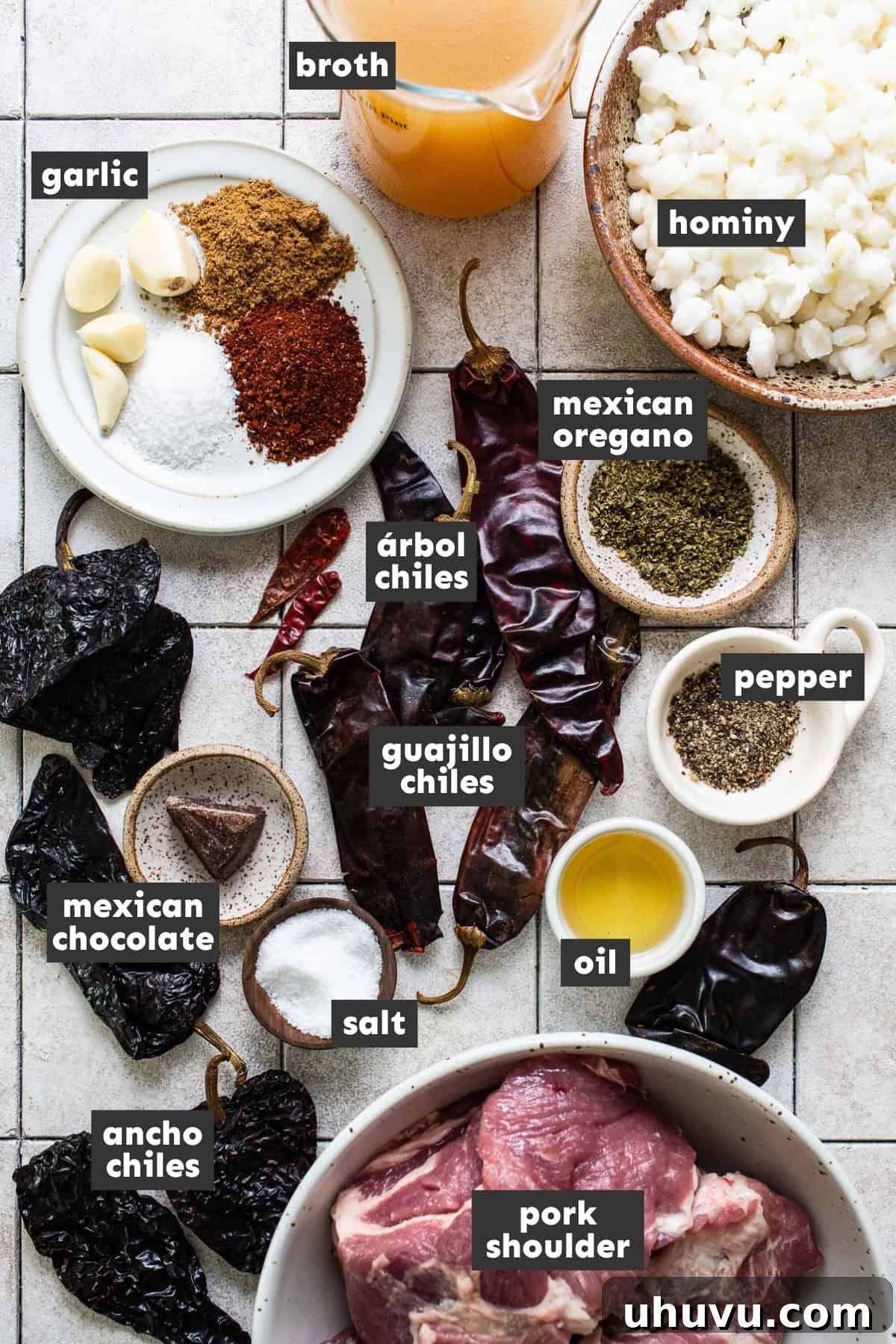
- Dried Chiles: The heart and soul of Pozole Rojo. You’ll need a specific trio to create that complex, rich red broth:
- Guajillo chiles: Known for their mild heat and fruity, tangy flavor, guajillos contribute the vibrant red color and a foundation of sweet, berry-like notes to the broth.
- Ancho chiles: These dried poblano peppers are sweet, smoky, and slightly earthy, providing depth and a deep red hue. They offer a mild, almost raisin-like flavor that balances the other chiles.
- Árbol chiles: For those who appreciate a kick, árbol chiles deliver a bright, fiery heat. You can adjust the quantity (or remove seeds) to customize your desired spice level.
These essential dried chiles are typically found in the Hispanic foods aisle of most large grocery stores or, more reliably, at a specialty Mexican grocer. If local availability is an issue, purchasing them online is a convenient and excellent option.
- Hominy: This unique ingredient is what truly defines pozole. Hominy consists of dried maize kernels that have been treated in an alkaline solution (nixtamalization), which causes them to swell and lose their hull. The kernels are significantly larger than regular canned corn and possess a wonderful chewy texture and a distinct, earthy corn flavor that absorbs the broth beautifully. It’s commonly found in the Hispanic foods aisle or sometimes near other canned vegetables like corn. While white hominy is traditionally used, yellow hominy can also be substituted.
- Pork Shoulder: Also widely known as “pork butt,” this cut is ideal for Pozole Rojo. Its marbling and connective tissues render it incredibly tender, juicy, and effortlessly shreddable after slow cooking. It imparts a rich, savory flavor that is crucial to the stew’s depth.
- Broth: Using a quality broth rather than just water significantly enhances the overall flavor of your pozole. Chicken, vegetable, or beef broth all work wonderfully, each adding its own subtle layer of complexity. In a pinch, water can be used, but broth is highly recommended for a richer result.
- Aromatic Spices: A blend of essential Mexican spices forms the backbone of the broth’s savory profile. This includes fragrant cumin, robust chili powder (complementing the dried chiles), earthy Mexican oregano (which has a distinct citrusy and earthy note different from Mediterranean oregano), kosher salt, freshly ground black pepper, and pungent garlic cloves. Together, they create a harmonious and authentic Mexican flavor foundation.
- Mexican Chocolate (Optional, but Recommended): This is our family’s secret ingredient and one you might consider adding. While optional, a small tablet of Mexican chocolate introduces an incredible depth of flavor. It doesn’t make the stew sweet; instead, its subtle bitterness and spice notes (common in Mexican chocolate) beautifully complement and balance the complex flavors of the chiles, adding an unexpected richness. Brands like Abuelita are readily available in Hispanic aisles or online.
Crafting Your Authentic Pozole Rojo: A Step-by-Step Guide
Making Pozole Rojo is a rewarding process that infuses your home with incredible aromas. Follow these steps to create a truly memorable Mexican stew:
1. Prepare the Rich Chile Broth: Begin by adding 3 cups of water along with the rinsed and seeded guajillo, ancho, and árbol chiles to a medium pot. Bring the water to a rolling boil over high heat. Once boiling, immediately cover the pot, remove it from the heat, and let the chiles soak undisturbed for a crucial 15 minutes. This rehydration process softens them, making them easy to blend and releasing their full flavor potential.
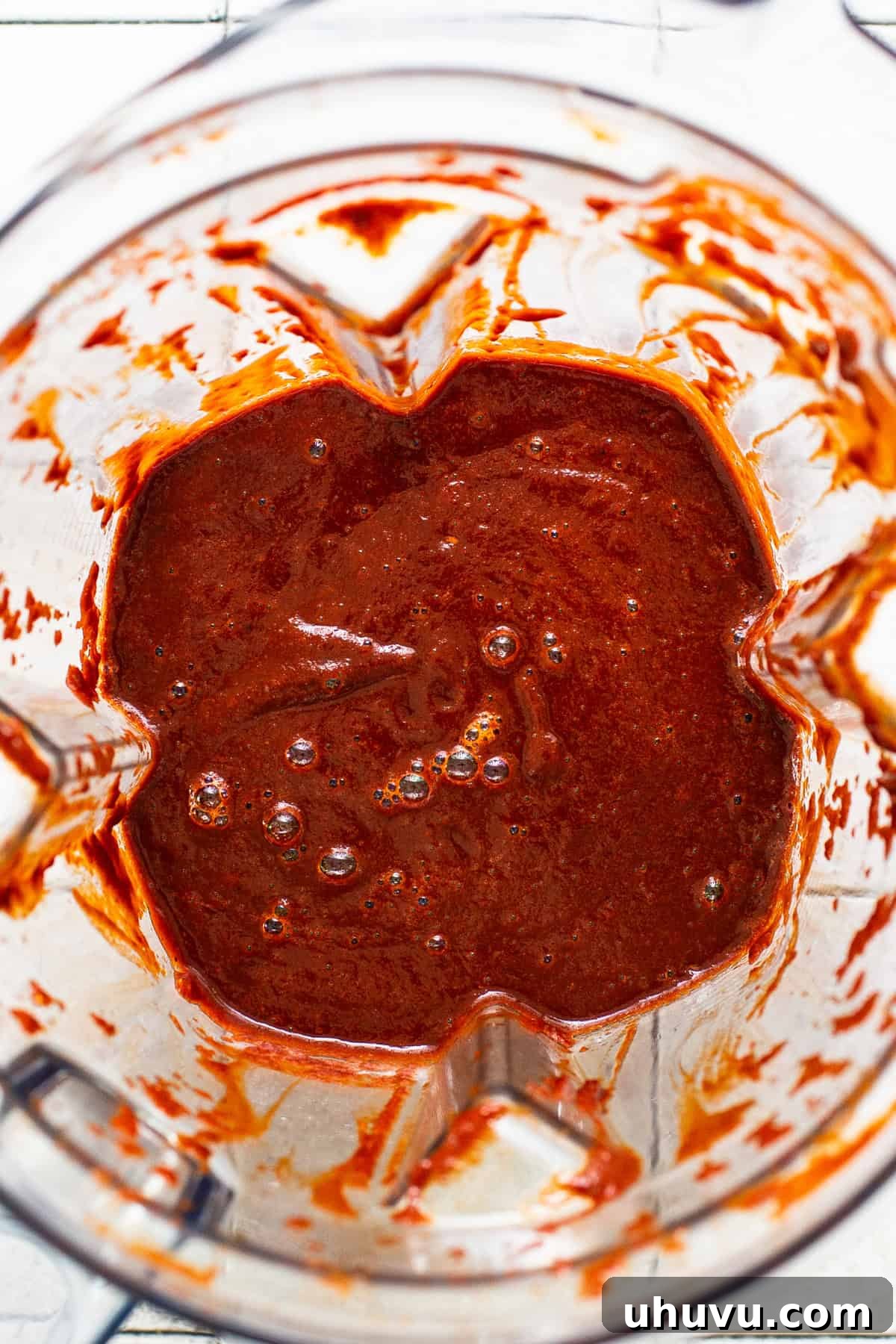
Carefully transfer the softened chiles and the hot soaking water (this water contains valuable chile essence) to a large, heat-safe blender. Add the remaining 1 cup of fresh water, chili powder, ground cumin, 1 ½ teaspoons of kosher salt, all the garlic cloves, and the optional Mexican chocolate. Blend for a full 2-3 minutes until the mixture is exceptionally smooth, ensuring no large chile pieces remain. This creates the vibrant, flavorful base for your stew. Set this chile broth aside.
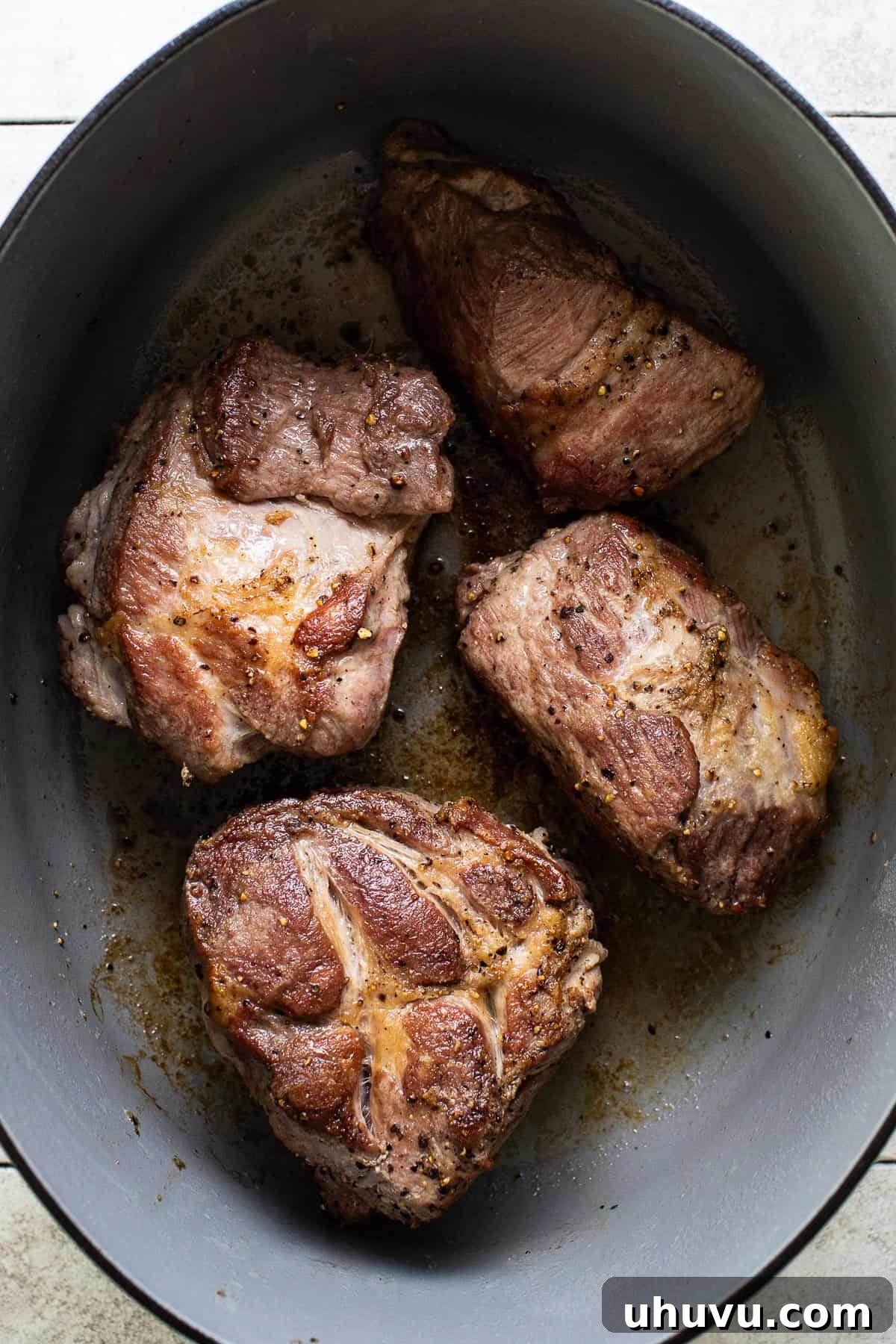
2. Sear the Pork Shoulder: Generously season all sides of your pork shoulder chunks with 1 tablespoon of kosher salt and 1 teaspoon of freshly ground black pepper. This seasoning is vital for building flavor from the start. Heat 2 tablespoons of oil in a large, heavy-bottomed pot or Dutch oven over medium-high heat. Once the oil shimmers, carefully add the seasoned pork. Sear the meat vigorously on all sides until each piece is beautifully browned and develops a rich, caramelized crust. This searing step, known as creating “fond,” adds immense depth of flavor to the entire stew.
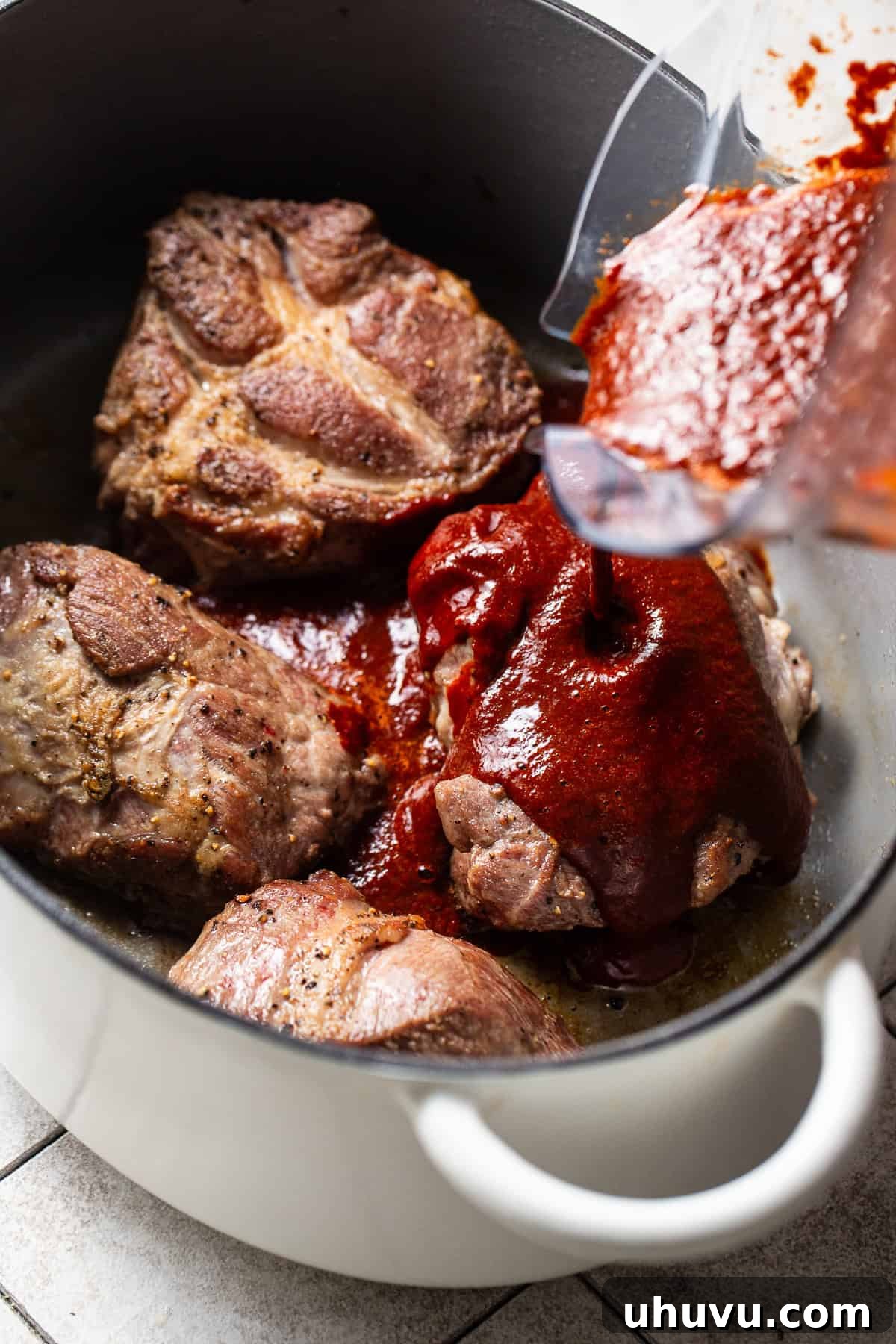
3. Combine and Simmer to Perfection: With the pork beautifully seared, carefully pour the prepared red chile broth directly into the pot. Immediately use a sturdy wooden spoon to scrape the bottom of the pot, loosening all the browned bits (the “fond”) that developed during searing. These bits are packed with flavor and will dissolve into the broth, enriching it further. Stir in the 6 cups of your chosen broth (chicken, vegetable, or beef), the 3 cans of drained and rinsed hominy, and 1 tablespoon of dried Mexican oregano. Bring the entire mixture to a vigorous boil. Once boiling, reduce the heat significantly to a very low simmer, cover the pot tightly, and let it cook for approximately 2 ½ hours. The goal is for the pork to become incredibly tender, practically falling apart with ease.
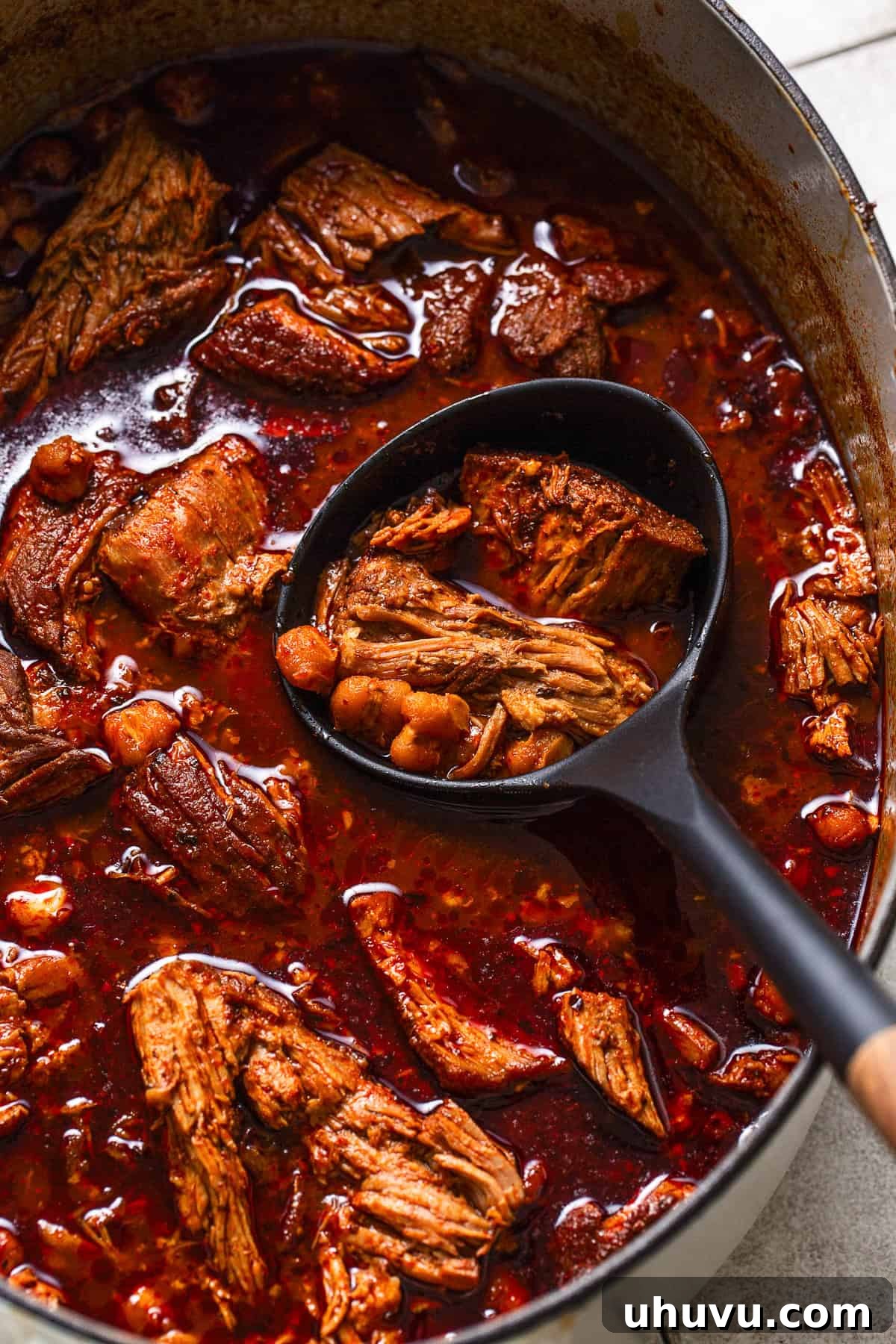
4. Shred the Pork and Adjust Seasoning: Once the simmering time is complete, remove the pork chunks from the pot and place them on a cutting board or in a shallow dish. Using two forks or tongs, easily shred the pork; it should be incredibly tender and almost fall apart on its own. Return all the shredded pork to the pot, stirring it gently into the rich broth. Taste the pozole and adjust the seasoning with more salt if necessary to achieve your desired flavor balance. If you prefer a more brothy consistency, feel free to mix in a little more water or additional broth at this stage, stirring until it reaches your perfect thickness.
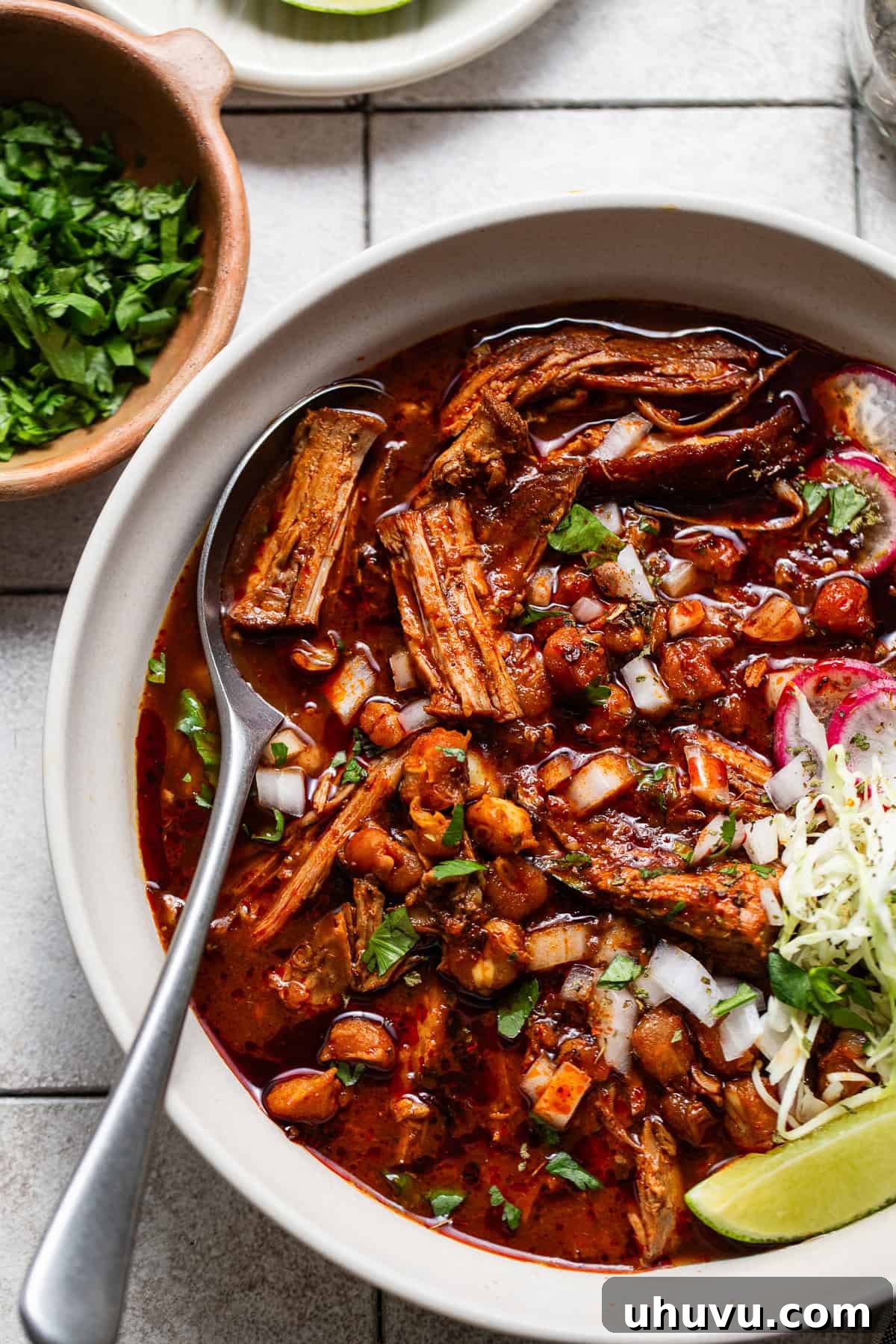
5. Serve with Abundant Toppings: Ladle the steaming Pozole Rojo into individual bowls. The real magic happens with the toppings! Encourage everyone to customize their serving with a vibrant array of thinly shredded cabbage, fresh chopped cilantro, a sprinkle of aromatic dried Mexican oregano, a generous squeeze of fresh lime juice, crunchy sliced radishes, and finely diced white onions. Each topping adds a unique layer of flavor and texture, completing the authentic Pozole Rojo experience.
Expert Recipe Tips for Perfect Pozole Rojo
- Experiment with Protein Choices: While pork shoulder is traditional and highly recommended for its tenderness and flavor, you can certainly use beef chuck roast as an alternative. Treat it in the exact same manner: sear it thoroughly first to develop a rich crust, then braise it slowly in the flavorful chile broth until it’s fork-tender and easily shreddable. Chicken can also be used, though it will require a shorter cooking time.
- Source the Right Dried Chiles for Authentic Flavor: The type and quality of your dried chiles are paramount to an authentic Pozole Rojo. Ensure you use guajillo, ancho, and árbol chiles for the balanced flavor profile. You can typically find these in the Hispanic foods aisle of well-stocked local grocery stores or, for a wider selection and higher quality, at a specialty Mexican grocer. If these are hard to come by in your area, don’t hesitate to purchase them conveniently online.
- Customize Your Spice Level: The beauty of homemade Pozole Rojo is tailoring it to your palate. For a milder heat, simply omit the árbol chiles from the broth blend. If you crave a more intense, fiery stew, feel free to add a couple more árbol chiles, or leave their seeds in for maximum spice. Always taste and adjust as you go.
- Adjust Broth Consistency to Your Preference: Some pozole aficionados prefer their stew extra brothy, while others enjoy a thicker, heartier consistency. If, after the simmering and shredding process, you find the pozole isn’t as “soupy” as you like, simply stir in additional broth (chicken, vegetable, or beef) or even a little water, a half-cup at a time, until it reaches your desired brothy consistency. Bring it back to a gentle simmer for a few minutes to ensure it’s heated through.
- Don’t Skip the Searing: Searing the pork before simmering is a crucial step for developing deep, complex flavors. The caramelization creates a rich “fond” at the bottom of the pot, which, when deglazed with the chile sauce, contributes significantly to the overall deliciousness of the stew.
Elevating Your Pozole Rojo: Traditional Topping Suggestions
While a comforting bowl of Pozole Rojo is undeniably delicious and filling on its own, you wouldn’t capture the full, authentic Mexican experience without an array of fresh, vibrant toppings. These garnishes add layers of texture, brightness, and flavor that perfectly complement the rich stew. Encourage your guests to customize their bowls for a truly interactive and delightful meal. Here are some traditional and highly recommended toppings to serve alongside your Pozole Rojo:
- Thinly Shredded Cabbage: Provides a delightful crunch and a fresh, slightly bitter counterpoint to the rich broth.
- Freshly Chopped Cilantro: Adds an herbaceous, bright, and aromatic freshness that is indispensable in Mexican cuisine.
- Dried Mexican Oregano: A sprinkle over the top intensifies the stew’s earthy, aromatic profile. Its distinct flavor differs from Mediterranean oregano, offering citrusy and peppery notes.
- Freshly Squeezed Lime Juice: A squeeze of lime brightens the entire dish, cutting through the richness and enhancing all the other flavors. Don’t underestimate its power!
- Thinly Sliced Radishes: Offer a crisp texture and a mild, peppery bite that adds another layer of freshness and visual appeal.
- Finely Diced White Onions: Provides a pungent, sharp contrast to the savory stew, adding a delightful zing and aromatic kick.
- Creamy Avocado Slices or Diced Avocado: While not always strictly traditional, many enjoy the rich, buttery texture and mild flavor of avocado, which adds a wonderful creaminess and helps balance spicier notes.
- Crispy Tortilla Chips or Tostadas: For added crunch and a vessel to scoop up the delicious stew.
Convenient Cooking: Instant Pot and Slow Cooker Pozole Rojo
For those times when you need a more hands-off approach or a quicker cooking time, Pozole Rojo can be adapted beautifully for both the Instant Pot and the slow cooker, allowing you to enjoy this comforting stew with less active time.
To make Pozole Rojo in the Instant Pot: Begin by using the ‘Saute’ function to thoroughly sear the pork shoulder chunks on all sides until nicely browned. This crucial step locks in flavor. Once seared, cancel the saute function. Add the previously blended red chile sauce, the 6 cups of broth (chicken, vegetable, or beef), the drained and rinsed hominy, and the dried Mexican oregano to the pot. Close the lid securely and ensure the venting knob is set to the ‘Sealing’ position. Pressure cook on high for 60 minutes using the manual or pressure cook setting. Once the cooking cycle is complete, allow the pressure to release naturally for 10 minutes before carefully performing a manual quick release for any remaining pressure. Open the lid, shred the pork, adjust seasonings, and serve with your favorite toppings.
To make Pozole Rojo in the Slow Cooker: First, sear the pork shoulder chunks in a large skillet over medium-high heat until deeply browned on all sides. This searing step is vital for flavor development and should not be skipped, even if using a slow cooker. Transfer the seared meat to your slow cooker. Then, add the blended red chile sauce, the 6 cups of broth, the drained and rinsed hominy, and the dried Mexican oregano. Stir everything to combine well. Cook on low for 6-8 hours or on high for 4-5 hours, or until the pork is exceptionally tender and easily shreddable with a fork. Once cooked, shred the pork directly in the slow cooker, taste, adjust seasonings, and serve warm with an abundance of fresh toppings.
Storing and Reheating Your Delicious Pozole Rojo
Pozole Rojo often tastes even better the next day as the flavors meld and deepen. Proper storage and reheating ensure you can enjoy your delicious stew for days to come:
- Storing: Allow the Pozole Rojo to cool completely to room temperature before storing. Once cooled, transfer the stew to an airtight container. It can be safely refrigerated for up to 4 days. It is crucial to store any fresh toppings, such as shredded cabbage, radishes, or cilantro, in separate airtight containers. This prevents them from becoming soggy and helps maintain their crisp texture and vibrant freshness.
- Freezing: Pozole Rojo freezes exceptionally well, making it a perfect make-ahead meal. Portion the cooled pozole into freezer-safe containers or heavy-duty freezer bags. Leave about an inch of space at the top of containers to allow for expansion during freezing. For the best flavor and texture, freeze for up to 3 months. Longer periods might slightly affect texture but it will still be safe to eat.
- Reheating:
- From Refrigerated: For refrigerated pozole, the easiest way to reheat is on the stovetop over medium heat, stirring occasionally until it is heated through. Alternatively, you can reheat individual portions in the microwave in 1-2 minute increments, stirring between each until piping hot.
- From Frozen: If frozen, it’s best to thaw the pozole in the refrigerator overnight before reheating. Once thawed, reheat it on the stovetop over medium heat or in the microwave as described above. If reheating directly from frozen, do so over very low heat on the stovetop, stirring frequently, and adding a bit of extra broth or water if needed to achieve the desired consistency as it thaws and warms. Always add fresh toppings just before serving for the best experience.
Explore More Authentic Mexican Recipes
If you’ve fallen in love with the rich flavors of Pozole Rojo, we invite you to delve deeper into the vibrant world of Mexican cuisine with our collection of other beloved recipes:
- Authentic Birria: A savory, rich, and spicy stew, perfect for tacos.
- Albondigas Soup: Hearty Mexican meatball soup, packed with vegetables.
- Pozole Verde: The bright and tangy green chile version of this classic stew.
- Pork Tamales: Traditional corn masa steamed in a corn husk, filled with flavorful pork.
- Chile Colorado: A rich red chile sauce often served with beef, perfect for burritos or plates.
- Cochinita Pibil: Slow-roasted Yucatecan pork, marinated in achiote and citrus.
- Chile Verde: Tender pork simmered in a vibrant and zesty green chile sauce.
If you tried this Pozole Rojo Recipe or any other delightful recipe on Isabel Eats, we would be thrilled to hear from you! Don’t forget to rate the recipe and share your cooking experience in the comments section below! Your feedback and stories inspire us greatly!
Pozole Rojo
Ingredients
For the broth
- 4 cups water, divided
- 6 guajillo chiles, rinsed and seeded
- 4 ancho chiles, rinsed and seeded
- 2 árbol chiles, rinsed (seeds removed if you prefer a mild spice level)
- 1 tablespoon chili powder
- 2 teaspoons ground cumin
- 1 ½ teaspoon kosher salt
- 4 cloves garlic
- 8 grams Mexican chocolate, optional (about ⅛ disc)
For the stew
- 2 ½ pounds pork shoulder, cut into large 4-inch chunks
- 1 tablespoon kosher salt
- 1 teaspoon freshly ground black pepper
- 2 tablespoons oil
- 6 cups broth (chicken, vegetable, or beef)
- 3 (15-ounce) cans white hominy, drained and rinsed
- 1 tablespoon dried Mexican oregano
Suggested toppings
- thinly shredded cabbage, cilantro, diced onions, lime wedges, sliced radishes, Mexican oregano
Instructions
-
Make the chile sauce: Add 3 cups of water and the guajillo, ancho, and árbol chiles to a medium pot. Bring to a boil over high heat, cover, remove from heat, and let soak for 15 minutes.
-
Carefully transfer the softened chiles and the hot water to a large blender. Add the remaining fresh water, the chili powder, ground cumin, salt, garlic, and Mexican chocolate. Blend for 2-3 minutes until completely smooth. Set aside.
-
Prepare the meat: Season all sides of the pork with the salt and black pepper. Heat the oil in a large pot or Dutch oven over medium-high heat. Add the pork, and sear the meat on all sides until nicely browned.
-
Combine and cook: Pour in the red chile sauce and scrape the bottom of the pot with a wooden spoon to loosen all the brown bits. Stir in the broth, hominy, and dried oregano.
-
Bring the pot to a boil, reduce the heat to a low, cover, and simmer for 2 ½ hours until the pork is fall-apart tender.
-
Shred the pork with a fork or tongs (it should fall apart very easily). Taste and season with more salt, if necessary.
-
Serve with toppings such as thinly shredded cabbage, cilantro, lime juice, sliced radishes, diced onions, and dried Mexican oregano.
Notes
- Mexican chocolate: This ingredient is optional, but I find that it adds a little extra depth of flavor that compliments the chiles. It doesn’t make the chile sauce sweet at all.
- Swap the protein: You can use beef chuck roast instead of pork shoulder. Treat it exactly the same by searing it first, then braising it in the broth.
- Use the right chiles: You can find dried chiles in the Hispanic foods aisle of your local grocery store or a specialty Mexican grocer. If you can’t find them in your area, you can easily buy them online.
- Customize the spice: Omit the árbol chiles for a milder heat, or add in a couple more for a spicy stew.
- Not enough broth? Some people love their pozole extra brothy. If you find that the pozole isn’t soupy enough for you, stir in some more broth at the end until it’s to your desired consistency.
Nutrition
Nutrition information is automatically calculated, so should only be used as an approximation.