
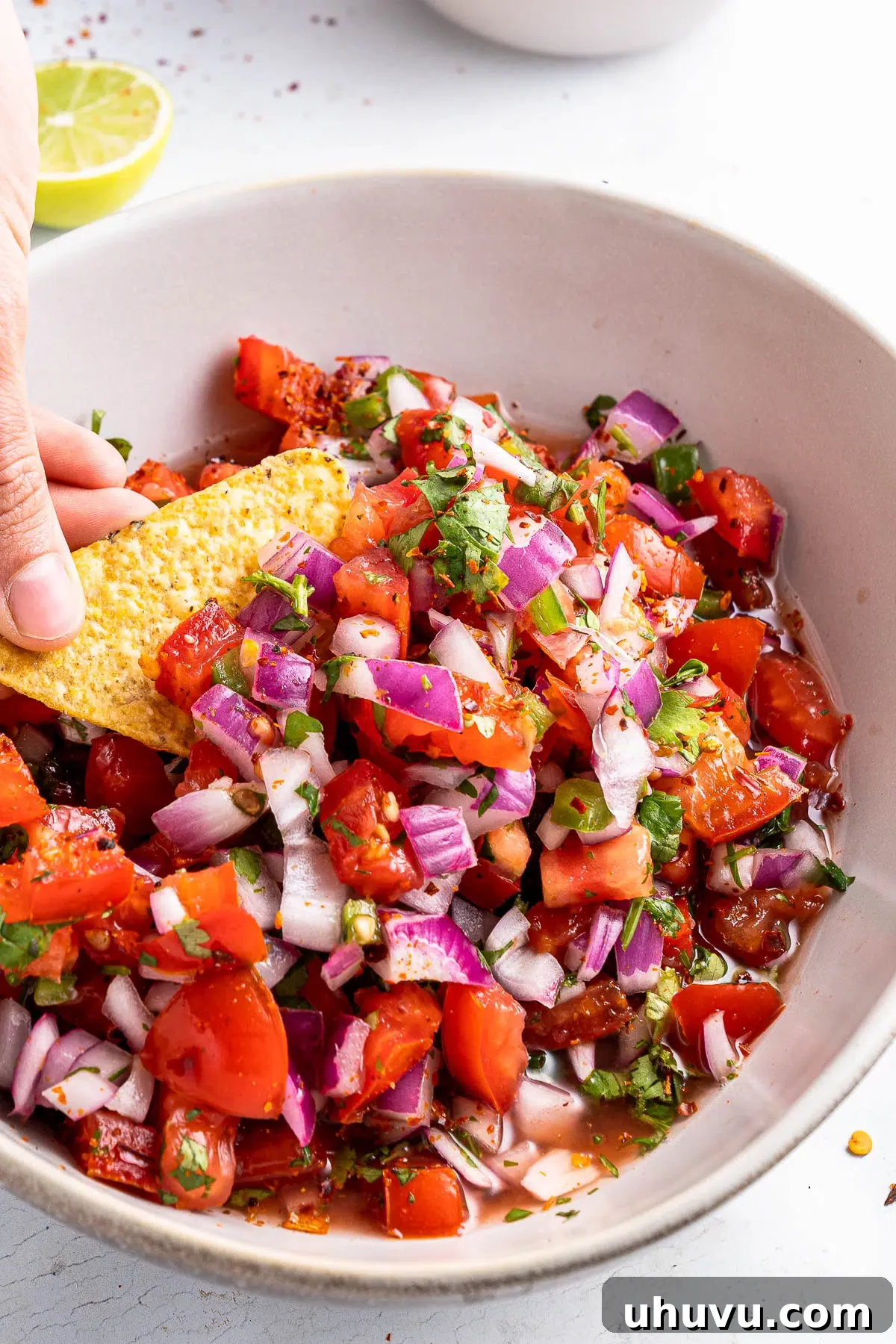
Welcome to the ultimate guide to crafting the most irresistible Homemade Pico de Gallo, a vibrant condiment also lovingly known as Salsa Fresca. This staple of Mexican cuisine is more than just a dip; it’s a celebration of fresh, simple ingredients coming together to create an explosion of flavor. Imagine succulent ripe tomatoes, finely diced onions, a kick of jalapeños, and fragrant cilantro, all harmonized with a squeeze of fresh lime juice and a pinch of salt. It’s the perfect accompaniment to countless dishes, elevating everything from your favorite tacos and nachos to grilled meats and even a simple bowl of tortilla chips.
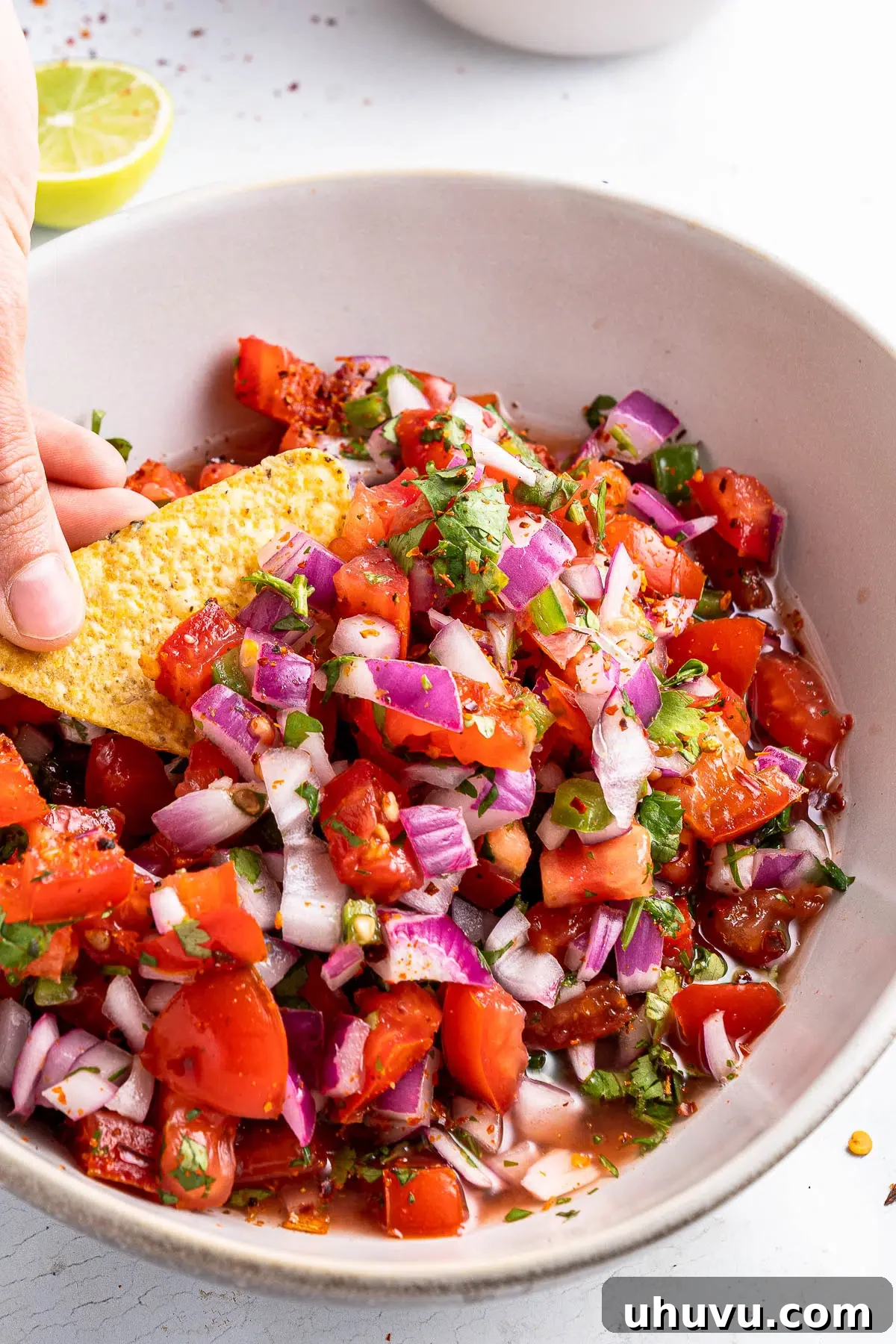
There’s something uniquely satisfying about preparing Pico de Gallo from scratch. It’s a tradition in my kitchen, especially when I’m whipping up a Mexican feast. The process is incredibly quick and straightforward, relying on staple ingredients that are usually on hand in my fridge. During the summer months, the joy is even greater when I can pick fresh tomatoes and onions directly from my garden, infusing the salsa with an unmatched garden-fresh taste. My family adores it and it’s always on their request list as an essential side dish, transforming any meal into an instant favorite.
Whenever I prepare beloved dishes like these savory beef tacos or any other delightful Mexican creation, a generous batch of this refreshing salsa fresca is a must. It pairs perfectly with creamy guacamole and aromatic cilantro lime rice, creating a harmonious and utterly delicious meal that’s both effortless to make and incredibly satisfying. It’s the epitome of a quick and easy dinner that never fails to impress.
What Exactly is Pico de Gallo? Exploring the Heart of Fresh Mexican Flavor
Pico de Gallo, a cornerstone of authentic Mexican cuisine, is much more than just a salsa. It’s a vibrant, uncooked mixture of finely diced fresh vegetables that offers a unique textual and flavor experience. While its most recognized name is Pico de Gallo, which translates charmingly to “rooster’s beak” (perhaps referring to how the ingredients are picked up, or the small, sharp chop), it goes by several other evocative names. You might hear it called Salsa Fresca (fresh salsa), Salsa Cruda (raw salsa), or even Salsa Mexicana (Mexican sauce). A particularly fitting nickname is Salsa Bandera (flag sauce), due to its striking red (tomatoes), white (onions), and green (cilantro and jalapeños) colors, proudly mirroring the Mexican flag.
This fresh, zesty, and invigorating condiment is characterized by its chunky texture and the pure, unadulterated taste of its components. The magic lies in its simplicity: a precise blend of finely chopped tomatoes, crisp white or red onions, fragrant cilantro, fiery jalapeño or serrano peppers, bright lime juice, and a touch of salt. Unlike many cooked salsas, Pico de Gallo celebrates the natural state of each ingredient, delivering a refreshing burst of flavor with every bite. It’s surprisingly simple to prepare, yet the synergy of these fresh ingredients and zesty citrus creates a taste that is both lively and incredibly delicious, making it an indispensable part of any Mexican meal.
Pico de Gallo vs. Salsa: Understanding the Distinct Differences
While the terms “Pico de Gallo” and “salsa” are often used interchangeably, they represent two distinct culinary creations, each bringing its own unique charm and utility to the table. Understanding their differences is key to appreciating their individual roles in Mexican cuisine and knowing when to use each for optimal flavor and texture.
The primary distinction lies in their consistency and preparation methods. Traditional salsa typically features a smoother, often saucier consistency. Its ingredients can be roasted, simmered, or blended, resulting in a variety of textures ranging from a chunky, rustic sauce to a perfectly smooth purée. Salsas often contain more liquid and can be cooked, which deepens and melds their flavors into a more uniform profile, offering a spectrum of tastes from mild and smoky to intensely fiery. This saucier nature makes salsa ideal for smothering enchiladas, mixing into stews, or as a smoother dip.
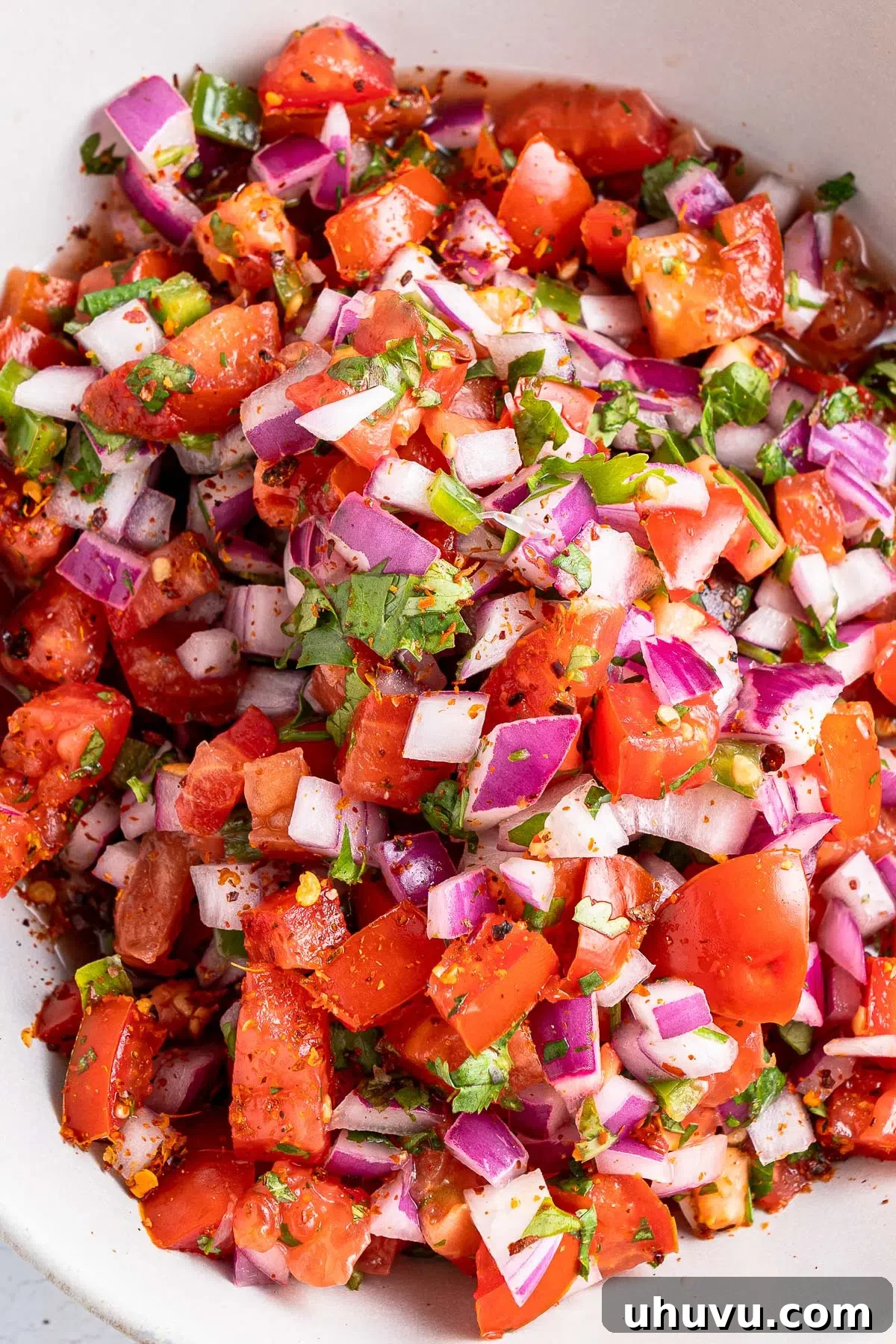
Pico de Gallo, on the other hand, is defined by its vibrant freshness and chunky texture. It is always raw and uncooked, celebrating the pristine quality of its fresh ingredients. The components – tomatoes, onions, cilantro, and chilies – are finely diced but distinct, not submerged in liquid. This deliberate lack of extensive blending or cooking allows each individual ingredient to shine through in its natural state, offering a bright, crisp, and crunchy contrast that is incredibly refreshing. It’s designed to highlight the crispness of the vegetables and the zesty punch of lime. This makes Pico de Gallo perfect for applications where you desire a fresh bite and distinct texture, such as topping tacos, burritos, or as a standalone side dish. The emphasis is on freshness, clarity of flavor, and a satisfying textural contrast that awakens the palate.
Essential Ingredients for Authentic Pico de Gallo
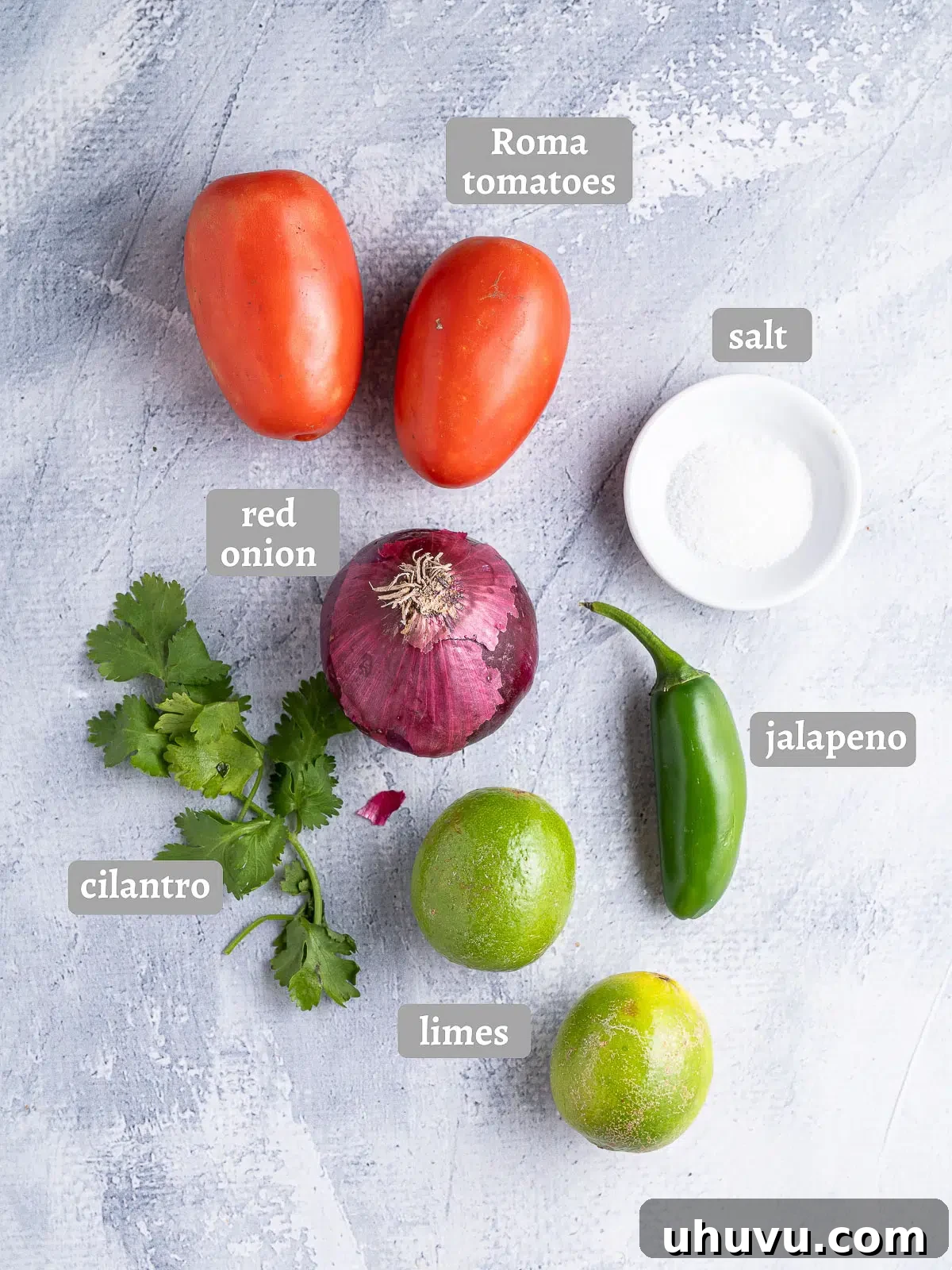
Crafting a truly exceptional homemade Pico de Gallo starts with selecting the freshest, highest-quality ingredients. Each component plays a vital role in creating the signature flavor and texture of this beloved Mexican condiment. Here’s what you’ll need and some tips for choosing the best:
- Ripe Roma Tomatoes: These are the stars of Pico de Gallo. Roma tomatoes are preferred because they have a firm flesh and significantly less juice compared to other varieties, which helps prevent the salsa from becoming watery. Look for tomatoes that are bright red, firm to the touch, and heavy for their size. If Romas aren’t available, cherry tomatoes, quartered or halved, can be a delightful alternative, offering a burst of sweetness.
- White or Red Onions: Both white and red onions work wonderfully. White onions tend to have a sharper, more pungent flavor, offering a classic bite. Red onions, on the other hand, are slightly sweeter and milder, and their vibrant purple color adds an attractive visual element to the salsa. Choose whichever you prefer, or a combination for added complexity. Ensure they are firm and free of blemishes.
- Fresh Cilantro: This herb is indispensable for authentic Pico de Gallo, lending its distinctive, fresh, and slightly citrusy flavor that perfectly complements the other ingredients. Always use fresh cilantro; dried cilantro won’t provide the same vibrant taste. If you’re one of the few who aren’t a fan of cilantro, you can omit it or substitute with fresh parsley for a different, but still fresh, herbaceous note.
- Jalapeño or Serrano Peppers: These peppers provide the signature heat. Jalapeños are widely available and offer a moderate spice level. For a bolder, more intense heat, opt for serrano peppers. To control the spice, you can decrease the amount of pepper, or completely remove the seeds and white membranes (where most of the capsaicin resides). If you love a fiery kick, feel free to add an extra pepper or leave some seeds in!
- Fresh Lime Juice: Do not skip this crucial ingredient! Freshly squeezed lime juice is the bright, zesty backbone of Pico de Gallo. It not only adds a refreshing tang that balances the flavors but also helps to “cook” the onions slightly, mellowing their raw bite. Always use fresh limes for the best flavor; bottled lime juice simply doesn’t compare.
- Salt to Taste: Salt is essential for enhancing all the other flavors, bringing them into harmony. Start with a small amount and adjust to your preference, tasting as you go.
- Optional Add-ins for Depth: While the classic recipe is perfect as is, you can personalize your Pico de Gallo with a minced clove of garlic for a sharper, more robust flavor, diced avocado for a creamy texture, or a tiny pinch of cumin to add a warm, earthy undertone and complexity.
Step-By-Step Guide to Crafting Perfect Pico de Gallo
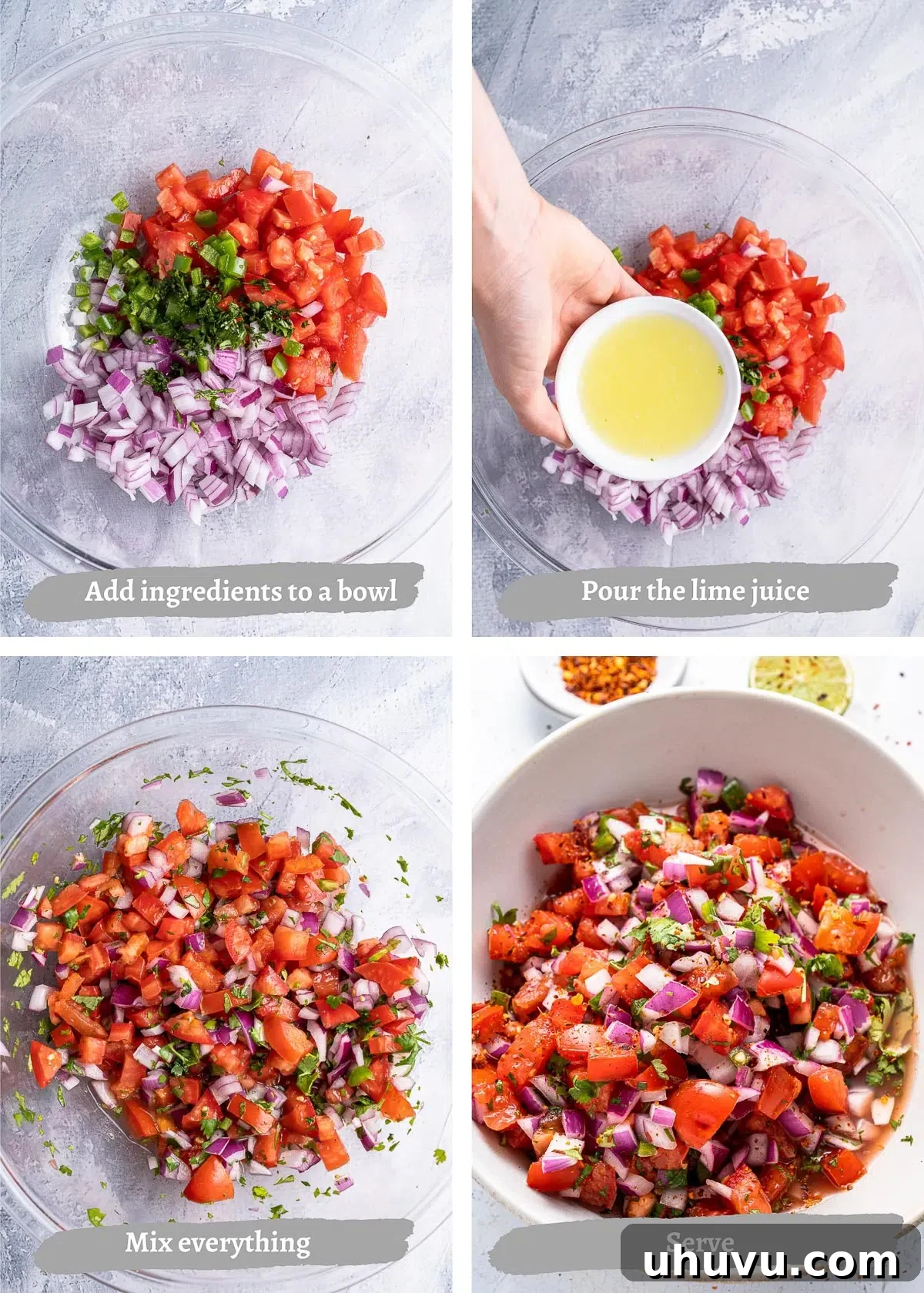
Making Pico de Gallo is incredibly simple, requiring minimal effort for maximum flavor. Follow these easy steps to prepare a fresh batch of this beloved Mexican salsa:
- Prepare and Chop the Ingredients: Start by washing all your fresh vegetables thoroughly. The key to excellent Pico de Gallo is uniform chopping. Dice the Roma tomatoes into small, even pieces – approximately ¼-inch cubes are ideal. This ensures a consistent texture and allows all the flavors to blend harmoniously in each bite. Next, finely dice your chosen onion (red or white) and finely chop the cilantro. For the jalapeño, carefully remove the ribs and seeds for less heat, then finely mince it. If you prefer more spice, you can leave some seeds in.
- Combine the Fresh Mix: In a medium-sized mixing bowl, gently combine all your freshly chopped ingredients: the diced tomatoes, onions, peppers, and cilantro. Use a spoon or spatula to mix them without mashing, preserving their distinct textures.
- Season Everything to Perfection: Now it’s time to add the flavor enhancers. Squeeze fresh lime juice generously over the mixture. The lime juice provides that essential tang and brightness. Sprinkle with salt, starting with about half a teaspoon. Gently stir the mixture again to ensure all ingredients are well coated and the seasoning is evenly distributed.
- Allow Flavors to Marinate (Resting Time is Key!): This step is often overlooked but is crucial for the best flavor. Once everything is mixed and seasoned, allow the Pico de Gallo to rest for at least 15 minutes at room temperature, or ideally, in the refrigerator for up to an hour. This resting period allows the flavors to meld beautifully, deepen, and truly come alive. The lime juice also slightly “cooks” the onions, mellowing their raw intensity. Before serving, give it one last gentle stir and taste, adjusting salt or lime juice if needed.
TIPS FROM NELI’S KITCHEN
Recipe Notes and Expert Tips for the Best Pico de Gallo
- Embrace Fresh Ingredients: The cornerstone of exceptional Pico de Gallo is undoubtedly the freshness of its components. Always prioritize using the most vibrant, ripe tomatoes, crisp onions, and aromatic cilantro you can find. This commitment to fresh produce truly makes a world of difference in the final flavor profile, delivering a brighter and more invigorating salsa.
- Master Uniform Chopping: Precision in chopping is more than just aesthetics; it ensures a consistent texture and balanced flavor in every single bite. Aim for finely diced pieces of uniform size for all your ingredients. This prevents one ingredient from overpowering another and guarantees a harmonious blend of flavors and textures that defines great Pico de Gallo.
- Season Gradually and Taste: Salt and lime juice are powerful flavor enhancers. It’s always best to add them gradually, tasting the mixture as you go. This allows you to fine-tune the seasoning to your personal preference, ensuring the perfect balance of tang and savory notes without overdoing it. Remember, you can always add more, but you can’t take it away!
- Don’t Skip the Resting Time: The resting period is not merely a suggestion; it’s a crucial step that allows the flavors to truly meld and deepen. During this time, the lime juice works its magic, lightly pickling the onions and drawing out the natural juices from the tomatoes, creating a more cohesive and intensely flavored salsa. Plan for at least 15-30 minutes of resting time for optimal results.
- Drain Excess Liquid (Optional but Recommended): Depending on the ripeness of your tomatoes, Pico de Gallo can become a bit watery as it rests. To avoid a soggy salsa, especially if serving as a dip, you might gently drain any excess liquid before serving. This keeps the texture firm and chunky, as it should be.
- Handle Jalapeños with Care: When deseeding and chopping jalapeños, consider wearing gloves to protect your hands from the capsaicin, the compound responsible for their heat. Always wash your hands thoroughly after handling to prevent any accidental eye or skin irritation.
Creative Variations and Customizations for Your Pico de Gallo
While the classic Pico de Gallo recipe is perfect in its simplicity, it’s also incredibly versatile, lending itself beautifully to creative variations. Don’t hesitate to experiment and tweak the recipe to suit your taste or to complement the specific dish it’s accompanying. Here are some inspiring ideas:
- Sweet and Spicy Fruit Pico: Introduce a delightful tropical twist by adding finely diced mango, pineapple, or even watermelon. These fruits provide a natural sweetness that beautifully contrasts with the spicy kick of the jalapeño and the tang of the lime. This variation is fantastic with grilled fish or chicken.
- Creamy Avocado Pico: For a richer, more substantial salsa, gently fold in chunks of ripe avocado just before serving. The creamy texture of the avocado adds a wonderful mouthfeel and a hint of healthy fat, making it a more satisfying dip or topping.
- Garlic Lover’s Pico: For those who appreciate a more pungent and robust flavor, mince one or two small cloves of fresh garlic and add them to the mix. The garlic will infuse the salsa with a deeper, more aromatic dimension.
- Cucumber Crunch Pico: Incorporate finely diced cucumber for an added layer of freshness and a delightful crunch. Cucumber can also help to mellow the spice a bit and adds a cooling element, perfect for hot summer days.
- Corn and Black Bean Pico: Transform your Pico de Gallo into a heartier salad-salsa by adding drained and rinsed canned black beans and sweet corn kernels (fresh or frozen and thawed). This version is incredibly satisfying as a side dish or a light lunch.
- Smoky Chipotle Pico: For a smoky depth, finely mince a small amount of chipotle in adobo sauce and stir it into the salsa. This will add a complex, smoky heat that is irresistible.
- Roasted Poblano Pico: Roast, peel, and dice a poblano pepper for a milder, smoky-sweet flavor alternative to jalapeños. This provides a different kind of warmth and earthiness.
Storage and Make-Ahead Tips for Maximum Freshness
Pico de Gallo is undeniably at its best when enjoyed fresh, shortly after the flavors have had a chance to meld. However, you can certainly prepare it in advance or store leftovers, keeping a few key tips in mind to maintain its quality and vibrant taste.
For optimal enjoyment, aim to consume your Pico de Gallo within one to two days. Stored in an airtight container in the refrigerator, the flavors will continue to develop, often becoming more intense. However, over time, the tomatoes will naturally release more juice, potentially making the salsa a bit more watery. To mitigate this, consider draining any accumulated liquid before serving on subsequent days.
If you plan to make Pico de Gallo several hours or even a day ahead, a clever trick is to keep the lime juice and salt separate until just before serving. Chop and combine all the vegetables, then store them covered in the refrigerator. When you’re ready to serve, simply add the fresh lime juice and salt, stir, and allow it to rest for 15 minutes. This method helps to preserve the crispness of the vegetables and ensures the brightest, freshest taste and texture, as the salt won’t draw out moisture prematurely. Freezing Pico de Gallo is generally not recommended, as the delicate texture of the fresh tomatoes and onions will become mushy upon thawing, significantly compromising the quality of the salsa.
Serving Suggestions: Unleash the Versatility of Pico de Gallo
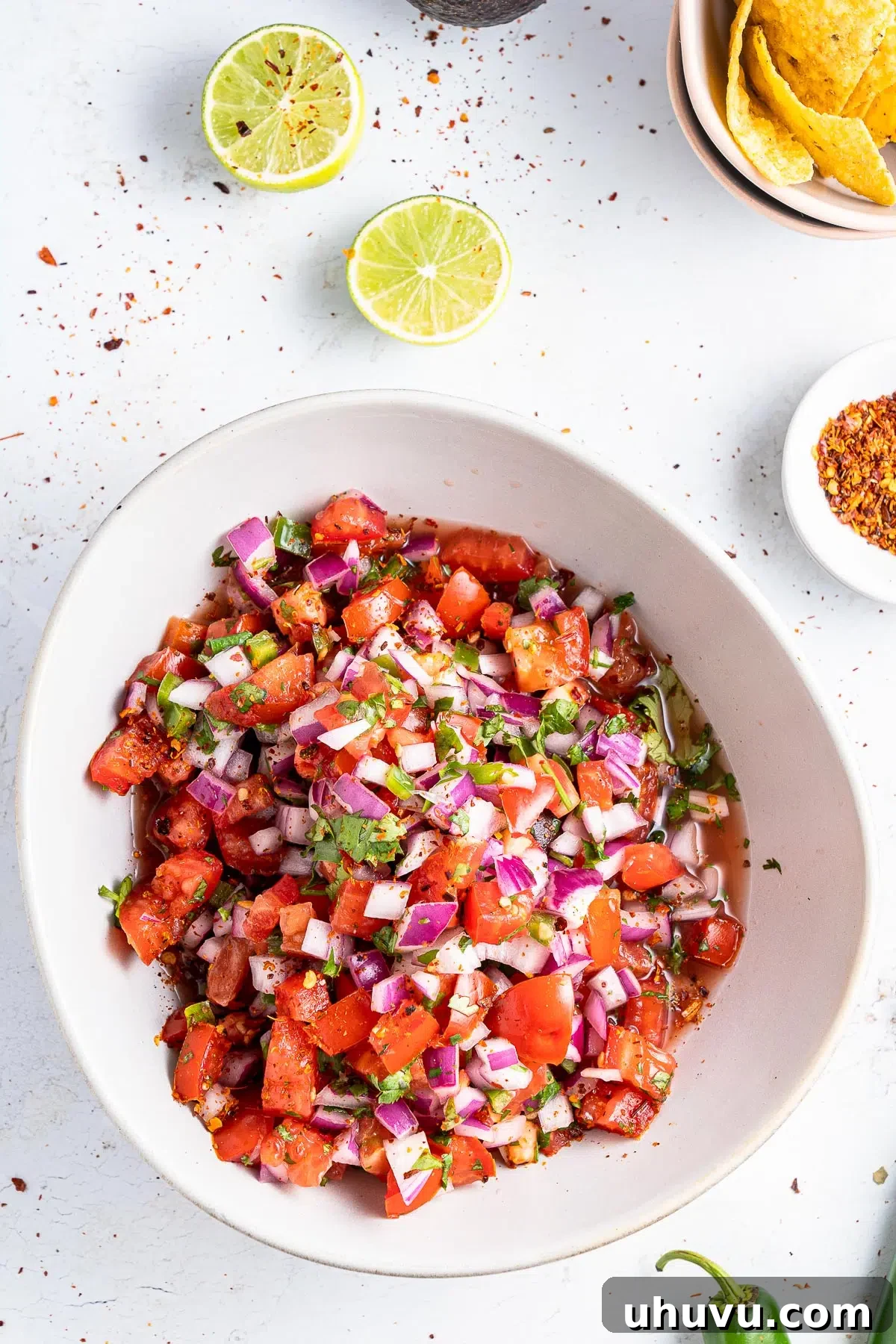
Pico de Gallo’s fresh, zesty profile makes it an incredibly versatile condiment that can elevate a myriad of dishes, extending far beyond the traditional chip and dip. Its bright flavors and chunky texture are perfect for adding a burst of freshness to almost any meal. Here are some of the best ways to enjoy your homemade Pico de Gallo:
- Taco Perfection: This is a classic pairing for a reason! Sprinkle generously over any type of taco for an immediate upgrade in freshness, flavor, and texture. It’s fantastic with beef tacos, chicken tacos, shrimp tacos, or even salmon tacos. The cool, crisp salsa balances the rich fillings beautifully.
- Delicious Topping for Other Mexican Dishes: Pico de Gallo is an essential component for a wide array of Mexican staples. Spoon it over Breakfast Burritos, Tostadas, Taquitos, Enchiladas, or Nachos to add a lively, uncooked element that contrasts with the richer, cooked components.
- Enhance Grilled Meats and Fish: Serve a dollop of Pico de Gallo alongside grilled or baked chicken, steak, or fish. The zesty, acidic nature of the salsa cuts through the richness of the meat, offering a refreshing contrast and enhancing the overall flavor profile. It’s particularly good with white fish and lean cuts of poultry.
- Vibrant Salad and Grain Bowl Addition: Toss Pico de Gallo into green salads or grain bowls for an instant boost of flavor, color, and nutrition. It acts as a natural dressing and adds a delightful texture. Try it as a key component in a Taco Salad or a Taco Bowl for a fresh and satisfying meal.
- Simple Appetizer with Tortilla Chips: Sometimes, the simplest pairings are the best. A bowl of freshly made Pico de Gallo served with crispy tortilla chips remains a timeless and delicious appetizer, perfect for parties or a casual snack.
- Breakfast Power-Up: Brighten up your morning eggs by spooning Pico de Gallo over scrambled eggs, omelets, or huevos rancheros. It adds an incredible layer of fresh taste and color to your breakfast routine.
- Garnish for Soups and Chilis: A spoonful of Pico de Gallo can add a fresh, zesty garnish to hearty soups, stews, and chilis, providing a textural contrast and a pop of raw flavor.
FAQ
Frequently Asked Questions About Pico de Gallo
Absolutely! While Roma tomatoes are traditionally favored for their firm texture and lower water content, other varieties can certainly be used. Cherry or grape tomatoes, quartered, work well and add a burst of sweetness. Heirloom tomatoes can offer unique flavors and colors, just be mindful that juicier varieties may require a gentle drain before serving to maintain the desired chunky consistency.
To make your Pico de Gallo less spicy, simply remove all the seeds and white membranes from the jalapeño or serrano peppers before dicing, as these parts contain most of the heat. You can also use a milder pepper like a bell pepper or a small amount of Anaheim pepper. For a spicier version, leave some or all of the seeds and membranes in your jalapeño, or use a hotter pepper like a habanero (with caution!) if you dare.
Wateriness is a common issue, often due to very ripe tomatoes releasing their juices. To remedy this, gently drain any excess liquid from the bowl before serving. You can use a slotted spoon or a fine-mesh sieve. Another preventative tip is to gently squeeze out some of the excess moisture from the diced tomatoes before adding them to the mixture, especially if they are particularly juicy.
It is generally not recommended to freeze Pico de Gallo. The high water content in fresh tomatoes and onions will cause them to become mushy and lose their crisp texture upon thawing, significantly altering the quality and appeal of the salsa. Pico de Gallo is best enjoyed fresh, within a few days of preparation.
When stored properly in an airtight container in the refrigerator, homemade Pico de Gallo will stay fresh for up to 3-4 days. While it’s best within the first two days for optimal crispness, the flavors will continue to deepen. Remember to drain any excess liquid that might accumulate over time.
Explore More Delicious Mexican Recipes
If you’re loving the vibrant flavors of Mexican cuisine, you’re in for a treat! Discover more authentic and easy-to-make recipes that perfectly complement your Pico de Gallo or stand alone as delightful meals. From savory dips to hearty main courses, expand your culinary adventures with these family favorites.
Appetizers + Snacks
Perfect Classic Guacamole
Side Dishes
Instant Pot Spanish Rice
Main Dishes
Baked Chicken Fajitas
Main Dishes
Tacos
We hope you enjoyed learning how to make this delightful Pico de Gallo recipe! If you tried this recipe or any other recipe on my blog, please take a moment to leave a ⭐ star rating and share your experience in the 📝 comments section below. Your feedback means the world to us! Thank you for visiting and happy cooking!
Pin this now to find it later
Pin It
☝ Tap stars to rate
Pico de Gallo (Salsa Fresca)
Save This Recipe
Enter your email and we’ll send the recipe directly to you!
By submitting this form, you consent to receive emails from Delicious Meets Healthy.
Ingredients
- 4 Roma tomatoes, diced into small, even pieces for optimal texture.
- 1 small red onion, finely diced for a subtle bite and vibrant color.
- 1 jalapeno, ribs and seeds removed (for less heat), finely chopped. Adjust quantity based on desired spice level.
- ½ cup fresh cilantro (about 1 bunch), finely chopped, adding essential fresh, herbaceous notes.
- ¼ cup fresh lime juice, freshly squeezed for the best zesty flavor.
- ½ teaspoon salt, or to taste.
Instructions
-
In a medium serving bowl, gently combine your freshly diced Roma tomatoes, finely chopped red onion, minced jalapeño, and fragrant cilantro. Stir carefully to ensure all ingredients are evenly distributed without mashing the delicate tomatoes.
-
Pour the fresh lime juice over the mixture and sprinkle with a starting amount of salt. Stir everything together once more, gently. Take a small taste and adjust the salt or add a bit more lime juice if you desire a tangier profile. The balance of flavors is key here.
-
For the absolute best flavor, allow the Pico de Gallo to marinate. Let it rest for at least 15 minutes at room temperature, or for a deeper flavor infusion, chill it in the refrigerator for several hours. This crucial resting period allows the flavors to truly meld and intensify. When serving, especially if it has rested for a while, use a slotted spoon or large serving fork to avoid transferring too much of the watery tomato juice that might accumulate. Homemade Pico de Gallo keeps well, covered, in the refrigerator for up to 4 days.
-
Once the resting time is complete, your fresh Pico de Gallo is ready to be enjoyed! Serve it immediately with a generous bowl of crispy tortilla chips, as a vibrant topping for your favorite tacos, or alongside any Mexican-inspired dish. Enjoy the burst of fresh, delicious taste!
Notes
- Fresh Ingredients are Paramount: Always choose the freshest possible ingredients for your Pico de Gallo. The quality of your ripe tomatoes, crisp onions, and vibrant cilantro will directly impact the incredible taste and freshness of your final salsa. This is truly where the magic happens!
- Achieve Uniform Chopping for Consistency: Strive for small, uniform dice across all your ingredients. This ensures that every bite offers a harmonious blend of textures and flavors, and prevents any single ingredient from dominating. Precision in chopping elevates the entire experience.
- Season Gradually and Trust Your Taste Buds: When adding salt and lime juice, do so in small increments, tasting frequently as you go. This iterative approach allows you to achieve the perfect balance of seasoning that suits your palate, ensuring your Pico de Gallo is neither under-seasoned nor overly salted.
- Embrace the Resting Time: Do not rush the resting period. Allowing the Pico de Gallo to sit for at least 15-30 minutes (or longer, refrigerated) is crucial. This time allows the flavors to deepen, meld, and truly develop, resulting in a much more complex and satisfying salsa.
- Manage Moisture for Optimal Texture: If your tomatoes are particularly juicy, you might find your Pico de Gallo becoming a bit watery as it rests. To maintain a perfectly chunky texture, especially when serving as a dip, consider gently draining any excess liquid that collects at the bottom of the bowl before serving.
Nutrition
Nutrition Disclaimer: Nutritional values are estimates and may vary with ingredients, brands, and portion sizes. For accuracy, use your preferred nutrition calculator.