
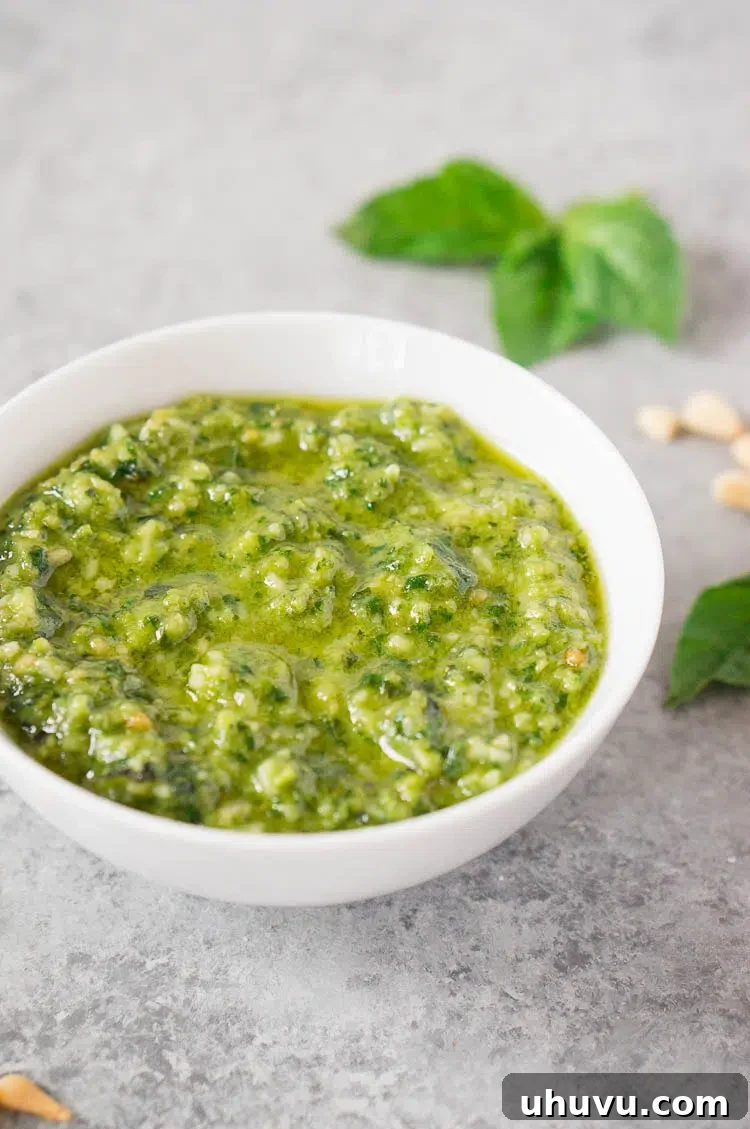
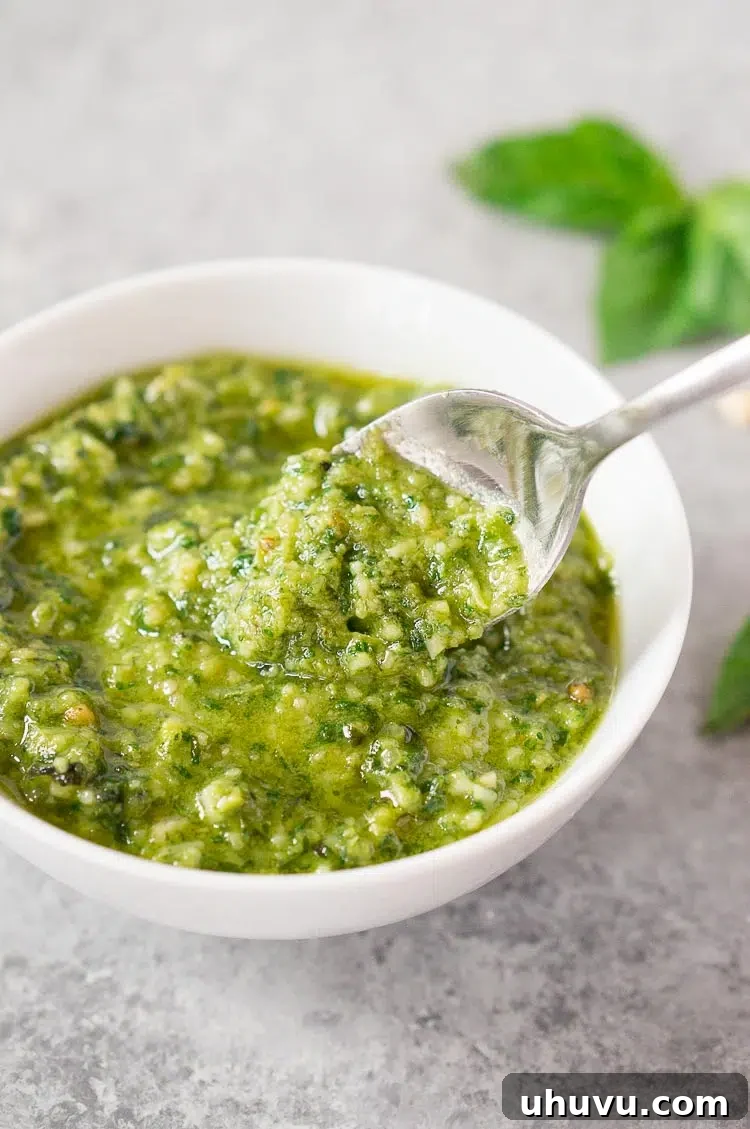
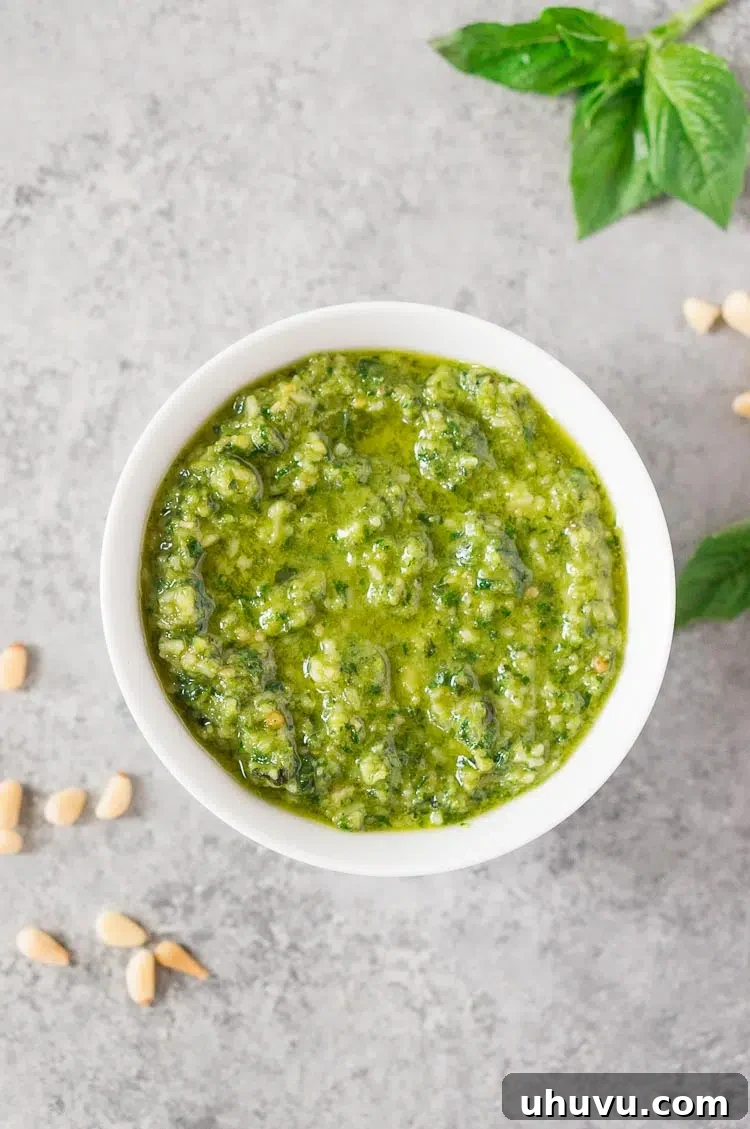
There’s nothing quite like the vibrant flavor of **homemade basil pesto**. Forget those lackluster jars from the supermarket; whipping up your own fresh, aromatic pesto is incredibly simple and yields a profoundly superior taste that will elevate any meal. This classic Italian sauce, crafted from fragrant basil, toasted pine nuts, pungent garlic, rich olive oil, and savory Parmesan cheese, comes together effortlessly in under **5 minutes**. It’s the quintessential culinary secret for adding a burst of fresh, herbaceous goodness to a myriad of dishes, whether tossed with warm pasta, spread generously on a sandwich, or drizzled over grilled vegetables.
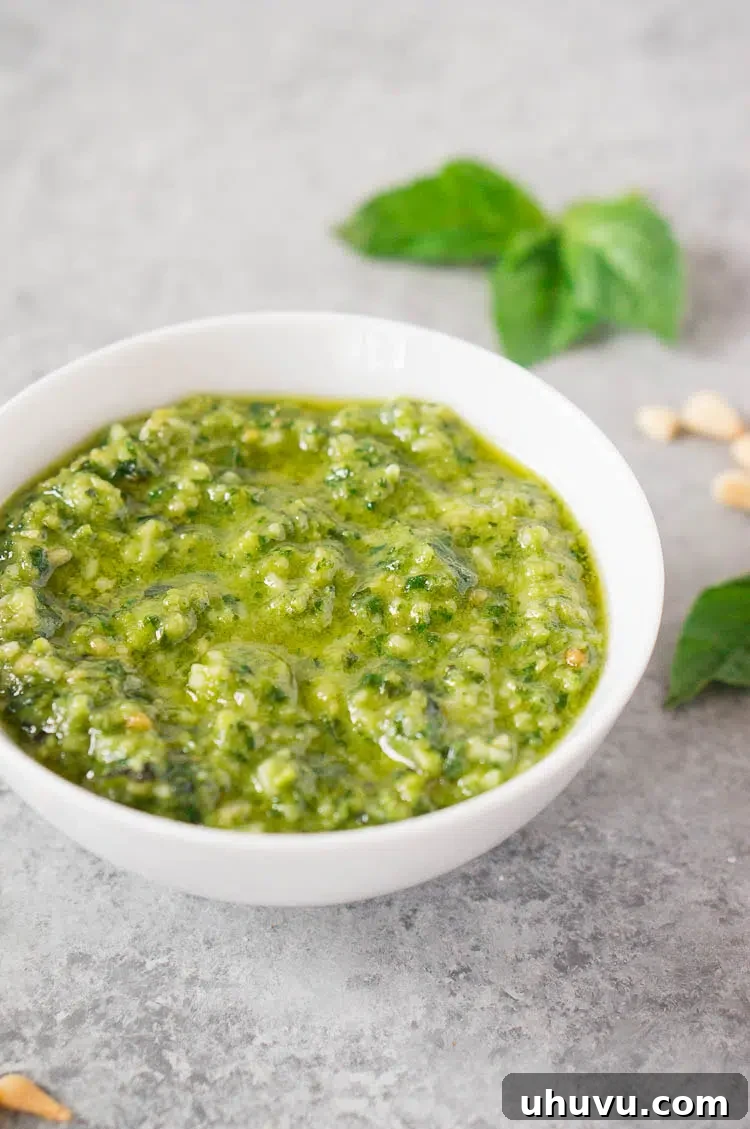
Making your own pesto at home is a revelation. The difference in freshness, aroma, and flavor compared to any store-bought variety is simply astounding. Once you experience the vibrant taste of freshly made pesto, you’ll never look back. It’s an incredibly simple recipe, relying on just a handful of wholesome ingredients, making it an essential addition to your culinary repertoire.
This healthy basil pesto recipe is not just delicious but also incredibly fast to prepare, taking less than 5 minutes from start to finish. It’s the perfect solution for quickly infusing your everyday meals with an authentic, homemade touch.
For those who love exploring new sauces and dips to brighten their dishes, be sure to explore more of our favorites, including our Thousand Island Dressing and Avocado Crema recipes.
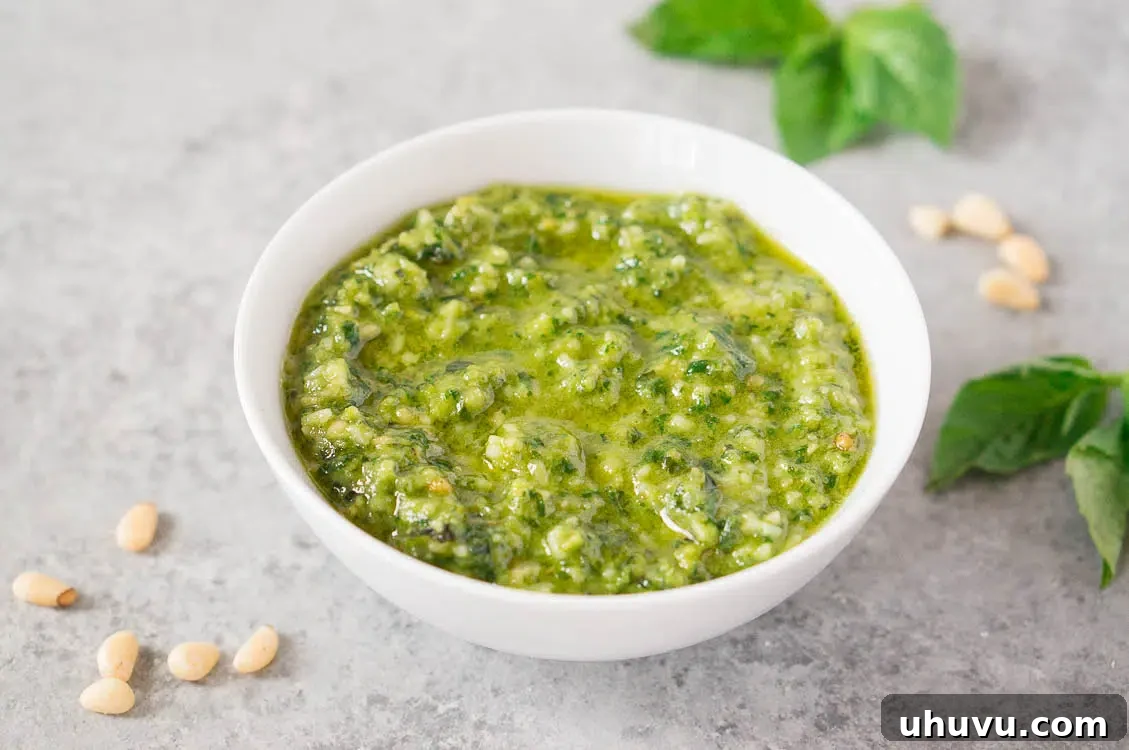
Why You’ll Fall in Love with This Homemade Pesto Recipe
There are countless reasons why this homemade basil pesto will become a staple in your kitchen. Beyond its incredible flavor, it offers practicality and versatility that busy home cooks will truly appreciate.
- Unbelievably Quick & Easy: This recipe redefines simplicity. With minimal preparation and a mere 5 minutes in a food processor, you’ll have a gourmet-quality sauce ready to go. It’s perfect for those busy weeknights when you need a flavorful meal without the fuss.
- Endlessly Versatile: Pesto is a culinary chameleon, transforming ordinary ingredients into extraordinary dishes. While famously paired with pasta, its applications extend far beyond. Think savory spreads for sandwiches, vibrant salad dressings, marinades for grilled chicken or fish, a flavorful base for pizza, or a bright addition to roasted vegetables and soups.
- Fresh & Intensely Flavorful: Experience the true essence of fresh ingredients. This pesto bursts with the bright, peppery notes of basil, the subtle sweetness of pine nuts, the aromatic punch of garlic, and the salty depth of Parmesan, all balanced by high-quality olive oil. It’s a healthy flavor boost that makes every bite memorable.
- Health Benefits Galore: Basil is rich in antioxidants and vitamins, olive oil provides healthy monounsaturated fats, and pine nuts offer protein and essential minerals. This pesto is not just delicious but also a wholesome addition to your diet.
- Cost-Effective & Customizable: Making pesto at home is often more economical than buying premium store-bought versions. Plus, you have complete control over the ingredients, allowing you to adjust seasonings to your preference or experiment with nut-free or dairy-free variations.
Essential Ingredients for the Best Basil Pesto
Crafting the perfect basil pesto requires a selection of fresh, high-quality ingredients. Each component plays a vital role in achieving that authentic, irresistible taste and texture. Below, we delve into the details of what makes this pesto truly special. For a full ingredients list with precise measurements, please refer to the comprehensive recipe card at the bottom of this page.
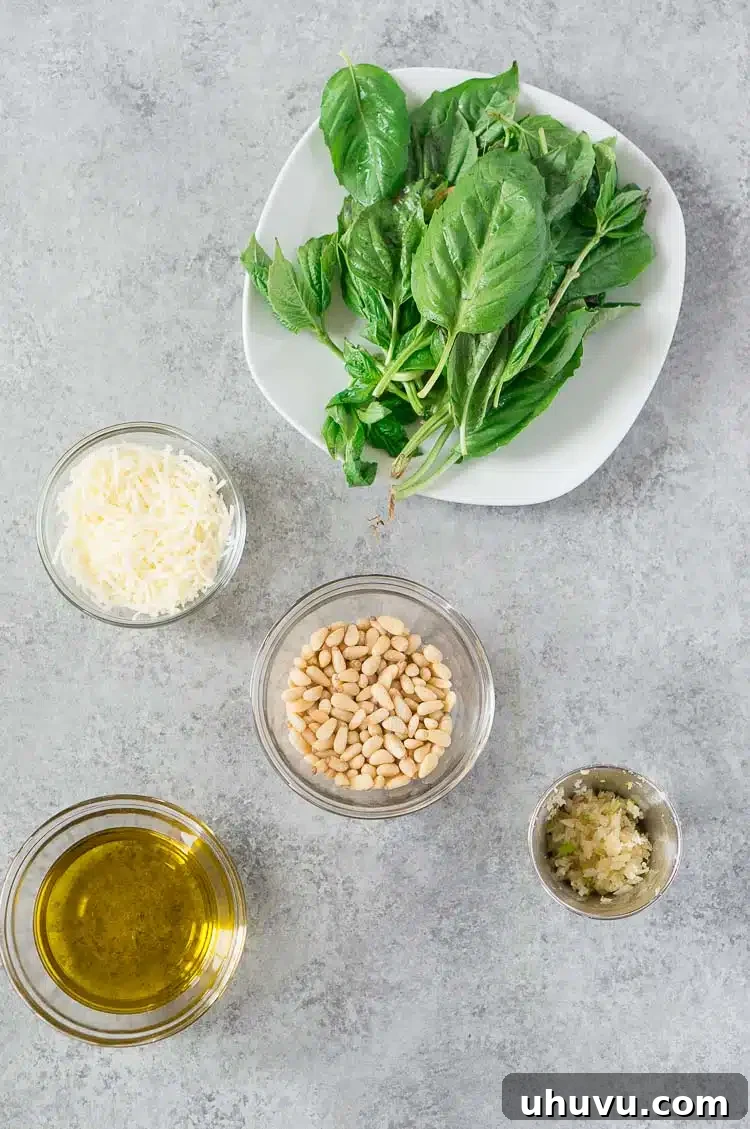
- Fresh Basil: The star of the show! For the most authentic and vibrant flavor, always opt for fresh, bright green basil leaves. Genovese basil is the traditional choice, offering a slightly sweet, peppery, and aromatic profile that defines classic pesto. Ensure the leaves are thoroughly washed and dried, with stems removed, to prevent any bitterness.
- Olive Oil: The quality of your olive oil significantly impacts the final taste. While extra virgin olive oil is often lauded for its robust flavor, for a more traditional pesto that lets the basil shine, many prefer a lighter-tasting, good quality olive oil. This ensures the oil complements, rather than overpowers, the delicate basil and other ingredients.
- Pine Nuts: These small, buttery nuts are traditionally used in pesto, providing a subtle creaminess and earthy texture. For an extra depth of flavor, lightly toasting the pine nuts in a dry pan for a few minutes until golden can make a world of difference. Keep an eye on them, as they can burn quickly!
- Garlic: Fresh garlic cloves are non-negotiable for the best pesto. Avoid jarred minced garlic, as its flavor can be muted or even slightly acrid. Use medium-sized cloves, and feel free to adjust the quantity based on your preference for a milder or more garlicky pesto. For a deeper, mellower garlic flavor, you can gently toast the cloves before adding them.
- Parmesan Cheese: Finely grated Parmesan cheese adds a crucial salty, umami depth and helps to thicken the sauce. Ideally, use freshly grated Parmigiano-Reggiano for its superior flavor and texture. Avoid pre-grated cheeses, which often contain anti-caking agents that can affect the pesto’s consistency and taste.
- Salt: A pinch of salt is essential to enhance and balance all the individual flavors within the pesto. Start with a smaller amount and adjust to taste after combining all ingredients, as the Parmesan cheese also contributes significant saltiness. Freshly ground black pepper can also be added for a subtle kick.
Step-by-Step Guide: How to Make the Perfect Basil Pesto
Making homemade basil pesto is surprisingly straightforward, requiring minimal effort and just a few simple steps. Here’s how you can create this flavorful sauce in minutes:
- Prepare Your Ingredients: Begin by washing and thoroughly drying your fresh basil leaves. It’s crucial that they are completely dry to prevent a watery pesto. Remove any thick stems. If you’re using pine nuts, consider lightly toasting them in a dry pan over medium heat for 2-3 minutes until fragrant and lightly golden – this truly enhances their flavor. Peel your fresh garlic cloves.
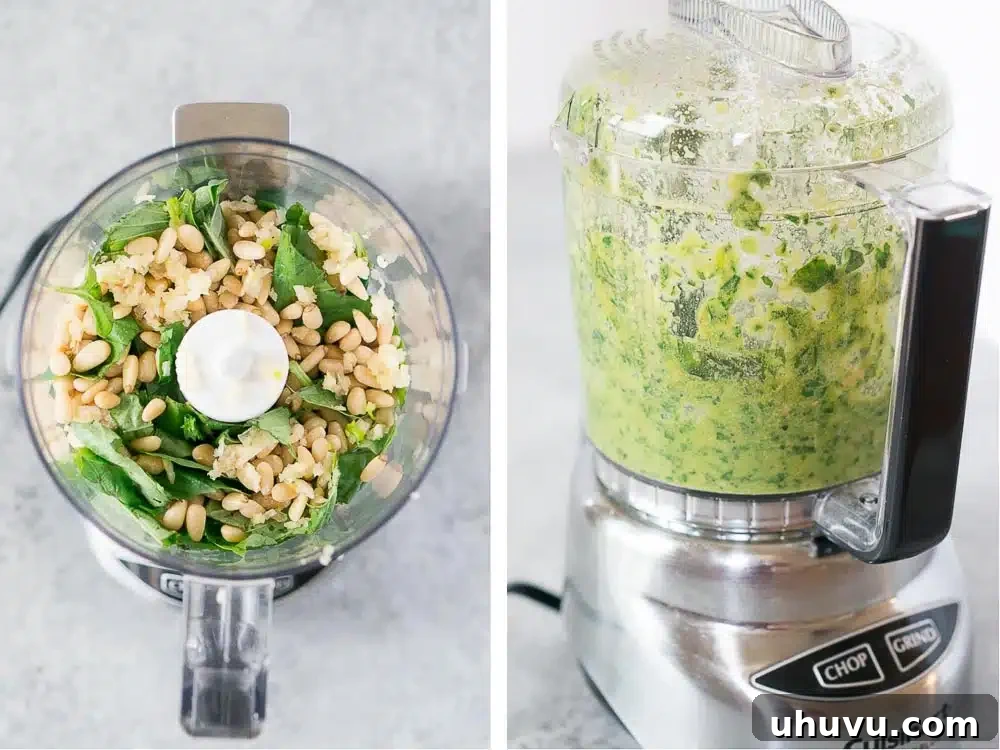
- Combine in a Food Processor: Add the prepared basil leaves, pine nuts, peeled garlic cloves, and salt to the bowl of a food processor.
- Pulse to Combine: Secure the lid and pulse the ingredients a few times to roughly chop and combine them. Scrape down the sides of the bowl with a spatula as needed to ensure everything is evenly processed.
- Stream in Olive Oil: With the food processor running on a low setting or pulsing continuously, slowly drizzle in the light olive oil through the feed tube. This gradual addition helps to emulsify the oil with the other ingredients, creating a smooth, cohesive pesto texture and preventing separation. Continue processing until a smooth, yet slightly coarse, paste forms.
- Add Parmesan Cheese: Once the pesto reaches your desired consistency, stop the food processor. Stir in the finely grated Parmesan cheese by hand or pulse briefly to incorporate it. Over-processing after adding the cheese can sometimes make the pesto too dense.
- Season and Taste: Taste the pesto and adjust seasoning as needed. You might want to add a little more salt, freshly ground black pepper, or even a squeeze of fresh lemon juice for brightness, depending on your preference.
EXPERT TIPS FROM NELI’S KITCHEN
Recipe Notes and Essential Tips for Perfect Pesto
Achieving the perfect pesto is easy with a few insider tips. These notes will help you customize your pesto, enhance its flavor, and maintain its beautiful green color.
- Nutty Substitutions & Nut-Free Options: While pine nuts are the traditional choice, feel free to experiment with other nuts. Walnuts offer a more robust, slightly bitter flavor, almonds provide a milder taste, and pistachios lend a beautiful green hue and unique sweetness. For a completely **nut-free pesto**, you can simply omit the nuts or substitute them with sunflower seeds or pumpkin seeds for a similar texture and a touch of earthiness.
- Always Opt for Fresh Garlic: The flavor of fresh garlic is unparalleled. Jarred, pre-minced garlic often lacks the pungent, vibrant taste required for a truly exceptional pesto. Fresh cloves deliver a sharper, cleaner flavor profile.
- Pulse, Don’t Blend! This is a crucial tip for pesto perfection. Instead of continuously blending, pulse your ingredients. This technique allows for better control over the texture, creating a slightly coarse pesto that traditionally clings better to pasta, chicken, or fish, rather than a completely smooth puree. Over-blending can also generate heat, which can dull the basil’s vibrant color and flavor.
- Stream the Oil Slowly for Emulsification: When adding the olive oil, do so in a slow, steady stream while the food processor is running (or pulsing). This gradual method is key to emulsifying the oil with the other ingredients, creating a creamy, cohesive sauce that won’t separate easily. Adding it all at once can result in an oily, less integrated pesto.
- Keep it Fresh in the Fridge: Once made, transfer your pesto to an airtight container. To prevent oxidation (which can turn the pesto brown) and keep it fresh, pour a thin layer of olive oil over the surface before sealing. This creates a protective barrier. Refrigerated pesto will maintain its freshness and vibrant flavor for up to 5-7 days.
- Freeze for Future Flavor: Pesto freezes beautifully! This makes it an excellent candidate for meal prepping. Freeze it in ice cube trays for convenient, single-serving portions. Once frozen, transfer the cubes to a freezer-safe bag or container. These handy portions can be directly stirred into hot pasta, soups, or stews, providing a quick and flavorful boost to any meal.
Storing Your Homemade Basil Pesto Sauce for Lasting Freshness
One of the many advantages of homemade pesto is its excellent shelf life, especially when stored correctly. Whether you plan to use it within a week or save it for months, these storage tips will help you preserve its vibrant color and incredible flavor.
Refrigerator Storage
After preparing your delicious basil pesto, transfer it to clean, airtight jars. To significantly extend its freshness and prevent oxidation, which can cause the top layer to brown, gently drizzle a thin layer of olive oil over the surface of the pesto. This oil layer acts as a barrier, sealing out air. Stored this way, your homemade pesto will remain perfectly fresh and flavorful in the refrigerator for up to 5 to 7 days. You can easily scoop out the amount you need directly from the fridge whenever inspiration strikes.
Freezer Storage
Basil pesto sauce is an ideal candidate for freezing, and we highly recommend making a double or even triple batch to ensure you always have some on hand! Freezing allows you to enjoy the taste of fresh summer basil long after the season ends.
The most convenient way to freeze pesto is in ice cube trays. Simply spoon the pesto into the compartments, filling them almost to the top. Once the pesto cubes are completely frozen (usually overnight), pop them out and transfer them to freezer-safe bags or containers. This method provides perfectly portioned amounts that can be easily added straight to warm pasta, soups, sauces, or stews without needing to thaw the entire batch. Frozen pesto will retain its quality and flavor for up to 6 months.
Alternatively, you can store larger quantities in freezer-safe containers. When you’re ready to use it, simply transfer the container to the refrigerator overnight to thaw. Remember to add a layer of olive oil on top even when freezing in containers to help preserve color and flavor.
Frequently Asked Questions About Basil Pesto
Homemade basil pesto is incredibly versatile! It’s fantastic mixed with warm or cold pasta for an easy weeknight meal, spread on sandwiches or wraps, used as a vibrant base for homemade pizza, or stirred into Caprese salads. Try it drizzled over baked cod, mixed into spaghetti squash, or as a flavorful marinade for pesto chicken. It also pairs wonderfully with roasted vegetables, eggs (scrambled or omelets), or as a swirl in minestrone soup.
While fresh basil delivers the absolute best flavor and brightest green color, you can certainly use frozen basil in a pinch, especially if you harvested a large amount from your garden. Just be sure to thaw it completely and squeeze out any excess moisture before adding it to the food processor. Be aware that the texture and color might be slightly different than with fresh basil.
Absolutely! Pine nuts are traditional, but you can get creative with other nuts. Walnuts offer a robust, earthy flavor (sometimes slightly bitter), almonds provide a milder, sweeter note, and cashews give a creamy texture. Pistachios are also a fantastic option, lending a beautiful green color and unique flavor. If you have nut allergies, consider using sunflower or pumpkin seeds for a nut-free alternative.
Yes, you can easily make a delicious dairy-free or vegan pesto! Simply omit the Parmesan cheese. To replace the cheesy, umami flavor, you can add a couple of tablespoons of nutritional yeast. This will give your pesto a savory, cheese-like depth without any dairy, making it suitable for a wider range of dietary needs.
Pesto can turn brown due to oxidation, which happens when the basil leaves are exposed to air. To prevent this, ensure you always cover the surface of your stored pesto with a thin layer of olive oil. Also, avoid over-processing, as the heat generated can accelerate browning. Blanching basil leaves briefly before making pesto can also help retain their vibrant green color.
If your pesto is too thick, gradually add a little more olive oil (or even a tablespoon of water) while pulsing until it reaches your desired consistency. If it’s too thin, you can try adding a few more basil leaves, a small handful of extra nuts, or a bit more grated Parmesan cheese to thicken it up.
Explore More Easy and Healthy Recipes
If you loved making this easy basil pesto, you’ll surely enjoy these other simple and healthy recipes designed to make your cooking experience delightful and stress-free:
- Easy Meal Prep Recipes & Tips: Streamline your week with smart meal planning.
- Easy Dinner Ideas You Can Make with Pantry Staples: Discover delicious meals using ingredients you already have.
- Easy Freezer Meals & Tips: Prepare ahead and enjoy convenient, homemade meals anytime.
- Easy & Healthy Sheet Pan Dinners: Minimal cleanup and maximum flavor with these one-pan wonders.
If you enjoyed this Basil Pesto recipe or any other recipe on my blog, please leave a ⭐ star rating and let me know how it went in the 📝 comments below. Your feedback is greatly appreciated, and thanks for visiting!
Pin this now to find it later
Pin It
Rating: 5 out of 5 stars (from 4 votes)
Homemade Basil Pesto Recipe
Neli Howard
5 minutes
5 minutes
6
servings
Print Recipe
Ingredients
- 2 cups packed fresh basil leaves, stems removed
- ⅓ cup pine nuts (lightly toasted for best flavor, optional)
- 3 medium garlic cloves, peeled
- ⅓ cup light olive oil
- ½ teaspoon salt (or to taste)
- ¼ cup finely grated Parmesan cheese
- Optional: Freshly ground black pepper to taste
Instructions
-
Add the basil leaves, pine nuts (if using and toasted), garlic, and initial ½ teaspoon of salt to a food processor.
-
Process (pulse, don’t continuously blend) everything until coarsely chopped. Then, with the food processor running or pulsing, slowly drizzle in the olive oil through the feed tube until a smooth, slightly textured sauce forms (about 1 minute). Stop to scrape down the sides of the bowl as necessary.
-
Stir in the finely grated Parmesan cheese. Taste the pesto and season with additional salt and freshly ground black pepper to your preference.
Notes
- Pine nuts are a traditional ingredient in basil pesto, but you can also use walnuts, almonds, or pistachios if you have those to hand. You can also make it nut-free by omitting the pinenuts or substituting with sunflower or pumpkin seeds.
- Use fresh garlic cloves rather than jarred for the best, most authentic flavor.
- Pulse the pesto, don’t blend it continuously. This method creates a desirable coarse texture that clings better to pasta, chicken, or fish, and helps prevent oxidation.
- Stream in the oil slowly using a steady pulse to keep the sauce together and ensure proper emulsification, preventing the oil from separating.
- Keep the pesto refrigerated in an airtight container with a thin layer of olive oil on top once you have made it. It will last 5-7 days.
- You can also freeze it in ice cube trays for convenient portions, which can then be added directly to pasta, chicken, or fish for a quick & flavorful meal. Frozen pesto keeps well for up to 6 months.
Nutrition
Calories: 165kcal
|
Carbohydrates: 2g
|
Protein: 3g
|
Fat: 17g
|
Saturated Fat: 3g
|
Cholesterol: 3mg
|
Sodium: 262mg
|
Potassium: 71mg
|
Fiber: 1g
|
Sugar: 1g
|
Vitamin A: 567IU
|
Vitamin C: 4mg
|
Calcium: 68mg
|
Iron: 1mg
Nutrition Disclaimer: Nutritional values are estimates and may vary with ingredients, brands, and portion sizes. For accuracy, use your preferred nutrition calculator.