
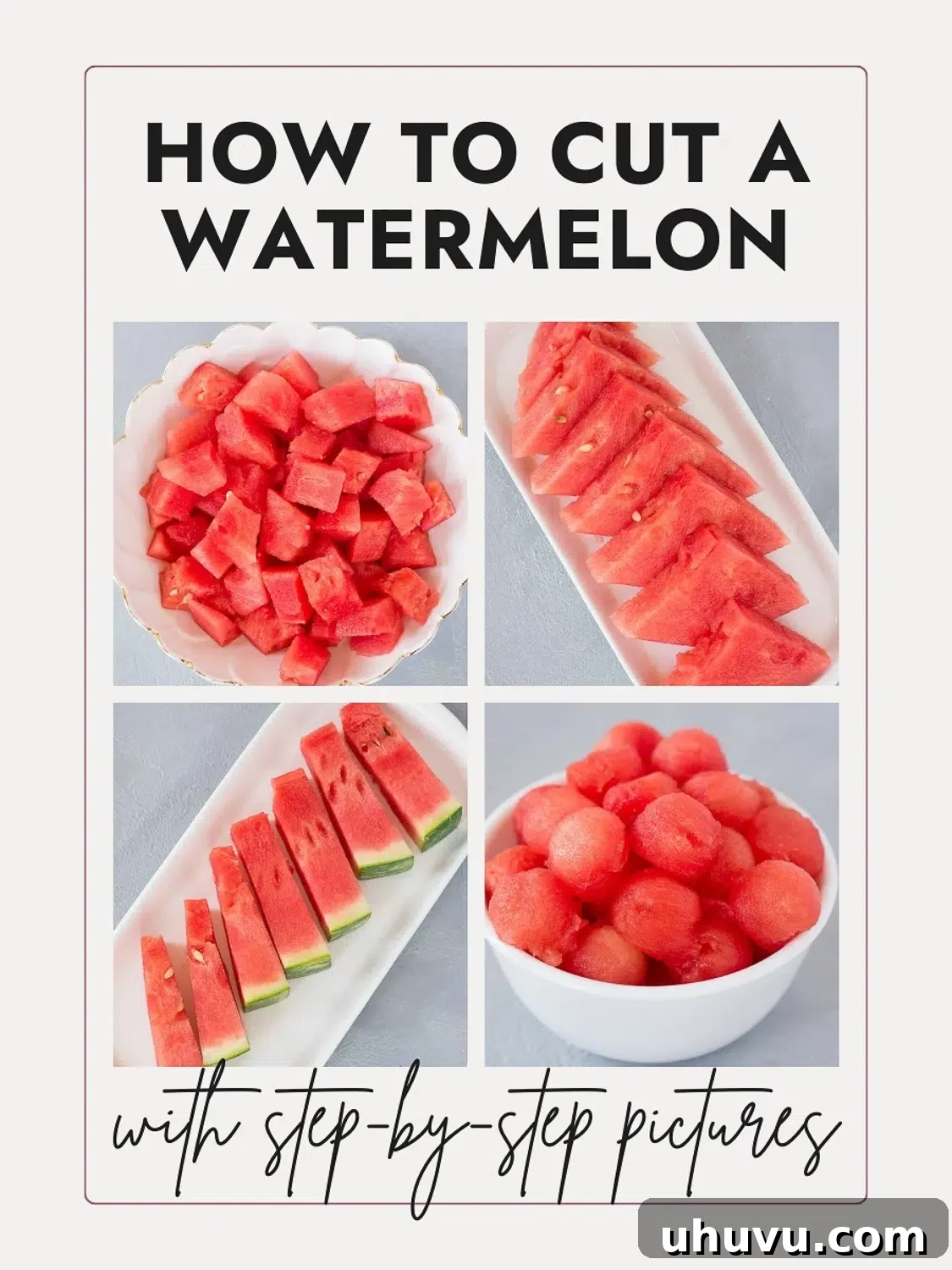
Dive into the refreshing world of watermelon with this comprehensive guide! Learn how to effortlessly cut a whole watermelon into perfect cubes, convenient wedges, fun sticks, or elegant balls, maximizing every juicy bite. We’ll also share insider tips on picking the sweetest, most flavorful watermelon and storing it to keep that summer goodness lasting longer.
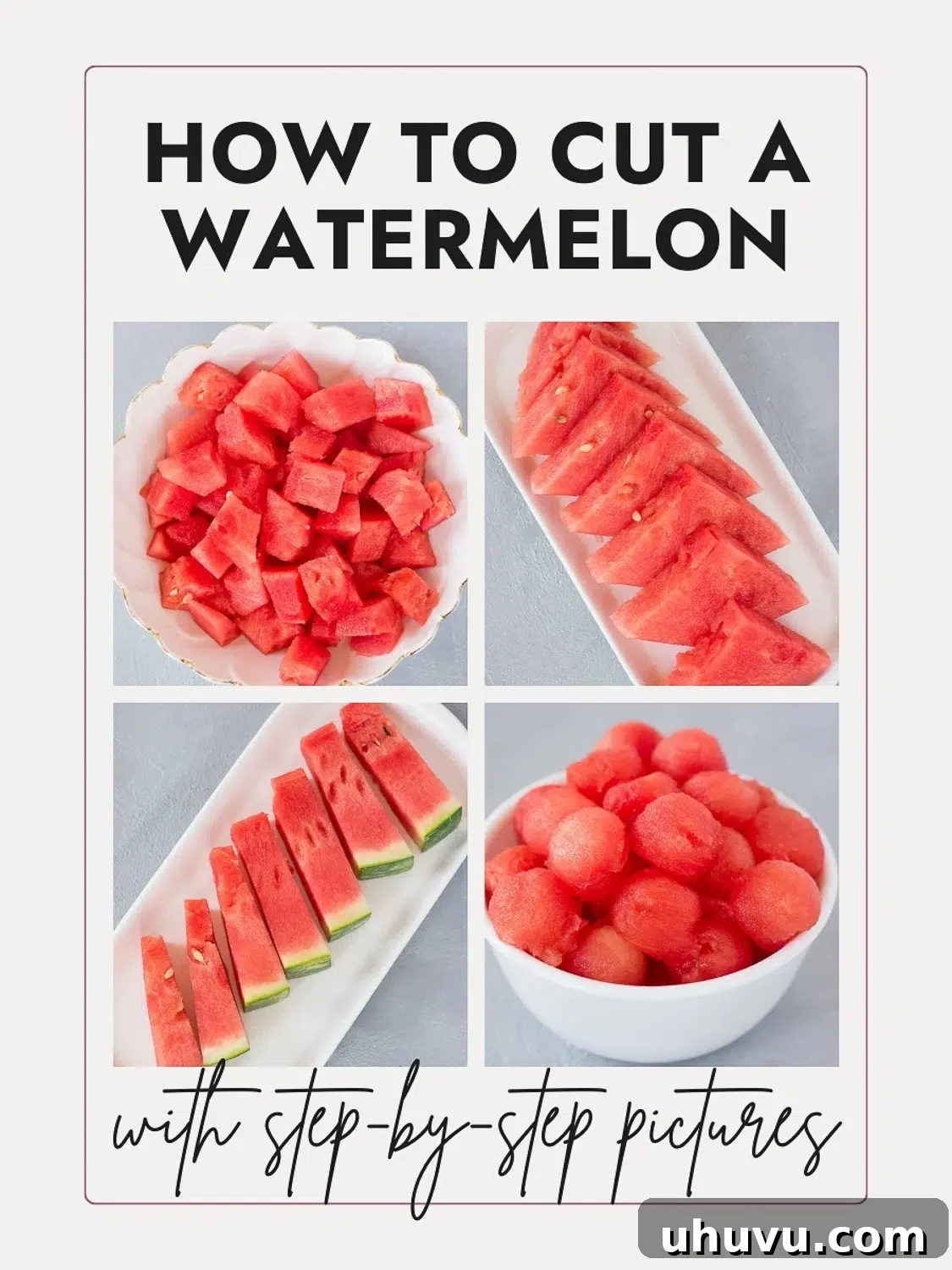
Mastering Watermelon: Your Ultimate Guide to Picking, Cutting, and Enjoying This Summer Fruit
Summer just isn’t complete without the delightful sweetness and refreshing crunch of watermelon. This iconic fruit is a versatile star, perfect for enhancing fresh fruit salads, adding a unique twist to desserts, blending into vibrant juices, or simply enjoying as a hydrating snack on a warm day. Personally, I adore serving it in this incredible Watermelon Feta Salad!
While pre-cut watermelon from the grocery store might seem convenient, it often comes with a hefty price tag and compromises on freshness. By learning simple and effective cutting methods, you can easily prepare a whole watermelon at home, saving money and ensuring the highest quality for yourself, your family, or a gathering of guests. In this guide, I’ll walk you through step-by-step photos and clear instructions on how to cut watermelon with ease.
But before we dive into the cutting techniques, let’s unlock the secret to finding that truly delicious and juicy watermelon every time. A great watermelon experience starts with a smart pick!
If you’re a fan of simple, refreshing fruit recipes, you absolutely can’t miss my healthy Strawberry Popsicles – they are the ultimate healthy treat for any hot day, much like a perfectly ripe slice of watermelon.
How to Pick the Best Watermelon Every Time
Not all watermelons are created equal. Finding the perfect one can feel like a challenge, but with these simple yet effective tips, you’ll be able to select the sweetest and juiciest watermelons with confidence:
- Feel the Weight: Lift the watermelon. It should feel surprisingly heavy for its size. A dense watermelon indicates it’s full of water and ripe juice, rather than being dried out.
- Look for the Field Spot: This is arguably the most crucial indicator. Search for a creamy yellow, orange-yellow, or even off-white patch on the underside of the watermelon. This “field spot” is where the melon rested on the ground and ripened in the sun. A darker, creamier yellow signifies a longer time on the vine, resulting in more sweetness. Avoid melons with white or greenish field spots, as they were likely picked too early.
- Check for Webbing: Examine the rind for brown, web-like scarring. These marks indicate sugar seeping out as the fruit developed, often a sign of bees visiting the flower, which further contributes to sweetness. The more webbing, the sweeter the melon tends to be!
- Tap for a Hollow Sound: Gently tap or knock on the watermelon’s rind with your knuckles. A ripe watermelon should produce a deep, hollow sound, almost like a drum. If it sounds dull or flat, it might be overripe or underripe. A high-pitched sound could mean it’s not quite ready.
- Observe the Color: A ripe watermelon should have a dark green, rather than a pale or shiny, appearance. Dullness in color is often a good sign of ripeness.
- Inspect the Stem: A dry, shriveled stem or tendril indicates the watermelon was harvested when fully ripe. A green stem might suggest it was picked prematurely.
Essential Tips for Preparing Your Watermelon and Cutting Station
Before you begin slicing into your magnificent melon, a little preparation goes a long way in ensuring safety, cleanliness, and efficiency. Setting up your workstation correctly will make the entire process smoother and more enjoyable:
- Thoroughly Wash the Watermelon: Even though you won’t be eating the rind, it’s crucial to wash the entire watermelon under cool, running water. This removes any dirt, bacteria, or pesticide residues from the surface that could transfer to the edible flesh during cutting. A clean scrub brush can be helpful here.
- Choose the Right Knife: Safety and clean cuts depend heavily on your knife. Opt for a large, sharp chef’s knife or a serrated knife with a blade of at least 8 inches in length. A sharp blade requires less force, reducing the risk of slipping. You might also consider specialty tools like a watermelon slicer or a dedicated watermelon cutter for added convenience, though a good knife is usually sufficient.
- Secure Your Cutting Board: Use a large, sturdy cutting board that can accommodate the entire watermelon and provide ample space for slicing. To prevent the board from slipping, place a moist paper towel or a non-slip mat underneath it. This stability is critical for safety when dealing with a large, round, and potentially wobbly fruit.
- Keep Cleaning Supplies Handy: Watermelons are famously juicy, and spills are almost inevitable. Have a clean cloth or a roll of paper towels within easy reach to quickly wipe up any watermelon juice, keeping your workspace tidy and non-slippery.
- Prepare a Receiving Bowl or Platter: Before you make your first cut, ensure you have a large bowl, container, or platter ready to hold the cut watermelon pieces. This minimizes pauses in your workflow and keeps your kitchen organized.
- Clear Your Workspace: Ensure the area around your cutting board is clear of clutter. A spacious, organized area allows for safer and more efficient cutting.
Mastering Watermelon Cutting Techniques: A Step-by-Step Guide
Now that you’ve selected a stellar watermelon and prepared your cutting station, it’s time to transform it into delectable, ready-to-eat pieces. The key to mastering watermelon cutting lies in creating a stable base and using precise cuts. Let’s explore four popular methods for serving this magnificent fruit.
General First Steps for Safe Cutting
Regardless of the final shape you desire, always start with these foundational steps to ensure safety and stability:
- Trim the Ends: Place the watermelon horizontally on your cutting board. Carefully cut off about a 1/2-inch to 1-inch slice from both ends of the watermelon. This creates two flat, stable surfaces.
- Create a Stable Base: Stand the watermelon upright on one of its newly flattened ends. This stable base is essential for safe slicing and prevents the melon from rolling.
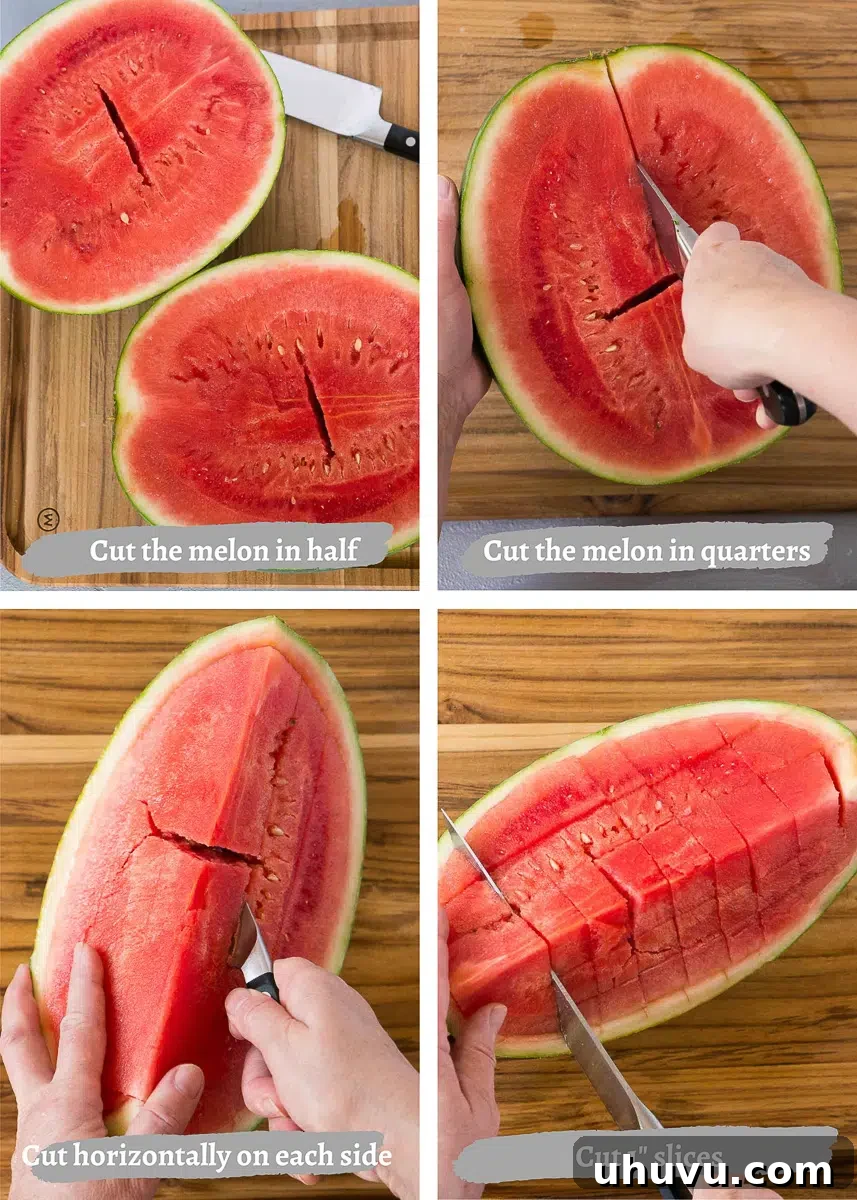
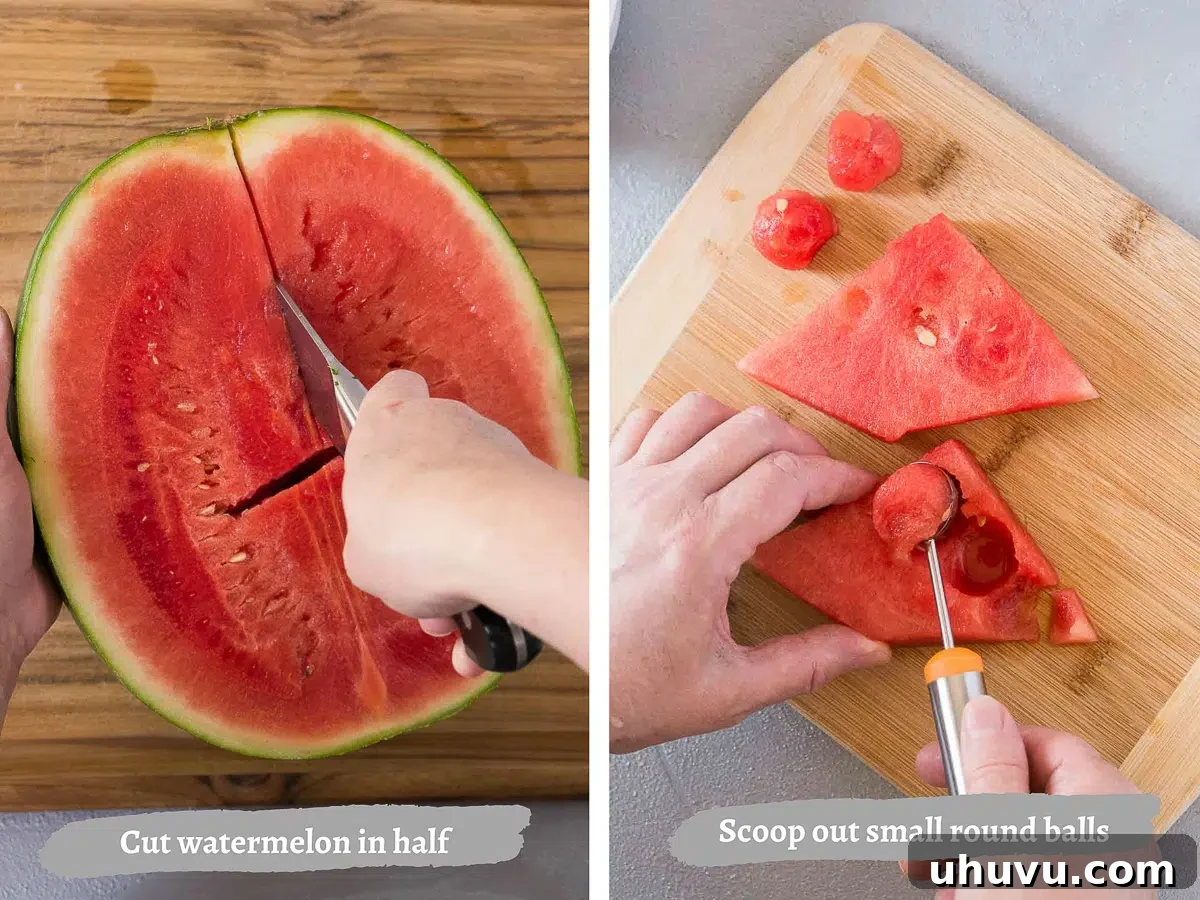
- Slice in Half: With the watermelon standing tall, use your large, sharp knife to carefully cut it in half lengthwise, from top to bottom. You will now have two large, flat-sided halves.
How to Cut Watermelon into Cubes
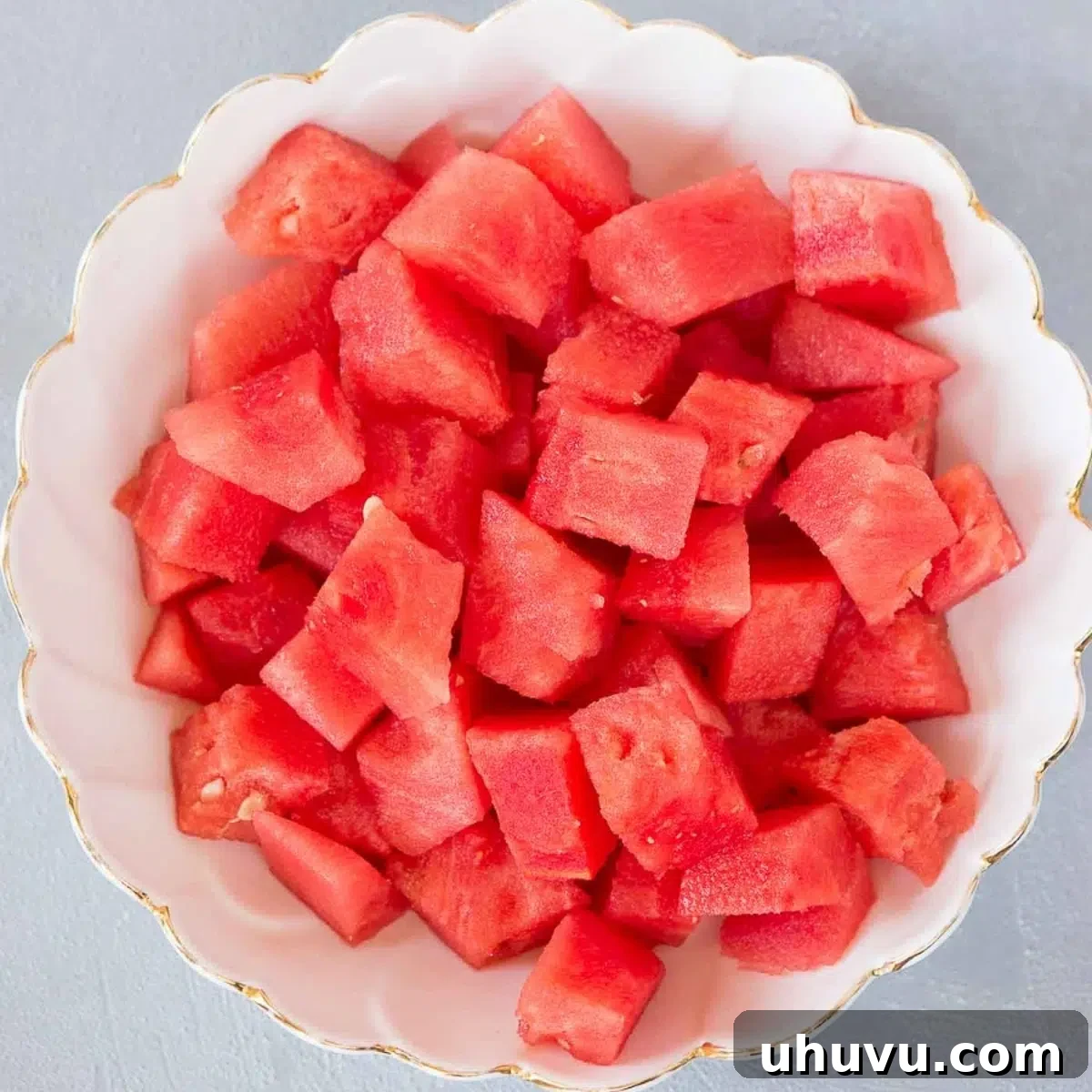
Watermelon cubes are incredibly versatile, perfect for snacking, adding to fruit salads, or blending into smoothies. This method results in uniform, bite-sized pieces that are easy to eat.
- After slicing the watermelon in half lengthwise (as per the general first steps), lay one half cut-side down on your cutting board.
- Carefully slice this half lengthwise into 1-inch thick planks. Repeat with the other half.
- Stack a few planks on top of each other (if manageable) or work with one plank at a time. Make 1-inch crosswise cuts to create long, uniform strips.
- Then, rotate the strips and make 1-inch cuts perpendicular to your previous cuts, creating perfect cubes.
- Alternatively, for rind-off cubes: place one half of the melon cut-side down. Using your knife, slice off the rind by following the curve of the melon, working your way around. Once the rind is removed, you’ll have a large, red cylinder of watermelon flesh. Slice this into planks, then into strips, and finally into cubes as described above.
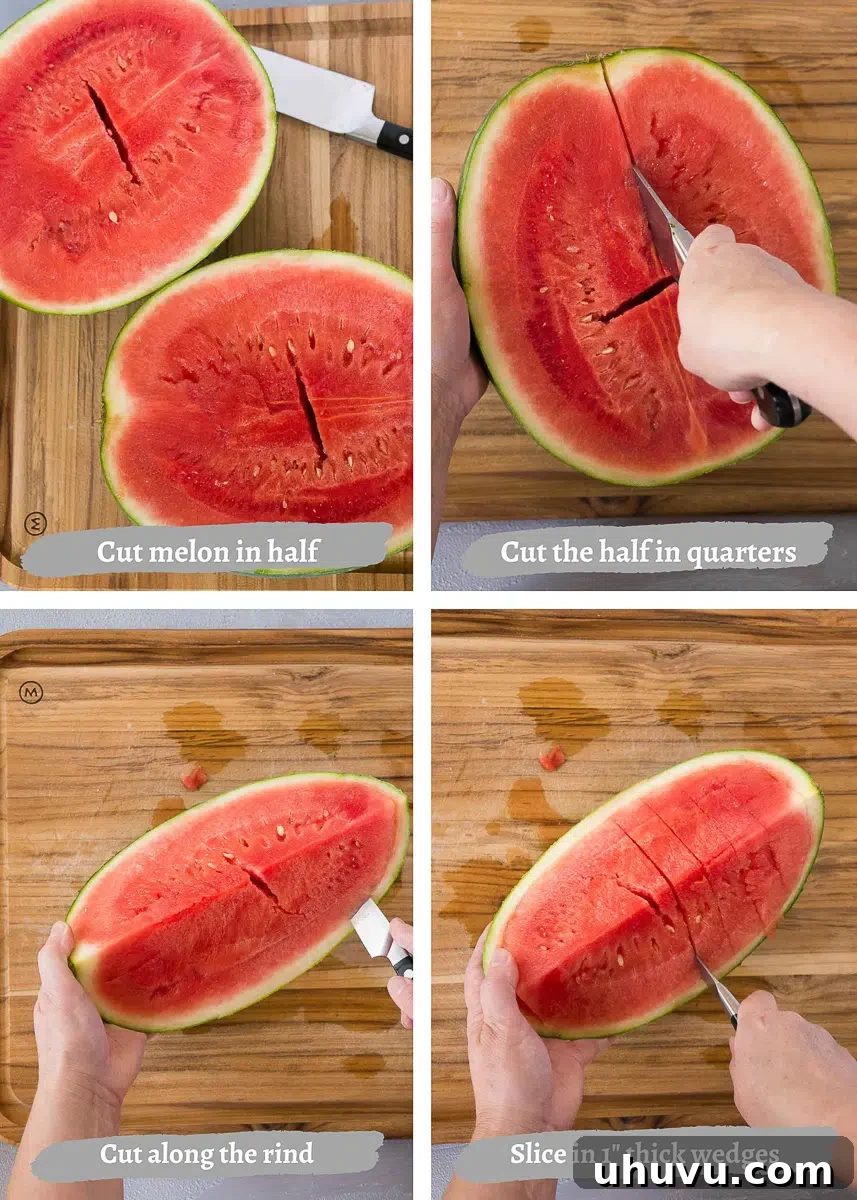
How to Cut Watermelon into Wedges
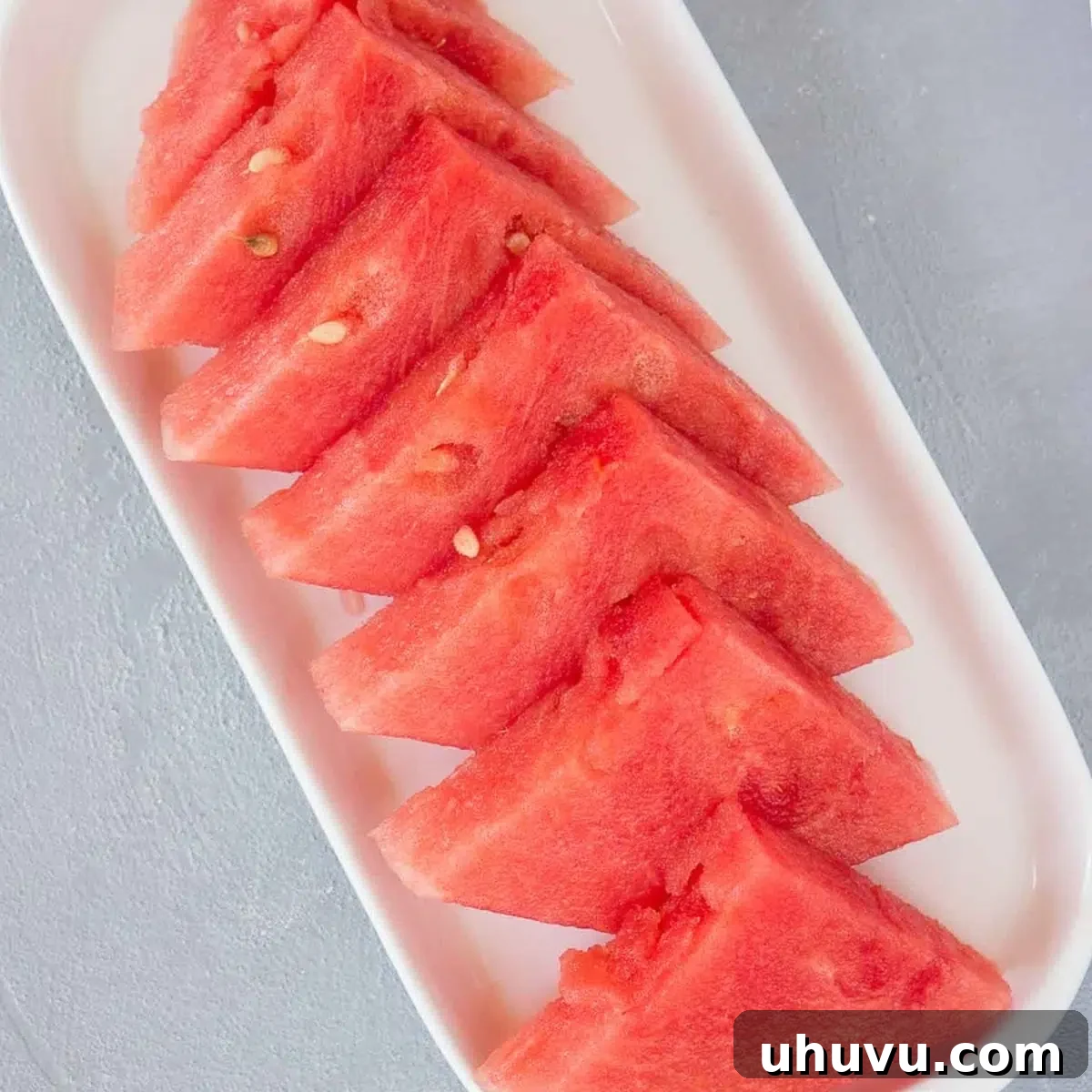
Watermelon wedges are the classic, no-fuss way to enjoy this fruit. They’re ideal for picnics, barbecues, or any casual gathering where guests can grab a piece and enjoy without needing utensils. This is often my preferred method for simple serving.
- Begin by cutting the watermelon in half lengthwise and then each half into quarters, as per the initial safety steps.
- Take one quarter of the watermelon and place it cut-side down on your board.
- Now, slice this quarter lengthwise into 1-inch thick wedges. The rind will still be attached, providing a convenient “handle” for eating.
- Repeat with the remaining quarters.
How to Cut Watermelon into Sticks
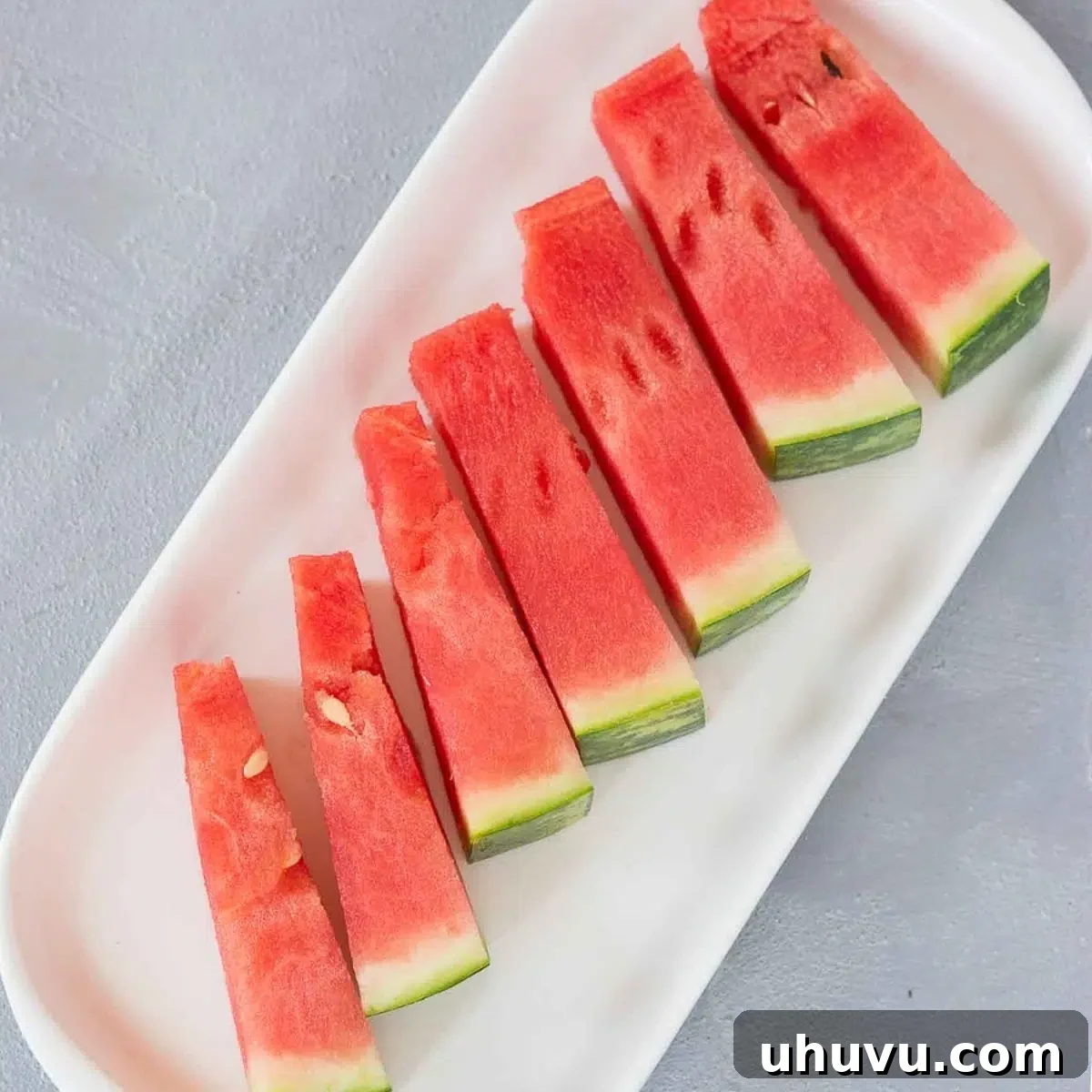
Watermelon sticks are a fantastic, kid-friendly option that minimizes mess and maximizes fun. They are perfect for little hands, great for dipping into yogurt or fruit sauces, and make for an easy grab-and-go snack. My kids absolutely love these!
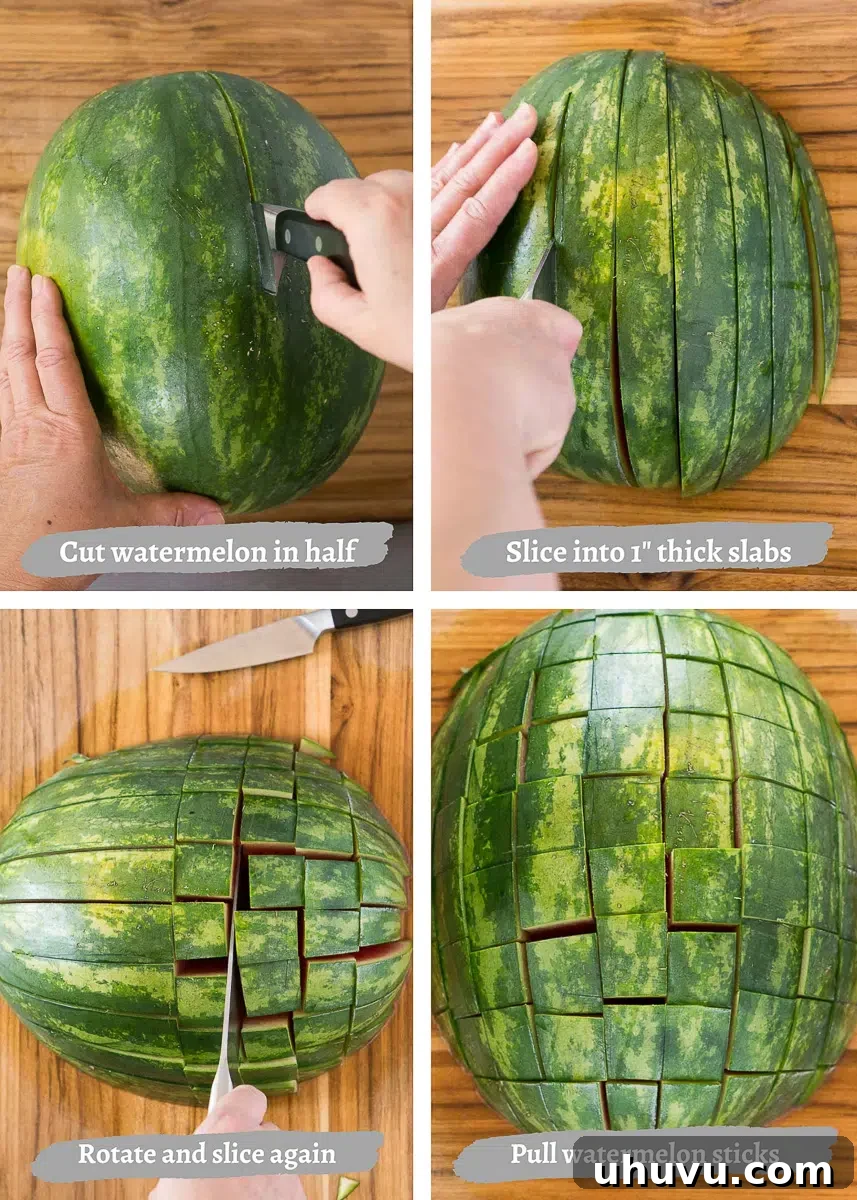
- After you’ve cut the watermelon in half lengthwise (following the general first steps), lay each half cut-side down on your cutting board.
- Slice vertically into 1-inch thick slabs, cutting all the way through to the rind but without cutting through the rind itself at the bottom. Think of it like scoring the melon.
- Rotate the watermelon 90 degrees and cut perpendicular to your previous slices, again making 1-inch thick slabs down the width of the melon, cutting through to the rind. This creates a grid pattern within the rind.
- Once the grid is complete, you can easily pull out individual watermelon sticks. The rind acts as a natural handle, making them incredibly convenient to eat.
How to Scoop Watermelon Balls
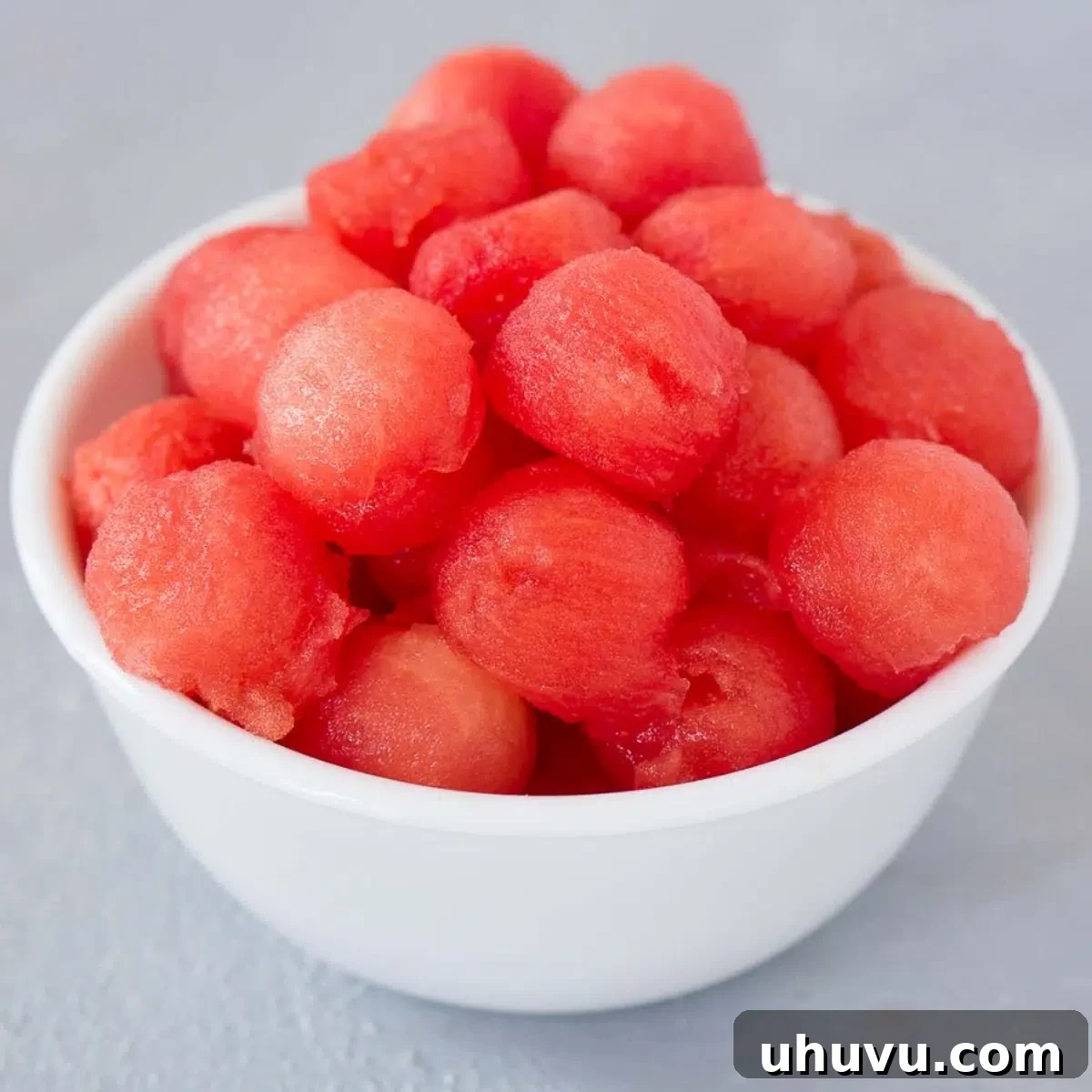
Watermelon balls are a charming addition to any fruit salad, dessert platter, or as a garnish for drinks. They add a touch of elegance and whimsy. This method can be used on any size melon, and the perfectly round balls can be stored or served immediately.
- After cutting the watermelon in half (using the general first steps), lay one half cut-side up on your cutting board.
- Using a melon baller (or a small cookie scoop for slightly larger balls), press the baller into the watermelon flesh and twist gently to scoop out a perfect sphere.
- Continue scooping out balls from the entire exposed surface of the watermelon half. As you work, you can scrape away excess flesh around the scooped areas to make it easier to get more balls.
- Repeat with the other watermelon half.
- The remaining flesh, though not perfectly round, is still delicious and can be enjoyed as a snack, added to smoothies, or juiced.
Creative and Decorative Watermelon Serving Ideas
For special occasions or just to add a bit of flair, get creative with decorative watermelon cuts. A beautifully carved watermelon can serve as a stunning centerpiece, while fun shapes can delight children and adults alike.
- Watermelon Carving: If you’re feeling ambitious, consider carving a watermelon into a basket, a themed sculpture, or intricate patterns. Start by sketching your design on the rind with a food-safe marker. Use a small paring knife or a specialized carving tool kit to carefully carve out your design. Remember, practice makes perfect, so don’t be discouraged if it takes a few tries to achieve your desired look.
- Cookie Cutter Shapes: For a simpler yet equally charming decorative touch, cut watermelon into 1-inch thick slices (like you would for sticks, but remove the rind first to create flat discs). Lay these slices flat on the cutting board and use various cookie cutters to stamp out fun shapes. Stars are perfect for a Fourth of July celebration, hearts for Valentine’s Day or anniversaries, or even animal shapes for a child’s birthday party.
Maximizing Your Watermelon: Health Benefits and Culinary Uses
Beyond its delicious taste, watermelon is a powerhouse of nutrition and incredibly versatile in the kitchen. Understanding its benefits and varied uses can help you enjoy this fruit even more.
Health Benefits of Watermelon
Watermelon is more than just a refreshing treat; it’s packed with health-promoting nutrients:
- Excellent Hydration: Comprising over 90% water, watermelon is incredibly hydrating, making it perfect for replenishing fluids on hot days or after exercise.
- Rich in Vitamins and Minerals: It’s a good source of Vitamin C, which supports immune function, and Vitamin A, vital for eye health. It also provides potassium, an important electrolyte.
- Loaded with Antioxidants: Watermelon contains lycopene, a powerful antioxidant responsible for its red color. Lycopene is linked to heart health and may help protect against certain types of cancer.
- Contains Amino Acids: It provides citrulline, an amino acid that can help improve blood flow and reduce muscle soreness.
Culinary Uses Beyond Simple Snacking
Don’t limit watermelon to just eating slices! Its unique flavor and texture make it a fantastic ingredient in many dishes:
- Refreshing Beverages: Blend watermelon into fresh juices, smoothies, or even infused water. It also makes a fantastic base for summer cocktails and mocktails.
- Savory Salads: Watermelon pairs surprisingly well with savory ingredients. Try it in salads with feta cheese, mint, red onion, or balsamic glaze for a sweet and savory sensation (like my Watermelon Feta Salad).
- Grilled Watermelon: Grilling watermelon caramelizes its natural sugars, adding a smoky depth of flavor that’s unexpected and delicious. Serve it as a side or a unique dessert.
- Frozen Treats: Puree watermelon and freeze it into homemade popsicles or sorbet for a healthy and cooling dessert. If you love fruit-based frozen treats, you might also enjoy these healthy Strawberry Popsicles.
Storage Solutions for Fresh Watermelon
Proper storage is key to extending the life and freshness of your watermelon, whether whole or cut. Here’s how to keep your melon delicious for as long as possible:
Whole, Uncut Watermelon
A whole, uncut watermelon is quite resilient. You can store it unrefrigerated for up to two weeks. For optimal shelf life, place it in a cool, dark place away from direct sunlight. This helps preserve its freshness and prevents premature ripening or spoilage.
Refrigerator Storage for Cut Watermelon
Once you cut into a watermelon, its shelf life significantly shortens, and it requires refrigeration to maintain quality and safety:
- With Rind: For larger pieces with the rind still attached (like wedges or halves), wrap them tightly in plastic wrap or aluminum foil to prevent them from drying out and absorbing odors from other foods.
- Small Pieces (Cubes, Balls, Sticks): Place any smaller, rind-less pieces in an airtight container. This keeps them fresh, prevents contamination, and minimizes moisture loss.
- Consume Quickly: Regardless of how you store it, cut watermelon is best consumed within three to five days for optimal taste and texture.
Freezer Storage for Longer Preservation
If you have an abundance of watermelon or want to enjoy its flavors beyond peak season, freezing is an excellent option. While the texture will change after thawing, frozen watermelon is perfect for smoothies and chilled beverages.
- Prepare for Freezing: Cut the watermelon into cubes or balls, removing all rind.
- Flash Freeze: Spread the watermelon pieces in a single layer on a baking sheet lined with parchment paper. Place the baking sheet in the freezer for 2-3 hours, or until the pieces are individually frozen solid. This prevents them from clumping together.
- Transfer to Freezer Bag: Once flash-frozen, transfer the pieces to a heavy-duty freezer bag or an airtight freezer-safe container. Remove as much air as possible to prevent freezer burn.
- Usage: Frozen watermelon can be stored for up to 6-8 months. You can use it directly from frozen in smoothies or thaw it in the fridge for use in drinks, ensuring nothing goes to waste.
Common Watermelon Cutting Mistakes to Avoid
Even with the best intentions, some common errors can make watermelon cutting frustrating or unsafe. Be mindful of these pitfalls:
- Using a Dull Knife: A dull knife is a dangerous knife. It requires more force, increasing the chance of slippage and injury. Always use a freshly sharpened knife.
- Not Creating a Flat Base: Trying to cut a round watermelon without first creating a stable flat surface is a recipe for disaster. Always trim the ends first.
- Insufficient Cutting Board Size: A small cutting board won’t contain the melon or its juices, leading to a messy and potentially slippery workstation. Use a board that gives you ample space.
- Ignoring Hygiene: Skipping the watermelon wash can transfer dirt and bacteria from the rind to the edible flesh.
- Cutting Towards Your Hand: Always direct your knife strokes away from your body and non-cutting hand.
More Essential Kitchen Tips
Enhance your culinary skills with these additional helpful kitchen guides:
- How To Make Butter
- How to Peel and Mince Garlic
- How To Cook Rice Perfectly Every Time
- How to Make Cauliflower Rice

How To Cut a Watermelon (4 ways)
Neli Howard
10
10
8
servings
Ingredients
-
1
large watermelon
Instructions
-
Wash and dry the watermelon thoroughly.
To Cut into Cubes:
-
Cut your watermelon in half lengthwise.
-
Then, cut each half in half again to make 4 quarters.
-
On each quarter, make 2 horizontal cuts into the flesh, parallel to the rind, but without cutting through the rind.
-
Next, make 1-inch vertical slices from one side of the melon to the other, creating strips.
-
Finally, cut along the rind, and the prepared cubes will fall out easily.
To Cut into Wedges:
-
Cut your watermelon in half lengthwise.
-
Then, cut each watermelon half into quarters.
-
Take each quarter and slice it into 1-inch thick wedges from the outside edge towards the center, keeping the rind attached.
To Cut into Sticks:
-
Cut your watermelon in half lengthwise and place each half cut-side down.
-
Make vertical slices down the length of the melon (at 1 to 1½ inch intervals), cutting through the flesh but leaving the rind intact at the bottom.
-
Rotate the melon 90 degrees and cut crosswise down the width of the melon (1 to 1.5” intervals) to form a grid pattern.
-
Simply pull the watermelon sticks from the rind to serve.
To Scoop into Balls:
-
Cut watermelon in half. Using a melon baller (or a small cookie scoop), scoop out small, round pieces from the flesh by pressing and twisting. You can also use the scooped balls to create a decorative watermelon basket.
Nutrition Facts (per serving)
Calories:
169
kcal
|
Carbohydrates:
42
g
|
Protein:
3
g
|
Fat:
1
g
|
Saturated Fat:
1
g
|
Sodium:
6
mg
|
Potassium:
630
mg
|
Fiber:
2
g
|
Sugar:
35
g
|
Vitamin A:
3201
IU
|
Vitamin C:
46
mg
|
Calcium:
39
mg
|
Iron:
1
mg
Nutrition Disclaimer: Nutritional values are estimates and may vary with ingredients, brands, and portion sizes. For accuracy, use your preferred nutrition calculator.
Frequently Asked Questions About Watermelon
A large, sharp chef’s knife or a sturdy serrated knife with a blade of at least 8 inches works best for clean, effortless cuts and safe handling.
Leftover watermelon is incredibly versatile! You can blend it into refreshing smoothies or juices, turn it into homemade popsicles, add it to savory salads (like a watermelon feta salad), grill it, or even use it in fruit salsas. Get creative and experiment with different recipes to enjoy every bit.
While watermelons are available year-round in many regions due to imports, their peak season for optimal flavor and freshness in North America is typically between May and September. During this time, they are usually locally grown and at their sweetest.
Absolutely! The often-discarded watermelon rind is surprisingly versatile and nutritious. It can be pickled, used in stir-fries, added to smoothies for an extra nutritional boost, or even candied. It’s a great way to minimize food waste and explore new flavors.
Conclusion: Enjoy Your Perfectly Prepared Watermelon!
Armed with these comprehensive tips and techniques, you are now ready to confidently select, prepare, and cut any watermelon like a pro. From picking a perfectly ripe melon to transforming it into appealing cubes, wedges, sticks, or elegant balls, you’ll find that mastering these skills enhances your enjoyment of this quintessential summer fruit. So go ahead, grab a juicy watermelon, apply your newfound knowledge, and savor the refreshing taste of summer, perfectly presented and ready to delight!