
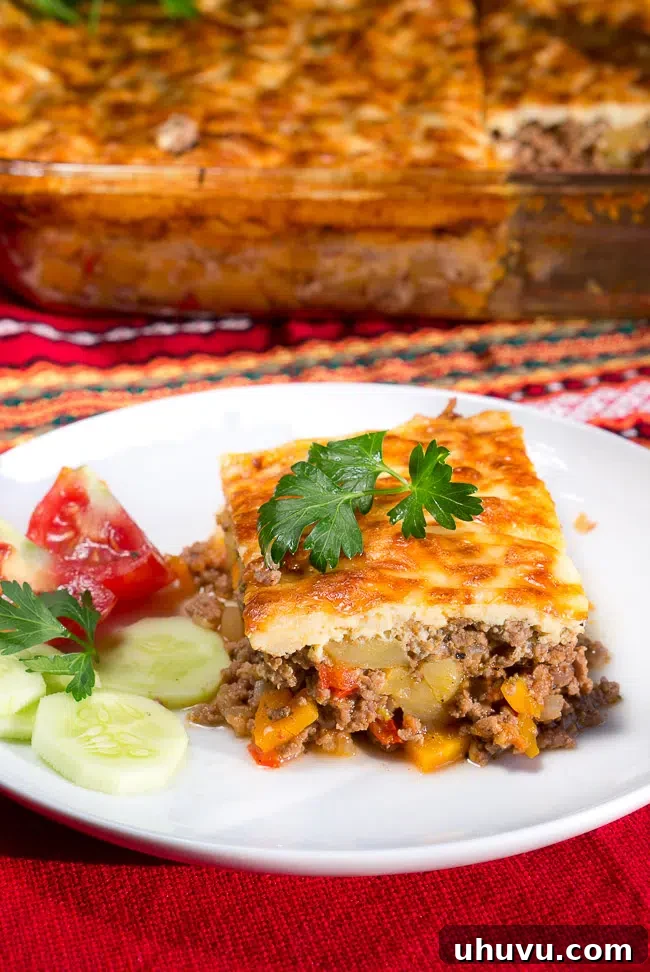
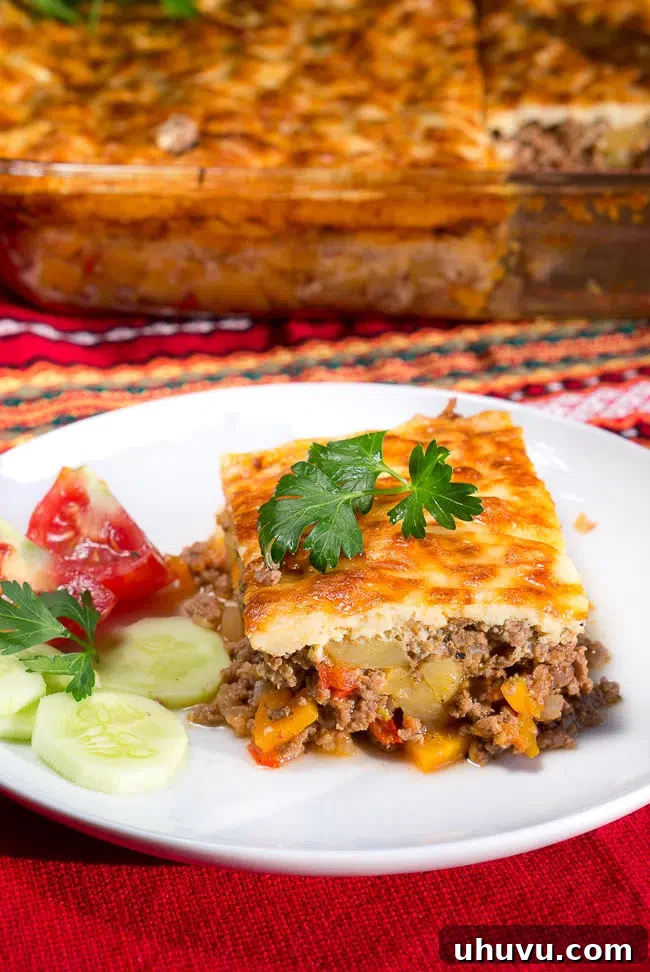
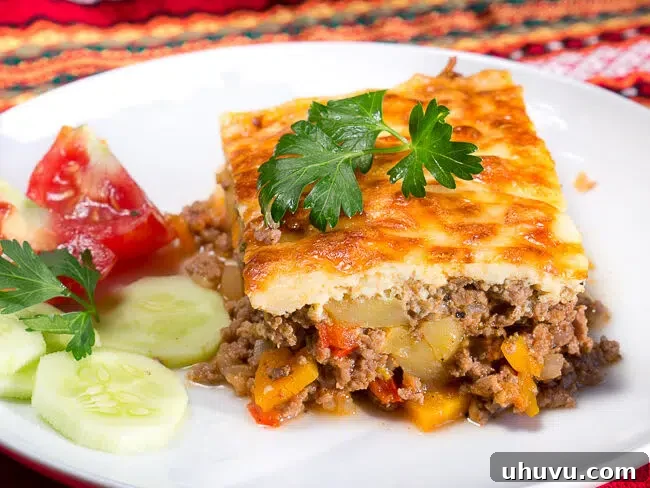
This authentic Bulgarian Moussaka recipe, a treasured family heirloom passed down through generations, offers a hearty and deeply flavorful experience. Unlike its more widely known Greek cousin, Bulgarian moussaka traditionally features tender potatoes and a rich ground beef filling, all crowned with a creamy, airy yogurt-and-egg topping. It’s a dish that evokes warmth, comfort, and the true taste of Bulgarian home cooking, perfect for gathering family around the table.
Authentic Bulgarian Moussaka: A Timeless Family Tradition
There’s nothing quite like the comforting aroma of a homemade Bulgarian Moussaka wafting through the kitchen. This beloved dish isn’t just food; it’s a culinary hug, a taste of home, and a centerpiece of Bulgarian family meals. My own connection to this recipe runs deep, having been lovingly passed down through three generations in my family—from my grandmother to my mom, and now to me.
Preparing this moussaka always brings back cherished memories of bustling kitchens filled with laughter and the rich scents of simmering vegetables and spices. It’s more than just a recipe; it’s a way to keep family traditions alive and share a piece of my heritage with loved ones. While many traditional recipes can be time-consuming, I’ve spent years perfecting this version to make it accessible and efficient, without compromising on the deep, authentic flavors that make Bulgarian moussaka so special. You can now enjoy this hearty dish on your table in roughly an hour, a testament to streamlined cooking without sacrificing tradition.
One of the secrets to achieving such rich flavor and cutting down on baking time is to pre-cook the ground beef and vegetables before they go into the oven. This crucial step ensures that every ingredient is perfectly seasoned and caramelized, allowing their flavors to meld beautifully and intensify, resulting in a moussaka that is far from bland and full of character. This method makes the process not only faster but also guarantees an incredibly savory and satisfying outcome every single time.
What Makes Bulgarian Moussaka Unique?
For those unfamiliar, moussaka is a classic Balkan and Middle Eastern dish, but its variations are numerous. The Bulgarian moussaka stands out significantly from the more commonly known Greek version. The primary difference lies in the main vegetable: while Greek moussaka famously uses layers of sliced eggplant, Bulgarian moussaka traditionally features hearty layers of diced or sliced potatoes. This makes it a substantial, comforting potato casserole.
Another distinguishing factor is the creamy topping. Instead of a béchamel sauce, authentic Bulgarian moussaka is finished with a unique mixture of yogurt and eggs. When baked, this topping puffs up and turns golden, creating a light, tangy, and incredibly flavorful crust that perfectly complements the rich filling beneath. The combination of savory meat, tender potatoes, aromatic vegetables, and this distinctive topping creates a truly unforgettable dish.
Essential Ingredients & Smart Substitutions for Bulgarian Moussaka
One of the many beauties of this Bulgarian Moussaka recipe is its reliance on simple, readily available ingredients. You likely have most of these pantry staples already! The quality of your ingredients, however, will elevate the final dish significantly. Below is a detailed breakdown, along with clever substitutions to ensure your moussaka is perfect every time. For a full ingredients list with precise measurements, please refer to the detailed recipe card below.
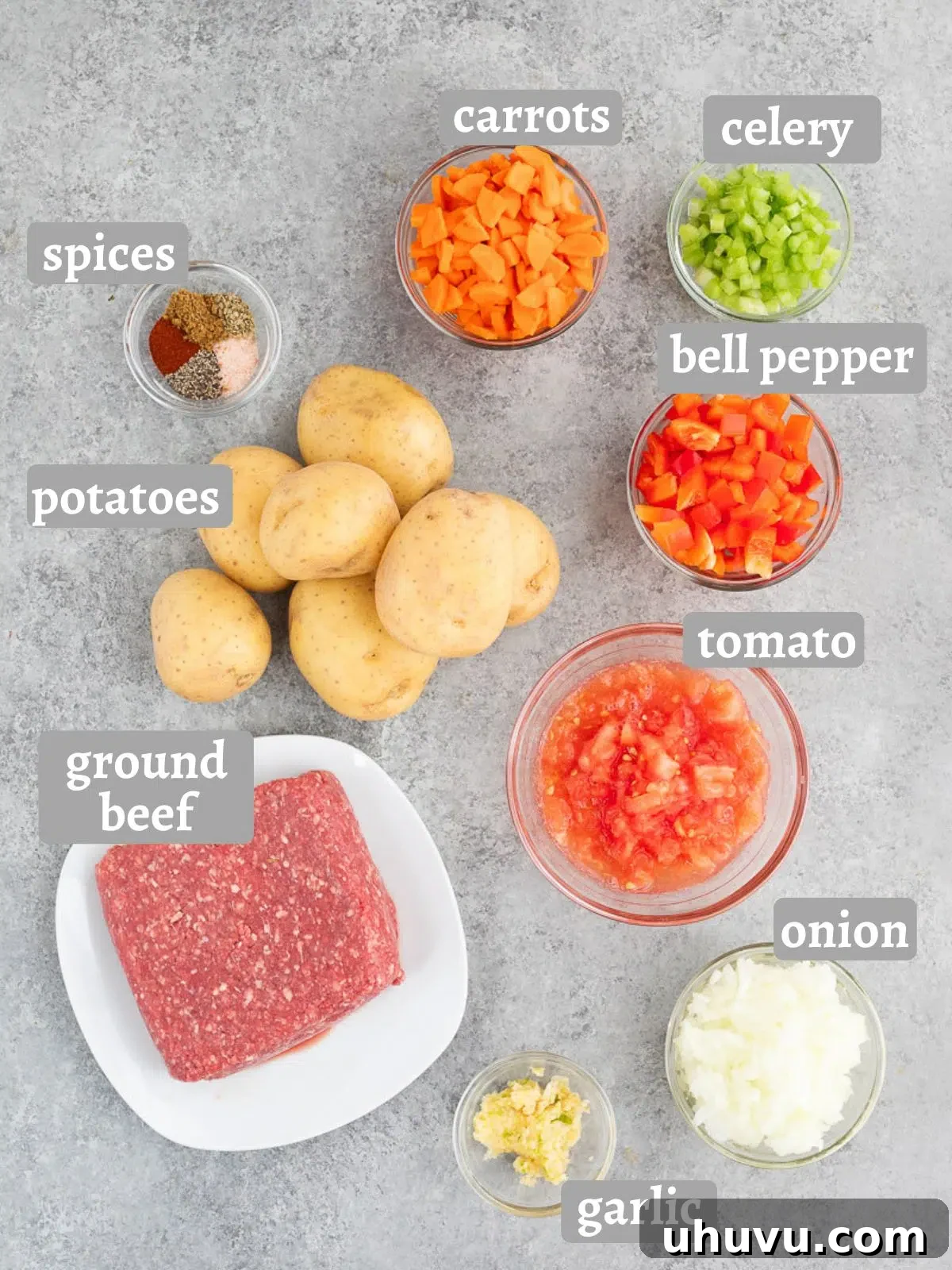
- Ground Beef: I typically opt for lean ground beef (around 93% lean) to keep the dish lighter, but a slightly fattier blend (like 80/20) will also work beautifully, lending even more flavor. If using a higher fat content, you might want to drain off any excess grease after browning to prevent the moussaka from becoming too oily. For a different flavor profile, consider using ground lamb, venison, or even ground turkey for a leaner option.
- Yukon Gold Potatoes: These are the star of Bulgarian moussaka! I highly recommend Yukon Gold potatoes for their firm, waxy texture that holds its shape wonderfully during cooking and baking. They won’t turn mushy like some starchier varieties (e.g., Russet) and offer a slightly buttery flavor. If Yukon Golds aren’t available, other waxy potatoes like red bliss or new potatoes are good alternatives.
- Other Vegetables: Aromatic vegetables form the flavorful base of our meat mixture. This recipe calls for carrots, celery, onion, red bell pepper, tomato, and garlic. These ingredients are sautéed to bring out their sweetness and deepen the overall savory profile of the dish. Feel free to incorporate other vegetables like zucchini or mushrooms if you wish to add more depth and nutrients.
- Seasonings: The right blend of spices is key to authentic Bulgarian flavor. We use salt, freshly ground black pepper, paprika (preferably Hungarian or Bulgarian sweet paprika for color and mild flavor), cumin, and the very special Bulgarian chubritsa (summer savory). Chubritsa is a unique herb that imparts a distinct, aromatic, and slightly peppery taste, essential for an authentic touch. If you can’t find it, a good quality Italian herb seasoning blend or even a mix of thyme and oregano can serve as a decent substitute, though the flavor will be slightly different.
- Topping Ingredients: The signature creamy topping requires eggs, plain yogurt (full-fat for richness is best), milk, a pinch of baking soda (to help it puff), and a sprinkle of shredded cheese for a golden, irresistible crust. The yogurt adds a delightful tang that cuts through the richness of the meat and potatoes.
- Olive Oil: Essential for sautéing and building flavor. Use a good quality extra virgin olive oil.
Step-by-Step Guide to Making the Best Bulgarian Moussaka
Creating this delicious Bulgarian Moussaka is a straightforward process, especially with our streamlined approach. Follow these steps for a perfect, flavorful casserole every time. For precise measurements and detailed timing, please consult the full recipe card below.
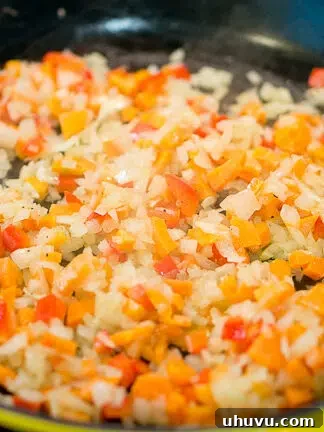
- Sauté Vegetables: Begin by heating a tablespoon of olive oil in a large, heavy-bottomed skillet over medium-high heat. Add the chopped onions, carrots, celery, and red bell pepper. Sauté these aromatics for 3 to 5 minutes, stirring occasionally, until they begin to soften and become slightly tender. Next, stir in the chopped tomato and minced garlic, cooking for another minute until fragrant. Season this vegetable mixture generously with salt, black pepper, paprika, and savory. Once thoroughly mixed and aromatic, transfer the sautéed vegetables to a 9×13-inch casserole dish, spreading them evenly across the bottom.
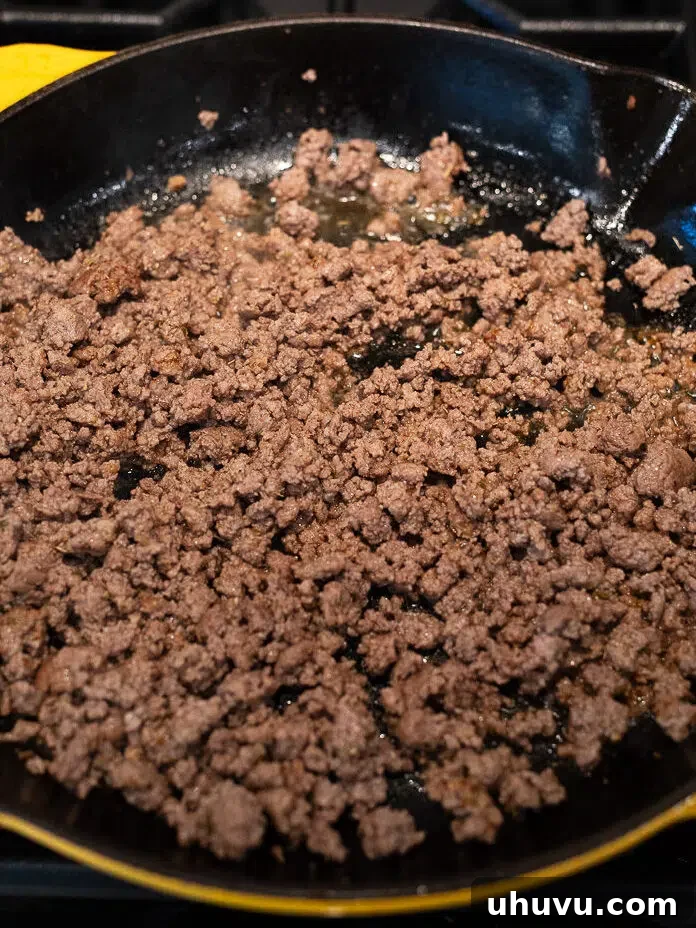
- Cook Ground Beef: Using the same skillet (no need to clean it, the residual flavors add depth!), add the ground beef. Brown the beef over medium-high heat for about 5 minutes, breaking it up with a spoon as it cooks until it’s no longer pink and begins to caramelize. Drain any excess fat if necessary. Season the cooked ground beef generously with salt, black pepper, paprika, savory, and cumin. Stir well to ensure the spices are evenly distributed and infuse the meat with flavor. Add the seasoned ground beef to the casserole dish, layering it over the sautéed vegetables.
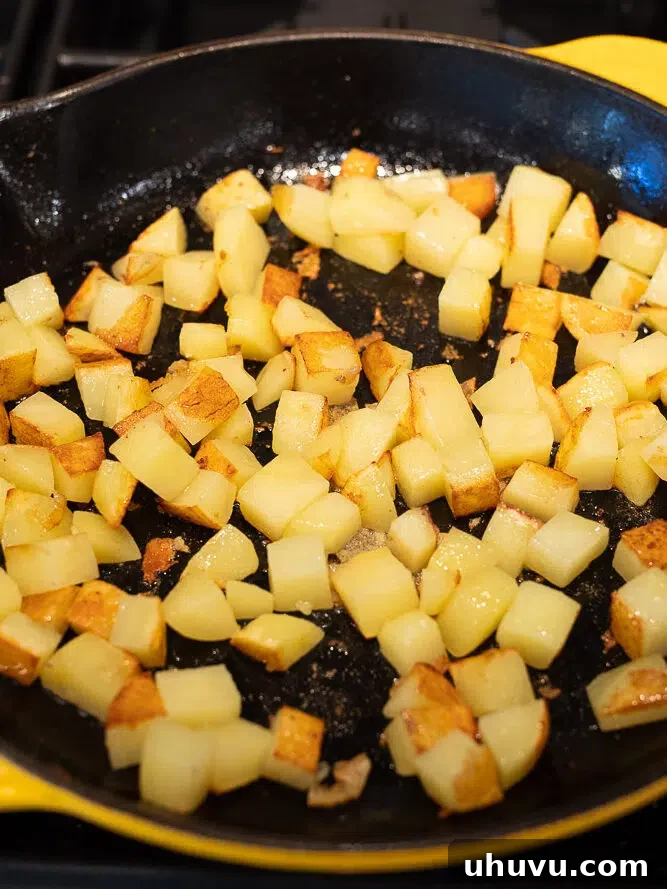
- Cook Potatoes: Add a little more oil to the same skillet if needed. Cook the diced Yukon Gold potatoes in two batches to avoid overcrowding the pan and ensure even cooking. Season each batch generously with salt, paprika, black pepper, and savory. Cook the potatoes, covered, for about 10 minutes per batch, stirring occasionally, until they are fork-tender and slightly browned. This pre-cooking step is vital for ensuring the potatoes are perfectly cooked and infused with flavor. Once tender, add the cooked potatoes to the casserole dish, layering them over the meat and vegetables.
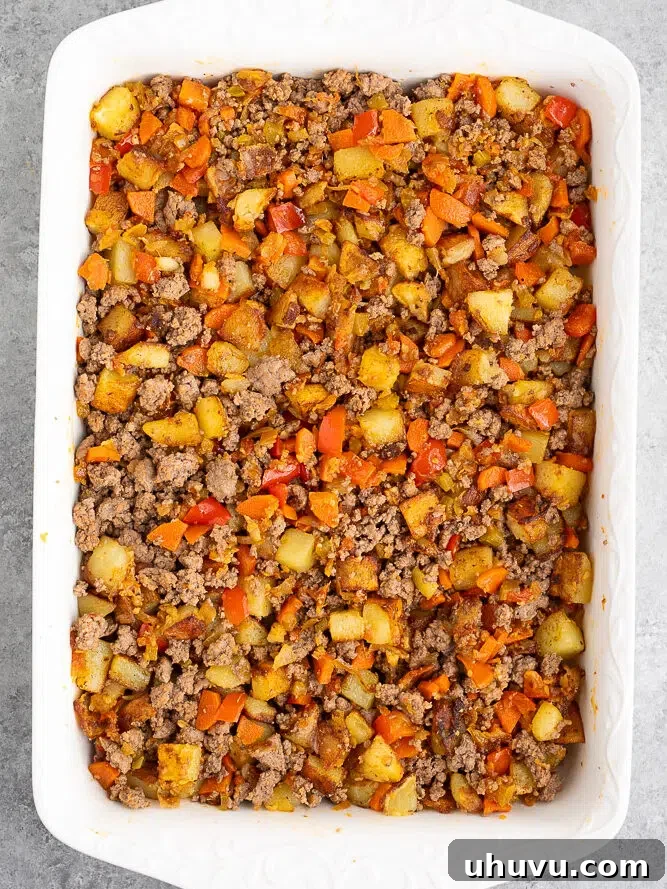
- Combine and Bake: Once all components are in the casserole dish, gently mix everything together with a spoon to ensure an even distribution of meat, potatoes, and vegetables. Spread the mixture evenly across the dish. Pour 1 cup of water over the mixture; this will create steam and prevent the moussaka from drying out, keeping it moist and flavorful. Bake the moussaka in a preheated oven at 375 degrees Fahrenheit (190°C) for 40 minutes. This initial bake allows the flavors to meld and the ingredients to finish cooking through.

- Make Topping: While the moussaka is baking, prepare the light and airy topping. In a clean bowl, beat the egg whites until they form soft peaks. In a separate bowl, whisk the egg yolks together with the milk, yogurt, and baking soda. Gently fold the egg yolk mixture into the beaten egg whites. This technique creates a fluffy topping that becomes beautifully golden and crusty. Season with a pinch of salt and black pepper for balanced flavor.
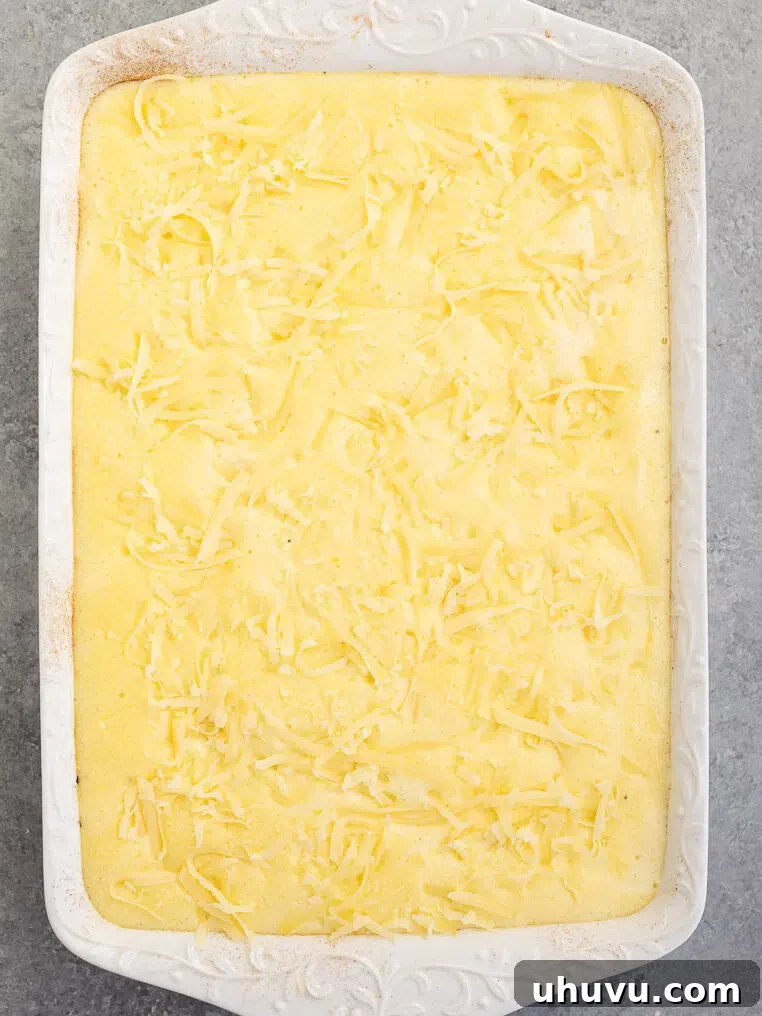
- Final Bake & Serve: After the initial 40 minutes, remove the moussaka from the oven. Increase the oven temperature to 400 degrees Fahrenheit (200°C). Carefully spread the prepared yogurt-egg topping evenly over the baked moussaka mixture. Sprinkle with shredded cheese for an extra layer of flavor and golden crust. Return the dish to the oven and bake for an additional 10 to 15 minutes, or until the topping is beautifully puffed, golden brown, and set. Once baked, let the moussaka rest for about 10-15 minutes before slicing and serving. This allows the layers to set, making it easier to cut into neat, delicious portions. Serve warm and enjoy!
PRO TIPS FOR THE PERFECT BULGARIAN MOUSSAKA
Recipe Notes and Expert Tips for Success
To ensure your homemade Bulgarian Moussaka turns out absolutely perfect, incredibly flavorful, and truly authentic every single time, keep these expert tips in mind:
- Season Generously at Every Stage: This is arguably the most critical tip for a flavorful moussaka. Instead of seasoning only at the end, season each component as you cook it. Season the ground beef as you brown it, the vegetables as you sauté them, and the potatoes as you pan-fry them. This layering of seasoning ensures that every bite of the final dish is vibrant and well-balanced, preventing any bland layers.
- To Layer or To Mix? It’s Your Choice: While some moussaka recipes advocate for distinct layers, in Bulgarian tradition, it’s very common to mix all the ingredients (meat, vegetables, and potatoes) together in the casserole dish before the final bake. This method ensures that every spoonful contains a delightful medley of all the savory components. My grandmother and mom always mixed them, and it’s my preferred approach for a homogenous, satisfying texture and flavor. Feel free to experiment with layering if you prefer a more defined presentation.
- Allow Moussaka to Rest: Patience is a virtue, especially when it comes to moussaka. Once your beautiful moussaka comes out of the oven, resist the urge to cut into it immediately. Allowing it to rest for at least 10 to 15 minutes (or even 20 minutes if you can wait) is crucial. This resting period allows the casserole to set properly, firming up the layers and making it significantly easier to slice into neat, individual portions without falling apart. The flavors also have a chance to further meld and deepen during this time.
- Prevent a Watery Moussaka: Ensure your vegetables are well-drained and the ground beef is browned until any liquid has evaporated before combining. Adding a cup of water is necessary for tenderness, but don’t add more. Overcrowding the skillet when cooking vegetables or potatoes can also lead to steaming instead of sautéing, which retains more moisture. Cook in batches if necessary.
- Achieving the Perfect Golden Crust: The signature golden-brown, puffy topping is a hallmark of Bulgarian Moussaka. Ensure your egg whites are beaten to soft peaks before gently folding in the yolk mixture. The baking soda also aids in the topping’s aeration. The higher temperature for the final bake (400°F) helps create that beautiful golden color and slightly crisp texture.
- Make-Ahead & Storage: Moussaka is an excellent make-ahead meal! You can prepare the entire casserole (meat, vegetables, potatoes) and assemble it in the dish up to 2 days in advance. Store it covered in the refrigerator. Add the topping just before the final bake. Leftovers can be stored in an airtight container in the refrigerator for 3-4 days. Reheat gently in the oven or microwave.
- Freezing Instructions: Moussaka freezes remarkably well. Assemble the entire casserole (without the topping), cover it tightly with plastic wrap and then foil, and freeze for up to 3 months. When ready to bake, thaw overnight in the refrigerator, then add the topping and bake as directed. Alternatively, you can freeze individual portions of baked moussaka for quick, comforting meals.
Serving Suggestions: What to Pair with Bulgarian Moussaka
Bulgarian Moussaka is a complete and satisfying meal on its own, but pairing it with traditional Bulgarian accompaniments elevates the experience to another level. Here are some fantastic serving suggestions to round out your authentic Bulgarian feast:
- Shopska Salad: A classic Shopska salad is the perfect fresh counterpoint to the rich moussaka. This vibrant salad features diced tomatoes, cucumbers, bell peppers, onions, and often a generous grating of sirene cheese (Bulgarian feta), all dressed with sunflower oil and vinegar. Its crispness and tangy notes provide a refreshing balance.
- Cucumber Salad: A simple, yet incredibly effective Cucumber Salad, dressed lightly with dill, garlic, and yogurt, offers a cool and refreshing bite that cleanses the palate beautifully between mouthfuls of the hearty moussaka.
- Tarator (Cold Cucumber Soup): For a truly authentic Bulgarian experience, start your meal with Tarator. This refreshing cold cucumber soup, made with yogurt, dill, garlic, walnuts, and a touch of oil, is a delightful appetizer, especially in warmer weather, setting the stage for the main course.
- Fresh Bread: A crusty loaf of bread is always welcome to soak up any delicious juices.
- Dessert Indulgence: To complete the meal on a sweet note, an irresistible Baklava (while not exclusively Bulgarian, it’s popular in the region) or a simple fruit salad can provide a perfect finish. Sometimes, a little indulgence is just what the soul needs!
Why This Bulgarian Moussaka Recipe Deserves a Spot in Your Kitchen
This traditional Bulgarian Moussaka recipe with potatoes and ground beef is the epitome of comfort food – deeply hearty, incredibly flavorful, and utterly satisfying. But beyond its comforting qualities, there are several compelling reasons why this particular recipe stands out:
- Surprisingly Quick to Prepare: While many traditional moussaka recipes can be quite an undertaking, this version is specifically designed for modern kitchens. Thanks to our pre-cooking method for the meat and vegetables, this delicious casserole comes together in just about an hour, proving that authentic flavor doesn’t always require an entire afternoon in the kitchen.
- Unrivaled Flavor-Packed Experience: The secret to its incredible taste lies in sautéing the vegetables and browning the ground beef before baking. This crucial step allows the ingredients to caramelize and their flavors to develop deeply, preventing any blandness that can sometimes plague casseroles. Every bite is rich, savory, and bursting with traditional Bulgarian spices – a true feast for your taste buds.
- A Foolproof Method for Home Cooks: After countless tests and tweaks, I’ve perfected a streamlined process that eliminates any unnecessary complexities while consistently delivering the same authentic, hearty taste you’d expect from a generations-old recipe. You won’t find complicated techniques here, just straightforward steps for creating real, wholesome comfort food that anyone can master.
- Authentic Family Tradition: This isn’t just a generic recipe; it’s a piece of culinary heritage, passed down and refined over generations. By making this moussaka, you’re not just cooking; you’re participating in a rich tradition, bringing the warmth and flavors of a Bulgarian home to your own table.
- Versatile & Customizable: While the traditional recipe is perfect as is, it’s also wonderfully adaptable. You can easily adjust the spices, add different vegetables, or even experiment with various ground meats to suit your family’s preferences.
Creative Variations & Dietary Adaptations
While this recipe offers the authentic traditional Bulgarian Moussaka experience, it’s also a fantastic canvas for culinary creativity. Here are a few ideas to customize it to your liking or dietary needs:
- Vegetarian Moussaka: Easily convert this into a delightful vegetarian dish. Replace the ground beef with an equal amount of finely chopped mushrooms, lentils, or a plant-based ground meat substitute. Enhance the umami flavor with a touch of soy sauce or nutritional yeast.
- Spicier Kick: If you enjoy a bit of heat, add a pinch of chili flakes or a finely diced hot pepper (like a Bulgarian hot pepper if you can find one, or a jalapeño) along with the other vegetables.
- Extra Veggies: Feel free to add more vegetables to the meat mixture, such as zucchini, green beans, or peas. Just ensure they are chopped small and sautéed until tender to avoid excess moisture.
- Cheese in the Filling: While not traditional, some people love to sprinkle a layer of shredded hard cheese (like kashkaval or even cheddar) over the meat and potato mixture before pouring the water and baking, adding another dimension of flavor.
- Different Meats: As mentioned, ground lamb or a mix of beef and lamb can offer a richer, more traditional Balkan flavor. Ground pork can also be used for a robust taste.
Frequently Asked Questions (FAQ)
- What is the main difference between Bulgarian and Greek Moussaka?
- The primary difference is the main vegetable. Bulgarian moussaka traditionally uses potatoes, while Greek moussaka features eggplant. Bulgarian moussaka also typically has a yogurt-and-egg topping, rather than a béchamel sauce.
- Can I make Bulgarian Moussaka ahead of time?
- Yes, absolutely! You can prepare the meat and potato filling a day or two in advance and store it covered in the refrigerator. Prepare the topping just before the final baking step.
- Can I freeze Moussaka?
- Yes, moussaka freezes very well. Assemble the dish without the topping, cover tightly, and freeze for up to 3 months. Thaw overnight in the refrigerator, then prepare and add the topping, and bake as instructed. You can also freeze baked leftovers in individual portions.
- What kind of potatoes are best for Bulgarian Moussaka?
- Yukon Gold potatoes are highly recommended because they hold their shape well after cooking and baking, and their slightly waxy texture prevents them from becoming mushy. Other waxy potatoes like red bliss or new potatoes are good substitutes.
- Is Bulgarian Moussaka gluten-free?
- Yes, this specific recipe is naturally gluten-free as it uses potatoes instead of pasta or wheat-based thickeners. Always check labels for all ingredients if catering to strict dietary needs.
If you enjoyed this Bulgarian Moussaka recipe or any other recipe on my blog, please consider leaving a ⭐ star rating and let me know how it went in the 📝 comments below. Your feedback is greatly appreciated! Thanks for visiting!