
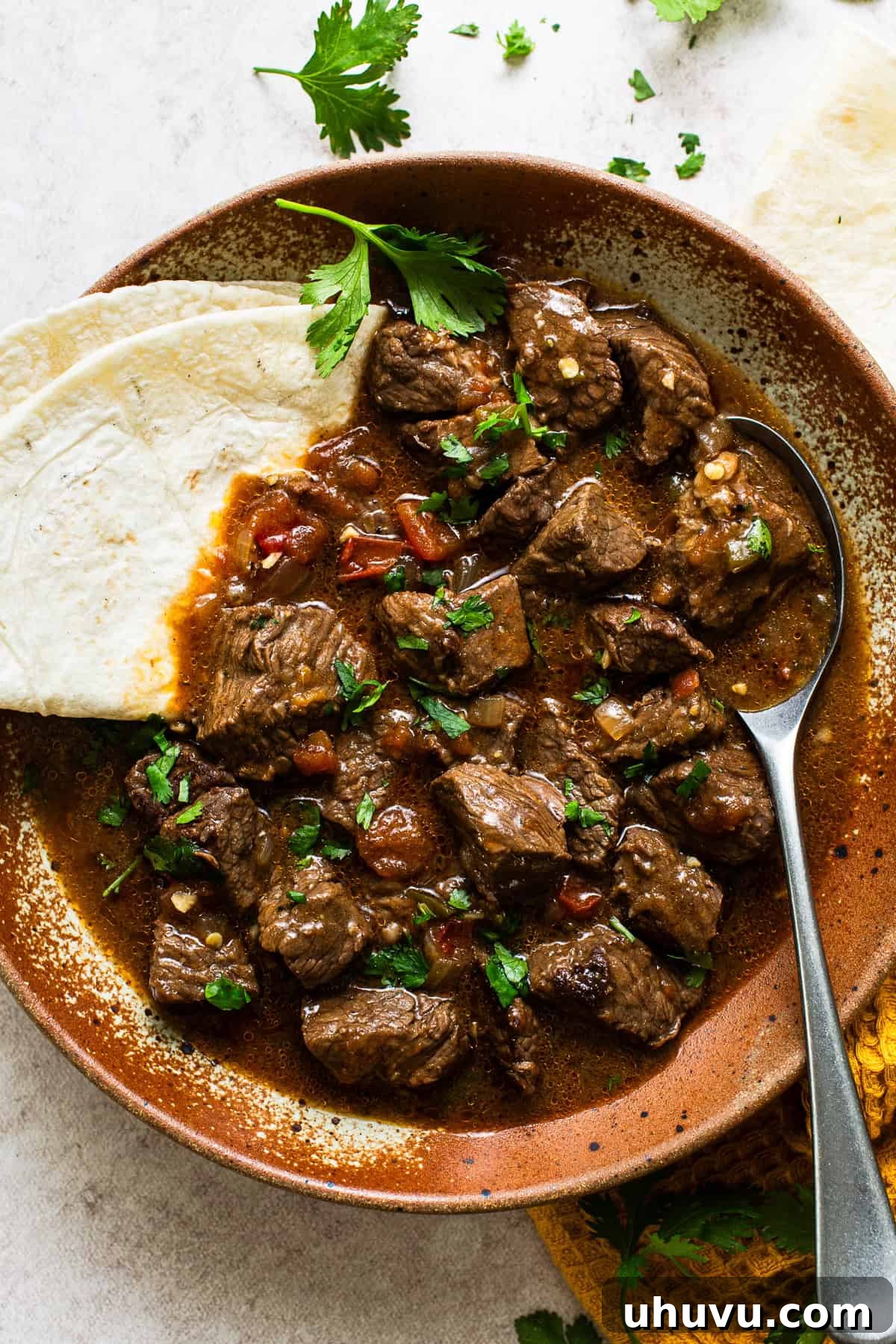
Craving a dish that speaks to the soul and satisfies with every tender bite? Then look no further than Carne Guisada, a quintessential Mexican beef stew that embodies comfort food at its finest. This cherished recipe features succulent chunks of beef, slow-cooked to perfection, and enveloped in a rich, deeply flavored tomato-based gravy. It’s a culinary hug in a bowl, perfect for any occasion that calls for heartwarming and authentic Mexican flavors. Elevate your dining experience by pairing it with classic sides like fluffy Mexican rice, creamy refried beans, and warm, pillowy homemade flour tortillas. This combination is a truly tried-and-true Mexican dinner that will transport your taste buds straight to a vibrant Mexican kitchen.
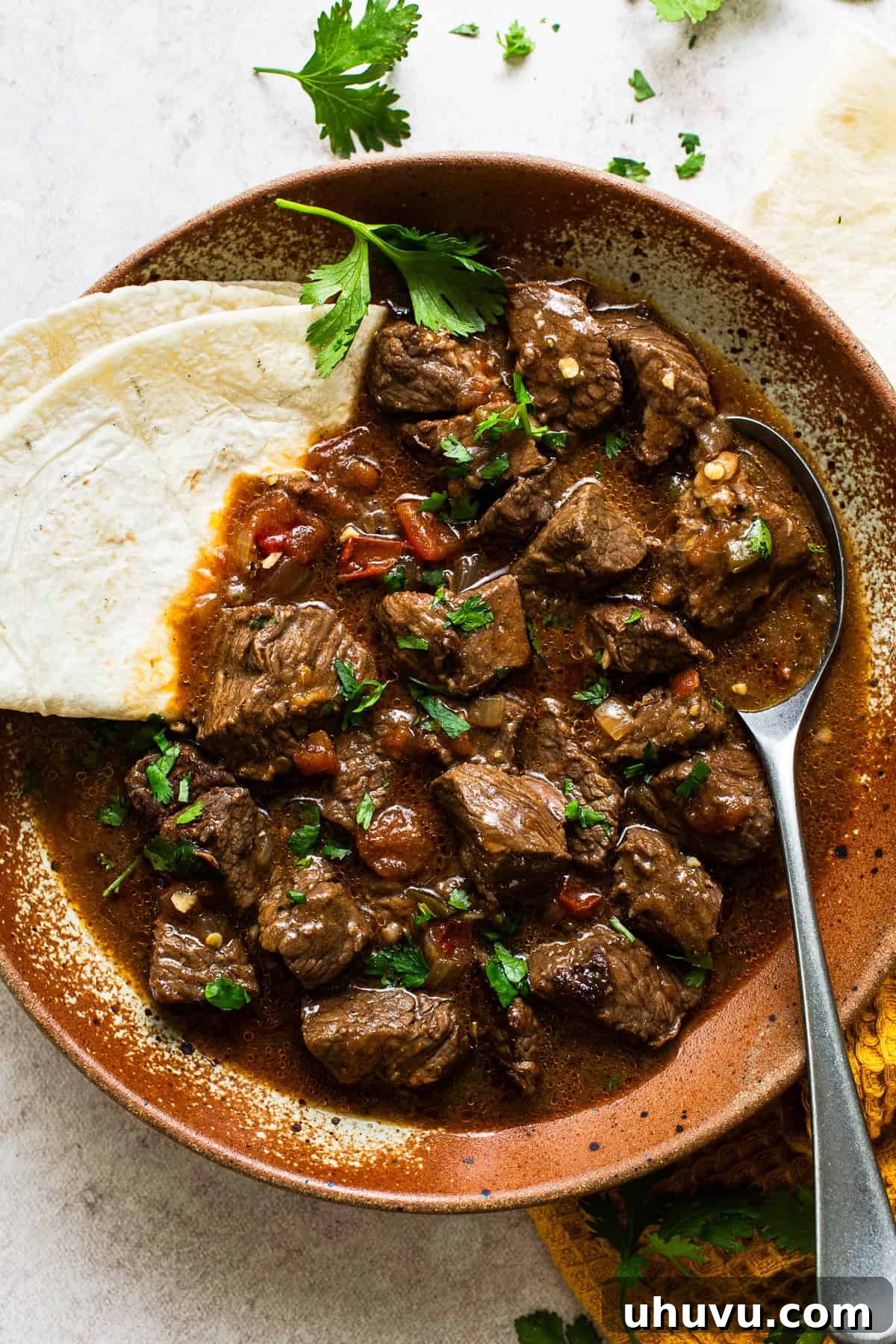
Growing up in a Mexican household, I vividly recall Carne Guisada being a staple in my mom’s repertoire. It was her go-to meal, the one she’d whip up when she wanted something reliably delicious, incredibly filling, and effortless to prepare using ingredients she always had on hand. She was a master of variations, often substituting the beef with tender pork, juicy chicken, earthy nopales (cactus paddles), or even hearty potatoes. But, for me, the ultimate version always featured those deeply flavorful, melt-in-your-mouth pieces of beef, simmering in that incredible gravy.
There are countless reasons why this particular Carne Guisada recipe holds a special place in my heart and why I believe it will quickly become a favorite in your home:
- Effortless Preparation: Despite its rich and complex taste, this dish is remarkably straightforward to make. The magic lies in the luscious gravy that generously coats the beef. It’s crafted from a handful of humble and readily available ingredients like ripe tomatoes, pungent onions, vibrant peppers, and a perfect blend of authentic Mexican spices such as earthy cumin and aromatic oregano. The simplicity of its components belies the depth of flavor it achieves, making it accessible even for novice cooks.
- Unmatched Versatility: Carne Guisada is more than just a main dish; it’s a culinary chameleon! While it shines brightly as a standalone meal, served simply with tortillas and rice, its incredible flavor and tender texture make it an ideal filling for a myriad of Mexican delights. Imagine stuffing it into warm burritos, savory gorditas, thick corn sopes, boat-shaped huaraches, or hearty tortas. It’s also fantastic piled high on crispy sheet pan nachos, adding a gourmet touch to a casual favorite. The possibilities are truly endless, allowing you to enjoy this delicious stew in many creative ways.
What Exactly Is Carne Guisada? A Culinary Journey
The term “Carne Guisada,” directly translating to ‘stewed meat,’ is a broad culinary descriptor used across various Latin American countries and even within different regions of Mexico. This means that while the name is universal, the specific ingredients and preparation methods can vary significantly from one kitchen to another. Growing up, I frequently encountered this term applied to a diverse array of slow-cooked meat dishes, each with its unique regional twist. For instance, what I affectionately refer to as my authentic Chile Colorado recipe might be known as “Guisado Rojo” (red stew) by others, while my vibrant Chile Verde is sometimes called “Guisado Verde” (green stew), and so forth. This rich tapestry of regional guisados speaks to the adaptability and ubiquity of the stewing tradition in Mexican cuisine.
However, the Mexican version of Carne Guisada that we’re celebrating today typically features succulent beef chunks, lovingly slow-cooked until fork-tender. The heart of this stew lies in its simple yet deeply flavorful tomato-based gravy, often built upon what many call the “Mexican trinity” of fresh Roma tomatoes, aromatic onions, and a hint of heat from jalapeños. It’s a humble dish, steeped in tradition, that truly embodies comfort and warmth. The magic happens as the beef slowly braises, absorbing all the robust flavors of the gravy, resulting in a dish that’s both deeply satisfying and incredibly tender. When paired with the soft, warm embrace of homemade tortillas, it transforms into an unforgettable meal that truly “screams comfort” with every spoonful.
Selecting the Perfect Beef Cut for Tender Carne Guisada
Carne Guisada, at its heart, is a humble and economical dish, traditionally prepared with more affordable cuts of beef that benefit immensely from slow cooking. These cuts, often tougher due to connective tissue, transform into incredibly tender morsels when given enough time to braise in a flavorful liquid. The key is to select beef with good marbling, as the fat melts during cooking, adding moisture and richness to the stew.
While classic options like chuck roast or bottom roast are excellent choices for their ability to become incredibly tender, I personally lean towards top sirloin. Top sirloin offers a few distinct advantages: it boasts a stronger, more pronounced beefy flavor that harmonizes beautifully with the rich tomato gravy, and it typically requires a slightly shorter cooking time to reach that coveted melt-in-your-mouth tenderness. This means you can achieve outstanding results without committing to an excessively long braising period.
Regardless of your chosen cut, a crucial tip is to avoid extra lean or thinly sliced pieces of beef. These cuts lack the necessary fat and connective tissue to break down slowly, making them prone to overcooking and becoming tough and chewy. Instead, opt for cuts with some marbling and a bit of thickness, allowing them to withstand the simmering process and develop that signature fall-apart texture that is the hallmark of an exceptional Carne Guisada.
Essential Ingredients for an Authentic Carne Guisada
Crafting a truly memorable Carne Guisada relies on a careful selection of fresh, simple ingredients that come together to create a symphony of flavors. Here’s a closer look at what you’ll need and the role each component plays in this magnificent Mexican stew:
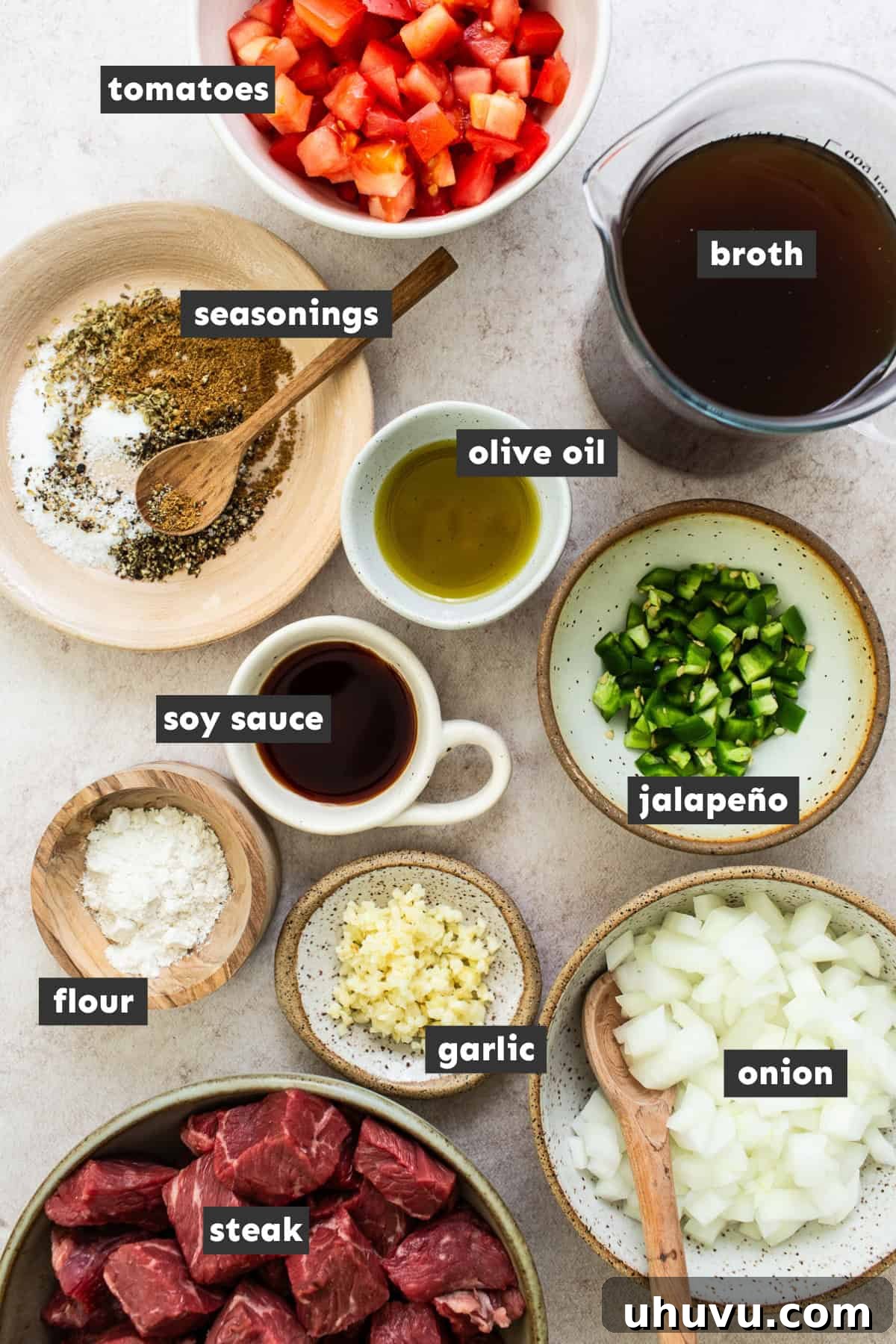
- Beef (Top Sirloin Steak): For this recipe, I specifically recommend top sirloin steak, cut into 1-inch cubes. Its inherent tenderness ensures a quicker cooking time compared to denser cuts like chuck roast, making it ideal for a relatively faster stew. Furthermore, top sirloin contributes a robust, concentrated beef flavor that pairs exquisitely with the vibrant tomato gravy. If chuck roast is your preference or more readily available, it will work wonderfully but may require a longer simmering period to achieve desired tenderness.
- Kosher Salt and Freshly Ground Black Pepper: These foundational seasonings are indispensable. Generously seasoning the beef before searing not only enhances its natural flavor but also plays a vital role in balancing the sweetness and acidity of the tomato-based gravy, ensuring a well-rounded and harmonious taste profile.
- Olive Oil: Used for searing the beef chunks to develop a beautiful crust and lock in moisture. A neutral-tasting oil, such as canola or avocado oil, can be used as an alternative without altering the overall flavor of the stew.
- Yellow Onion: Diced yellow onion forms a sweet and tangy aromatic base for the stew. As it softens and caramelizes during cooking, it releases its natural sugars, contributing a subtle sweetness and a foundational layer of flavor that is essential to the gravy’s depth.
- Jalapeño Pepper: The jalapeño adds a mild, pleasant heat that skillfully balances the inherent sweetness of the onion and tomato components. For those who prefer a milder flavor, simply remove the ribs and seeds before dicing. If you wish to omit the heat entirely, you can substitute a bell pepper or a milder Anaheim pepper. For a bolder kick, consider using a serrano pepper, which offers significantly more spice.
- Garlic Cloves: Minced garlic is a powerhouse of flavor, adding an essential pungent and aromatic layer that complements the other ingredients beautifully and deepens the stew’s overall character.
- Soy Sauce: While seemingly unconventional for a Mexican stew, a small splash of soy sauce is a secret ingredient that works wonders. It introduces a profound umami depth, enhancing and amplifying the natural flavors of the beef and vegetables, elevating the gravy to an exceptionally savory level.
- Ground Cumin and Mexican Oregano: These two spices are the heart and soul of authentic Mexican flavor. Cumin provides an earthy, warm, and slightly pungent note, while Mexican oregano offers a distinct citrusy and slightly peppery aroma that sets it apart from its Mediterranean counterpart. Together, they imbue the beef and gravy with that unmistakable, comforting Mexican essence.
- Roma Tomatoes: These are the undisputed foundation of the stew’s luscious gravy. As they slowly cook down, Roma tomatoes release their rich, acidic juices, which tenderize the beef and create a naturally sweet, tangy base. Their reduction during simmering thickens the sauce, yielding a velvety, slightly sweet gravy that clings perfectly to every piece of beef.
- Beef Broth: This liquid gold provides the necessary moisture for the slow-cooking process, ensuring the beef remains submerged and tenderizes effectively. It also enriches the gravy with a deep, savory flavor, contributing to the overall robustness of the stew.
- All-Purpose Flour: A small amount of all-purpose flour is used to create a slurry with beef broth. This slurry is essential for thickening the gravy, giving it that desirable rich, spoonable consistency that defines a classic Carne Guisada.
Crafting the Perfect Carne Guisada: A Step-by-Step Guide
Making Carne Guisada is a rewarding process that transforms simple ingredients into a dish bursting with flavor and comforting warmth. Follow these steps to achieve a truly authentic and tender Mexican beef stew:
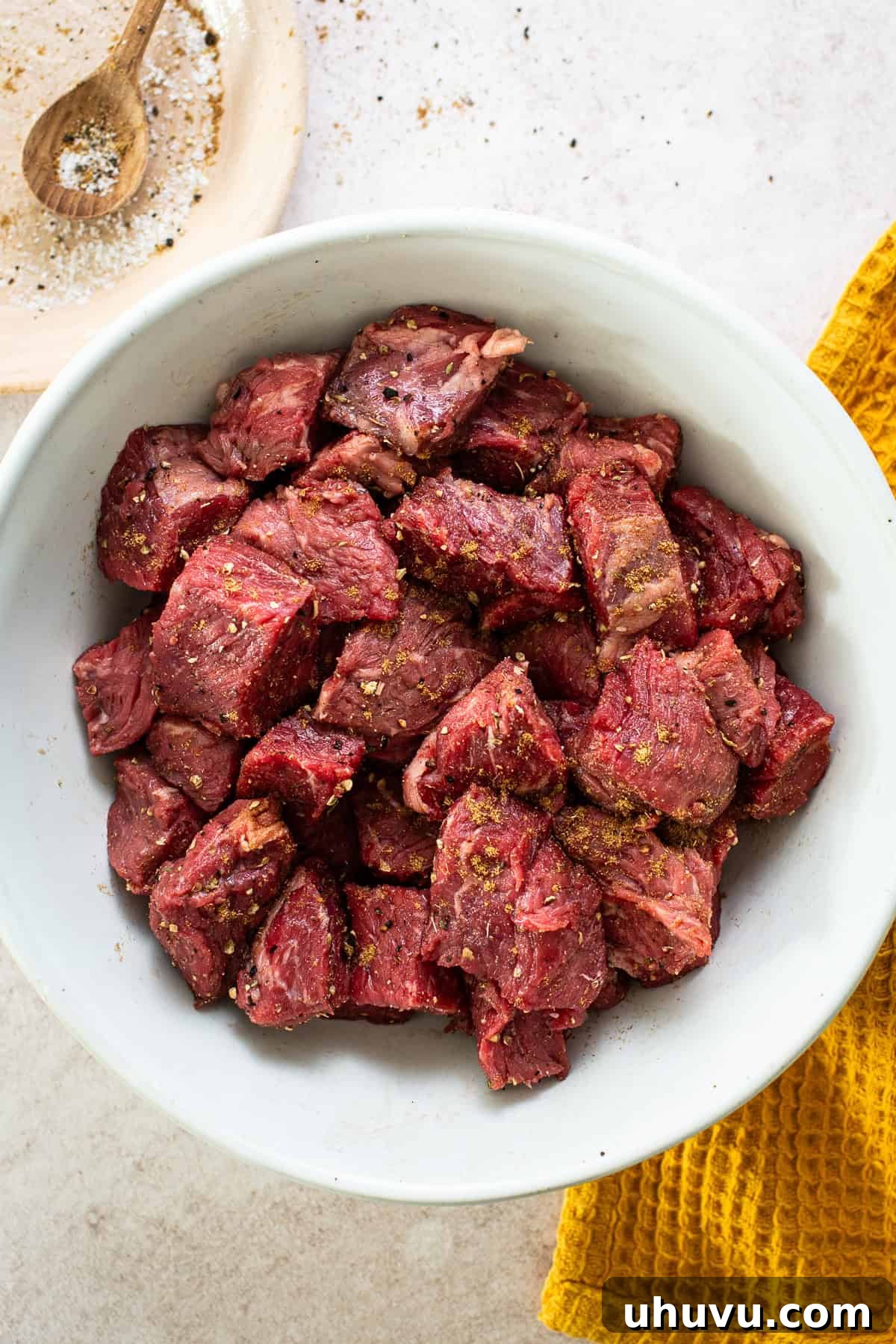
Step 1: Prepare and Season the Beef. Begin by thoroughly patting the diced beef dry with paper towels. This crucial step removes excess moisture, which is essential for achieving a good sear. Once dry, generously season the beef cubes on all sides with kosher salt, ground cumin, Mexican oregano, and freshly ground black pepper. In a large, heavy-bottomed pot or Dutch oven, heat the olive oil over medium-high heat until shimmering. Add the seasoned beef in batches if necessary to avoid overcrowding the pot, ensuring each piece gets proper contact with the hot surface. Sear the beef on all sides until it develops a beautiful golden-brown crust. This browning process is vital as it locks in flavor and adds depth to the stew. Once browned, remove the beef and set it aside.
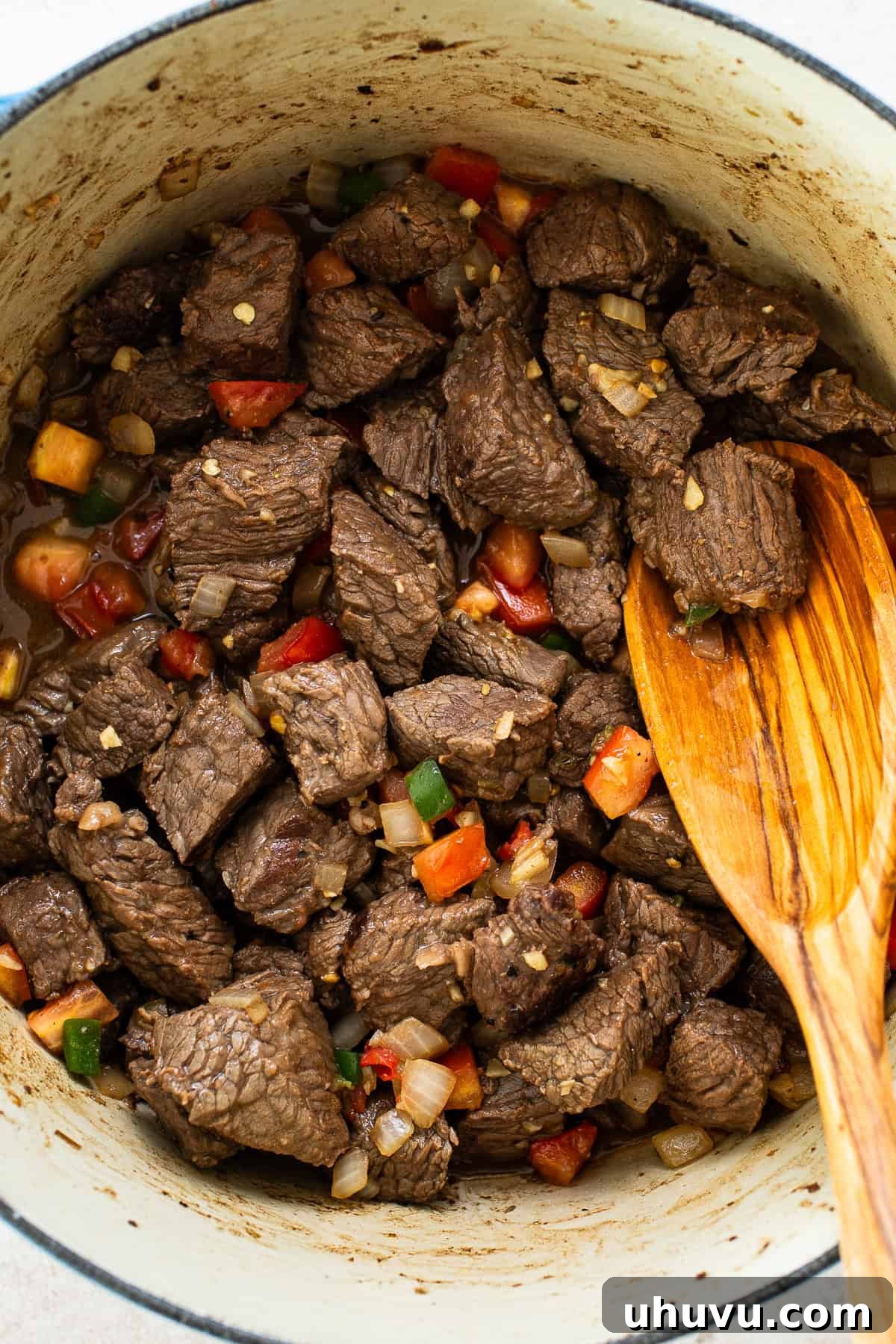
Step 2: Build the Flavor Base. Return the pot to medium heat. Add the diced yellow onion, jalapeño, and minced garlic to the pot, stirring frequently. Sauté these aromatics for about 2-3 minutes, or until the onions become translucent and the jalapeños begin to soften, releasing their fragrant oils. This step builds the foundational flavor profile of your Carne Guisada. Next, stir in the soy sauce, which will add a wonderful umami depth. Continue to cook for another minute, allowing the flavors to meld. Meanwhile, in a small bowl, whisk together ¼ cup of beef broth and the all-purpose flour until a smooth slurry forms; set this aside.
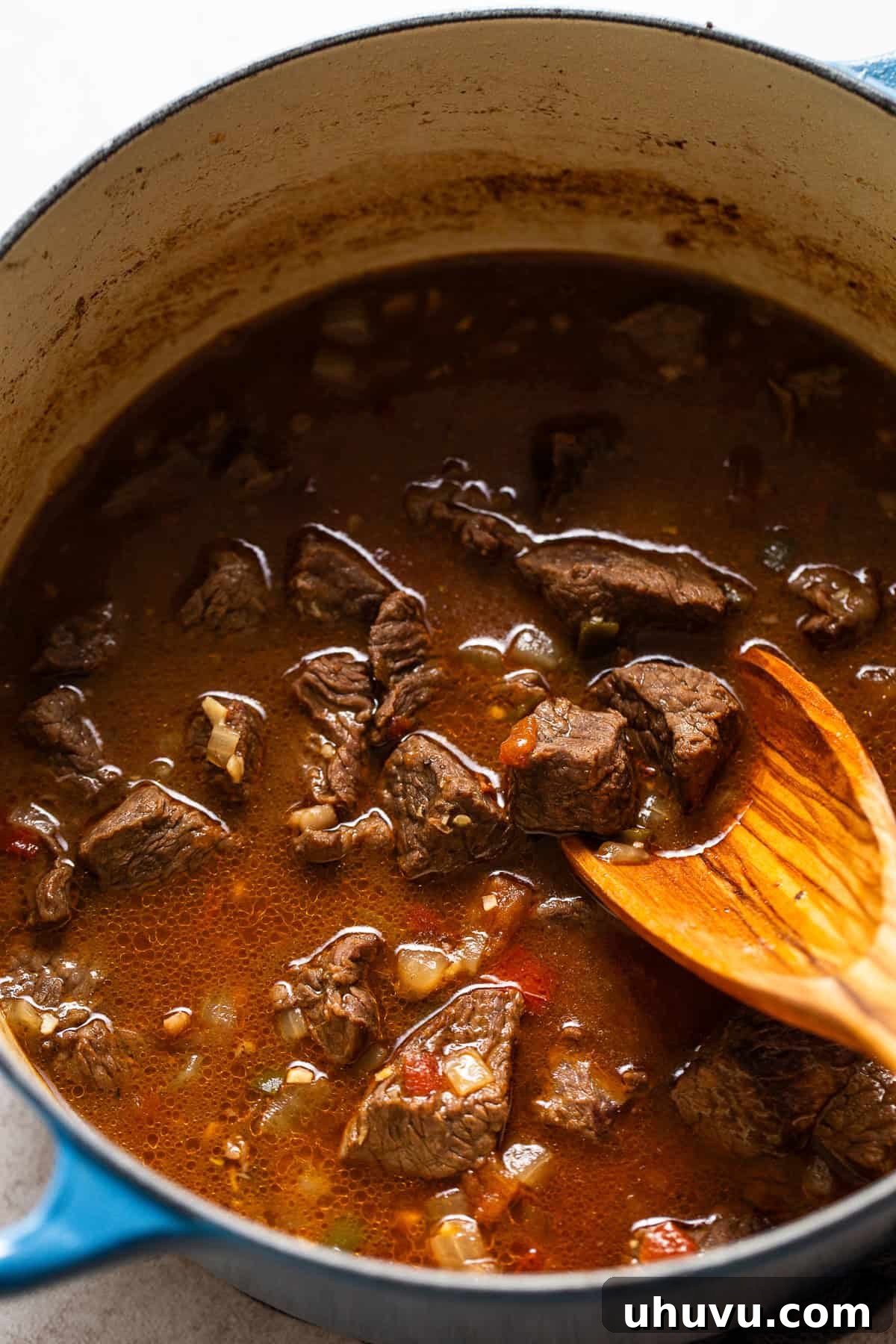
Step 3: Simmer and Thicken the Stew. Return the seared beef to the pot. Add the diced Roma tomatoes, stirring to combine them with the beef and aromatics. Pour in the remaining 1 ¾ cups of beef broth and the prepared flour slurry. Stir everything together thoroughly, ensuring the slurry is well incorporated. Bring the mixture to a gentle boil, then immediately reduce the heat to low, cover the pot tightly, and let it simmer for 45 minutes. During this time, the beef will tenderize, and the flavors will deepen beautifully. After 45 minutes, uncover the pot and continue to cook for an additional 3-5 minutes, stirring occasionally. This final uncovered simmering allows the sauce to thicken slightly to your desired consistency. Keep in mind that Carne Guisada will continue to thicken as it cools. Taste the stew and adjust the salt and pepper as needed.
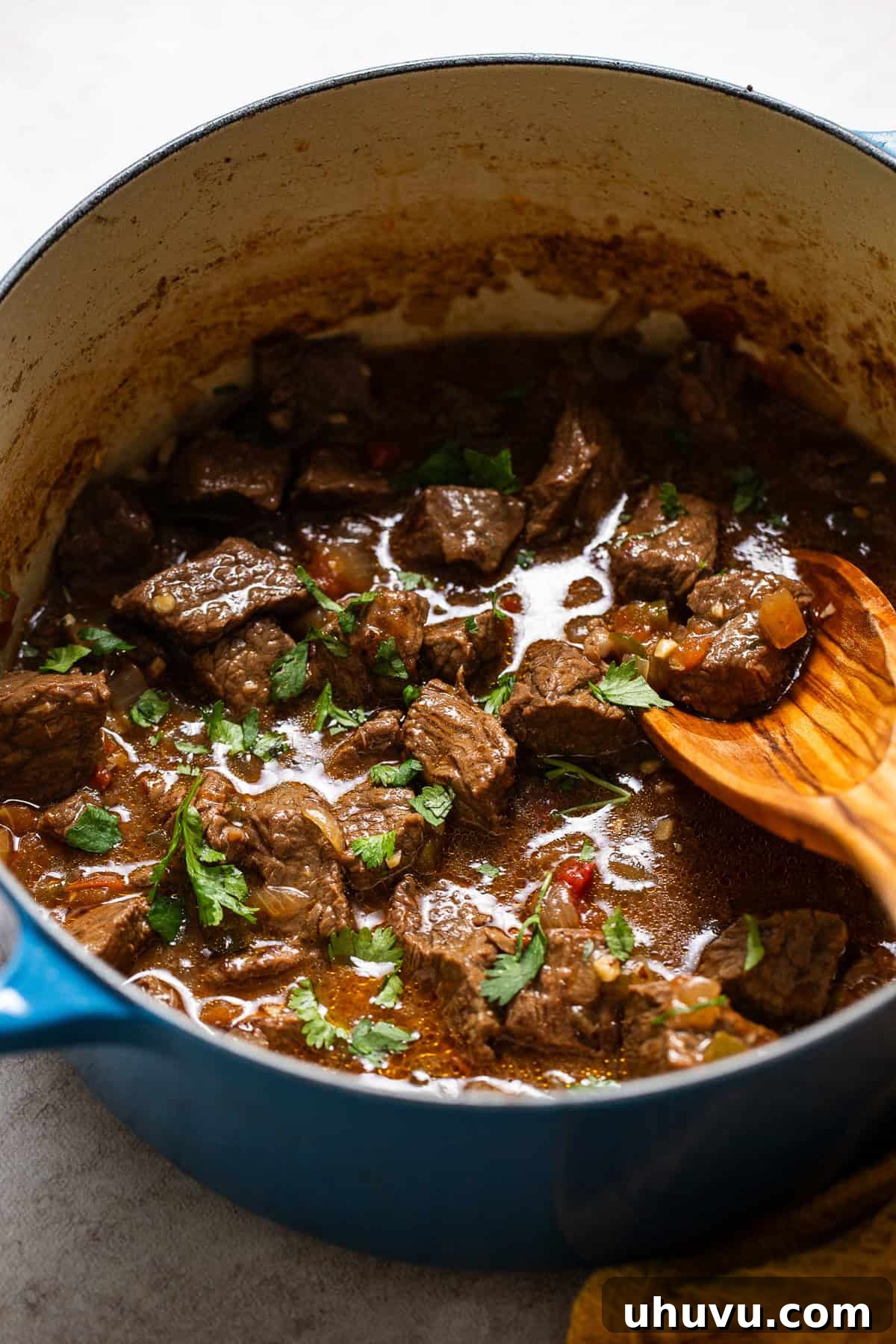
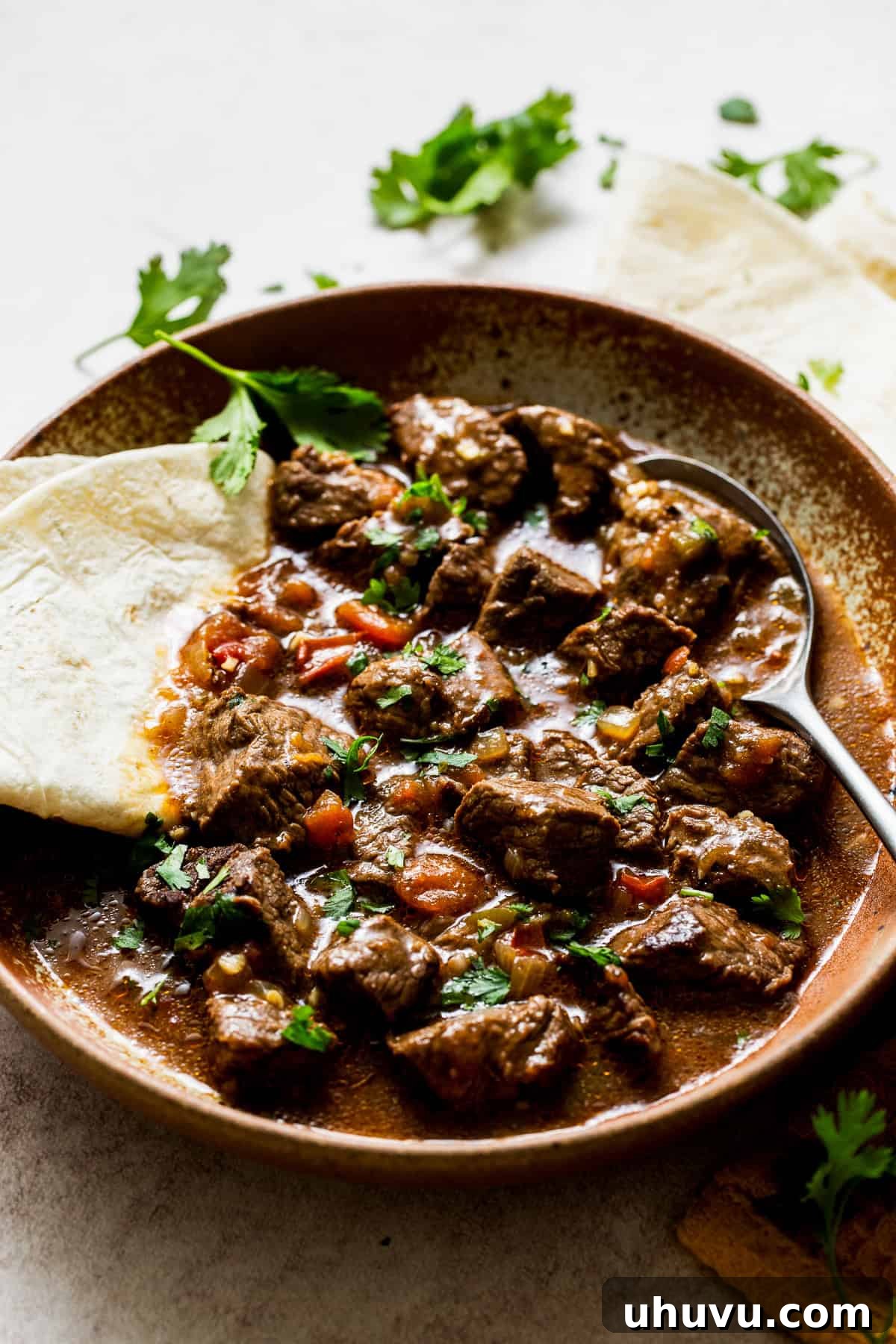
Step 4: Garnish and Serve. Once the Carne Guisada has reached your desired thickness and the beef is fork-tender, it’s ready to be served. Garnish generously with freshly chopped cilantro, which adds a bright, herbaceous note that beautifully contrasts the rich stew. Serve immediately with warm, homemade flour or corn tortillas for scooping up every drop of that delicious gravy. Completing the meal with classic sides like fluffy Mexican rice and creamy refried beans creates a truly authentic and satisfying Mexican feast. Enjoy!
Expert Recipe Tips for the Best Carne Guisada
Achieving the perfect Carne Guisada is all about understanding the ingredients and being willing to adapt. Here are some pro tips to help you master this comforting stew:
- Selecting and Adapting Beef Cuts: While top sirloin is recommended for its quicker cooking time and robust flavor, you can certainly use more economical cuts like chuck roast or chuck shoulder. If opting for these, make a few adjustments:
- Chop the beef into slightly smaller, more uniform cubes to ensure even cooking.
- Increase the simmering time significantly. Chuck cuts benefit from at least 1.5 to 2 hours of slow cooking, or even longer, until they are incredibly tender and fall apart easily.
- Keep an eye on the liquid level. As these cuts cook longer, they might absorb more liquid. You can add extra beef broth or water incrementally to keep the stew moist and prevent it from drying out.
- Customizing the Spice Level: This recipe uses jalapeño peppers for a moderate kick, but you have full control over the heat.
- For a milder stew: Simply remove the ribs and seeds from the jalapeño before dicing, as these contain most of the capsaicin (the heat-producing compound). You can also substitute the jalapeño entirely with a mild bell pepper (green, red, or yellow), a poblano pepper for a subtle earthy flavor, or an Anaheim pepper.
- For a spicier stew: Leave some or all of the ribs and seeds in the jalapeño. For an even more intense heat, replace the jalapeño with a spicier pepper like a serrano pepper, which is considerably hotter.
- Exploring Protein Swaps: While beef is traditional, the beauty of “guisado” is its adaptability. Feel free to experiment with other proteins:
- Pork: Use pork shoulder (Boston butt) or pork loin, cut into cubes. Pork shoulder will require similar slow-cooking times to chuck roast for maximum tenderness, while pork loin will cook faster.
- Chicken: Boneless, skinless chicken thighs are an excellent choice for their flavor and tenderness. They will cook much faster than beef, typically requiring only 20-30 minutes of simmering. Adjust cooking times accordingly to prevent dry chicken.
- Achieving the Perfect Sauce Thickness: The stew naturally thickens as it simmers and reduces, and further as it cools. If you prefer an even thicker, richer gravy:
- Cornstarch Slurry: Towards the end of the cooking process, create a cornstarch slurry. In a small bowl, whisk together 1 to 2 tablespoons of cornstarch with an equal amount of cold water until smooth. Stir this slurry gradually into the simmering stew, allowing it to cook for an additional 1-2 minutes until the sauce reaches your desired consistency. This method provides a quick and effective way to control thickness.
- Deepening Flavor with Roasted Tomatoes: For an extra layer of complex flavor, consider roasting your Roma tomatoes before adding them to the stew. Halve the tomatoes, toss with a drizzle of olive oil, and roast at 400°F (200°C) for 15-20 minutes until slightly charred and softened. This intensifies their sweetness and adds a smoky depth to the gravy.
Serving Suggestions: Completing Your Mexican Feast
Carne Guisada is a incredibly versatile dish that serves as a satisfying and comforting main course on its own, but it truly shines when paired with traditional Mexican accompaniments. Here are some delicious ways to serve your homemade Carne Guisada, ensuring a complete and unforgettable meal:
- As a Hearty Filling: The tender beef and rich gravy make Carne Guisada an ideal filling for various Mexican staples.
- Burritos and Tacos: Roll it up in warm flour tortillas for a classic burrito, or spoon it into corn tortillas to create flavorful tacos. Top with your favorite salsa, such as smoky Salsa Macha or fiery Chile de Arbol Salsa, for an extra kick.
- Gorditas and Sopes: Use it to fill thick, masa-based gorditas or as a savory topping for homemade sopes. The rich stew perfectly complements the corn flavor.
- Huaraches and Tostadas: Pile the Carne Guisada onto crispy tostada shells or boat-shaped Mexican huaraches for a satisfying open-faced meal.
- Classic Mexican Sides: No Mexican dinner is complete without complementary sides.
- Rice: Serve alongside a generous helping of vibrant Mexican rice (Arroz Rojo) or a refreshing Arroz Verde (Green Rice). The rice soaks up the delicious gravy, enhancing every bite.
- Beans: Creamy Instant Pot refried beans or hearty Frijoles Puercos (Pork and Bean Stew) are perfect companions, adding texture and protein to your meal.
- Beyond Tradition: Get creative with your serving ideas!
- Serve over creamy mashed potatoes for a comforting twist.
- Enjoy it in a bowl with warm crusty bread for dipping into the flavorful gravy.
- Top it with a dollop of sour cream or crema and a sprinkle of crumbled cotija cheese for added richness.
Frequently Asked Questions About Carne Guisada
Carne Guisada is primarily made from tender chunks of beef that are slow-simmered in a rich, flavorful tomato-based gravy. The gravy typically features a blend of fresh Roma tomatoes, aromatic yellow onions, a hint of heat from jalapeño peppers, pungent fresh garlic, and essential Mexican seasonings like ground cumin and Mexican oregano. A touch of soy sauce and beef broth further enhance its savory depth.
The primary difference lies in their preparation methods and resulting textures. “Carne Guisada” translates to “stewed meat,” referring to beef that is slow-cooked in a sauce until tender. “Carne Asada,” on the other hand, means “grilled meat,” typically referring to thinly sliced, marinated beef that is quickly grilled or seared to achieve a smoky, charred flavor.
Carne Guisada naturally thickens as it cooks, due to the reduction of the tomato-based gravy, and continues to thicken further as it cools. For a more robustly thickened sauce, you can create a simple cornstarch slurry. Whisk together 1 to 2 tablespoons of cornstarch with an equal amount of cold water in a small bowl until smooth. Stir this slurry gradually into the simmering stew during the last few minutes of cooking, allowing it to cook for an additional 1-2 minutes until it reaches your desired consistency. The flour slurry added at the beginning of this recipe also contributes significantly to the gravy’s thickness.
The spice level of Carne Guisada can vary. In this recipe, a single jalapeño pepper provides a mild to moderate warmth, enhancing the flavor without overwhelming heat. You can easily adjust the spice by removing the ribs and seeds from the jalapeño for a milder stew, or by substituting with a hotter pepper like a serrano for those who prefer more heat.
Storing and Reheating Your Carne Guisada
Carne Guisada is an excellent dish for meal prepping, as its flavors tend to deepen beautifully overnight. Properly stored, it makes for convenient leftovers:
To store, transfer any leftover Carne Guisada into an airtight container and refrigerate promptly. It will maintain its freshness and delicious flavor for up to 1 week. For longer storage, you can freeze it in an airtight, freezer-safe container for up to 3 months. Thaw overnight in the refrigerator before reheating.
To reheat, you have a couple of easy options:
- Microwave: For individual servings, microwave the Carne Guisada in a microwave-safe dish for 1-2 minutes, stirring halfway through, until thoroughly warmed.
- Stovetop: For larger quantities, transfer the stew to a skillet or pot and reheat over medium-low heat, stirring occasionally, until it is heated through. If the gravy has thickened too much during storage, you can add a splash of beef broth or water to thin it to your preferred consistency.
Explore More Authentic Mexican Recipes
If you loved the rich flavors of this Carne Guisada, you’re sure to enjoy these other beloved Mexican stews and comfort food classics:
- Carne Adovada: A rich stew made with tender pork marinated and simmered in a savory red chile sauce.
- Chile Verde: A vibrant and zesty stew featuring tender pork simmered in a tangy green tomatillo and chile sauce.
- Chile Colorado: A hearty beef stew characterized by a deep, earthy red chile sauce.
- Chicken Chile Verde: A lighter alternative to the pork version, with tender chicken simmered in the bright, flavorful green chile sauce.
If you’ve tried this fantastic Carne Guisada Recipe or any other delightful recipe on Isabel Eats, don’t forget to 🌟 rate the recipe and share your culinary experience in the comments below! Your feedback is invaluable, and I truly love hearing about your journey in the kitchen!
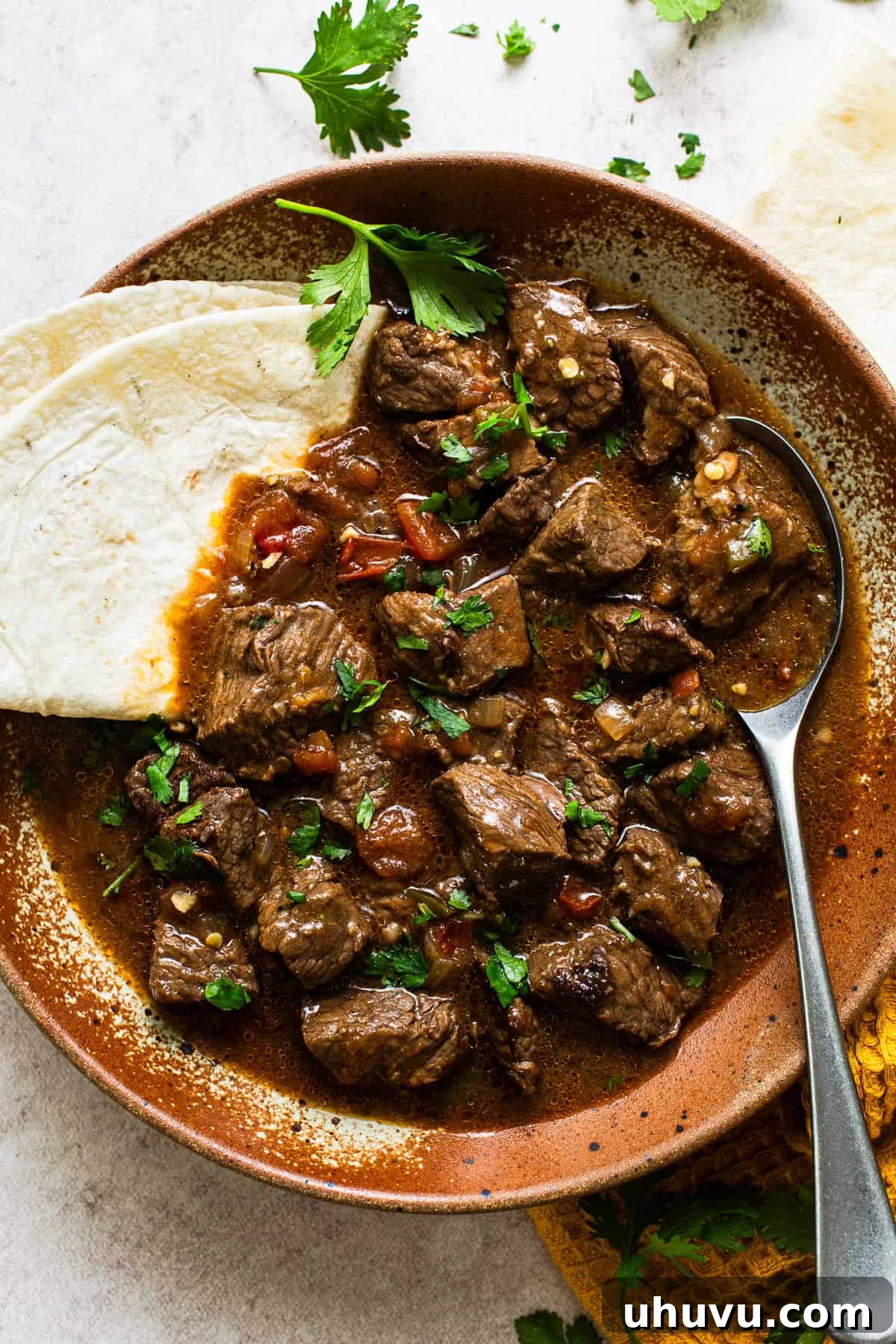
Carne Guisada
Ingredients
- 2 pounds sirloin steak, diced into 1-inch cubes
- 1 ½ teaspoon kosher salt
- 1 teaspoon ground cumin
- ½ teaspoon Mexican oregano
- ½ teaspoon freshly ground black pepper
- 2 cups beef broth, divided
- 1 tablespoon all-purpose flour
- 2 tablespoons olive oil
- ½ yellow onion, diced
- 1 jalapeño pepper, diced
- 3 cloves garlic minced
- 2 Roma tomatoes, diced
- ½ teaspoon soy sauce
Instructions
- Toss together the beef, salt, cumin, oregano, and black pepper in a large bowl.
- In a small bowl, whisk together ¼ cup of the beef broth and the flour to create a slurry. Set aside.
- Heat the olive oil in a large pot or Dutch oven over medium-high heat. Add the beef and cook for 5 minutes, stirring occasionally, until browned.
- Stir in the onion, jalapeño, and garlic and cook for 2 minutes.
- Add the tomatoes and soy sauce. Stir and cook for 2 more minutes.
- Pour in the remaining 1 ¾ cups of beef broth and the slurry. Stir to combine and bring everything to a boil.
- Reduce the heat to low, cover, and simmer for 45 minutes.
- Uncover and cook for an additional 3 minutes to thicken the sauce slightly. It will continue to thicken as it cools. Taste and add more salt as needed.
- Garnish with chopped cilantro and serve immediately with warm flour tortillas and a side of Mexican rice.
Notes
- Beef cut: You can use cheaper cuts of beef like chuck roast or chuck shoulder with a few adjustments. Chop the beef into smaller cubes and make sure to cook them in the tomato-gravy for a longer period of time. You can add beef broth as it cooks to keep it moist.
- Adjust the spice: I used jalapeños to add a little kick, but you can keep it mild by removing the ribs and seeds or substituting a bell pepper, poblano, or Anaheim pepper.
- Thickness of the sauce: If the sauce isn’t as thick as you want it to be, carefully pour about 2 to 3 tablespoons of the sauce into a small bowl. Whisk in ½ tablespoon of flour to create a slurry, then stir it back into the pot until the sauce begins to thicken.
Nutrition
Nutrition information is automatically calculated, so should only be used as an approximation.