
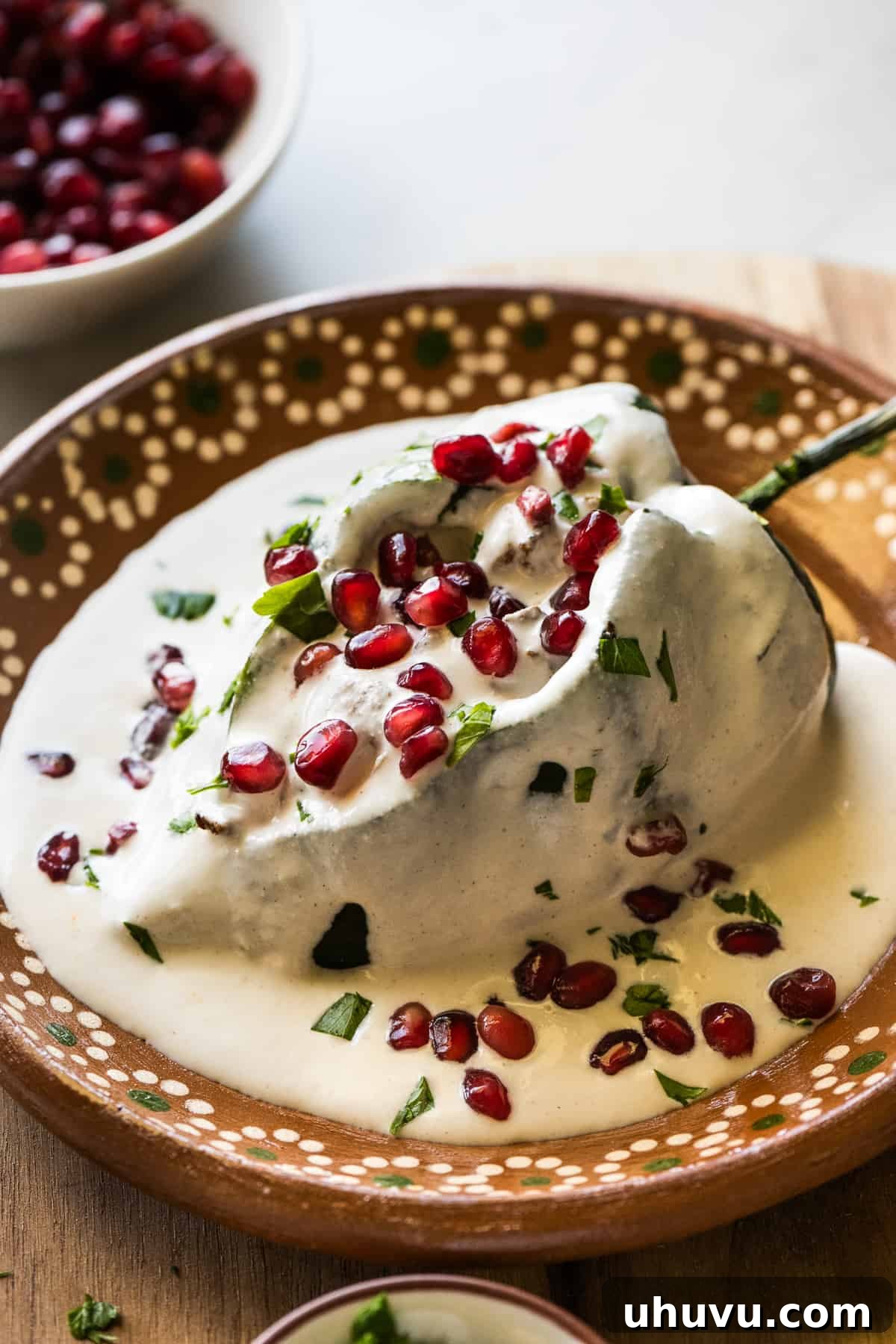
Chiles en Nogada: A Culinary Masterpiece Celebrating Mexican Heritage
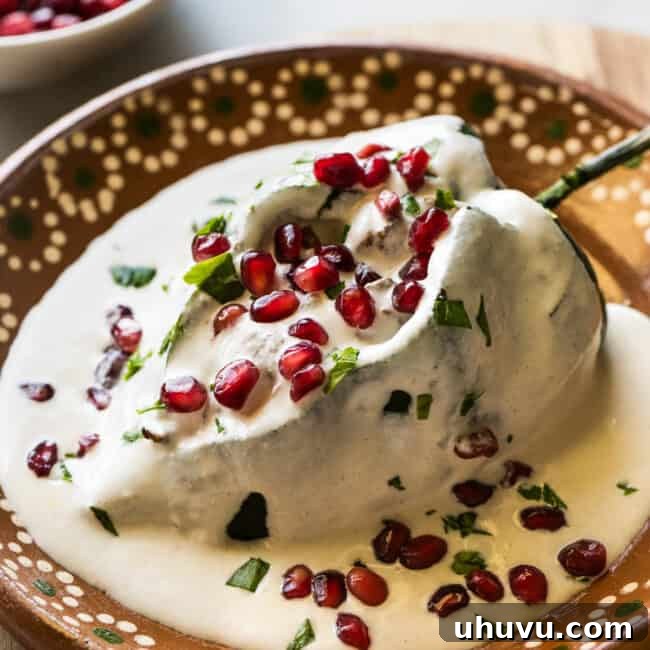
Step into the vibrant world of Mexican cuisine with Chiles en Nogada, a dish that is as visually stunning as it is gastronomically rich. This iconic meal features succulent poblano peppers, meticulously roasted and peeled, then generously stuffed with a unique sweet and savory picadillo. The true magic lies in its velvety walnut-cream sauce, known as “nogada,” which blankets the peppers in a pristine white. Crowned with ruby-red pomegranate seeds and verdant parsley, Chiles en Nogada proudly displays the colors of the Mexican flag, making it a culinary emblem of national pride and a truly impressive dish for any occasion.
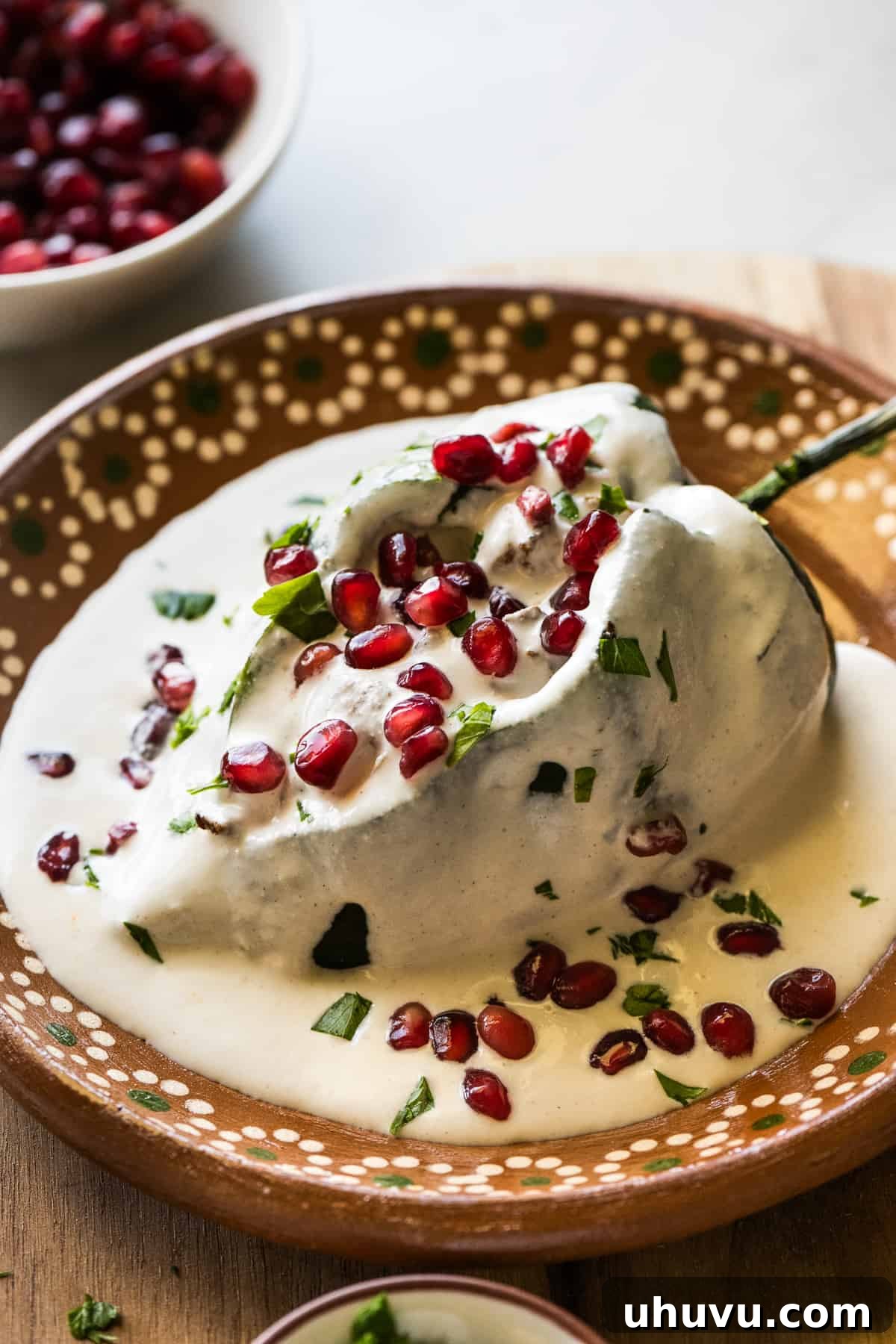
Crafting Chiles en Nogada is a labor of love, a culinary journey that deeply connects me to Mexico’s rich heritage. While it demands attention to detail and a touch of patience, the reward is an unparalleled explosion of flavors and a profound sense of cultural connection. Sharing this authentic recipe is more than just passing on instructions; it’s about preserving a piece of history and inviting everyone to experience the heart and soul of Mexican gastronomy.
What is Chiles en Nogada? The Heart of Mexican Independence Day
Chiles en Nogada is far more than just a dish; it’s a culinary symbol steeped in Mexican history and patriotism. At its core, it consists of perfectly roasted and peeled poblano peppers, carefully deseeded and filled with a complex picadillo. This filling is a delightful fusion of ground meat (typically pork and beef), combined with a medley of fruits, nuts, and aromatic spices, offering a harmonious balance of sweet and savory notes. The stuffed peppers are then generously coated with “nogada,” a luxurious, creamy sauce made from fresh walnuts, goat cheese, and milk. The final flourishes of vibrant red pomegranate seeds and fresh green parsley not only add bursts of flavor and texture but also famously represent the colors of the Mexican flag: green (poblano), white (nogada), and red (pomegranate).
Originating in Puebla, Mexico, in 1821, Chiles en Nogada was reputedly created by the Augustinian nuns of the Santa Monica convent to celebrate Agustín de Iturbide’s visit to Puebla after the signing of the Treaty of Córdoba, which granted Mexico its independence. The nuns ingeniously designed the dish to incorporate the colors of the newly formed Mexican flag, serving it as a triumphant culinary tribute. This historical significance has led many to consider it the national dish of Mexico, often served around Mexican Independence Day (September 16th) celebrations. While some might argue that mole holds this title, Chiles en Nogada’s direct connection to the nation’s founding makes its claim particularly strong and resonates deeply with Mexican identity.
Throughout Mexico, this iconic dish is a cherished staple, with many families and regions boasting their unique variations. Some recipes might incorporate different local fruits into the picadillo, or vary the type of cheese in the nogada for a distinct regional twist. You might also encounter versions where the stuffed chiles are lightly battered and fried, similar to traditional Chiles Rellenos, before being adorned with the exquisite walnut sauce. These variations underscore the dish’s adaptability and enduring popularity across the country, while always maintaining its essential patriotic essence.
Culinary Insight: The Traditional Acitrón
Historically, the rich picadillo filling in Chiles en Nogada included acitrón, a candied pulp derived from the endangered barrel cactus (biznaga). This ingredient contributed a unique sweetness and chewy texture. Due to conservation efforts and restrictions on its harvest, acitrón is now very difficult to find, especially outside of Mexico, and its use is largely discouraged. In this recipe, we thoughtfully substitute it with dried pineapple chunks. This alternative provides a similar delightful sweetness and a pleasant chewiness, ensuring the integrity of the dish’s flavor and texture profile while remaining ethically conscious.
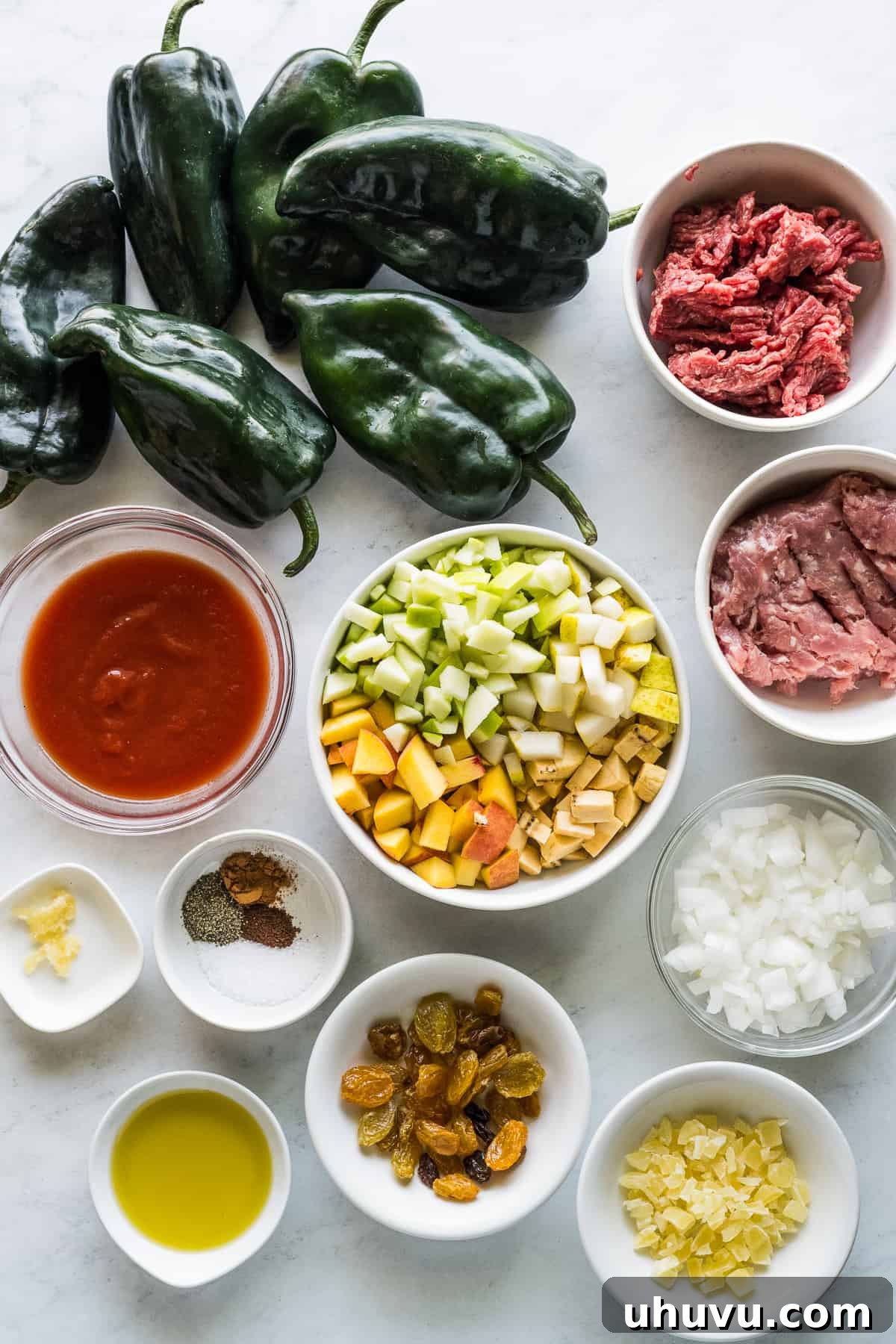
Essential Ingredients for Chiles en Nogada
While the ingredient list for Chiles en Nogada might seem extensive, each component plays a vital role in creating the dish’s signature complex flavor. Don’t be daunted; gathering everything beforehand makes the cooking process smooth and enjoyable!
For the Luxurious Nogada (Walnut-Cream Sauce):
- Walnuts: The star of the nogada. Using fresh walnuts is key, and skinning them (though laborious) is crucial to prevent bitterness and achieve a pure, delicate flavor. If pre-skinned walnuts are available, they will significantly reduce prep time.
- Dairy Blend: A combination of creamy goat cheese, mild queso fresco, fresh milk, and authentic Mexican crema creates the sauce’s rich, tangy, and smooth consistency. The goat cheese adds a characteristic piquant note that balances the sweetness.
- Sweeteners & Spices: A hint of ground cinnamon and granulated sugar introduces a subtle sweetness, harmonizing beautifully with the tang of the goat cheese and the earthy notes of the walnuts.
For the Flavorful Picadillo Filling and Peppers:
- Ground Meats: A traditional blend of ground pork and ground beef forms the hearty base of the picadillo. Opting for a slightly fattier cut helps ensure a moist, flavorful filling that won’t dry out during cooking.
- Diverse Fruits: Golden raisins, dried pineapple chunks (our ethical substitute for acitrón), Bosc pear, Granny Smith apple, ripe peach, and plantain. This array of fruits contributes essential sweetness, complex acidity, and a wonderful variety of textures to the picadillo, making each bite an experience.
- Aromatic Vegetables: Finely diced white onion, minced garlic, and rich tomato sauce lay the savory foundation for the filling, deepening its umami profile.
- Nuts: Blanched slivered almonds are added for a delicate crunch and a mild, nutty flavor that complements the richness of the meat and fruits.
- Key Seasonings: Ground cloves, ground cinnamon, salt, and freshly ground black pepper are carefully balanced to enhance the sweet, savory, and aromatic qualities of the picadillo.
- Vibrant Garnish: Fresh, jewel-toned pomegranate seeds and finely chopped parsley are not just for visual appeal; they add a refreshing burst of flavor and a crucial textural contrast, completing the dish’s iconic look and taste.
Crafting Chiles en Nogada: A Step-by-Step Culinary Journey
Embark on the journey of creating this magnificent Mexican dish. Each step is designed to build layers of flavor and texture, culminating in a truly unforgettable experience.
1. Prepare the Exquisite Nogada Sauce:
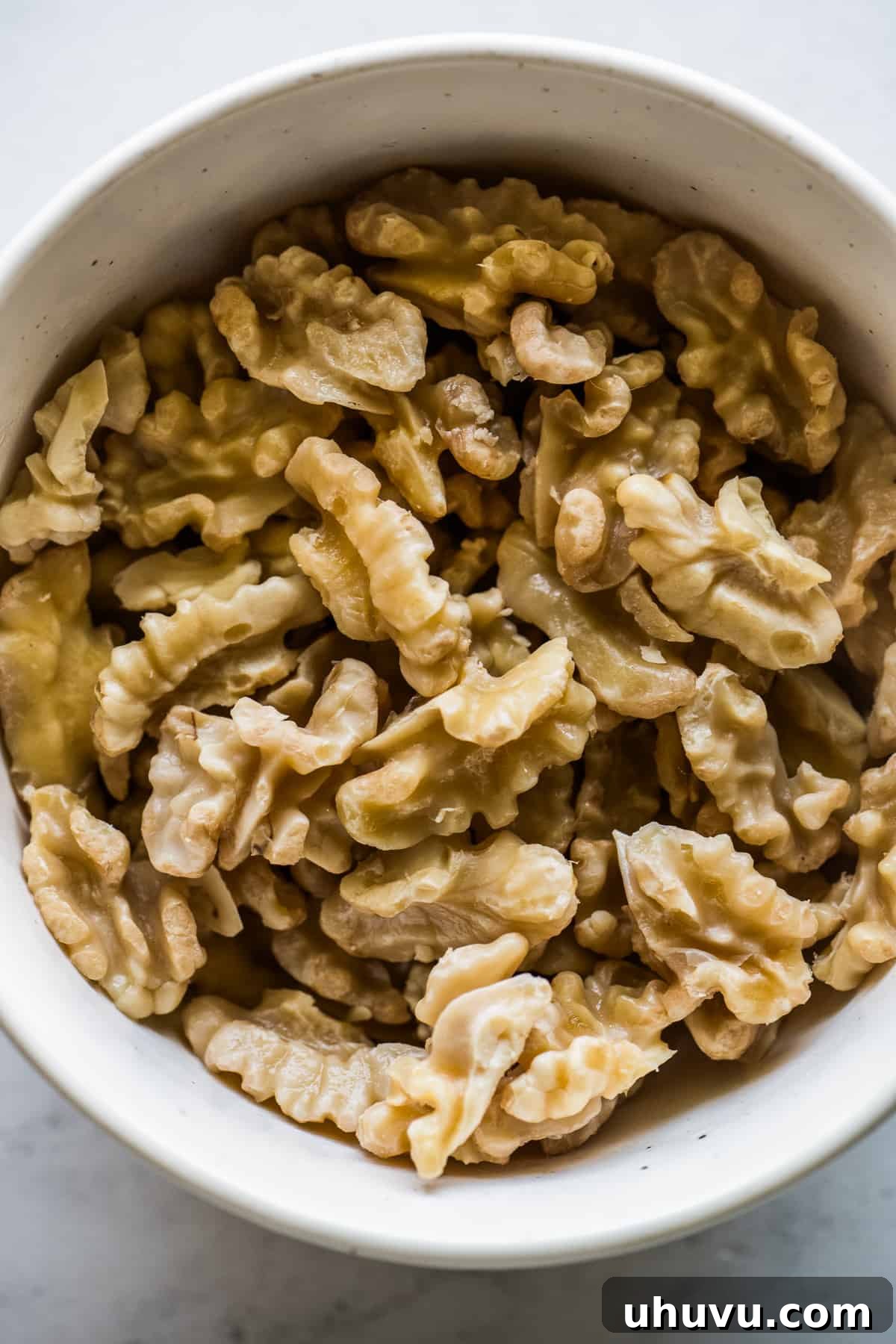
Begin by preparing the walnuts for your creamy nogada. This is arguably the most time-consuming part, but absolutely essential for a smooth, non-bitter sauce. Submerge the shelled walnut halves in boiling water for about 5 minutes. This softens the papery skin, making it easier to remove. Using your fingers or a small paring knife, meticulously peel off all the skin from each walnut. Don’t rush this step; patience here guarantees a superior sauce. If you can do this the night before, you’ll save valuable time on cooking day!
Once skinned, transfer the pristine walnuts to a blender. Add the goat cheese, queso fresco, milk, authentic Mexican crema, a pinch of ground cinnamon, and granulated sugar. Blend for a full 3-5 minutes until the sauce achieves a perfectly smooth, luscious consistency. Taste and adjust seasoning with a tiny pinch of salt if necessary. Set this velvety sauce aside to allow the flavors to meld.
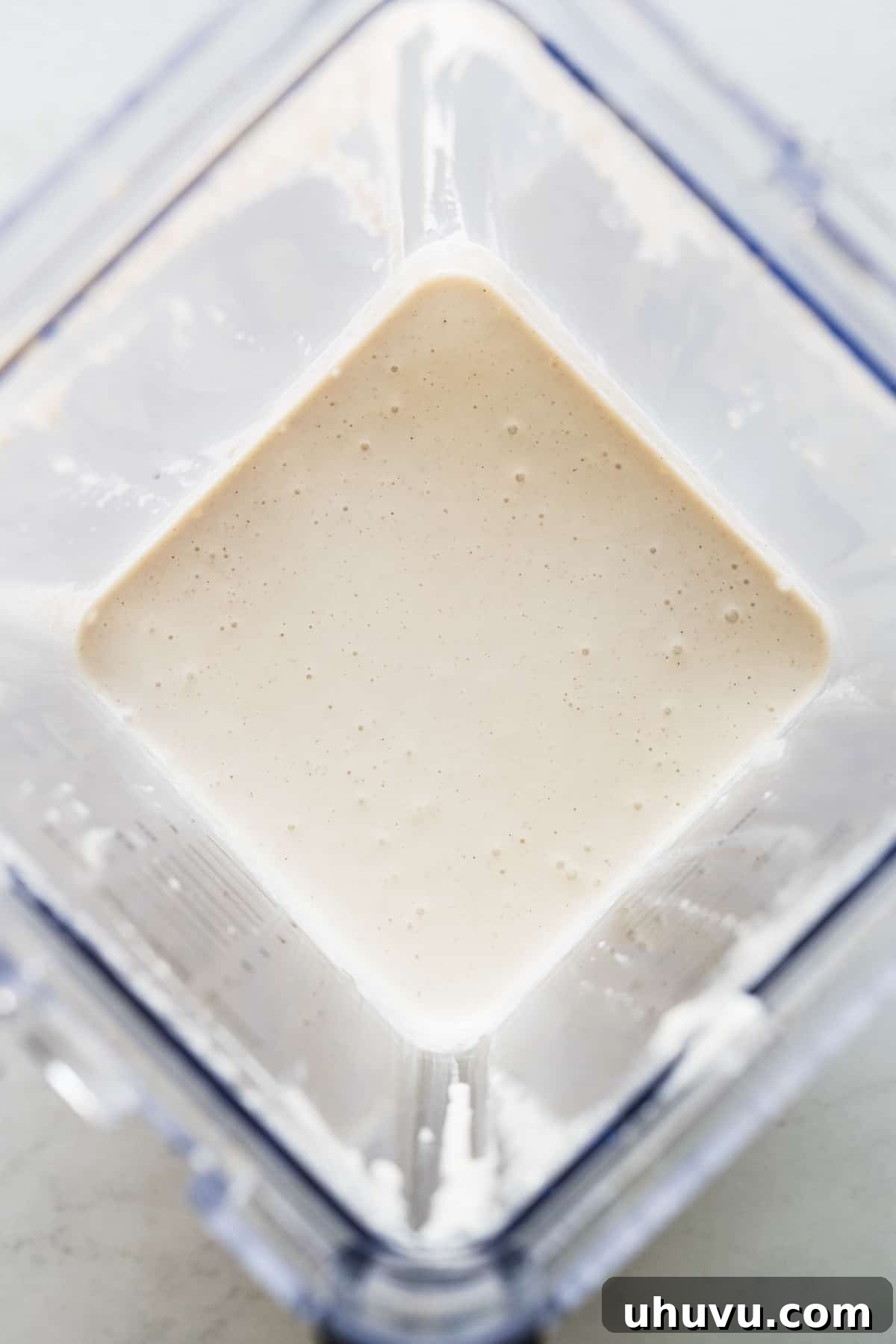
2. Create the Rich Picadillo Filling:
In a large skillet, heat a touch of olive oil over medium-high heat. Sauté the diced white onion until it becomes translucent and fragrant, typically around 3 minutes. Add the minced garlic and cook for another 30 seconds, being careful not to burn it. Introduce the ground pork and ground beef to the skillet, breaking up the meat with a spoon as it cooks. Continue to cook until both meats are thoroughly browned and any excess moisture has evaporated, which usually takes 6-8 minutes.
Next, stir in the tomato sauce, golden raisins, chopped dried pineapple, kosher salt, freshly ground black pepper, ground cloves, and an additional touch of ground cinnamon. Allow this mixture to simmer, uncovered, for about 8-10 minutes, stirring occasionally, until the flavors deepen and the sauce thickens slightly. This step is crucial for developing the picadillo’s aromatic base.
Finally, reduce the heat to low and fold in the diced Bosc pear, Granny Smith apple, peach, plantain, and blanched slivered almonds. Cover the skillet and let it gently cook for an additional 15-20 minutes, or until all the fruits have softened beautifully and are cooked through. The result should be a vibrant, sweet-and-savory filling with a wonderful medley of textures. Remove from heat and allow the filling to cool slightly before stuffing the peppers.
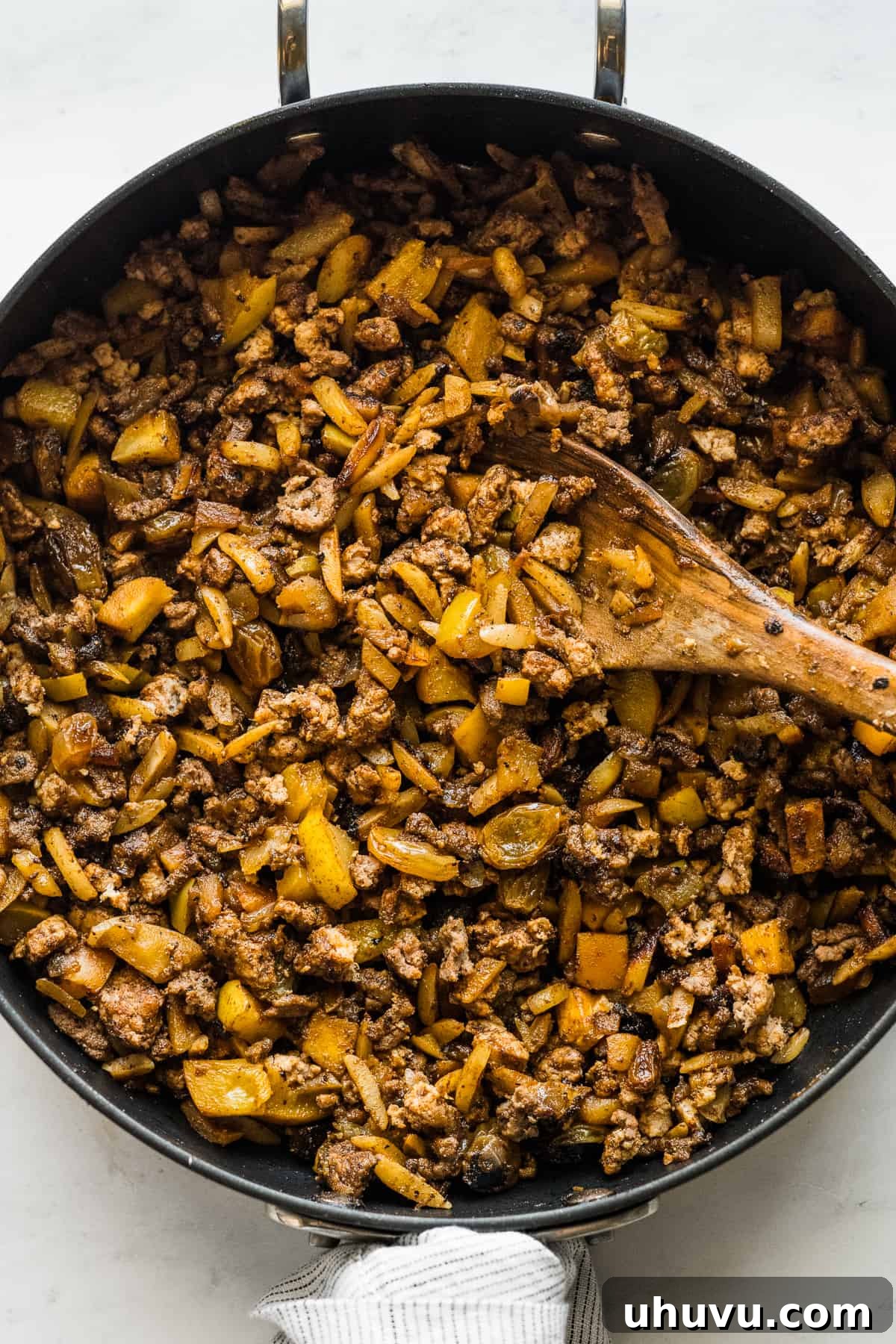
3. Roast and Carefully Stuff the Poblano Peppers:
Roasting the poblano peppers is a critical step that imparts a smoky flavor and makes them pliable for stuffing. You can achieve this using your oven broiler or over an open flame on a gas stove. For detailed instructions, refer to a guide on how to roast poblano peppers.
Once roasted, place the hot peppers in a plastic bag or cover them tightly with foil for 5-10 minutes. This steaming process helps loosen the charred skin. Carefully remove as much of the blackened skin as possible; a few small charred bits are fine for flavor. Make a single, careful slit down the middle of each pepper, being cautious not to cut all the way through. Gently scoop out the seeds and membranes. The peppers will be delicate, so handle them with care.
Now, carefully stuff each roasted poblano pepper with a generous amount of the prepared picadillo filling. The peppers may tear slightly during this process, but that’s perfectly normal and part of the rustic charm. Don’t worry if they don’t fully close; the rich nogada sauce will beautifully embrace them. Stuff them as full as you can without tearing them excessively.
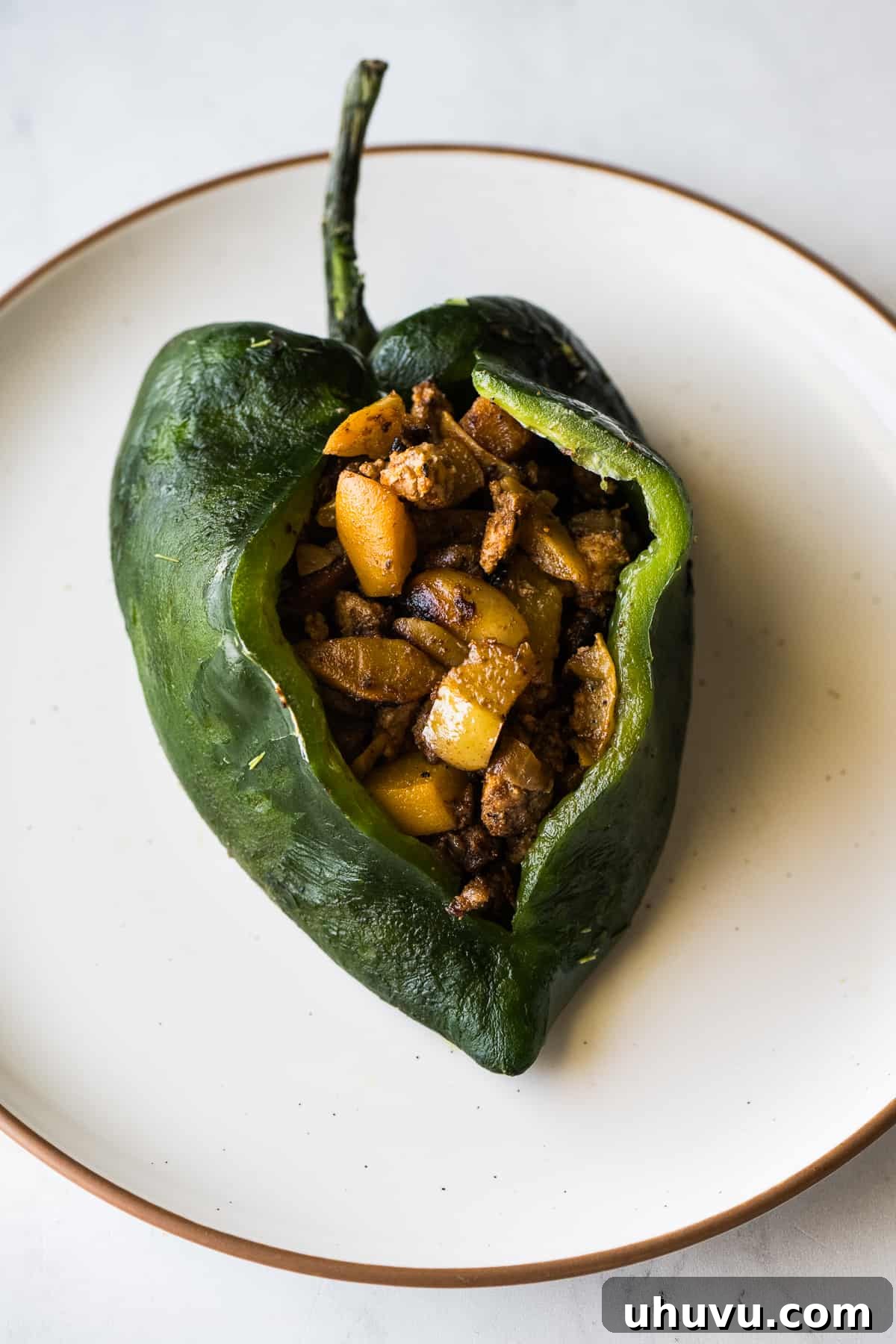
4. Garnish and Serve with Pride:
Arrange the stuffed poblano peppers elegantly on individual plates or a large serving platter. Generously spoon the luscious nogada sauce over each pepper, ensuring a rich, white blanket. Finally, sprinkle liberally with vibrant pomegranate seeds and fresh chopped parsley. A delicate pinch of flaky sea salt can further enhance the flavors. Serve immediately to enjoy the warmth of the peppers and filling contrasting with the cool, creamy sauce. This dish is best savored as a centerpiece, perhaps accompanied by a light side salad or simple white rice.
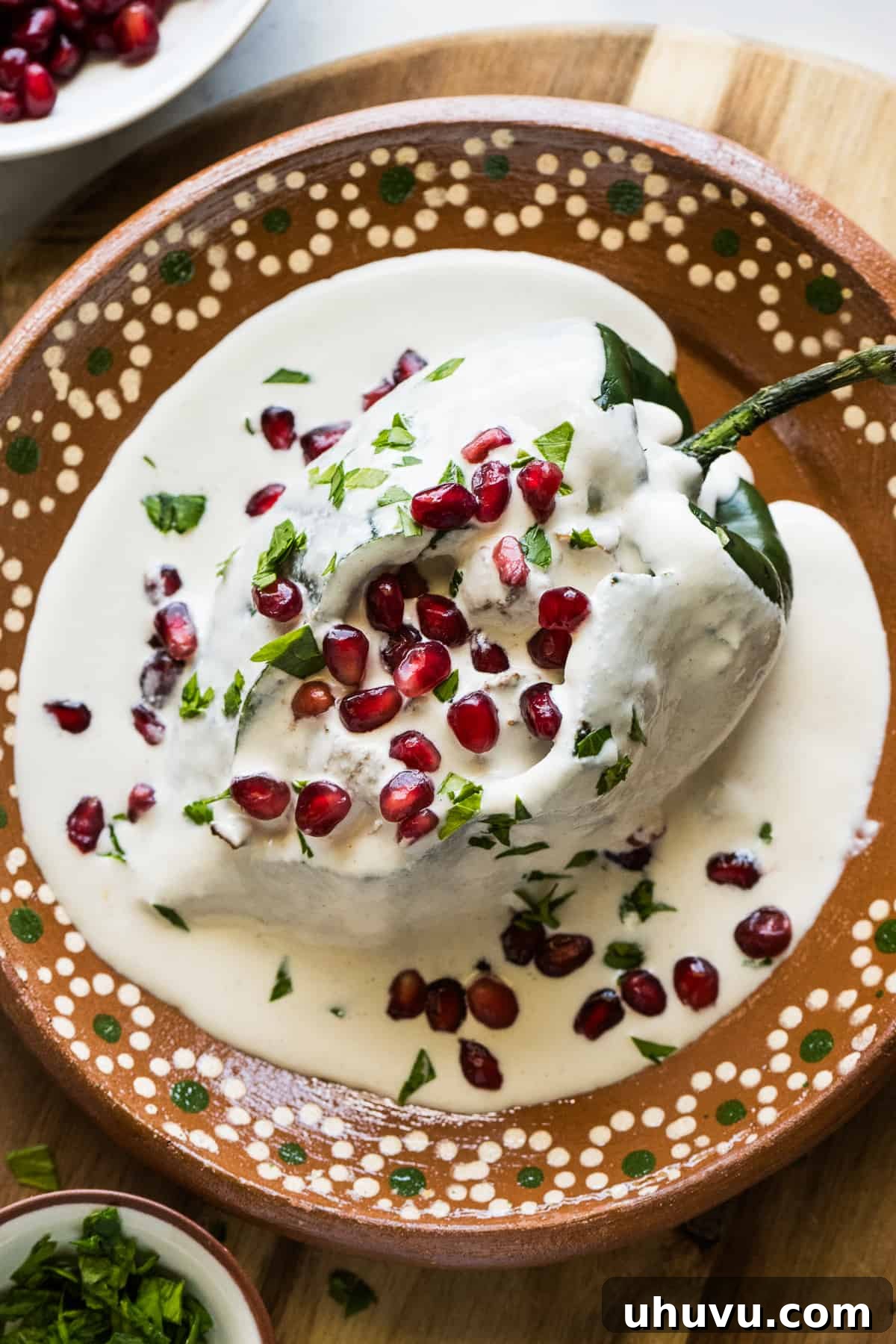
Expert Tips for Perfect Chiles en Nogada
- Walnut Preparation is Key: The most crucial step for a non-bitter nogada is meticulously peeling the walnuts. Soak them in boiling water for 5 minutes, then use your fingers or a paring knife to remove all the papery skin. This process can take up to 45 minutes, so consider doing it a day in advance. Your efforts will be rewarded with a sauce that is truly sublime.
- Prepping Ahead: Both the picadillo filling and the nogada sauce can be prepared a day or two in advance. Store them separately in airtight containers in the refrigerator. On the day of serving, simply roast your peppers, warm the filling, and assemble the dish. This significantly reduces day-of stress.
- Choosing Poblano Peppers: Select large, firm poblano peppers that are free of blemishes. Their size will determine how much filling they can hold. This recipe typically yields enough filling for 6 large or 8 medium poblanos.
- Balancing Sweet and Savory: Taste your picadillo and nogada throughout the cooking process. The beauty of Chiles en Nogada lies in its delicate balance. Adjust sweetness or saltiness as needed to match your preference.
Recommended Kitchen Tools
Having the right tools can make preparing Chiles en Nogada a much smoother experience:
- High-Speed Blender: Essential for achieving that ultra-smooth, creamy consistency for your nogada sauce.
- Sturdy Baking Sheet Set: Ideal for roasting or broiling your poblano peppers evenly.
- Quality Nonstick Skillet: Perfect for browning your ground meats and simmering the picadillo filling without sticking.
- Paring Knife: Invaluable for the intricate task of peeling walnut skins and precisely slitting peppers.
Storing and Reheating Chiles en Nogada
To preserve the freshness and distinct textures of Chiles en Nogada, it’s best to store the components separately. Place your stuffed peppers in an airtight container and store the nogada sauce in another. Both can be refrigerated for up to 5 days.
For reheating, gently warm the stuffed peppers on a rimmed baking sheet in a preheated oven at 375°F (190°C) for 5-10 minutes, or until heated through. Simultaneously, you can gently warm the nogada sauce over low heat on the stovetop, stirring occasionally, or microwave it briefly until it reaches a desired temperature. Once warm, pour the sauce over the peppers and garnish fresh with pomegranate seeds and chopped parsley before serving. This method helps maintain the integrity of both the pepper and the sauce.
Explore More Authentic Mexican Recipes
If you’ve enjoyed the rich flavors of Chiles en Nogada, you’ll love diving into these other traditional Mexican dishes:
- Chile Relleno: Stuffed, battered, and fried poblano peppers, often filled with cheese and covered in tomato sauce.
- Tlacoyos: Oval-shaped corn tortillas, typically filled with beans, cheese, or fava beans, served with various toppings.
- Mexican Picadillo: A versatile savory ground meat hash, often featuring potatoes and carrots, perfect for tacos or stuffing.
- Authentic Mole: A complex and rich sauce with dozens of ingredients, including chiles, spices, and often chocolate, a true culinary cornerstone.
Chiles en Nogada: The Full Recipe
Chiles en Nogada
Isabel Orozco-Moore
1 hour
45 minutes
1 hour 45 minutes
6 servings
Ingredients
For the Nogada (Walnut Sauce)
- 2 cups water, plus more as needed
- 1 cup shelled walnuts halves
- 4 ounces goat cheese
- 3 ounces queso fresco
- ¾ cup milk, divided
- ½ cup Mexican crema
- ¼ teaspoon ground cinnamon
- ⅛ teaspoon granulated sugar
For the Stuffed Peppers
- 2 tablespoons olive oil
- ¼ medium white onion, diced
- 1 garlic clove, minced
- ½ lb ground beef
- ½ lb ground pork
- ¾ cup tomato sauce
- ¼ cup golden raisins
- 3 tablespoons chopped dried pineapple chunks
- 1 teaspoon kosher salt
- ½ teaspoon freshly ground black pepper
- ⅛ teaspoon ground cloves
- ⅛ teaspoon ground cinnamon
- ¼ cup blanched slivered almonds
- ½ Bosc pear, peeled and diced
- ½ Granny Smith apple, peeled and diced
- ½ peach, peeled and diced
- ¼ plantain, diced
- 6 large poblano peppers
- pomegranate seeds, for garnish
- chopped parsley, for garnish
- flaky sea salt, for garnish
Instructions
-
Make the nogada sauce. Boil the water in a small pot over high heat. Add the walnuts, cover, and soak for 5 minutes to loosen the skin.
-
Using your fingers or a paring knife, carefully remove the papery walnut skin off each walnut and place the peeled, skinless walnuts in a bowl. This is a very tedious process and takes patience, but it’s an important step to ensure the sauce doesn’t come out bitter.
-
Add the skinned walnuts, goat cheese, queso fresco, milk, Mexican crema, ground cinnamon, and sugar to a blender. Blend for 5 minutes until completely smooth. Set aside.
-
Make the filling. Heat the olive oil in a large skillet over medium-high heat. Add the onion and cook for 3 minutes, stirring occasionally. Add the garlic and cook for 30 seconds.
-
Add the ground beef and ground pork. Cook for 6 to 8 minutes, breaking up the meat into small pieces as it cooks.
-
Stir in the tomato sauce, golden raisins, dried pineapple, salt, black pepper, ground cloves, and ground cinnamon. Cook uncovered for about 8-10 minutes, stirring occasionally, until the excess moisture is cooked out.
-
Reduce the heat to low and stir in the pear, apple, peach, plantain, and slivered almonds. Cover and cook for about 15-20 minutes, until the fruit is tender and cooked through. Set aside to cool slightly.
-
Prepare the poblanos. Line a large baking sheet with aluminum foil and place the poblano peppers on top. Set your oven rack directly underneath the broiler and turn the broiler on.
-
Broil the poblanos for 5 minutes or until the skin is blackened and blistered. Carefully flip them over and broil for another 5 minutes or until the skin is blackened and blistered.
-
Remove them from the oven and loosely cover the baking sheet with aluminum foil or plastic wrap to keep in some of the heat and help them steam. Let them sit for 5 minutes.
-
Peel and rub off as much of the loose skin on the peppers as possible. It doesn’t have to be perfect; just as much as you can.
-
Cut a small slit down the middle of the peppers with a knife. Carefully scoop out and discard the seeds using a spoon.
-
Assemble the Chiles en Nogada. Carefully stuff the peppers with the picadillo filling. Some of the peppers will be extra fragile because of the roasting process and may tear – that’s okay. Just do the best you can. The peppers do not need to fully close, so stuff them as much as you can. parsley.
-
Garnish and serve. Drizzle the nogada sauce all over the peppers, garnish with pomegranate seeds, chopped parsley, and a sprinkle of flaky sea salt. Serve immediately.
Notes
- Walnuts: Removing the skin from the walnuts is a very tedious process that can take up to 45 minutes, but it’s an important step to ensure the sauce doesn’t come out bitter.
- Poblano peppers: This filling in this recipe fills up 6 large poblanos or 8 medium poblanos.
Nutrition
Nutrition information is automatically calculated, so should only be used as an approximation.
Did you make this recipe? Leave a comment and star rating below!