
Mastering the Art of Roasting Poblano Peppers: A Flavorful Guide
Unlock a world of rich, smoky flavor and incredible versatility by learning how to perfectly roast poblano peppers. This essential culinary skill is not only easy to master but also transforms ordinary poblano peppers into a foundational ingredient for countless delectable Mexican dishes and beyond. Whether you prefer the convenience of your oven broiler or the authentic char of an open flame, this guide will walk you through each step, ensuring you achieve beautifully roasted poblanos every time, ready to elevate your cooking.
Why Roast Poblano Peppers? Unlocking Their Unique Flavor Profile
While poblano peppers are a fantastic addition to many recipes even when fresh, roasting them is a game-changer. The intense heat of roasting brings about a delightful transformation, coaxing out a subtle sweetness that complements their mild, earthy heat. The process of charring and blistering the skin not only makes it easy to remove but also infuses the peppers with a distinct smoky aroma and flavor that’s simply unmatched.
Roasting also tenderizes the flesh of the pepper, giving it a melt-in-your-mouth texture that’s ideal for sauces, stuffings, or simply enjoying on its own. It concentrates their inherent deliciousness, making them a more complex and satisfying ingredient. This simple technique is a cornerstone of authentic Mexican cuisine and one you’ll be glad to have in your repertoire.
Choosing the Right Poblano Peppers for Roasting
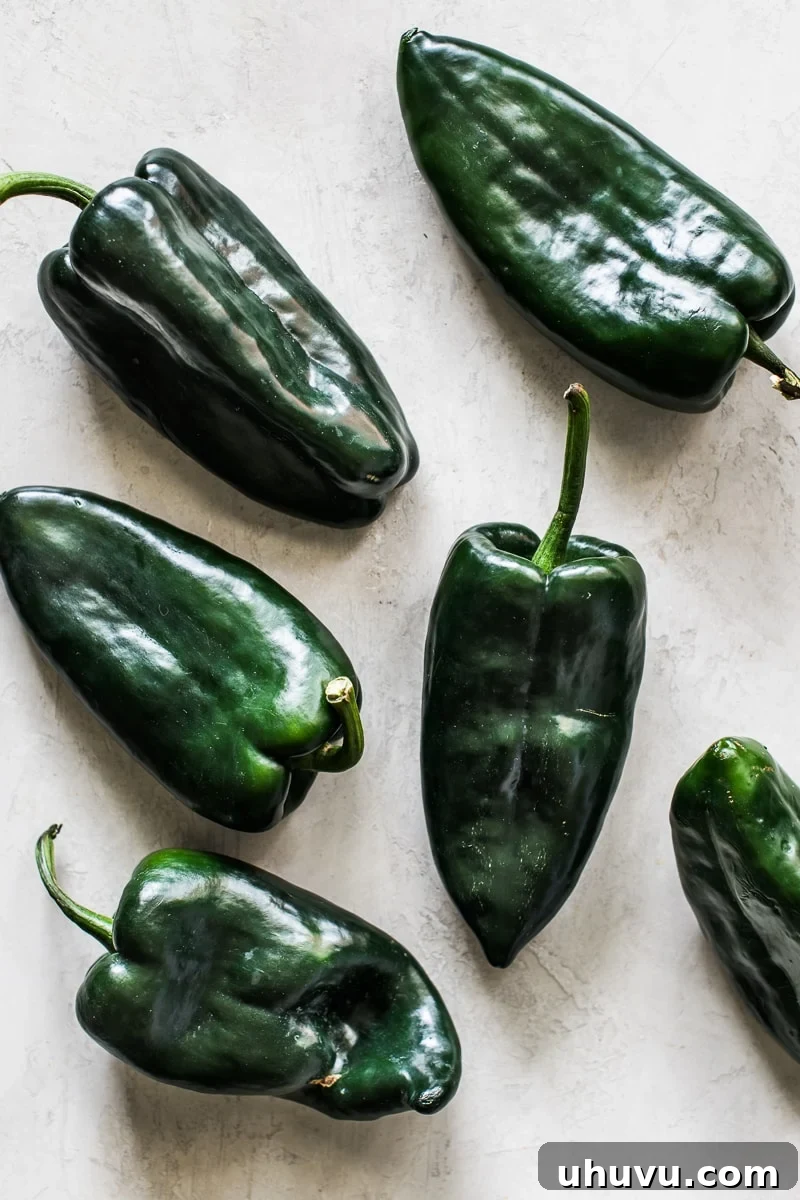
For the best results, select poblanos that are firm, glossy, and dark green. Avoid any with soft spots, wrinkles, or blemishes. A fresh, healthy pepper will roast more evenly and yield a superior flavor and texture. Poblanos are typically mild peppers, registering between 1,000 to 1,500 Scoville Heat Units (SHU), making them approachable for most palates while still offering a pleasant warmth.
Two Easy Methods for Roasting Poblano Peppers at Home
There are several effective ways to roast poblano peppers, each with its own advantages. My two preferred methods, both straightforward and yielding fantastic results, are using an oven broiler and roasting over an open flame on your stove or grill. Both methods aim to blister and blacken the pepper’s skin, which is crucial for easy peeling and flavor development.
Method 1: Roasting Poblano Peppers Under an Oven Broiler
The oven broiler method is incredibly convenient, especially if you need to roast multiple peppers at once. It’s a hands-off approach for much of the cooking time, allowing you to focus on other meal preparations.
Step-by-Step Guide for Oven Broiling Poblanos:
- Preparation: Begin by lining a large baking sheet with aluminum foil. This step is a lifesaver for cleanup, as the charred bits can be messy. Arrange your poblano peppers in a single layer on the foil-lined sheet, ensuring they have enough space for even cooking. Position your oven rack so it’s directly underneath the broiler element. Preheat your oven broiler to its highest setting.
- First Broil: Place the baking sheet with the poblanos under the hot broiler. Broil the peppers for approximately 5 to 7 minutes. Keep a close eye on them, as broiler intensity can vary between ovens. You’re looking for the skin to become visibly blackened, blistered, and puffed up in areas. This charring is essential for developing that deep, smoky flavor and making the skin easier to peel.
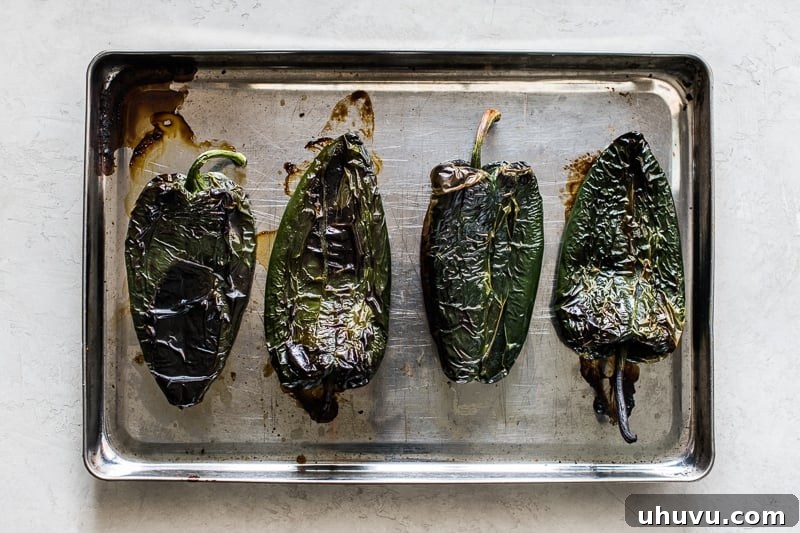
- Second Broil: Carefully remove the baking sheet from the oven. Using metal tongs, flip each poblano pepper over to expose the uncharred side. Return the baking sheet to the broiler and continue broiling for another 5 to 7 minutes, or until the other side is also evenly blackened and blistered. The goal is to get as much of the skin charred as possible without burning the flesh underneath.
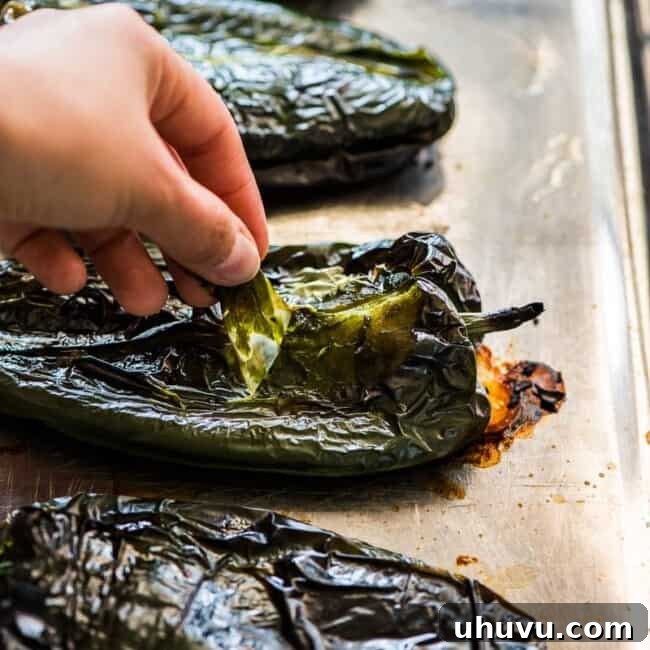
- Steam and Rest: Once both sides are sufficiently charred, remove the peppers from the oven. Immediately and loosely cover the baking sheet with another piece of aluminum foil or plastic wrap. This traps the heat and steam, which helps further loosen the skins, making them much easier to remove. Let the peppers sit and steam for at least 5 to 10 minutes. For larger peppers or more stubborn skins, you can extend this resting time slightly.
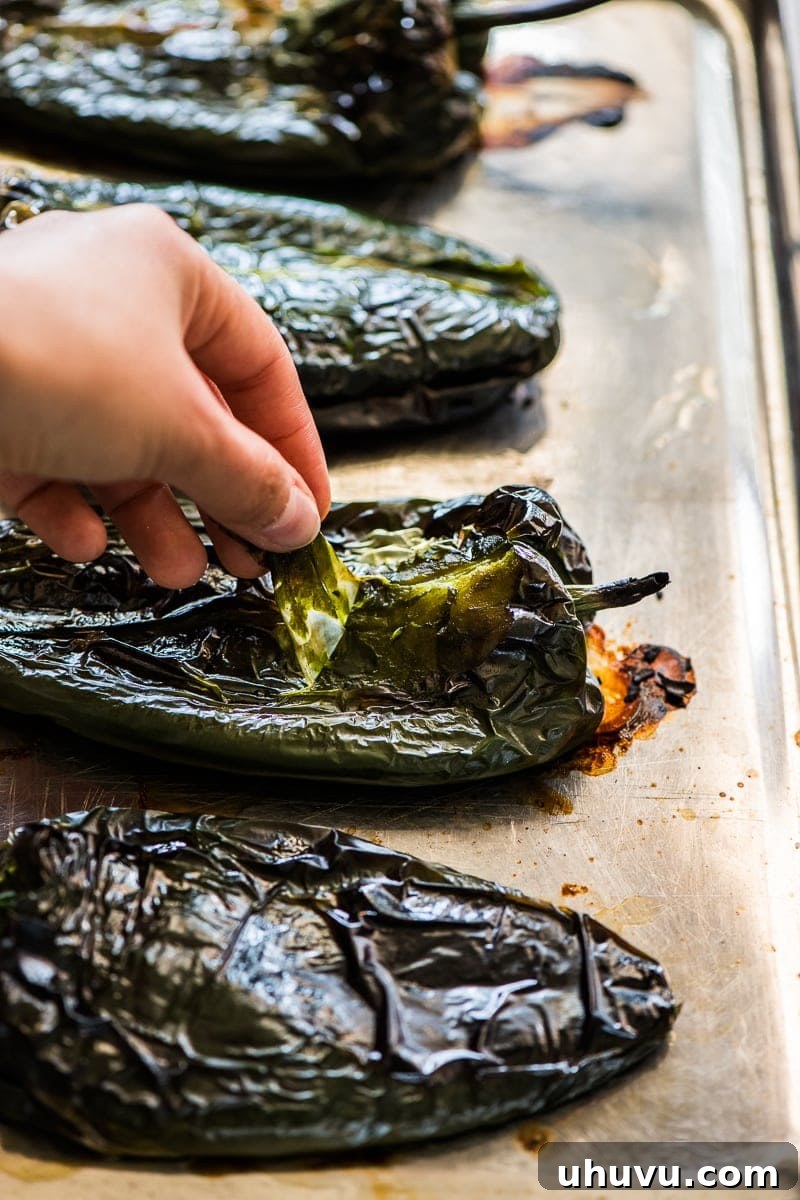
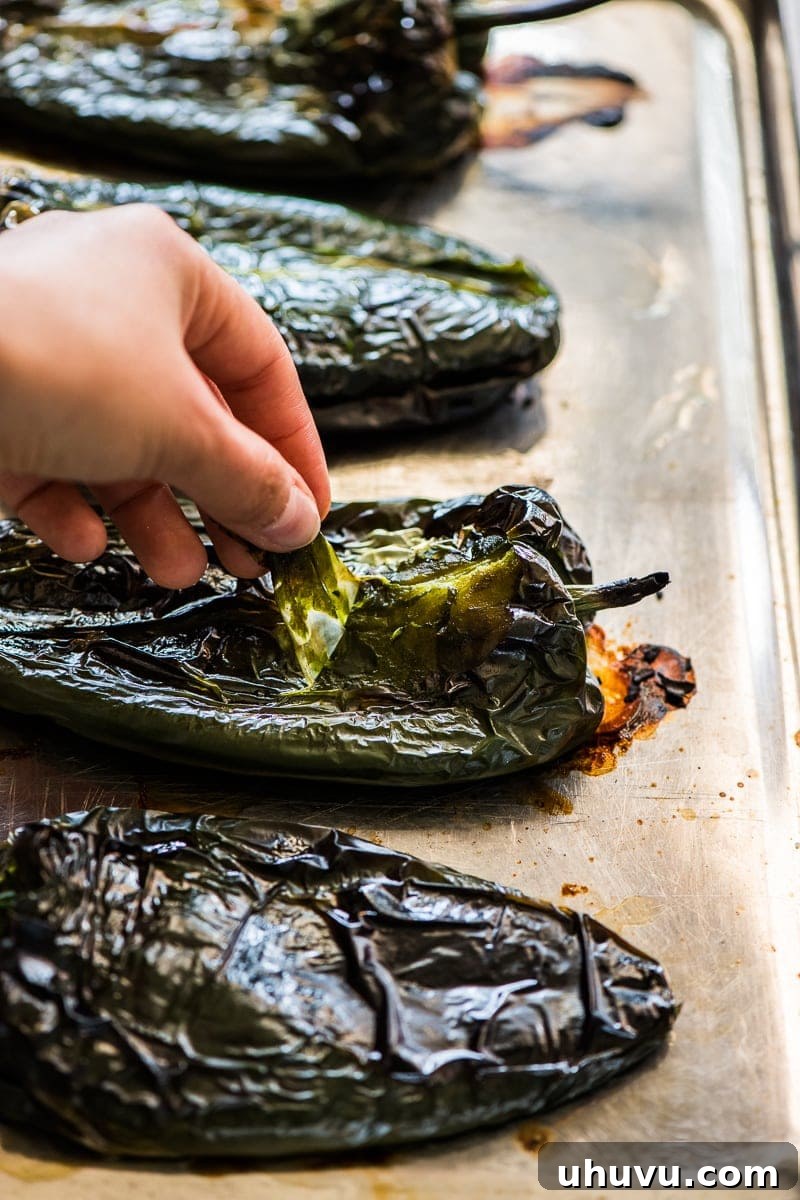
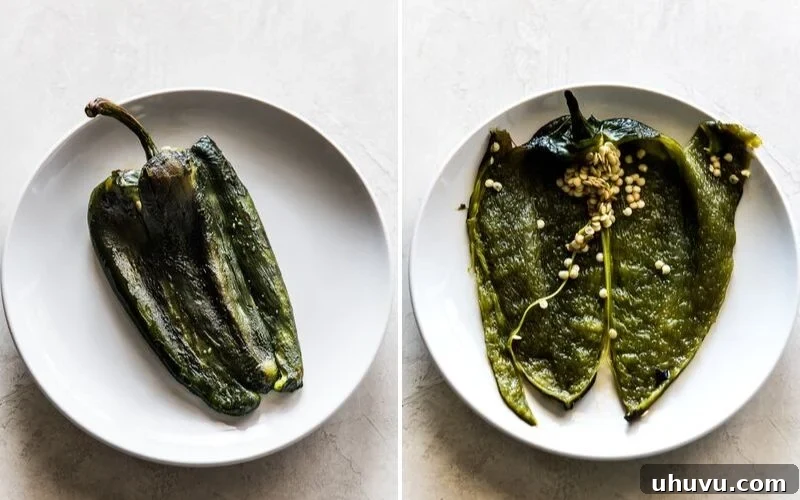
- Peeling the Peppers: Once the peppers have cooled enough to handle, gently pull and rub off as much of the loose, charred skin as possible. Don’t worry if you don’t get every single speck; a little char adds character and flavor.
- Deseeding (Optional): If you prefer a milder pepper or simply want to remove the seeds and veins (which hold most of the heat), make a vertical slit down one side of each pepper. Gently open it up and scrape out the seeds and white membranes with a small spoon or your fingers. If you enjoy a bit more heat, feel free to leave them intact.
Method 2: Roasting Poblano Peppers Over an Open Flame
Roasting over an open flame, whether on a gas stove burner or a grill, imparts the most intense smoky flavor. It’s a quick and traditional method, especially if you only have a few peppers to roast. This technique requires more direct attention but offers a rewarding, authentic taste.
Step-by-Step Guide for Open Flame Roasting:
- Ignite the Flame: Turn a gas stove burner to high. If using a grill, preheat it to high heat. Place the poblano peppers directly on the flame or grill grates.
- Charring Process: Using metal tongs, turn the peppers occasionally to ensure all sides are exposed to the flame. Continue roasting until the skin on all sides is thoroughly blackened and blistered. This usually takes about 5-8 minutes total, depending on the heat of your flame and the size of the peppers. Be careful not to let the peppers catch fire, though a little flame char is good.
- Steam and Rest: Once evenly charred, immediately transfer the roasted peppers to a medium-sized bowl. Cover the bowl tightly with aluminum foil, plastic wrap, or even a large plate. Let the peppers sit and steam for at least 5-10 minutes. This steaming process is vital for loosening the skins.
- Peeling and Deseeding: Follow steps 4 and 5 from the oven broiler method to peel the skins and deseed the peppers if desired.
Tips for Perfect Roasting and Peeling
- Don’t Overcook the Flesh: The goal is to char the skin, not to turn the entire pepper into mush. Once the skin is blackened, remove the pepper from the heat.
- Steam Immediately: The moment the peppers come off the heat, get them into a steaming environment. This is the secret to easy peeling.
- Don’t Rinse: Avoid rinsing the peeled peppers under water, as this can wash away some of that delicious smoky flavor. If some stubborn bits of skin remain, it’s perfectly fine; they add character.
- Gloves for Heat: If you’re sensitive to capsaicin (the compound that causes heat in peppers), consider wearing gloves when handling the roasted peppers, especially when deseeding.
How to Use Roasted Poblano Peppers: Versatile Culinary Applications
Once you’ve mastered the art of roasting poblano peppers, a world of culinary possibilities opens up. Their smoky, sweet, and mildly spicy flavor makes them an incredibly versatile ingredient, perfect for adding depth to a wide array of dishes. Here are just a few ideas to inspire your cooking:
- Chiles en Nogada: A truly iconic Mexican dish featuring roasted poblanos stuffed with a savory picadillo and draped in a creamy walnut sauce, garnished with pomegranate seeds and parsley.
- Chile Relleno Casserole: Enjoy the flavors of classic chile rellenos in a convenient, comforting casserole format, with tender roasted poblanos baked into a cheesy, egg-based dish.
- Roasted Poblano Corn Chowder: A creamy, heartwarming soup where the smoky notes of roasted poblanos beautifully complement the sweetness of corn, creating a rich and satisfying meal.
- Green Spaghetti (Espagueti Verde): Elevate your pasta night with a vibrant and flavorful green sauce made from roasted poblanos, often blended with cream, cheese, and sometimes cilantro, for a unique twist on spaghetti.
- Chile Relleno: The traditional individual dish, where a roasted poblano is typically stuffed with cheese, dipped in an egg batter, and fried until golden, then often served with a tomato sauce.
- Chile Verde: A robust and hearty Mexican stew, often made with pork, simmered in a rich, tangy, and subtly spicy sauce primarily based on roasted poblanos and tomatillos.
- Roasted Poblano Cream Sauce: A luxuriously smooth and flavorful sauce that can be drizzled over grilled meats, chicken, fish, or used as a base for other creamy dishes, thanks to the deep flavor of roasted poblanos.
- Roasted Poblano Broccoli Soup: A creative and healthy soup that combines the earthy goodness of broccoli with the smoky depth of roasted poblanos, offering a nutritious yet comforting meal.
- Salsas and Dips: Blend them into a smoky salsa verde, a creamy poblano dip, or a vibrant guacamole for an extra kick.
- Tacos and Burritos: Chop them up and add them to your favorite taco fillings, burritos, or quesadillas for a layer of complex flavor.
- Egg Dishes: Incorporate diced roasted poblanos into scrambled eggs, omelets, frittatas, or huevos rancheros for a Mexican-inspired breakfast or brunch.
- Stews and Soups: Beyond specific recipes, they can enhance almost any chili, stew, or creamy soup, adding depth and warmth.
- Side Dishes: Sauté them with onions and corn for a simple, flavorful side, or mix them into rice and bean dishes.
Storage and Freezing Roasted Poblano Peppers
Once roasted and peeled, poblano peppers can be stored in the refrigerator for several days or frozen for longer-term use, making them a fantastic meal prep ingredient.
- Refrigeration: Place the cooled, peeled, and deseeded peppers in an airtight container or a resealable plastic bag. They will keep fresh in the refrigerator for up to 3-5 days.
- Freezing: For longer storage, spread the peeled and deseeded peppers in a single layer on a baking sheet and freeze until solid. Once frozen, transfer them to a freezer-safe bag or container, removing as much air as possible to prevent freezer burn. They can be stored in the freezer for up to 6 months. Thaw them in the refrigerator before use.
Frequently Asked Questions About Roasting Poblano Peppers
Are poblano peppers spicy?
Poblano peppers are generally considered mild. They typically range from 1,000 to 1,500 Scoville Heat Units (SHU), which is significantly milder than a jalapeño (2,500-8,000 SHU). Their heat is more of a subtle warmth, and much of it resides in the seeds and veins, which you can remove for an even milder experience.
Can I roast poblano peppers without peeling them?
While you technically *can* use roasted poblanos without peeling them, it’s highly recommended to remove the skin. The skin of a roasted poblano becomes tough and papery, and its texture can be unpleasant in dishes. Peeling also allows the smoky, tender flesh to truly shine.
What’s the best way to peel roasted poblano peppers?
The best way is to ensure they steam adequately after roasting. Immediately covering them in a bowl or on a baking sheet after removing them from the heat creates a steamy environment that loosens the skin. Once cooled enough to handle, the skin should rub or pull off easily with your fingers. Avoid rinsing them under water, as this can dilute their flavor.
Can I roast other peppers using these methods?
Absolutely! These methods are versatile and work wonderfully for other types of chiles and bell peppers. Bell peppers, jalapeños, serranos, anaheims, and Hatch chiles can all be roasted using either the oven broiler or open flame technique to enhance their flavor and make them easier to peel.
What if my peppers aren’t charring evenly?
Don’t worry too much about absolute perfection. The key is to get a good amount of charring across most of the surface. If you’re using an oven broiler, rotate the peppers more frequently or adjust their position on the baking sheet. For open flame, use tongs to move them around until most of the surface is blackened. The steaming process will help soften any uncharred skin.
Rating: 4.83 out of 5 stars (from 23 votes)
Roasted Poblano Peppers
Isabel Orozco-Moore
5 minutes
10 minutes
15 minutes
4
peppers
Equipment
-
aluminum foil
-
large baking sheet
-
metal tongs (for open flame method)
-
medium bowl (for open flame method)
Ingredients
-
4
large
poblano peppers
Instructions
To roast under an oven broiler:
-
Line a large baking sheet with aluminum foil for easy cleanup. Place poblano peppers on top in a single layer. Set your oven rack directly underneath the broiler and preheat the broiler to high.
-
Broil poblanos for 5-7 minutes, or until the skin is blackened and blistered. Carefully flip them over using tongs and broil for another 5-7 minutes, or until the skin on the other side is also blackened and blistered. Watch closely to prevent burning.
-
Remove the baking sheet from the oven and immediately cover it loosely with aluminum foil or plastic wrap. This traps the heat and steam, which helps loosen the skins for easier peeling. Let them sit for 5-10 minutes.
-
Once cooled enough to handle, pull and rub off as much of the loose, charred skin on the peppers as possible. It doesn’t have to be perfectly clean; some charred bits add flavor.
-
If you prefer a milder pepper or want to remove the seeds, make a vertical slit down one side of the peppers. Open them up and scrape out the seeds and white veins with a spoon or your fingers. The peppers are now ready to be chopped, sliced, or stuffed for use in your favorite recipes.
To roast over an open flame:
-
Turn a gas stove burner on high. Place peppers directly on the flame, turning them occasionally with metal tongs until the skin on all sides is blackened and blistered. This usually takes 5-8 minutes total.
-
Once evenly charred, immediately transfer the peppers to a medium bowl and cover tightly with aluminum foil, plastic wrap, or even a large plate. Let them sit for 5-10 minutes to steam.
-
Pull and rub off as much of the loose, charred skin on the peppers as possible. It doesn’t have to be perfect; a little char is welcome.
-
If you don’t want the peppers too spicy, make a vertical slit down one side of the peppers and remove the seeds and veins. Chop, slice, or stuff the peppers to use in your recipes.
Nutrition
Serving:
1
pepper
|
Calories:
33
kcal
|
Carbohydrates:
8
g
|
Protein:
1
g
|
Fat:
1
g
|
Saturated Fat:
1
g
|
Sodium:
5
mg
|
Potassium:
287
mg
|
Fiber:
3
g
|
Sugar:
4
g
|
Vitamin A:
607
IU
|
Vitamin C:
132
mg
|
Calcium:
16
mg
|
Iron:
1
mg
Nutrition information is automatically calculated, so should only be used as an approximation.
Share your experience and leave a comment and star rating below!