
Welcome to the wonderful world of jicama, a truly versatile and incredibly healthy root vegetable that deserves a prime spot in your kitchen! Often underestimated, this crunchy, subtly sweet tuber offers a refreshing taste and a wealth of nutritional benefits that can elevate your meals and boost your well-being. Whether you’re a seasoned chef or just beginning your culinary journey, understanding what jicama is, how it tastes, and its numerous uses will undoubtedly inspire you to incorporate this fantastic ingredient into your diet. Get ready to discover why jicama, a staple in many Latin American cuisines, is quickly gaining popularity worldwide as a delicious and nutrient-packed addition to a healthy lifestyle.
Understanding Jicama: What is This Unique Root Vegetable?
At its core, jicama (pronounced HEE-kah-mah) is a fascinating root vegetable, scientifically known as Pachyrhizus erosus. Native to Mexico and Central America, it thrives in warm, tropical climates, growing on long, climbing vines that can reach impressive lengths. While the plant itself produces leaves, flowers, and pods, it’s crucial to remember that only the root portion is edible. The leaves and seeds contain a natural insecticide compound called rotenone, making them toxic for human consumption. So, always stick to the subterranean treasure!
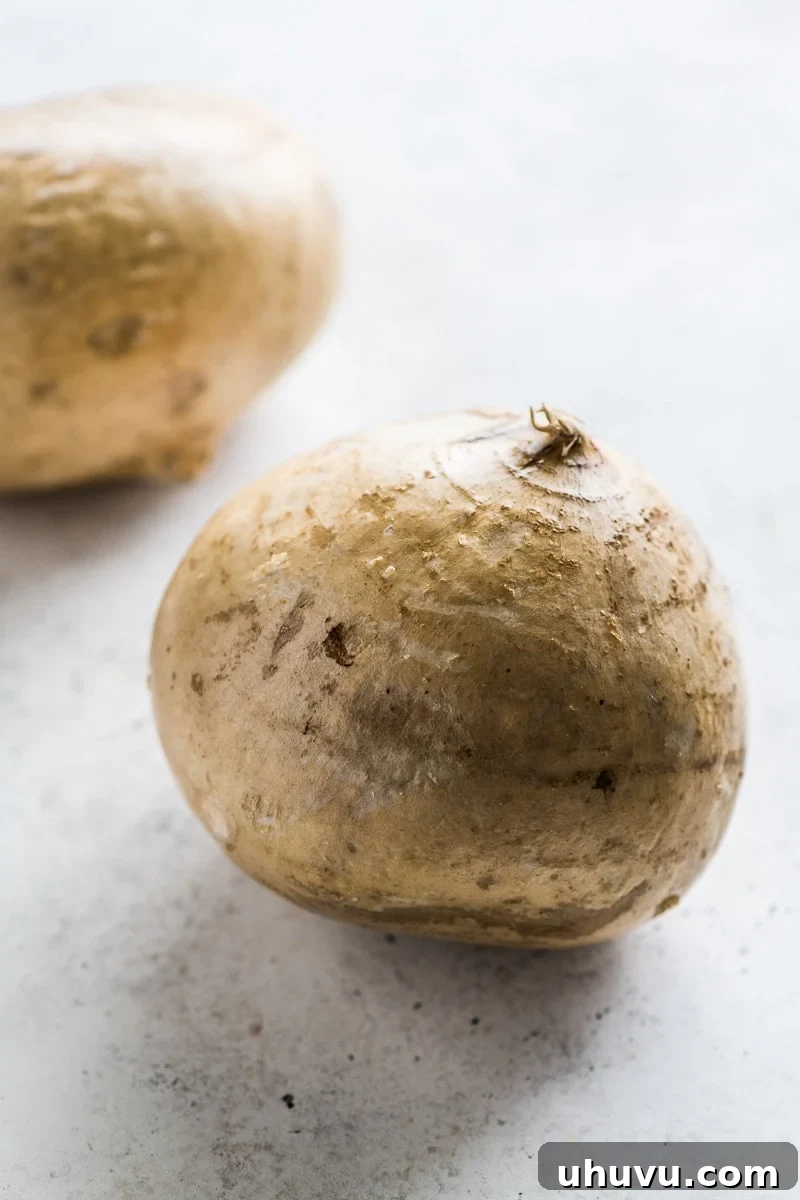
Visually, jicama might remind you of a large, earthy potato or a sturdy turnip. It typically has a round to oblate shape, encased in a thin, brownish-yellow skin that is inedible and must be peeled before consumption. Beneath this outer layer lies its most appealing feature: a crisp, white, starchy flesh that is remarkably juicy. This high water content, combined with its unique texture, makes jicama a standout ingredient. Its mild appearance belies the refreshing crunch and subtle sweetness it delivers, making it a versatile addition to a wide array of dishes.
Throughout various cultures, jicama goes by several other intriguing names, reflecting its widespread use and characteristics. In some regions, it’s known as the “Mexican potato” due to its origin and starchy nature. Other common monikers include “yam bean” and “Chinese turnip,” hinting at its texture and perhaps its visual resemblance to other root vegetables. Regardless of what you call it, this humble root vegetable holds a significant place in traditional and modern cuisines alike, celebrated for its unique attributes and health benefits.
The Distinctive Taste and Texture of Jicama
One of the most appealing aspects of jicama is its delightful taste profile and refreshing texture. The flavor of jicama is wonderfully mild, allowing it to seamlessly integrate into various culinary preparations without overpowering other ingredients. It presents a delicate sweetness, often described as subtly nutty, with an underlying earthy freshness. Imagine a harmonious blend that sits somewhere between the crispness of an apple, the slight starchiness of a potato, the refreshing watery crunch of a water chestnut, and the gentle sweetness of a pear. This unique combination makes it incredibly palatable and versatile.
Beyond its nuanced flavor, jicama’s texture is arguably its most defining characteristic. It boasts an exceptional crispness and juiciness that remains satisfyingly firm, even when cooked lightly. Unlike some root vegetables that can turn mushy, jicama maintains its satisfying bite, whether served raw or incorporated into hot dishes. This delightful crunch adds a fantastic textural contrast to salads, stir-fries, and salsas, making every bite an invigorating experience. Because of its mild and somewhat neutral base, jicama is a true culinary chameleon. It readily absorbs the flavors of accompanying ingredients, making it an excellent canvas for marinades, spices, and dressings. This attribute allows it to blend beautifully with bold flavors, from zesty lime and spicy chili powder to savory soy sauce and aromatic herbs, enhancing dishes without asserting its own dominance. Its adaptability ensures it’s a favorite for both raw applications and cooked preparations, promising a unique sensory experience every time.
Remarkable Health Benefits of Jicama: A Nutrient Powerhouse
Beyond its appealing taste and texture, jicama is a genuine nutritional powerhouse, packed with an array of health benefits that make it an excellent choice for a balanced diet. Incorporating this root vegetable into your meals can contribute significantly to your overall well-being. Let’s explore some of the key health advantages offered by jicama:
Low-Calorie and Low-Carb for Weight Management
- Jicama stands out as an ideal food for those managing their weight or following a low-calorie diet. With its exceptionally high water content (around 85-90%) and low sugar and fat levels, it provides significant volume and satiety without contributing excessive calories. A 100-gram serving typically contains only about 38 calories and less than 10 grams of carbohydrates. When combined with its robust fiber content, jicama offers a fantastic, nutrient-dense alternative to higher-carbohydrate root vegetables like potatoes, making it a favorite for keto, paleo, and gluten-free lifestyles.
Rich in Essential Vitamins and Minerals
- This humble tuber is surprisingly dense in a variety of vital vitamins and minerals. It’s an excellent source of dietary fiber, crucial for digestive health, and potassium, an electrolyte essential for maintaining healthy blood pressure and fluid balance. Moreover, jicama is particularly rich in Vitamin C, often providing a substantial portion of the daily recommended intake in a single serving. Vitamin C acts as a powerful antioxidant, protecting your cells from damage caused by free radicals, and plays a critical role in bolstering the immune system, collagen production, and iron absorption. It also contains smaller but significant amounts of folate, magnesium, and iron, all contributing to various bodily functions.
Supports a Thriving Gut Microbiome with Prebiotic Fiber
- One of jicama’s most celebrated health benefits is its high concentration of a unique type of soluble fiber called inulin. Inulin is a potent prebiotic, meaning it acts as a non-digestible food source for beneficial bacteria (probiotics) residing in your gut. These healthy bacteria are vital for a balanced gut microbiome, which in turn influences numerous aspects of health, including digestion, nutrient absorption, mood regulation, and a robust immune system. By regularly consuming jicama, you help nourish your gut flora, promoting a healthy digestive tract and contributing to overall systemic wellness.
Aids in Blood Sugar Control
- Thanks to its high fiber content and low glycemic index, jicama is an excellent choice for individuals looking to manage their blood sugar levels. The fiber helps slow down the absorption of sugars into the bloodstream, preventing rapid spikes. This makes jicama a valuable food for diabetics or those seeking to maintain stable energy levels throughout the day.
Promotes Cardiovascular Health
- The combination of potassium, fiber, and Vitamin C in jicama contributes positively to heart health. Potassium helps counteract the effects of sodium, thereby helping to regulate blood pressure. Dietary fiber can help reduce cholesterol levels, while the antioxidant properties of Vitamin C protect blood vessels from oxidative damage, all working in concert to support a healthy cardiovascular system.
Preparing Jicama: From Peel to Plate
Preparing jicama for consumption is a straightforward process, but it requires a few key steps to ensure you enjoy its delicious, edible flesh safely. The outer peel of jicama is tough, fibrous, and inedible, so it must always be removed before you can savor the crunchy interior. Here’s how to prepare it:
Peeling Jicama
You have a couple of effective methods for peeling jicama, depending on your preference and the thickness of the skin:
- With a Sharp Knife: For larger jicama or those with thicker skin, a sharp chef’s knife is often the most efficient tool. Start by trimming both ends of the jicama to create flat surfaces. Then, stand the jicama upright on one of its flat ends. Carefully slice downwards, following the contour of the vegetable, to remove the skin in strips. Work your way around until all the brown skin and any underlying fibrous layers are gone.
- With a Vegetable Peeler: For smaller jicama or if you prefer a less intimidating tool, a sturdy vegetable peeler can work wonders. Simply peel the skin off as you would a potato or apple, ensuring you remove all traces of the tough outer layer.
Once peeled, you’ll be left with the beautiful, white, translucent flesh, which is ready for its next step. Always ensure no fibrous bits of skin remain, as they can be unpleasant to chew.
Cutting and Shaping Jicama
The beauty of jicama lies in its versatility in cutting and shaping. Its firm texture allows it to hold its form well, making it suitable for various culinary applications:
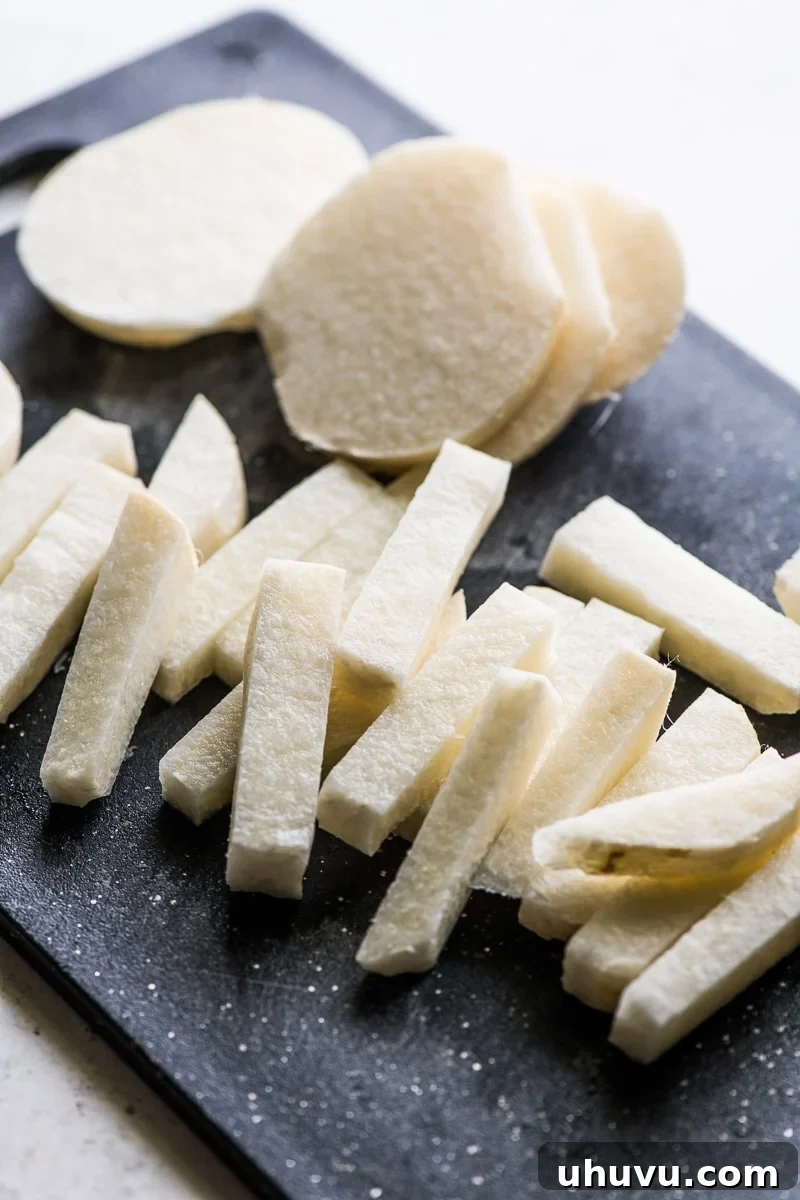
- Strips or Batons: Ideal for snacking, salads, or replicating fries. Simply slice the peeled jicama into rounds or half-moons, then stack them and cut into uniform sticks.
- Cubes: Perfect for adding a crunchy element to stir-fries, stews, fruit salads, or for roasting. First, cut into strips, then dice the strips into cubes of your desired size.
- Shredded or Grated: Excellent for slaws, fresh spring rolls, or adding a fine texture to salads. Use a box grater or a food processor with a grating attachment to achieve fine shreds, similar to how you would prepare cabbage or carrots.
- Thin Slices or Rounds: Great for serving raw with dips, as a base for appetizers, or in wraps. A mandoline slicer can help achieve perfectly thin, even slices.
Once peeled and cut, jicama can be enjoyed immediately, either raw (much like an apple or cucumber) or cooked (similar to how you might prepare a potato or turnip). Its delightful crunch and mild flavor make it incredibly adaptable to almost any dish you envision.
Culinary Inspirations: Delicious Ways to Enjoy Jicama
Jicama’s mild flavor and satisfying crunch make it an incredibly versatile ingredient, equally at home in raw preparations as it is in cooked dishes. Its ability to absorb flavors while retaining its texture makes it a favorite among chefs and home cooks alike. Here are some of the most popular and creative ways to incorporate this amazing root vegetable into your diet:
Jicama in Raw Preparations: Fresh and Crunchy Delights
- Snack Sticks or Slices: The simplest and often most satisfying way to enjoy jicama is raw. Peel and cut it into thick sticks or slices, much like carrot sticks. It’s perfect for dipping into hummus, guacamole, salsa, or your favorite healthy dip.
- Mexican Street Food Style: Experience jicama like a true Mexican street food vendor serves it. Thinly slice the jicama, sprinkle it generously with fresh lime juice, a pinch of chili powder (such as Tajín), and a dash of salt. The combination of sweet, tart, salty, and spicy is absolutely addictive and a testament to jicama’s refreshing character.
- Refreshing Salads and Fruit Cups: Jicama is a fantastic addition to any salad, providing a hydrating crunch. It pairs beautifully with other fruits like watermelon, pineapple, oranges, and mango in authentic Mexican Fruit Cups. For savory salads, cube or julienne jicama and mix with greens, other vegetables, and a light vinaigrette.
- Vibrant Slaws: Use shredded jicama as the base for a uniquely crunchy slaw. A popular choice is a refreshing jicama slaw with fresh cilantro, lime juice, and a hint of spice. This makes an excellent side dish for tacos, grilled fish, or other Mexican dishes.
- Salsa and Guacamole Enhancer: Finely diced jicama can add an unexpected and delightful crunch to your homemade salsas or guacamole, providing a textural contrast that elevates these classic dips.
- Spring Rolls and Wraps: Its crispness is perfect for adding texture to fresh spring rolls or as a crunchy filling in lettuce wraps, complementing ingredients like shrimp, chicken, or tofu.
Jicama in Cooked Applications: Versatility Beyond Raw
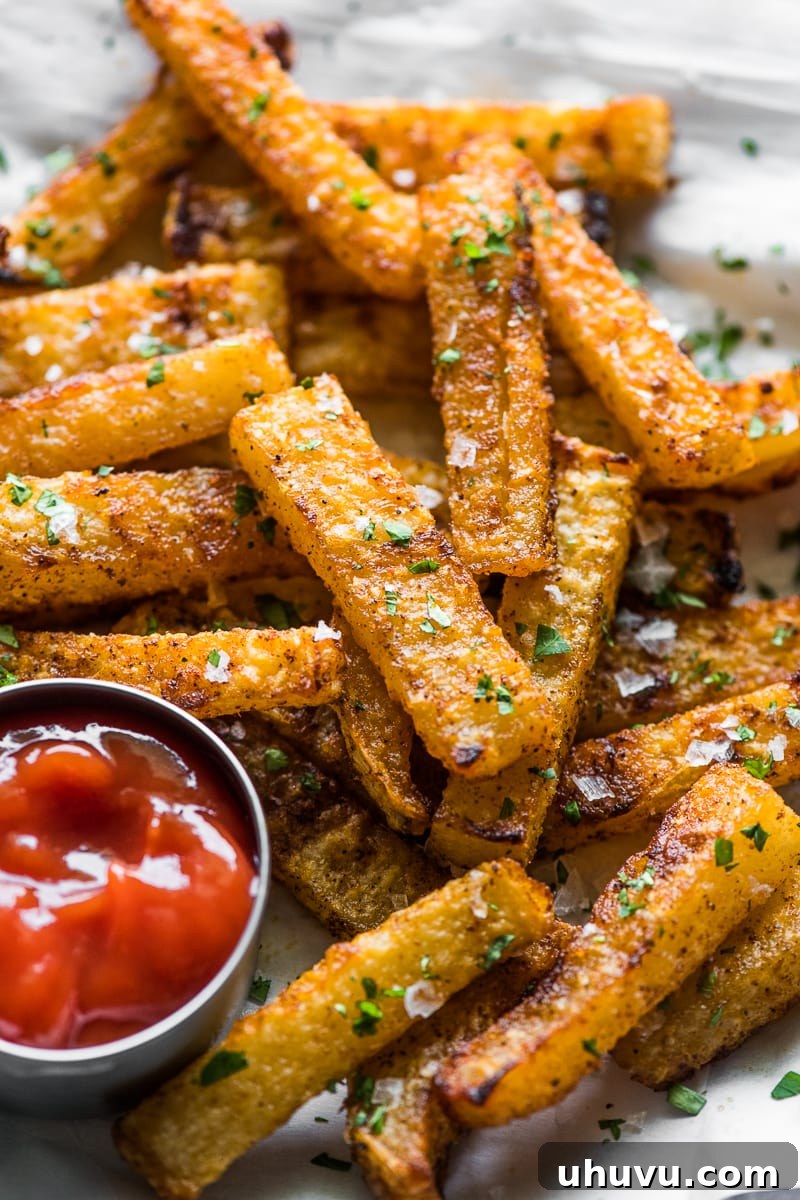
- Healthy Jicama Fries: A fantastic low-carb alternative to traditional potato fries. Cut jicama into matchsticks or wedges, toss with olive oil and your favorite seasonings (paprika, garlic powder, salt, pepper), and then bake or air-fry until tender-crisp and lightly caramelized. Serve them with ketchup, mustard, or a spicy aioli. Here’s an easy baked jicama fries recipe to get you started.
- Stir-Fries: Jicama holds its crisp texture wonderfully, even when subjected to high heat. Add cubed or julienned jicama to your favorite stir-fry dishes for an extra layer of crunch and a delicate sweetness that complements savory sauces and vegetables.
- Soups and Stews: While less common, jicama can be added to soups and stews during the final stages of cooking to retain some of its crunch, offering a unique textural element that stands out from softer vegetables.
- Roasted Jicama: Cubed jicama can be roasted alongside other root vegetables like carrots and sweet potatoes. Its mild flavor takes on a lovely depth when roasted, and its edges can develop a pleasing caramelization.
- Hash Browns: Grated jicama can be pressed and pan-fried to create crispy, low-carb hash browns, a delightful breakfast or brunch side.
Don’t be afraid to experiment! Jicama’s neutral profile means it can adapt to many cuisines and flavor combinations. It’s truly a secret weapon for adding crunch, hydration, and nutritional value to almost any meal.
Finding and Selecting the Best Jicama
Locating fresh, high-quality jicama is generally quite easy, as it has become a staple in many grocery stores. Knowing what to look for will ensure you bring home the best possible root for your culinary adventures.
Where to Find Jicama
- Mainstream Grocery Stores: You should be able to find jicama year-round in the produce section of most major supermarkets. It’s often located near other root vegetables like potatoes, yams, or turnips, or sometimes with exotic fruits and vegetables.
- Mexican and Asian Markets: These specialty markets are excellent places to find jicama, especially if you’re looking for larger specimens or more consistent availability. They often carry a wider variety of fresh produce popular in their respective cuisines.
- Farmers’ Markets: During warmer months, if you live in a region where jicama can be grown, you might find it at local farmers’ markets, offering a chance to buy directly from growers.
Tips for Selecting the Best Jicama
When choosing jicama, inspect it carefully to ensure freshness and quality. Look for these characteristics:
- Firmness: The most crucial indicator of freshness is firmness. A good jicama should feel very solid and heavy for its size, with no give when gently squeezed. Avoid any jicama that feels soft, spongy, or squishy, as this indicates spoilage or dehydration.
- Dry Roots and Skin: The skin should be relatively dry and intact, with a light brown or yellowish-brown color. A healthy jicama will have dry, often fibrous roots attached, which is normal.
- Absence of Blemishes: Avoid jicama with any visible bruises, dark spots, deep dents, cuts, or signs of mold. Minor surface imperfections are usually fine, but significant damage can indicate compromised quality or spoilage.
- Smooth, Unwrinkled Skin: The skin should appear smooth and taut. Wrinkled or shriveled skin is a sign that the jicama is old, dehydrated, and likely past its prime, which will affect its crispness and juiciness.
By following these tips, you’ll be able to select a fresh, crisp jicama that will provide the best flavor and texture for your recipes.
Storing Jicama for Optimal Freshness
Proper storage is key to maintaining jicama’s crisp texture and extending its shelf life. How you store it depends on whether it’s still whole and unpeeled, or if it has been cut and prepared.
Storing Whole, Unpeeled Jicama
- Cool, Dry Place: Whole, unpeeled jicama thrives in a cool, dark, and dry environment, similar to how you would store potatoes or onions. A pantry, cellar, or even a countertop away from direct sunlight and heat is ideal.
- Avoid Refrigeration (Generally): While some sources suggest refrigeration, unpeeled jicama often lasts longer and maintains its texture better when stored at room temperature or slightly cooler (around 50-60°F or 10-15°C). Refrigerating whole jicama can sometimes cause it to become starchy or develop a woody texture over time, though it might extend its shelf life slightly.
- Duration: When stored correctly in a cool, dry place, a whole, unpeeled jicama can last for up to two to four weeks, sometimes even longer, depending on its initial freshness.
- Airtight Container/Bag: While not strictly necessary for whole jicama, placing it in a loose paper bag or a breathable mesh bag can help protect it and prevent moisture buildup, though plastic bags might trap too much moisture and encourage spoilage.
Storing Peeled or Cut Jicama
- Refrigeration is Essential: Once peeled or cut, jicama’s delicate white flesh is exposed to air and will start to dry out and oxidize. It absolutely needs to be refrigerated to maintain its quality.
- Airtight Container with Water: For best results and to prevent discoloration and drying, store peeled or cut jicama in an airtight container completely submerged in cold water. This method helps maintain its crispness and prevents it from turning brown. The water should be changed daily to keep it fresh.
- Duration: When stored in an airtight container covered with water in the refrigerator, peeled or cut jicama will typically last for about 3 to 7 days. Beyond this, it may start to lose its crispness and develop an off-flavor.
- Freezing (Not Recommended for Texture): While you technically can freeze jicama, it’s generally not recommended for culinary uses where its crisp texture is important. Freezing and thawing will alter its cellular structure, making it soft and mushy. If you must freeze it, blanch it first and then freeze it in an airtight freezer bag, but reserve it for cooked applications where texture is less critical, like purees or stews.
By following these storage guidelines, you can maximize the enjoyment of your jicama, ensuring it remains crisp, juicy, and delicious for your culinary creations.
Embrace the Versatility of Jicama
Jicama is truly a remarkable root vegetable, offering a refreshing crunch, a mild, adaptable flavor, and an impressive array of health benefits. From supporting gut health with its prebiotic fiber to boosting immunity with Vitamin C, this “Mexican potato” is a smart addition to any diet. Whether you enjoy it raw in a vibrant slaw, seasoned with lime and chili, or as a low-carb alternative to fries, jicama’s versatility makes it a delight in countless dishes. It’s easy to prepare, readily available, and simple to store, making it an accessible and enjoyable ingredient for everyone. We encourage you to explore the exciting possibilities jicama brings to your kitchen and discover firsthand why this unique root vegetable is celebrated around the world. Don’t hesitate – pick up a jicama on your next grocery trip and embark on a journey of delicious and healthy culinary exploration!