
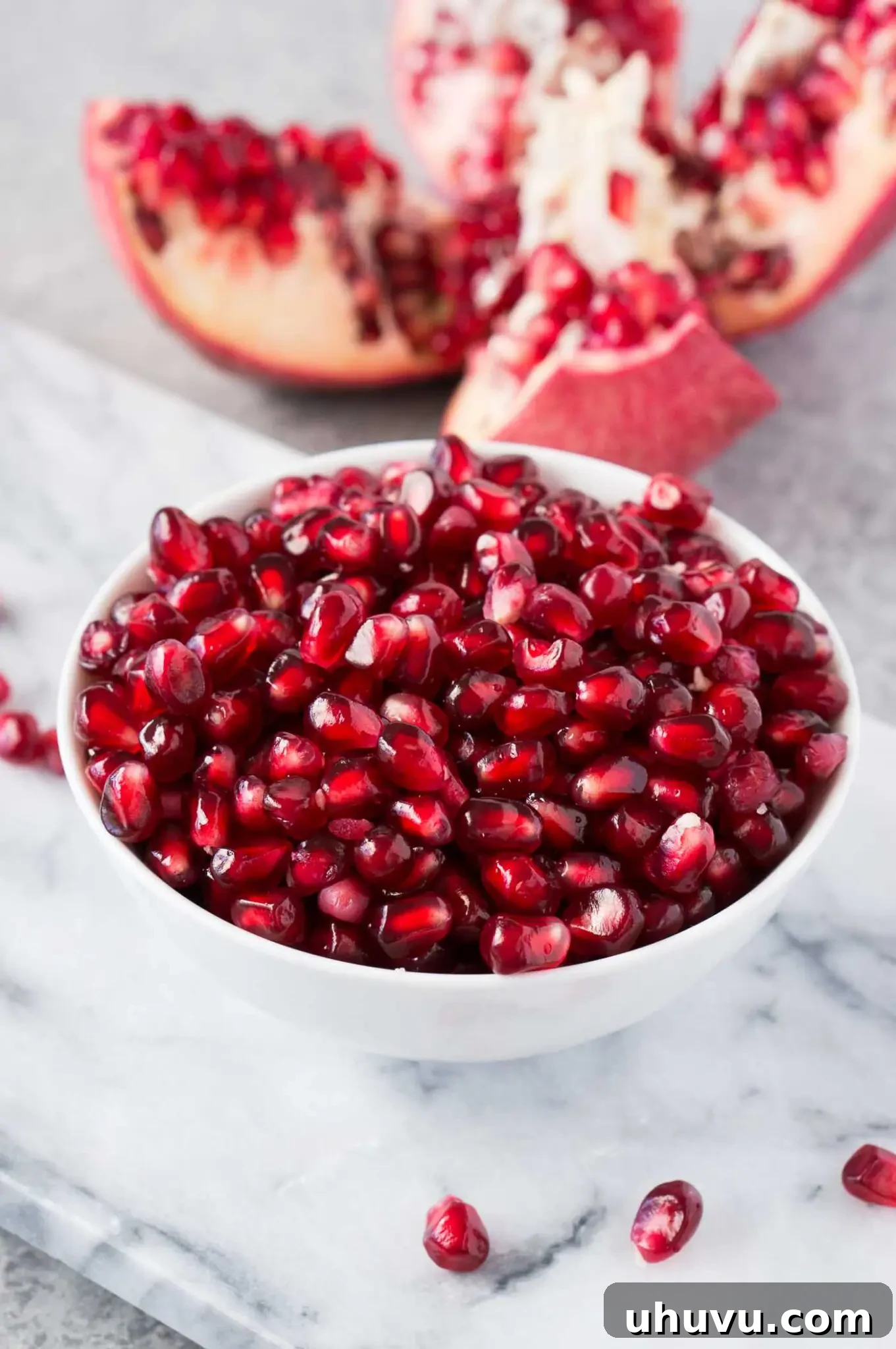
Unlock the secret to enjoying fresh pomegranates without the fuss! This comprehensive guide will teach you how to effortlessly cut a pomegranate and remove its jewel-like seeds (arils), ready to elevate your favorite recipes. It’s easier than you think, and with our simple technique, you’ll master it in no time!
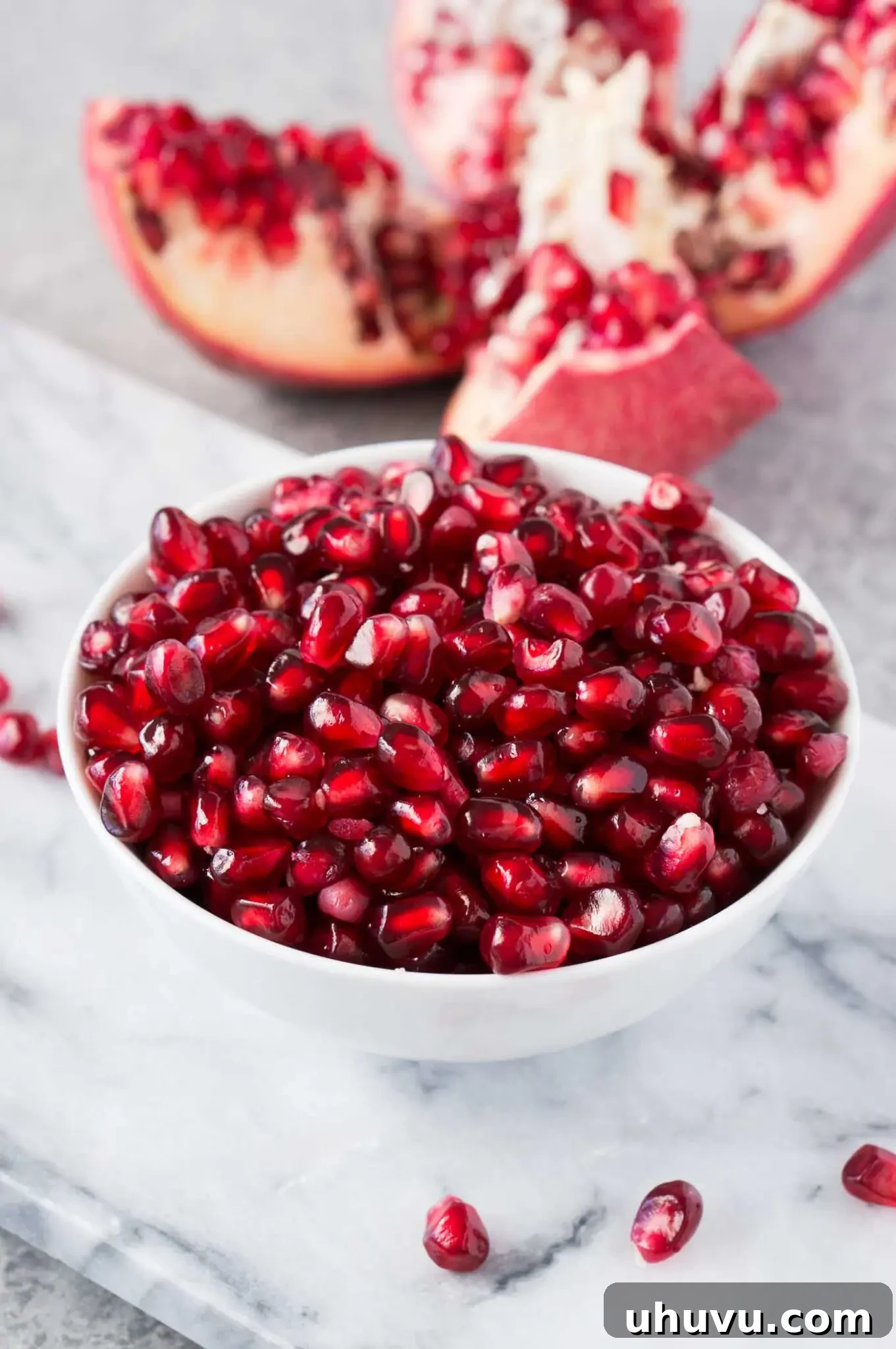
If the thought of prepping fresh pomegranates has kept you from enjoying this wonderful fruit, you’re about to discover how incredibly quick and easy it is to remove those gorgeous, nutritious seeds. Pomegranates are typically in season from late fall through winter, peaking from October to January. This makes them an ideal and beautiful garnish for all your festive holiday recipes and seasonal dishes. Beyond their visual appeal, pomegranate arils are bursting with flavor and offer a fantastic boost of antioxidants.
The versatile arils can be incorporated into a wide array of culinary creations, ranging from delightful sweet desserts and refreshing fruit salads to savory main courses and vibrant side dishes. They’re also perfect for making fresh, tangy juice or adding a sophisticated touch as garnishes for holiday cocktails and mocktails. Their unique sweet-tart flavor profile truly shines in both simple snacks and gourmet meals.
For more essential cooking tips and tricks that will enhance your kitchen skills, be sure to explore our guides on How To Cook Rice and How to Make Cauliflower Rice. Mastering these foundational techniques will set you up for success with countless recipes.
Essential Tools for Deseeding a Pomegranate
Gathering the right tools beforehand makes the deseeding process seamless and enjoyable. You won’t need anything fancy, just a few kitchen basics:
- Pomegranate: A fresh, ripe pomegranate is key. Look for one that feels heavy for its size, indicating juiciness.
- Sharp Paring Knife: A small, sharp paring knife offers precision for making the necessary shallow cuts without piercing the arils.
- Large Bowl: Essential for submerging the pomegranate and catching the seeds.
- Water: Cold water in the large bowl is the secret ingredient for a mess-free deseeding experience.
- Optional: A wooden spoon for gently tapping the fruit (can help release stubborn arils) and a colander for draining the seeds.
Mastering the Mess-Free Pomegranate Deseeding Method
Say goodbye to stained countertops and sticky hands! This step-by-step guide will walk you through the easiest and cleanest method for deseeding a pomegranate. By using the water submersion technique, you’ll contain the juice and effortlessly separate the luscious arils from the bitter membranes.
- Step 1: Remove the Crown (Blossom End)
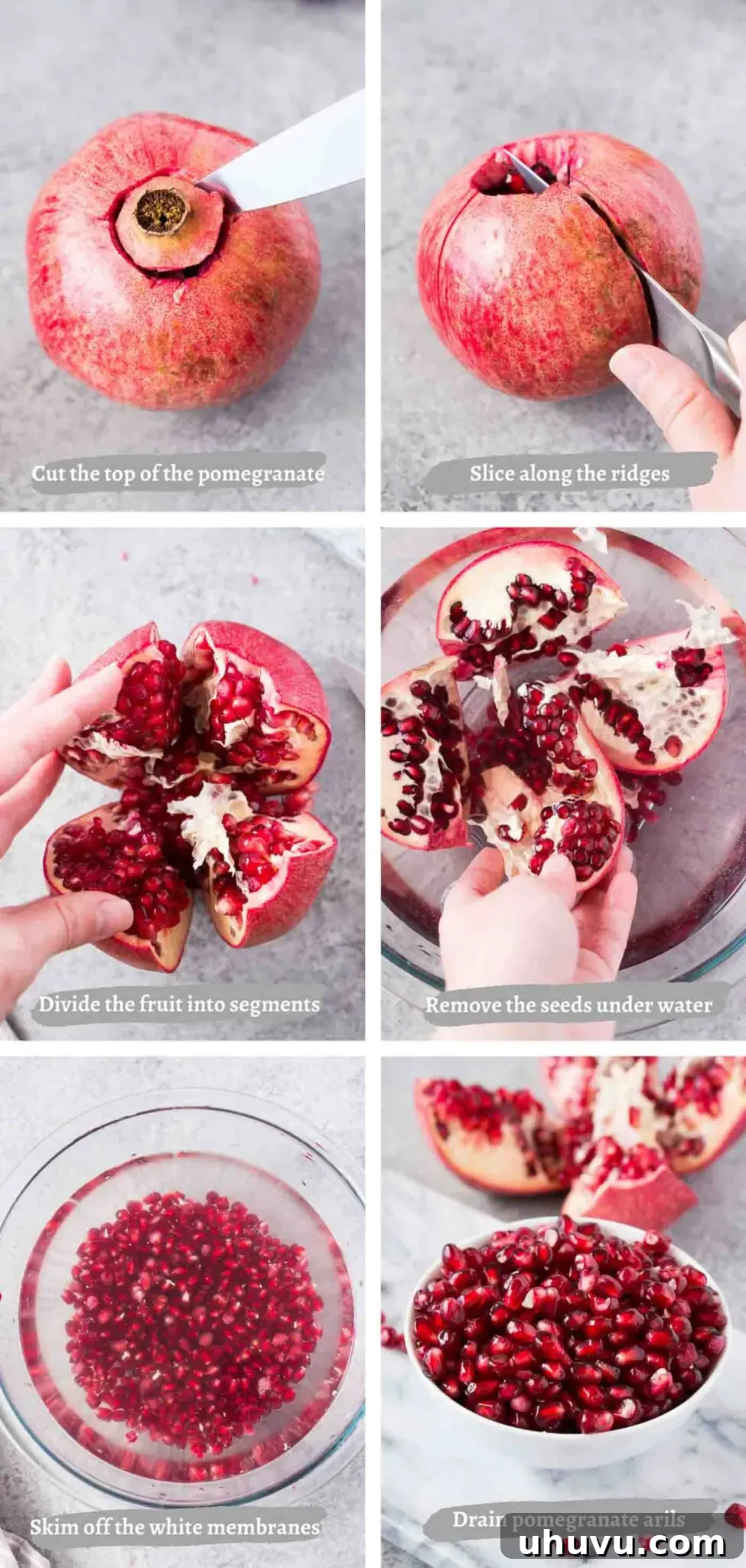
Carefully cut a circle around the top of the pomegranate, which resembles a crown. This is the blossom end of the fruit. Make sure your cut is shallow, just penetrating the skin, and aim to remove the crown without cutting into the arils beneath. This initial cut allows you to easily identify the natural segments of the fruit and prepares it for the next step.
- Step 2: Score Along the Ridges and Segment
Once the crown is removed, you’ll notice natural ridges or lines running down the outside of the pomegranate. Use your sharp paring knife to make shallow cuts along these ridges, typically 5 to 6 cuts, from the top opening down to the base. Again, only cut through the red skin, avoiding the arils. After scoring, gently use your hands to pry open the fruit. It should naturally split into several segments along your cuts, making it much easier to access the seeds.
- Step 3: Submerge and Release the Arils
Fill a large bowl with cold water. Submerge the segmented pomegranate pieces completely into the water. While still underwater, use your hands to gently bend and break apart the segments, and rub your thumbs across the white membranes to release the bright red seeds. The water helps to prevent the juice from spraying and staining, and also allows the heavy arils to sink to the bottom while the lighter white pith floats.
For particularly stubborn arils, you can hold a segment in the palm of your hand, outer skin facing up, and lightly whack the back of it with a wooden spoon. The vibrations will help dislodge the seeds, sending them directly into the water.
- Step 4: Skim and Drain
After all the arils have been released, you’ll observe that the vibrant red seeds have settled at the bottom of the bowl, while the unwanted white, spongy membranes and pith pieces float on the surface. Carefully skim off these white bits using your hands or a fine-mesh sieve. Once the water is clear of debris, drain the beautiful pomegranate arils through a colander. Your perfectly cleaned, mess-free pomegranate seeds are now ready to enjoy!
EXPERT TIPS FROM OUR KITCHEN
Recipe Notes and Tips for Pomegranate Perfection
- Preventing Stains with Water: Pomegranate juice contains powerful pigments that can easily stain clothing, cutting boards, and countertops. The genius of the water submersion method is that it contains any splashes and helps dilute the juice, dramatically minimizing the risk of unsightly stains. Always remove the arils in a bowl of water to ensure a truly mess-free experience.
- Precise Scoring: The key to easy segmentation and protecting the delicate arils is making shallow cuts along the pomegranate’s natural ridges. These ridges are typically slight depressions or lines on the fruit’s surface. You can often feel them with your fingers. Ensure your knife only penetrates the red outer skin, not the arils themselves. Cutting too deep can burst the seeds and defeat the purpose of the mess-free method.
- Choosing the Right Knife: While any sharp knife can work, a small paring knife provides the best control for making precise, shallow cuts around the crown and along the ridges, reducing the chance of accidental damage to the arils.
- Handling the Pith: The white, spongy pith (membrane) is bitter and should not be consumed. Fortunately, our water method makes separating it from the seeds incredibly easy, as the pith floats while the arils sink.
What Does Pomegranate Taste Like? A Flavor Profile Exploration
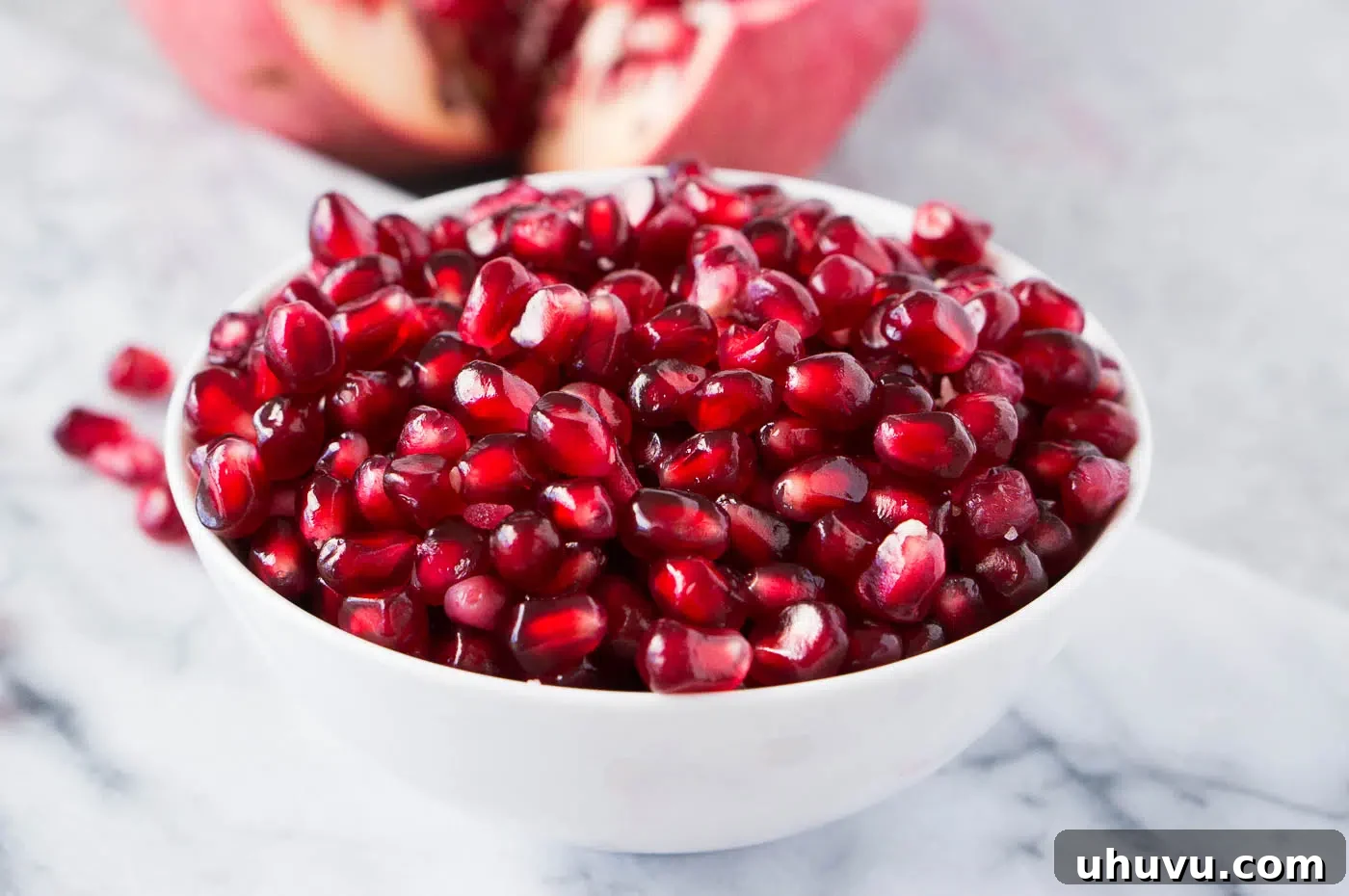
The pomegranate seeds, or arils, offer a delightful and complex flavor experience that makes them incredibly versatile. When you bite into an aril, you’ll first notice a vibrant burst of juice that is typically tart, akin to cranberries or tart cherries, but it’s beautifully balanced with a subtle, underlying sweetness. This unique combination creates a refreshing and invigorating sensation on the palate.
Beyond the initial juicy pop, the arils also possess a slight fruitiness with a pleasant tang that keeps them from being overly sweet. Their refreshing, slightly acidic notes are what allow them to bridge the gap between sweet and savory applications so effortlessly. The texture is equally distinctive – a juicy, crunchy burst followed by a tender, edible seed, providing a satisfying mouthfeel in every bite.
This dynamic flavor profile means pomegranate arils can brighten up a fruit salad, add a tangy counterpoint to rich meats, or lend a sophisticated zest to beverages. Their appealing taste and texture truly make them a culinary gem.
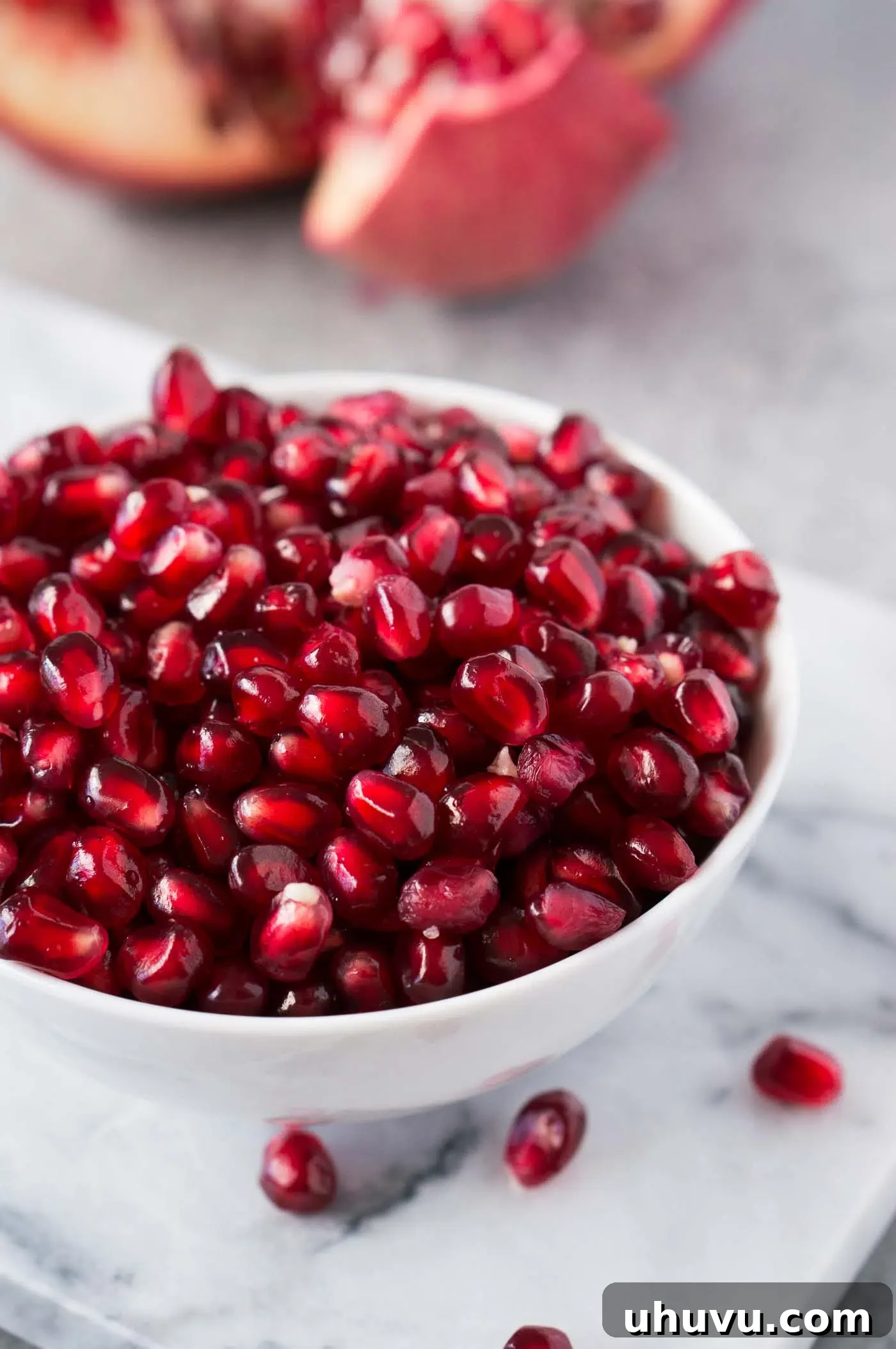
Delicious Ways to Enjoy Pomegranate Arils
Once you’ve easily deseeded your pomegranate, a world of culinary possibilities opens up! Both the crunchy arils and fresh pomegranate juice are nutritional powerhouses, packed with beneficial antioxidants, vitamins, and minerals. Here are some fantastic ways to incorporate this vibrant fruit into your diet:
- As a Snack: Enjoy the arils straight from the bowl for a refreshing and healthy snack.
- Breakfast Booster: Sprinkle them over yogurt, oatmeal, granola, or cottage cheese for added flavor, texture, and nutrition.
- Salad Enhancer: Pomegranate arils add a beautiful pop of color and a delightful sweet-tart crunch to green salads, grain salads (like quinoa or couscous), and fruit salads. They pair wonderfully with ingredients like feta cheese, walnuts, and balsamic vinaigrette.
- Dessert Topping: Use them as a stunning garnish for tarts, cakes, puddings, ice cream, or even chocolate bark. Their vibrant color makes any dessert look more elegant.
- Savory Dishes: Don’t limit pomegranates to sweet treats! They complement savory dishes surprisingly well. Try sprinkling them over roasted chicken or lamb, incorporating them into a festive stuffing, or adding them to a salsa for fish tacos.
- Fresh Pomegranate Juice: If you have a large quantity of arils, you can easily juice them using a blender and a fine-mesh strainer. Fresh pomegranate juice is delicious on its own, diluted with sparkling water, or as a base for smoothies and cocktails.
- Beverage Garnish: Add a few arils to your sparkling water, lemonade, iced tea, or homemade cocktails for a festive touch and a burst of flavor. They’re particularly popular in holiday drinks like pomegranate martinis or sparkling cider.
Understanding Pomegranate Stains and How to Prevent Them
It’s a common concern: does pomegranate juice stain? The answer is a resounding yes! The beautiful deep red color of pomegranate juice comes from powerful natural pigments (anthocyanins) that can easily leave stubborn stains on clothing, porous cutting boards, and even countertops. This is precisely why our recommended deseeding method emphasizes working underwater.
Cutting a pomegranate open straight down the middle, as one might do with an apple, is generally not advised. This method tends to burst many of the arils, allowing their highly pigmented juice to escape and spray everywhere. By contrast, the water submersion method significantly mitigates this risk. When you cut around the top (the crown) and score along the ridges, you avoid disturbing the delicate arils until they are safely submerged in water. Any juice released underwater is immediately diluted, preventing it from splattering and staining surfaces.
For extra precaution, especially if you’re working with particularly juicy pomegranates or light-colored clothing, consider wearing an apron. While our method is designed to be mess-free, an apron provides an additional layer of protection. It’s also wise to use a non-porous cutting board, just in case a rogue drop escapes the bowl, though this is less likely with the water method.
Should a stain occur, act quickly! For fabric, rinse with cold water immediately and treat with a stain remover. For countertops, lemon juice or vinegar can sometimes help lift fresh stains, but quick action is always the best defense.
Selecting the Perfect Pomegranate: A Buyer’s Guide
Choosing a ripe, juicy, and flavorful pomegranate is the first step to a delightful culinary experience. Follow these expert tips and tricks to select the freshest and best-tasting fruit from your grocery store or farmer’s market:
- Heft is Key: Always pick up a few pomegranates and feel their weight. A heavy pomegranate for its size indicates that it is full of juice and perfectly plump arils. Lighter fruits may be dry or less flavorful.
- Deep Color and Glossy Skin: Look for pomegranates with a deep, vibrant red color that is consistent across the skin. The skin should also have a slightly glossy appearance. Avoid fruits with dull, discolored, or bruised spots, as these can indicate over-ripeness or damage.
- Embrace Imperfection in Shape: Don’t be fooled into thinking a perfectly round pomegranate is best. As the arils inside ripen and expand with juice, they exert pressure on the skin, causing the sides of the fruit to become slightly flattened or faceted. This irregular shape is often a sign of a truly ripe and juicy pomegranate.
- Firmness with No Soft Spots: Gently squeeze the pomegranate. It should feel firm all around, without any soft or mushy areas. Soft spots are a clear indicator of bruising, spoilage, or internal decay, which can affect the taste and quality of the arils.
- Listen for the Sound: Some people like to tap a pomegranate gently. A dull thud might indicate a drier fruit, while a slightly metallic sound or a subtle “thwock” can suggest a juicy interior.
- Subtle Aroma: A truly ripe pomegranate will often have a very subtle, fresh, and slightly sweet fruity aroma. Avoid any fruit that has a fermented or off-putting smell.
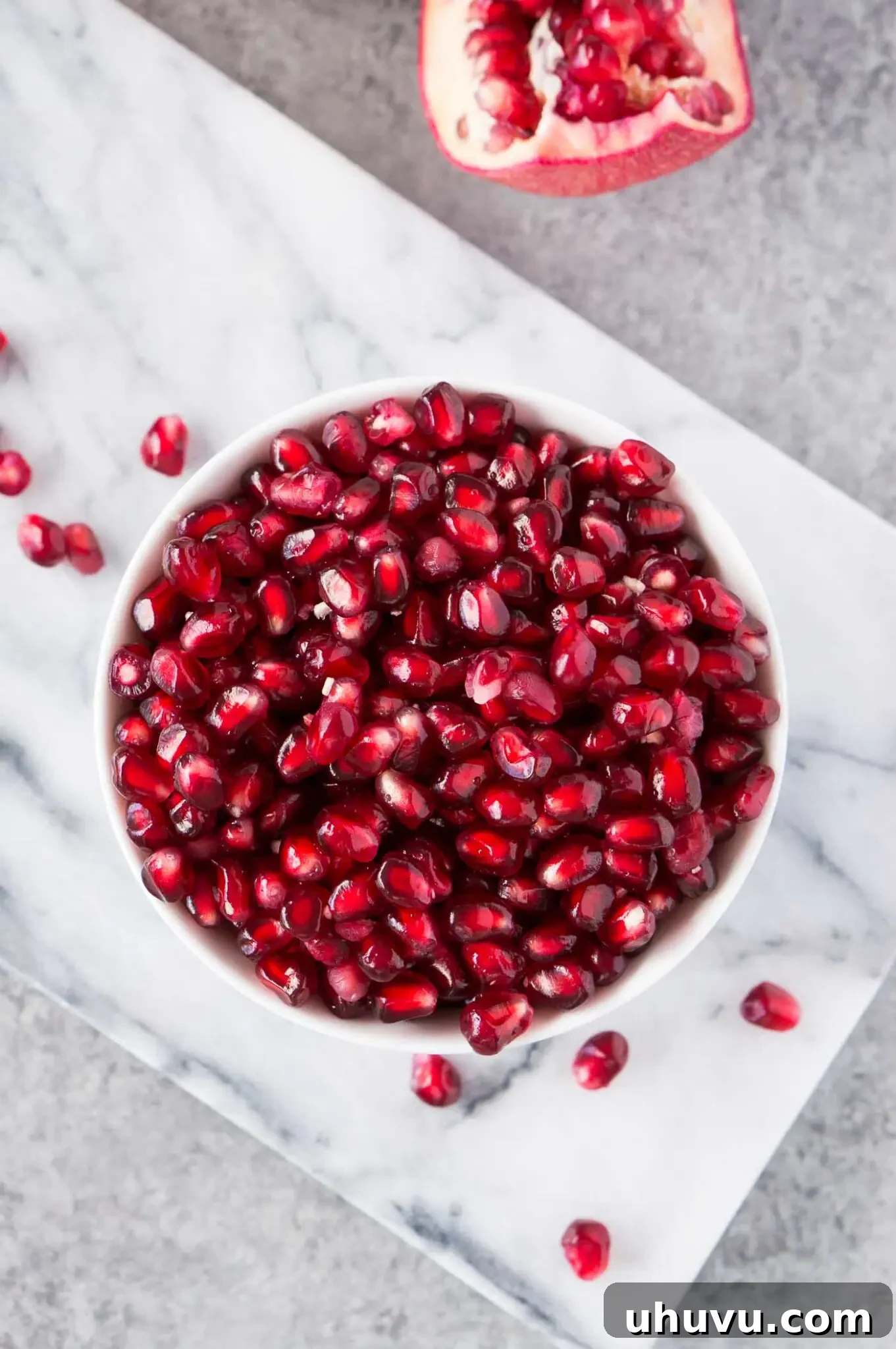
Storing Pomegranate Arils for Freshness and Future Enjoyment
Proper storage ensures your deseeded pomegranate arils remain fresh and ready for use, minimizing waste and maximizing convenience. Both refrigeration and freezing are excellent options depending on how soon you plan to use them:
- Refrigeration:
Once you’ve removed the seeds, ensure they are thoroughly drained and as dry as possible to prevent mold. Store fresh pomegranate arils in an airtight container or a sealed zip-top bag in the refrigerator for up to 5 to 7 days. This keeps them plump, juicy, and ready to be sprinkled into your morning yogurt or evening salad. For whole, uncut pomegranates, they can last significantly longer, often for several weeks to up to two months, in a cool, dry place or in the refrigerator.
- Freezing for Longer Storage:
Pomegranate arils can be frozen for extended use, allowing you to enjoy them long after the season ends. To freeze, first spread the well-drained and patted-dry seeds in a single layer on a parchment-lined baking sheet. Patting them dry is crucial to prevent them from clumping together. Freeze the arils for 2-3 hours, or until solid. Once frozen, transfer them to an airtight freezer-safe bag or container, removing as much air as possible to prevent freezer burn. They can be stored in the freezer for up to 6 months. Frozen arils are perfect for smoothies, baking, or adding to oatmeal, but their texture will be softer when thawed, so they are generally not recommended for fresh salads.
The Nutritional Powerhouse: Health Benefits of Pomegranates
Beyond their stunning appearance and delightful taste, pomegranates are celebrated as a superfood due to their impressive nutritional profile. Incorporating these vibrant arils into your diet offers a myriad of health advantages:
- Rich in Antioxidants: Pomegranates are exceptionally high in powerful antioxidants, particularly polyphenols like punicalagins and anthocyanins. These compounds help combat free radicals in the body, reducing oxidative stress and inflammation, which are linked to various chronic diseases.
- Anti-Inflammatory Properties: The anti-inflammatory effects of pomegranate extract and juice are well-documented. Regular consumption may help reduce inflammation throughout the body, benefiting conditions like arthritis and other inflammatory disorders.
- Heart Health: Studies suggest that pomegranates can support cardiovascular health by reducing blood pressure, improving cholesterol levels (lowering LDL or “bad” cholesterol), and preventing plaque buildup in the arteries.
- Abundant in Vitamins and Minerals: Pomegranates are a good source of Vitamin C, a crucial antioxidant for immune function, and Vitamin K, important for blood clotting and bone health. They also provide folate, vital for cell growth, and potassium, an essential mineral for maintaining fluid balance and healthy blood pressure.
- High Fiber Content: The arils are an excellent source of dietary fiber, which is essential for digestive health. Fiber helps regulate bowel movements, prevents constipation, and can contribute to a feeling of fullness, aiding in weight management.
- Potential Cognitive Benefits: Emerging research indicates that pomegranate compounds may have neuroprotective effects, potentially improving memory and cognitive function.
- Exercise Performance: The nitrates found in pomegranates may help improve blood flow, leading to enhanced exercise performance and reduced muscle soreness.
Pomegranate Fun Facts and History
The pomegranate is not just a delicious fruit; it’s steeped in history, symbolism, and intriguing characteristics:
- Ancient Origins: Pomegranates originated in the region spanning from modern-day Iran to northern India. They have been cultivated for thousands of years across the Middle East, North Africa, and the Mediterranean.
- Symbol of Fertility and Abundance: Throughout history, the pomegranate has been a powerful symbol in many cultures and religions. It often represents fertility, prosperity, abundance, and eternal life due to its countless seeds and vibrant appearance.
- Botanically a Berry: Surprisingly, botanists classify the pomegranate as a type of berry called a “balausta.” It’s unique in that it has a tough, leathery rind and is segmented internally.
- How Many Seeds? The exact number of seeds in a pomegranate is a popular question. While it varies, a typical pomegranate can contain anywhere from 200 to over 1,400 arils, with common estimates often hovering around 600-800.
- “Pomegranate” Meaning: The name “pomegranate” derives from the Old French “pome garnete,” meaning “apple with many seeds.”
Explore More Delicious Cooking Guides
Continue your culinary journey with these helpful cooking guides designed to simplify your kitchen endeavors:
- How To Cook Lentils
- How To Make Butter
- How to Peel and Mince Garlic
- How To Poach an Egg Perfectly
If you enjoyed this guide or any other recipe on my blog, please leave a ⭐ star rating and let us know how it went in the 📝 comments below. Thanks for visiting!
Pin this now to find it later
Pin It
☝ Tap stars to rate
How To Cut a Pomegranate
Neli Howard
5 minutes
5 minutes
1 pomegranate
Save This Recipe
Enter your email and we’ll send the recipe directly to you!
By providing your email, you consent to receive emails from Delicious Meets Healthy.
Ingredients
- 1 pomegranate
- large bowl of water
- Sharp Knife
Instructions
-
Cut a circle around the top of the pomegranate using a sharp paring knife (the top looks like a crown).
-
Make shallow cuts along the ridges of the pomegranate, around 5 – 6 cuts. After you make the cuts, use your hands to open the fruit and gently divide it into segments.
-
Submerge the pomegranate in the bowl with water, and use your hands to gently remove the seeds from the skin and membranes while still under water.
-
The seeds will sink to the bottom of the bowl, while the white, spongy membranes will float to the top. Skim off the white bits, and drain the seeds.
Notes
- Pomegranate juice stains everything; it is best to remove the pomegranate arils in a bowl with water to prevent juice from spraying everywhere.
- Make sure you cut along the gentle ridges on the outside of the pomegranate, just through the red part of the pomegranate skin. You can feel the ridges with your fingers or look for a slight dent on the skin.
Nutrition
Carbohydrates: 53g |
Protein: 5g |
Fat: 3g |
Saturated Fat: 1g |
Sodium: 8mg |
Potassium: 666mg |
Fiber: 11g |
Sugar: 39g |
Vitamin C: 29mg |
Calcium: 28mg |
Iron: 1mg
Nutrition Disclaimer: Nutritional values are estimates and may vary with ingredients, brands, and portion sizes. For accuracy, use your preferred nutrition calculator.
Like this recipe? Rate and comment below!