
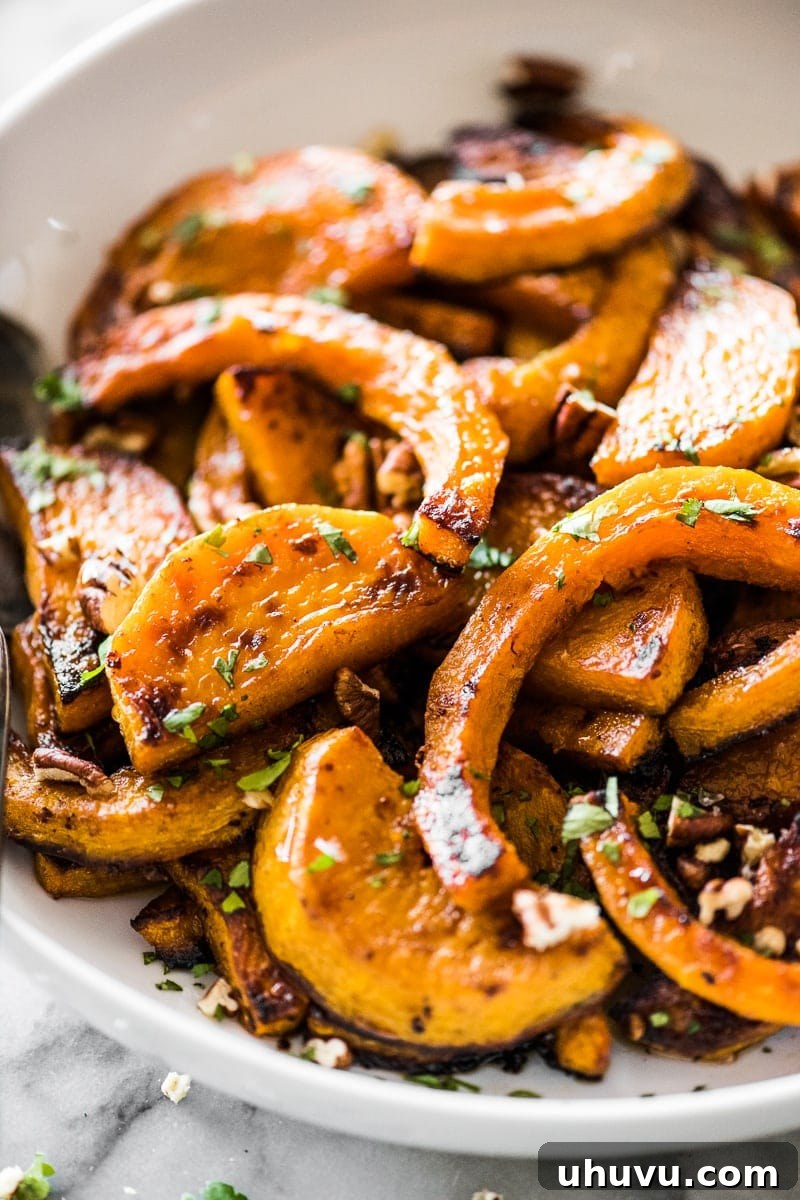
Welcome to your new favorite side dish! This Roasted Butternut Squash recipe is designed to melt in your mouth, offering a perfect blend of sweet, savory, and tangy notes that will truly steal the show. Whether you’re planning an elaborate holiday feast like Thanksgiving or Christmas, or simply looking for an effortless yet impressive addition to your weeknight meal, this recipe delivers on all fronts. Get ready to fall head over heels for the rich flavors and tender texture of perfectly roasted butternut squash, seasoned to perfection and drizzled with a delightful maple-lime glaze.
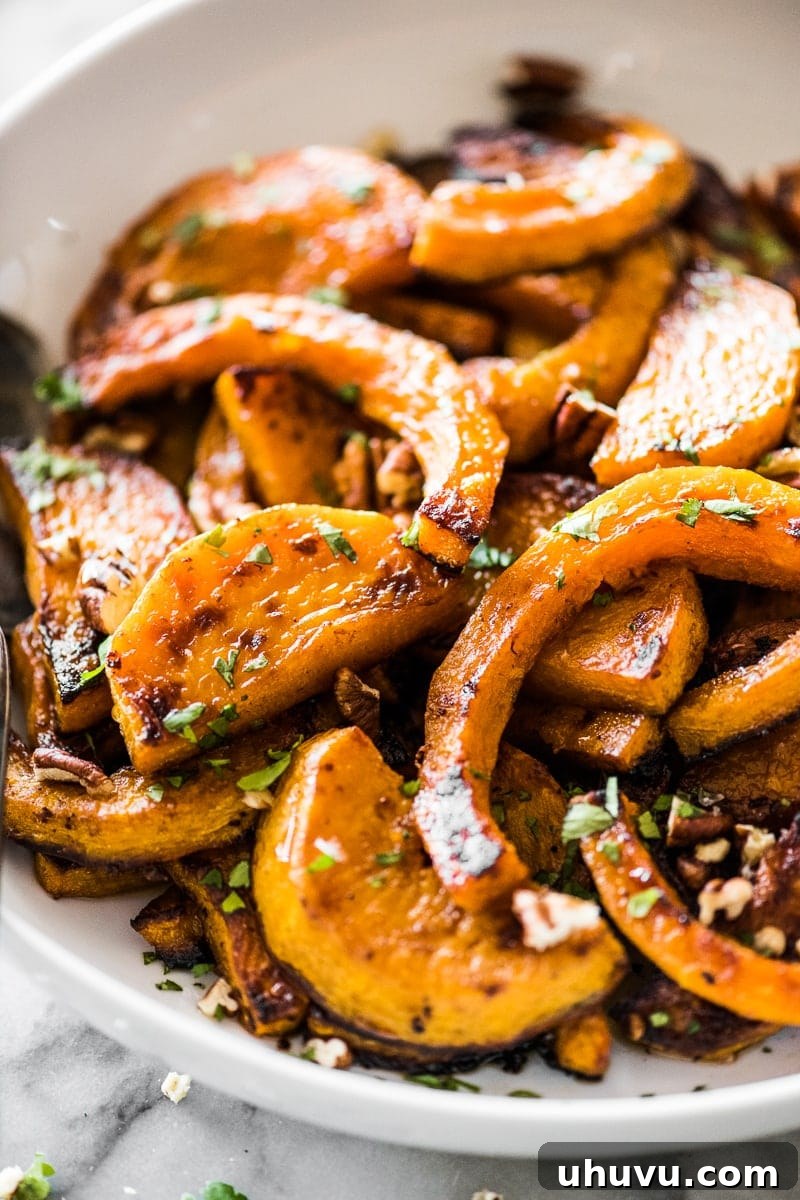
Roasted vegetables are a consistent staple in my kitchen, and for good reason. They are incredibly easy to prepare, require minimal hands-on time, and serve as an ideal accompaniment to almost any main course. While I appreciate all forms of roasted veggies, this particular butternut squash recipe stands out from the rest. It’s a symphony of flavors that transforms a simple vegetable into an extraordinary culinary experience. I truly believe I’ve outdone myself with this one, creating a dish that balances comforting warmth with a burst of fresh zest.
Why This Roasted Butternut Squash Will Become Your Go-To
There are countless reasons to adore this roasted butternut squash recipe, making it a must-have in your cooking repertoire. First and foremost is its undeniable deliciousness; each bite offers a caramelized sweetness intertwined with aromatic spices, culminating in a tender texture that practically dissolves in your mouth. This isn’t just any roasted squash; it’s an elevated experience. Beyond taste, its ease of preparation makes it incredibly appealing. You don’t need to be a gourmet chef to achieve perfect results, making it ideal for busy weeknights. Its versatility is another major plus; it complements a wide array of proteins, from roasted chicken and turkey to simple grilled fish or even hearty vegetarian stews. Lastly, butternut squash itself is a nutritional powerhouse, packed with vitamins, minerals, and fiber, transforming this indulgent-tasting side into a surprisingly healthy choice. It’s a dish that truly ticks all the boxes.
The Nutritional Powerhouse: Unlocking Butternut Squash Benefits
Butternut squash is more than just a delicious seasonal vegetable; it’s a nutritional powerhouse that offers a bounty of health benefits. This vibrant orange squash is an excellent source of several key vitamins and minerals. It’s particularly rich in Vitamin A, primarily in the form of beta-carotene, which is crucial for vision, immune function, and skin health. Just one serving can provide more than your daily recommended intake! It also contains a significant amount of Vitamin C, a powerful antioxidant that supports immune health and collagen production. Beyond vitamins, butternut squash is a good source of dietary fiber, aiding in digestion, promoting satiety, and helping to regulate blood sugar levels. Furthermore, it supplies potassium, which is vital for maintaining healthy blood pressure, and magnesium, important for muscle and nerve function. Its natural sweetness means you can enjoy a comforting, flavorful dish without relying heavily on added sugars, especially when paired with natural sweeteners like honey and maple syrup. Incorporating butternut squash into your diet, especially through a simple roasting method, is a delicious way to boost your nutrient intake and support overall well-being. It’s a versatile vegetable that shines brightly from fall through winter, bringing warmth and nutrition to any table.
The Essential Ingredients for Truly Perfect Roasted Butternut Squash
The magic of this roasted butternut squash lies in its carefully selected ingredients, each playing a crucial role in creating a harmonious flavor profile. At its core, we use two large butternut squash. When selecting your squash, look for one that feels heavy for its size, has a dull rather than shiny skin, and is free of any soft spots or bruises. A firm stem also indicates freshness. The roasting process enhances its natural sweetness and creates a beautifully tender interior.
To achieve that irresistible golden caramelization and rich flavor, we toss the squash with 4 tablespoons of unsalted melted butter. Using unsalted butter is key here, as it allows you to control the seasoning precisely and lets the natural sweetness of the squash and the warmth of the spices truly shine without being overpowered by excess salt.
The spice blend is what truly elevates this dish: 1 teaspoon of ground cumin adds an earthy depth, while 1 teaspoon of ground coriander introduces a subtle citrusy, floral note. A hint of warmth comes from 1/2 teaspoon of ground cinnamon, which beautifully complements the squash’s inherent sweetness. These spices, often found in savory dishes, create an unexpected yet delightful complexity when paired with sweet elements.
For a touch of initial sweetness that helps with caramelization during roasting, we incorporate 2 teaspoons of honey into the butter and spice mixture. This natural sweetener helps develop a beautiful golden crust on the squash pieces. Finally, the finishing touches are what truly set this recipe apart: a generous drizzle of 1 tablespoon of maple syrup after roasting adds an extra layer of nuanced sweetness and a glossy finish. This is balanced by a refreshing squeeze of 1 tablespoon of fresh lime juice (typically from half a lime), which provides a bright, acidic counterpoint, cutting through the richness and brightening all the flavors. For garnish, we recommend chopped pecans for a delightful crunch and fresh chopped cilantro for a pop of color and herbaceous freshness, though parsley or omitting the herbs are perfectly fine alternatives.
Mastering the Half-Moon Cut for Butternut Squash
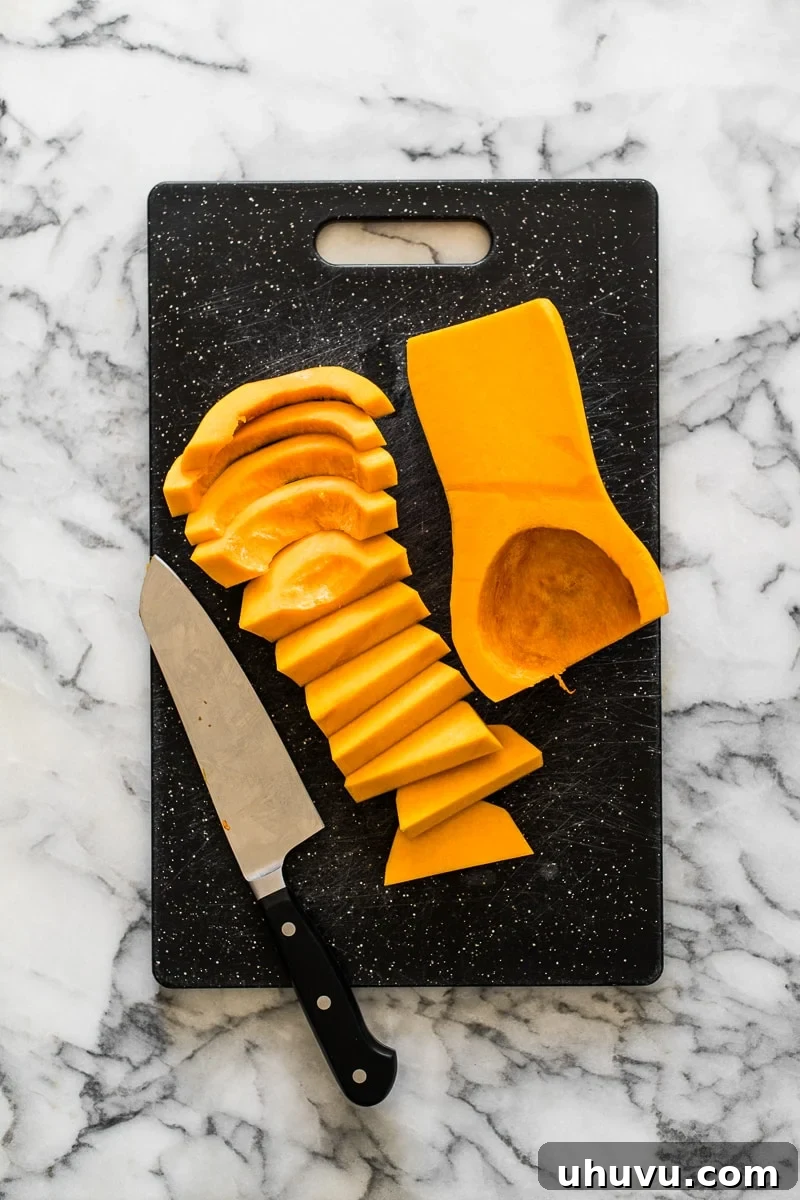
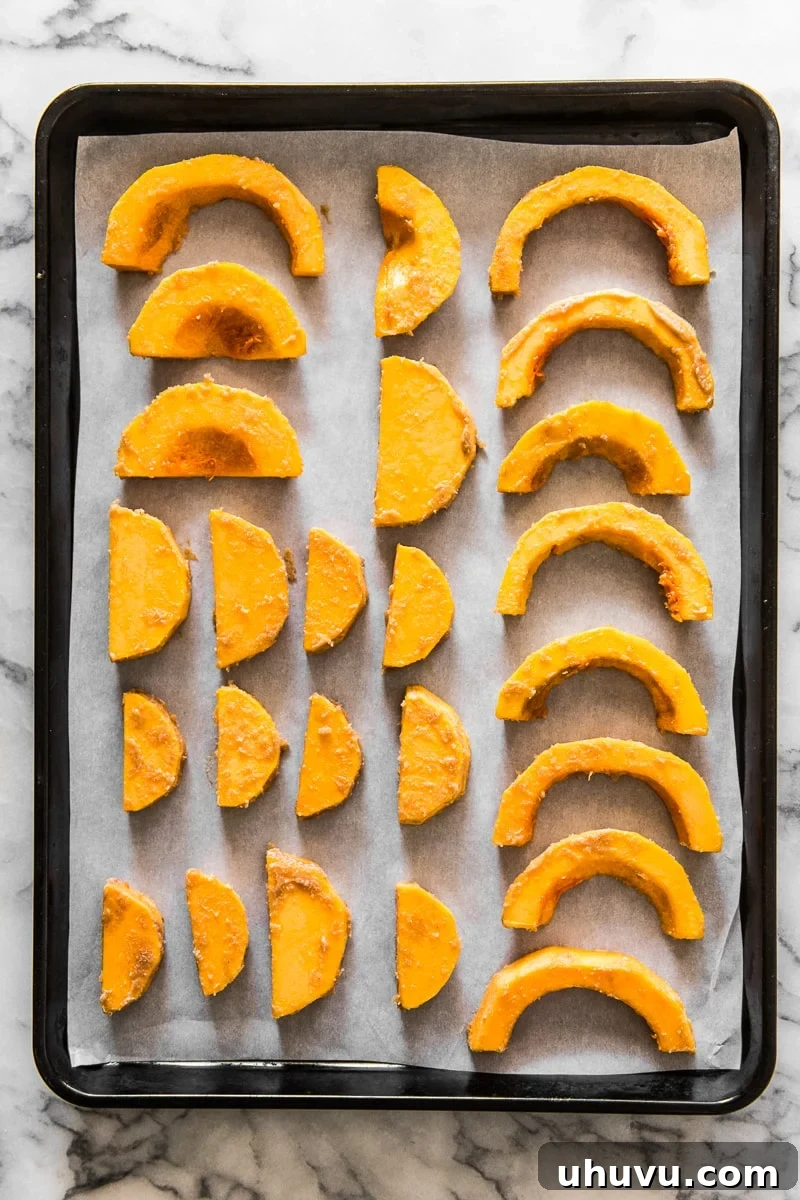
While many recipes call for cubed butternut squash, for this particular dish, I highly recommend cutting your squash into elegant half-moon slices. This method not only significantly reduces your prep time compared to meticulous cubing, but it also yields larger, more substantial pieces of squash that present beautifully on the plate. These larger pieces also tend to caramelize more effectively on their surfaces while remaining incredibly tender inside, offering a truly satisfying bite.
Here’s a detailed guide on how to achieve the perfect half-moon slices:
- Peel the Squash: Begin by placing the butternut squash on a sturdy cutting board. Using a sharp vegetable peeler, carefully remove the tough outer skin. It’s easier to handle if you cut off a small portion of both ends first to create flat, stable surfaces.
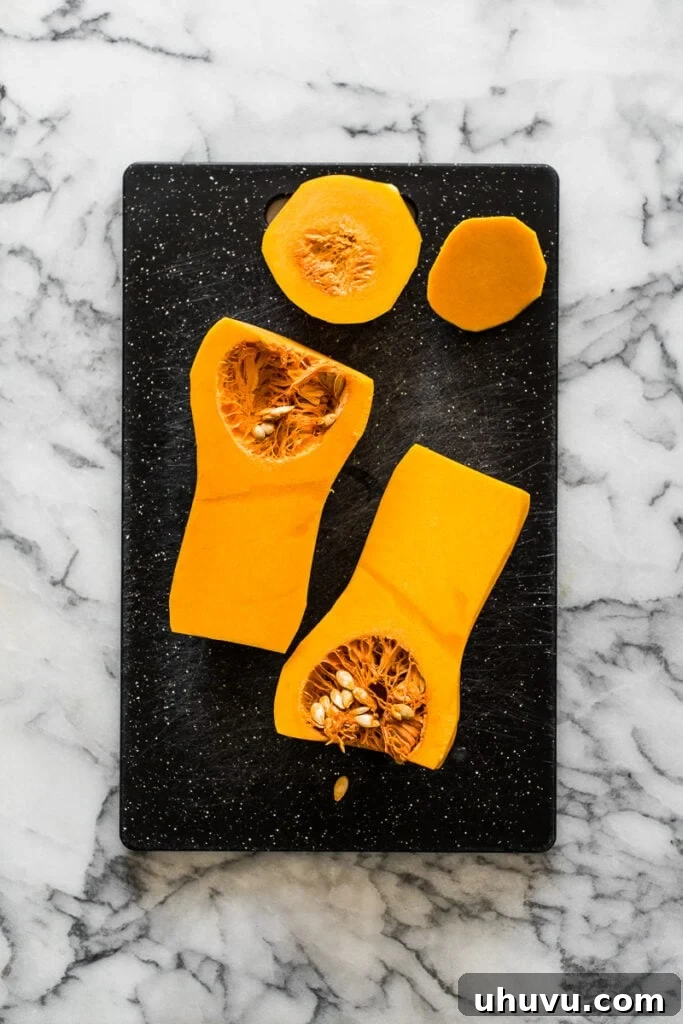
- Halve and Seed: Once peeled, slice the squash in half lengthwise from top to bottom. You’ll reveal the distinct seed cavity in the bulbous end.
- Scoop the Seeds: With a spoon (a sturdy metal spoon works best), scoop out all the seeds and fibrous strands from both halves. Discard these.
- Slice into Half-Moons: Turn each squash half cut-side down onto your cutting board. This provides a flat, stable surface for safer slicing. Now, slice the squash into half-moon shapes, aiming for a thickness of about 1/2 to 3/4-inch. The key to even cooking is to try and make these slices as uniformly thick as possible. If the pieces are too thin, they might burn; if too thick, they won’t cook through properly.
With these larger half-moon slices, you’ll find that they caramelize wonderfully in the oven, developing a slightly crispy exterior and a silky-smooth interior. This cut not only simplifies the preparation but also enhances the overall presentation and texture of your final dish.

Cubed Butternut Squash: An Alternative Option
Absolutely! If you prefer your butternut squash in smaller, bite-sized pieces, feel free to cut it into cubes instead of half-moon slices. Cubes are a classic and equally delicious way to prepare this versatile vegetable. The preparation steps for cubing are similar: peel the squash, cut it in half lengthwise, scoop out the seeds, and then chop it into approximately 1-inch cubes.
It’s important to note that because cubes are significantly smaller than the half-moon slices, their roasting time will be different. Smaller pieces cook faster and can dry out more quickly. If you opt for cubes, I recommend checking the recipe notes for the adjusted roasting time. Generally, you’ll want to reduce the baking time, perhaps roasting for 15 minutes on one side, then flipping and roasting for another 15 minutes, or until the cubes are fork-tender and beautifully caramelized. Always keep an eye on your squash, as oven temperatures can vary, and don’t hesitate to pull them out sooner if they’ve reached your desired tenderness and golden-brown perfection.
Step-by-Step: How to Roast Butternut Squash to Perfection
Achieving perfectly roasted butternut squash is surprisingly simple, and with a few key steps, you’ll have a side dish that’s both flavorful and visually appealing. Follow these instructions for a truly exceptional result:
- Preheat and Prepare: Start by preheating your oven to 400°F (200°C). This ensures the squash begins cooking immediately upon entering the oven, promoting even roasting and caramelization. Line two large baking sheets with parchment paper. This prevents sticking and makes cleanup a breeze.
- Toss with Flavor: Once your butternut squash is peeled and cut into half-moon slices (or cubes, if preferred), transfer all the pieces to a large mixing bowl. In a separate small bowl, whisk together the melted unsalted butter, ground cumin, ground coriander, ground cinnamon, and honey until well combined. Pour this aromatic mixture over the squash pieces and toss thoroughly. Make sure every single piece is evenly coated, as this spice and butter blend is crucial for developing the rich flavors and beautiful golden-brown exterior.
- Arrange and Roast (First Round): Arrange the coated butternut squash slices onto the prepared baking sheets in a single layer. It’s important not to overcrowd the pans; give the squash enough space so it roasts rather than steams. If the pans are too full, the squash will release moisture and become soggy instead of crispy and caramelized. If necessary, use three baking sheets. Place the baking sheets in the preheated oven and roast for 20 minutes.
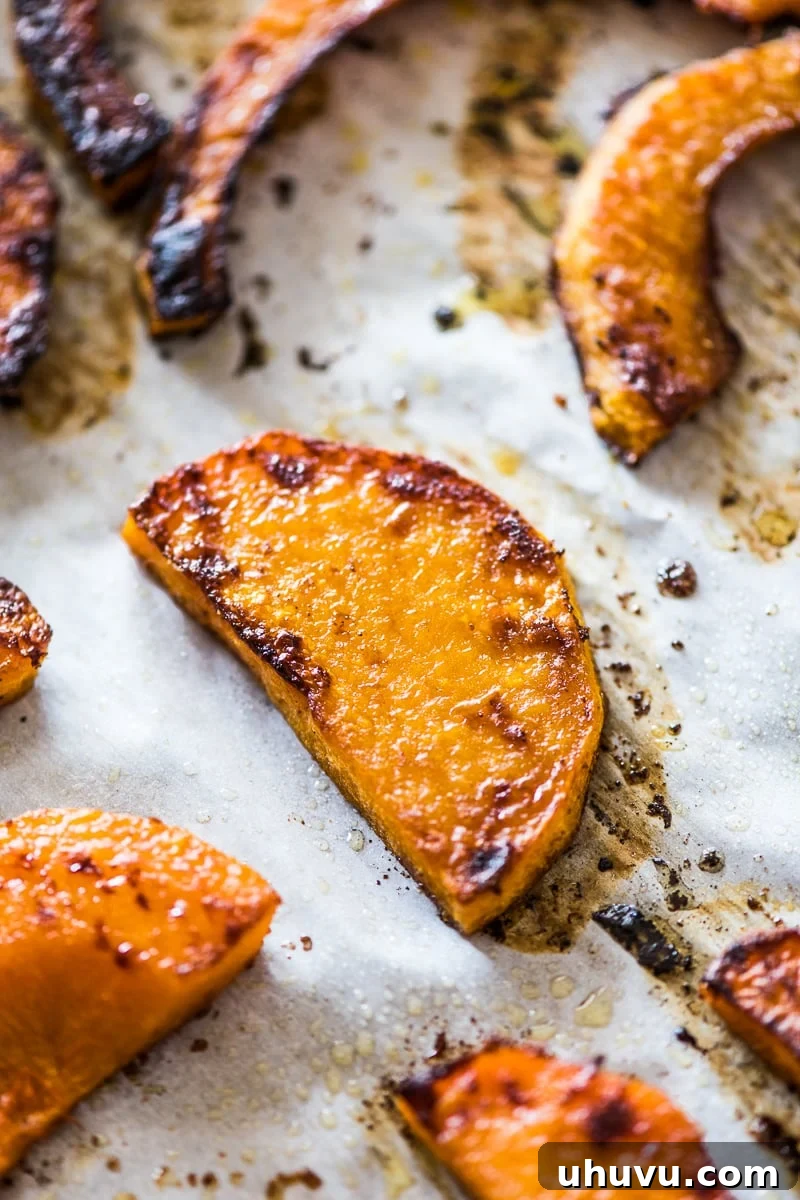
- Flip and Roast (Second Round): After 20 minutes, carefully remove the baking sheets from the oven. Using a spatula, flip each squash piece over to ensure even cooking and browning on both sides. At this point, it’s also a good idea to rotate the baking sheets in the oven (e.g., move the top sheet to the bottom rack and vice-versa, and spin them 180 degrees). Return them to the oven and continue roasting for another 20 minutes, or until the squash is tender when pierced with a fork and has achieved a beautiful golden-brown caramelization around the edges.
The result is a batch of roasted butternut squash that is both tender and flavorful, ready for its final embellishments.
Finishing Touches: Maple-Lime Drizzle and Garnish
The final step in this recipe is where the roasted butternut squash truly transforms from simply delicious to absolutely unforgettable. Once the squash has emerged from the oven, beautifully caramelized and tender, it’s time to add the finishing touches that bring all the flavors together in a spectacular way.
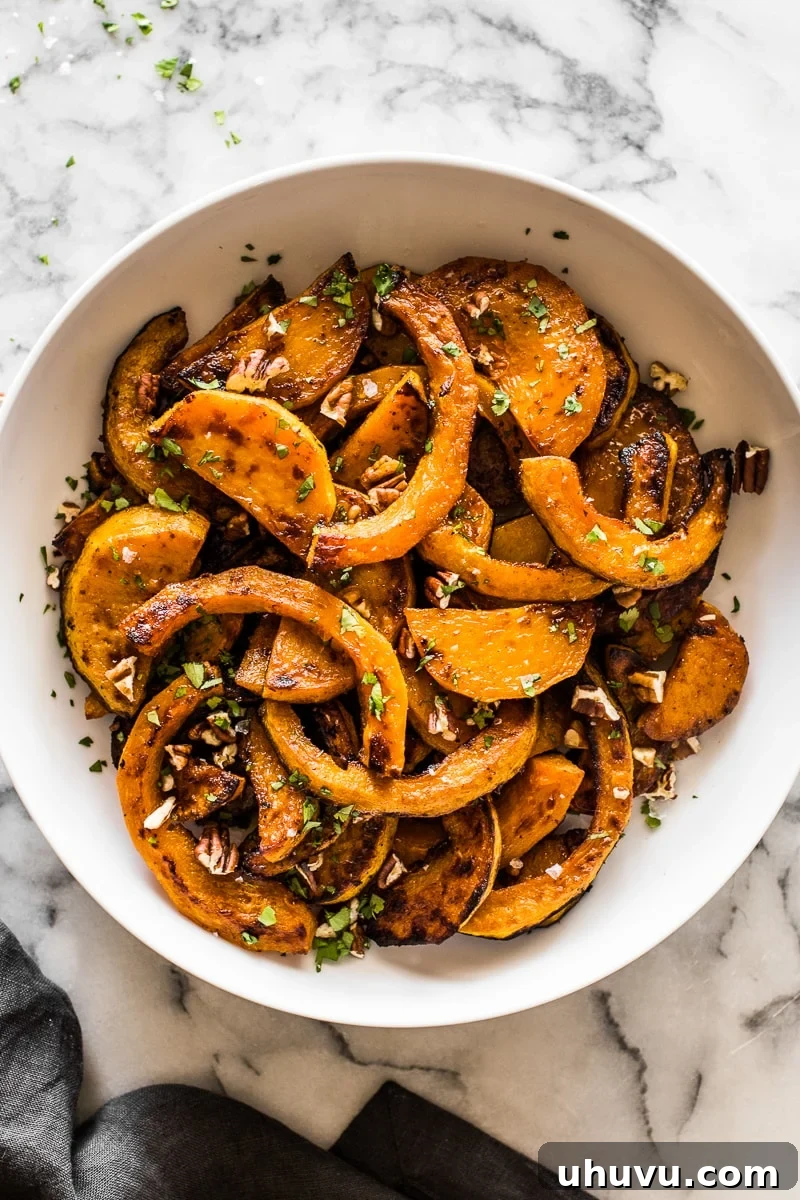
While the squash is still warm, transfer it to a beautiful serving dish. This is when the magic drizzle comes into play. In a small bowl, whisk together the maple syrup and fresh lime juice. This simple yet profound combination introduces a vibrant sweetness from the maple and a bright, zesty tang from the lime. The lime juice is particularly important as it cuts through the rich, buttery, and sweet flavors of the squash, preventing it from being overly heavy and instead adding a refreshing lift. Drizzle this mixture generously over all the roasted squash pieces, ensuring an even coating. The warmth of the squash will allow the drizzle to slightly seep in, infusing every bite.
To add both visual appeal and textural contrast, I love to garnish this dish with some chopped nuts. Pecans are my personal favorite for their buttery flavor and satisfying crunch, which complements the softness of the squash. You could also use walnuts or even toasted pumpkin seeds for a different twist. For a final pop of color and a fresh herbaceous note, sprinkle some chopped cilantro over the top. The vibrant green of the cilantro offers a beautiful contrast to the golden squash. If cilantro isn’t to your taste, finely chopped fresh parsley makes an excellent substitute, or you can simply omit the herbs entirely and let the squash shine on its own. Serve immediately and watch it disappear!
Tips for the Best Roasted Butternut Squash
- Don’t Overcrowd the Pan: This is crucial for caramelization. If your squash pieces are too close together, they will steam instead of roast, leading to a soggy texture. Use two large baking sheets and arrange the squash in a single layer, ensuring each piece has enough space.
- Even Slices/Cubes: Whether you choose half-moons or cubes, try to cut them as uniformly as possible. This ensures that all pieces cook at the same rate, preventing some from being undercooked while others are burnt.
- Unsalted Butter is Key: Using unsalted butter allows you to control the seasoning and ensures the natural sweetness and spice flavors are prominent. You can add salt to taste separately.
- High Heat for Roasting: Roasting at 400°F (200°C) is ideal for achieving tender interiors and crispy, caramelized edges. Don’t be tempted to use lower heat, as it won’t produce the same delicious texture.
- Flip Halfway: Flipping the squash pieces and rotating the baking sheets halfway through the cooking time ensures even browning on all sides.
- Fresh Lime Juice: Don’t skip the lime juice! It’s a game-changer, adding a crucial bright, zesty tang that cuts through the richness and enhances all the other flavors.
- Taste and Adjust: Before serving, always taste a piece of squash. You might want to add a pinch more salt, a tiny bit more honey, or an extra squeeze of lime, depending on your preference.
Variations and Customizations for Your Roasted Butternut Squash
- Spice It Up: For a spicier kick, add a pinch of cayenne pepper or red chili flakes to the spice mixture.
- Herbaceous Twist: Instead of cilantro or parsley, try fresh thyme or rosemary. These woody herbs pair beautifully with the sweetness of butternut squash.
- Nutty Additions: While pecans are excellent, feel free to experiment with other nuts like walnuts, almonds, or even toasted pumpkin seeds (pepitas) for a different texture and flavor profile.
- Citrus Alternatives: If you don’t have lime, lemon juice can be used as a substitute, offering a similar brightening effect.
- Garlic Infusion: For a savory-sweet profile, mince a couple of cloves of garlic and toss them with the squash and butter mixture before roasting.
- Sweetness Level: Adjust the amount of honey and maple syrup to your liking. If your squash is particularly sweet, you might need less, and vice-versa.
- Make it Vegan: Simply substitute the butter with a good quality olive oil or a plant-based butter alternative to make this recipe entirely vegan-friendly.
What to Serve with Roasted Butternut Squash
This exquisite roasted butternut squash is incredibly versatile and pairs wonderfully with a wide variety of main courses, making it a stellar addition to any meal, from festive holiday gatherings to simple weeknight dinners. Its sweet and savory profile complements rich meats and adds depth to vegetarian dishes.
For holiday feasts, it’s a natural match for traditional roasts. Imagine it alongside a succulent Roasted Turkey, a tender Glazed Ham, or a hearty Prime Rib. The sweetness of the squash balances the richness of these proteins perfectly. If you’re serving roasted chicken, the earthy spices in the squash echo the flavors of a classic roast, creating a cohesive meal.
Beyond the holidays, this side dish elevates everyday meals. Serve it with pan-seared pork chops, grilled salmon, or even simple baked chicken breasts for a balanced and flavorful dinner. For vegetarian options, it’s fantastic alongside a hearty lentil loaf, black bean burgers, or even mixed into a vibrant grain bowl. Its comforting warmth also makes it a perfect accompaniment to a light soup or a fresh salad.
Here are some more delectable side dishes that complement this roasted butternut squash beautifully, creating a well-rounded and impressive spread:
- Healthy Sweet Potato Casserole
- Honey Balsamic Brussels Sprouts
- Cornbread Stuffing with Chorizo
- Mexican Potatoes
Storage and Reheating Instructions
This roasted butternut squash recipe is so delicious that you might not have any leftovers! However, if you do, it stores and reheats beautifully, making it an excellent candidate for meal prep or enjoying over a few days.
- Storage: Allow any leftover roasted butternut squash to cool completely to room temperature. Transfer it to an airtight container and store it in the refrigerator for up to 3-4 days.
- Freezing: While technically possible, freezing roasted butternut squash can alter its texture, making it a bit mushier upon reheating. If you wish to freeze it, spread the cooled squash in a single layer on a baking sheet and freeze until solid. Then transfer the frozen pieces to a freezer-safe bag or container for up to 2-3 months. Thaw in the refrigerator overnight before reheating.
- Reheating (Oven): For best results and to regain some of that lovely caramelization, reheat the squash in the oven. Preheat your oven to 350°F (175°C). Spread the squash in a single layer on a baking sheet. Heat for 10-15 minutes, or until warmed through and slightly crisp around the edges.
- Reheating (Microwave): While quicker, the microwave won’t restore the crispy edges. Place the squash in a microwave-safe dish and heat in 30-second intervals, stirring in between, until heated through. Be careful not to overheat, as it can become mushy.
Frequently Asked Questions (FAQs)
- Can I prepare butternut squash ahead of time?
- Yes! You can peel and cut the butternut squash up to 2-3 days in advance. Store the cut pieces in an airtight container in the refrigerator. If you’re worried about them drying out, you can add a damp paper towel to the container.
- Is butternut squash healthy?
- Absolutely! Butternut squash is incredibly nutritious. It’s rich in vitamins A and C, fiber, potassium, and magnesium, making it a fantastic addition to a healthy diet. This recipe, with natural sweeteners and healthy spices, maintains those benefits.
- What if I don’t have all the spices?
- While the combination of cumin, coriander, and cinnamon creates a unique depth, you can certainly adapt. If you’re missing one, the others will still provide great flavor. For a simpler approach, a pinch of nutmeg and a dash of allspice can also be delightful, or simply use salt and pepper with the honey and maple syrup.
- Can I substitute the honey or maple syrup?
- You can use either honey or maple syrup for both the initial coating and the final drizzle. Agave nectar would also work as a substitute if you prefer a vegan option. Adjust quantities to your desired level of sweetness.
- How do I know when the butternut squash is perfectly roasted?
- The squash is done when it’s fork-tender and has beautiful golden-brown, slightly caramelized edges. The exact time can vary depending on your oven and the thickness of your slices, so always check for tenderness.
Roasted Butternut Squash Recipe Card
Roasted Butternut Squash
By: Isabel Orozco-Moore
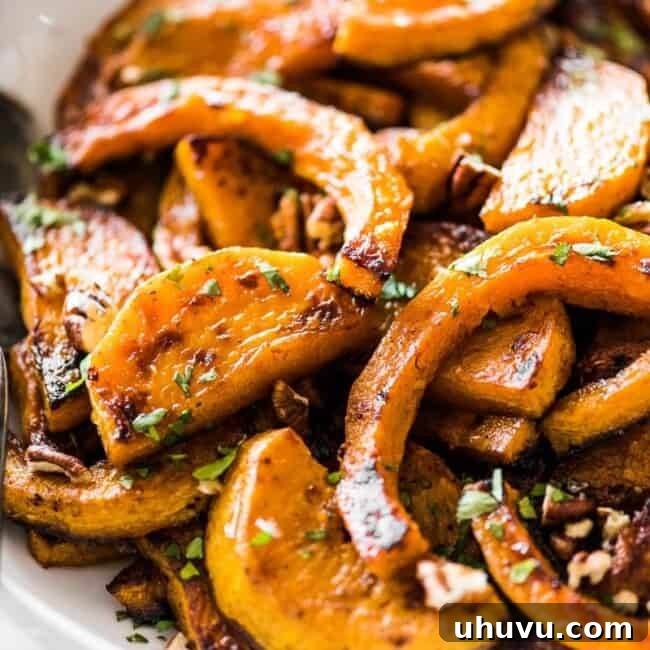
This Oven Roasted Butternut Squash recipe is melt-in-your-mouth good! Made with maple syrup, honey and melted butter, it’s tasty enough for a special occasion like Thanksgiving and Christmas holidays, yet easy enough for a weeknight meal!
- Prep Time: 15 minutes
- Cook Time: 40 minutes
- Total Time: 55 minutes
- Servings: 8 servings
Ingredients
For the squash
- 2 large butternut squash, peeled and sliced in half lengthwise (about 4 lbs total)
- 4 tablespoons unsalted butter, melted
- 1 teaspoon ground cumin
- 1 teaspoon ground coriander
- 1/2 teaspoon ground cinnamon
- 2 teaspoons honey
For drizzle and topping
- 1 tablespoon maple syrup
- 1 tablespoon lime juice (about the juice of 1/2 lime)
- Chopped pecans, for garnish
- Chopped cilantro, for garnish (optional)
Instructions
- Preheat oven to 400°F (200°C). Line two large baking sheets with parchment paper and set aside.
- Remove and discard seeds from butternut squash. Place butternut squash onto a cutting board cut side down and slice into evenly thick half-moon slices (about 1/2 to 3/4-inch thick). Place in a large mixing bowl.
- In a small bowl, whisk together melted butter, cumin, coriander, cinnamon, and honey. Pour onto the sliced butternut squash and toss together until all the pieces are coated.
- Arrange butternut squash on prepared baking sheets in a single layer, ensuring not to overcrowd the pans. Bake for 20 minutes.
- Flip squash over with a spatula and bake for another 20 minutes, making sure to rotate the baking sheets in the oven for even cooking and browning.
- While squash is baking, whisk together maple syrup and lime juice in a small bowl.
- Transfer roasted squash to a serving dish and drizzle generously with the maple-lime mixture. Garnish with chopped pecans and cilantro (if using) and serve immediately.
Notes
- To save some time, you can buy pre-peeled and cubed butternut squash at your grocery store! The average butternut squash weighs about 2 lbs, so you’ll need about 4 lbs total.
- If using cubed butternut squash, the cook time will need to be reduced since the pieces are much smaller and cook faster. Try roasting for 15 minutes on one side, flip the pieces over and roast for another 15 minutes, or until tender and caramelized.
Nutrition Information (Approximate per serving)
- Serving Size: 1/8th of recipe
- Calories: 169kcal
- Carbohydrates: 31g
- Protein: 2g
- Fat: 6g
- Saturated Fat: 4g
- Cholesterol: 15mg
- Sodium: 11mg
- Potassium: 829mg
- Fiber: 5g
- Sugar: 8g
- Vitamin A: 24000IU
- Vitamin C: 70mg
- Calcium: 140mg
- Iron: 2mg
Nutrition information is automatically calculated and should only be used as an approximation. Individual results may vary.
Did you make this delicious recipe?
We’d love to hear about it! Please leave a comment and a star rating below to share your experience and help others discover this amazing side dish.