
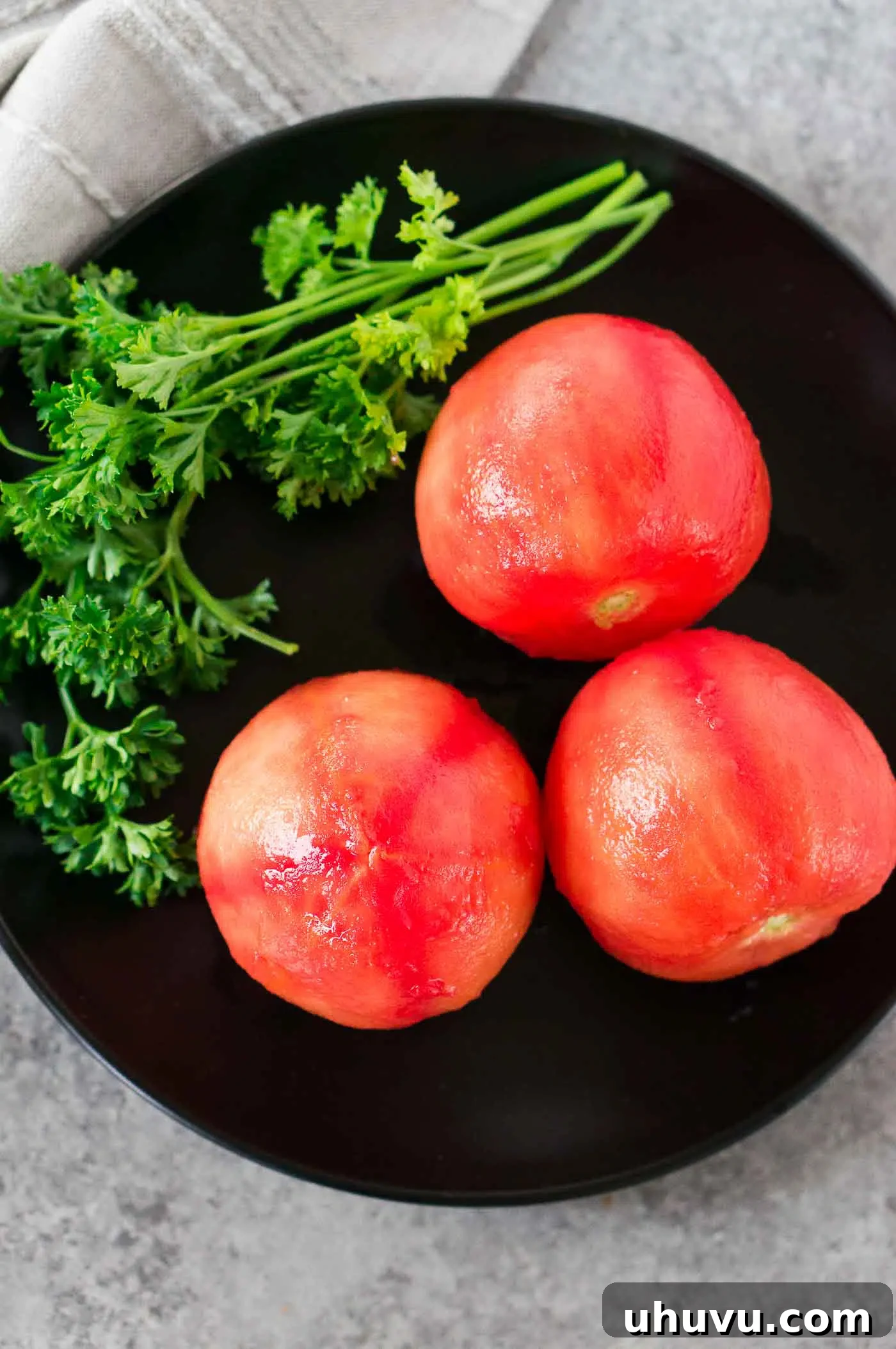
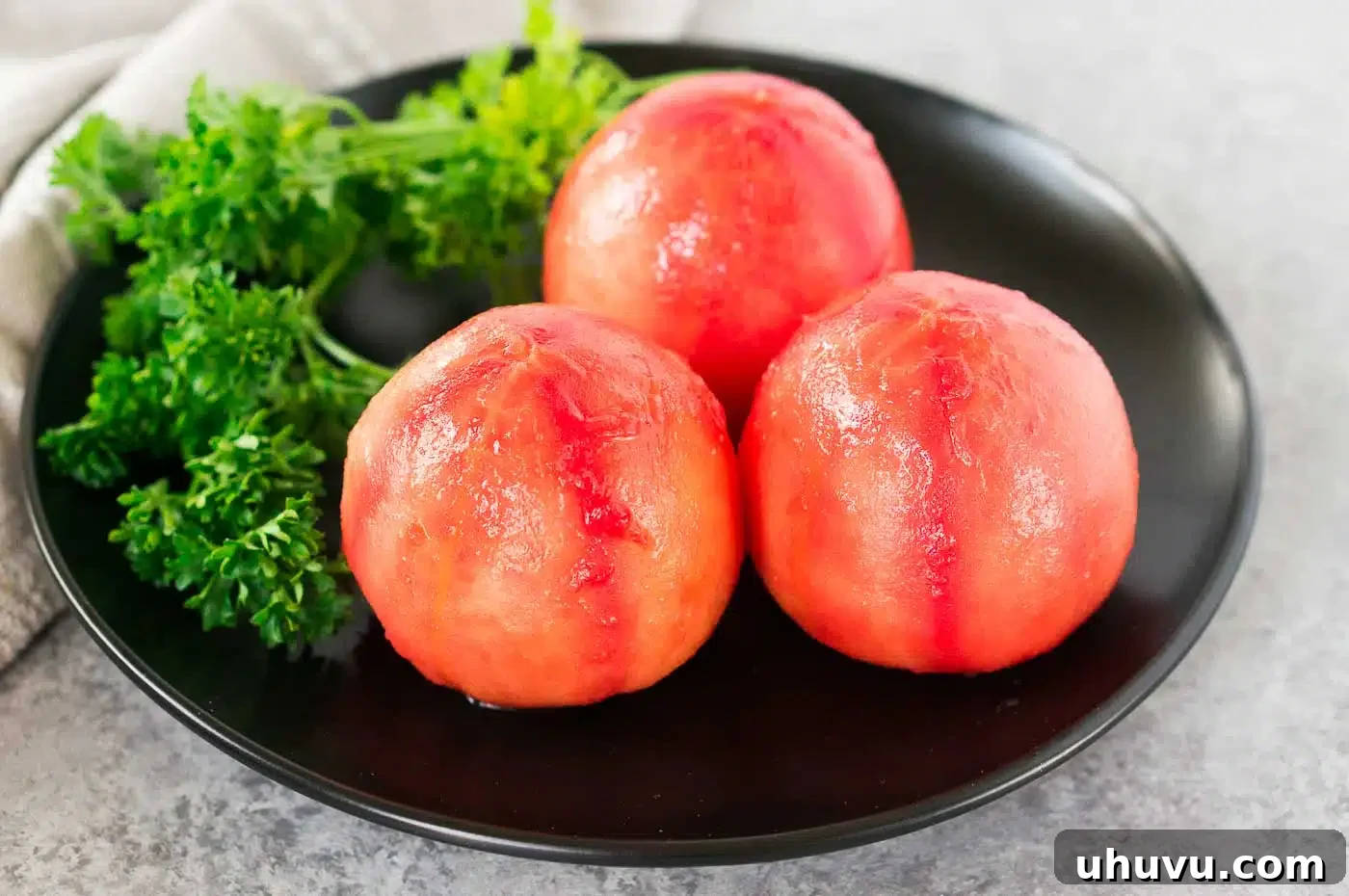
Learn how to peel tomatoes quickly and easily with this simple method. Effortlessly remove the skins to make your sauces, dips, and juices extra smooth and incredibly delicious.
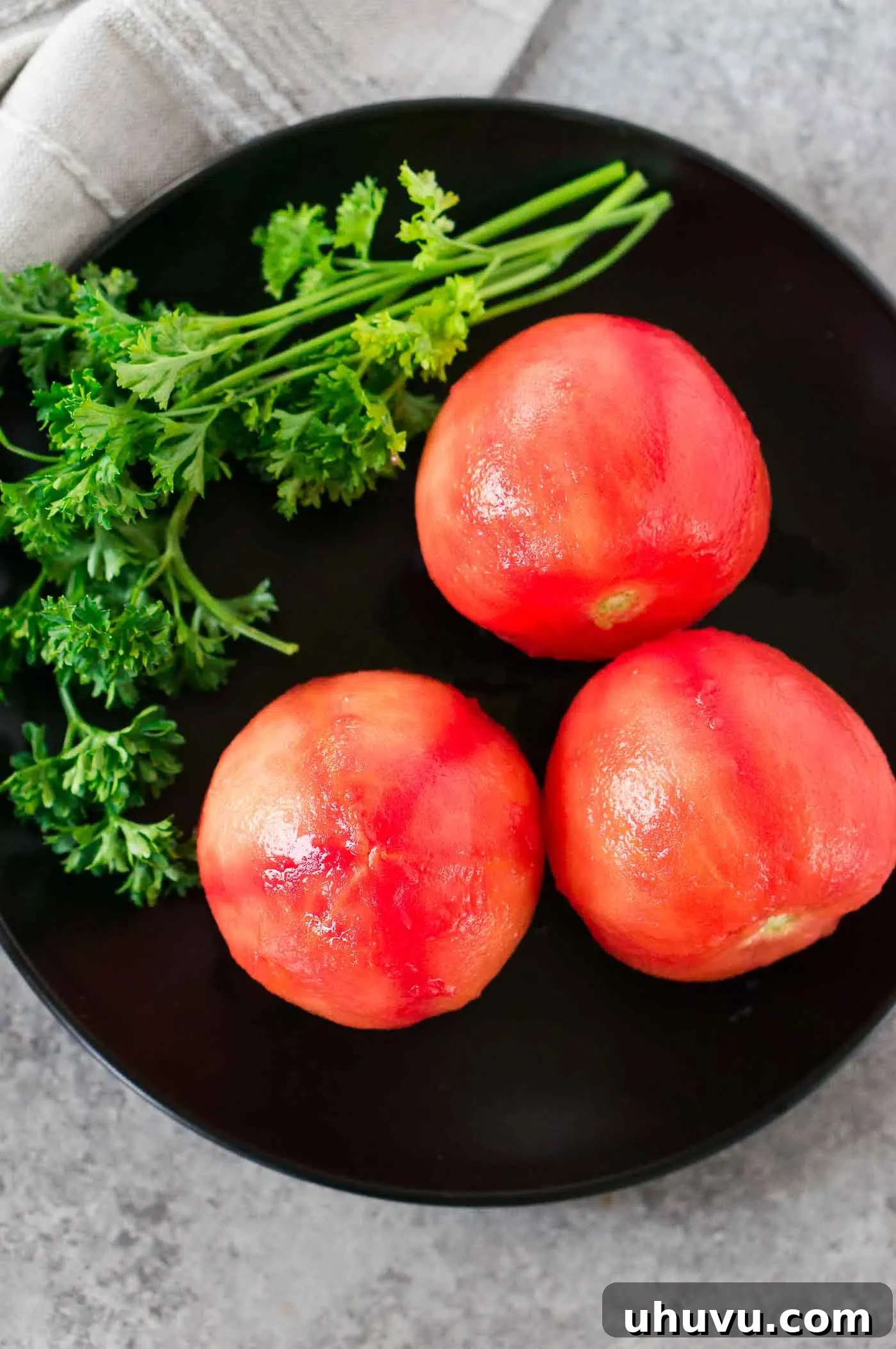
For many home cooks, peeling tomatoes might seem like an extra step, but once you discover this incredibly simple and efficient method, you’ll wonder how you ever cooked without it. While it used to be one of my least favorite kitchen tasks, this blanching hack has transformed it into an effortless process that takes just minutes to achieve truly restaurant-quality results.
Say goodbye to lumpy sauces and chewy skins. By mastering this quick technique, you’ll unlock a new level of smoothness and purity in your homemade culinary creations. Be sure to explore other useful kitchen tutorials on our site, such as How to Mince Garlic and How to Cook Bacon in the Oven, to further enhance your cooking skills!
Why Peeling Tomatoes is a Game-Changer for Your Cooking
Removing the skin from tomatoes offers several significant benefits that can dramatically improve the texture, flavor, and overall quality of your dishes. Here’s why this method will become your new kitchen favorite:
- Achieve Unrivaled Smoothness: Tomato skins, though thin, can create a coarse or chewy texture in pureed dishes like sauces, soups, and dips. Peeling them ensures a silky, velvety consistency that’s highly desirable in gourmet cooking.
- Enhance Pure Flavor: Sometimes, tomato skins can introduce a slightly bitter note or a different flavor profile that detracts from the pure, sweet essence of the tomato flesh. By removing them, you allow the true, vibrant taste of the tomato to shine through.
- Improve Digestibility: For some individuals, tomato skins can be difficult to digest. Peeling tomatoes makes them easier on the stomach, allowing everyone to enjoy your delicious creations without discomfort.
- Essential for Canning and Preserving: If you’re canning tomatoes, making homemade tomato paste, or preparing chunky salsa for long-term storage, removing the skins is crucial. It prevents the skins from separating during the cooking and storage process, which can lead to an undesirable texture and potential spoilage.
- Elevate Aesthetics: Peeled tomatoes contribute to a more refined and professional appearance in many dishes, especially those where presentation matters, such as a fresh Caprese salad or a clear tomato consommé.
- Quick and Easy Process: Despite what you might think, this blanching method is incredibly fast, turning a potentially tedious task into a quick and satisfying one. You’ll be amazed at how easily the skins slip off!
Essential Equipment for Peeling Tomatoes
You don’t need any fancy gadgets to peel tomatoes like a pro. Most of the items you’ll need are likely already in your kitchen:
- Fresh Tomatoes: Choose ripe, firm tomatoes for the best results. Roma, plum, or beefsteak varieties are ideal due to their thicker skins and meaty texture.
- Large Pot: For boiling water. Ensure it’s large enough to comfortably submerge several tomatoes without overcrowding.
- Plenty of Water: For both boiling and creating an ice bath.
- Slotted Spoon or Spider: Essential for safely transferring hot tomatoes from boiling water to the ice bath.
- Large Bowl with Ice Water: This “ice bath” is crucial for stopping the cooking process immediately and making the skins easier to handle and peel. Have plenty of ice ready!
- Small Paring Knife: For scoring the tomatoes and assisting with peeling if necessary.
- Cutting Board: For safely preparing your tomatoes.
How to Peel Tomatoes: The Blanching Method
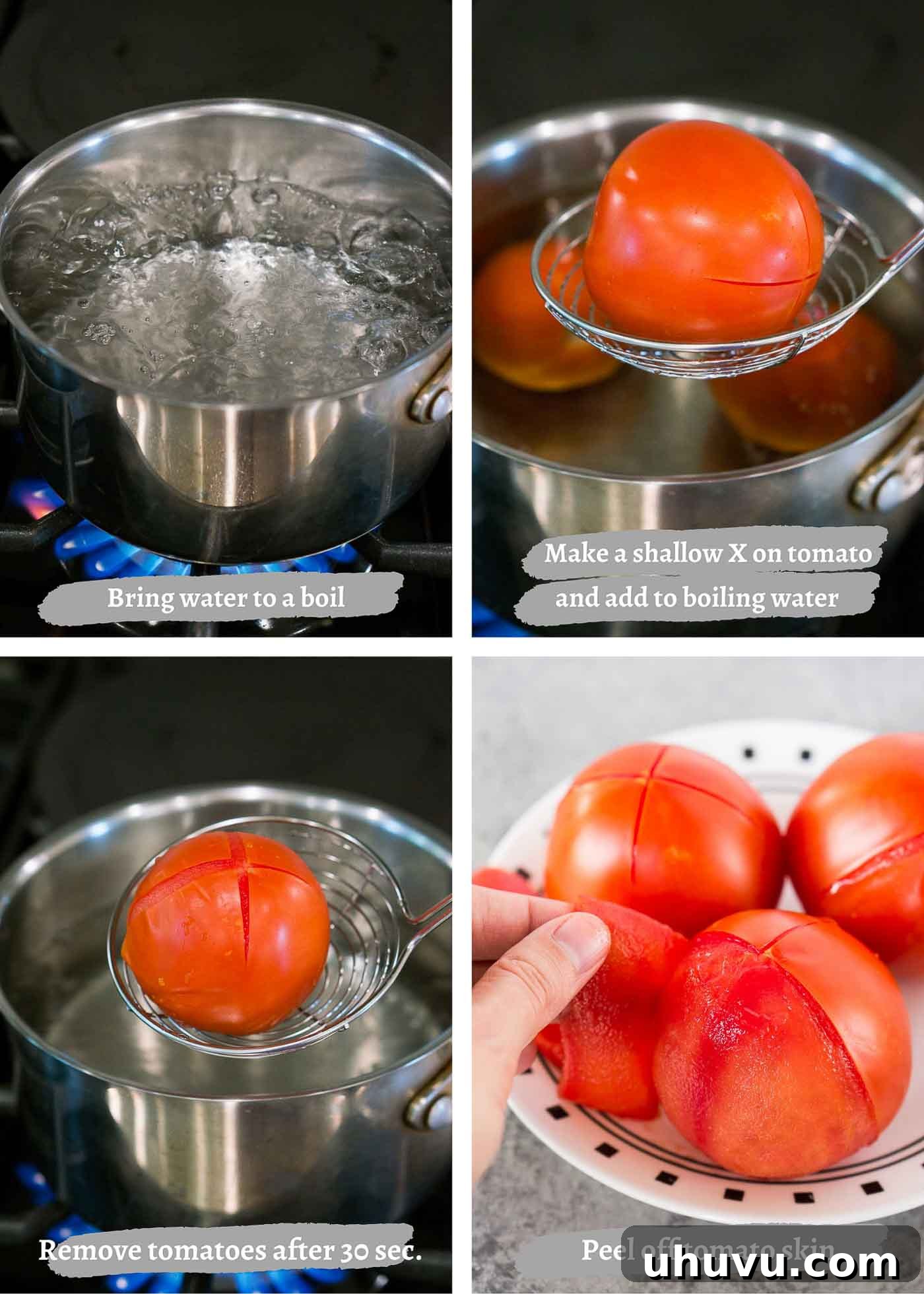
This simple blanching technique makes peeling tomatoes incredibly fast and easy. Follow these steps for perfectly peeled tomatoes every time:
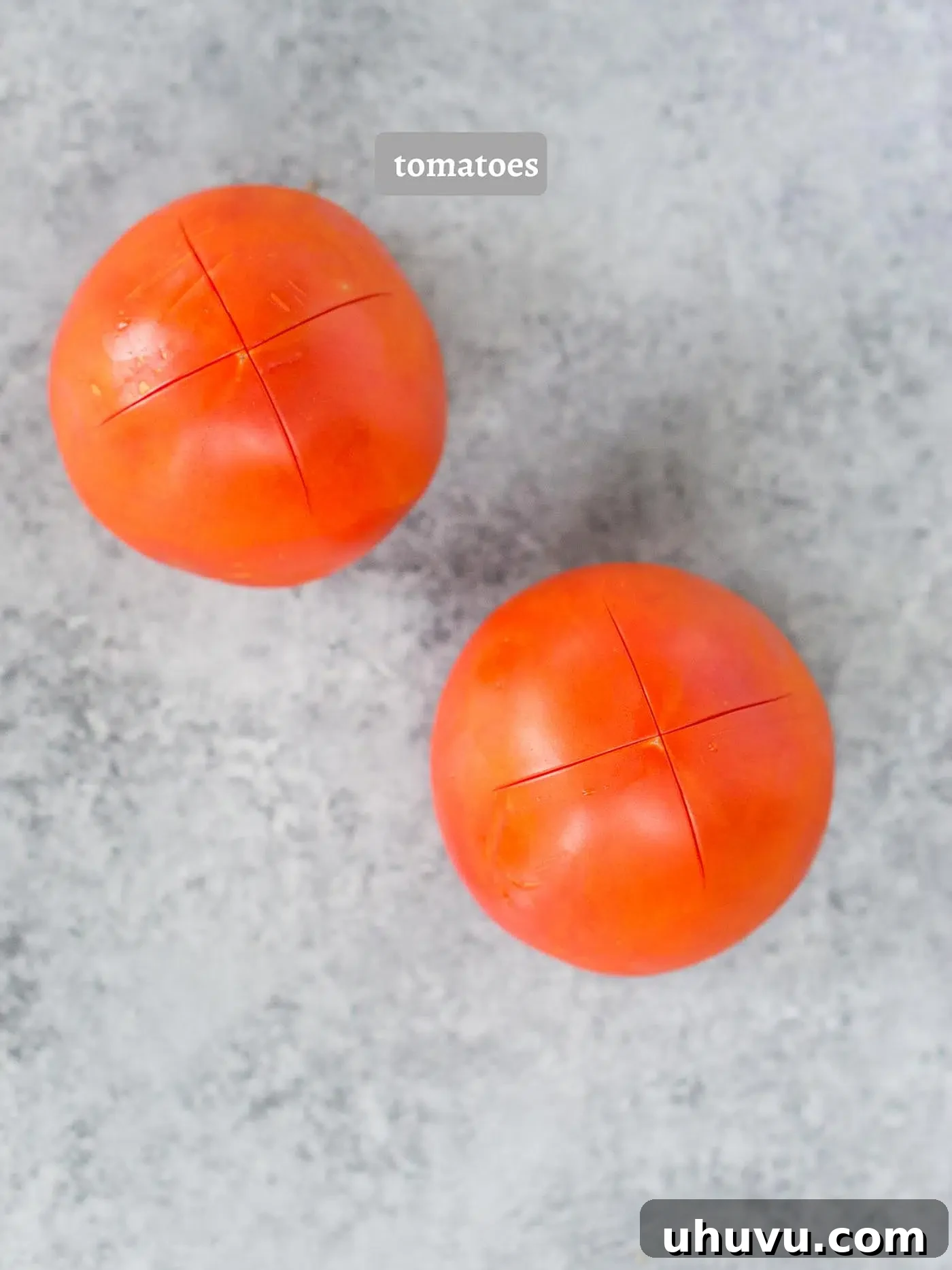
- Prepare the Tomatoes: Wash your tomatoes thoroughly under cold running water. With a small, sharp paring knife, carefully slice a shallow “X” at the bottom (blossom end) of each tomato. This cut should only penetrate the skin, not deep into the flesh.
- Boil and Blanch: Bring a large pot of water to a rolling boil. Carefully place the scored tomatoes into the boiling water using your slotted spoon. Do not overcrowd the pot; work in batches if necessary. Allow them to blanch for 30 to 60 seconds, or until you clearly see the skin around the “X” beginning to wrinkle and pull away from the tomato flesh.
- Immediate Ice Bath: As soon as the skins start to loosen, quickly transfer the tomatoes from the boiling water directly into a large bowl filled with ice water using your slotted spoon. This immediate thermal shock halts the cooking process, ensuring the tomatoes remain firm, and makes the skins much easier to remove. Let them cool in the ice bath for a minute or two, or until they are comfortable enough to handle.
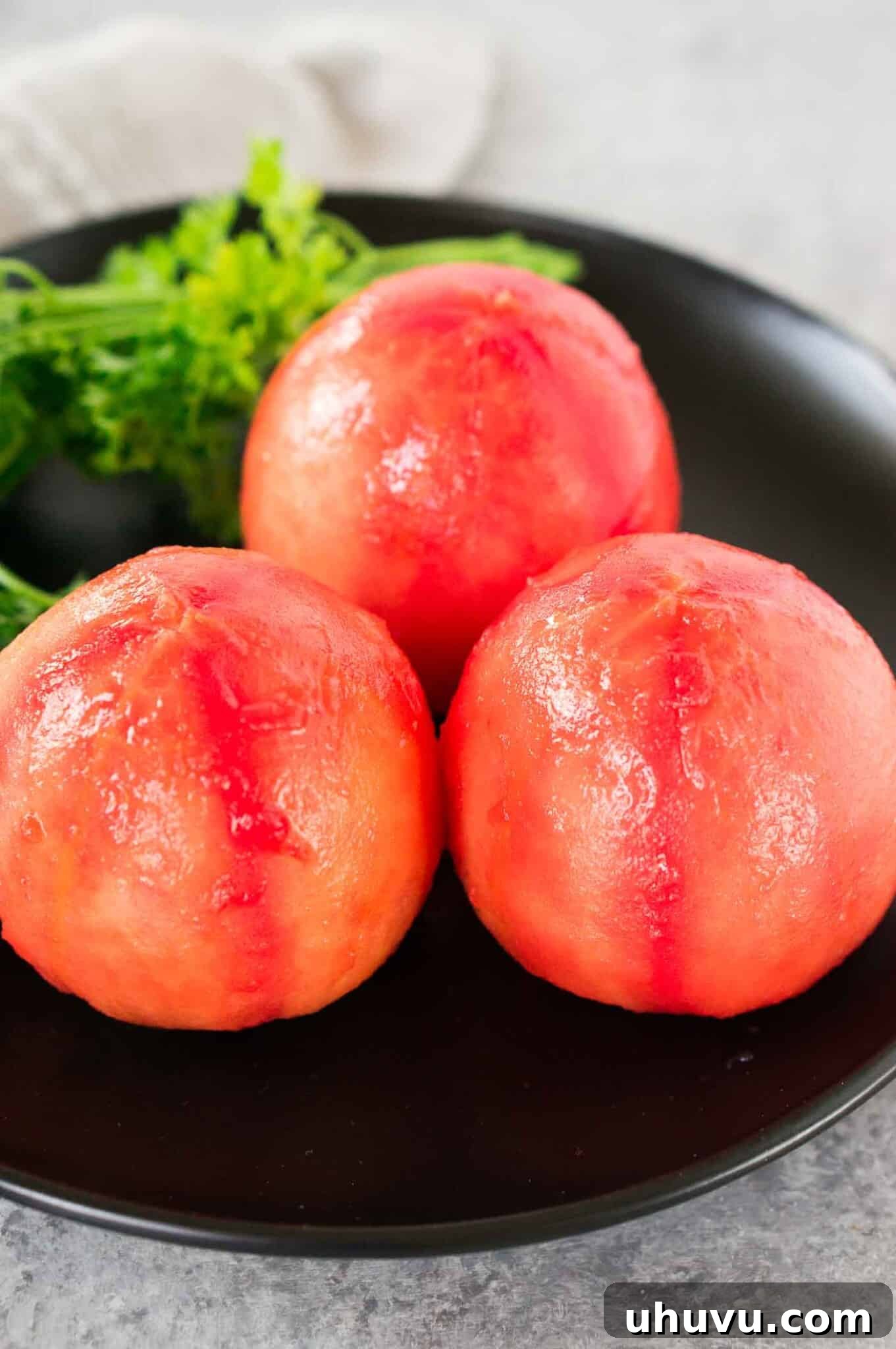
- Effortless Peeling: Once cooled, remove the tomatoes from the ice water. You should now be able to easily peel the skins off with your fingers, starting from the loosened edges around the “X.” For any stubborn spots, use your paring knife to gently scrape or lift the skin. The skins should slide off almost effortlessly, leaving you with perfectly smooth, peeled tomatoes.
When Should You Peel Tomatoes for Best Results?
While tomato skins are perfectly edible and safe to consume, there are specific culinary applications where peeling them makes a world of difference. You don’t necessarily need to peel tomatoes for every recipe, but it’s highly recommended in certain situations:
- Smooth Sauces and Soups: If you’re aiming for a velvety smooth texture in dishes like marinara sauce, tomato soup, or tomato puree, peeling is an absolute must. Skins can disrupt the smooth consistency and introduce unwanted chewiness.
- Canning and Preserving: When canning whole, diced, or crushed tomatoes, or making homemade tomato paste, removing the skins is not just for texture but also for quality and safety. Skins can separate during processing, creating an unappealing product and potentially impacting the seal or shelf life.
- Refined Salsas and Juices: For salsas where you desire a uniform texture or for fresh tomato juice, peeling prevents any stringiness or bitterness from the skins, resulting in a cleaner, sweeter product.
- Delicate Dishes: In recipes where the texture of the tomato is paramount, such as a fresh tomato salad, bruschetta, or an elegant appetizer, peeled tomatoes offer a more refined eating experience. The absence of skin allows the soft flesh to melt in your mouth.
In essence, if your recipe calls for a smooth, homogenous mixture, or if you’re preserving tomatoes, peeling is an invaluable step that elevates your dish from good to exceptional.
Should You Peel All Tomato Varieties?
No, not all tomatoes require peeling. The decision often comes down to the tomato variety, its skin thickness, and the desired outcome of your dish. Smaller tomatoes, such as cherry or grape tomatoes, typically have very thin and tender skins that soften quickly when cooked and are usually pleasant to eat. Many large heirloom varieties also boast delicate skins that don’t negatively impact the texture of most dishes.
However, varieties like beefsteak, plum, and Roma tomatoes are the primary beneficiaries of this peeling technique. These types generally have thicker, tougher skins that can become chewy or fibrous when cooked, making them less desirable in sauces, soups, and other pureed preparations. For these workhorse tomatoes, blanching and peeling is an essential step to ensure a truly smooth and enjoyable result.
Why Scoring Tomatoes is Key to Easy Peeling
The shallow “X” cut at the bottom of each tomato is more than just a suggestion – it’s a vital step in the blanching process. Scoring the tomatoes serves two primary purposes:
- Initiates Skin Separation: The small cut creates a weak point in the skin. When exposed to the hot boiling water, the skin at these points quickly reacts, shrinking and beginning to pull away from the tomato’s flesh. This gives you an easy starting point for peeling.
- Visual Indicator of Readiness: The scoring also acts as a clear visual cue. When you see the skin around the “X” beginning to visibly curl back or wrinkle, it’s a sure sign that the tomato has been blanched for just the right amount of time and is ready for the ice bath. This helps prevent both under-blanching (where the skin won’t come off easily) and over-blanching (where the tomato starts to cook and become mushy).
This simple initial step significantly streamlines the peeling process, making it much faster and less frustrating.
TIPS FROM NELI’S KITCHEN
Recipe Notes and Expert Tips
- Don’t Overcook: It’s crucial not to leave the tomatoes in the boiling water for more than a minute, generally 30 to 60 seconds is plenty. If left too long, the tomatoes will start to cook, becoming soft and mushy, which is undesirable for most recipes requiring peeled tomatoes.
- The Importance of the Ice Bath: Always transfer the blanched tomatoes immediately into iced water. This rapid cooling, known as “shocking,” serves two vital functions: it instantly stops the cooking process to maintain the tomato’s firm texture, and it further loosens the skin, making it incredibly easy to remove by hand.
- Choose Ripe Tomatoes: The riper the tomato, the easier its skin will slip off after blanching. Under-ripe tomatoes tend to hold onto their skins more stubbornly.
- Work in Batches: If you have a large quantity of tomatoes, blanch them in small batches to avoid overcrowding the pot. Overcrowding can lower the water temperature, leading to uneven blanching and tougher skins.
- Save the Skins (Optional): Don’t toss those skins immediately! You can dry them out in a low oven or dehydrator and then grind them into a powder to create a flavorful tomato seasoning.
Creative Uses for Your Perfectly Peeled Tomatoes
Now that you’ve mastered the art of peeling tomatoes, a world of culinary possibilities opens up! Here are some fantastic ways to utilize your beautifully peeled tomatoes:
- Homemade Marinara Sauce: The quintessential use! Peeled tomatoes create a wonderfully smooth, rich, and deeply flavorful marinara that tastes authentic and professional.
- Creamy Tomato Soup: For a silky-smooth and comforting bowl of tomato soup, peeled tomatoes are non-negotiable. They ensure no chewy bits disrupt the luxurious texture.
- Fresh Salsa and Pico de Gallo: When you want a salsa with a refined texture that won’t have tough skin pieces, peeled tomatoes are the way to go.
- Tomato Paste and Puree: If you’re making homemade tomato paste or a smooth tomato puree for future use, peeling is essential for achieving the right consistency and flavor concentration.
- Tomato Juice or Bloody Mary Mix: For the freshest, smoothest tomato juice, remove those skins! It makes for a much more pleasant drinking experience.
- Bruschetta and Crostini: Diced peeled tomatoes offer a delicate texture that pairs perfectly with crunchy bread, basil, and garlic.
- Caprese Salad: For a truly elegant Caprese, slicing peeled tomatoes ensures that every bite is tender and flavorful, without any tough skins.
- Canning Whole or Diced Tomatoes: As mentioned, peeling is crucial for safe and high-quality home canning, providing a superior product for your pantry.
Storing and Preserving Peeled Tomatoes
Once you’ve gone through the effort of peeling your tomatoes, you’ll want to ensure they can be enjoyed for as long as possible. Here are some effective ways to store and preserve them:
- Refrigeration: Freshly peeled tomatoes can be stored in an airtight container in the refrigerator for up to 3-5 days. It’s best to keep them whole or in large chunks to maintain their texture.
- Freezing: This is an excellent option for longer storage. Place peeled tomatoes (whole, halved, or diced) on a baking sheet and freeze until solid. Once frozen, transfer them to freezer-safe bags or containers. They can be stored for up to 6-8 months. They might become slightly softer upon thawing but are perfect for sauces and soups.
- Canning: As highlighted earlier, peeling is a critical step for canning tomatoes. Follow a reliable canning recipe for either whole, crushed, or diced tomatoes. Proper canning techniques ensure shelf-stable tomatoes for up to a year or more.
- Making Tomato Paste or Sauce: Turn your peeled tomatoes into a cooked sauce or paste, which can then be frozen or canned. This is a great way to preserve their flavor and use them in a convenient form.
By properly storing your peeled tomatoes, you can enjoy the fruits of your labor long after peak season, bringing that fresh, homemade taste to your kitchen year-round.
More Cooking Tutorials From Our Kitchen
If you found this comprehensive tutorial on how to peel tomatoes helpful, we’re confident you’ll appreciate our other detailed cooking guides and kitchen hacks. Expand your culinary repertoire with these essential skills:
- How To Cook Lentils
- How To Make Butter
- How To Poach an Egg
- How To Cook Rice
How to Peel Tomatoes
By: Neli Howard
Learn how to peel tomatoes quickly and easily with this simple blanching method. Easily remove the skins to make your sauces, dips, and juices extra smooth and enhance their natural flavor.
Equipment
- Saucepan
- Slotted spoon
- Large bowl
- Ice
- Paring knife
Ingredients
- 4 ripe Tomatoes (e.g., Roma, Plum, or Beefsteak)
Instructions
- Score the Tomatoes: Slice a shallow “X” at the bottom (blossom end) of each tomato, just cutting through the skin.
- Blanch: Place the scored tomatoes into a pot of boiling water for 30 to 60 seconds. Watch for the skin around the “X” to begin curling or wrinkling.
- Ice Bath: Immediately transfer the blanched tomatoes using a slotted spoon into a bowl filled with ice water. Let them cool for 1-2 minutes until comfortable to handle.
- Peel: Once cooled, gently peel the loosened skins from the tomatoes using your fingers or a small paring knife.
Notes
- Do not leave the tomatoes in the boiling water for more than a minute; otherwise, they will start to cook and become mushy.
- The ice bath is crucial for stopping the cooking process and ensuring the skins are easy to remove.
Nutrition
- Calories:
- 22 kcal
- Carbohydrates:
- 5g
- Protein:
- 1g
- Fat:
- 1g
- Saturated Fat:
- 1g
- Polyunsaturated Fat:
- 1g
- Monounsaturated Fat:
- 1g
- Sodium:
- 6mg
- Potassium:
- 292mg
- Fiber:
- 1g
- Sugar:
- 3g
- Vitamin A:
- 1025 IU
- Vitamin C:
- 17mg
- Calcium:
- 12mg
- Iron:
- 1mg
Nutrition Disclaimer: Nutritional values are estimates and may vary with ingredients, brands, and portion sizes. For accuracy, use your preferred nutrition calculator.