
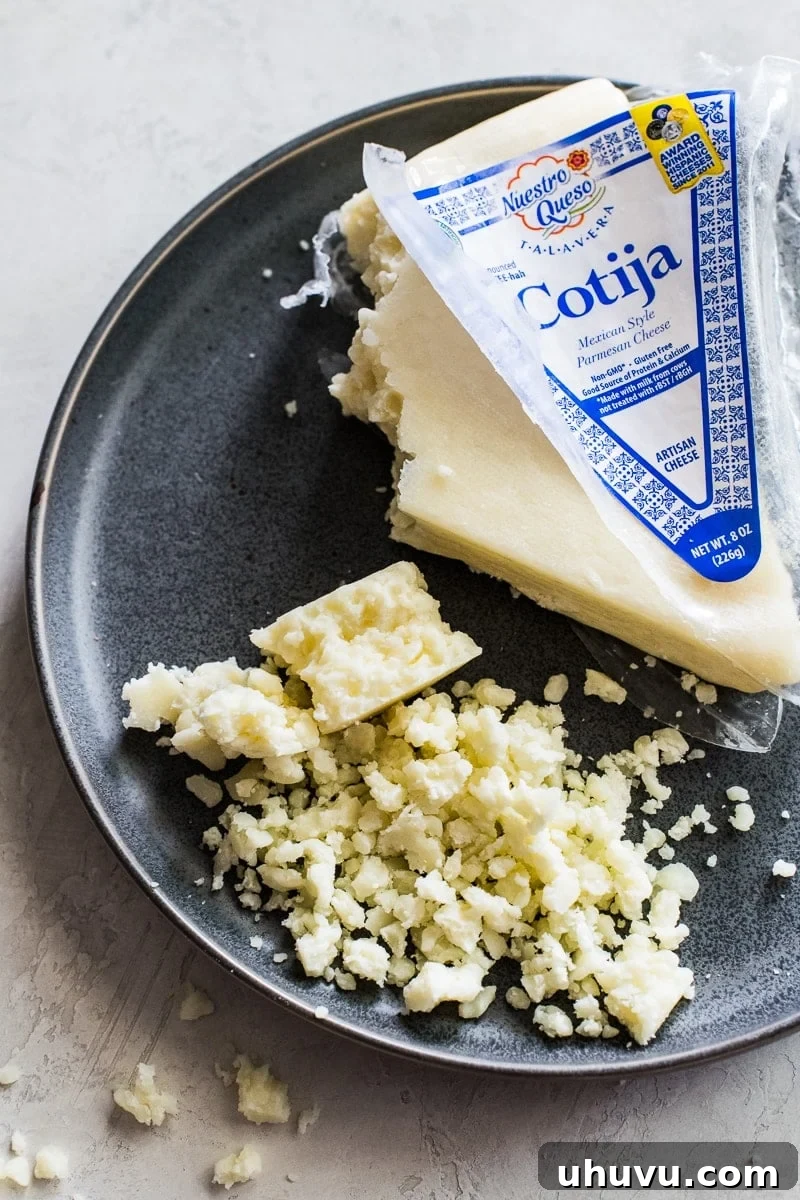
Cotija cheese is a truly versatile and indispensable ingredient in authentic Mexican cuisine, renowned for its distinct salty and crumbly texture. This popular cheese effortlessly elevates a myriad of savory dishes, from classic tacos and enchiladas to robust tostadas and comforting soups. Get ready to discover how Cotija can transform your culinary creations!
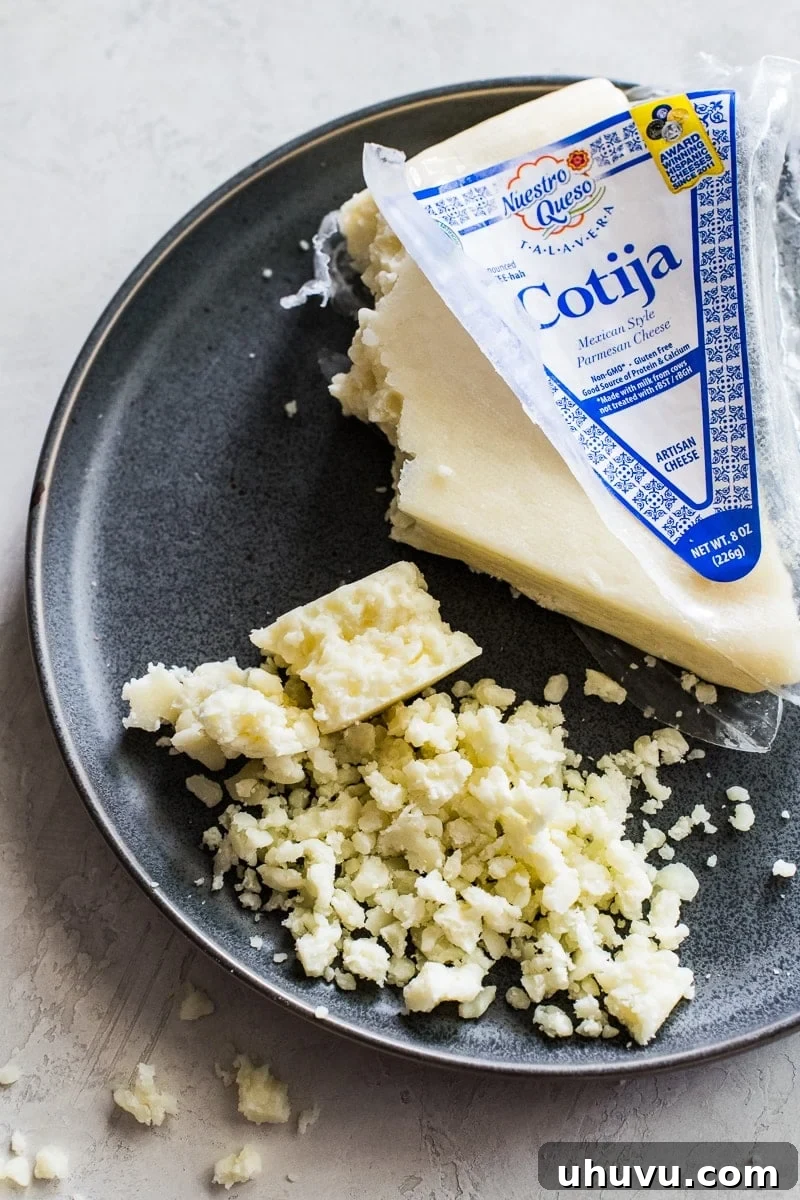
If you appreciate a cheese with a strong personality—salty, bold, and delightfully crumbly—then you’re in for a treat with the beloved Mexican Cotija cheese! It’s a staple in many kitchens, including mine, and for good reason. Its unique characteristics make it a go-to for adding depth and authenticity to countless recipes, from vibrant street corn to hearty enchiladas. Often referred to as the “Parmesan of Mexico,” Cotija holds a special place in Mexican gastronomy, offering a flavor profile that is both familiar and uniquely its own.
What Exactly is Cotija Cheese? The “Parmesan of Mexico” Explored
Cotija is an iconic Mexican cheese crafted from cow’s milk, distinguished by its robust salty flavor and firm, crumbly texture. It proudly bears the name of Cotija de la Paz, a town nestled in the state of Michoacán, Mexico, where its rich history and traditional production methods have been preserved for centuries. This artisanal cheese comes in two primary forms, each offering a distinct experience: fresh (or “fresco”) and aged (known as “añejo”).
While both variations share Cotija’s signature saltiness, they diverge significantly in texture and intensity. The fresh version presents a softer, more pliable crumb, making it perfect for dishes where a milder flavor and delicate texture are desired. In contrast, aged Cotija undergoes a longer maturation process, resulting in a much harder, drier consistency and a more pronounced, complex flavor profile—often drawing comparisons to Italian Parmesan cheese due to its grating quality and sharp, savory taste.
A Brief History and Traditional Production of Cotija
The tradition of making Cotija cheese dates back over 400 years in the highlands of Michoacán, a region known for its rich dairy farming. Originally produced seasonally, primarily during the rainy months when cows graze on lush pastures, the cheese was designed for longevity, allowing it to be stored and consumed throughout the year. This historical context contributes to its inherent saltiness, which acts as a natural preservative, and its firm texture, a hallmark of cheeses meant to withstand time and travel. Traditionally, Cotija is made from raw cow’s milk, pressed, salted, and then aged for at least three months, though some varieties can age for over a year, developing even greater complexity. Today, Cotija remains a cherished part of Mexican culinary heritage, a testament to its enduring flavor and versatility.
What Does Cotija Cheese Taste Like? Unpacking its Unique Flavor Profile
The taste of Cotija is undeniably strong and singularly salty, making it a powerful flavor enhancer in any dish. Its profile often evokes comparisons to feta cheese, as both share a bold, tangy, and distinctly briny character. However, Cotija distinguishes itself with a unique milky undertone that rounds out its sharp edges, offering a more nuanced complexity that is both savory and slightly sour.
The specific flavor nuances largely depend on whether you’re experiencing fresh or aged Cotija. Fresh Cotija, with its softer, fluffier texture, delivers a vibrant saltiness and a brighter tang. It’s lively and assertive without being overwhelming, making it an excellent accompaniment to fresh vegetables and lighter preparations. Aged Cotija, on the other hand, develops a harder, more granular crumb and a significantly stronger, almost pungent flavor. Its saltiness deepens, and it acquires nutty, even slightly spicy notes, mirroring the umami richness found in aged hard cheeses. This evolution in flavor makes aged Cotija a superb finishing cheese, where its potent taste can truly shine, much like a good Parmesan.
The Indispensable Role of Salt in Cotija
Salt is not merely an additive in Cotija; it’s a fundamental component that defines its character and history. Beyond enhancing its distinctive taste, salt plays a crucial role in the cheese’s preservation, particularly important in its traditional production where refrigeration was not always readily available. This high salt content contributes to its ability to be stored for extended periods and is a key reason why Cotija remains a beloved, enduring ingredient in Mexican culinary traditions, offering a consistent burst of flavor that cuts through richer ingredients.
Cotija Versus Queso Fresco: Understanding the Mexican Cheese Duo
Cotija and queso fresco are perhaps the two most commonly encountered crumbly Mexican cheeses, and while they are often used interchangeably, understanding their distinct differences can significantly elevate your cooking. Both are wonderful for sprinkling over dishes, but their flavor and texture profiles offer unique contributions that cater to different culinary needs.
Queso fresco, literally meaning “fresh cheese,” lives up to its name with a much milder, milky, and slightly acidic flavor. Its texture is notably softer and creamier than Cotija, making it crumbly yet yielding. It provides a gentle tang and a fresh dairy note that complements dishes without overpowering them, often used to balance spicier or richer components. In contrast, Cotija—especially the aged variety—brings a bold, intensely salty, and tangy punch to the table. Its firmer, drier crumb maintains its integrity even when heated slightly, making it a more robust choice for adding texture and a powerful flavor burst.
While they both achieve a similar visual effect as a topping, their flavor contributions are quite different. If you’re looking for a subtle, fresh dairy note and a softer crumb, queso fresco is your go-to. If you desire a powerful burst of salty, tangy flavor that stands up to other ingredients, Cotija is the superior choice. In a pinch, they can indeed be swapped, but be mindful that the overall flavor profile of your dish will shift accordingly. For example, using Cotija in place of queso fresco will result in a much saltier and bolder outcome, which might require adjusting other seasonings in your recipe.
How to Use Cotija Cheese: Unleashing its Culinary Potential in Your Kitchen
One of Cotija cheese’s most defining characteristics is its exceptional resistance to melting, a quality that makes it an unparalleled finishing cheese rather than a melting one. Unlike mozzarella or cheddar, Cotija retains its shape and crumbly texture even when exposed to heat, softening slightly but never fully liquefying. This makes it perfect for adding a textural contrast and a burst of salty flavor right before serving, ensuring its presence is both seen and tasted.
Its versatility extends across a vast array of Mexican and Tex-Mex dishes, where its salty tang cuts through richness and adds an authentic touch. You can find Cotija pre-grated in fine, fluffy textures, or as a block, allowing you to control the size of your crumbles—from a delicate sprinkle to more substantial, textural chunks. The block form often yields a fresher, more intense flavor and a more satisfying crumb when grated fresh.
Essential Applications for Cotija Cheese in Mexican Cuisine:
- Classic Toppings: Cotija is the ultimate topping for beloved Mexican staples. Sprinkle generously over enchiladas, tacos, burritos, and tostadas. Its saltiness beautifully complements the rich sauces and savory fillings, adding a crucial layer of flavor.
- Street Food Stars: It’s an absolute must for authentic Mexican street corn, or elotes, whether on the cob or as the deconstructed esquites salad. The tangy cheese, combined with mayonnaise, chili powder, and lime, creates an explosion of quintessential Mexican flavor.
- Salad Enhancer: Transform any green salad or grain bowl into something extraordinary with a generous sprinkle of Cotija. It adds a salty, savory kick that elevates fresh vegetables and lighter dressings. Try it with a vibrant Mexican quinoa salad for a complete and flavorful meal.
- Soups and Stews: Just before serving, a dash of Cotija on top of hearty bean soups, tortilla soup, or chili adds a delightful texture and a salty finish that brightens the entire bowl, offering a contrast to the warm, comforting liquids.
- Savory Sides: Give your side dishes an authentic Mexican twist. It’s fantastic sprinkled over creamy refried beans, rich frijoles puercos, or even roasted vegetables like Mexican zucchini, enhancing their natural flavors.
- Main Dishes: Elevate your main courses with Cotija. It’s perfect for finishing dishes like cheesy enchiladas, savory entomatadas, crispy flautas, and flavorful chilaquiles, adding a crucial layer of flavor and textural appeal.
Tips for Buying and Grating Cotija Cheese
When purchasing Cotija, you’ll typically find it in two forms: pre-grated or in a block. The pre-grated version offers convenience with its very fine, fluffy texture, ready to sprinkle. However, if you opt for a block, you gain more control over the texture. For a fine, powdery sprinkle, ideal for dusting, use the smallest holes on a box grater or a microplane. For larger, more distinct crumbles that provide a delightful textural contrast, simply use a fork to break off chunks, or utilize the larger holes of a grater. Grating it fresh from the block often provides a more intense flavor and aroma, truly enhancing your dish.
Cotija Cheese Substitutes: When You Can’t Find the Real Deal
While Cotija’s unique flavor and texture are hard to replicate exactly, there are several excellent substitutes that can stand in, depending on whether you’re aiming for the fresh or aged version. Choosing the right substitute will ensure your dish maintains a similar flavor profile and textural integrity, allowing you to adapt recipes without losing the essence of Mexican cuisine.
- For Fresh Cotija (Softer & Crumbly Texture):
- Queso Fresco: As discussed, queso fresco is an excellent choice for its similar soft, crumbly texture. Its milder flavor means you might want to add a pinch more salt to your dish to compensate for Cotija’s natural brininess, but it provides a very similar mouthfeel.
- Feta Cheese: Feta is arguably the best flavor match for fresh Cotija. Both are salty, bold, and tangy, with a similar crumbly consistency. Opt for a drier, firmer feta if possible, rather than a very creamy one, for the most comparable texture and less moisture.
- For Aged Cotija (Harder & Stronger Flavor):
- Parmesan: Italian Parmesan cheese (Parmigiano-Reggiano) is a fantastic substitute for aged Cotija. Both share a hard, granular texture perfect for grating, and a strong, salty, umami-rich flavor profile. While Parmesan might be slightly nuttier, it delivers a very similar impact and can be used in the same way.
- Pecorino Romano: This Italian sheep’s milk cheese is another excellent option for aged Cotija. It’s known for its robust, salty, and sharp flavor, which can be even more intense than Parmesan, making it a powerful stand-in for dishes requiring a significant flavor punch and a firm grating texture.
Storage Instructions: Keeping Your Cotija Cheese Fresh and Flavorful
Proper storage is key to maintaining the quality and extending the shelf life of your Cotija cheese. Whether you purchase it in a block or pre-grated, a few simple steps will keep it fresh and flavorful for longer, ensuring you always have this delightful cheese on hand for your culinary adventures.
If your Cotija comes in a block form and you’ve already opened it, the best practice is to wrap it tightly in parchment paper or wax paper, and then place it in an airtight container or a resealable plastic bag. This dual layer of protection helps to prevent it from drying out, absorbing odors from other foods in your refrigerator, and inhibits mold growth. Store it in the coldest part of your fridge. A properly stored block of Cotija can last for several weeks, if not months, due to its low moisture and high salt content, much like other hard cheeses.
For pre-grated Cotija, which typically comes in a resealable bag, simply ensure the bag is sealed tightly after each use. Transferring it to another airtight container can provide extra protection against moisture and air exposure, which are the main culprits for spoilage. Pre-grated cheese generally has a shorter shelf life once opened compared to blocks, so aim to use it within 1-2 weeks for optimal freshness. Always check for any signs of mold, discoloration, or an off-odor before consuming to ensure its quality.
Frequently Asked Questions About Cotija Cheese
Here are answers to some of the most common questions about Cotija cheese, helping you understand and use this incredible ingredient with confidence.
Is Cotija cheese vegetarian-friendly?
Most Cotija cheese available in stores today is made using microbial rennet, making it suitable for vegetarians. However, some traditional or imported varieties, especially those produced artisanally in Mexico, might still use animal rennet. If you are strictly vegetarian, always check the ingredient label for clarification, particularly for lesser-known or specialty brands.
Can Cotija cheese melt?
No, Cotija cheese does not melt in the traditional sense like cheddar, mozzarella, or Oaxaca cheese. When exposed to heat, it will soften slightly and become less crumbly, but it retains its shape and distinct texture. This characteristic is precisely what makes it ideal as a finishing cheese, providing texture and a burst of flavor without becoming a gooey or stringy mess.
Where can I buy Cotija cheese?
Cotija cheese is widely available in North America and beyond. You can typically find it in the specialty cheese section of larger supermarkets, at dedicated Mexican grocery stores, and often in the international foods aisle of well-stocked conventional grocery stores. Both block and pre-grated versions are common, making it accessible for any type of preparation.
What is the best way to grate Cotija cheese?
The best way to grate Cotija depends on your desired texture. For a fine, powdery texture perfect for dusting over dishes, use a microplane or the smallest holes on a box grater. For larger, more noticeable crumbles that add substantial texture to a dish, use the larger holes of a box grater or simply use a fork to break off pieces directly from a block of cheese.
Explore More Mexican Cheeses for Your Culinary Adventures
The world of Mexican cheeses is rich and diverse, each offering unique textures and flavors that are integral to the cuisine. If you enjoyed learning about Cotija’s distinct qualities and versatility, you might also be interested in exploring these other fantastic Mexican cheeses to expand your culinary repertoire:
- Oaxaca Cheese: Known for its stringy, mozzarella-like texture, Oaxaca cheese is perfect for melting in quesadillas, empanadas, and as a filling for chiles rellenos, offering a mild and creamy flavor.
- Queso Fresco: A fresh, mild, and soft crumbly cheese, Queso Fresco is ideal for balancing bolder flavors in tacos, enchiladas, and salads, providing a gentle acidity and milky freshness.
- Panela Cheese: A firm, white, non-melting cheese often used for grilling or frying, known for its mild flavor and ability to hold its shape beautifully.
- Asadero Cheese: Similar to Oaxaca, Asadero is a semi-soft cheese that melts easily, making it a favorite for fundido (cheese dip) and grilled sandwiches due to its mild, buttery flavor.
What’s your favorite way of using Cotija cheese in your kitchen? We’d love to hear from you and discover new culinary inspirations in the comments section below!
This post was originally published in April 2019 and has been comprehensively updated with more helpful information and expanded content for our readers, ensuring you have the most up-to-date and useful guide to Cotija cheese.