
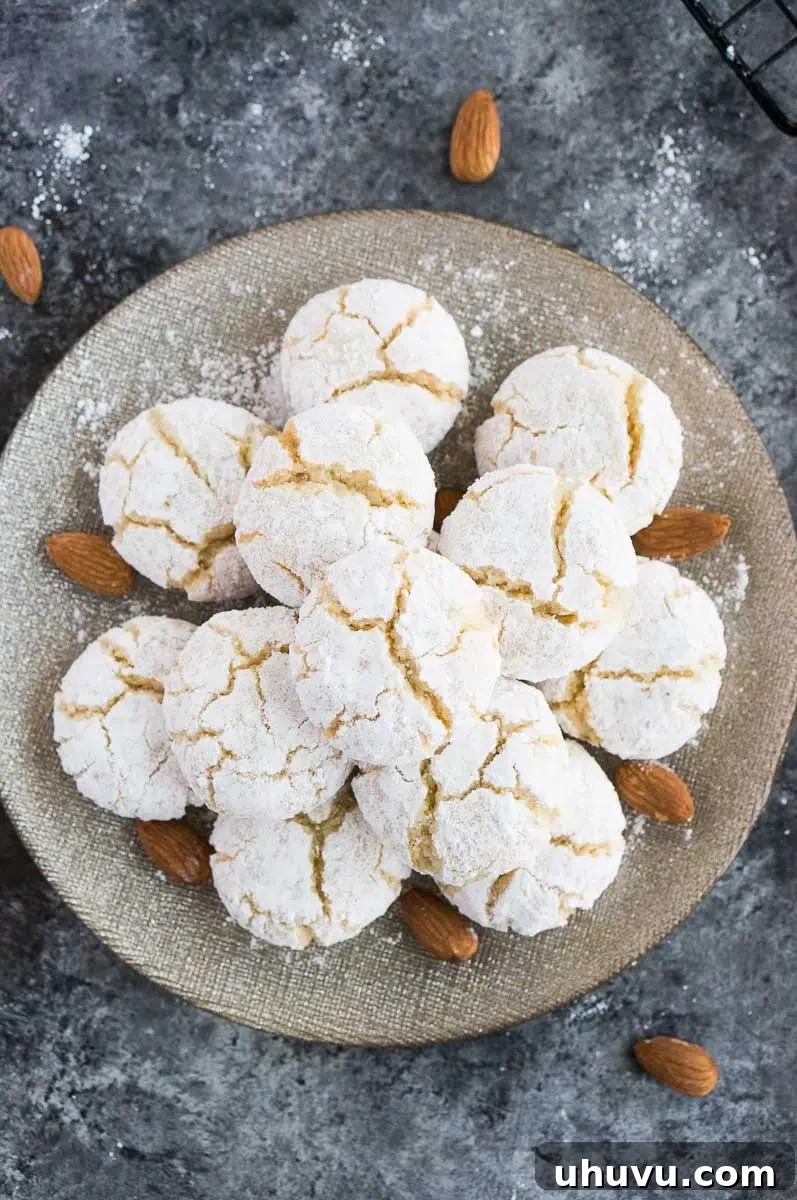
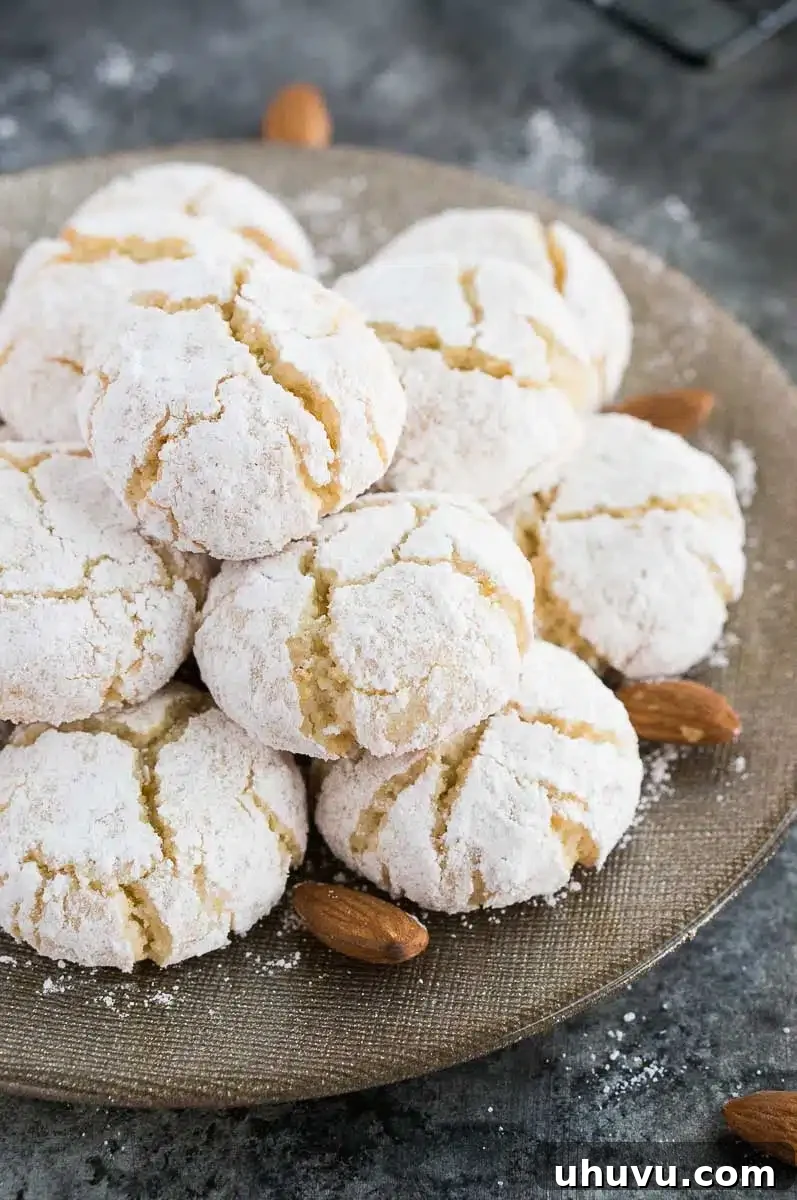
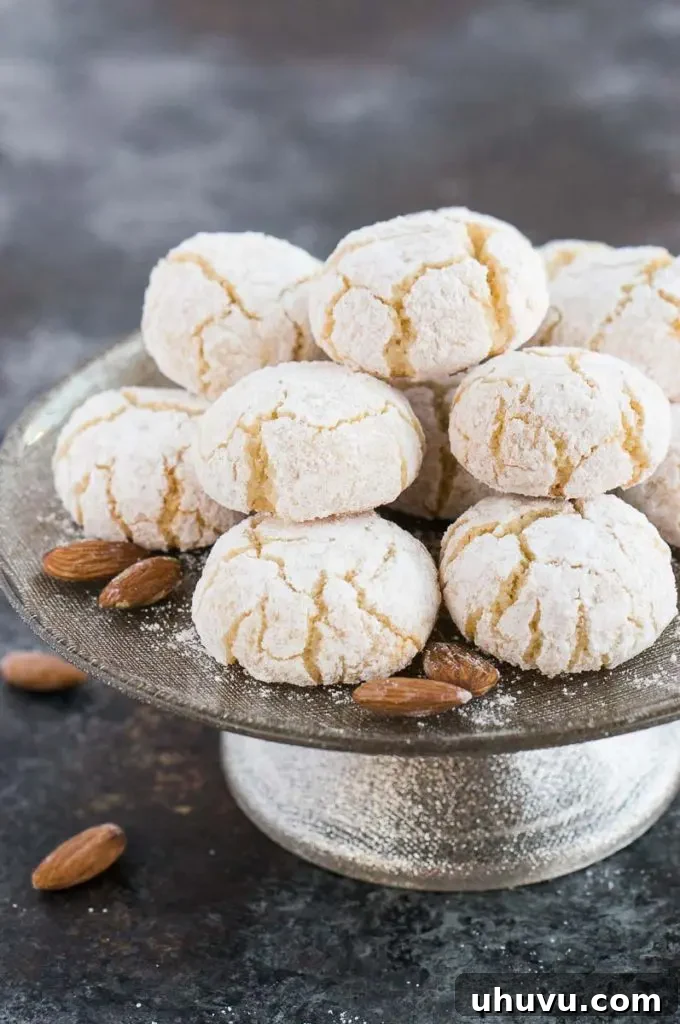
Delight in the exquisite taste of these **Italian Amaretti Cookies**, a symphony of light, chewy textures and vibrant lemon flavor. Crafted from a **simple handful of wholesome ingredients** like fine almond flour, delicate whipped egg whites, and aromatic lemon zest, these traditional treats are naturally **gluten-free**. For those mindful of sugar intake, they can easily be adapted to be **low-carb** with your preferred sugar alternative. Each cookie is gracefully rolled in a blend of sugar, creating that iconic, irresistibly crackly top that promises a soft, tender bite within. Perfect for any occasion, these classic almond amaretti with a citrus twist are an absolute must-try for lemon enthusiasts and anyone seeking a truly authentic Italian baking experience.
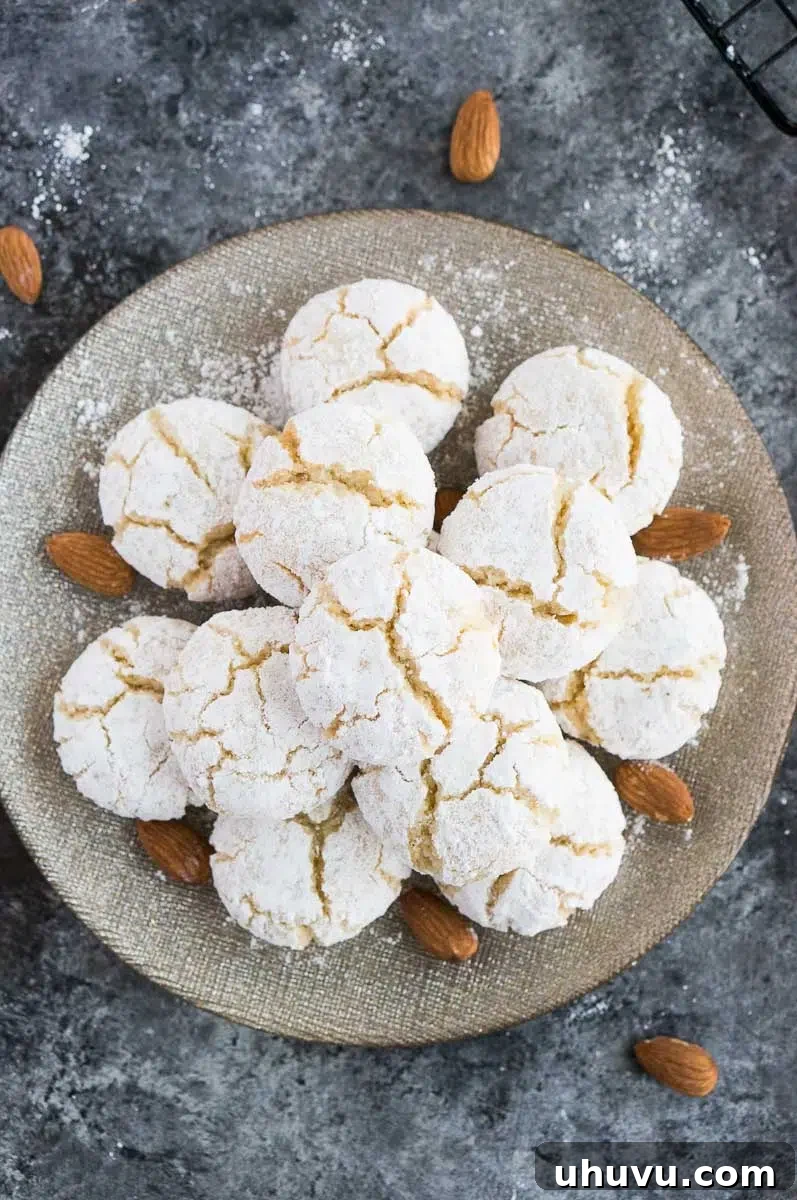
Have you ever experienced the sheer joy of biting into a perfectly baked amaretti cookie? For me, they are more than just a sweet treat; they are a delightful indulgence that transports you straight to the heart of Italy with every bite. What makes them even more appealing is their incredible simplicity and ease of preparation, proving that some of the best things in life truly are uncomplicated.
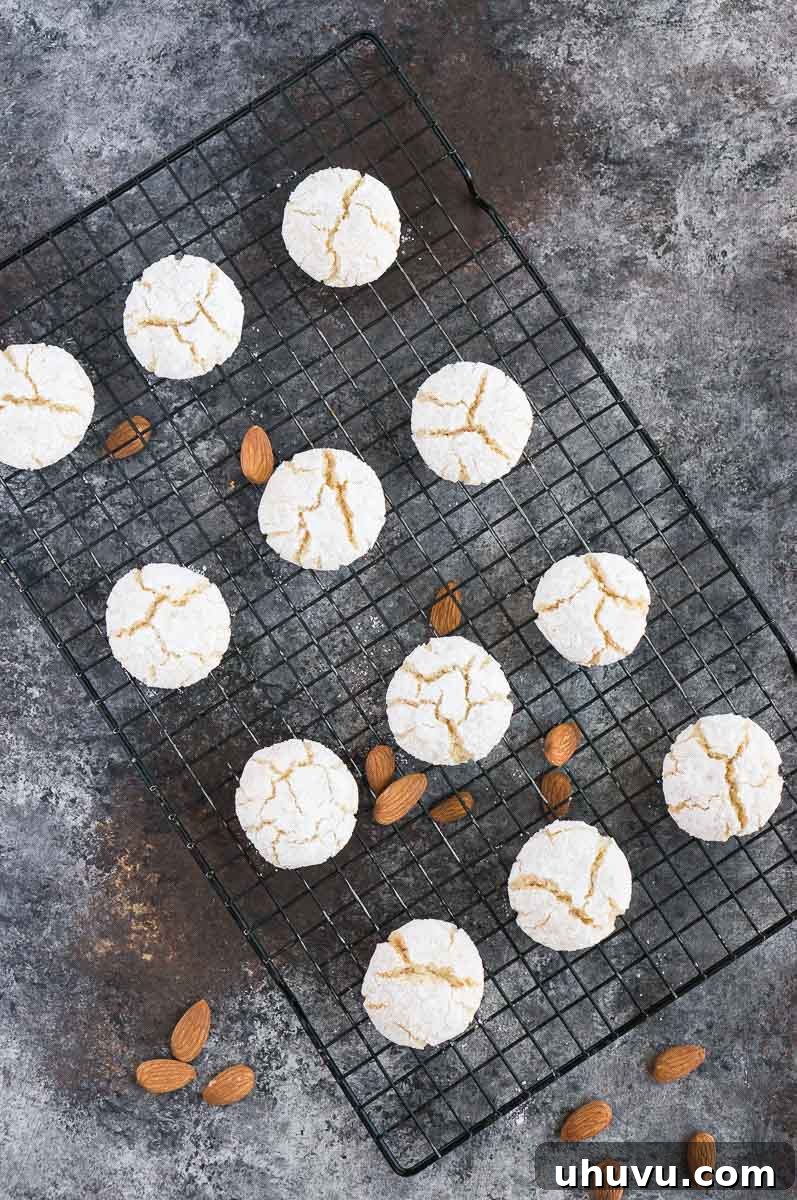
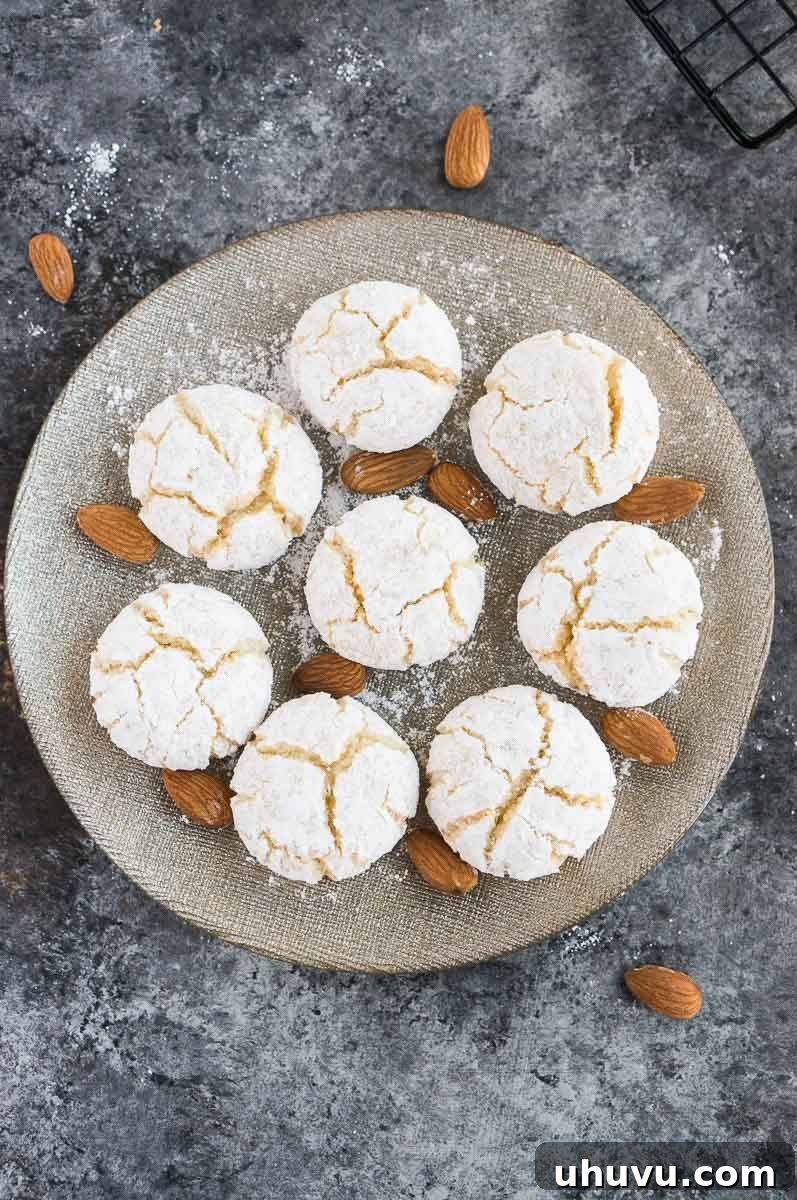
These almond-flavored cookies are renowned for their wonderfully light and airy consistency, melting in your mouth while offering a satisfying chewiness. Their delicate sugar coating isn’t just for aesthetics; it provides that signature crackled finish that makes them undeniably festive and utterly charming, especially around the holidays like Christmas or any special gathering. They strike the perfect balance between nutty almond depth and the bright, refreshing tang of lemon, creating a flavor profile that is both comforting and exhilarating.
If you’re a fan of baking and exploring delightful cookie recipes, don’t forget to check out some of my other favorites, including these decadent Keto Chocolate Pecan Cookies and the wholesome Paleo Walnut Cookies. Each recipe offers a unique taste adventure, but for sheer elegance and ease, these Lemon Amaretti are hard to beat.
Why You’ll Fall in Love with This Amaretti Cookies Recipe!
There are countless reasons why these Italian Amaretti cookies will quickly become a cherished recipe in your baking repertoire. Beyond their irresistible taste and texture, they offer a host of practical benefits that make them a standout choice for home bakers:
- Effortlessly Gluten-Free: Crafted entirely with almond flour, this recipe is a dream come true for anyone managing gluten sensitivities or catering to guests with dietary restrictions. You get all the deliciousness without compromising on texture or flavor, making them a safe and delightful choice for everyone at your table.
- Naturally Dairy-Free: These cookies are made without any butter, milk, or other dairy products. This makes them an excellent option for those with dairy allergies or intolerances, or for anyone following a dairy-free lifestyle. It’s a testament to how rich and satisfying a cookie can be with just a few core ingredients.
- Simple, Wholesome Ingredients: You’ll be amazed at how such an elegant cookie can be made with so few ingredients. Requiring just 6 main components, most of which are likely already staples in your pantry, this recipe simplifies your shopping list and makes baking accessible. No obscure flours or lengthy ingredient lists here!
- Quick & Easy Preparation: Don’t let their sophisticated appearance fool you; these amaretti cookies are surprisingly swift to prepare. The dough comes together in a flash, and the hands-on time is minimal, allowing you to enjoy fresh, homemade cookies without spending hours in the kitchen. They’re perfect for last-minute treats or when you crave something special without the fuss.
- Versatile & Adaptable: While this recipe highlights a bright lemon flavor, amaretti cookies are inherently versatile. You can easily adjust the flavorings to suit your preferences, or switch to a low-carb sugar alternative for a guilt-free indulgence. They’re forgiving and open to creative twists!
- Impressive Presentation: With their beautiful crackled tops and perfectly round shapes, these cookies look as good as they taste. They’re ideal for gifting, serving at dinner parties, or simply elevating your everyday snack time with a touch of Italian charm.

Essential Ingredients for These Irresistible Gluten-Free Amaretti Cookies
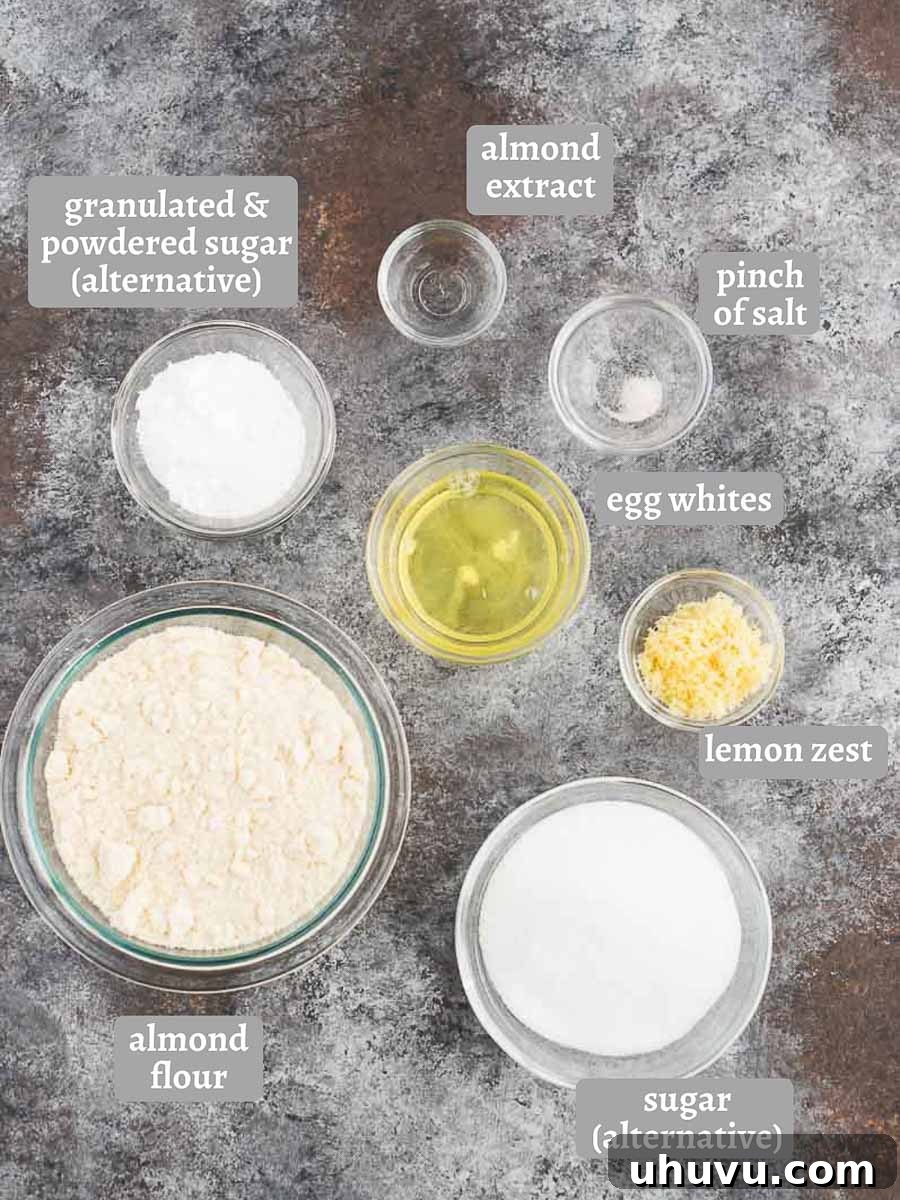
Creating truly outstanding amaretti cookies starts with understanding the role each ingredient plays. Here’s a closer look at what you’ll need and why it’s important:
- Almond Flour: This is the cornerstone of amaretti cookies, and it’s what makes them naturally gluten-free. Unlike almond meal, which can be coarser, almond flour is finely ground blanched almonds, providing a delicate texture. It imparts a rich, nutty flavor and a tender crumb. For best results, use a finely ground, blanched almond flour.
- Sugar: This recipe calls for both granulated and powdered sugar. Granulated sugar is incorporated into the dough for sweetness and structure, while a mix of granulated and powdered sugar is used for rolling. The powdered sugar in the coating helps create that beautiful, crackled top as the cookies bake, preventing them from spreading too much and adding a delicate sweetness. If you’re opting for a low-carb version, ensure your sugar alternative is suitable for baking and can be used both in the dough and for coating.
- Eggs (Whites Only): The magic of amaretti largely lies in whipped egg whites. These provide the essential lift and airy texture, making the cookies wonderfully light and delicate. Only the whites are needed, so save those yolks for another delicious recipe! Ensure your egg whites are at room temperature for optimal whipping.
- Salt: Just a pinch of salt plays a crucial role in balancing and enhancing the sweetness of the cookies. It also helps to bring out the subtle nuances of the almond and lemon flavors, ensuring a well-rounded taste.
- Lemon Zest: This is where our amaretti cookies truly shine with a bright and zingy flavor profile. The zest of one medium lemon infuses the cookies with a fresh, aromatic citrus note that perfectly complements the almond. Be sure to zest only the yellow part of the peel, avoiding the bitter white pith.
- Almond Extract: For that unmistakable, classic almond flavor that defines amaretti. Almond extract provides a concentrated burst of nutty aroma and taste, ensuring your cookies are authentically delicious. Don’t be tempted to skip this – it’s a key flavor component!
Using fresh, high-quality ingredients will always yield the best results, so choose your almond flour and extract wisely for the most flavorful batch of homemade amaretti.
Crafting Perfect Amaretti: A Step-by-Step Guide
Follow these detailed instructions to create your own batch of soft, chewy, and irresistibly lemony Italian Amaretti cookies:
- Step 1: Prepare Your Baking Station. Begin by preheating your oven to a steady 325°F (160°C). This ensures the oven is at the correct temperature for even baking. Line two baking sheets with parchment paper; this prevents sticking and makes for easy cleanup.
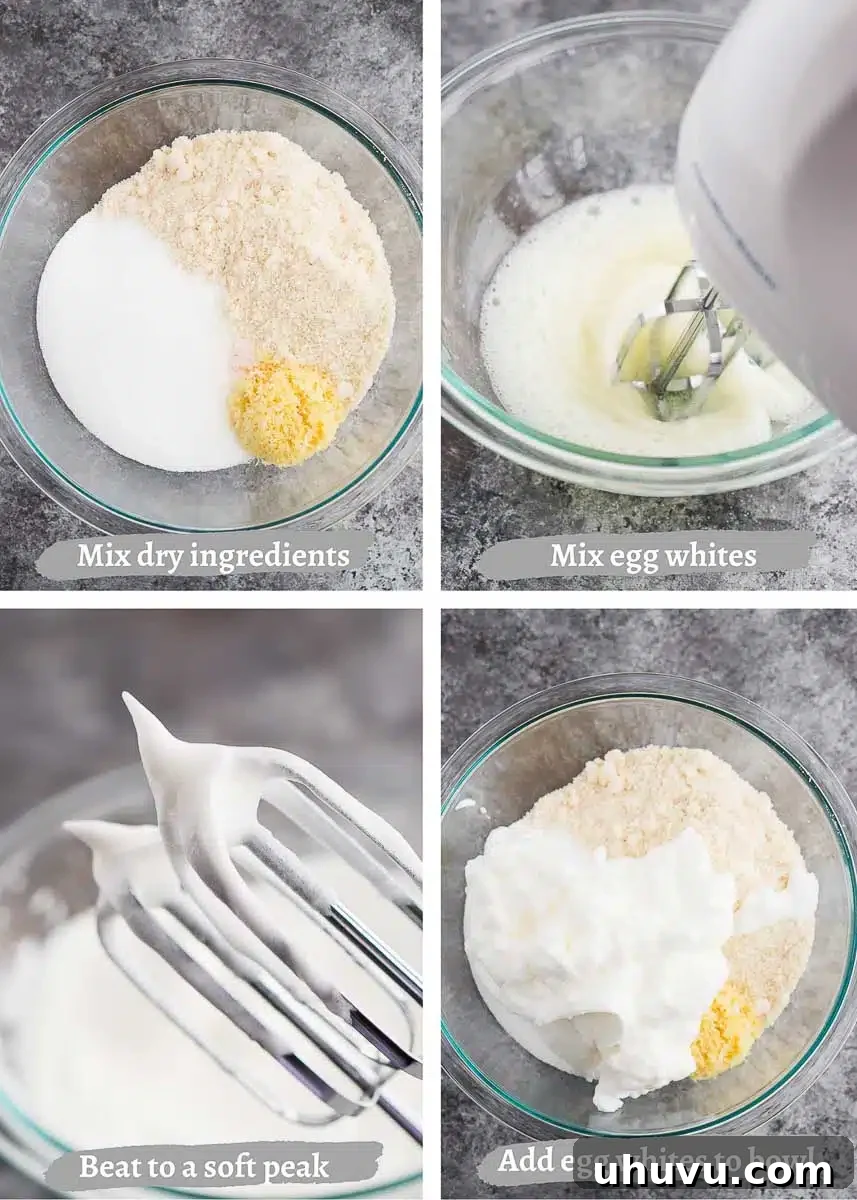
- Step 2: Combine Dry Ingredients. In a spacious large bowl, thoroughly combine the almond flour, 1 cup of granulated sugar (or your chosen low-carb alternative), a delicate pinch of salt, and the aromatic lemon zest. Whisk these dry ingredients together until they are well integrated and evenly distributed. This step sets the flavor foundation for your cookies.
- Step 3: Whip the Egg Whites. In a separate, clean medium bowl, pour in the egg whites. Using an electric mixer (either a hand mixer or stand mixer with a whisk attachment), beat the egg whites until they reach a soft peak consistency. This means when you lift the beaters, the whites will hold a soft, gentle peak that curls over. Now, gently whisk in the almond extract until just combined. Be careful not to overmix at this stage.
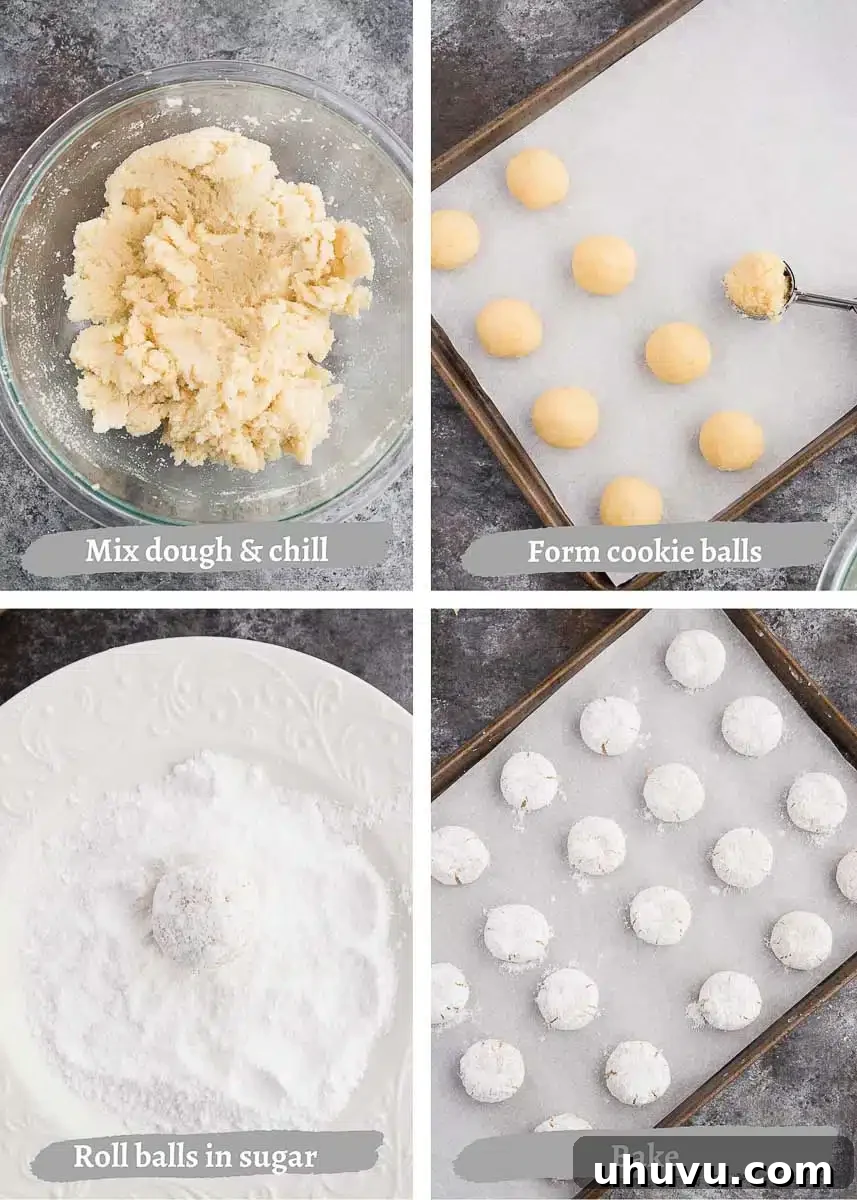
- Step 4: Gently Fold the Dough & Chill. With a light hand, carefully fold the whipped egg whites into the dry almond flour mixture. Use a spatula to incorporate them until the dough is just moistened and uniformly combined. The resulting dough will be thick, but notably sticky. Cover the bowl with plastic wrap and transfer it to the refrigerator to chill for at least 1 hour. Chilling is a crucial step that helps the dough firm up, making it easier to handle and contributing to the cookies’ final texture.
- Step 5: Prepare the Sugar Coating. While the dough is chilling, prepare your rolling mixture. On a small plate or shallow bowl, combine 3 tablespoons of granulated sugar with 3 tablespoons of powdered sugar. This blend will give your cookies their characteristic crackled surface and an extra touch of sweetness.
- Step 6: Form and Coat the Cookies. Once the dough has chilled sufficiently, it will be easier to work with. Using a small cookie scoop (about 1.5-2 tablespoons) or your hands, scoop out equal amounts of dough. Roll each portion into a smooth ball. Next, roll each cookie ball generously in the prepared sugar mixture, ensuring it’s evenly coated. Place the coated cookie balls onto your prepared baking sheets, leaving a little space between each one to allow for slight expansion during baking. Gently press down on the top of each cookie ball with your finger to slightly flatten it.
- Step 7: Bake to Golden Perfection. Carefully transfer the baking sheets to your preheated oven. Bake for approximately 25 minutes, or until the edges of the cookies begin to turn a very light golden color, and the bottoms are golden brown. Keep an eye on them towards the end of the baking time, as ovens can vary. Once baked, remove the cookies from the oven and let them cool completely on wire cooling racks. They will be soft when they first come out, but will firm up as they cool, developing their signature chewy texture.
Enjoy your homemade Italian Amaretti Cookies! They are truly a treat for the senses.
Expert Tips for Amaretti Cookie Success & Troubleshooting
Achieving that perfect balance of chewy interior and crackly exterior is key to great amaretti. Here are some essential tips and common troubleshooting advice to help you master this recipe:
- Dough Consistency is Key: The amaretti dough is naturally sticky due to the almond flour and egg whites, but it should be firm enough to hold its shape once rolled into balls. If it feels too wet or loose, a little more chilling time can help.
- Don’t Skip the Chilling: Refrigerating the dough for at least 1 hour is non-negotiable. This step not only makes the sticky dough easier to handle and roll but also helps prevent the cookies from spreading too much in the oven, ensuring they maintain their delightful dome shape and chewy texture.
- Perfectly Whipped Egg Whites: Ensure your egg whites are beaten to soft peaks – not stiff. Over-whipping can lead to dry, crumbly cookies, while under-whipping won’t provide enough structure. Soft peaks means they hold their shape but still have a slight curl at the tip when you lift the whisk.
- Gentle Folding Technique: When combining the egg whites with the dry ingredients, use a light hand and a folding motion with a spatula. You want to incorporate the ingredients without deflating the air you’ve whipped into the egg whites, which is crucial for the cookies’ airy texture.
- Even Cookie Size: For uniform baking and a beautiful presentation, try to make all your cookie balls roughly the same size. A small cookie scoop is ideal for this.
- Give Them Room: Always leave a little space (about 1-2 inches) between the amaretti cookies on the baking sheet. While they don’t spread dramatically, they will expand slightly as they bake, and adequate spacing ensures even cooking and prevents them from melding together.
- Monitor Baking Time: Ovens can vary, so the baking time of 25 minutes is a guideline. Look for visual cues: the cookies should be lightly golden around the edges and on the bottom. They will still feel soft to the touch when removed from the oven, which is perfectly normal.
- Cool Completely on Racks: Resist the urge to move them immediately! Allowing the amaretti cookies to cool completely on a wire rack is essential. This allows them to set properly, firm up, and develop their characteristic chewy texture. Handling them too soon can cause them to break apart.
- Troubleshooting Flat Cookies: If your cookies spread too much and come out flat, it could be due to several factors: not chilling the dough long enough, over-whipping the egg whites, or an oven that’s too hot. Ensure your oven temperature is accurate and try chilling the dough for an additional 30 minutes.
- Adjusting Sweetness: If using a low-carb sugar alternative, be sure to use one that measures cup-for-cup with granulated sugar for consistent results. Taste the dough before chilling (if safe with your specific ingredients) to ensure preferred sweetness.
Storage and Shelf Life of Amaretti Cookies
Once your exquisite amaretti cookies have fully cooled to room temperature, proper storage is key to maintaining their delightful texture and freshness. Store them in an airtight container at room temperature for optimal enjoyment; they will remain wonderfully fresh for approximately 4 to 5 days. If you wish to extend their freshness a bit longer, you can store them in an airtight container in the refrigerator, where they will keep well for around 8 to 9 days. Always ensure they are completely cool before storing to prevent condensation, which can make them soggy.
Can You Freeze Amaretti Cookies?
Absolutely! These versatile amaretti cookies freeze exceptionally well, making them perfect for meal prepping ahead of holidays or whenever you want to have a quick treat on hand. To freeze, first ensure the baked cookies are completely cooled. Then, arrange them in a single layer on a baking sheet and freeze until solid. Once frozen, transfer the cookies to an airtight container or a heavy-duty freezer bag, separating layers with parchment paper to prevent sticking. They will maintain their quality in the freezer for up to six months. When you’re ready to enjoy them, simply thaw the desired amount at room temperature for a few hours, and they’ll be as delicious as freshly baked.
Frequently Asked Questions (FAQs) About Amaretti Cookies
Here are answers to some common questions you might have when making these delicious Italian Amaretti cookies:
Can I use carton egg whites for this recipe?
Yes, this recipe primarily uses egg whites for their leavening and binding properties. While fresh egg whites whipped from whole eggs often produce the best volume, carton egg whites can certainly be used as a convenient alternative. Keep in mind that generally, two tablespoons of liquid carton egg white are equivalent to one large fresh egg white. Make sure they are at room temperature before whipping for optimal results.
What is the difference between almond flour and almond meal?
Almond flour is made from blanched (skinless) almonds that have been very finely ground, resulting in a light, powdery texture. Almond meal, on the other hand, is typically made from unblanched (skin-on) almonds and is coarser in texture. For the delicate, chewy texture of amaretti, finely ground almond flour is highly recommended. Almond meal might result in a slightly denser cookie with a noticeable texture from the almond skins.
Can I make these cookies ahead of time?
Yes, you can! The dough can be prepared and chilled in the refrigerator for up to 24 hours before baking. This makes them a great option for entertaining, as you can do some of the prep work in advance. Just be sure to bring the dough out of the fridge for about 10-15 minutes before rolling if it’s too firm.
What can I do if my amaretti cookies are too hard?
Hard amaretti often indicate overbaking or a dough that was too dry. Ensure you’re baking them only until the edges are lightly golden, and they still feel slightly soft in the middle. They will firm up considerably as they cool. Also, ensure your egg whites are not over-whipped to stiff peaks, as this can lead to a drier crumb.
Are these amaretti similar to “amaretti di Saronno”?
The amaretti di Saronno are a specific type of crunchy amaretti cookie, often made with apricot kernels for a distinct bitter almond flavor. This recipe for soft and chewy amaretti offers a different experience – a more tender interior and a dominant sweet almond and lemon profile, without the bitterness. Both are delightful, but they are distinct styles of amaretti.
Serving Suggestions and Creative Variations
These Italian Amaretti Cookies are wonderful on their own, but their versatility allows for many delightful serving suggestions and flavor variations:
Serving Ideas:
- With Coffee or Tea: A classic pairing! The delicate almond and lemon notes are a perfect complement to a rich espresso, a frothy cappuccino, or your favorite cup of tea.
- Dessert Platter: Include them on a dessert platter alongside fresh berries, a scoop of vanilla ice cream, or other small pastries for an elegant presentation.
- After-Dinner Treat: Serve them as a light and sophisticated end to any meal.
- Garnish for Desserts: Crumble a few amaretti cookies over panna cotta, tiramisu, or fruit tarts for an added layer of flavor and texture.
- Gift Giving: Package them in a beautiful box or bag for a thoughtful homemade gift that everyone will appreciate.
Creative Variations:
- Orange Amaretti: Substitute lemon zest with orange zest for a sweeter, more floral citrus flavor. A few drops of orange extract can enhance this further.
- Chocolate Dipped Amaretti: For an extra touch of indulgence, dip half of each cooled cookie in melted dark or white chocolate. Sprinkle with flaky sea salt or finely chopped pistachios before the chocolate sets.
- Spiced Amaretti: Add a pinch of cinnamon, nutmeg, or cardamom to the dry ingredients for a warm, spiced version, especially lovely during the colder months.
- Espresso Amaretti: Incorporate 1-2 teaspoons of instant espresso powder (dissolved in a tiny bit of almond extract or water) into the egg whites for a subtle coffee flavor that pairs beautifully with almond.
- Nutty Amaretti: While almond is traditional, you could experiment with a tiny amount of other nut extracts like pistachio or hazelnut for a different twist.
Discover More Sweet Delights
If you loved baking these traditional Italian Amaretti Cookies, explore more recipes that promise to satisfy your sweet tooth and expand your baking skills:
- How To Make Candied Pecans
- White Chocolate Macadamia Nut Cookies
- Gluten-Free Cranberry Orange Muffins
- Paleo Banana Walnut Brownies
If you enjoyed this delightful recipe or any other culinary creation on my blog, please take a moment to leave a ⭐ star rating and share your experience in the 📝 comments below. Your feedback is greatly appreciated!
Pin this now to find it later
Pin It
☝ Tap stars to rate
Soft & Chewy Amaretti Cookies
Pin
Rate
Ingredients
- 2 ½ cup almond flour
- 1 cup granulated sugar, or alternative low-carb sugar
- Pinch of salt
- Lemon zest of one medium lemon
- 3 large egg whites
- 1 teaspoon almond extract
- 3 tablespoons each granulated & powder sugar, for rolling
Instructions
-
Preheat your oven to 325°F and line 2 baking sheets with parchment paper.
-
In a large bowl add the almond flour, 1 cup of sugar, pinch of salt, and lemon zest. Whisk well.
-
In a medium bowl mix the egg whites with a mixer and beat to a soft peak. Whisk in the almond extract.
-
Gently fold in the egg whites into the dry ingredients until the dough is moist. The dough will be thick and sticky. Cover the bowl and chill dough in the refrigerator for 1 hour.
-
Mix 3 tablespoons granulated and powdered sugar in a small plate.
-
Using a small cookie scoop, scoop out equal amounts of dough, then roll into balls and place them on the prepared baking sheets. Roll each cookie ball in the sugar mixture for rolling. Place cookies on the prepared baking sheets and press slightly on top with your finger.
-
Transfer the baking sheets to the oven and bake for 25 minutes or until the cookies start to slightly turn golden and bottom is golden brown. Cool completely on cooling racks.
Notes
- The dough will be sticky, but fairly firm. They should hold their shape when you place them on the baking sheet.
- After mixing the dough, make sure you refrigerate it for 1 hour before forming the balls.
- Allow a little room between the amaretti cookies on the baking sheet as they will expand slightly in the oven.
- They will be soft when you take them out of the oven but allow them to cool on a cooling rack.
Nutrition
Nutrition Disclaimer: Nutritional values are estimates and may vary with ingredients, brands, and portion sizes. For accuracy, use your preferred nutrition calculator.
Like this recipe? Rate and comment below!