
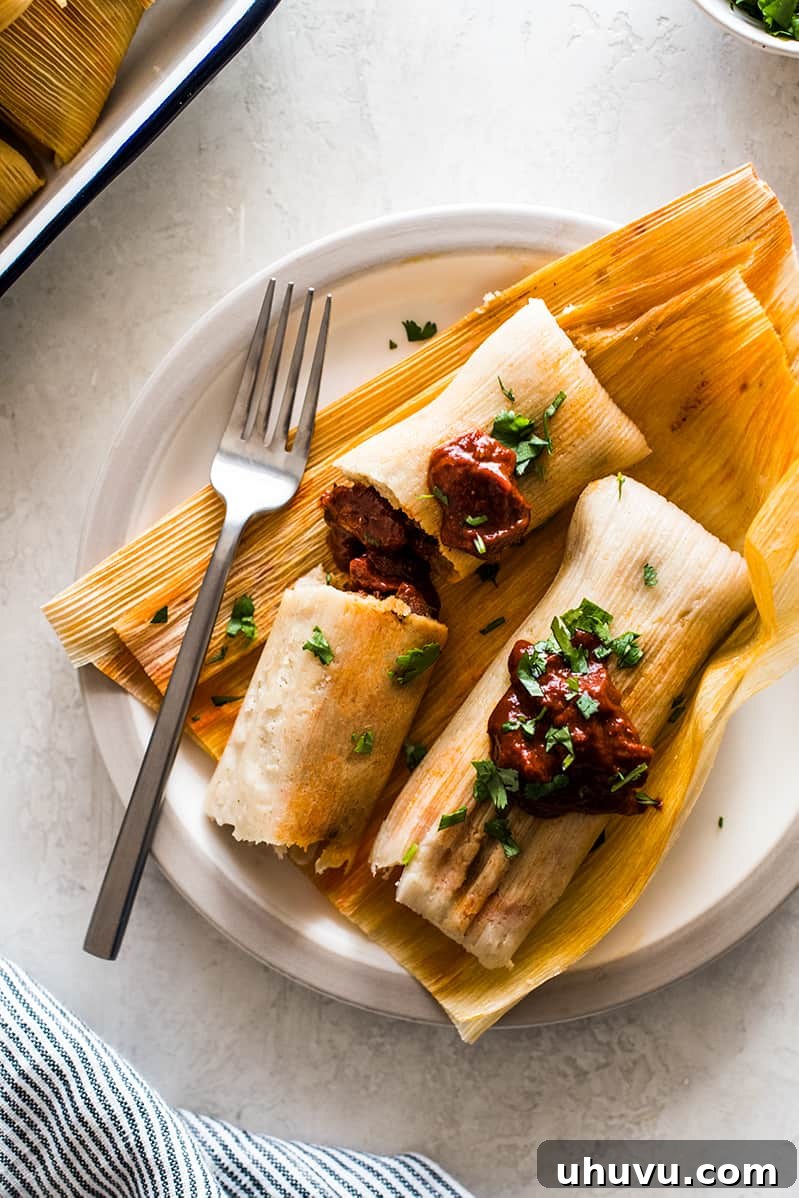
Embark on a delightful culinary adventure right in your own kitchen by learning how to master the art of making authentic Mexican tamales. This comprehensive guide provides simple, step-by-step instructions for crafting a truly unforgettable batch of pork tamales, slow-simmered in a rich, flavorful red chile sauce and enveloped in a soft, tender masa dough. Perfect for family gatherings, festive occasions, or simply enjoying a taste of traditional Mexican cuisine at home, these tamales are a labor of love that rewards you with incredible flavor and a heartwarming experience.
If this classic pork tamale recipe captures your heart, you’ll be thrilled to explore other delicious variations from my kitchen. Don’t miss out on my chicken tamales, sweet temptations with sweet tamales, savory delights like tamales de rajas (green chile and cheese), comforting bean and cheese tamales, and the unique, sweet corn-based tamales de elote.
A Note from Isabel

Growing up, tamale-making wasn’t just a recipe; it was a cherished annual tradition, a vibrant tapestry woven into our family’s celebrations for Christmas, New Year’s, and countless special occasions. Tamales stand as one of the most iconic and beloved traditional Mexican dishes, a testament to the rich culinary heritage of Mexico. What makes them so special is the incredible diversity – virtually every family and region across Mexico boasts its own unique, treasured way of preparing them, each reflecting local flavors and generations of expertise.
My journey to document this particular recipe began with my dear Mom, who graciously walked me through her time-honored techniques. I meticulously recorded every detail, every nuance, translating her wisdom into an easy-to-follow, step-by-step format. My hope is to not only preserve this culinary legacy but also to pass it down to my daughter and future generations, ensuring these flavors and traditions continue to thrive.
This method is deeply rooted in my childhood memories, a taste of home that I hope brings as much joy and deliciousness to your table as it has to mine!
What Are Tamales? A Culinary Icon
At their core, tamales are a quintessential Mexican delicacy, crafted from a specialized corn dough known as “masa,” which is made from nixtamalized corn. This pliable masa is carefully spread onto a corn husk or banana leaf, then generously filled with an array of sweet or savory ingredients. Common fillings include succulent meats, rich cheeses, vibrant peppers, sweet fruits, or other regional specialties. Once filled, the tamales are meticulously wrapped in the same husk or leaf and gently steamed until perfectly cooked, resulting in a tender, flavorful parcel.
The beauty of tamales lies in their incredible regional diversity. From the spicy kick of Oaxacan tamales wrapped in banana leaves to the sweet, fruit-filled versions of central Mexico, each region offers a unique take. Among the most universally adored varieties are the classic red chile pork tamales, often called tamales rojos, which is precisely the mouthwatering recipe we’re exploring here. These tamales represent not just a dish, but a deep-rooted cultural narrative.
Did You Know? The Magic of Tamaladas
While the process of making tamales is not inherently difficult, it can be quite time-consuming, involving numerous steps that can easily span an entire day. This intricate preparation is often why many Mexican and Mexican-American families host “tamaladas,” festive gatherings where friends and family unite to partake in the joyful, communal endeavor of tamale making.
A tamalada is far more than just a cooking session; it’s a cherished cultural tradition, a vibrant celebration of community, shared heritage, and storytelling. It’s an occasion for bonding, laughter, and the invaluable preservation of culinary traditions that connect generations. Each tamal made is a testament to shared effort and love, creating not just delicious food but also enduring memories. This communal effort transforms a lengthy task into a heartwarming and memorable event.
Essential Ingredients for Authentic Pork Tamales
Creating truly authentic and flavorful tamales requires specific ingredients that are key to achieving their signature texture and taste. Here’s a breakdown of what you’ll need:
- Masa Harina: This specially nixtamalized corn flour is the heart of the tamale dough. It’s distinct from regular corn flour and is essential for the characteristic soft, yet firm texture of tamales. Masa harina is also the foundation for authentic corn tortillas and other Mexican staples. While several brands are available, Maseca is widely popular and can be found in most large grocery stores. For an artisan touch, I highly recommend Masienda, known for its small-batch production directly from Mexico.
- Broth: Used to hydrate the masa harina and form the dough, broth significantly enhances the overall flavor of the tamales. While chicken broth is my go-to for its rich depth, beef broth, vegetable broth, or even plain water can be used. However, broth adds an invaluable layer of savory taste to the masa itself.
- Fat: The type of fat used is crucial for the masa’s texture. Traditionally, lard is favored for its unparalleled ability to create a tender, fluffy, and incredibly rich masa. Vegetable shortening is another common alternative. My family, however, has always opted for vegetable oil, such as canola or avocado oil, which yields a lighter yet still wonderfully soft masa. This recipe includes detailed instructions for both variations, allowing you to choose based on preference.
- Salt and Baking Powder: Salt is vital for seasoning the masa dough, ensuring it isn’t bland. Baking powder is the secret ingredient that helps the masa expand and become light and fluffy during the steaming process, contributing to that desirable airy texture.
- Corn Husks: These dried husks serve as the traditional wrapper for tamales, imparting a subtle corn flavor and helping them retain their shape during steaming. You’ll need approximately 50 husks for this recipe. Dried corn husks are readily available at most Mexican grocery stores or can be conveniently purchased online.
- Meat for Filling: This recipe focuses on pork tamales, specifically using pork shoulder (also known as ‘pork butt’) for its ideal fat content and tenderness when slow-cooked. If you prefer beef, beef chuck roast is an excellent substitute, offering similar qualities for shredding.
- Red Chile Sauce Ingredients: The heart of the savory filling is a robust red chile sauce. You’ll need dried guajillo chiles and ancho chiles, which provide a deep, earthy, and mildly fruity flavor rather than intense heat. Ground cumin and garlic powder enhance the aromatic profile, while salt balances the flavors. The pork is then simmered in this aromatic sauce with a bay leaf until it reaches a melt-in-your-mouth, fall-apart tender consistency.
How to Master the Art of Making Tamales: A Step-by-Step Guide
Making tamales is a rewarding process that involves several key stages. Follow these detailed steps to create your own batch of delicious homemade tamales:
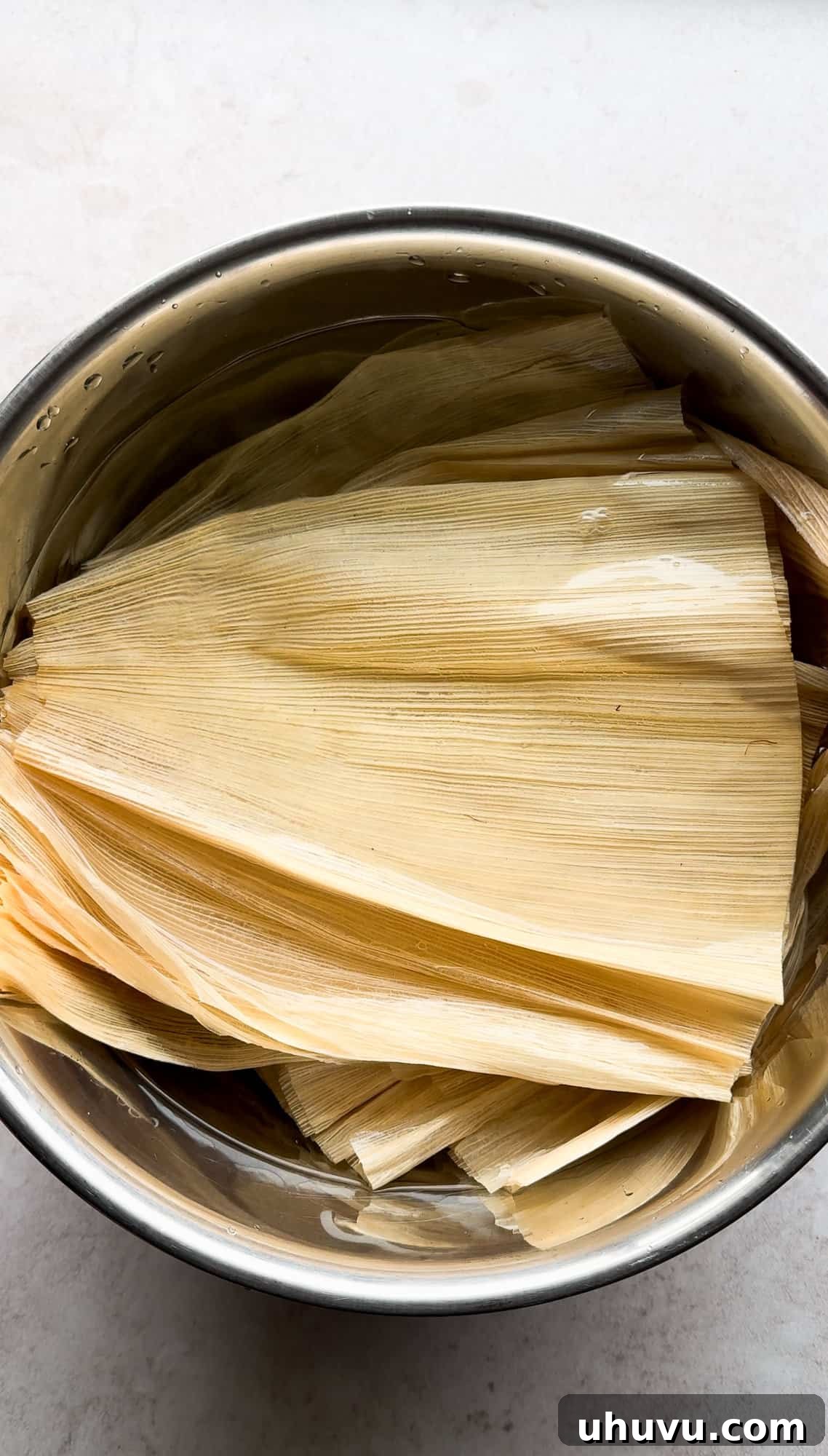
1. Prep the Corn Husks. Dried corn husks are stiff and brittle, so the first crucial step is to rehydrate them. Place the husks in a large bowl or pot and cover them completely with hot water. Weigh them down with a plate or another heavy object to keep them submerged. Allow them to soak for at least an hour, or until they become soft, pliable, and easily foldable. This makes them much easier to work with during assembly, preventing tears and ensuring a snug wrap for your tamales.
2. Prepare the Red Chile Sauce. This sauce is the flavorful foundation of your pork filling. Begin by rehydrating the dried guajillo and ancho chiles in hot water until softened. Once pliable, transfer them to a blender. Add garlic powder, salt, and ground cumin along with some of the chile-soaked water (and a little fresh water) to achieve a smooth consistency. Blend thoroughly until no large pieces remain. For an extra smooth sauce, pass it through a fine-mesh strainer to remove any lingering skin or seeds.
This red chile sauce is known for its rich, earthy flavor rather than its spiciness. If you prefer a fiery kick, consider adding 3-5 dried árbol chiles to the rehydration and blending process. The flavor profile of this sauce is wonderfully similar to my popular chile colorado recipe.
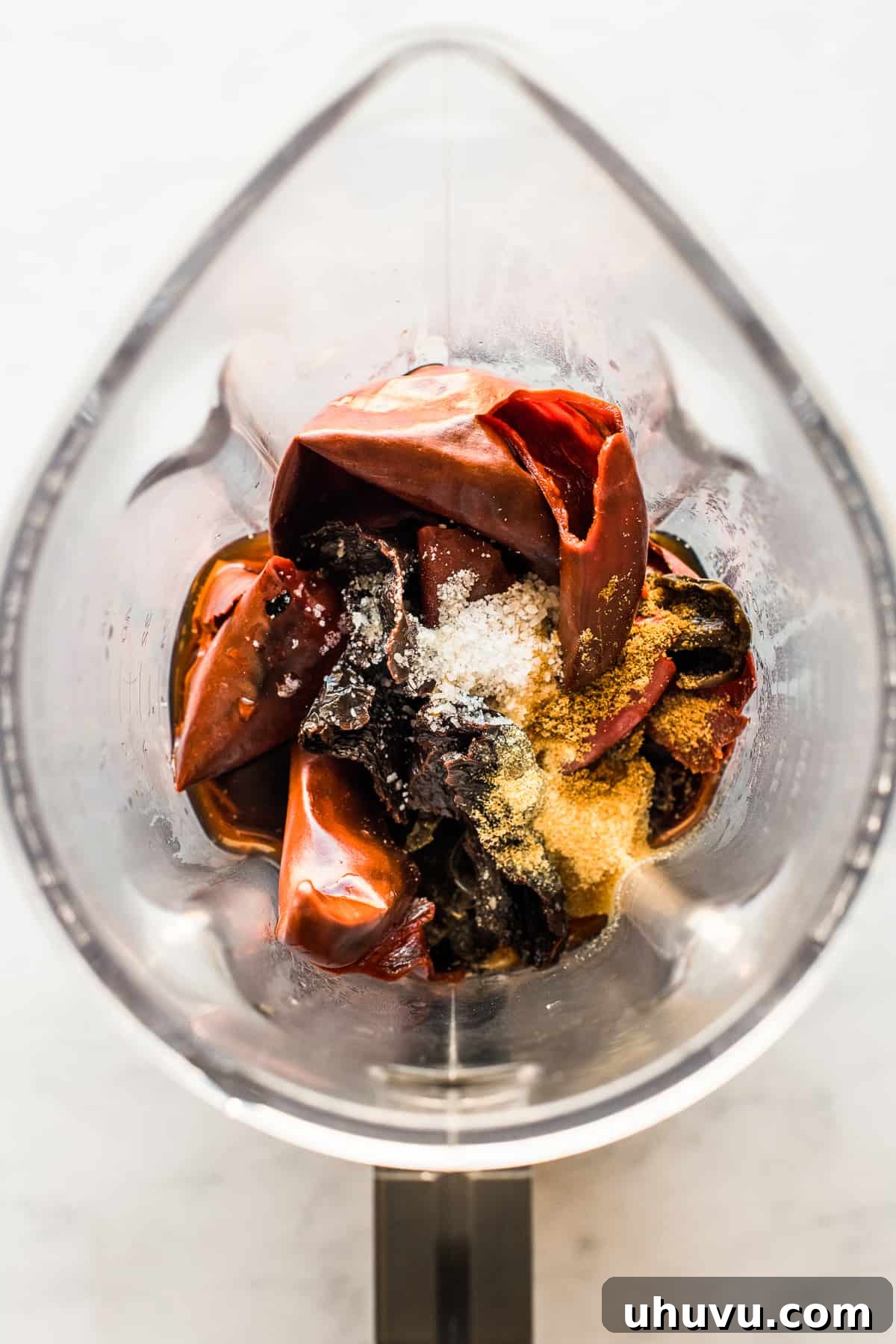
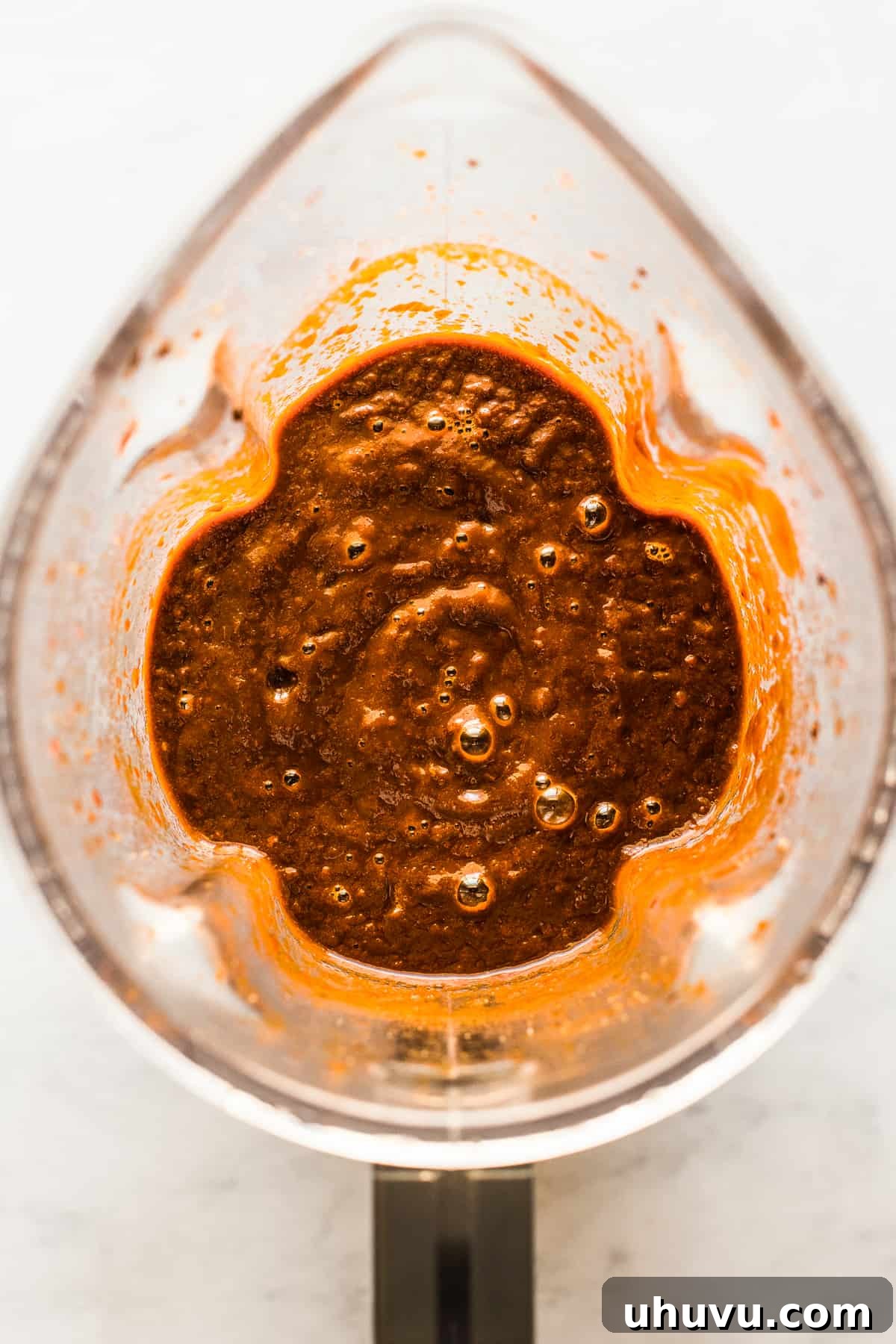
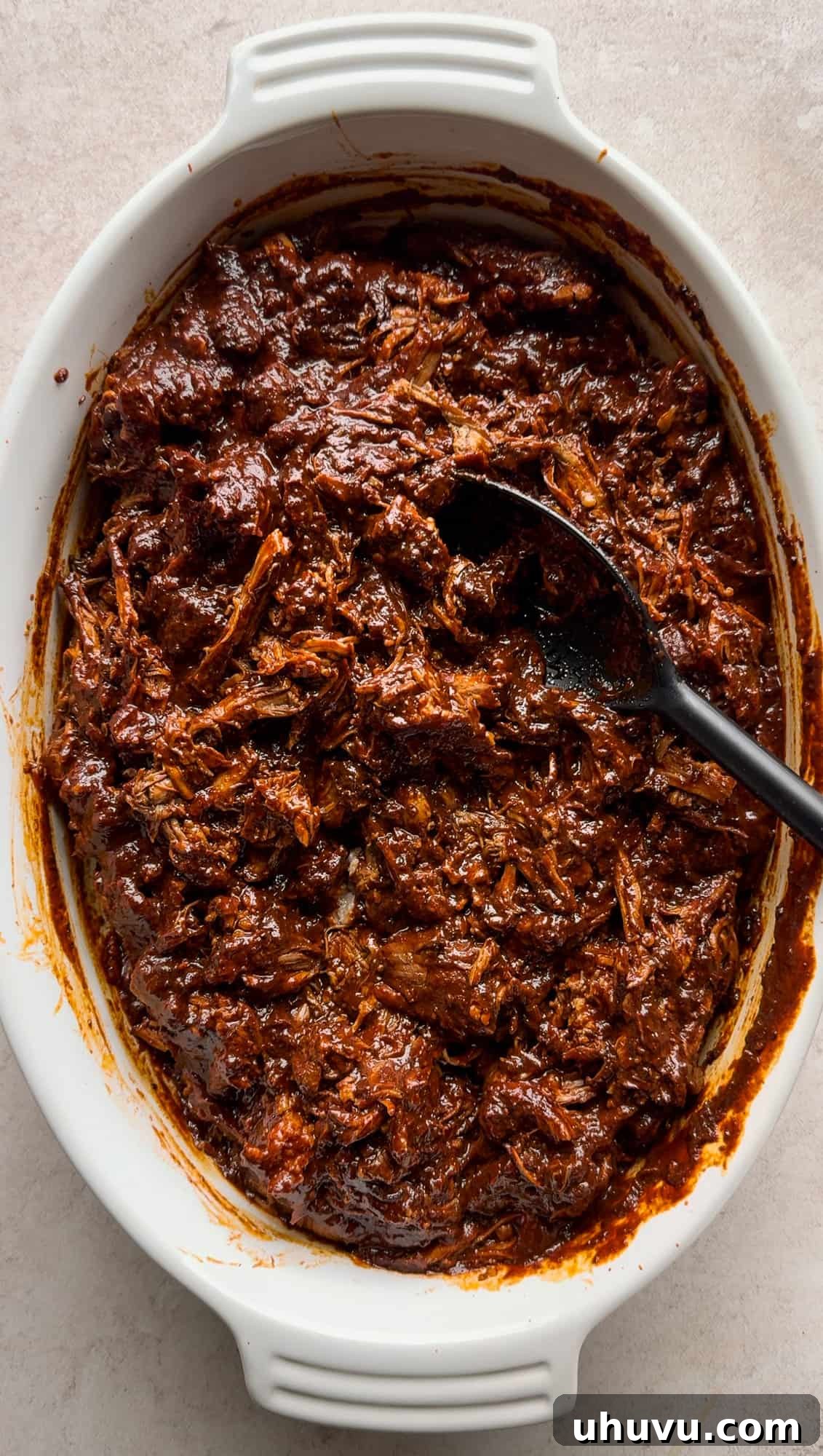
3. Cook the Pork Filling. Cut the pork shoulder into large, roughly 4-inch chunks. Season them generously with kosher salt. In a large Dutch oven or heavy-bottomed pot, sear the pork pieces on all sides over medium-high heat until beautifully browned. This step is crucial for developing deep, rich flavors. Once seared, return all the pork to the pot. Carefully pour in the freshly blended red chile sauce, stir in a bay leaf, and bring the mixture to a boil. Reduce the heat to low, cover the pot, and let it simmer for approximately 2 1/2 hours, or until the pork is incredibly tender and easily falls apart with a fork. Once cooked, remove the bay leaf and shred the pork directly in the sauce. The meat should absorb the flavors of the chile sauce beautifully.
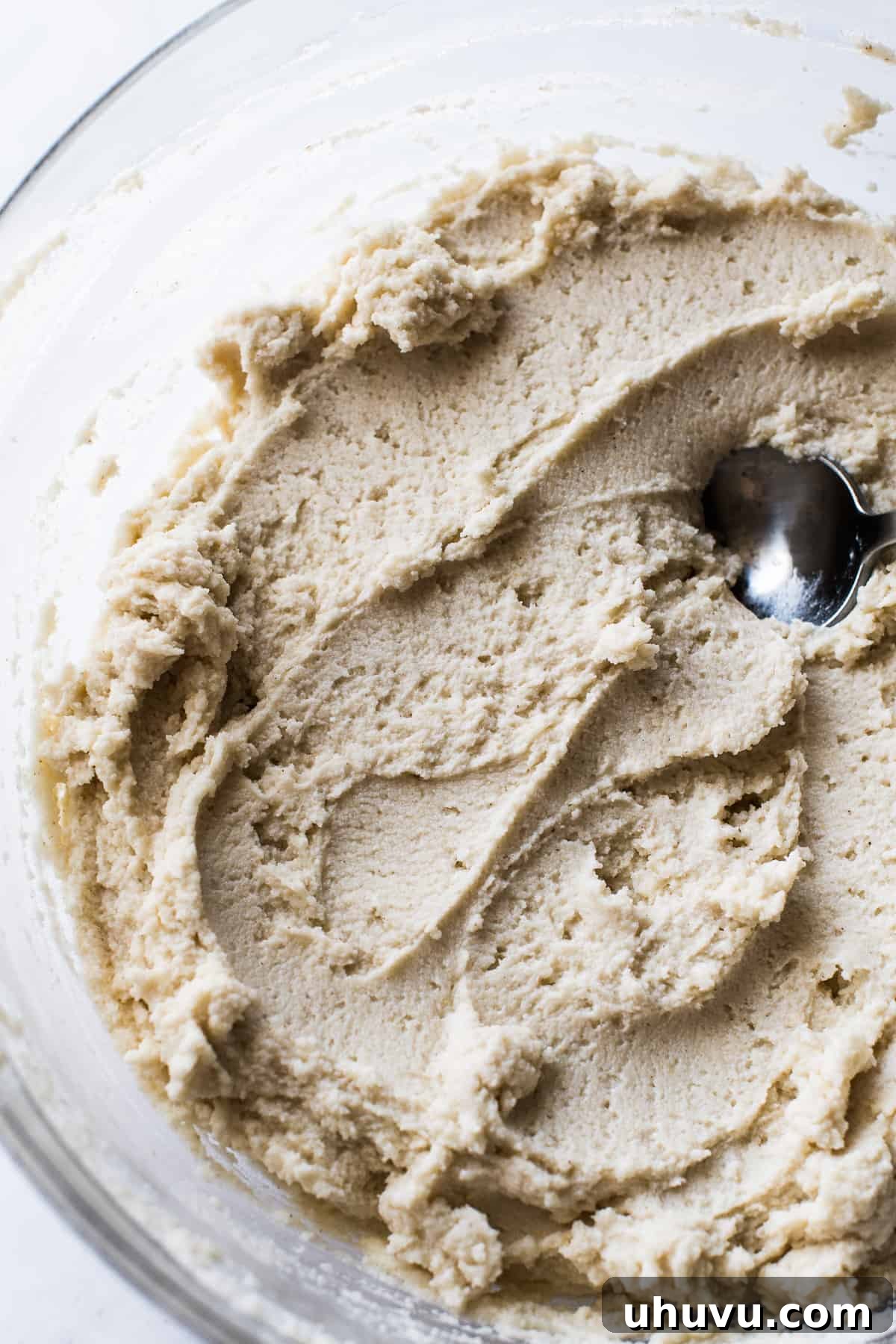
4. Create the Fluffy Masa Dough. The masa is the heart of the tamal, and its texture is paramount. In a very large mixing bowl or the bowl of a stand mixer, combine the masa harina with salt and baking powder, stirring well to distribute. Next, add your chosen fat—either vegetable oil or lard—and begin incorporating it into the dry mixture. If using your hands, rub the fat into the masa harina until it resembles wet sand and holds a light shape when squeezed. If using a stand mixer, beat until well combined. Gradually add the broth, mixing for 3-5 minutes until the dough becomes soft, pliable, and has a consistency similar to thick hummus. It should be easily spreadable. If the masa feels too dry, add more broth a tablespoon at a time. If it’s too wet, add a little more masa harina until the perfect, fluffy texture is achieved.
- For Masa Dough with Oil, you will need 1 3/4 cups of vegetable oil (such as canola or avocado) and 7 cups of broth or water.
- For Masa Dough with Lard, you will need 2 cups of lard and 8 cups of broth or water.
*Detailed instructions for making both types of masa are provided in the recipe card below.
5. Dry and Select Corn Husks. Once you’re ready to begin assembly, remove the softened corn husks from the soaking water and pat them thoroughly dry with paper towels. Lay them flat on a baking sheet or clean surface for easy access. Select a corn husk that is a good, manageable size and comfortably fits in the palm of your hand. Examine both sides: the rough, ridged texture should face outwards, while the relatively smooth and slightly shinier side is the surface where you will spread the masa. This orientation helps the tamale release easily after cooking.

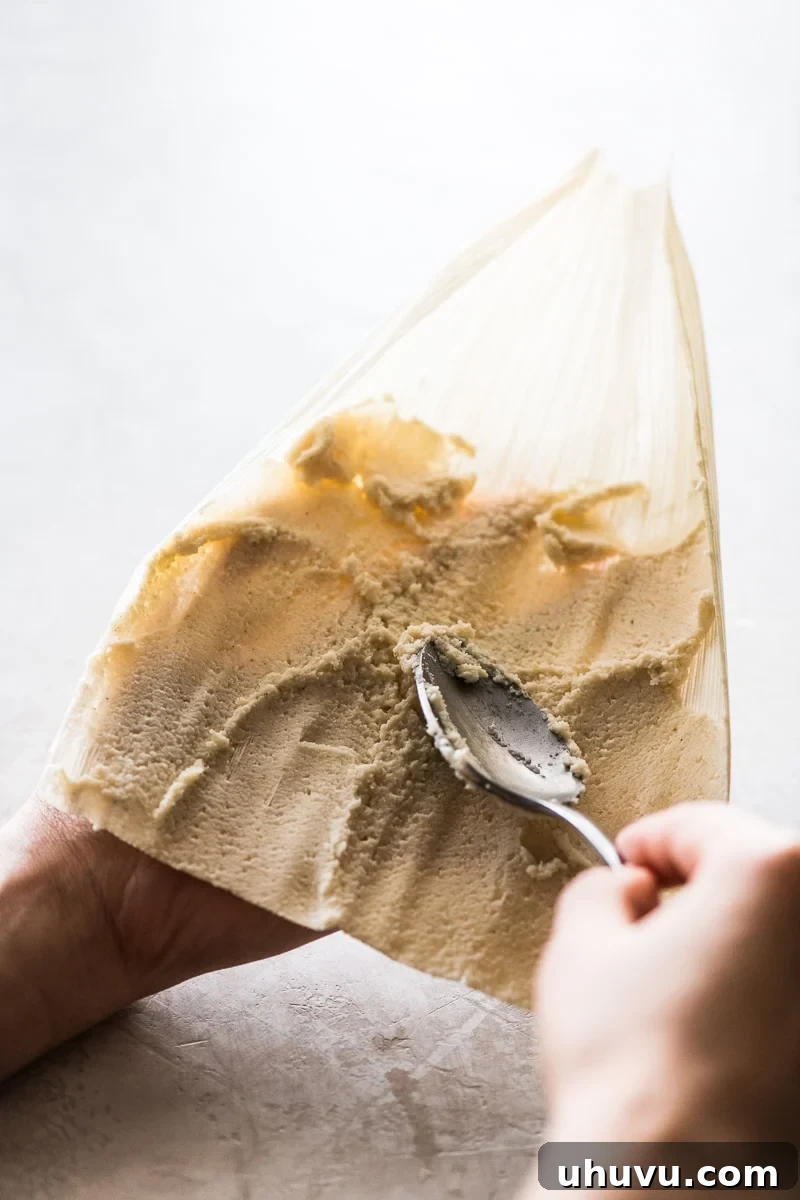
6. Spread the Masa. Take a heaping spoonful of the prepared masa dough and place it in the wider, bottom-middle section of a chosen corn husk. Using the back of your spoon, spread the masa into a thin, even layer, forming a roughly rectangular or square shape. Aim to cover the wide bottom half and a small portion of the top half, leaving the top one-third of the husk empty. The layer should be thin enough to cook thoroughly but not so thin that it becomes transparent or tears. If holding the husk while spreading is difficult, place it on a flat surface. Spreading masa is a skill that improves with practice, so don’t be discouraged if your first few aren’t perfect; you’ll get the hang of it!
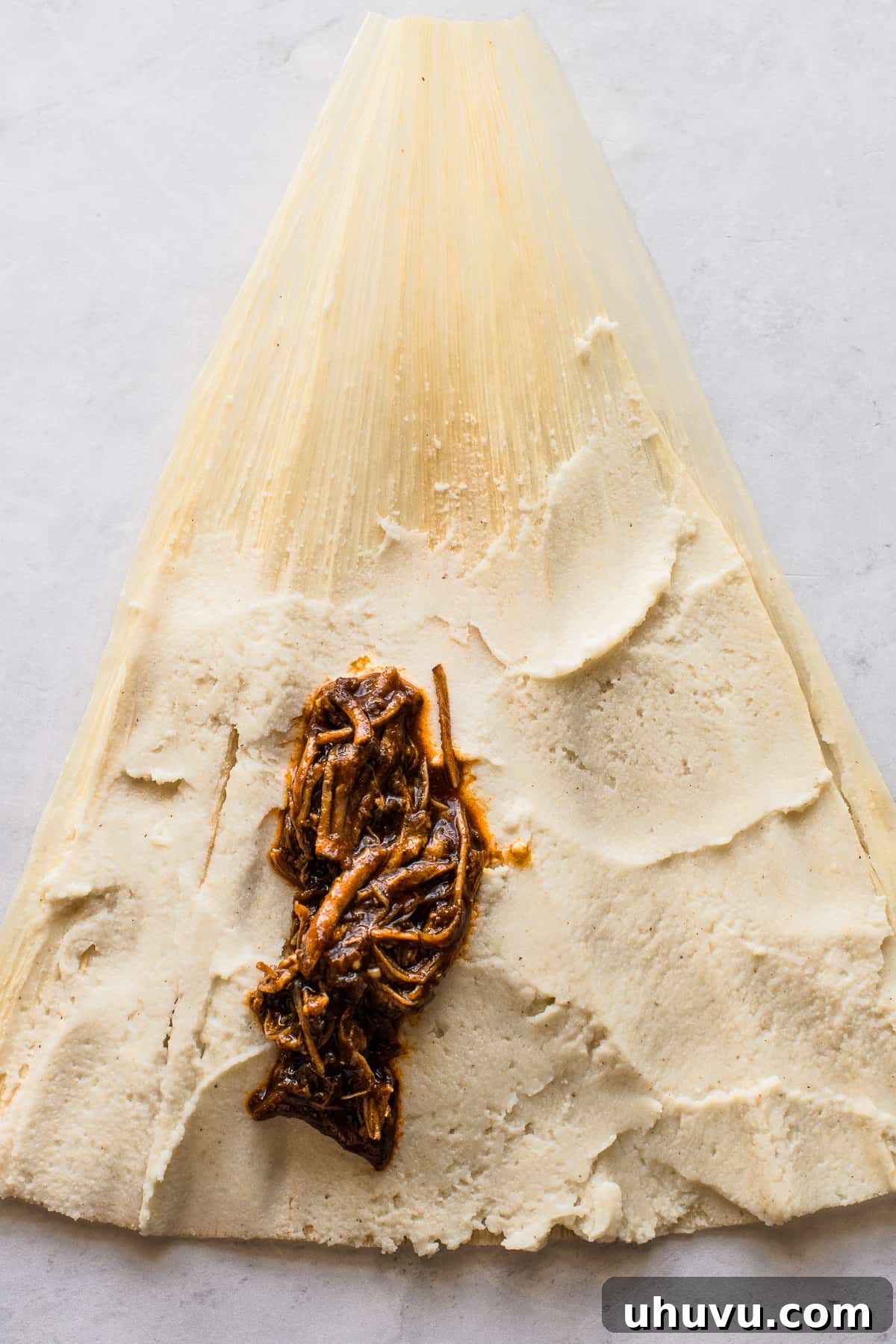
7. Fill the Tamale. Once the masa is spread, place a spoonful—about 1 to 2 tablespoons—of the shredded red chile pork filling in a line down the center of the masa. It’s important not to overfill the tamale, as too much filling can cause it to ooze out during the folding and steaming process. A modest amount ensures the tamale remains intact and cooks evenly.
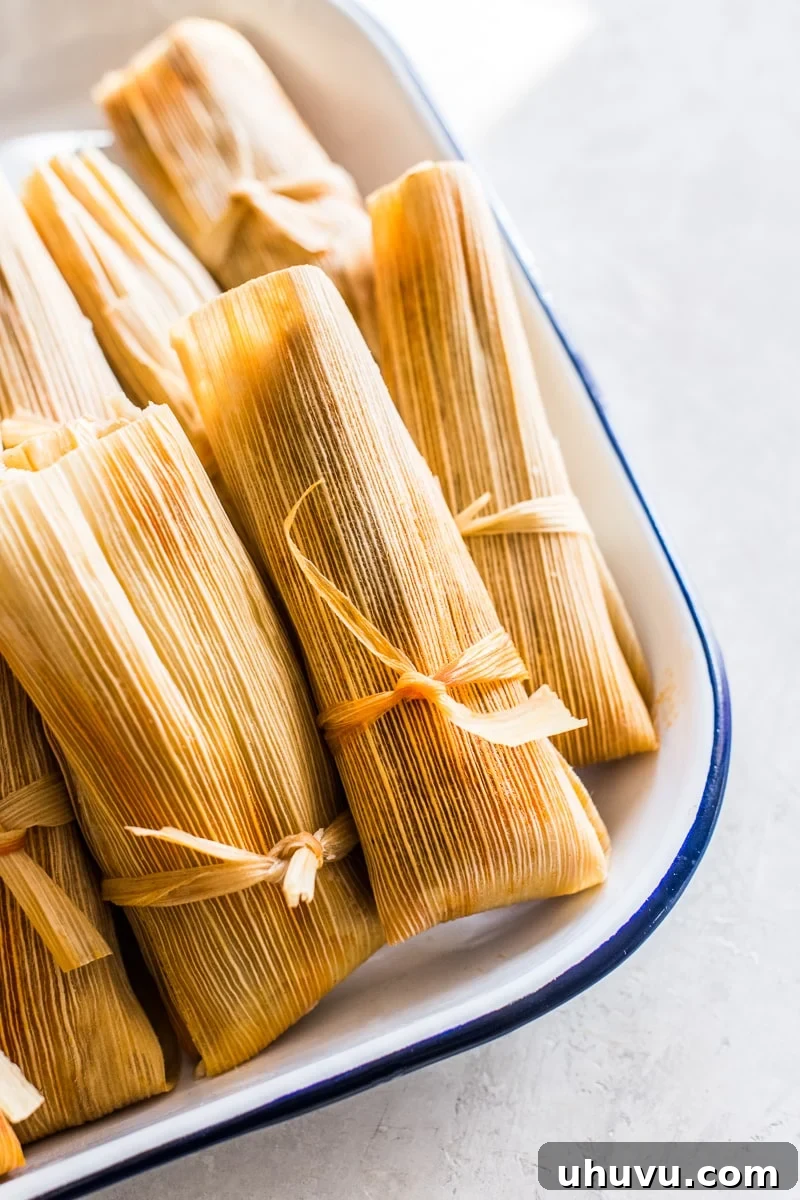
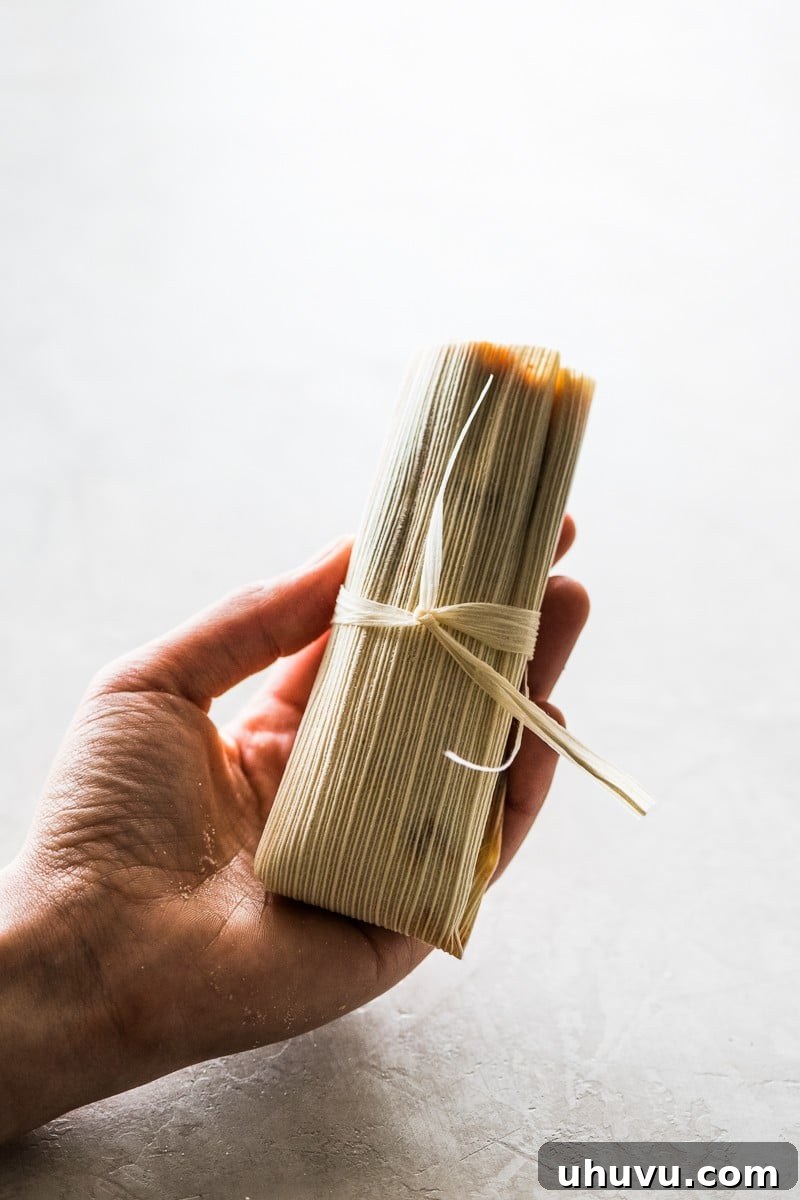
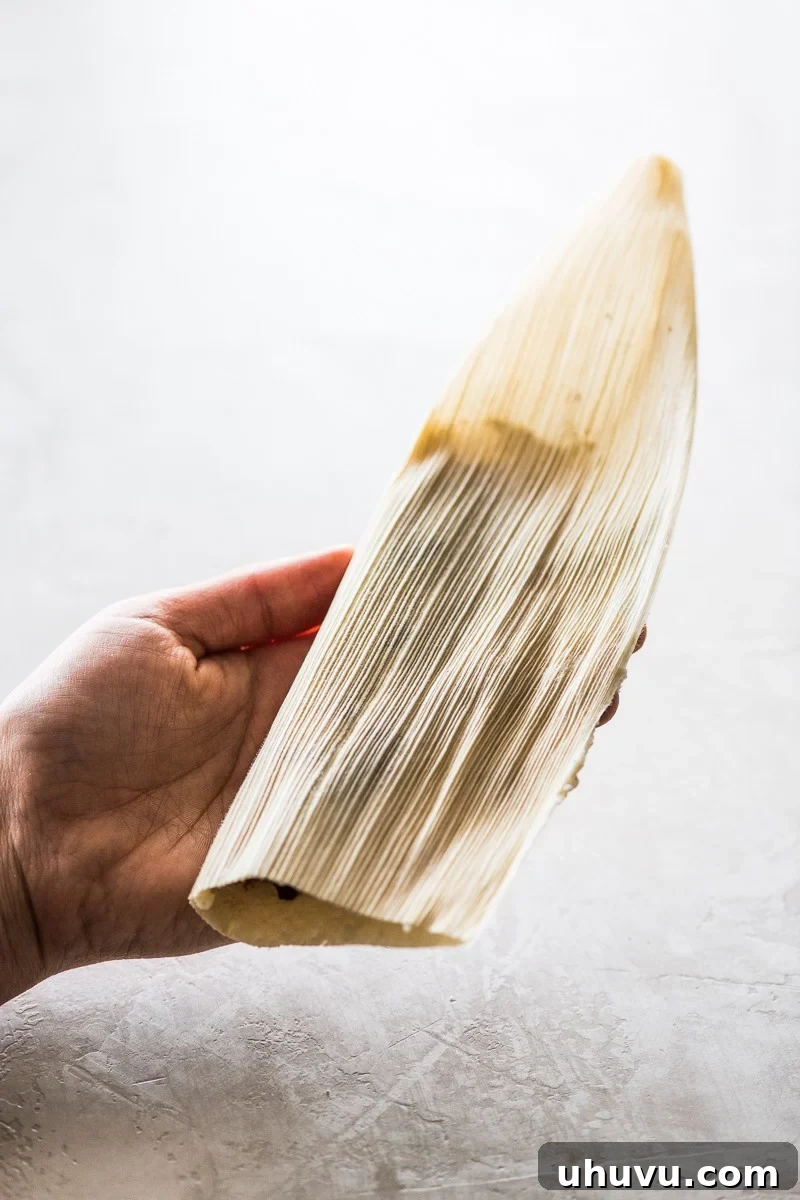
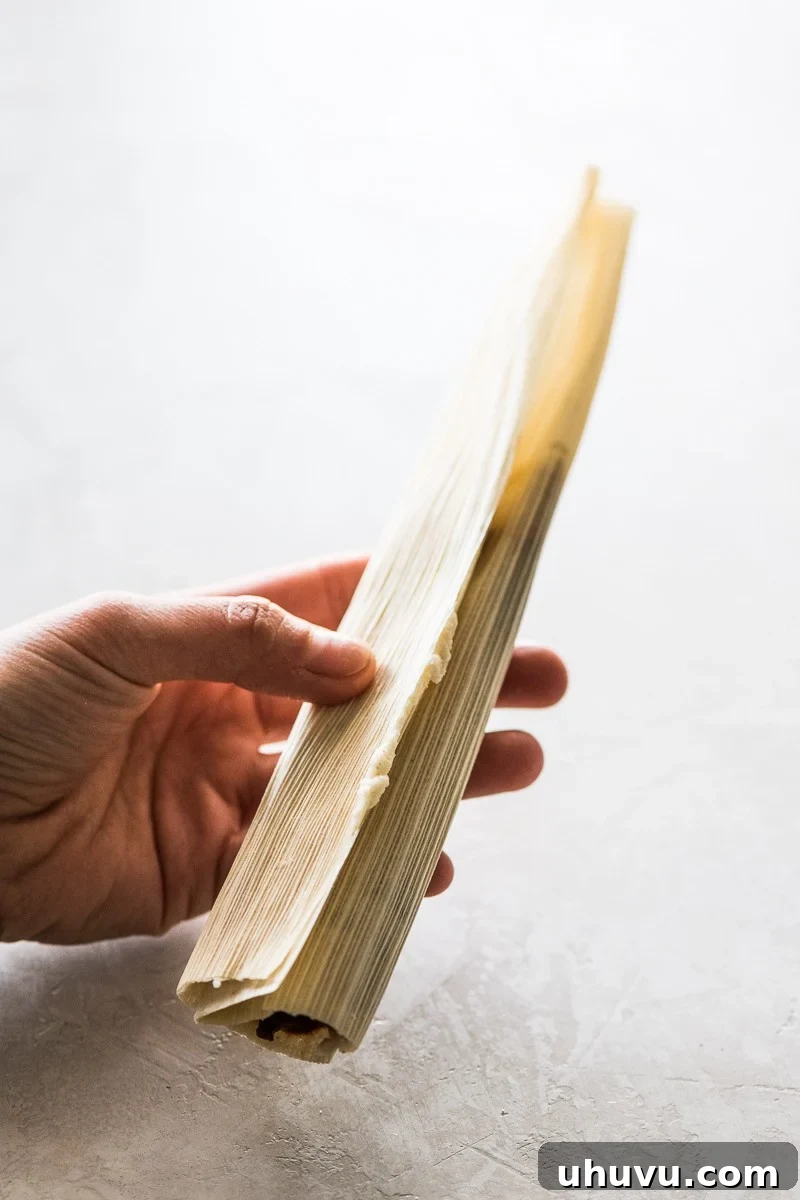
8. Fold for Steaming. To fold the tamale, bring the two long edges of the corn husk together, sealing the filling inside, much like closing a book. Then, fold them over once more to create a secure cylinder. Finally, take the pointy, narrower end of the husk and fold it upwards towards the wider end. This creates a packet that is open on only one side. When steaming, tamales are always placed with the open side facing upwards in the steamer pot, which prevents the filling from escaping and ensures proper cooking.
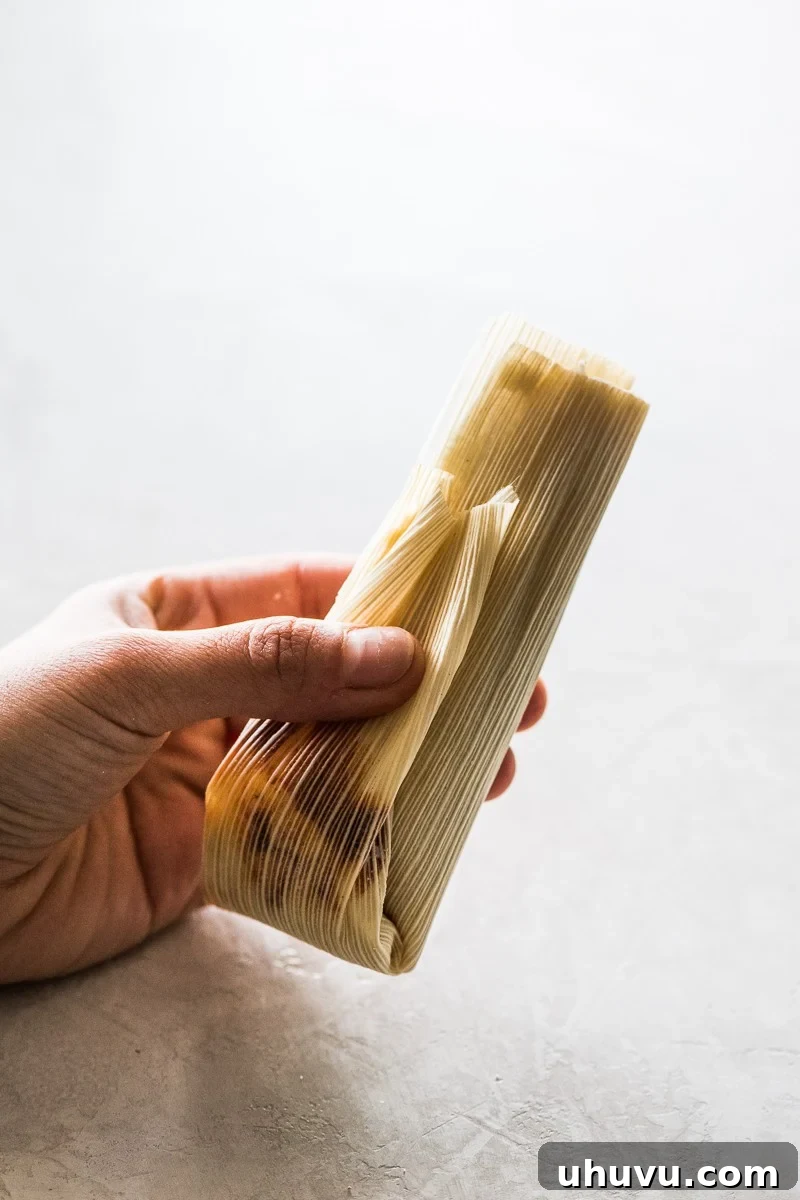
9. Cook the Tamales. For cooking, you’ll need a large steamer pot. If you don’t have a dedicated tamale steamer, any large pot with a steamer insert that sits above the water level will work perfectly. The key is to ensure the tamales are steamed, not boiled.
- Traditional Steaming Method: Fill the bottom of your pot with water, making sure it doesn’t touch the steamer insert. Place a penny or coin at the bottom of the pot; its rattling sound will alert you if the water level gets too low during steaming. Arrange the filled and folded tamales vertically in the steamer pot with their open ends facing up. Pack them snugly to keep them upright. Bring the water to a boil over high heat, then reduce the heat to a simmer, cover tightly, and steam for approximately 2 1/2 hours.
- Instant Pot Method: For a quicker alternative, the Instant Pot is fantastic. Place the tamales on the trivet inside the Instant Pot with 1 to 1 1/2 cups of water at the bottom. Cook on high pressure for 45 minutes. Allow the pressure to release naturally for 15 minutes before manually releasing any remaining pressure. For more detailed guidance, refer to my specific guide on Instant Pot tamales.
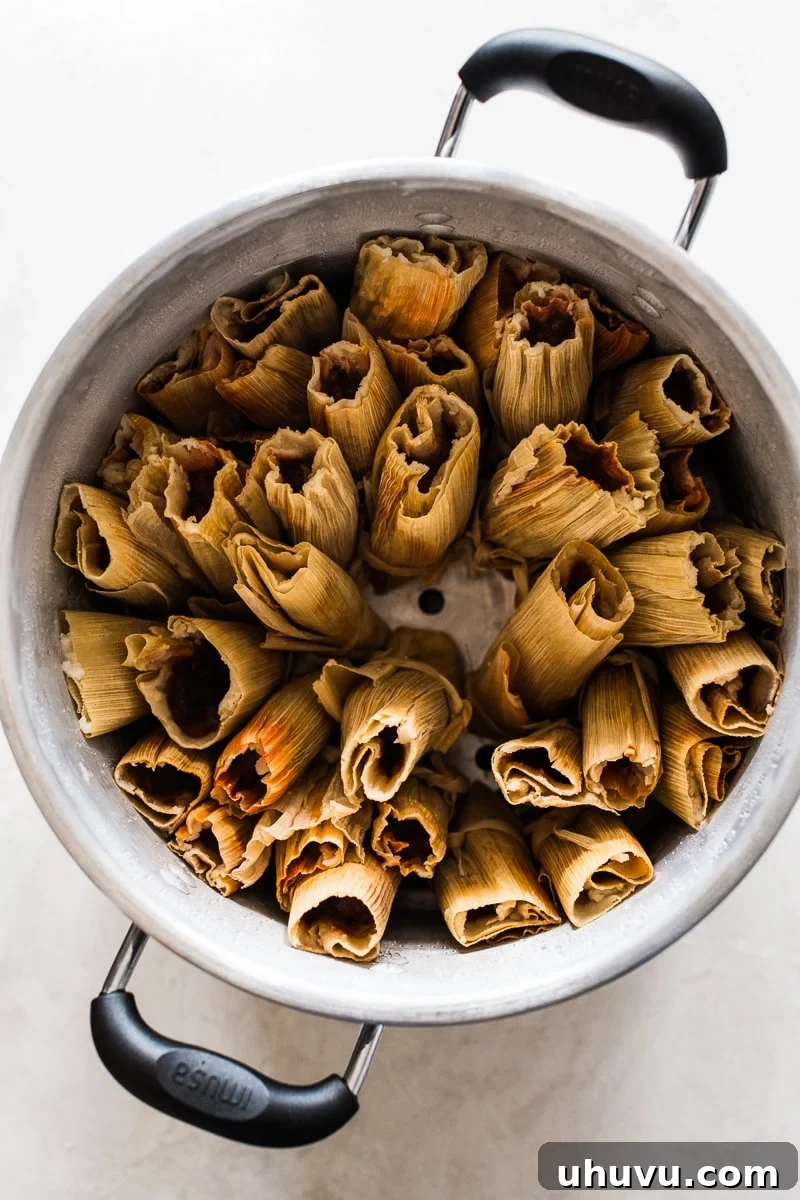
Expert Tips for Perfect Tamales
- Thoroughly Soak the Corn Husks. This step cannot be emphasized enough. Soaking the husks in warm water for at least an hour, or even longer, is crucial. It transforms them from brittle to pliable, making them far easier to handle, spread masa on, and fold without tearing.
- Orient the Corn Husk Correctly. Always spread the masa on the smooth, shinier side of the corn husk. The rougher, ridged side should face outwards. This simple trick ensures the tamale peels away cleanly from the husk after steaming, making for a much more enjoyable eating experience.
- Aim for Even, Thin Masa Layers. A common mistake is using too much masa. Spread a thin, even layer on the husk. Too much masa can result in a dense, heavy, or “gummy” tamale. A thin, consistent layer allows the masa to cook evenly and achieve that desirable fluffy texture.
- Resist Overfilling. While it’s tempting to load up on the delicious filling, overstuffing is a recipe for disaster. Excessive filling can cause the tamales to burst open or leak during the steaming process. A modest 1-2 tablespoons of filling is usually plenty to infuse flavor without compromising the structural integrity of your tamale.
- How to Check for Doneness. The ultimate test for a perfectly cooked tamale is when the corn husk effortlessly peels away from the masa. For tamales made with traditional lard, this typically occurs after about 1 to 1.5 hours of steaming. If using oil for your masa, it generally takes longer, around 2.5 hours. Always remember that steaming times can vary based on the size and quantity of tamales in your pot, so it’s best to check one thoroughly.
- Allow Them to Rest. Just like a good steak, tamales benefit from resting. After removing them from the steamer, let them rest for at least 10 minutes on a serving tray or baking sheet. This brief cooling period allows the masa to firm up slightly, making them much easier to unwrap and ensuring they hold their shape beautifully.
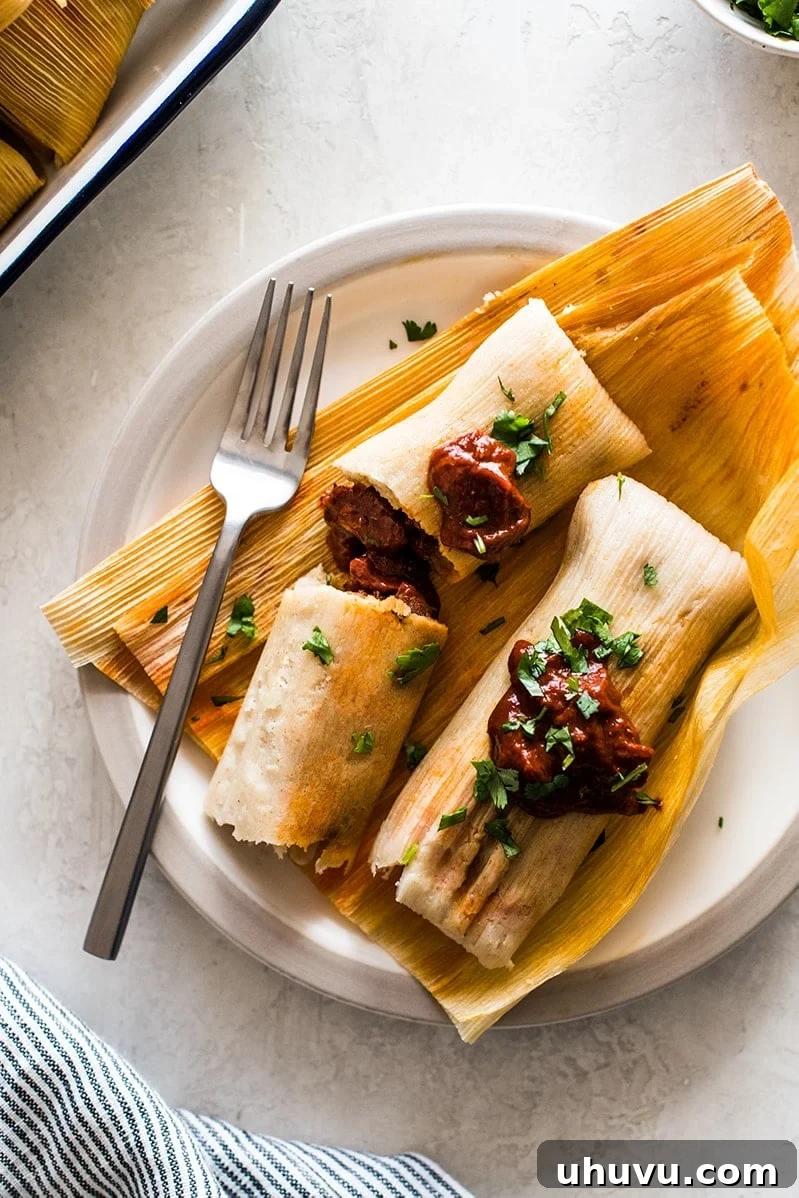
Helpful Tools for Tamale Making
Having the right equipment can significantly streamline the tamale-making process, making it more enjoyable and efficient:
- Steamer pot: A robust steamer pot is essential for perfectly cooking your tamales. This 16-quart pot is an ideal size for the amount of tamales yielded by this recipe (approximately 45-50). In my family, we often make larger batches, so I actually have two of these!
- Stand mixer: While masa can certainly be mixed by hand, a stand mixer can make the process significantly easier, especially when preparing the lard version of the masa which requires whipping.
- Large mixing bowls: These are incredibly useful for organizing all your prepped ingredients—from soaked corn husks to shredded pork—ensuring a smooth and efficient tamale assembly line.
Storing, Freezing, and Reheating Tamales
Tamales are excellent for meal prep and can be enjoyed long after they are made. Proper storage ensures they retain their flavor and texture:
Freshly cooked tamales can be stored in an airtight container in the refrigerator for up to one week. For longer preservation, they freeze beautifully. Wrap individual tamales tightly in plastic wrap, then place them in a freezer-safe bag or container. They can be kept in the freezer for up to 6 months.
When you’re ready to enjoy them again, tamales can be reheated using several convenient methods:
- Steamer: This is the best method for reheating as it helps to rehydrate the masa and restore its original fluffy texture. Steam them for about 15 minutes in a steamer pot, ensuring there’s enough water at the bottom.
- Oven: For a crispier exterior, preheat your oven to 350°F (175°C). Wrap the tamales loosely in foil to prevent drying out and heat them for 15-20 minutes, or until thoroughly warmed through.
- Microwave: For a quick reheat, place one or two tamales on a microwave-safe plate, cover them with a damp paper towel to retain moisture, and microwave in batches for 1-2 minutes on high, or until hot.
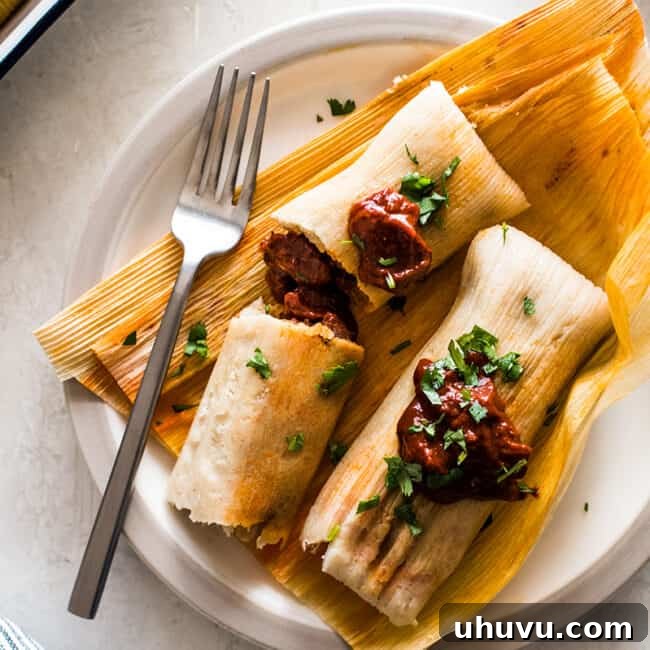
Authentic Mexican Tamales
Ingredients
For the Filling
- 3 ounces guajillo chiles, rinsed, stemmed, and seeded
- 3 ounces ancho chiles, rinsed, stemmed, and seeded
- Water, as needed
- 1 ½ teaspoons garlic powder
- 3 teaspoons kosher salt, divided
- ¾ teaspoon ground cumin
- 2 tablespoons olive oil
- 2 ½ pounds boneless pork shoulder, cut into large 4-inch chunks
- 1 bay leaf
For the Masa Dough
- 8 ¼ cups masa harina (about half of a 4.4 lb bag of Maseca)
- 1 ¾ tablespoons fine salt
- 1 tablespoon baking powder
- 1 ¾ cups canola or avocado oil (see Notes for making masa with lard*)
- 7 cups broth (chicken, beef, or vegetable, plus more as needed)
- 50 corn husks (about ½-¾ pound bag)
- Hot water, as needed
Instructions
-
1. Prep the corn husks. Add the corn husks to a large bowl or pot. Pour enough hot water over the corn husks to cover them completely. Cover the bowl with foil or plastic wrap and let them soak for 1 hour to soften them up. While the husks are soaking, you can proceed with making the filling and masa dough.
-
2. Make the chile sauce. Place the guajillo and ancho chiles in a medium pot and cover them completely with water. Bring to a boil over high heat. Once boiling, remove the pot from the heat, cover, and let the chiles steep for 10 minutes to soften further.
-
Using a slotted spoon, transfer the softened chiles to a large blender. Add 1 cup of the chile-soaked water, 1 ½ cups of fresh water, garlic powder, 1 ½ teaspoons kosher salt, and ground cumin. Blend until completely smooth. If you desire an extra smooth sauce, pour it through a fine mesh strainer into a bowl to remove any solids.
-
3. Cook the pork. Heat the olive oil in a large Dutch oven or heavy-bottomed pot over medium-high heat. Season the pork chunks with the remaining 1 ½ teaspoons of kosher salt. Working in 2 batches to avoid crowding the pot, add the meat and sear on all sides until nicely browned.
-
Add all the seared meat back to the pot. Carefully pour in the blended red chile sauce and stir in the bay leaf. Bring the mixture to a boil, then reduce the heat to low, cover, and simmer for 2 ½ hours until the meat is fall-apart tender. It should shred very easily with a fork.
-
4. Make the masa dough. (Refer to Notes for how to make masa with lard.) In a very large mixing bowl or pot, add the masa harina, salt, and baking powder. Stir together thoroughly to combine all dry ingredients.
-
Add the oil and mix it together using your hands. Work the dough through your fingers until everything is well combined and incorporated. The dough should feel a little crumbly, almost like wet sand, and should lightly hold its shape when pressed together.
-
Gradually add the broth and mix for about 3-5 minutes until the dough is fairly wet and well-saturated. The dough should be soft and easily spreadable, with a texture similar to thick hummus. If the dough is too dry, add more broth a tablespoon at a time. If it’s too wet, add more masa harina until the desired consistency is reached.
-
5. Finish prepping the corn husks. Once the husks are softened, drain the water completely and pat them dry with paper towels. Lay them flat onto a baking sheet or a clean work surface for easy access during assembly.
-
6. Spread the masa onto corn husks. Grab a corn husk and identify the smooth side (which should face up) and the side with ridges (which faces outward). Place the smooth side face up onto the palm of your hand or on a plate. Take a heaping spoonful of masa and place it in the middle of the wide bottom half of the corn husk. Spread it in a thin, even layer using the back of the spoon to create a large rectangular shape, leaving the top ⅓ of the corn husk empty. (See photos in the post above for visual guidance).
-
7. Add the filling. Place a spoonful of the shredded red chile pork filling in a line down the center of the masa dough. You only need a small amount, typically about 1-2 tablespoons. Be careful not to overstuff it, as too much filling will cause it to ooze out when you fold the tamale.
-
8. Fold the tamales. Fold together the two long edges of the corn husk, bringing the masa-covered sides together like a book. Then, fold it once more to create a secure cylinder. Next, fold the pointy, narrower edge of the husk up towards the wider end, leaving only one side of the corn husk open and exposed. Set the folded tamale aside and continue assembling all the tamales until you’ve used up all the masa dough and filling.
-
9. Prepare the steamer pot. Fill the bottom of a large steamer pot with water, ensuring the water level is below the steamer insert. Place a penny or coin at the bottom of the pot (it will rattle when the water boils and notify you if the water level drops too low). Insert the steamer rack. Place the assembled tamales vertically in the steamer pot with the open end facing up. Lean them against the side of the pot or each other to prevent them from falling over.
-
10. Steam the tamales. Cover the steamer pot tightly with its lid and place it over high heat. Bring the water to a boil; you’ll hear the coin rattle in the pot when it’s boiling vigorously! Once boiling, reduce the heat to medium-low to maintain a steady simmer and cook for 2 ½ hours, or until the masa is fully cooked through. (Refer to the notes section for specific cooking times if you’re making masa with lard.)
-
11. Check for doneness. To verify if the tamales are cooked, carefully remove 1 tamal from the steamer pot. Let it sit for 10 minutes to cool slightly. If the husk peels away easily and cleanly from the masa, the tamale is done. If the masa is still gooey or sticks to the husk, return all tamales to the steamer and cook for another 15 minutes, then check again.
-
12. Serve and enjoy. Once cooked, remove the tamales from the pot and let them cool for 10 minutes before serving. This resting period helps them firm up and makes them easier to unwrap from their corn husks. Enjoy your homemade authentic Mexican tamales!
Notes
- Yields: This recipe yields approximately 45-50 tamales, which fits snugly in a 16-quart steamer pot or larger. While it’s a tight squeeze, they will fit.
- To make the masa using lard: For a richer masa, you will need 2 cups of lard, 8 ¾ cups of masa harina, 1 ¾ tablespoons of fine salt, 1 tablespoon of baking powder, and 8 cups of broth. In a large bowl, use an electric handheld mixer or a stand mixer to beat the lard for 1 minute until it is whipped and fluffy. In a separate bowl, combine the masa harina, salt, and baking powder. Add this dry mixture to the whipped lard and mix well to combine. While continuing to mix, slowly add in the broth. Continue mixing until the dough is smooth, fluffy, and achieves the texture of thick hummus.
- Cooking time for tamales made with lard: Tamales made with lard-based masa typically cook faster, usually requiring about 90 minutes of steaming.
- Make ahead: Both the red chile pork filling and the masa dough can be prepared up to 3 days in advance. Store each component in separate airtight containers in the refrigerator until you are ready to assemble and steam your tamales.
Nutrition
Nutrition information is automatically calculated, so should only be used as an approximation.
Making a Large Batch: Perfect for Celebrations
Tamales are inherently a celebratory food, traditionally prepared in large quantities for holidays, family gatherings, and special occasions within Mexican culture. To truly embrace this tradition, my family and I often double the recipe provided above. This yields a generous batch of approximately 100 tamales, ensuring there’s plenty to share and enjoy. Here are the ingredient amounts for your convenience if you plan to make a large batch:
Ingredient Amounts for Double the Recipe (Approx. 100 Tamales)
For the Filling
- 6 ounces dried guajillo chiles
- 6 ounces dried ancho chiles
- Water, as needed
- 1 tablespoon garlic powder
- 1 tablespoon kosher salt, plus more as needed
- 1 1/2 teaspoons ground cumin
- 5 pounds pork shoulder, excess fat removed and cut into large 4-inch chunks
- 3 tablespoons vegetable oil
- 1 bay leaf
For the Masa Dough
- 16 1/2 cups masa harina (a whole 4.4 lb bag Maseca)
- 3 1/2 tablespoons fine salt
- 2 tablespoons baking powder
- 3 1/2 cups canola oil (or 4 cups lard for lard-based masa)
- 13 cups broth (or 16 cups broth for lard-based masa)
Explore More Authentic Mexican Recipes
If you love the rich flavors of traditional Mexican cuisine, be sure to check out these other popular recipes:
- Chile Verde: A vibrant and savory pork stew in a green chile sauce.
- Mole Sauce (Mole Poblano): The complex and iconic chocolate-chile sauce.
- Pozole Rojo: A hearty and comforting red chile hominy stew.
- Birria: Flavorful slow-cooked meat, perfect for tacos and dipping.
- Carnitas: Crispy and tender slow-cooked pork, ideal for tacos.
- Chile Relleno: Cheese-stuffed, battered, and fried poblano peppers.
This post was initially published in December 2019 and has been comprehensively updated in December 2023. The update includes clearer, more detailed instructions, a slightly refined recipe, and additional helpful tips to ensure your tamale-making experience is a complete success.