
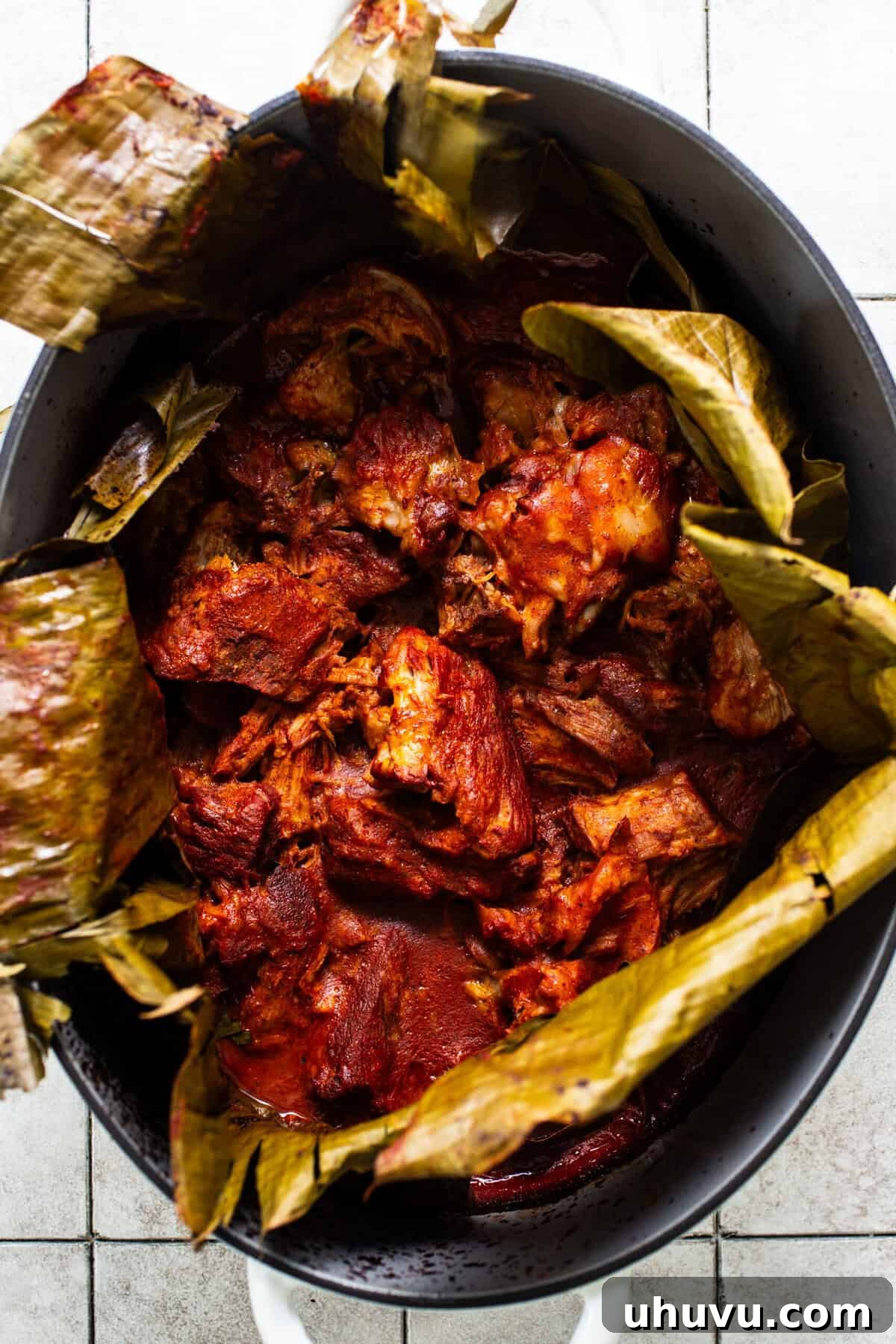
Cochinita pibil is a celebrated traditional Mexican dish, originating from the Yucatán Peninsula, renowned for its incredible depth of flavor and tender, slow-cooked pork. This culinary masterpiece features succulent pork, typically pork shoulder, generously marinated in a vibrant blend of achiote paste, tangy citrus juices, and a medley of aromatic spices. Traditionally, the marinated pork is meticulously wrapped in fragrant banana leaves and slow-roasted in an underground pit (píib), resulting in an unbelievably moist, fall-apart texture that practically melts in your mouth. While most of us don’t have an underground pit in our backyards, this iconic dish can be perfectly replicated in a conventional oven or slow cooker, delivering the same authentic, mouth-watering experience. It’s truly a feast for the senses, perfect for piling high onto warm corn tortillas and serving with classic accompaniments like zesty pickled red onions and a fiery salsa.
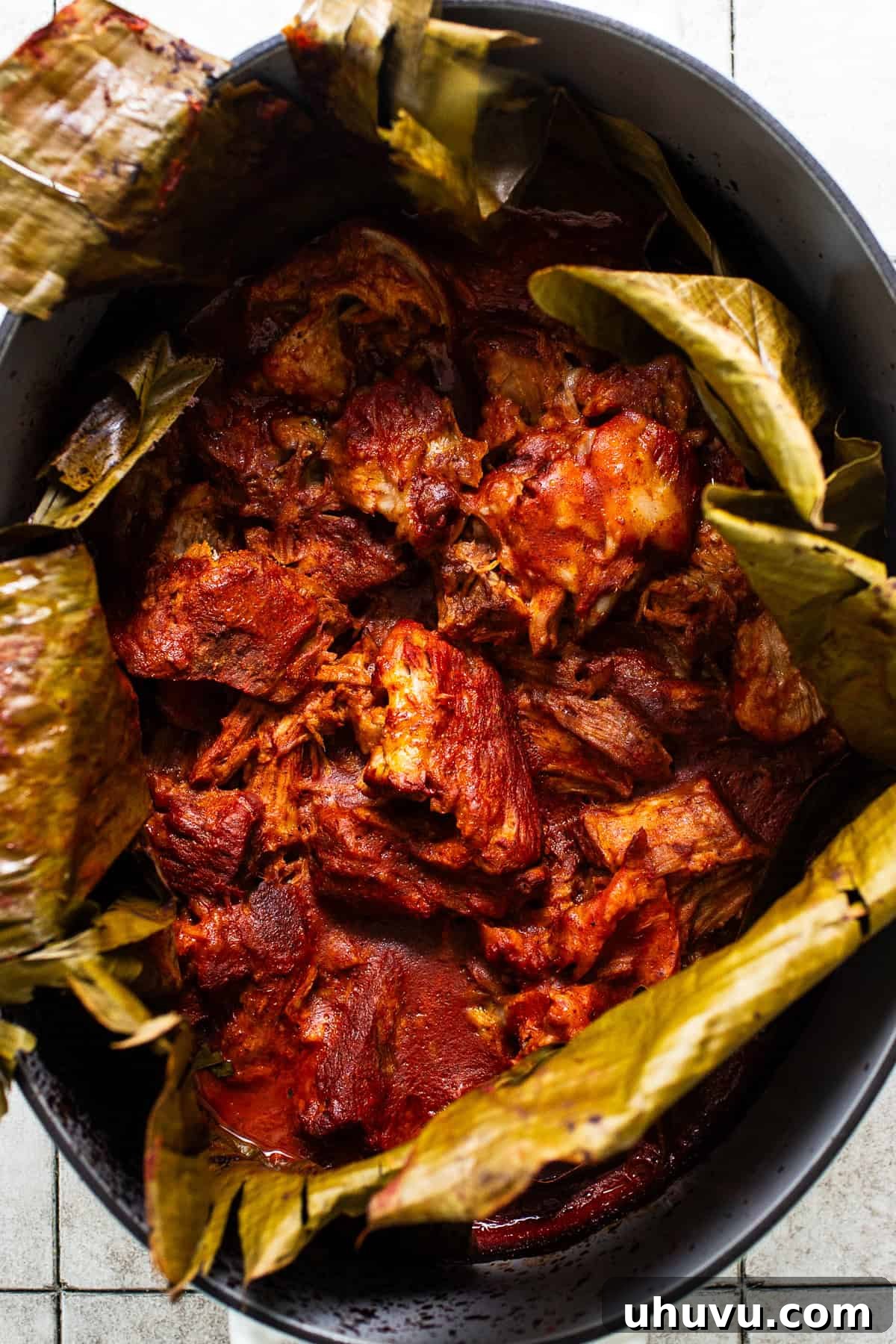
Growing up, cochinita pibil wasn’t a regular on my family’s dinner table, but it quickly captivated my taste buds and earned a permanent spot among my favorite dishes. This recipe is a testament to the magic of minimal effort yielding maximum flavor – a culinary paradox achieved through a robust marinade and the patient art of slow roasting. Much like other beloved Mexican pulled pork recipes such as tacos al pastor, crispy carnitas, and savory barbacoa, cochinita pibil transforms a humble cut of pork into something extraordinary.
My preferred approach involves marinating the pork overnight, allowing the vibrant flavors to deeply penetrate the meat. This crucial step, combined with the slow, gentle heat of the oven, means you’ll spend very little hands-on time in the kitchen. The result is an incredibly flavorful, tender meal that practically cooks itself, leaving you free to enjoy the enticing aromas filling your home.
Why You’ll Love This Authentic Cochinita Pibil Recipe
- Effortless Make-Ahead Meal: This dish is a host’s dream! The longer the pork marinates, the more intense and delicious the flavors become. You can prep it a day in advance, making entertaining a breeze. Plus, the leftovers are truly spectacular, often tasting even better the next day.
- Unforgettable, Layered Flavor Profile: The magic of cochinita pibil lies in its unique flavor. The earthy, slightly peppery notes of achiote, combined with the bright tang of fresh citrus and the richness of slow-cooked pork, create a symphony of tastes. It’s a perfect balance of savory, sweet, and acidic, with an incredible depth that will leave you craving more.
- Surprisingly Simple Preparation: Don’t let the exotic name or traditional cooking method intimidate you. The vast majority of the “work” is done by the powerful marinade, which infuses the pork with flavor, and then by the oven (or slow cooker/Instant Pot), which handles the slow, gentle cooking. This means minimal fuss for you, translating into maximum enjoyment for everyone at the table.
- Versatile Serving Options: Cochinita Pibil isn’t just for tacos! Its rich, shredded texture makes it a fantastic filling for a variety of dishes, from tortas to tamales, or even as a flavorful component in rice bowls.
What Exactly Is Cochinita Pibil? A Culinary Journey to Yucatán
Cochinita pibil is more than just a pork dish; it’s a culinary emblem of the Yucatán Peninsula, steeped in rich Mayan history and tradition. The name itself offers a clue to its origins: “cochinita” translates to “little pig” (though any cut of pork is now common), and “pibil” refers to the traditional Mayan cooking method of burying food in a “píib,” an underground earthen oven. This ancient technique involves slow-cooking food over hot coals, often wrapped in banana leaves, which imparts a distinct smoky flavor and incredibly tender texture.
Historically, an entire suckling pig would be marinated and cooked whole in the píib, buried beneath the earth for hours. The unique marinade, featuring achiote (annatto seeds), provides the dish’s signature vibrant reddish-orange hue and a complex, earthy, and slightly peppery flavor. The generous use of sour orange juice (or a mix of sweet orange and lime juice for home cooks) is also crucial, not only for its tangy flavor but also for its tenderizing properties, breaking down the pork fibers to achieve that coveted melt-in-your-mouth consistency.
While the authentic underground pit method is largely reserved for special occasions and traditional festivals in Yucatán, modern adaptations allow home cooks worldwide to recreate this exquisite dish. Using a conventional oven, a slow cooker, or even an Instant Pot, we can achieve similar results, transforming pork shoulder into a tender, flavorful masterpiece that honors its rich heritage.
Essential Ingredients for Authentic Cochinita Pibil
Crafting truly authentic and flavor-packed cochinita pibil begins with selecting the right ingredients. Here’s a breakdown of what you’ll need, and why each component is vital:
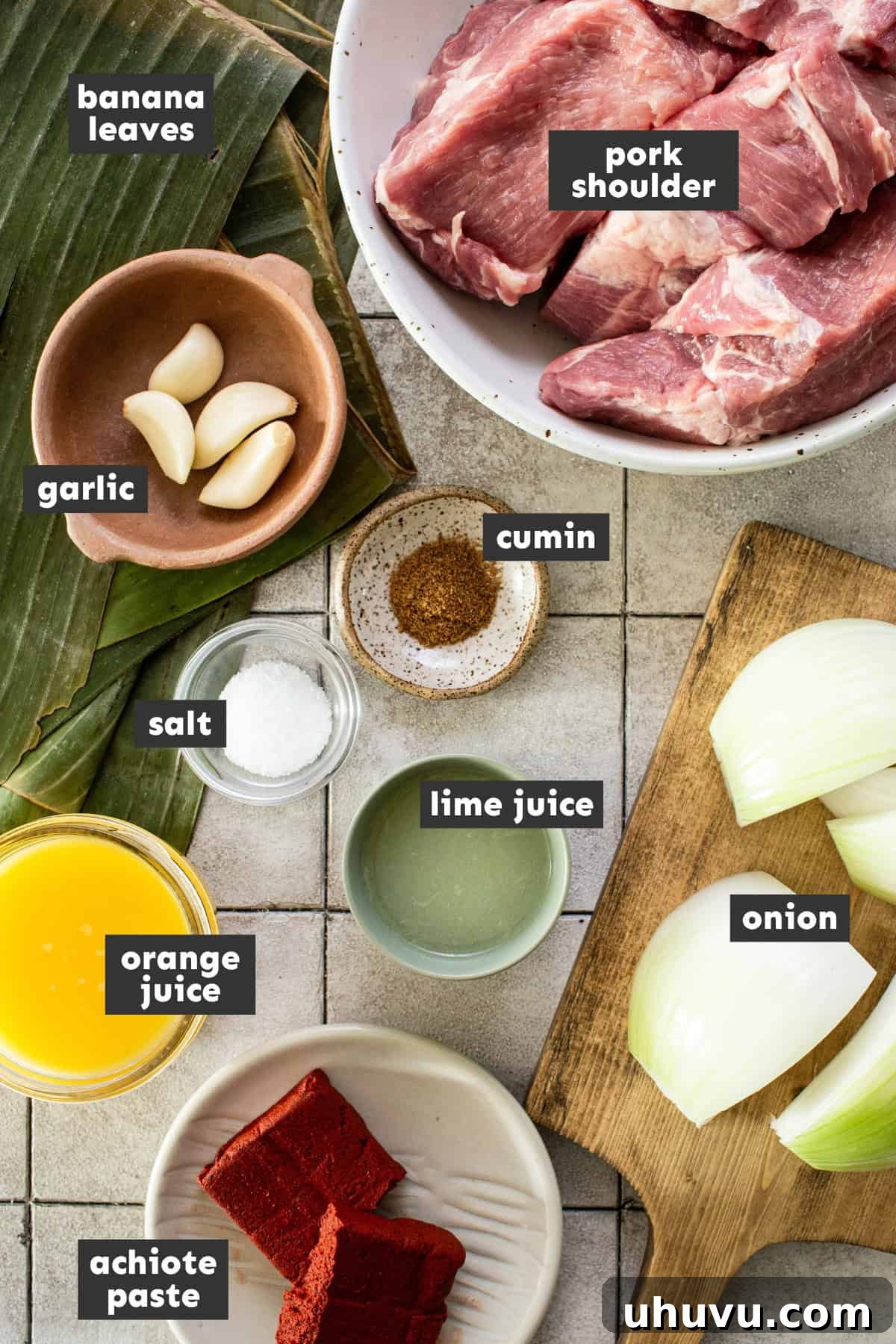
- Achiote Paste: This is the soul of cochinita pibil. Made from ground annatto seeds, achiote paste not only gives the dish its iconic fiery red-orange color but also contributes a distinctive earthy, slightly peppery, and subtly sweet flavor. It’s crucial for authenticity. You can typically find it in the Hispanic or international aisle of larger grocery stores, specialty Mexican markets, or conveniently online.
- Orange and Lime Juice: The combination of these citrus juices is fundamental. Traditionally, sour oranges (naranja agria) are used in Yucatán. For home cooking, a blend of sweet orange juice and fresh lime juice perfectly mimics that essential tangy-sweet balance. Beyond flavor, the acidity from the citrus acts as a natural tenderizer, helping the pork become irresistibly fall-apart soft during the long cooking process.
- White Onion and Garlic: These kitchen staples form the aromatic base of the marinade, adding essential depth, sweetness, and pungency that complement the other flavors beautifully.
- Kosher Salt and Ground Cumin: Achiote paste itself is packed with various spices, so only a modest amount of additional seasoning is needed. Kosher salt enhances all the flavors, while a touch of ground cumin adds a warm, earthy undertone that rounds out the marinade.
- Pork Shoulder: Also widely known as pork butt, this cut is ideal for cochinita pibil. Its generous marbling of fat and connective tissues breaks down wonderfully during slow cooking, resulting in succulent, juicy, and incredibly tender pull-apart pork. Opt for a bone-in cut if possible, as the bone adds even more flavor to the cooking liquid.
- Banana Leaves (Optional but Recommended): Traditionally, the pork is wrapped in banana leaves before cooking. These leaves impart a subtle, unique aroma and sweetness to the meat, enhancing the overall authenticity of the dish. They also help to seal in moisture, keeping the pork incredibly tender. Look for them fresh or frozen in most Mexican or Asian grocery stores. Remember, they are for flavor and aroma only – discard them after cooking! If you can’t find them, don’t worry; the dish will still be delicious without them.
Delving Deeper into Achiote Paste: The Heart of Yucatecan Cuisine
Achiote paste, sometimes referred to as annatto paste, is a cornerstone of Yucatecan and Central American cuisine. Its vibrant, almost glowing, red-orange color is instantly recognizable and largely thanks to the annatto seeds from which it’s derived. Beyond its stunning visual appeal, achiote paste delivers a complex flavor profile: earthy, subtly smoky, slightly peppery, and with a delicate, nutty undertone. This unique blend of tastes makes it indispensable for marinades, stews, and a variety of regional dishes, most famously cochinita pibil and pollo pibil (chicken pibil).
The paste is incredibly easy to incorporate into your cooking and is remarkably budget-friendly, offering a lot of flavor for a small cost. You can readily find achiote paste online, at most Mexican or Latin American grocery stores, and increasingly in the international foods aisle of mainstream supermarkets. Its widespread availability ensures that you can bring the authentic taste of Yucatán into your kitchen with ease.
While achiote’s distinctive flavor and texture are challenging to perfectly replicate, if you find yourself in a pinch, Sazón Goya, particularly the variety with annatto, is often cited as the closest widely available substitute due to its similar color and some shared flavor notes. For the ambitious cook, you can even make your own achiote paste by grinding whole annatto seeds with other spices like cumin, oregano, black pepper, and garlic, then blending with citrus juice or vinegar to form a paste. This homemade approach allows for customization of the spice blend to suit your preference, offering a fresh take on this traditional ingredient.
Step-by-Step Guide: How to Make Irresistible Cochinita Pibil
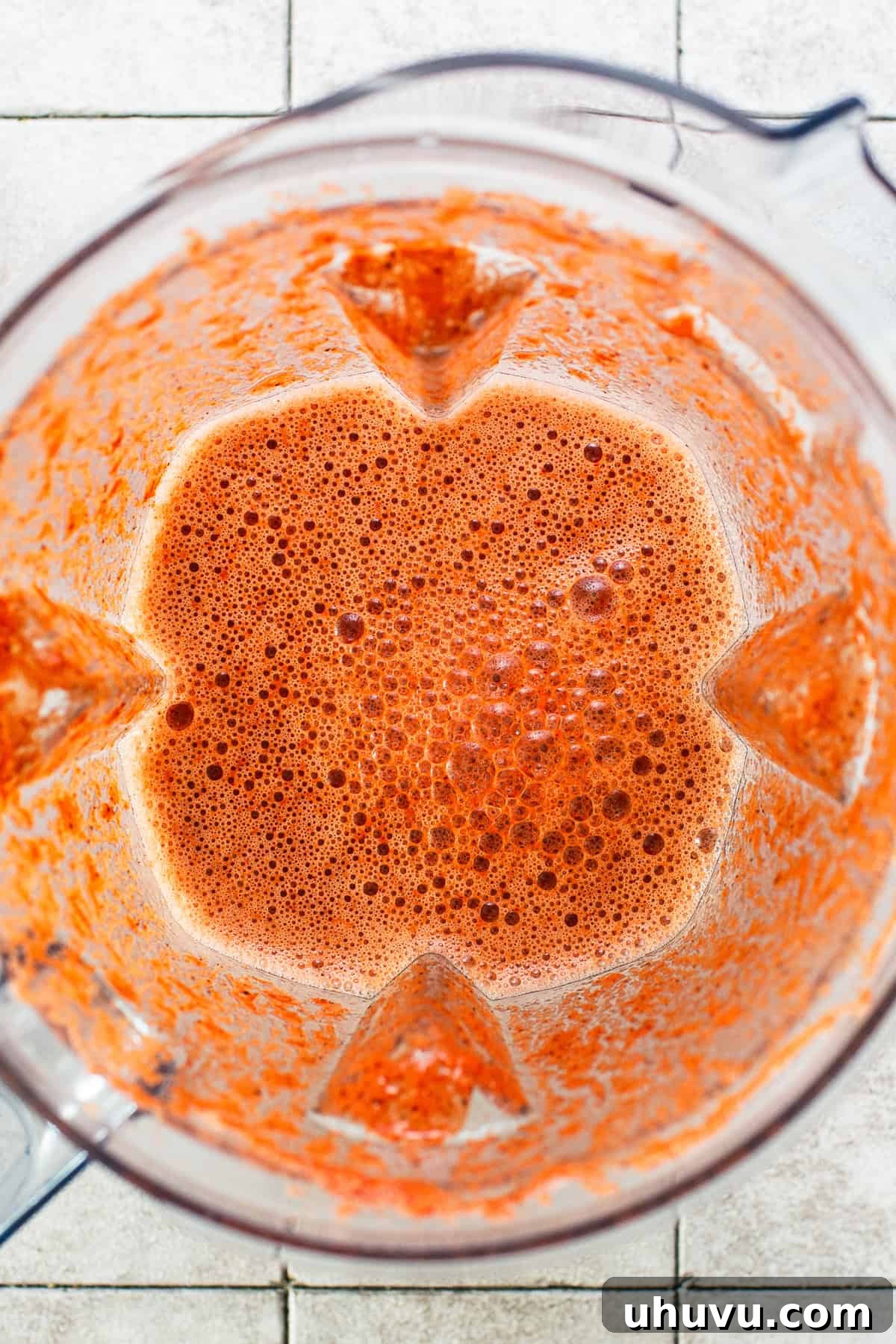
Step 1: Prepare the Marinade. In a high-speed blender, combine the achiote paste, fresh orange juice, fresh lime juice, quartered white onion, peeled garlic cloves, kosher salt, and ground cumin. Blend thoroughly until the mixture is completely smooth and uniform in consistency. This step is crucial for ensuring all the flavors are well integrated and can evenly coat the pork.
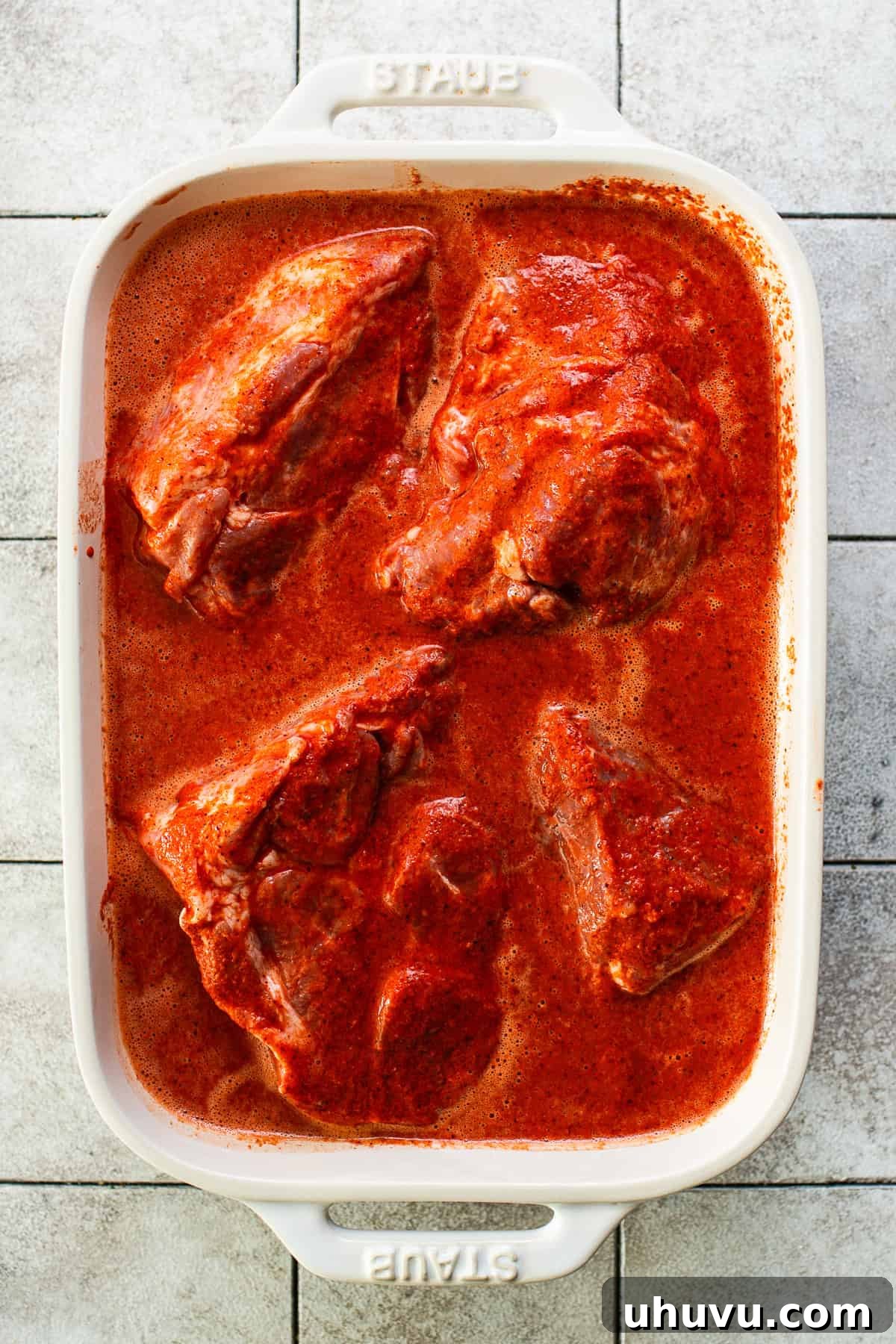
Step 2: Marinate the Pork. Place your large chunks of pork shoulder into a spacious bowl or a deep baking dish. Pour the freshly blended marinade evenly over the pork. Use your hands to thoroughly mix and massage the marinade into every piece of pork, ensuring each chunk is fully coated. Cover the bowl tightly with plastic wrap and refrigerate. Allow the pork to marinate for a minimum of 6 hours, but for the most profound flavor, aim for an overnight marination (up to 24 hours).
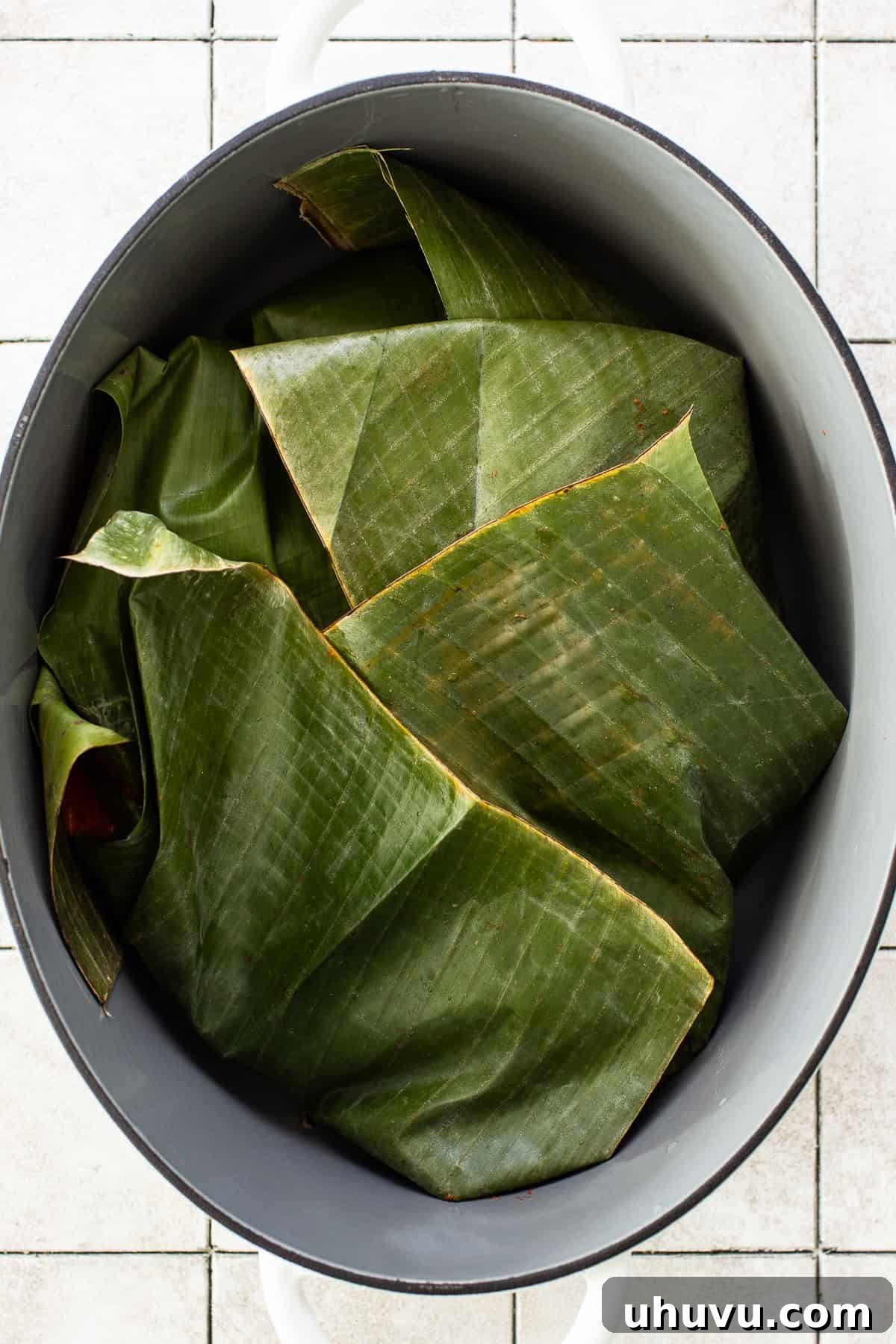
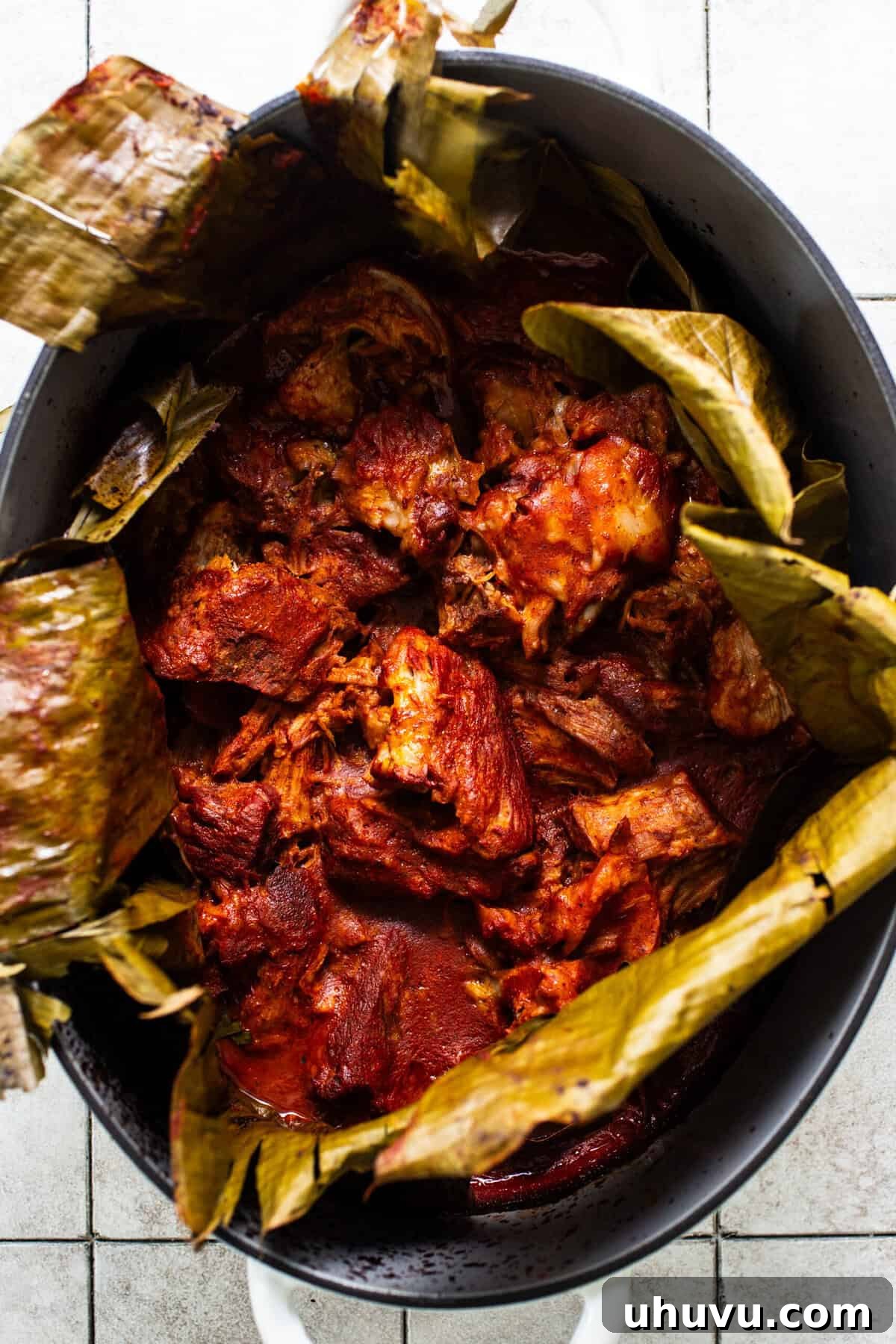
Step 3: Prepare for Roasting. Preheat your oven to 325℉ (160°C). If using banana leaves, carefully line the bottom and sides of a large Dutch oven or a heavy-bottomed pot with the leaves. Arrange them so that they completely cover the bottom and extend up and over the sides, creating a natural wrapper for the pork. Gently add the marinated pork, along with all the flavorful juices from the marinade, into the prepared Dutch oven. Fold the overhanging banana leaves inward to completely encase the meat, creating a sealed packet that will lock in moisture and flavor during cooking.
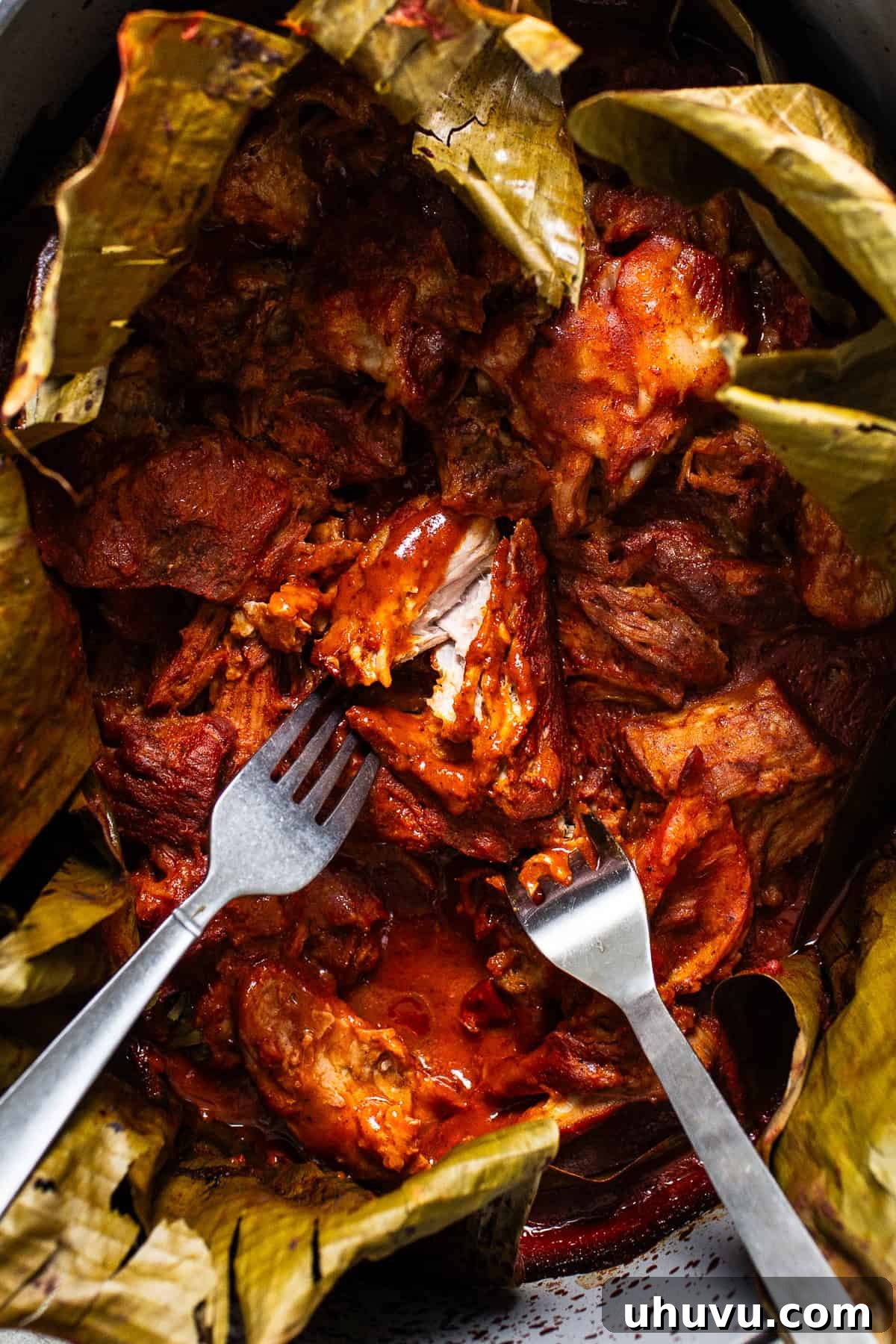
Step 4: Slow Roast to Perfection. Cover the Dutch oven tightly with its lid. Transfer it to the preheated oven and bake for approximately 3 ½ hours. The cooking time may vary slightly depending on your oven and the thickness of the pork chunks, but the goal is for the pork to become incredibly tender – so tender that it practically falls apart when prodded with a fork. It should shred with minimal effort, indicating it has reached its melt-in-your-mouth perfection.
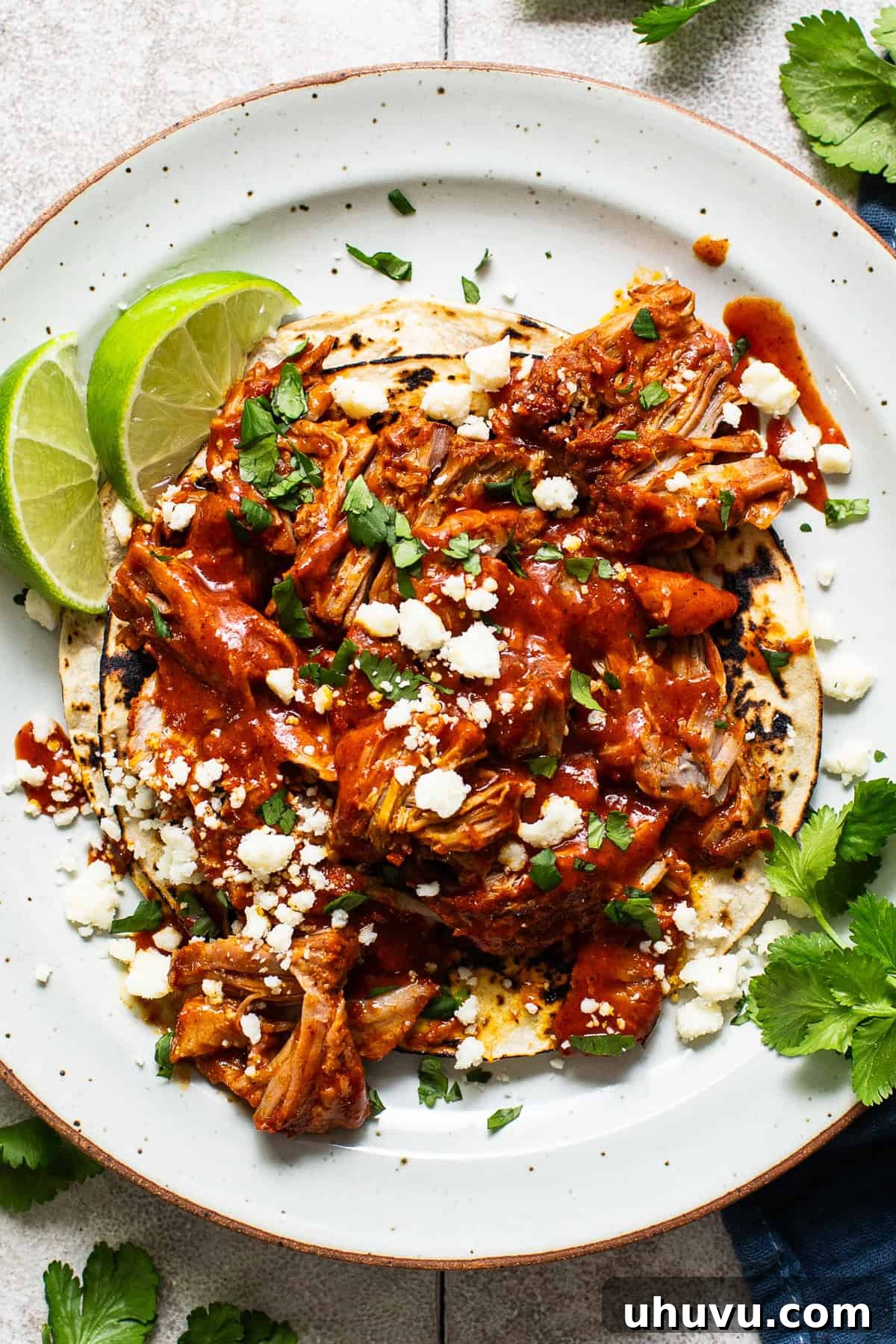
Step 5: Shred and Serve. Once the pork is cooked, carefully remove the Dutch oven from the oven. Using a slotted spoon, transfer the tender pork chunks into a large mixing bowl, leaving most of the cooking liquid behind in the pot. Using two forks, shred the meat until it reaches your desired consistency. Stir in about ⅓ cup of the rich cooking liquid from the Dutch oven back into the shredded pork to keep it moist and infuse it with even more flavor. Serve immediately with your favorite accompaniments.
Expert Tips for the Best Cochinita Pibil
- Preparing Banana Leaves: If you’re using banana leaves, you can usually find them fresh or frozen in most Mexican, Latin American, or Asian grocery stores. If frozen, be sure to thaw them completely at room temperature until they become pliable and easy to work with. Before lining your pot, gently wipe the leaves clean with a damp cloth to remove any dust or debris. You might also need to trim away any thick, woody stems along the edges to prevent them from tearing.
- No Banana Leaves? No Problem! While traditional, banana leaves are not absolutely essential for a delicious cochinita pibil. Their primary role is to impart a subtle aroma and help retain moisture. If you can’t find them, simply omit them and cook the pork directly in your Dutch oven or pot as directed. The flavor will still be incredible.
- Achieving Crispy Edges (Carnitas-Style): For a delightful textural contrast, you can get some crispy edges on your shredded cochinita pibil, similar to carnitas. After shredding the pork, spread it out on a baking sheet. Drizzle some extra cooking liquid over the top, and broil it for about 5 minutes, or until the edges are beautifully browned and slightly crispy. Keep a close eye on it to prevent burning!
- Embrace the Make-Ahead Magic: This recipe truly shines when prepared in advance. The pork can be marinated for up to 24 hours in the refrigerator, allowing the flavors to meld and deepen. Cooking it ahead of time also makes dinner prep less stressful, as you can simply reheat and serve when ready.
- Don’t Skimp on Marination Time: While 6 hours is the minimum, an overnight marination truly unlocks the full flavor potential of this dish. The longer the pork sits in the tangy, spiced marinade, the more tender and flavorful it will become.
- Choosing the Right Pork Cut: Pork shoulder (also known as pork butt) is highly recommended due to its fat content and connective tissues, which render down during slow cooking to create incredibly moist and tender meat. Avoid leaner cuts like pork loin, as they can dry out easily.
Alternate Cooking Methods: Slow Cooker & Instant Pot
For those who prefer alternative cooking methods or simply want to free up their oven, cochinita pibil adapts beautifully to both the slow cooker and the Instant Pot, delivering equally delicious results:
- Slow Cooker Method: This method is ideal for hands-off cooking over several hours. First, layer the bottom and sides of your slow cooker with banana leaves (if you choose to use them), ensuring there’s enough overhang to cover the pork later. Then, add the fully marinated pork along with all the flavorful marinade juices into the slow cooker. Fold any excess banana leaves over the top of the pork, and add an additional leaf if needed to fully enclose the meat. Cover the slow cooker with its lid and cook on the LOW setting for 8 hours, or on the HIGH setting for 4-5 hours. The pork should be incredibly tender and easily shredded with a fork. Once cooked, shred and serve as directed in the main recipe.
- Instant Pot Method: For a significantly faster cooking time, the Instant Pot is an excellent choice. Add the marinated pork and all of the marinade juices directly into the Instant Pot insert. (Banana leaves are generally not used in the Instant Pot method as the high pressure can cause them to disintegrate). Close the lid of the pressure cooker and ensure the steam release valve is set to the “Sealing” position. Press the “Manual” or “Pressure Cook” button and set the cooking time to 50 minutes on high pressure. Once the cooking cycle is complete, allow the pressure to release naturally for 15 minutes. After 15 minutes, carefully release any remaining pressure using the vent valve. Once the floating valve drops, open the lid, shred the pork, and stir in some cooking liquid before serving.
Frequently Asked Questions About Cochinita Pibil
Traditionally, cochinita pibil is not inherently spicy. The achiote paste provides a rich, earthy, and slightly peppery flavor but does not contribute significant heat. The tang comes from the citrus. If you prefer a spicy kick, you can easily add heat to your serving by including a fiery salsa, or by blending a couple of serrano peppers or a potent habanero pepper into the marinade for a more integrated spice.
Both carnitas and cochinita pibil are incredible slow-cooked pork dishes, but they differ significantly in their preparation, flavor, and texture. Carnitas, meaning “little meats,” originated in Michoacán and are typically made by simmering pork in its own rendered fat (or lard) until tender, then increasing the heat to achieve crispy, caramelized edges. This results in a distinctly savory, rich, and salty flavor profile with a delightful textural contrast. Cochinita pibil, on the other hand, hails from Yucatán and is characterized by its vibrant achiote and citrus marinade. It’s slow-cooked, often wrapped in banana leaves, resulting in extremely tender, moist, and flavorful pork with a tangy, earthy, and slightly sweet taste, but without the crispy edges found in carnitas.
Absolutely! While banana leaves add a subtle fragrance and are traditional, they are not strictly essential for making delicious cochinita pibil. If you can’t find them, simply proceed with the recipe by cooking the marinated pork directly in a tightly covered Dutch oven or heavy-bottomed pot. The dish will still be incredibly flavorful thanks to the robust achiote-citrus marinade.
Pork shoulder, also known as pork butt, is the absolute best cut for cochinita pibil. Its ideal fat-to-meat ratio and abundant connective tissue break down beautifully during the long, slow cooking process, yielding meat that is incredibly tender, juicy, and easy to shred. Leaner cuts of pork tend to dry out and won’t give you that desirable melt-in-your-mouth texture.
Delicious Ways to Serve Cochinita Pibil
The versatility of cochinita pibil extends far beyond just tacos. Its rich flavor and tender texture make it a fantastic star ingredient in a multitude of Mexican-inspired dishes:
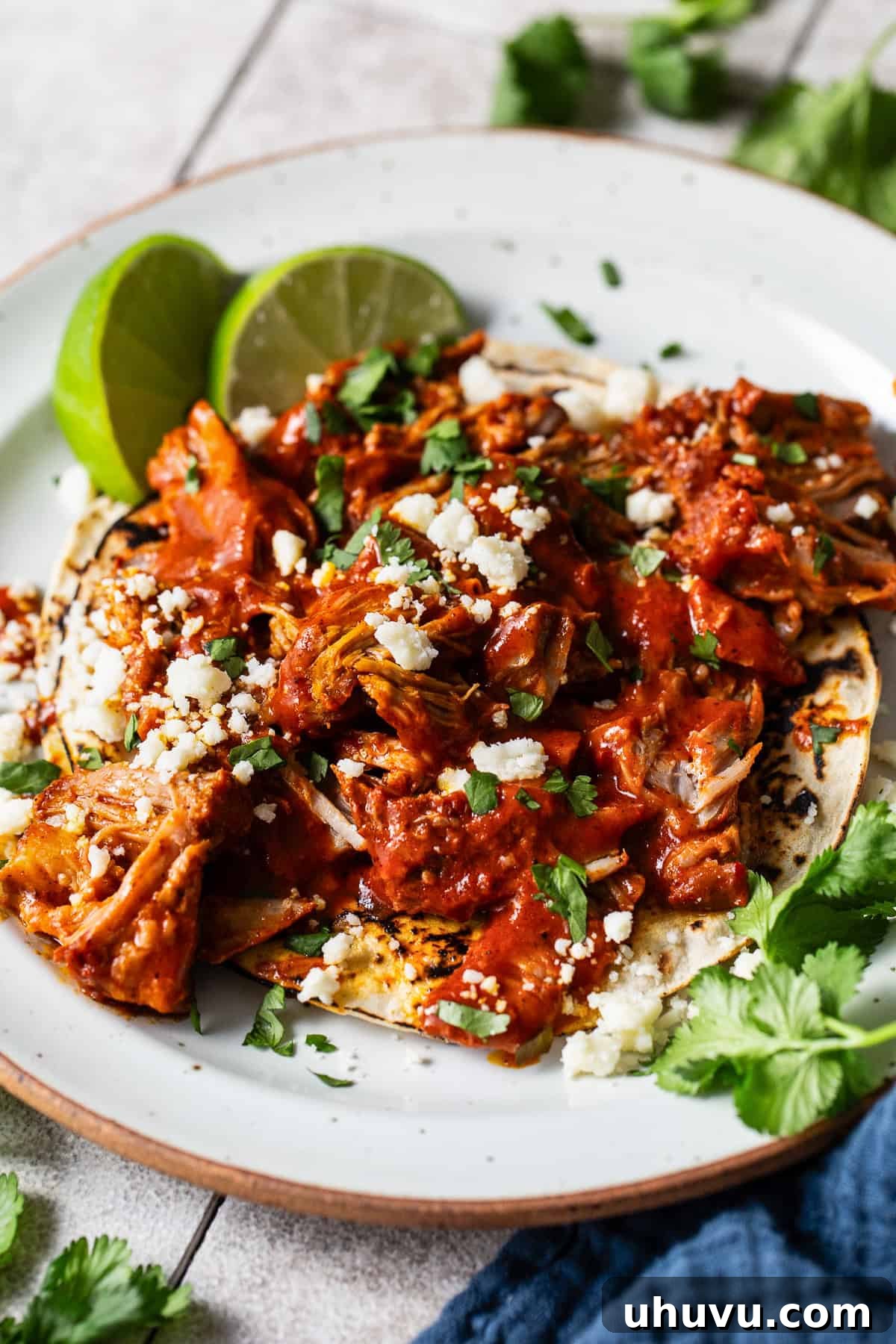
- Classic Tacos: This is the most traditional and perhaps the most beloved way to enjoy cochinita pibil. Serve it generously piled into warm, soft corn tortillas. Garnish with a vibrant sprinkle of fresh cilantro, a crumble of homemade queso fresco, and, most importantly, tangy pickled red onions, which provide a crucial acidic counterpoint to the rich pork. Don’t forget your favorite salsa for a kick!
- Crispy Tostadas: For a delightful crunch, load your cochinita pibil onto crisp tostada shells. Start with a layer of creamy refried beans (or refried black beans), then add the shredded pork, and top with diced avocado, a dollop of sour cream, or a fresh pico de gallo.
- Hearty Rice Bowls: Create a satisfying and balanced meal by serving the shredded pork over a bed of fragrant cilantro lime rice or savory Mexican rice. Add black beans, corn, a squeeze of fresh lime juice, and perhaps some sliced radishes or a sprinkle of cotija cheese for a complete and flavorful bowl.
- Flavorful Tamales: Cochinita pibil makes an absolutely incredible and authentic filling for tamales. Prepare your masa for tamales using your preferred recipe, then fill and steam them just as you would with traditional red Mexican pork tamales. The rich, tender pork is perfectly complemented by the soft, corn-based masa.
- Mouthwatering Sandwiches or Tortas: Pile the cochinita pibil high on a crusty roll or bolillo bread for an unforgettable Mexican sandwich. Add avocado slices, pickled jalapeños, and a smear of mayonnaise or crema for a truly satisfying meal.
Storing, Freezing, and Reheating Cochinita Pibil
Cochinita pibil is not only delicious freshly made but also excellent for meal prepping and enjoying later. Proper storage ensures you can savor its rich flavors for days or even months:
To Store: Once the cochinita pibil has cooled to room temperature, transfer the shredded pork, along with a good amount of its cooking liquid, to an airtight container. Refrigerate for up to 5 days. The liquid is crucial for keeping the pork moist and flavorful.
To Freeze: For longer storage, transfer the cooled shredded pork and its liquid to a freezer-safe airtight container or heavy-duty freezer bags. Ensure there’s minimal air in the container to prevent freezer burn. It can be frozen for up to 3 months. Thaw overnight in the refrigerator before reheating.
To Reheat:
- Skillet Method: The best way to reheat cochinita pibil is on the stovetop. Transfer the pork and its liquid to a skillet over medium heat. Stir occasionally, breaking up any clumps, until it is heated through and steaming hot. This method helps maintain moisture.
- Microwave Method: For a quick reheat, place a portion of the pork and its liquid in a microwave-safe dish. Heat in 1-minute intervals, stirring between each, until thoroughly warmed.
Explore More Authentic Mexican Recipes
- Authentic Birria: A savory, spiced, and tender beef stew often served in tacos.
- Mexican Pork Chile Verde: A vibrant, spicy green chile pork stew.
- Pozole Rojo: A hearty and comforting red chile hominy stew with pork.
- Chile Colorado: A rich and flavorful red chile beef stew.
Did you make this unforgettable cochinita pibil recipe? We’d love to hear about your culinary journey! Be sure to leave a rating and a comment below to share your experience – your feedback helps fellow food enthusiasts!
Cochinita Pibil: Yucatecan Pulled Pork
Ingredients
- 3 ½ ounces achiote paste
- 1 cup orange juice (about 4-5 fresh oranges)
- ½ cup lime juice (about 4 fresh limes)
- 1 white onion, quartered
- 4 cloves garlic, peeled
- 1 teaspoon kosher salt
- ½ teaspoon ground cumin
- 3 pounds pork shoulder, cut into large chunks (pork butt)
- 2-3 banana leaves, wiped clean (optional)
- For serving (optional): warm corn tortillas, pickled red onion, queso fresco, chopped cilantro, spicy salsa
Instructions
- Make the Marinade: Add the achiote paste, orange juice, lime juice, onion, garlic, salt, and cumin to a large blender. Blend until completely smooth.
- Marinate the Pork: Place the cut pork shoulder into a large bowl or baking dish. Pour the blended marinade over the pork. Toss everything together until the pork chunks are thoroughly and evenly coated. Cover the bowl tightly with plastic wrap and refrigerate. Allow the pork to marinate for at least 6 hours, or ideally, for up to 24 hours (overnight) for the best flavor.
- Prepare for Oven: Preheat your oven to 325℉ (160°C). If using banana leaves, line the bottom and sides of a large Dutch oven or a heavy-bottomed pot. Arrange the leaves so they fully cover the bottom and sides, with enough overhang to fold over the pork.
- Assemble & Cover: Pour the marinated pork, including all of the marinade juices, into the banana leaf-lined Dutch oven. Fold the overhanging banana leaves inward to completely cover the meat, creating a sealed package.
- Bake: Cover the Dutch oven tightly with its lid. Place it in the preheated oven and bake for 3 ½ hours, or until the pork is incredibly tender and easily pulls apart with a fork. (See Notes below for slow cooker and Instant Pot methods).
- Shred the Pork: Once cooked, carefully remove the Dutch oven from the oven. Using a slotted spoon, transfer the tender pork into a large mixing bowl, leaving most of the cooking liquid in the pot.
- Add Juices: Using two forks, shred the meat to your desired consistency. Add about ⅓ cup of the flavorful cooking liquid from the Dutch oven back into the shredded pork and mix well to keep it moist and enhance its flavor.
- Serve: Serve your delicious cochinita pibil in warm corn tortillas, topped with traditional pickled red onion, a sprinkle of queso fresco, and fresh chopped cilantro. Enjoy!
Notes
- Banana leaves: While they are traditionally used to impart a subtle aroma and sweetness, banana leaves are optional. If you can’t find them, simply omit them and follow the recipe directions. The cochinita pibil will still be delicious.
- Slow cooker method: To use a slow cooker, layer the bottom and sides with banana leaves (if using). Add the marinated pork and all juices. Fold leaves over the pork. Cover and cook on low for 8 hours, or on high for 4-5 hours. Shred and serve as directed.
- Instant Pot method: Add the marinated pork and all juices to the Instant Pot (banana leaves are not typically used here). Close the lid and set the valve to “Sealing.” Press “Manual” or “Pressure Cook” to high pressure and cook for 50 minutes. Allow natural pressure release for 15 minutes, then quick release any remaining pressure. Shred and serve.
- For crispy edges: To add a delicious texture, spread the shredded pork on a baking sheet, drizzle with extra cooking liquid, and broil for about 5 minutes until lightly crispy.
- Prep ahead: The pork can be marinated for up to 24 hours, making this an ideal dish to prepare in advance for an easy and delicious dinner.
This recipe was inspired by Rick Bayless.
Nutrition
Calories: 239kcal |
Carbohydrates: 8g |
Protein: 28g |
Fat: 10g |
Saturated Fat: 3g |
Polyunsaturated Fat: 1g |
Monounsaturated Fat: 5g |
Cholesterol: 93mg |
Sodium: 495mg |
Potassium: 616mg |
Fiber: 1g |
Sugar: 5g |
Vitamin A: 104IU |
Vitamin C: 30mg |
Calcium: 36mg |
Iron: 2mg
Nutrition information is automatically calculated and should only be used as an approximation.
Photography by Ashley McLaughlin.