
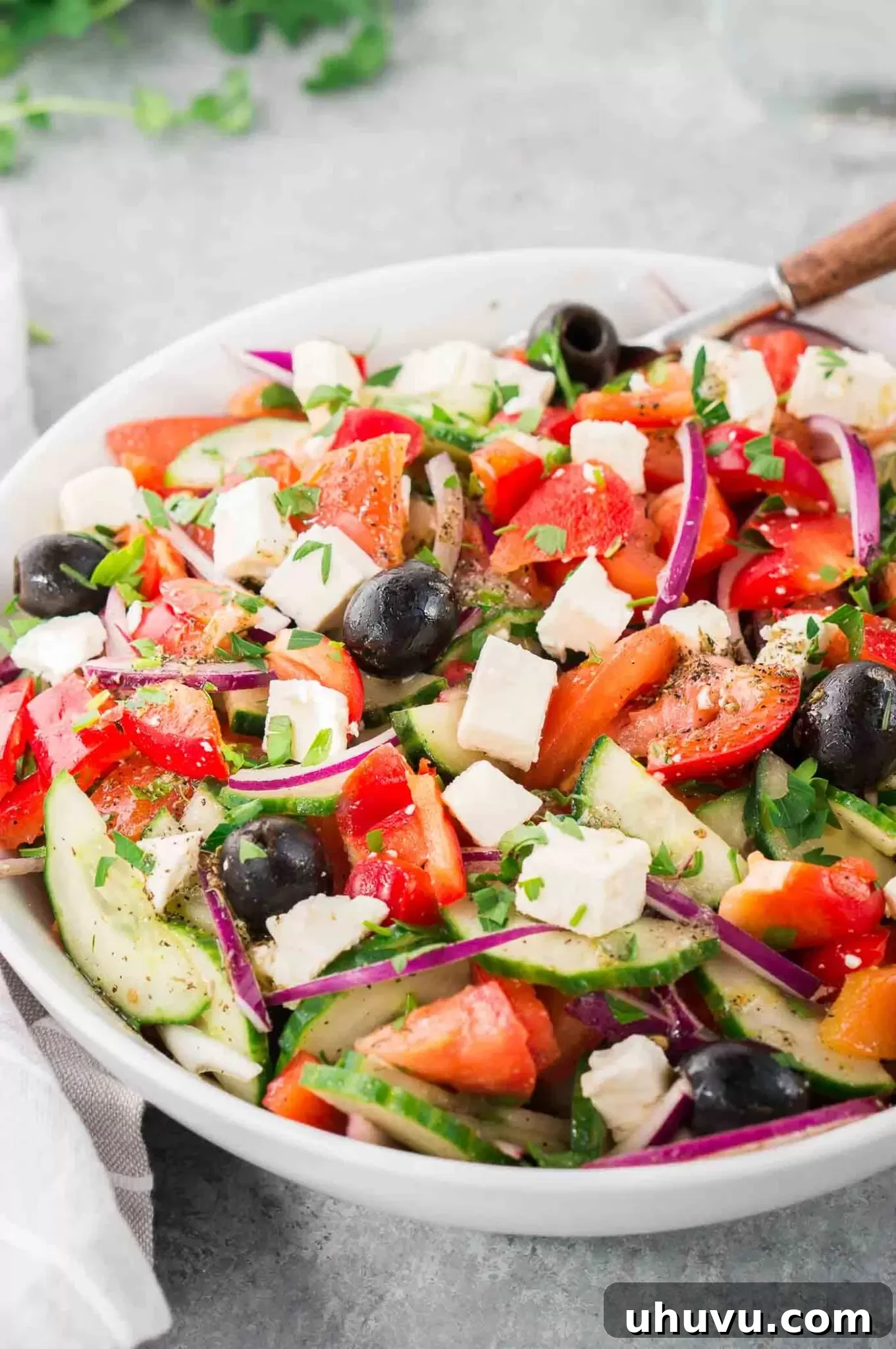
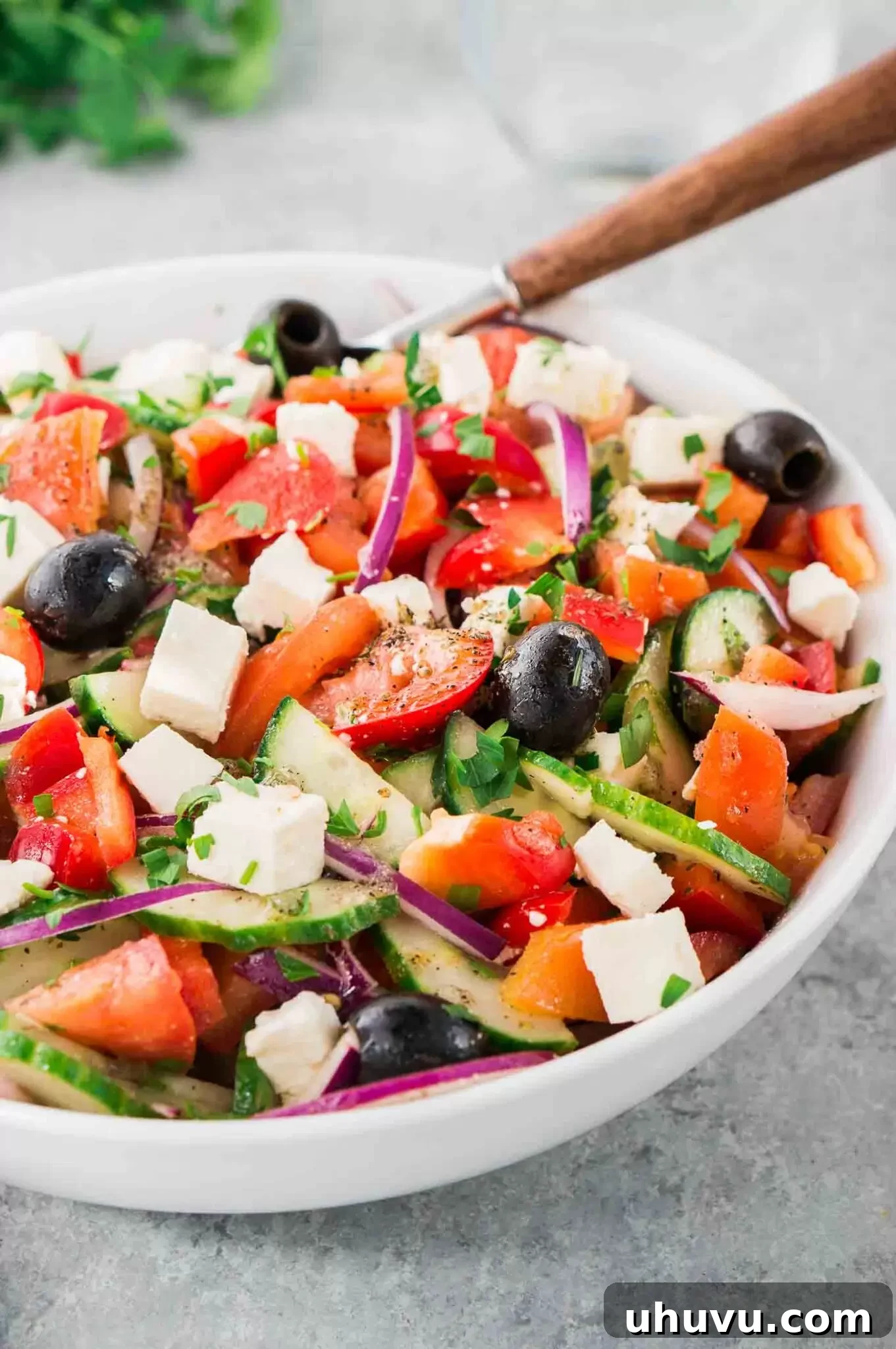
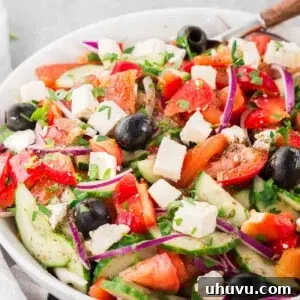
Transport your taste buds straight to the sun-drenched shores of the Mediterranean with this authentic Greek Salad, also known as Horiatiki. Bursting with incredibly fresh flavors and wholesome, healthy ingredients, this vibrant salad is more than just a dish; it’s a celebration of simplicity and natural goodness. Featuring crisp, sun-ripened vegetables, creamy, tangy feta cheese, and a light yet zesty dressing made from the finest olive oil, it truly is the perfect culinary companion for a refreshing summer meal, a lively potluck gathering, or a healthy everyday side dish. Prepare to fall in love with its irresistible charm and ease of preparation.
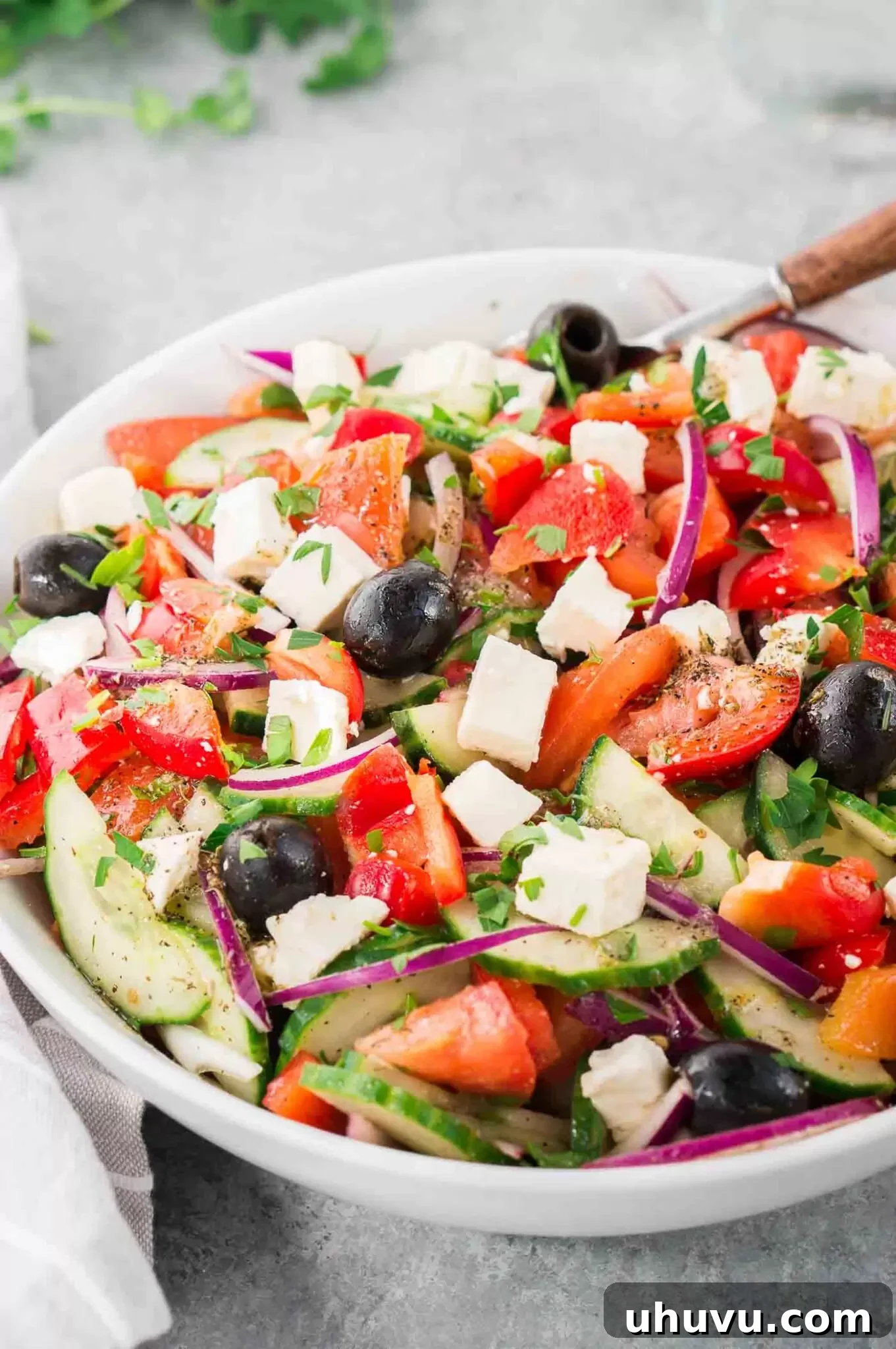
Greek Salad – At a Glance
PREP: 15 min | COOK: 0 min | TOTAL: 15 min | SERVES: 6 | DIFFICULTY: Easy
KEY INGREDIENTS: Fresh cucumber, ripe tomatoes, sweet bell pepper, pungent red onion, briny olives, creamy feta, fresh parsley & a classic dressing (extra virgin olive oil, red wine vinegar, dried oregano, salt & pepper)
DIETARY PROFILE: Naturally gluten-free, low-carb, grain-free, and vegetarian. Easily made dairy-free or Paleo/Whole30 by omitting feta.
MACROS (per serving): Protein 3g | Carbs 8g | Fat 14g | Fiber 2g | CALORIES: 160kcal
If you’re searching for a speedy, light, and utterly delicious side dish that consistently impresses everyone, then this healthy Greek Salad recipe is an absolute must-try. I’ve personally made this vibrant Mediterranean salad for countless summer potlucks, and it always receives rave reviews. The magic truly comes alive with the use of fresh, sun-ripened tomatoes and crisp cucumbers, ideally plucked straight from the garden if you have the luxury. Its inherently light and refreshing character makes it an ideal choice for warmer months.
Having grown up immersed in the rich culinary traditions of Mediterranean cuisine in Bulgaria, this salad was a daily staple during the summer. We savored it for both lunch and dinner, a testament to its simple yet profound appeal. It exemplifies the Mediterranean diet’s philosophy of using simple, seasonal ingredients to create dishes bursting with flavor, much like the beloved Bulgarian Shopska Salad and the iconic Italian Caprese Salad. Yet, the Greek salad stands out with its distinctive profile, offering a truly unique and amazing taste experience.
Why You Will Absolutely Love This Authentic Greek Salad
- Unforgettable Flavor: This salad isn’t just “good”; it’s incredibly flavorful, boasting the natural sweetness of summer vegetables, the briny punch of olives, and the creamy tang of feta, all harmonized by a simple yet potent dressing. Each bite is a refreshing burst of Mediterranean sunshine.
- Effortlessly Quick & Easy: Forget complicated recipes. Preparing this Greek salad is remarkably straightforward. It primarily involves a bit of chopping, a quick whisking of the dressing ingredients, and then a gentle toss to combine everything. It’s an ideal last-minute dish, perfect for busy weeknights or unexpected guests.
- The Ultimate Summer Companion: Whether you’re hosting a backyard BBQ, heading to a picnic, or looking for a vibrant addition to a potluck, this salad is a crowd-pleaser. Its crisp, cool nature makes it a perfect counterpoint to grilled meats, fish, or poultry, elevating any summer spread.
- Nutrient-Rich & Wholesome: Packed with fresh vegetables, healthy fats from olive oil, and protein from feta, this salad is a powerhouse of nutrients. It’s a deliciously guilt-free way to enjoy a substantial meal or side dish that supports a healthy lifestyle.
- Versatile & Customizable: While the classic recipe is divine, this salad is incredibly adaptable. Easily adjust ingredients to suit dietary preferences or what’s fresh in season. Add grilled protein for a complete meal or experiment with different herbs for a personalized touch.
What Is Authentic Greek Salad (Horiatiki)?
The term “Greek Salad” often conjures images of a simple yet elegant combination of fresh vegetables, cheese, and olives. In its truest form, known as Horiatiki Salata (Χωριάτικη Σαλάτα), meaning “village salad”, this iconic dish is a cornerstone of Mediterranean cuisine, beloved not only throughout Greece but across the entire Mediterranean region. The essence of Horiatiki lies in its rustic simplicity and the exceptional quality of its seasonal components.
Traditionally, an authentic Greek salad is deliberately free of leafy greens like lettuce, distinguishing it from many Westernized interpretations. Instead, it proudly showcases robust chunks of perfectly ripe, juicy tomatoes, thinly sliced crisp cucumbers, vibrant green bell peppers, and pungent red onions. Crucial to its character are the briny Kalamata olives and a generous slab of creamy, salty feta cheese, often served as a single, large block atop the vegetables, rather than crumbled. The dressing is wonderfully uncomplicated: a generous drizzle of the finest extra virgin olive oil, a splash of red wine vinegar, and a sprinkle of dried Greek oregano, all seasoned simply with salt and pepper. This minimalist approach allows the supreme quality and natural flavors of each ingredient to truly shine, offering a taste of authentic Greek culinary heritage.
Essential Greek Salad Recipe Ingredients
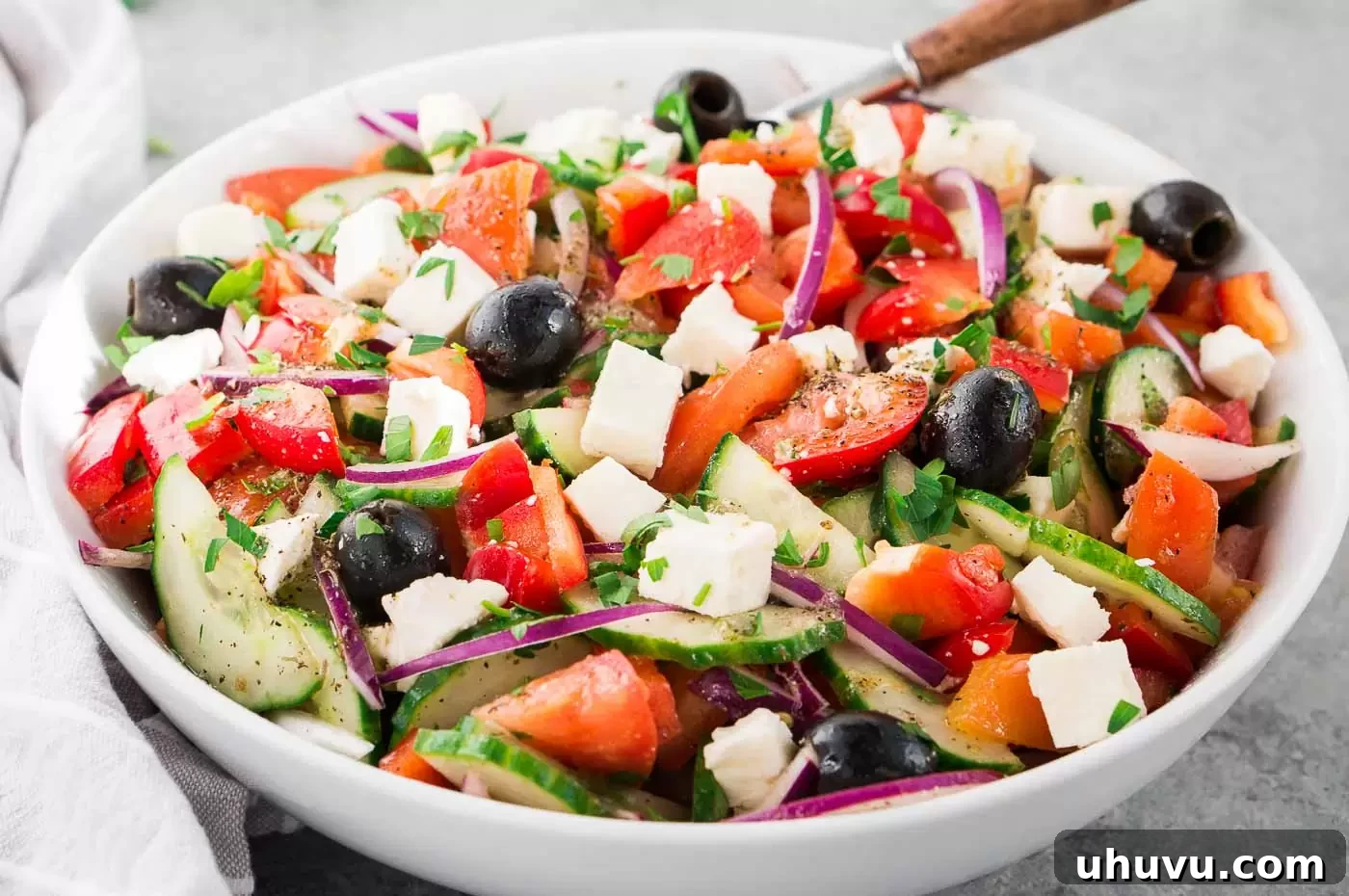
Crafting the perfect Greek salad doesn’t require a long list of exotic ingredients. Instead, it relies on a handful of high-quality, fresh components that come together to create a symphony of flavors. Here’s a closer look at what you’ll need to make this delightfully easy and healthy salad recipe:
- Perfectly Ripe Tomatoes: The star of the show! Opt for large, ripe, and juicy tomatoes. Heirloom varieties or vine-ripened tomatoes are excellent choices, as they offer the best flavor and sweetness. Cut them into substantial 1-inch pieces to truly appreciate their texture and juices.
- Crisp Cucumbers: An English cucumber is ideal for its mild flavor and minimal seeds. If using garden cucumbers, ensure they are fresh and firm. Quarter them lengthwise and chop into ½-inch pieces. No need to peel them; the skin adds a pleasant crunch and extra nutrients.
- Sweet Bell Pepper: Traditionally, a green bell pepper is used for its slightly bitter contrast, but a red or yellow bell pepper can also be used for a sweeter note and added color. Cut it into 1-inch pieces, similar to the tomatoes.
- Pungent Red Onion: Thinly sliced red onion adds a crucial sharp, piquant flavor. If you find raw red onion too intense, a pro tip is to soak the slices in a bowl of cold water with a splash of red wine vinegar or lemon juice for about 5-10 minutes. This mellows their bite considerably.
- Briny Olives: This salad wouldn’t be truly Greek without olives! Kalamata olives are the traditional choice, known for their distinct fruity, briny flavor and almond shape. Ensure they are pitted for ease of eating. If Kalamata aren’t available, any good quality black pitted olive will work, but the flavor profile will differ slightly.
- Creamy Feta Cheese: The hallmark of Greek cuisine. Always choose a block of authentic Greek feta cheese, preferably made from sheep’s or goat’s milk (or a blend), stored in brine. This ensures a rich, tangy, and creamy texture that crumbles beautifully. Avoid pre-crumbled feta, which often lacks the authentic taste and texture. I personally love Bulgarian feta for its unique creaminess. Cut it into generous cubes or serve it as a single slab over the salad.
- Fresh Parsley (Optional but Recommended): A sprinkle of freshly chopped flat-leaf parsley adds a touch of herbaceous freshness and a lovely visual appeal.
- The Simple Dressing: The magic happens with a harmonious blend of high-quality extra virgin olive oil, a robust red wine vinegar, a teaspoon of dried Greek oregano (the flavor is distinct!), a pinch of kosher salt, and freshly ground black pepper. The quality of your olive oil here is paramount, as it forms the backbone of the dressing.
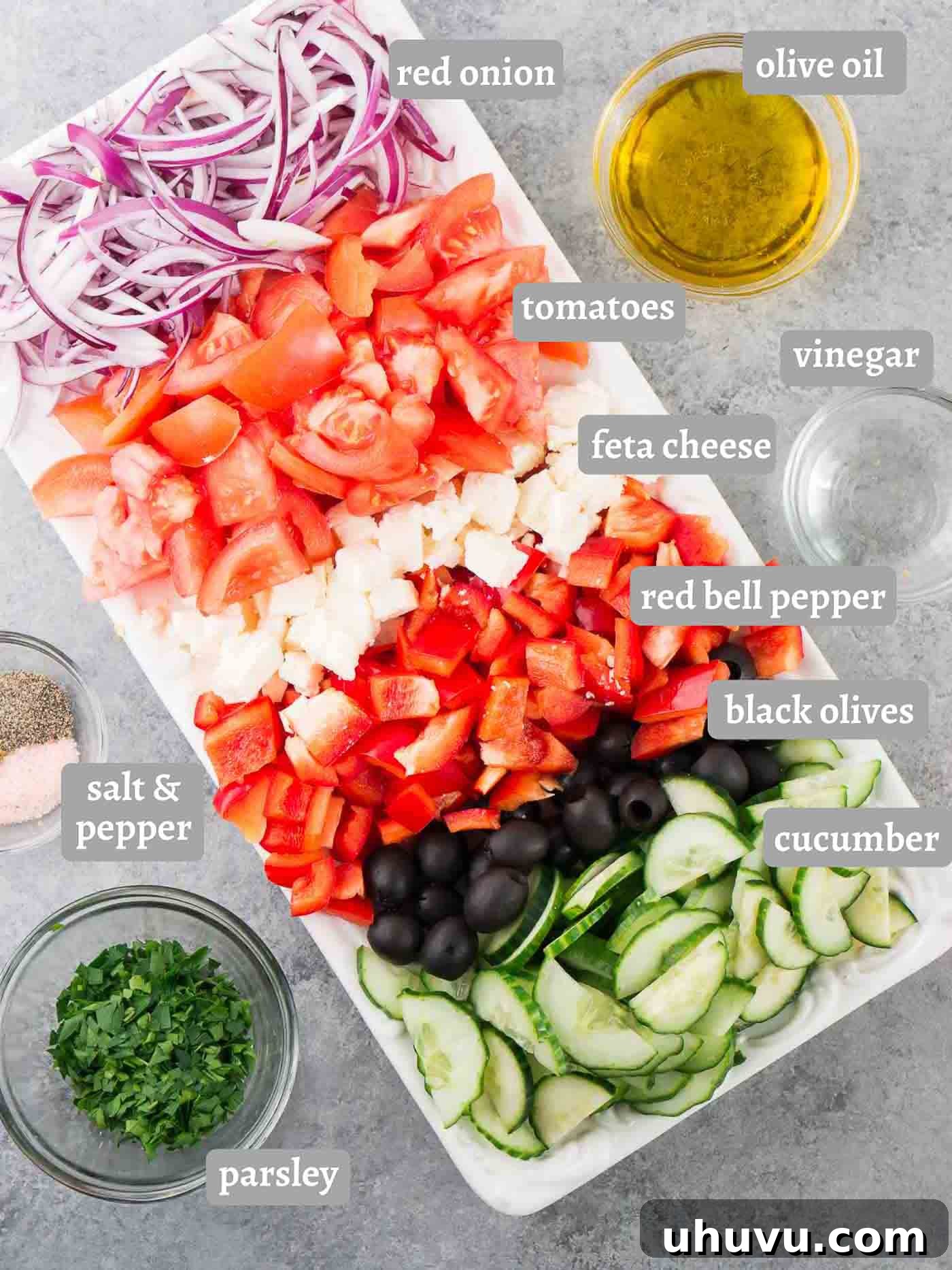
How To Assemble The Best Authentic Greek Salad
Creating this iconic Mediterranean salad is a delightful and straightforward process. Follow these simple steps for a truly authentic and flavorful experience:
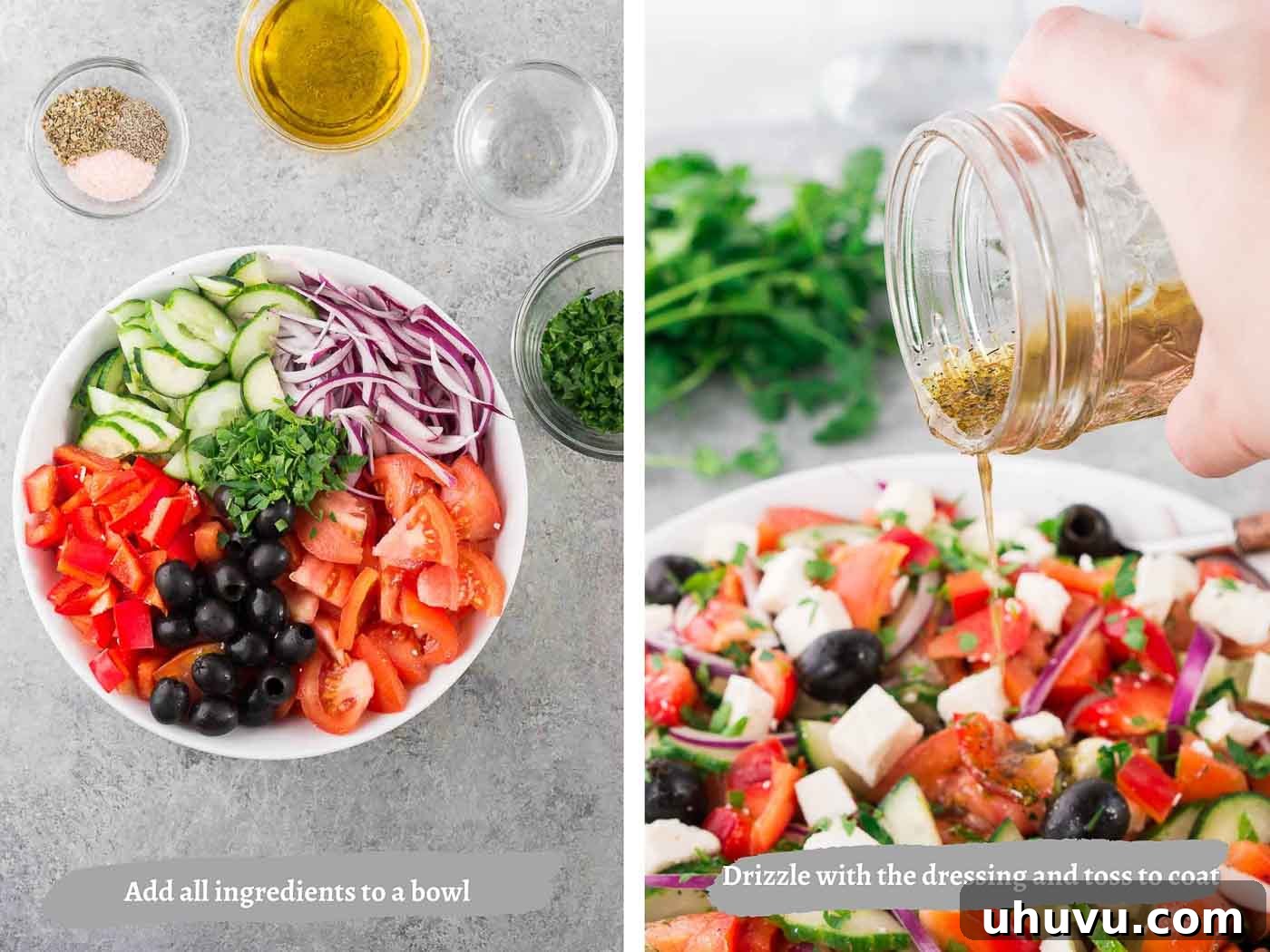
- Prepare the Vegetables: Begin by meticulously washing all your fresh vegetables. Dice the ripe tomatoes into substantial 1-inch pieces. Take your crisp cucumber, quarter it lengthwise, and then chop it into ½-inch segments. Slice the bell pepper into 1-inch pieces, matching the size of the tomatoes for visual appeal and balanced bites. Finally, thinly slice the red onion. If you’ve chosen to mellow its flavor, soak it now and drain thoroughly before adding. Combine all these vibrant vegetables, along with the halved pitted olives and freshly chopped parsley, into a large mixing bowl. Toss gently to ensure an even distribution.
- Craft the Zesty Dressing: In a separate small jar or bowl, combine all the dressing ingredients: the extra virgin olive oil, red wine vinegar, dried oregano, kosher salt, and freshly ground black pepper. Secure the lid on the jar and shake vigorously, or whisk thoroughly in a bowl, until all ingredients are well combined and the dressing is slightly emulsified. Taste and adjust seasoning if necessary, aiming for a balance of tangy, savory, and herbaceous notes.
- Dress the Salad: Pour the freshly prepared Greek salad dressing generously over the mixed vegetables in the large bowl. With a gentle hand, toss the salad thoroughly. The goal is to coat every piece of vegetable lightly with the dressing without bruising the delicate tomatoes or cucumbers.
- Add the Feta: Lastly, carefully place the cubed or sliced block of authentic Greek feta cheese on top of the dressed salad. This traditional presentation not only looks beautiful but also allows each diner to break off pieces of the tangy cheese with their serving, ensuring freshness and preventing it from dissolving too much into the dressing. Serve immediately to enjoy the peak of freshness and flavor.
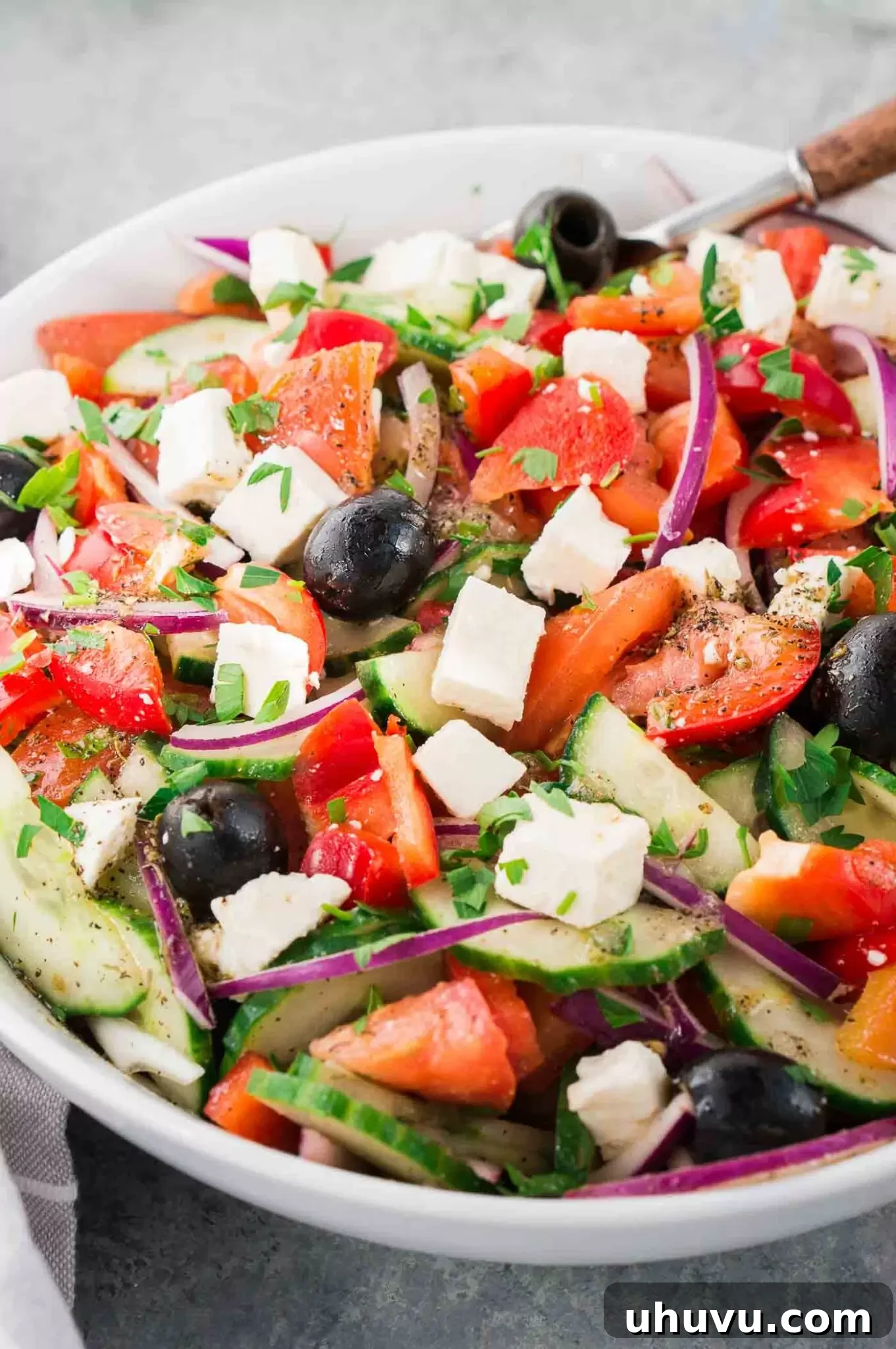
EXPERT TIPS FROM THE KITCHEN
Recipe Notes and Pro Tips for the Perfect Greek Salad
- Mellowing Red Onions: For those who find the sharp bite of raw red onions a bit overpowering, a simple trick is to thinly slice them and then soak them in a bowl of cold water, perhaps with a splash of vinegar or lemon juice, for about 5-10 minutes. This process significantly tames their intensity without compromising their flavor.
- Feta and Olives are Non-Negotiable: These two ingredients are defining characteristics of a true Greek salad. Their salty, briny, and creamy notes are essential for the authentic flavor profile. Don’t skip them; they add immense depth and deliciousness.
- To Chickpea or Not to Chickpea: While some modern variations might include chickpeas for added texture and protein, they are generally not part of the traditional Horiatiki salad. Feel free to add them if you prefer, but be aware it deviates from the classic recipe.
- Choose Juicy Tomatoes: The quality of your tomatoes dramatically impacts the salad. Seek out the juiciest, most flavorful ripe tomatoes you can find. As they mingle with the dressing, they release their sweet juices, which combined with the olive oil and vinegar, create an incredible, flavorful base that coats all the other ingredients.
- Keep the Cucumber Skin On: There’s no need to peel your cucumber, especially if using an English or Persian variety. The skin provides a delightful crisp texture and also adds extra fiber and nutrients to your salad.
- Optimal Dressing Timing: While you can prepare the chopped salad ingredients a day in advance, it’s crucial to add the dressing just before serving. Dressing the salad too early will cause the vegetables, especially the cucumbers and tomatoes, to release too much water and become soggy, diluting the vibrant flavors and compromising the texture. Store the chopped vegetables and dressing separately in the refrigerator.
- Quality Olive Oil Makes a Difference: Invest in a good quality extra virgin olive oil. Since the dressing is so simple, the flavor of the olive oil truly stands out and elevates the entire salad.
- Authentic Greek Oregano: If possible, use dried Greek oregano. It has a more potent and distinct flavor profile compared to regular oregano, adding that characteristic Mediterranean aroma and taste.
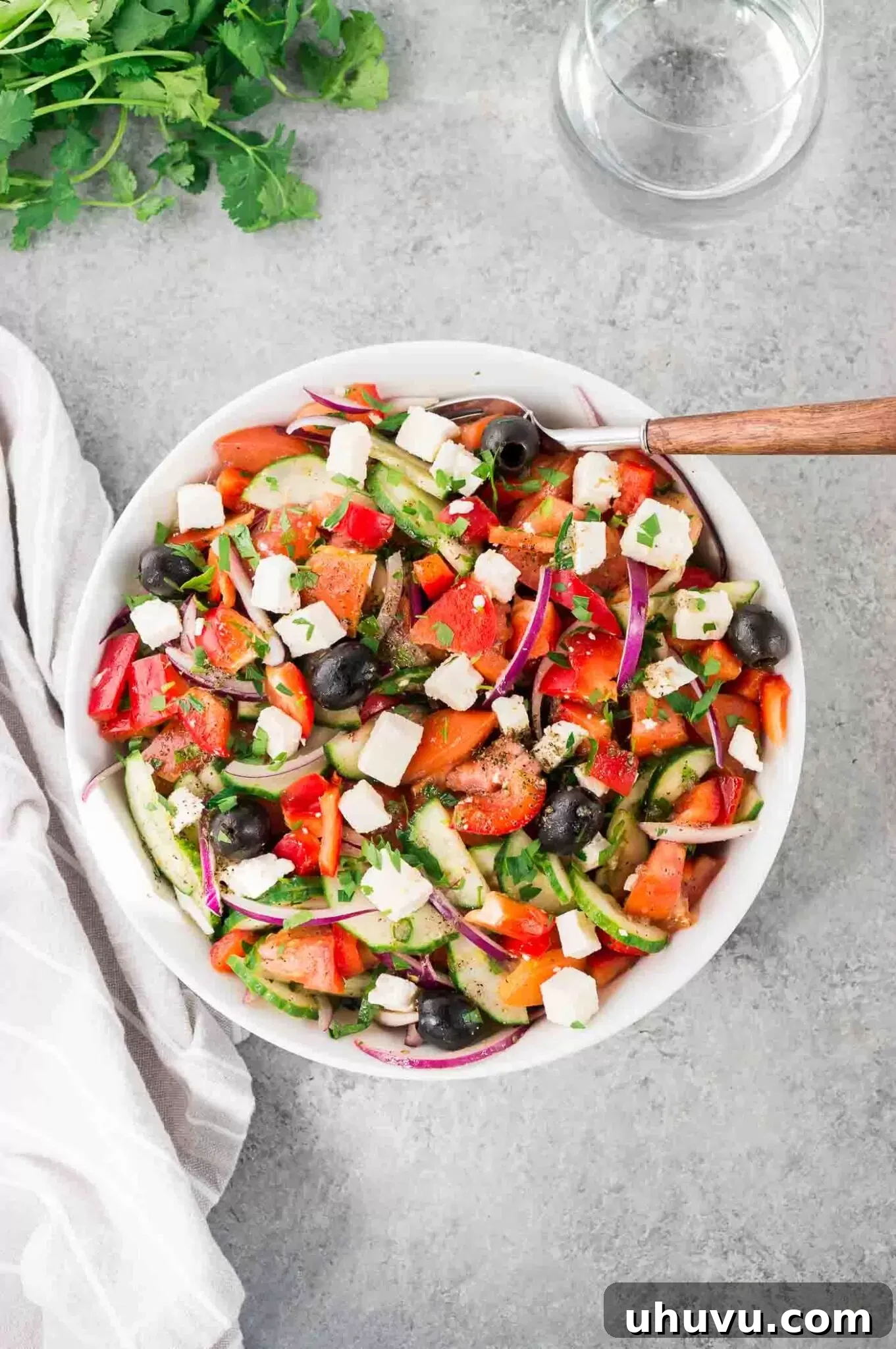
Creative Variations and Healthy Substitutions
While the classic Greek salad is perfect in its simplicity, its robust flavor profile makes it a fantastic base for creative variations and healthy substitutions. Feel free to customize your salad to suit your personal taste preferences, dietary needs, or what fresh ingredients you have on hand:
- Cheese Alternatives: If feta isn’t your preference or you’re looking for a different twist, consider goat cheese for a milder tang, fresh mozzarella balls (cherry or pearl size) for a creamy texture, or even shaved Parmesan for an umami kick. For a dairy-free option, simply omit the cheese or use a plant-based feta alternative.
- Adding Leafy Greens: Although traditional Horiatiki doesn’t include lettuce, adding some fresh greens can make the salad more substantial and boost nutrient content. Crisp romaine lettuce, tender mixed greens, nutrient-dense spinach, peppery arugula, or even finely chopped kale can be wonderful additions.
- Expanding the Vegetable Palette: Beyond the classic ingredients, you can introduce other Mediterranean-inspired vegetables. Artichoke hearts (canned or marinated, drained well) add a delightful tang. Roasted vegetables like eggplant, zucchini, or bell peppers (for an extra smoky flavor) can add warmth and depth. If large tomatoes are out of season, sweet cherry or grape tomatoes are excellent substitutes, offering concentrated bursts of flavor.
- Boosting Protein for a Main Meal: To transform your Greek salad into a satisfying main course, incorporate a source of lean protein. Grilled chicken breast or tender lamb skewers pair perfectly. For seafood lovers, grilled shrimp or flaky baked salmon are exquisite choices. Vegetarians can boost protein with canned chickpeas or white beans, drained and rinsed, which add a lovely creamy texture.
- Exploring Dressing Flavors: The traditional olive oil and red wine vinegar dressing is simple and sublime, but don’t shy away from experimenting! A balsamic vinaigrette can offer a sweeter, darker tang. For a creamy, nutty profile, a tahini-based dressing can be surprisingly delicious. A bright citrus-based dressing using lemon juice and olive oil will enhance the freshness.
- Incorporating Fresh Herbs: Herbs are key to Mediterranean cooking. Beyond oregano, fresh dill adds a wonderfully aromatic and slightly anise-like note. Fresh basil brings a sweet, peppery touch, while mint can add a surprising burst of coolness, especially refreshing in warmer weather. Sprinkle them generously on top or finely chop and mix into your dressing for an intensified flavor.
- Grains for a Heartier Meal: For a more filling option, particularly if serving as a main course, consider adding cooked and cooled grains like quinoa, farro, or couscous. They absorb the dressing beautifully and add a chewy texture.
By incorporating these diverse variations and clever substitutions, you can effortlessly tailor your Greek salad to precisely match your taste preferences and dietary requirements, all while still reveling in its vibrant and healthy Mediterranean essence.
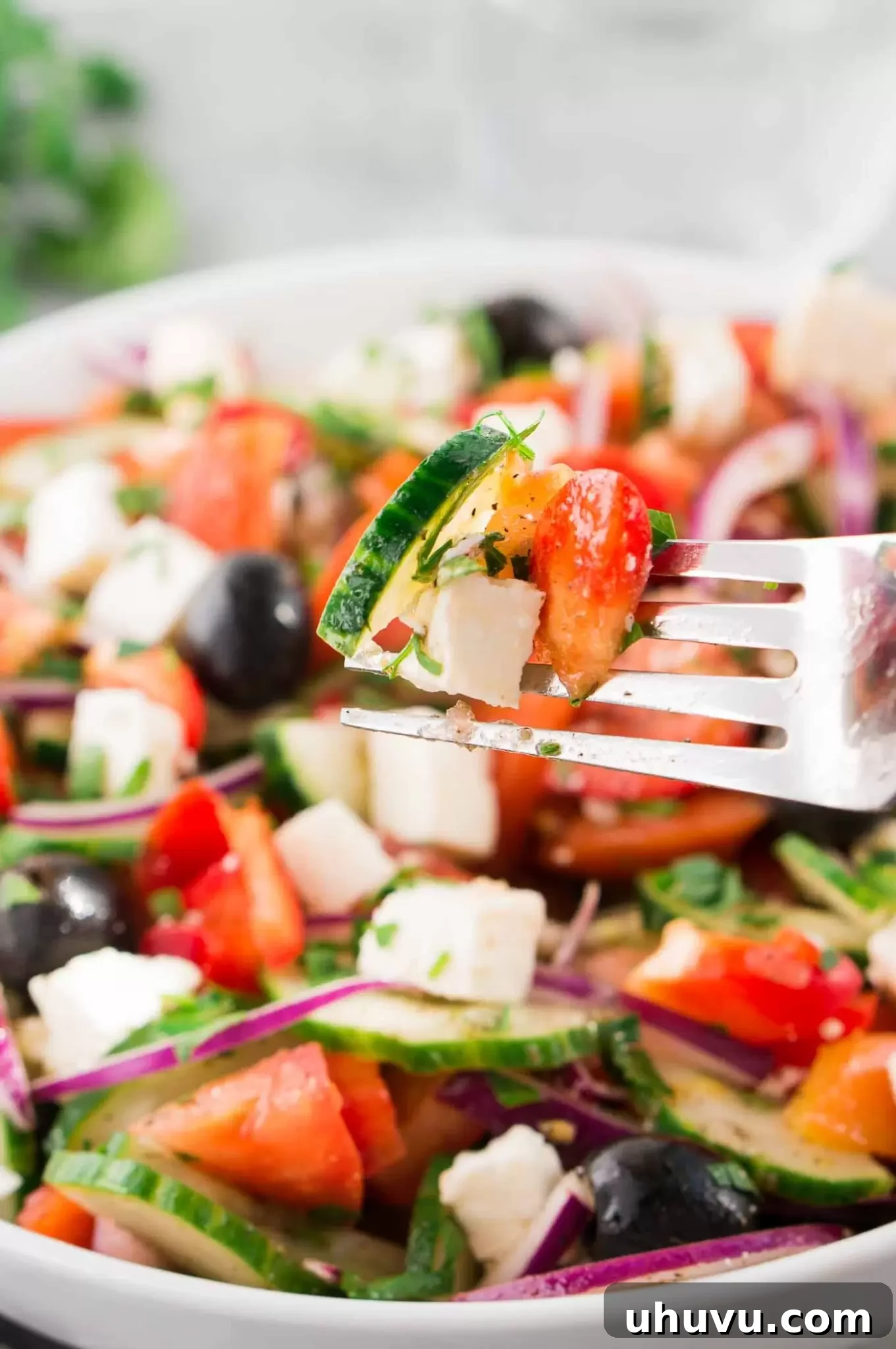
Delightful Serving Suggestions for Your Greek Salad
This easy Mediterranean salad is incredibly versatile, making it a fantastic addition to almost any meal. Its fresh, tangy flavors provide a perfect balance to richer dishes, or it can stand proudly as the star of the show. Here are some delightful ways to serve your homemade Greek salad:
- With Crusty Bread: A simple yet utterly satisfying pairing. Serve your Greek salad with a warm, crusty loaf of artisanal bread, perfect for soaking up the delicious olive oil and tomato juices at the bottom of the bowl.
- Alongside Grilled Meats: The crispness and acidity of the salad cut beautifully through the richness of grilled meats. It’s an ideal companion for roasted or grilled chicken (like our Mediterranean Chicken Kebabs), succulent lamb chops, juicy beef steaks, or even tender pork.
- With Seafood: The light and fresh profile of the Greek salad complements seafood wonderfully. Serve it alongside baked salmon (try our Honey Sriracha Salmon), grilled shrimp, or a simple pan-seared white fish for a complete and healthy meal.
- As a Main Course: Elevate this side dish to a hearty main course by adding extra protein. Top your Greek salad with generous servings of grilled chicken, salmon, or a handful of canned chickpeas for a delicious vegetarian option.
- Part of a Mediterranean Mezze Platter: Create an impressive spread by serving Greek salad alongside other small plates like hummus, tzatziki, dolmades, olives, and pita bread for a true Mediterranean feast.
- Pair with Pasta or Rice Dishes: It offers a refreshing contrast to creamy pasta dishes or savory rice pilafs. For instance, it would be a perfect side to Chicken in Creamy Mushroom Sauce or Easy Creamy Chicken Marsala.
Optimal Storing and Make-Ahead Tips
Proper storage is key to maintaining the freshness and vibrant flavors of your Greek salad. While it’s always best enjoyed immediately after dressing, you can certainly prepare components in advance:
- Undressed Salad Storage: You can chop and combine all the salad ingredients (tomatoes, cucumbers, bell peppers, onions, olives, and feta) and store them in an airtight container in the refrigerator for up to 2 days. Keep the dressing completely separate.
- Dressing Storage: Prepare the dressing and store it in a sealed jar or container in the refrigerator for up to a week. Give it a good shake or whisk before using, as the oil and vinegar may separate.
- Serving Dressed Salad: Once the salad is dressed, it’s best consumed within a day. The acid from the vinegar will start to break down the vegetables, causing them to soften and release moisture, which can make the salad watery and less appealing over time. If you have leftovers of a dressed salad, they will still be edible the next day, but the texture might be softer.
- Best Make-Ahead Strategy: For the freshest taste and texture, chop all your vegetables and prepare your dressing separately. Store them chilled. When you are ready to serve, simply combine the vegetables, drizzle with the dressing, gently toss, add the feta, and enjoy. This method ensures your salad remains crisp and flavorful, making it an ideal choice for meal prepping or entertaining.
Frequently Asked Questions About Greek Salad
While many Westernized versions of “Greek salad” include leafy greens like romaine lettuce, an authentic Horiatiki salad traditionally does not. The absence of lettuce is one of the key distinctions of a true village salad, allowing the robust flavors of the chunky vegetables, feta, and olives to take center stage. You can certainly add chopped Romaine lettuce to your salad if you prefer, but be aware it departs from the traditional Greek style.
Absolutely! This Mediterranean Greek salad recipe is inherently incredibly healthy. It’s naturally gluten-free, low-carb, and keto-friendly, making it suitable for a variety of dietary preferences. Made with an abundance of fresh, whole foods like vibrant vegetables and healthy fats from extra virgin olive oil, it’s packed with vitamins, minerals, and antioxidants. You can easily make it dairy-free by simply omitting the feta cheese. For a Paleo and Whole30 compliant version, just exclude the feta cheese as well.
For the best authentic Greek salad, choose ripe, juicy, and flavorful large tomatoes such as beefsteak, Roma, or heirloom varieties. These varieties have a good balance of sweetness and acidity, and their firm flesh holds up well when chopped. Avoid overly watery or unripe tomatoes, as they won’t contribute to the rich flavor profile.
It is generally recommended not to peel the cucumber when making Greek salad, especially if you are using an English or Persian cucumber. The skin adds a delightful crunch, vibrant color, and extra fiber and nutrients to the salad. Simply wash the cucumber thoroughly before chopping.
Explore More Easy and Refreshing Side Salads
If you love the simplicity and fresh flavors of this Greek Salad, you’ll surely enjoy these other easy and delicious side salad recipes:
- Refreshing Cucumber Salad
- Classic Wedge Salad
- Shopska Salad (Bulgarian Shepherd’s Salad)
- Vibrant Caprese Salad
- Crunchy Red Cabbage Slaw
- Sweet Strawberry Spinach Salad
- Simple Carrot Salad
If you’ve enjoyed making this authentic Greek Salad recipe or discovered new favorites on my blog, please take a moment to leave a ⭐ star rating and share your thoughts in the 📝 comments section below. Your feedback is greatly appreciated! Thanks for visiting!
Pin this now to find it later!
Pin It
Rated by readers like you!
Authentic Greek Salad (Horiatiki)
Neli Howard
15 minutes
15 minutes
6
Save This Recipe
Enter your email and we’ll send the recipe directly to you!
Sign up for our newsletter to receive delicious recipes straight to your inbox!
By signing up, you consent to receive emails from Delicious Meets Healthy.
Ingredients
For the Authentic Greek Salad
- 2 large, ripe tomatoes, cut into 1-inch pieces
- 1 red bell pepper, cut into 1-inch pieces
- 1 long English cucumber (or 2 medium garden cucumbers), quartered lengthwise and chopped into 1/2-inch pieces (unpeeled)
- 1 medium red onion, thinly sliced (optional: soak in cold water for 5 min to mellow)
- ½ cup Kalamata or black pitted olives, halved lengthwise
- ½ cup authentic Greek feta cheese, cubed or served as a slab
- 2 Tablespoon fresh parsley, chopped (for garnish)
For the Zesty Greek Salad Dressing
- 1 teaspoon kosher salt
- 1 teaspoon dried Greek oregano
- ½ teaspoon freshly ground black pepper
- ¼ cup high-quality extra virgin olive oil
- 2 Tablespoon red wine vinegar
Instructions
-
Prepare the Salad Base: In a large mixing bowl, combine the chopped tomatoes, bell pepper, cucumber, thinly sliced red onion, pitted olives, and fresh parsley. Toss gently to ensure an even mix of all the vibrant vegetables.
-
Whisk the Dressing: In a small separate bowl or a jar with a tight-fitting lid, combine the salt, black pepper, dried oregano, extra virgin olive oil, and red wine vinegar. Whisk vigorously or shake well until all ingredients are thoroughly combined and the dressing is emulsified.
-
Dress and Serve: Just before serving, drizzle the freshly prepared Greek dressing over the salad ingredients in the large bowl. Toss gently to ensure all vegetables are lightly coated. Finally, carefully add the cubed or slab of feta cheese on top. Serve immediately to enjoy its peak freshness.
Recipe Video (Coming Soon!)
A video tutorial for this delicious Greek Salad will be available here shortly!
Notes for the Perfect Greek Salad
- To remove the sharp bite of the onions, you can soak them in vinegar or lemon juice for a few minutes before adding them to the salad.
- Do not omit the feta and olives; they are crucial for the authentic flavor and add a lot of deliciousness to the salad.
- While some variations include chickpeas for extra texture and protein, they are not typically found in traditional Greek salad (Horiatiki). Feel free to add them if you like!
- Always use juicy, ripe tomatoes. Their natural sweetness and juices, when combined with the dressing, significantly enhance the overall taste of the salad.
- Keep the cucumber skin on for added crunch, nutrients, and visual appeal.
- For optimal freshness and texture, prepare this traditional Greek salad a day in advance, but crucially, do not add the dressing until you are ready to serve it. Store the chopped salad ingredients and the dressing separately in the refrigerator.
- Ensure you use a high-quality extra virgin olive oil for the dressing, as its flavor profile is central to the salad’s taste.
Nutrition Information
Carbohydrates: 8g |
Protein: 3g |
Fat: 14g |
Saturated Fat: 3g |
Polyunsaturated Fat: 1g |
Monounsaturated Fat: 8g |
Cholesterol: 11mg |
Sodium: 708mg |
Potassium: 268mg |
Fiber: 2g |
Sugar: 4g |
Vitamin A: 1231IU |
Vitamin C: 36mg |
Calcium: 94mg |
Iron: 1mg
Nutrition Disclaimer: Nutritional values are estimates and may vary with ingredients, brands, and portion sizes. For accuracy, use your preferred nutrition calculator.
Love this recipe? Share your thoughts!
Rate this recipe and leave a comment below to let us know how it turned out!