
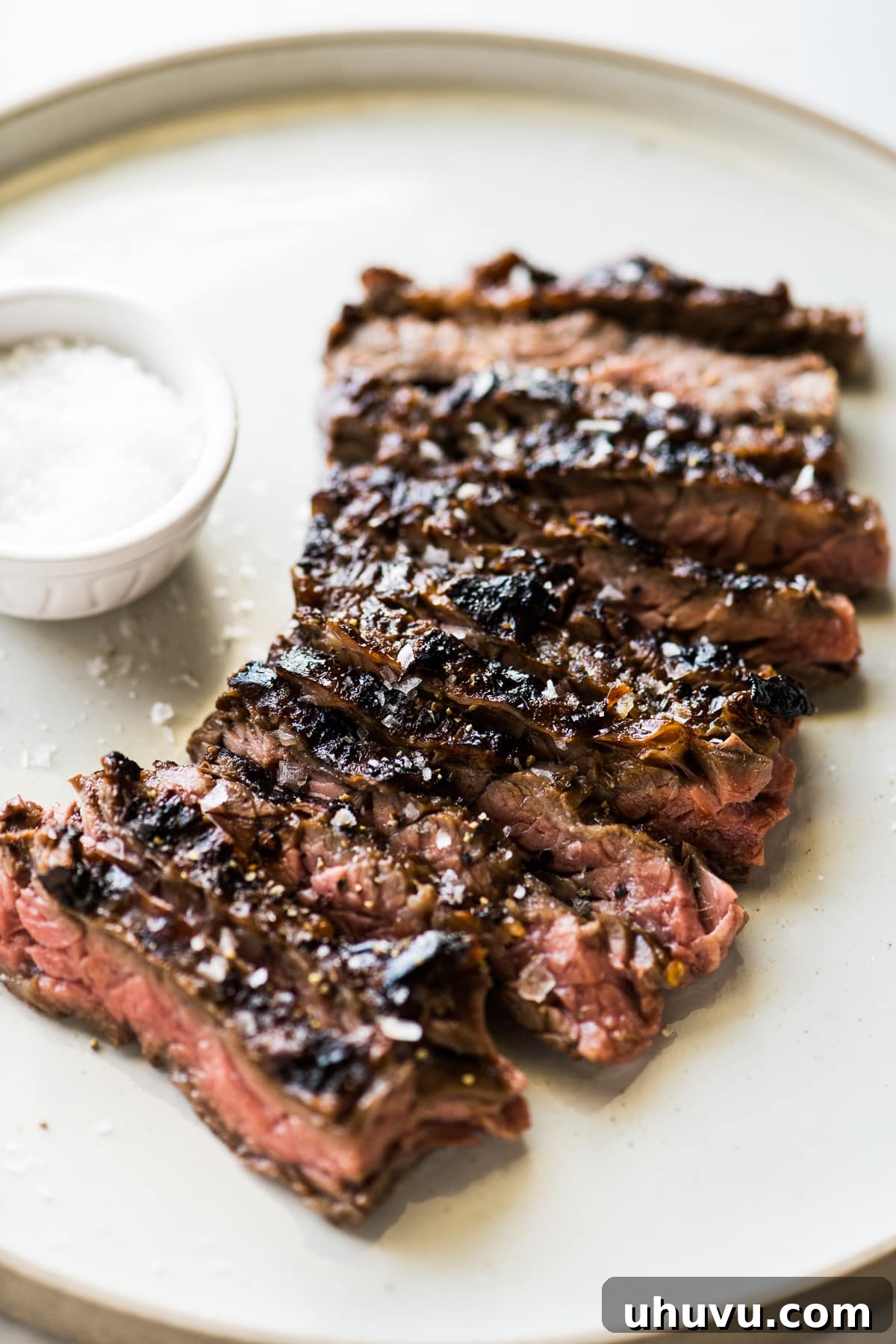
The Ultimate Skirt Steak Marinade for Tender, Flavorful Results
Unlock the secret to incredibly tender and bursting-with-flavor skirt steak with this effortless marinade recipe! Whether you prefer to grill it to smoky perfection or achieve a beautiful sear in a cast iron skillet on your stove, this marinade guarantees a juicy, irresistible steak every time. Prepare to elevate your weeknight dinners and weekend barbecues with a marinade that’s as simple to make as it is delicious.
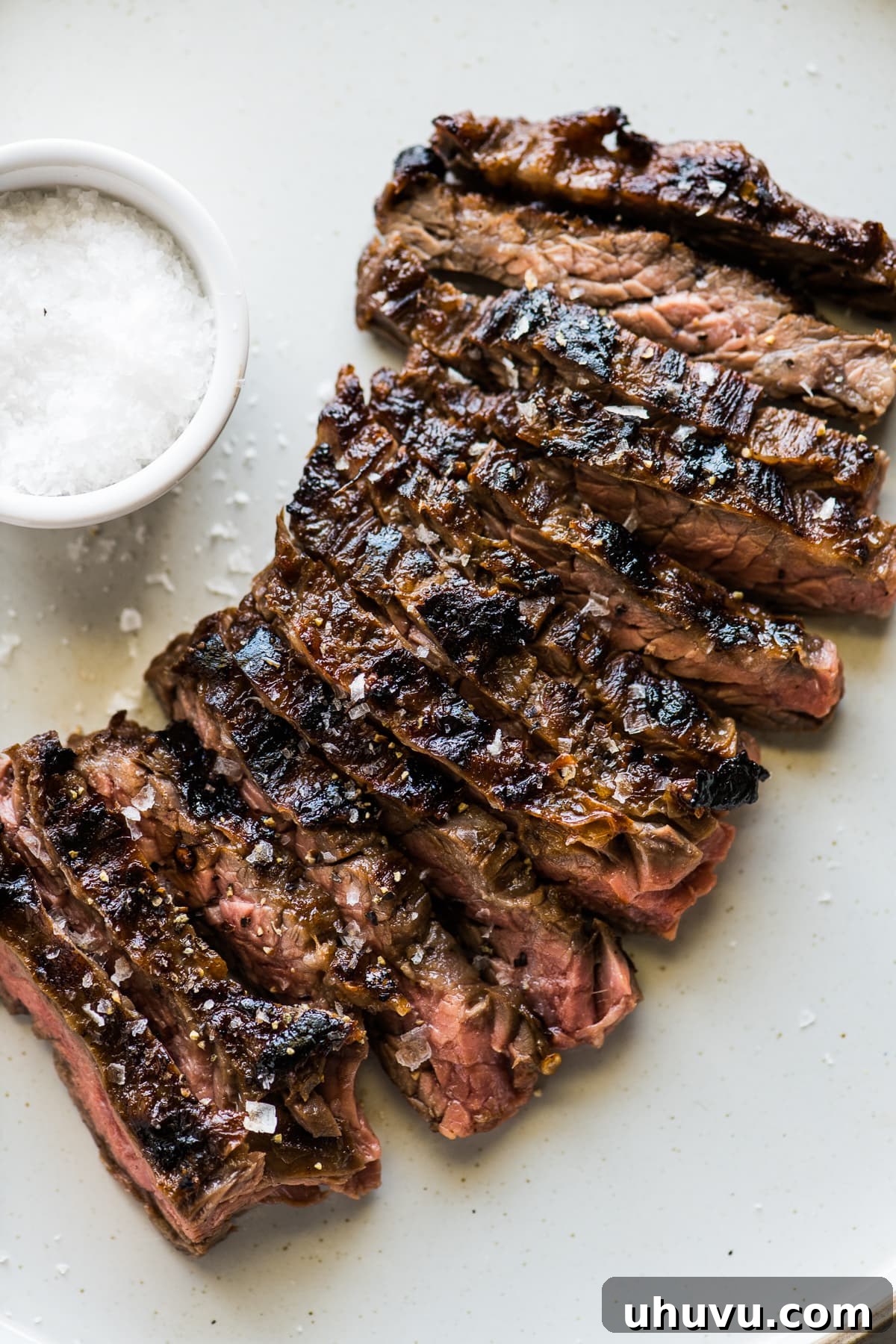
Why This Skirt Steak Marinade is a Game-Changer
There’s nothing quite like a perfectly cooked slice of skirt steak, straight from the sizzle of the grill or the searing heat of a cast iron pan. Its robust beefy flavor is undeniable, but it’s often a cut that benefits immensely from proper tenderization. That’s where a truly outstanding marinade comes in. This recipe isn’t just about adding a superficial layer of taste; it’s designed to penetrate the meat, breaking down tougher fibers and infusing every bite with a dynamic blend of savory, citrusy, and slightly spicy notes.
This isn’t your average, one-note marinade. It’s crafted with a harmonious blend of ingredients commonly found in most kitchens, making it incredibly easy to whip up without a special trip to the store. The beauty of a great steak marinade lies in its dual power: enhancing the natural taste of the beef while simultaneously working to make it remarkably tender. This particular recipe excels at both, transforming a budget-friendly cut like skirt steak into a gourmet experience.
Beyond being a fantastic standalone dish, this tender and flavorful skirt steak is incredibly versatile. Slice it thin for mouth-watering tacos, toss it into vibrant salads, layer it onto sandwiches, or serve it alongside your favorite sides for a complete meal. Once you try this skirt steak marinade, it’s sure to become a staple in your culinary repertoire.
Essential Skirt Steak Marinade Ingredients
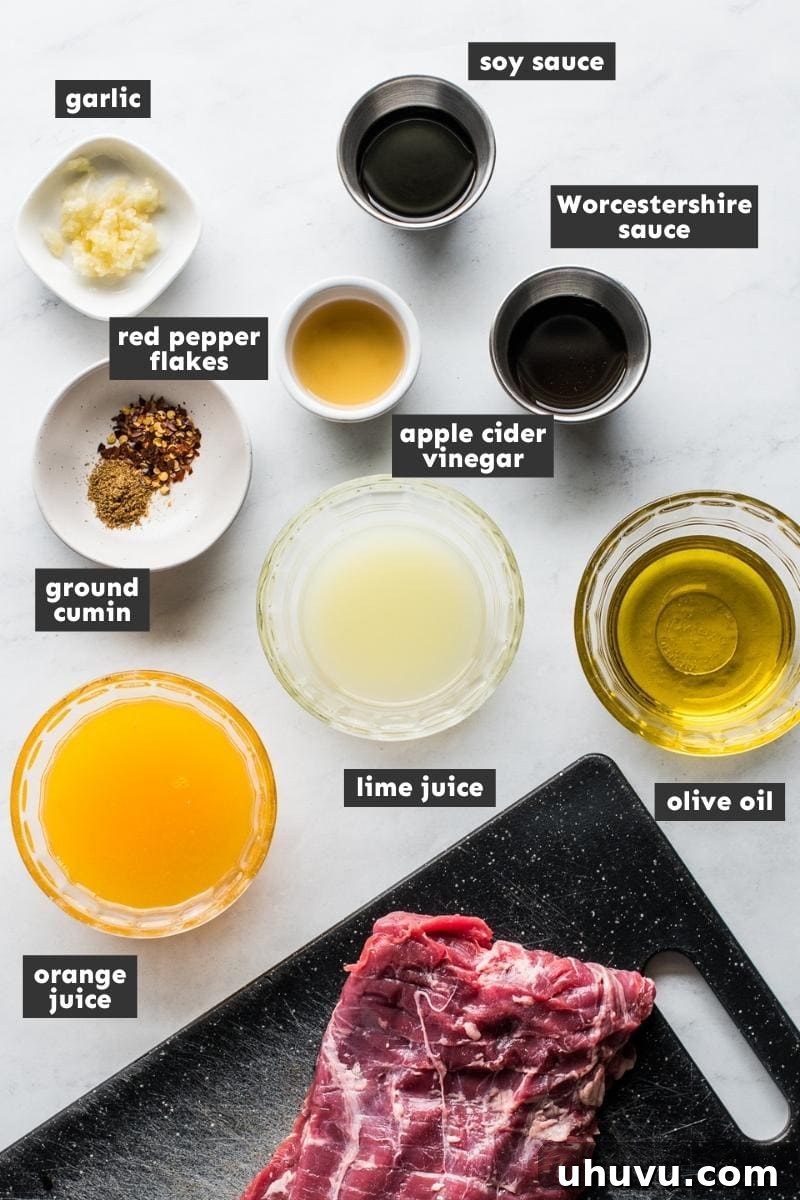
The secret to an unforgettable skirt steak lies in the quality and combination of its marinade ingredients. You’ll be pleased to know that everything you need for this tenderizing, flavor-packed marinade is likely already in your pantry or easily accessible at any grocery store. Each component plays a crucial role in creating the perfect balance of acidity, umami, and aromatic depth.
- Orange juice: Provides a subtle sweetness and an acidic component that helps to tenderize the meat.
- Lime juice: Adds a bright, zesty tang and further contributes to the tenderizing process.
- Olive oil: Acts as a carrier for the fat-soluble flavors and helps to keep the steak moist during cooking. You can also use your favorite vegetable oil.
- Soy sauce: Delivers a deep umami flavor and helps to create a beautiful crust when seared.
- Worcestershire sauce: Another umami powerhouse, adding complexity and a savory depth that is classic in steak marinades.
- Apple cider vinegar: A mild acid that tenderizes without overwhelming the flavor. White wine vinegar or red wine vinegar can be used as alternatives.
- Garlic: Freshly minced garlic is indispensable for its pungent, aromatic qualities that infuse deeply into the meat.
- Crushed red pepper flakes: Offers a gentle kick of heat that awakens the palate without being overly spicy. Adjust to your preference for more or less heat.
- Ground cumin: Introduces a warm, earthy, and slightly smoky aroma that complements the other flavors perfectly, especially if you’re aiming for a Mexican-inspired meal.
- Kosher salt and freshly ground black pepper: Basic seasonings that are critical for enhancing all the other flavors and seasoning the meat properly before cooking.
How Long Should You Marinate Skirt Steak?
The duration of marinating is a critical factor for achieving optimal results, especially with a cut like skirt steak. Marinating recommendations can vary widely based on the type of meat, its thickness, and the specific ingredients in the marinade. For this particular recipe, which contains a good balance of acidic components from the citrus juices and vinegar, I recommend marinating your skirt steak anywhere from 2 to 8 hours.
This timeframe allows the acids to effectively break down the muscle fibers, resulting in a more tender steak, while also giving the robust flavors enough time to penetrate the meat. Marinating for less than 2 hours may not yield sufficient tenderization or flavor infusion, leaving your steak less succulent than desired.
Conversely, it’s crucial not to over-marinate. I strongly advise against marinating for longer than 8 hours. The high acidity level in this marinade, while excellent for tenderizing, can start to negatively impact the meat’s texture if left for too long. Prolonged exposure to acid will cause the muscle fibers to break down excessively, potentially leading to a mushy or mealy texture, which is definitely not what we’re aiming for in a delicious steak. Stick to the 2-8 hour window for perfectly tender and flavorful skirt steak.
Best Ways to Cook Marinated Skirt Steak
Skirt steak, with its thin profile and rich marbling, cooks quickly and beautifully. Once marinated, this cut is incredibly versatile and can be prepared using a few different methods to achieve a fantastic result. Two of my absolute favorite and most recommended ways to cook a marinated skirt steak are:
- On the grill: Perfect for imparting a smoky flavor and those coveted char marks. Grilling is ideal for outdoor cooking and adds another layer of complexity to the steak’s taste.
- In a cast iron skillet on the stove: An excellent indoor option that provides a superior crust and an even cook. The high heat retention of cast iron makes it perfect for searing thin cuts of meat like skirt steak.
No matter which method you choose, the goal is to cook the steak quickly at high heat to achieve a beautiful sear on the exterior while keeping the interior juicy and cooked to your desired doneness. Full, detailed instructions for both of these cooking methods are provided in the recipe section below, ensuring you get perfect results every time.
Achieving the ideal doneness is key to a tender skirt steak. Don’t be afraid to experiment with cook times, but always prioritize internal temperature for best results.
Expert Tips for Grilling Skirt Steak
Grilling skirt steak is not only fast but also incredibly satisfying, making it my preferred method for preparing this marinated cut. To ensure you achieve a perfectly grilled skirt steak with a fantastic sear and juicy interior, keep these essential tips in mind:
- Preheat the grill to high heat: This is perhaps the most crucial step. Aim for a temperature of about 450°F to 500°F. High heat is essential for creating that desirable caramelized crust (Maillard reaction) on the outside of the steak in a short amount of time. Since skirt steak is a thinner cut, cooking it quickly over intense heat prevents it from drying out while ensuring a beautiful sear.
- Use a reliable meat thermometer to avoid overcooking: Overcooking is the arch-nemesis of a tender steak. Skirt steak cooks very rapidly, and its thinness makes it susceptible to going from perfectly medium-rare to tough and dry in a matter of seconds. An instant-read meat thermometer is your best friend here. Insert it into the thickest part of the steak for an accurate reading. For medium-rare, aim for 130-135°F; for medium, 135-140°F. This foolproof method guarantees your steak reaches your preferred doneness without guessing.
- Let the steak rest before slicing: Patience is a virtue when it comes to steak. Once your skirt steak is cooked, transfer it to a cutting board and let it rest, uncovered, for at least 5 minutes (or up to 10 minutes for thicker cuts). This resting period allows the juices, which have been driven to the center during cooking, to redistribute throughout the meat. Slicing immediately will cause those precious juices to run out, leaving you with a drier, less flavorful steak.
- Pat the steak dry before grilling: After removing the steak from the marinade, pat it thoroughly dry with paper towels. Excess moisture on the surface of the meat will steam rather than sear, preventing you from achieving that beautiful, crispy crust.
- Brush the grill grates with oil: To prevent sticking, especially with a well-marinated steak, ensure your hot grill grates are clean and lightly oiled before placing the meat down.
The Crucial Step: How to Slice Skirt Steak
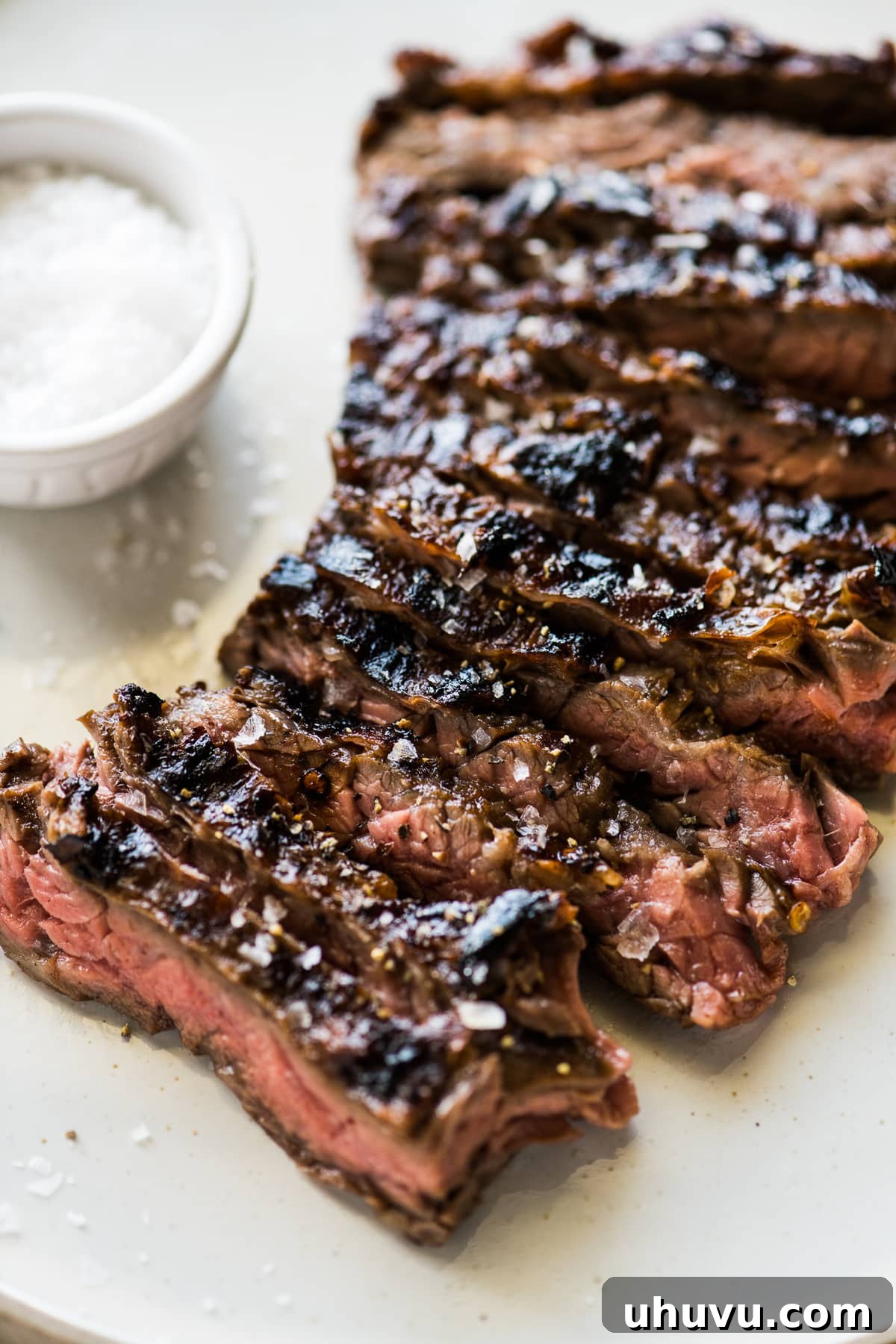
Even a perfectly cooked and rested skirt steak can be tough if not sliced correctly. This step is just as important as the marinating and cooking process for ensuring ultimate tenderness. Once your skirt steak has rested for the recommended 5 minutes (or up to 10 minutes), it’s time to slice it. The key here is to slice against the grain and at a slight angle into thin pieces.
But what does “against the grain” mean? Skirt steak has very long, visible muscle fibers running across it. If you slice with the grain (parallel to these fibers), each piece will be a long strand of muscle that is very chewy and difficult to eat. By slicing against the grain (perpendicular to the fibers), you are effectively shortening these tough muscle fibers, making them much easier to break down with each bite. This action physically tenderizes the meat, ensuring a melt-in-your-mouth experience.
To do this, identify the direction of the muscle fibers on your steak. Then, using a sharp knife, make thin slices (about ¼ to ½ inch thick) across these fibers. Cutting at a slight angle further increases the surface area of the slice and helps to break down the muscle fibers even more, contributing to a more tender and pleasant chew.
Recommended Tools for Steak Perfection
Having the right tools can make all the difference in preparing a delicious skirt steak. These are some of my go-to kitchen essentials that will help you achieve outstanding results with minimal effort:
- Instant-read thermometer: A non-negotiable for any steak lover. I personally swear by my Thermapen and enthusiastically recommend it to everyone. It’s a must-have in the kitchen, ensuring your meat is cooked to perfection without being under or overdone.
- Non-slip cutting board: Essential for safety and efficiency, especially when slicing meat. A good non-slip board stays firmly put on your counter, allowing you to slice with confidence and precision.
- Garlic press: While mincing garlic by hand is certainly an option, a quality garlic press makes this task incredibly fast and easy, saving you time and effort when prepping your marinade.
- Large zip-top bags or baking dish: Crucial for marinating your steak evenly and mess-free. A gallon-sized bag works well for typical skirt steaks, ensuring the marinade fully coats the meat.
- Whisk: To thoroughly combine all the marinade ingredients, ensuring a homogenous mixture that delivers consistent flavor.
- Heavy-duty tongs: For safely flipping steak on the grill or in the skillet.
Delicious Serving Suggestions for Skirt Steak
Skirt steak is remarkably versatile and pairs beautifully with a wide array of sides, making it a fantastic centerpiece for any meal. Its rich, savory flavor can be complemented by fresh, vibrant, or hearty accompaniments. Here are some of my favorite ways to serve this delicious marinated skirt steak:
- Rice: For a satisfying and well-rounded meal, serve your steak with a side of fluffy Mexican rice. If you’re looking for a low-carb alternative, consider cilantro lime cauliflower rice or even Mexican cauliflower rice for a flavor-packed healthy option.
- Vegetables: Light and flavorful vegetable sides are an excellent complement to the richness of skirt steak. Try roasted Mexican zucchini, a crisp jicama slaw, a medley of Mexican roasted vegetables, or the ever-popular elote (Mexican street corn) for a truly authentic touch.
- Salsa: Add a burst of freshness and zest with homemade salsas. Options like bright cucumber salsa, sweet and savory grilled corn salsa, or tropical pineapple salsa can truly elevate the steak’s flavor profile. For a creamy topping, a simple avocado crema or guacamole also works wonders.
- Tacos and Fajitas: Skirt steak is a classic choice for fajitas and tacos. Slice the cooked steak into strips and serve with warm tortillas, grilled peppers and onions, cheese, and your favorite toppings.
- Salads: For a lighter meal, thinly sliced skirt steak makes a fantastic protein addition to any green salad. Pair it with a vibrant vinaigrette and crisp greens.
Explore More Delicious Marinades
If you loved how this marinade transformed your skirt steak, you’ll be excited to try these other fantastic marinade recipes designed to bring incredible flavor to various meats:
- The Best Chicken Marinade (an incredibly simple 2-ingredient wonder!)
- Steak Fajita Marinade (perfect for a vibrant Tex-Mex feast)
- Lime Chicken Marinade (zesty and refreshing, great for grilling)
- Mexican Chicken Marinade (packed with authentic flavors)
Skirt Steak Marinade
Ingredients
- ½ cup orange juice
- ¼ cup lime juice (about 2 limes)
- ¼ cup olive oil
- 2 tablespoons soy sauce
- 2 tablespoons Worcestershire sauce
- 1 tablespoon apple cider vinegar
- 3 cloves garlic, minced
- ½ teaspoon crushed red pepper flakes
- ¼ teaspoon ground cumin
- 1 ½ pounds skirt steak
- 1 teaspoon kosher salt
- ½ teaspoon freshly ground black pepper
Instructions
-
In a medium bowl, combine the orange juice, lime juice, olive oil, soy sauce, Worcestershire sauce, apple cider vinegar, minced garlic, crushed red pepper flakes, and ground cumin. Whisk all the ingredients together thoroughly until well combined.
-
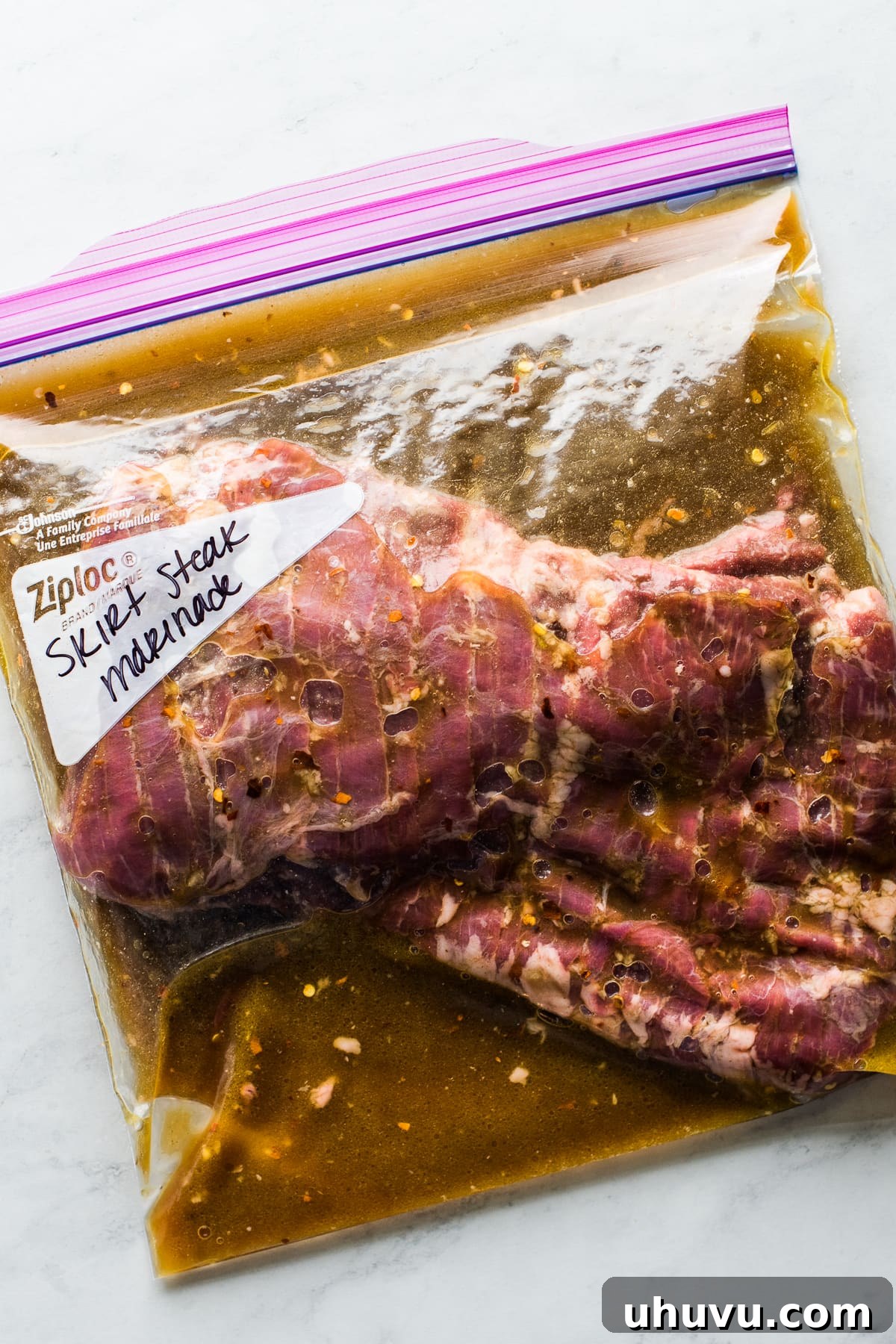
Place the skirt steak in a large baking dish or a gallon-sized zip-top bag. Pour the prepared marinade over the steak, ensuring it is completely coated. Turn the steak a few times to evenly distribute the marinade. Cover the dish or seal the bag, then refrigerate for 2 to 6 hours. Do not marinate for longer than 8 hours, as the meat’s texture may begin to break down due to the acidity.
-
Remove the steak from the marinade. Discard any excess marinade. Pat the steak thoroughly dry with paper towels on both sides. Season generously with kosher salt and freshly ground black pepper.
-
To grill: Preheat your grill to high heat, aiming for a temperature of about 450°F-500°F. Grill the skirt steak with the lid closed for approximately 3-4 minutes per side for a medium-rare doneness. Adjust cooking time based on the thickness of your steak and your desired doneness. For precise results, use an instant-read meat thermometer to check the internal temperature.
-
To cook on the stove (cast iron skillet): Heat a large cast-iron skillet over high heat until it’s very hot. Add a generous drizzle of high smoke point oil (like grapeseed or avocado oil). Carefully add the skirt steak to the hot skillet. Press down on the meat a couple of times with tongs or a spatula to ensure full contact with the bottom of the pan and achieve a good sear. Cook for 3-5 minutes, then flip and cook for another 3-5 minutes, depending on the steak’s thickness and your preferred doneness. Again, an instant-read meat thermometer is highly recommended to ensure perfection.
-
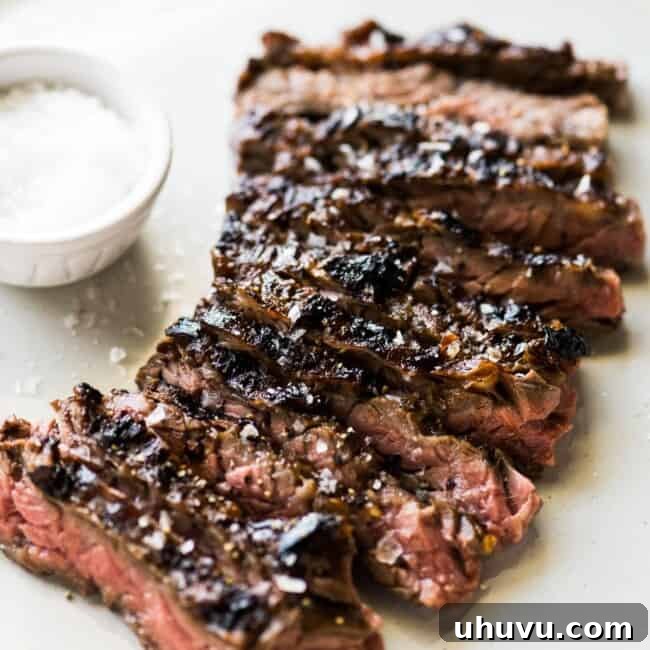
Once cooked, transfer the steak to a clean cutting board. Let it rest, uncovered, for 5 minutes. This allows the juices to redistribute throughout the meat, keeping it tender and juicy. After resting, use a sharp knife to slice the steak thinly across the grain and at a slight angle. Serve immediately and enjoy!
Notes
- Use a meat thermometer to make sure you don’t overcook it. This is my favorite and foolproof way of making sure I never overcook steak. For skirt steak, aiming for medium-rare (130-135°F) or medium (135-140°F) will yield the best tenderness and juiciness.
- Let it rest before slicing. This crucial step helps to lock in the juices and keeps the meat from drying out when slicing, ensuring every bite is moist and flavorful.
- Slice against the grain. Use a sharp knife to slice the meat against the grain and at a slight angle into thin slices. This helps to further break down the muscle fibers of the meat and makes it significantly easier to chew and enjoy.
Nutrition
Calories: 253kcal |
Protein: 25g |
Fat: 17g |
Saturated Fat: 4g |
Polyunsaturated Fat: 1g |
Monounsaturated Fat: 10g |
Trans Fat: 0.4g |
Cholesterol: 71mg |
Sodium: 75mg |
Potassium: 331mg |
Vitamin A: 9IU |
Calcium: 7mg |
Iron: 2mg
Nutrition information is automatically calculated, so should only be used as an approximation.