
Authentic Pozole Blanco Recipe: A Traditional Mexican White Hominy Stew
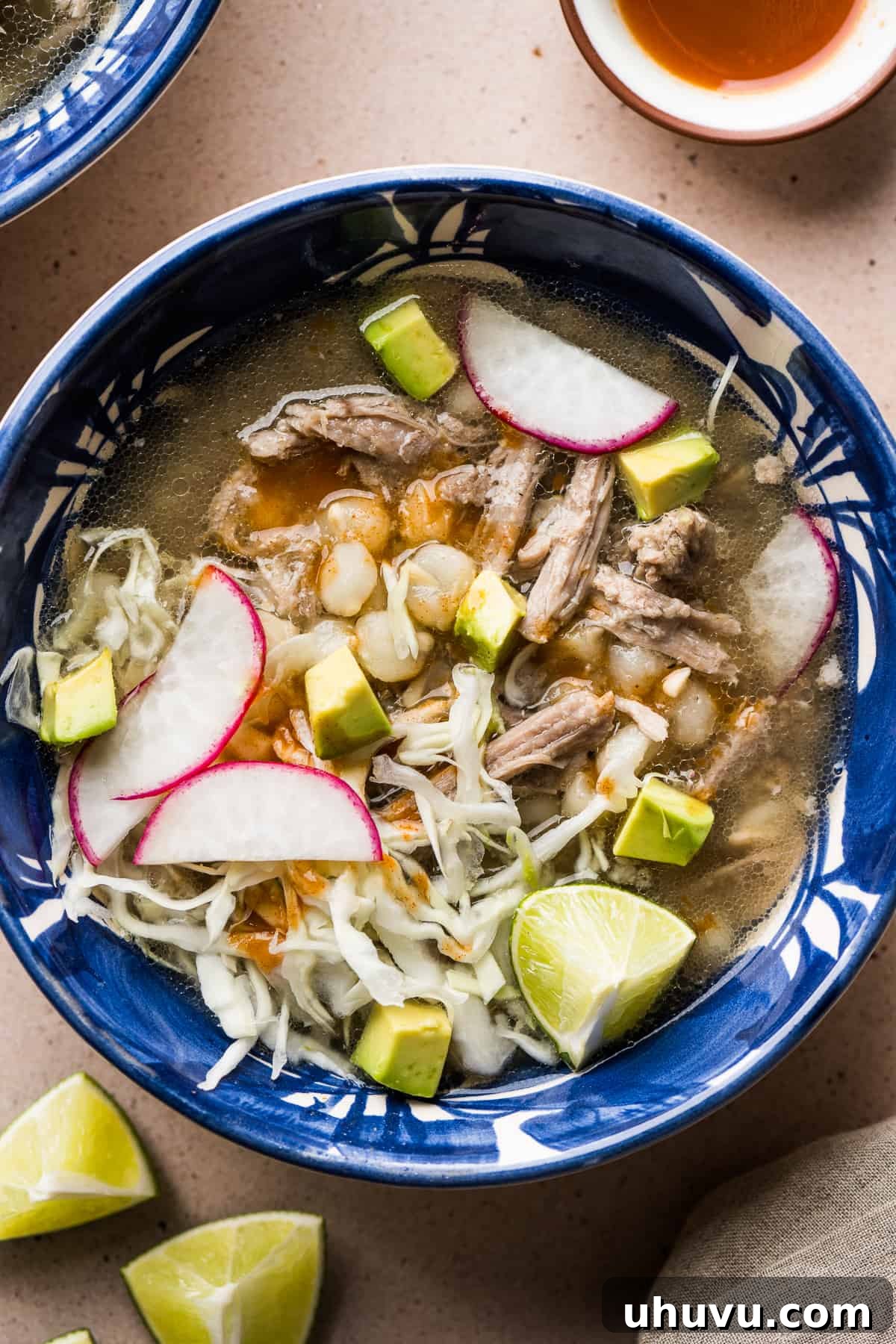
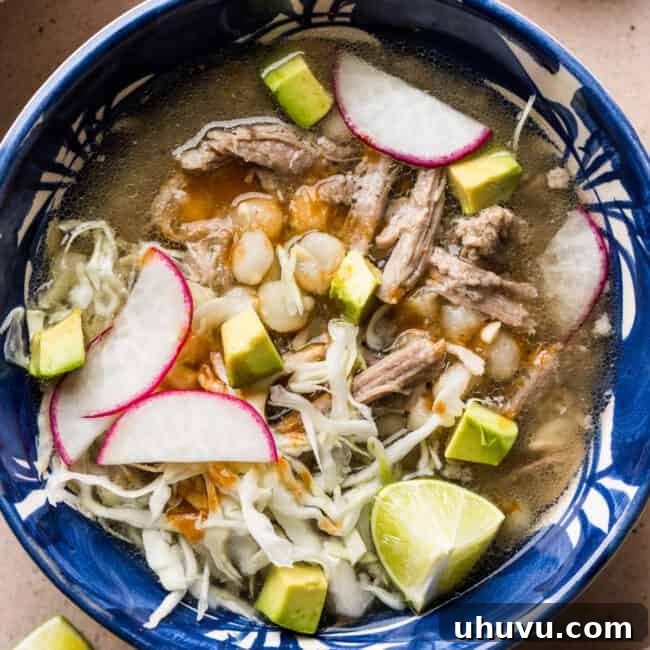
Embark on a culinary journey to the heart of Mexico with this exquisite Pozole Blanco recipe. While you might be familiar with the vibrant hues of pozole rojo or the zesty kick of pozole verde, Pozole Blanco, or “White Pozole,” offers a unique and equally captivating flavor profile. This traditional Mexican soup is a testament to the power of simple, high-quality ingredients, simmered to perfection to create a deeply satisfying and comforting meal. Featuring tender pork shoulder, plump hominy, and a clear, savory broth, it’s a dish that truly shines with the authentic flavors of Mexican home cooking.
Unlike its red and green counterparts, Pozole Blanco foregoes chiles in its broth, allowing the natural richness of the meat and aromatic spices to take center stage. Each spoonful delivers a symphony of traditional Mexican flavors, further enhanced by a generous array of fresh toppings like crisp cabbage, tangy lime, crunchy radishes, and a dash of your favorite salsa. Whether you’re gathering for a family meal, celebrating a special occasion, or simply craving a taste of Mexico, this Pozole Blanco recipe promises an unforgettable experience that’s both hearty and incredibly delicious.
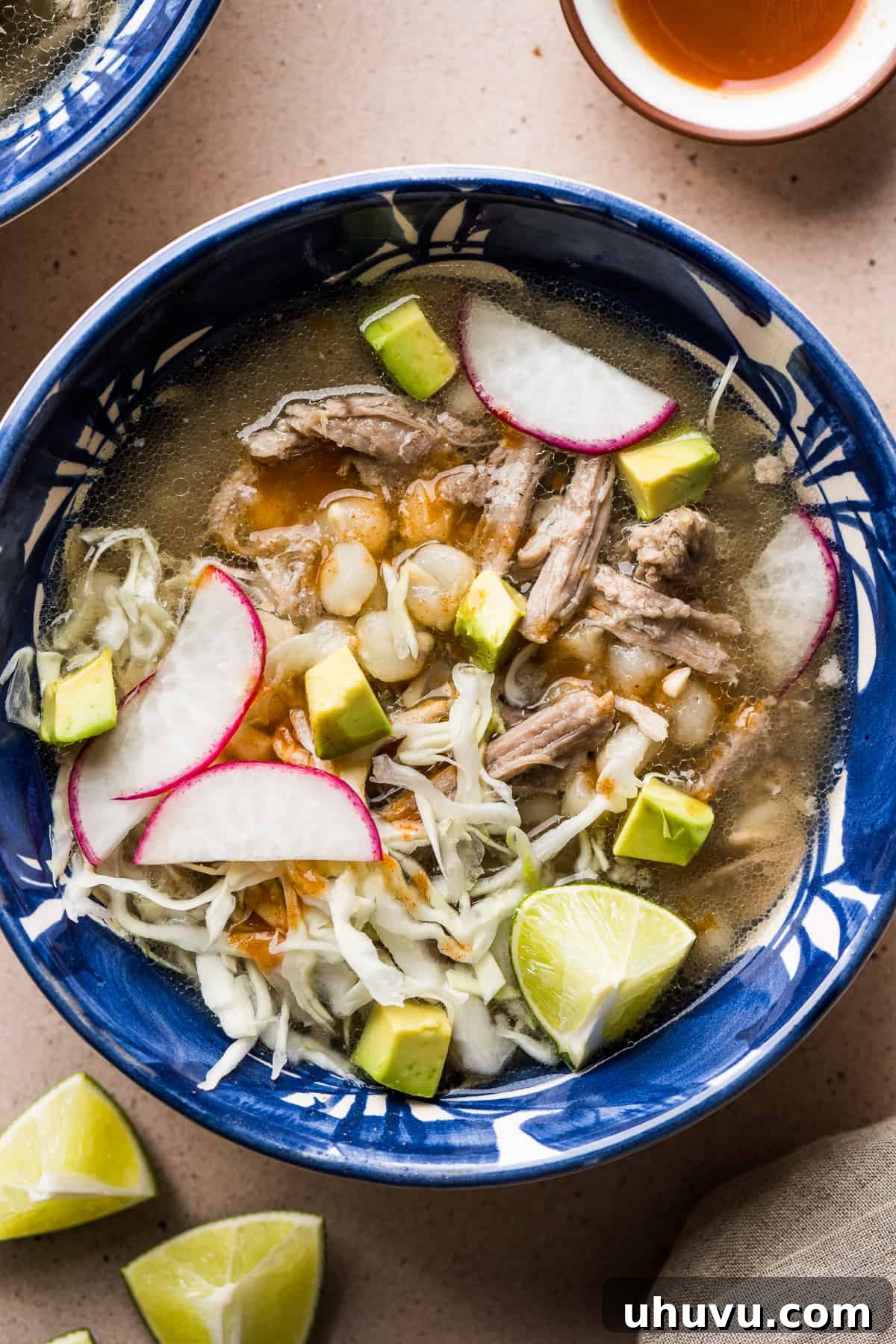
Table of Contents
- What is Pozole Blanco?
- The Heart of the Broth: Key Ingredients
- Crafting Your Pozole Blanco: Step-by-Step Guide
- Elevate Your Bowl: Toppings and Serving Suggestions
- Storing and Reheating Your Delicious Pozole
- Frequently Asked Questions About Pozole Blanco
- More Traditional Mexican Recipes
What is Pozole Blanco?
Pozole Blanco, translating to “White Pozole,” is a distinguished member of Mexico’s cherished pozole family. At its core, this traditional Mexican soup is characterized by its clear, uncolored broth, which derives its profound flavor primarily from slow-cooked meat—typically pork or chicken—and a savory blend of onions, garlic, and select spices. Unlike its more colorful relatives, pozole rojo (red pozole) and pozole verde (green pozole), Pozole Blanco is intentionally crafted without any chiles in the broth. This absence of chiles allows the pure, unadulterated essence of the meat and hominy to shine through, creating a distinctively delicate yet incredibly rich and satisfying experience.
The star ingredient, hominy, is dried maize kernels that have undergone a process called nixtamalization. This ancient technique involves soaking and cooking the corn in an alkaline solution, typically limewater, which removes the hull and germ, making the kernels larger, softer, and more digestible. It also enhances their nutritional value and distinctive chewy texture, which is fundamental to any authentic pozole.
Pozole Blanco is more than just a soup; it’s a canvas for an array of fresh, vibrant garnishes that add layers of flavor, texture, and visual appeal. These accompaniments are not merely optional but are integral to the complete pozole experience, allowing each diner to customize their bowl to perfection:
- Crisp Cabbage: Finely shredded cabbage provides a refreshing crunch and a hint of bitterness that beautifully contrasts the rich broth.
- Fresh Lime Juice: A squeeze of fresh lime juice brightens the entire dish, adding a crucial acidic tang that cuts through the richness.
- Piquant Radishes: Thinly sliced radishes offer a peppery bite and a delightful crispness.
- Diced Onions: Small cubes of raw white onion contribute a pungent, fresh aroma and a subtle sharpness.
- Creamy Avocado: Slices or chunks of ripe avocado add a luxurious, creamy texture and a mild, buttery flavor.
- A Dash of Salsa: For those who desire a touch of heat, a spoonful of your favorite salsa (red or green) can be added directly to the bowl, allowing individual control over spice levels.
- Chopped Cilantro: Fresh cilantro leaves provide a vibrant, herbaceous note that elevates the overall aroma and taste.
- Dried Mexican Oregano: A sprinkle of dried Mexican oregano, with its earthy and citrusy undertones, adds an authentic layer of depth.
While Pozole Blanco stands proudly on its own, it’s fascinating to explore its variations. Pozole Rojo typically uses a rich, smoky broth made from dried red chiles like guajillo, ancho, and chile de árbol, giving it its characteristic deep red color and robust flavor. Pozole Verde, on the other hand, boasts a bright, tangy green broth derived from tomatillos, jalapeños, poblanos, and cilantro. Each style offers a unique culinary adventure, celebrating the diverse regional flavors and ingredients of Mexico, but all share the comforting base of tender meat and hominy.
The Heart of the Broth: Key Ingredients
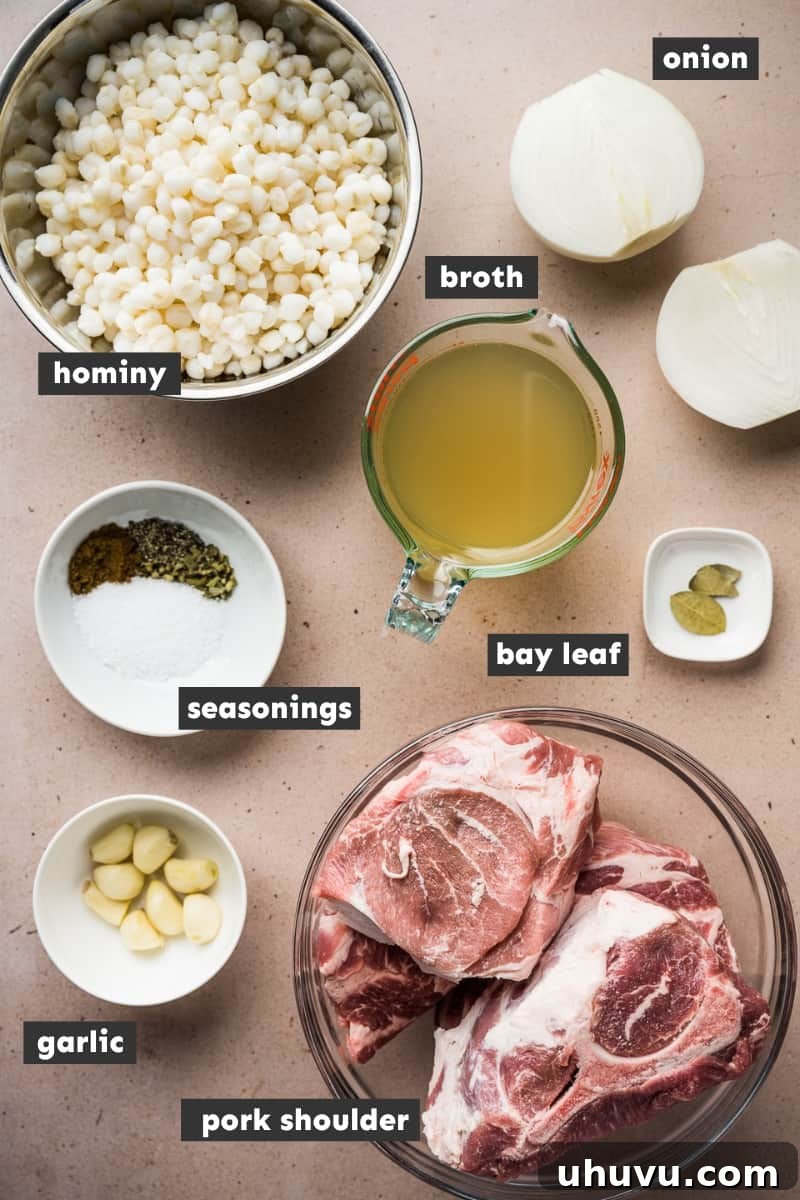
The magic of Pozole Blanco lies in the quality and harmony of its core ingredients. Each component plays a crucial role in building the complex, comforting flavor of this traditional Mexican stew. Here’s a detailed look at what you’ll need to create an authentic and delicious batch:
- Pork Shoulder (Boston Butt): For Pozole Blanco, I highly recommend using a bone-in pork shoulder, often labeled as Boston butt. This cut is rich in fat and connective tissue, which, when slow-cooked, renders down to create an incredibly flavorful broth and fork-tender, melt-in-your-mouth pork. The bone also contributes significantly to the depth of flavor in the broth. If you prefer poultry, bone-in chicken thighs are an excellent alternative, offering rich flavor without drying out. Just remember to adjust the cooking time significantly, as chicken cooks much faster.
- Hominy (Maíz Cacahuazintle): Hominy is indispensable for pozole. I typically use canned white hominy for convenience, which is widely available in most supermarkets. You can also find yellow hominy, which offers a slightly sweeter flavor and a different aesthetic. For the most authentic experience, seek out dried hominy (maíz cacahuazintle) and prepare it from scratch by soaking and simmering, though this adds considerable time to the cooking process. Always drain and rinse canned hominy thoroughly before adding it to your soup to remove excess sodium and improve its texture.
- Bay Leaves: These unassuming leaves are essential for adding a subtle, earthy, and slightly floral aroma to the broth. They infuse the soup with a classic, herbaceous background note that enhances the overall savory profile.
- Onions and Garlic: The aromatic backbone of any great Mexican stew. A large white onion, often halved for blending, and plenty of fresh garlic cloves are crucial for building a deeply flavorful foundation. When blended into the broth base, they release their full potential, creating a robust and aromatic liquid.
- Seasonings: The spice blend for Pozole Blanco is relatively simple but profoundly impactful:
- Kosher Salt: Essential for seasoning the meat and broth, enhancing all other flavors. Adjust to taste throughout the cooking process.
- Ground Cumin: Adds a warm, earthy, and slightly pungent flavor that is characteristic of Mexican cuisine.
- Freshly Ground Black Pepper: Contributes a sharp, spicy note that complements the other seasonings.
- Mexican Oregano: This is a game-changer. Mexican oregano (Lippia graveolens) has a stronger, more citrusy, and earthy flavor profile compared to its Mediterranean cousin (Origanum vulgare). Its distinct taste is vital for authentic Mexican dishes. While regular oregano can be used as a substitute, for the best results, try to find Mexican oregano.
- Broth (Chicken, Beef, or Vegetable): I typically use low-sodium chicken broth as it provides a neutral yet rich base that complements the pork without overpowering it. However, you can easily substitute with beef broth for a more robust flavor or vegetable broth for a lighter version, or if you plan to make a vegetarian pozole. Ensure you have enough liquid to cover the meat and hominy during simmering.
Crafting Your Pozole Blanco: Step-by-Step Guide
Making Pozole Blanco is a labor of love that rewards patience with incredibly rich flavors. The key is slow simmering, which allows the pork to become incredibly tender and the broth to develop its deep, savory character. Follow these steps to prepare your own authentic Pozole Blanco:
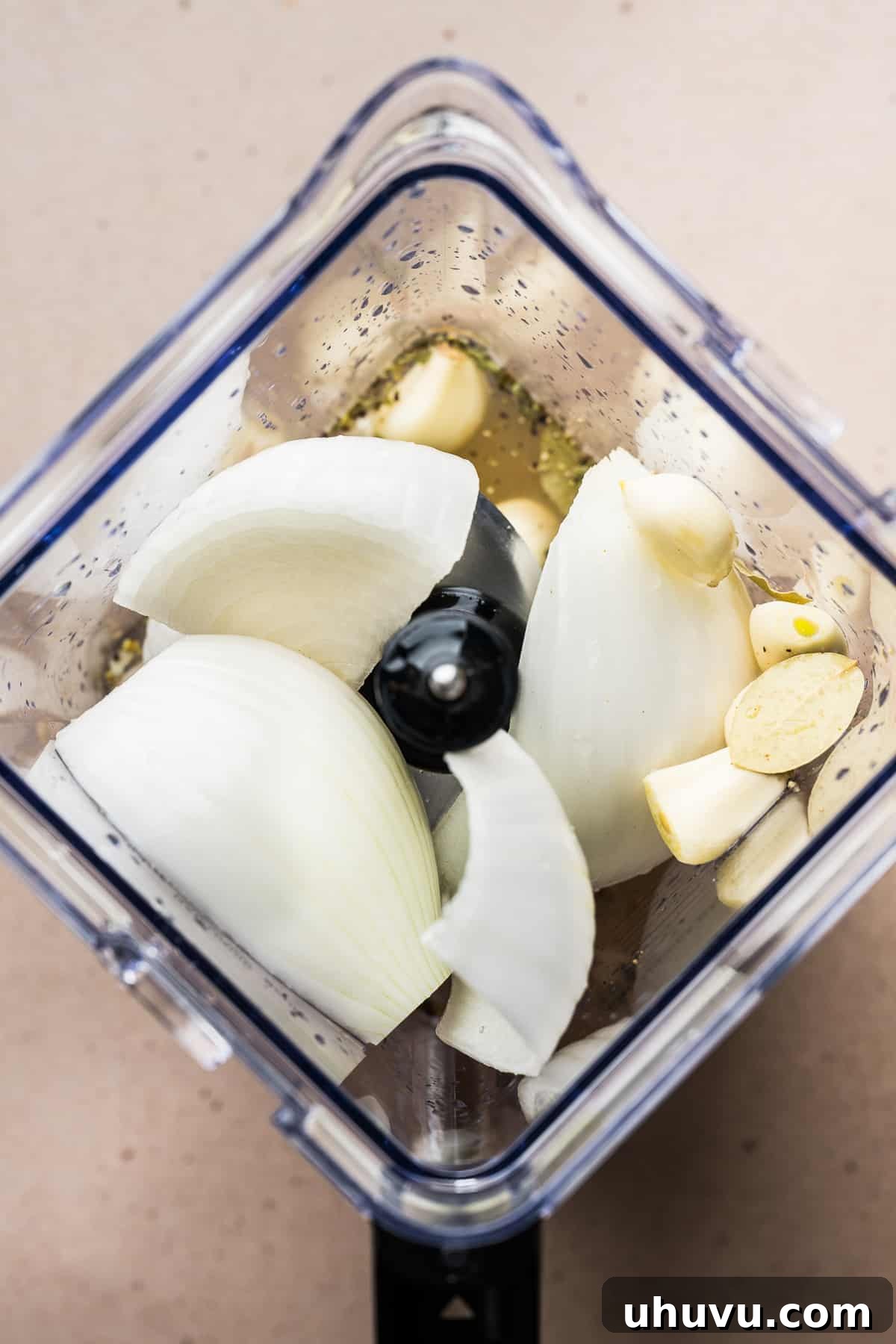
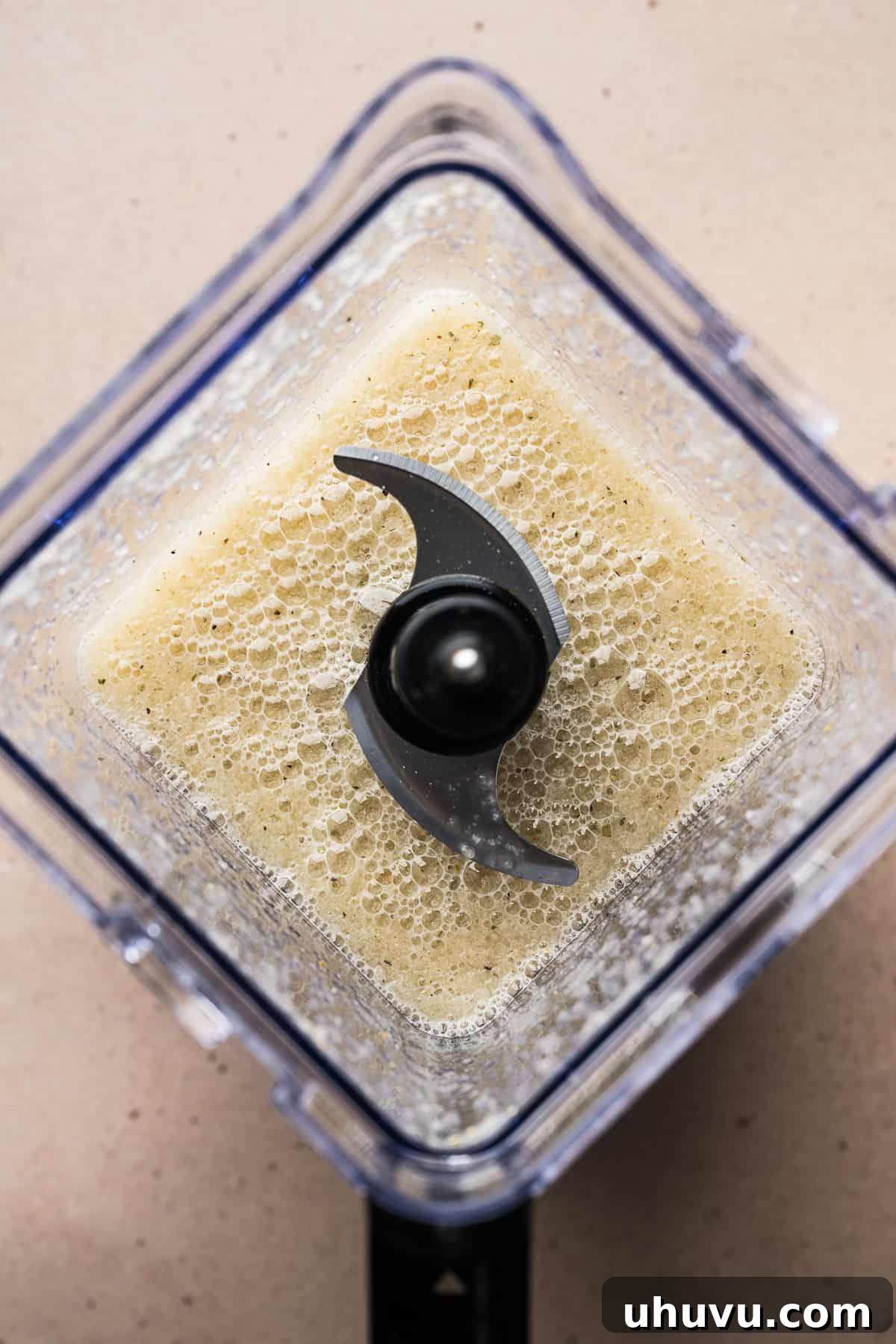
- Prepare the Flavor Base: Begin by creating the aromatic heart of your pozole. In a large blender, combine the halved white onion, all the garlic cloves, two bay leaves, kosher salt, ground cumin, freshly ground black pepper, dried Mexican oregano, and 2 cups of chicken broth. Blend these ingredients until you achieve a completely smooth puree. This step ensures that all the flavors are fully incorporated into the broth, rather than having diced pieces floating in the soup.
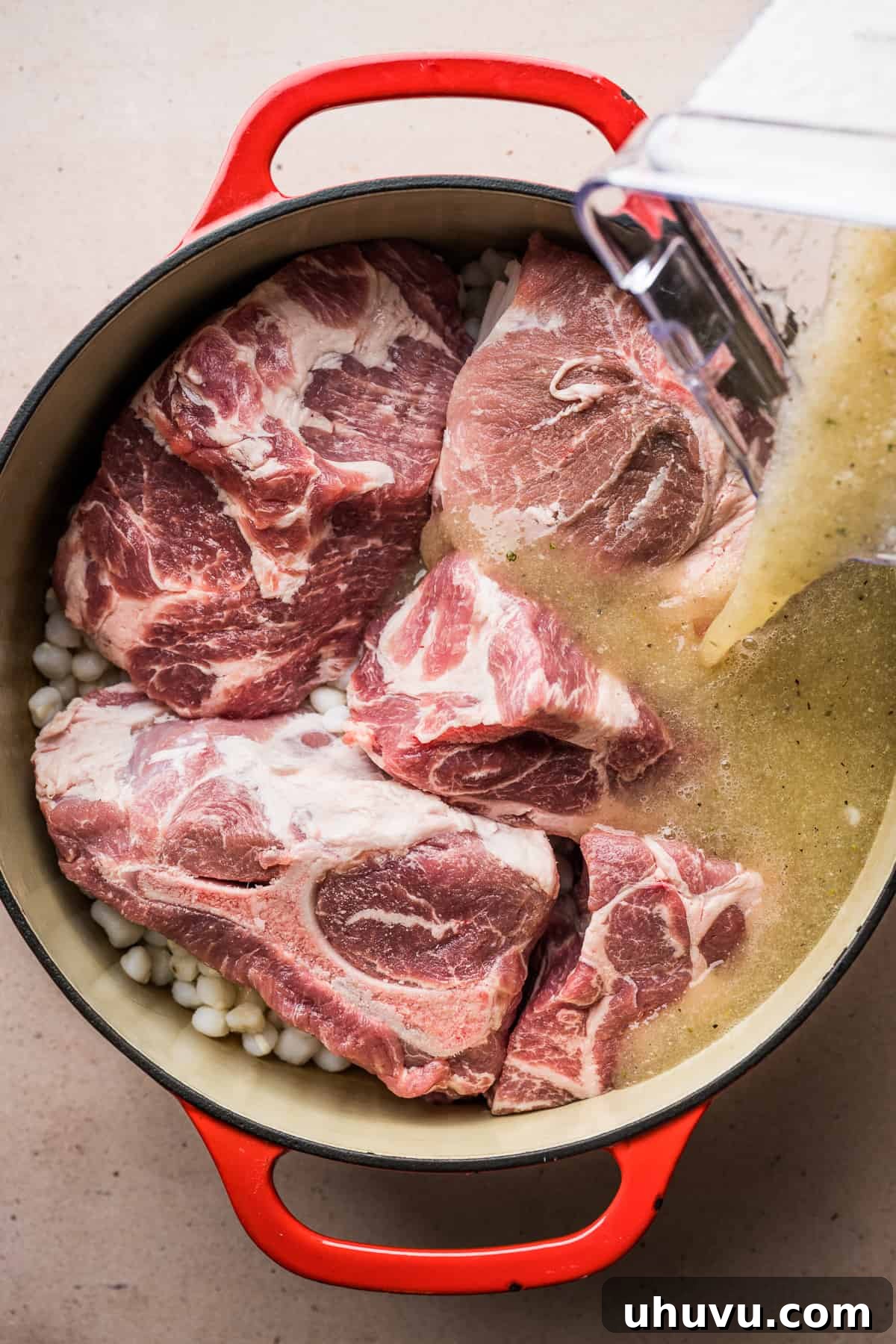
- Initiate the Simmer: Transfer the blended onion mixture to a large, heavy-bottomed pot or Dutch oven. Add the bone-in pork shoulder chunks and the drained and rinsed hominy to the pot. Pour in the remaining 2 cups of broth, ensuring the meat and hominy are mostly submerged. If necessary, add a little extra broth or water to cover them. Bring the mixture to a rolling boil over high heat, stirring occasionally.
- Slow Cook to Perfection: Once boiling, reduce the heat to its lowest setting. Cover the pot tightly with a lid and let it simmer gently for 3 hours. This extended cooking time is crucial for two reasons: it allows the tough pork shoulder to break down and become incredibly fall-apart tender, and it gives the flavors from the aromatics, spices, and pork time to fully meld and infuse the broth, creating a rich and complex flavor profile.
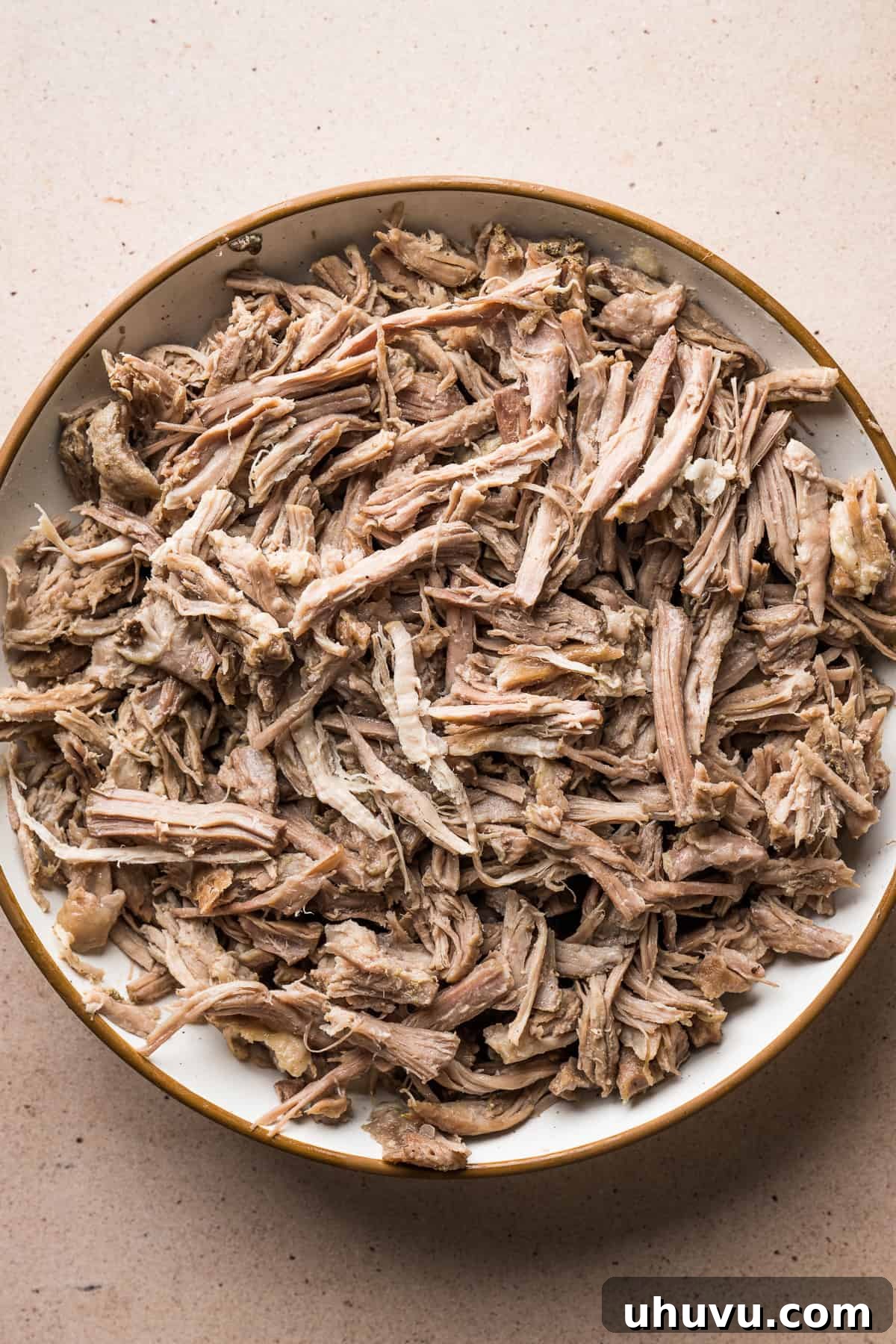
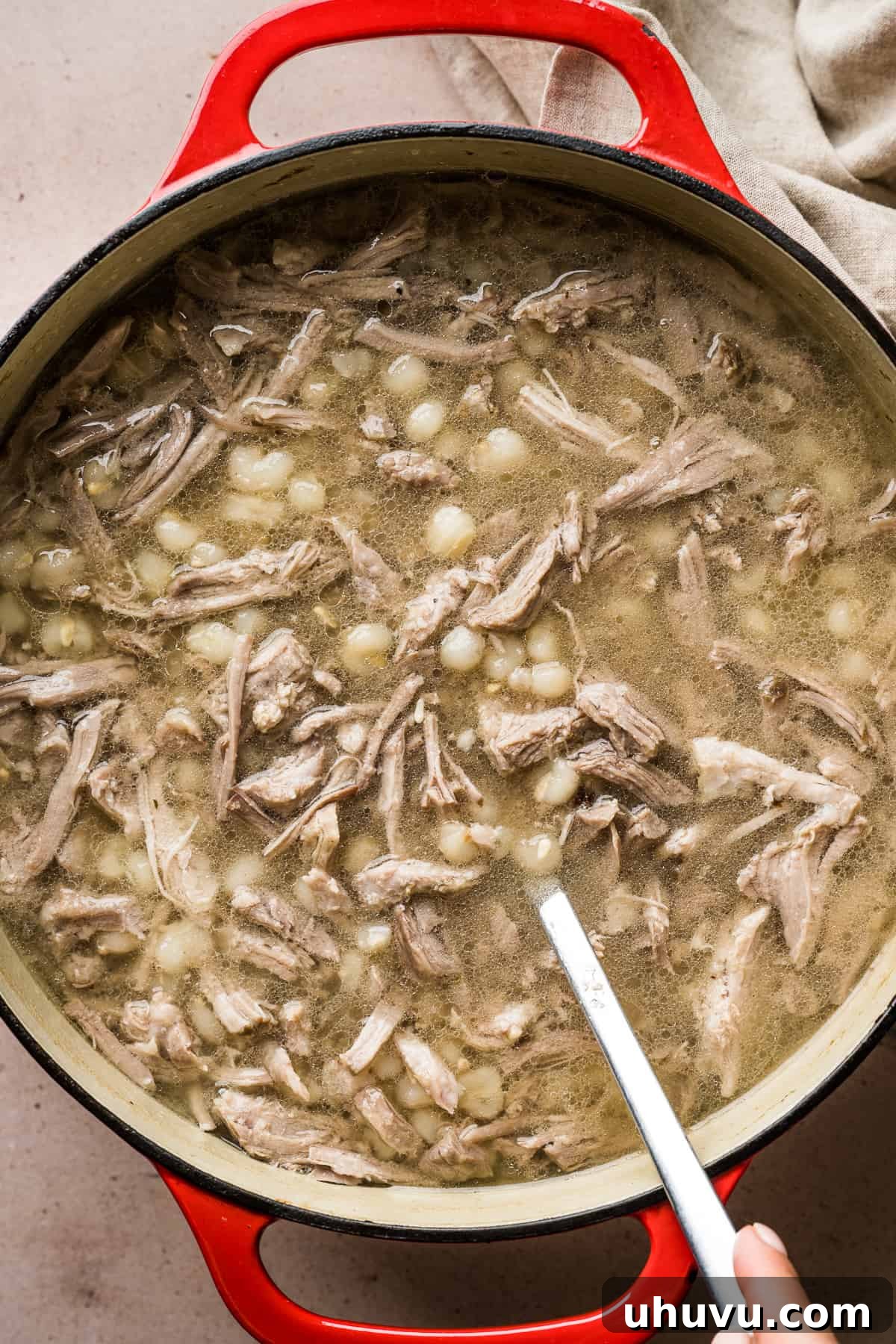
- Shred the Pork: After 3 hours, the pork should be exceptionally tender, easily falling off the bone. Carefully remove the pork chunks from the pot and transfer them to a large bowl. Using two forks or tongs, shred the pork into bite-sized pieces. Discard any bones or excess fat at this stage. Return the shredded pork back into the pot with the hominy and broth. Stir gently to combine. Taste the broth and adjust seasoning with additional salt and pepper if needed.
- Serve and Garnish: Your Pozole Blanco is now ready to be enjoyed! Ladle the hot soup into individual bowls. This is where the interactive and customizable fun begins. Encourage everyone to top their bowls with an assortment of fresh garnishes. The classic choices include thinly shredded cabbage, a generous squeeze of fresh lime juice, finely diced onions, sliced radishes, fresh chopped cilantro, creamy avocado slices, and a sprinkle of dried Mexican oregano. For those who love a bit of heat, a dash of spicy salsa roja or chile de arbol salsa is a must. Serve immediately and savor the comforting, authentic flavors of Mexico.
Elevate Your Bowl: Toppings and Serving Suggestions
The beauty of Pozole Blanco lies not just in its rich, clear broth and tender ingredients, but also in the vibrant array of toppings and accompaniments that transform each bowl into a personalized culinary masterpiece. These garnishes are essential for adding contrasting textures, refreshing flavors, and a crucial balance to the hearty soup. Don’t skip this step – it truly completes the authentic Pozole experience!
Essential Toppings and Garnishes:
- Shredded Cabbage: Finely shredded green cabbage provides a wonderful crunch and a slight bitterness that brightens the rich flavors of the soup.
- Sliced Radishes: Thinly sliced radishes add a peppery bite and a vibrant pop of color and crispness.
- Creamy Avocado: Diced or sliced avocado offers a smooth, buttery texture and a mild, creamy counterpoint to the broth.
- Chopped White Onion: Freshly diced white onion delivers a sharp, pungent kick that is characteristic of traditional Mexican garnishes.
- Fresh Cilantro: A scattering of chopped fresh cilantro adds a burst of herbaceous freshness and a beautiful aroma.
- Lime Wedges: A squeeze of fresh lime juice is paramount. Its acidity cuts through the richness of the pork and broth, enhancing all the other flavors.
- Dried Mexican Oregano: A pinch of dried Mexican oregano, crushed between your palms just before sprinkling, releases its unique citrusy and earthy notes, adding another layer of authenticity.
- Spicy Salsa Roja or Salsa Verde: For those who enjoy a bit of heat, a spoonful of your favorite chile de arbol salsa or salsa verde can be added to taste. This allows each diner to customize their spice level without altering the core flavor of the Blanco broth.
Traditional Sides and Accompaniments:
Pozole is often served alongside other delicious elements that complement its flavors and add to the communal dining experience:
- Homemade Tostada Shells: Crispy tostada shells are perfect for scooping up the rich broth and toppings, or simply to nibble on the side.
- Warm Corn Tortillas: Freshly made corn tortillas are ideal for dipping into the soup or for making small tacos with the shredded pork.
- Bolillo Bread: Crusty bolillo bread rolls, similar to French baguettes, are often served with pozole for soaking up every last drop of the flavorful broth.
Beverage Pairings:
To complete the meal, consider pairing your Pozole Blanco with traditional Mexican beverages. A refreshing glass of horchata (a sweet rice milk drink), agua fresca (fruit-infused water like jamaica or tamarindo), or even a cold Mexican lager can perfectly balance the richness of the soup.
Storing and Reheating Your Delicious Pozole
Pozole Blanco often tastes even better the next day, as the flavors have more time to meld and deepen. It’s a fantastic dish for meal prepping or enjoying leftovers throughout the week. Proper storage is key to maintaining its freshness and flavor.
Storage:
Once cooled, transfer your Pozole Blanco to an airtight container. It can be stored safely in the refrigerator for up to 5-7 days. For longer storage, pozole freezes beautifully. Divide it into individual portions in freezer-safe containers or heavy-duty freezer bags. It can be kept in the freezer for up to 2-3 months. Be sure to label containers with the date to keep track of freshness.
Reheating:
On the Stovetop: This is the preferred method for reheating pozole, as it allows for gentle, even warming without compromising texture. Pour the desired amount of pozole into a pot or saucepan. Heat over medium-high heat, stirring occasionally, until it reaches a gentle simmer and is heated through. This usually takes about 10-15 minutes, depending on the quantity. If the soup appears too thick, you can add a splash of chicken broth or water to reach your desired consistency.
In the Microwave: For a quicker option, individual servings of pozole can be reheated in the microwave. Transfer a portion to a microwave-safe bowl, cover loosely, and heat on high for 2-3 minutes, stirring halfway through, until thoroughly warmed. Be cautious not to overheat, which can make the hominy mushy.
Remember that fresh toppings should always be added just before serving, not reheated with the soup, to maintain their crispness and vibrant flavor.
Frequently Asked Questions About Pozole Blanco
Here are some common questions about Pozole Blanco, offering deeper insights into this beloved Mexican dish:
- What are the 3 types of pozole?
Pozole primarily comes in three popular variations, each distinguished by its unique broth and flavor profile:- Pozole Rojo (Red Pozole): Characterized by a rich, smoky red broth made from a blend of dried red chiles such as guajillo, ancho, and often chile de árbol for a spicy kick.
- Pozole Verde (Green Pozole): Features a bright, tangy green broth typically made with fresh ingredients like tomatillos, jalapeños, poblanos, cilantro, and sometimes pumpkin seeds.
- Pozole Blanco (White Pozole): Distinguished by its clear broth, which derives its flavor from the slow-cooked meat (usually pork or chicken) and aromatics like garlic and onion, with no chiles used in the broth itself.
All three share the essential components of tender meat and hominy, but their broths offer distinct culinary experiences.
- What is pozole blanco in English?
Pozole Blanco translates directly to “White Pozole” in English. This name is a clear descriptor of the broth’s color, which remains clear or light in contrast to the deep red of Pozole Rojo or the vibrant green of Pozole Verde. The “white” aspect emphasizes the absence of chiles in the broth, allowing the natural colors of the hominy and meat to dominate. - What does hominy taste like?
Hominy has a unique flavor and texture profile. It tastes similar to corn but is less sweet and possesses a more earthy, slightly nutty, and savory quality. Its most distinctive characteristic is its texture: plump, chewy, and somewhat starchy, offering a satisfying bite that holds up well in soups and stews. - Can I make Pozole Blanco with chicken instead of pork?
Absolutely! While pork is traditional, Pozole Blanco can be made with chicken for a delicious alternative. For the best flavor and tenderness, I recommend using bone-in chicken thighs or a whole cut-up chicken. Keep in mind that chicken cooks much faster than pork shoulder; typically, it will be tender in about 30-45 minutes after coming to a boil. Adjust your simmering time accordingly to avoid overcooking the chicken. - Is Pozole Blanco healthy?
Pozole Blanco can be a very nutritious and wholesome meal. It’s rich in protein from the pork (or chicken) and provides fiber and carbohydrates from the hominy. The broth, made with fresh aromatics, is naturally flavorful without excessive fats or artificial ingredients. When topped with plenty of fresh vegetables like cabbage, radishes, and avocado, it becomes a well-rounded dish packed with vitamins and minerals. The nutritional values provided are approximations, but overall, it’s a hearty and satisfying soup. - What is the origin of Pozole?
Pozole has ancient roots, tracing back to pre-Hispanic Mesoamerican cultures, particularly the Aztecs. The word “pozole” comes from the Nahuatl word “pozolli,” which refers to “hominy.” Originally, pozole was a ceremonial dish, with historical accounts suggesting that it may have been prepared with human flesh as part of ritual sacrifices. After the Spanish conquest, pork became the predominant meat, replacing human flesh in the recipe. Over centuries, it evolved into the beloved national dish it is today, deeply embedded in Mexican culinary tradition and frequently served during holidays and celebrations.
More Traditional Mexican Recipes
- Mexican Huaraches
- Green Spaghetti (Espagueti Verde)
- Barbacoa
- Chicken Tortilla Soup
4.89 from 9 votes
Pozole Blanco
Isabel Orozco-Moore
Pozole blanco is a traditional Mexican soup made from hominy simmered with meat in a flavorful broth made with onions, garlic, and spices.
15 minutes
3 hours 10 minutes
3 hours 25 minutes
10 servings
Ingredients
For the pozole
- 1 large white onion, halved
- 8 cloves garlic
- 2 bay leaves
- 1 ½ tablespoon kosher salt, plus more as needed
- 1 teaspoon ground cumin
- ½ teaspoon freshly ground black pepper
- ½ teaspoon dried Mexican oregano*
- 4 cups chicken broth, divided
- 4 to 5 pounds bone-in pork shoulder, cut into large chunks
- 4 (15-ounce) cans white hominy*, drained and rinsed
For serving (optional toppings)
- Thinly shredded cabbage
- Avocado slices or diced avocado
- Diced onions
- Lime wedges
- Sliced radishes
- Chopped cilantro
- Spicy salsa (roja or verde)
Instructions
-
Add the onion, garlic, bay leaves, salt, cumin, black pepper, Mexican oregano, and 2 cups of chicken broth to a large blender. Blend until smooth.
-
In a large pot or Dutch oven, combine the blended onion mixture, pork, hominy, and the remaining 2 cups of broth. Bring to a boil over high heat, reduce heat to low, cover, and simmer for 3 hours or until the pork is fall-apart tender.
-
Remove the pork from the pot and transfer it to a large bowl. Shred it with a fork or tongs (it should fall apart very easily), then transfer it back into the pot.
-
Serve the pozole in bowls topped with thinly shredded cabbage, cilantro, lime juice, sliced radishes, diced onions, avocados, dried Mexican oregano, and some spicy salsa roja.
Notes
- Mexican oregano: If you don’t have Mexican oregano, you can use regular oregano instead. It will have a slightly different flavor, but the dish will still be delicious.
- Hominy: If you can’t find white hominy, you can use yellow hominy instead.
- Meat: This dish is traditionally made with pork, but if you prefer chicken, I recommend using bone-in chicken thighs. The cooking time will also be much shorter, and you only need to cook it for about 30 minutes once it boils, until the chicken is cooked through.
Nutrition
Nutrition information is automatically calculated, so should only be used as an approximation.
We hope this detailed guide encourages you to try making this wonderful Pozole Blanco. It’s a dish that embodies warmth, tradition, and the vibrant spirit of Mexican cuisine. Enjoy!